
Caffeine can help some migraine attacks in the short term, especially when combined with an analgesic, but daily overuse or abrupt withdrawal can also trigger attacks. Evidence from a 2020 review found trigger effects in only 2% to 30% of participants across relevant studies, while acute-treatment studies generally found caffeine safe and effective when used with other pain relievers.
So why can the same morning coffee feel helpful one day and seem to cause a migraine the next? The answer usually isn't just “caffeine is good” or “caffeine is bad.” Your dose, timing, usual pattern, sleep, other treatments, and personal sensitivity all matter.
Migraine is more than an ordinary headache. It can include aura, meaning temporary neurological symptoms such as visual changes; photophobia, or sensitivity to light; nausea; and pain that may continue through the postdrome, the drained or foggy period after the main attack. If you've been dismissed because caffeine appears in both coffee and some migraine treatments, your confusion is understandable.
This article explains what caffeine does in the brain, what clinical evidence supports, why inconsistency can create a withdrawal trap, and how to track caffeine as your own variable without treating a diary entry as a diagnosis.
Table of Contents
What Caffeine Really Does to a Migraine
Caffeine can ease some migraines in the short term, yet it can also start an attack when your intake changes sharply or becomes excessive. Three effects pull in different directions: caffeine can narrow blood vessels involved in pain, strengthen the action of some analgesics, and create withdrawal symptoms when your nervous system adapts to regular exposure.
A 2020 systematic review of 21 studies found that caffeine or caffeine withdrawal was identified as a migraine trigger in only a minority of participants, typically 2% to 30% across 17 studies. The same review included 7 acute-treatment studies, which found caffeine safe and effective, particularly alongside analgesics, but concluded that the evidence wasn't strong enough to recommend universal caffeine cessation. It also warned that overuse may contribute to chronification, meaning a pattern can become more persistent, and that abrupt withdrawal can trigger attacks. Read the systematic review on caffeine and migraine
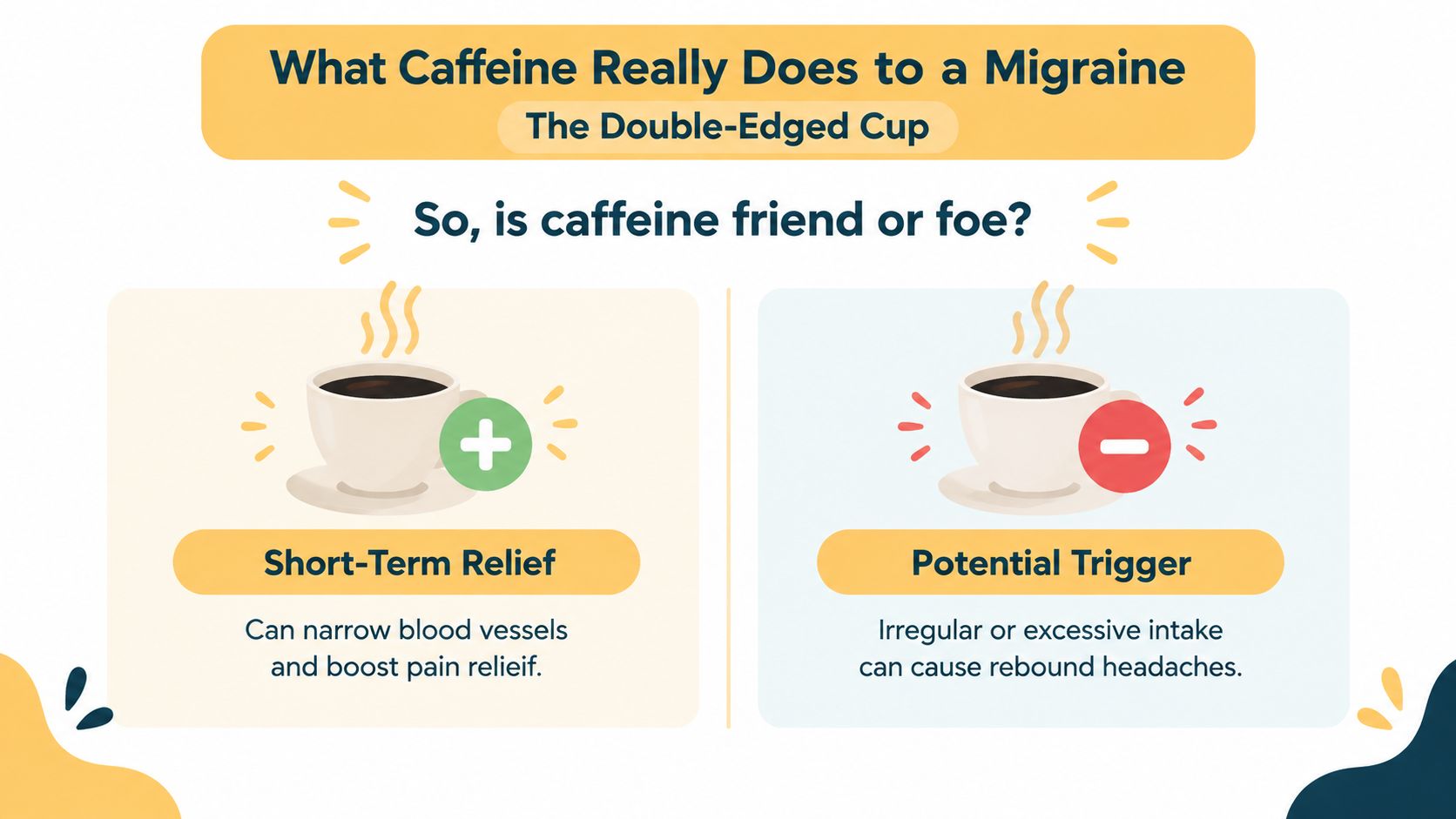
The double-edged cup
The short-term benefit makes biological sense. Caffeine blocks adenosine receptors, which can reduce some pain signaling and produce a mild constrictive effect on blood vessels. It can also add to the effect of common analgesics, which helps explain why caffeine appears in certain combination products.
The risk often appears in the pattern around that dose. A larger intake than usual, a skipped morning drink, or caffeine consumed inconsistently can change the level your brain has adapted to. The resulting headache may resemble a migraine, trigger one, or overlap with an attack already developing.
Practical rule: Don't judge caffeine from one isolated attack. Look at whether your usual amount, timing, sleep, and medication use changed around it.
The most useful question isn't only, “Does caffeine help migraines?” It's, “What happens when caffeine stays stable, increases, decreases, or disappears?” The sections below treat consistency as the central variable, rather than assuming every person should avoid caffeine or consume it.
How Caffeine Interacts With Migraine Biology
Caffeine's first important action involves adenosine, a molecule that helps regulate activity in the brain. During migraine biology, adenosine-related signaling can contribute to pain transmission and blood-vessel widening, also called vasodilation. Caffeine blocks adenosine receptors, so it can act like a hand turning down one part of an overly loud alarm system.
That blockade can produce a mild vasoconstrictive effect, meaning blood vessels narrow somewhat. This doesn't make caffeine a cure, and it won't stop every attack, but it helps explain why some people notice relief when caffeine is taken early in an acute episode.
Why combination products can feel stronger
Caffeine also changes how some analgesics behave. It can reduce gastric motility and slow the clearance of certain pain relievers, leaving more of the medication available for longer. In practical terms, caffeine may help an analgesic work more efficiently, rather than acting as a complete migraine treatment by itself.
This is why research has focused heavily on combinations such as caffeine with acetaminophen, acetylsalicylic acid, or ibuprofen. A 2017 review reported improved efficacy compared with analgesics alone when caffeine was included, with benefits observed at caffeine doses of at least 100 mg. Review the evidence on caffeine-containing analgesic combinations
Your response can still differ substantially from someone else's. People vary in adenosine-receptor biology, caffeine metabolism, sleep response, and sensitivity to changes in blood caffeine levels. The enzyme CYP1A2 helps metabolize caffeine, and differences in how quickly people process it can influence whether a similar drink feels mild, stimulating, disruptive to sleep, or headache-provoking.
There may also be a ceiling to caffeine's useful effect. Once the relevant receptors and pain pathways are sufficiently affected, adding more caffeine won't necessarily add more relief. It may instead increase jitteriness, interfere with sleep, or make the later drop in caffeine more noticeable.
What Clinical Trials Show About Caffeine as Treatment
Clinical evidence supports caffeine mainly as an acute adjuvant, meaning an added component used during an attack, rather than as a standalone strategy for preventing all migraines. A review of headache literature describes caffeine's adenosine-receptor action and reports benefit when caffeine is combined with analgesics such as acetaminophen or diclofenac. One trial used acetaminophen 1,000 mg plus caffeine 130 mg, while another found statistically significant pain relief with diclofenac plus caffeine compared with placebo at 60 minutes. See the review of caffeine's role in acute migraine treatment
A separate meta-analysis found that an aspirin, paracetamol, and caffeine combination was superior to placebo for acute migraine, with clinically relevant pain-free response and pain relief at 2 hours. These findings support the idea that caffeine can make a familiar analgesic combination more effective for some attacks, but they don't establish a universal dose or prove that coffee alone will provide equivalent relief.
Key findings from caffeine-combination migraine trials
| Comparison | Caffeine dose | Outcome | Notes |
|---|---|---|---|
| Caffeine-containing combinations versus analgesics alone | At least 100 mg | Improved migraine efficacy | Reported in a 2017 review of combination treatment evidence |
| Acetaminophen plus caffeine in an acute-migraine trial | 130 mg with acetaminophen | Used as part of acute treatment | This was a combination approach, not caffeine as a standalone therapy |
| Diclofenac plus caffeine versus placebo | Dose details vary by trial | Statistically significant pain relief at 60 minutes | Results apply to the studied combination and setting |
| Aspirin, paracetamol, and caffeine versus placebo | Combination dose varies | Clinically relevant pain-free response and pain relief at 2 hours | Supported by randomized placebo-controlled trial meta-analysis |
These studies have limits. Participants may have started with different habitual caffeine intake, the formulations and outcomes varied, and head-to-head evidence against newer migraine treatments remains sparse. Combination products also require careful attention because repeated use of acute medicines can contribute to medication-overuse headache.
The practical conclusion is modest but useful: caffeine may improve acute treatment for some people, especially when paired with an analgesic. That doesn't mean more caffeine is better, or that a caffeine-containing product should replace a treatment plan from your clinician.
The Withdrawal Problem Nobody Talks About Enough
The more useful contrast isn't always “caffeine helps versus caffeine triggers.” Often, it's stable intake versus unstable intake.
If you consume caffeine regularly, your brain adapts to its adenosine blockade. When the usual caffeine level suddenly falls, adenosine signaling can feel stronger, and blood vessels may widen. A randomized controlled trial and NIH-linked review concluded that sudden withdrawal is a potent migraine trigger, and withdrawal symptoms can occur after stopping as little as 100 mg per day in healthy adults. Read the evidence on abrupt caffeine withdrawal
That means a skipped drink can matter even if you don't consider yourself a heavy caffeine user. A weekday routine followed by a caffeine-free weekend may create a delayed headache pattern. The withdrawal headache can also overlap with migraine features, making it difficult to identify which process is responsible without tracking.
Why inconsistency creates confusion
Recent evidence adds another layer. Lifelong higher coffee or caffeine exposure has been associated with lower migraine risk, while abrupt withdrawal and acute excessive intake can trigger attacks in some people. Researchers still don't have firm universal guidance on the ideal timing, dose, or whether daily caffeine reduces or increases total migraine burden for different patients. Review the recent evidence on consistent caffeine exposure and migraine risk
A newer dose-response analysis described an S-shaped association, with an inflection around 97.5 mg per day, and a 2025 cohort found that 3 or more servings per day were linked to higher same-day migraine odds. Those findings don't prove that a particular amount causes your migraine, and they don't settle whether moderate intake is helpful, neutral, or risky for every subtype or context. Examine the recent dose-response findings
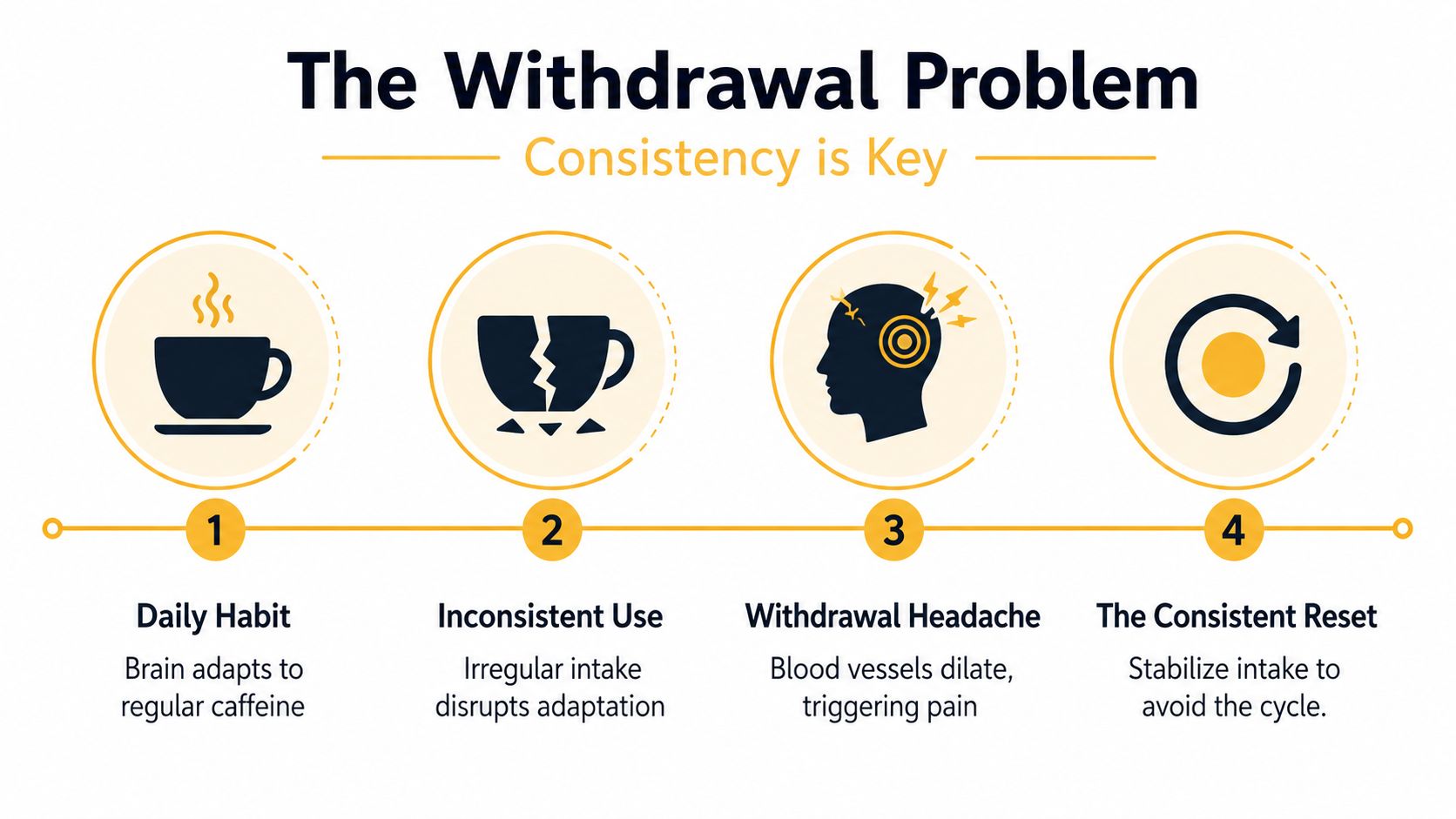
A caffeine change can therefore look like a food trigger, a sleep trigger, or a random migraine flare. Before deciding caffeine is your personal trigger, ask whether your intake varies with workdays, weekends, travel, illness, or migraine-related nausea.
A Practical Framework for Caffeine and Migraine
You don't need to make a dramatic decision during an active migraine. Start by making your caffeine pattern visible, then change one variable at a time.
For people with episodic migraine, the American Migraine Foundation says doctors often recommend moderation, commonly one or two beverages per day or about 200 mg total, because small amounts may help pain while larger or inconsistent intake can raise attack risk. Review the American Migraine Foundation's caffeine guidance
Build a steadier routine
If you choose to keep caffeine, morning use may be easier to evaluate because later caffeine can disrupt sleep, and poor sleep can influence migraine vulnerability. Keep the amount and timing as similar as practical on workdays and non-workdays. If you want to reduce or stop, discuss a gradual approach with a healthcare provider rather than making an abrupt change.
Watch for caffeine that doesn't arrive in a coffee mug. Energy drinks, pre-workout supplements, chocolate, tea, soda, and some pain relievers can all contribute to your total. Read labels and record the product, because serving sizes and caffeine content vary.
Caffeine may potentiate common acute treatments, including aspirin, acetaminophen, ibuprofen, naproxen, and some prescription migraine medicines. That can be useful in a clinician-designed plan, but it can also make it easier to overlook total acute-treatment use. Frequent use of acute medicines, including caffeine-containing products, can raise concern for medication-overuse headache, particularly when used beyond 10 to 15 days per month. This threshold varies by medication type and should be reviewed with a clinician.
Compare common interactions
| Medication | Caffeine interaction | Risk note |
|---|---|---|
| Aspirin | May strengthen analgesic effects in combination products | Count caffeine from the product alongside beverages |
| Acetaminophen | Caffeine-containing combinations may improve acute efficacy | Don't assume a drink and a combination product are interchangeable |
| Ibuprofen | Caffeine may add pain-relieving benefit | Repeated acute use can contribute to medication-overuse concerns |
| Naproxen | May be taken within some individualized treatment plans | Ask a clinician about your total treatment frequency |
| Triptans | The evidence for adding caffeine is limited and context-dependent | Get individualized guidance rather than experimenting during frequent attacks |
Your caffeine plan should also fit your broader health picture. People with heart rhythm concerns, anxiety, pregnancy, sleep disorders, or medication interactions may need different guidance. For general information about the app publisher, you can review Relief's background and purpose, but tracking tools aren't a substitute for medical care.
Testing Caffeine as Your Own Variable
A migraine diary becomes more useful when it records caffeine with the same precision you use for symptoms. You don't need a perfect experiment, but you do need a repeatable pattern that separates caffeine from coincidence.
Start with a one-week baseline. Log every caffeinated product, the time you consumed it, the estimated milligrams if the label provides them, and whether migraine symptoms began afterward. Also record sleep duration, meal timing, hydration, stress, acute treatments, and menstrual-cycle phase if relevant to your experience.

A repeatable tracking plan
During weeks two and three, choose one approach with clinician input. You might hold caffeine completely steady, including timing and approximate amount, or eliminate it entirely. Keeping the other variables as stable as possible makes the comparison more informative. If stopping caffeine causes significant symptoms, don't force the experiment alone.
In week four, return to the original pattern only if that feels medically appropriate. Reproducibility matters. If the same pattern appears again after a comparable change, it deserves more attention than a single attack after an unusual day.
Track the details that help distinguish a trigger from a confounder:
- Caffeine amount: Record beverages, supplements, chocolate, and caffeine-containing analgesics.
- Timing: Note when caffeine occurred relative to aura, prodrome, pain, nausea, photophobia, and postdrome.
- Sleep: Log both duration and whether your schedule changed.
- Cycle phase: Include this if hormonal changes affect your migraine pattern.
- Treatment use: Record what you used for the attack and whether symptoms returned.
Patterns worth discussing with a clinician include attacks clustering 12 to 24 hours after a caffeine change, headaches appearing mainly on weekends after weekday use, or symptoms that rise as intake increases. These patterns still don't prove causation, but they give you a clearer question to investigate.
A tool such as Migraine Buddy, Omef, or another comparable tracker can help organize the record. You can also use Relief's migraine tracking app to log caffeine alongside symptoms and other possible influences. The purpose isn't to blame yourself for an attack. It's to reduce guesswork when your nervous system is already giving you inconsistent signals.
Red Flags and When to Call a Clinician
Caffeine experiments belong only in the routine-management category. Some headaches need urgent medical evaluation, regardless of whether caffeine was involved.
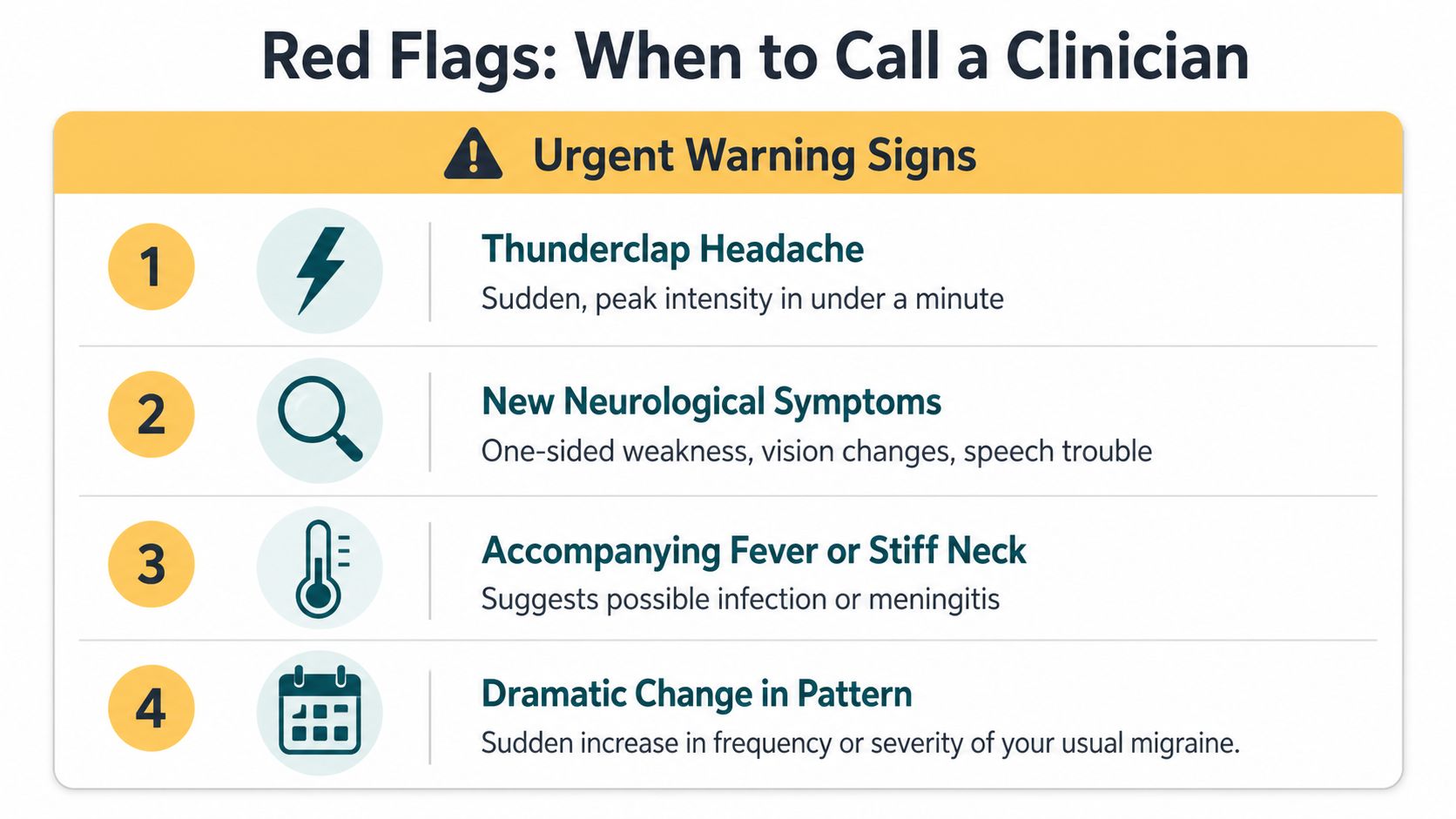
Seek immediate medical care for a sudden, severe headache that reaches peak intensity within minutes. Also seek urgent help for a headache accompanied by new neurological symptoms, such as one-sided weakness, facial drooping, slurred speech, vision loss, confusion, or a seizure.
Other warning signs include headache after a head injury, fever with a stiff neck, a new headache pattern after age 50, or headaches that worsen during pregnancy or occur with unexplained weight loss. A sudden increase in the frequency or severity of your usual migraine also deserves prompt clinical attention rather than a self-directed caffeine reset.
When routine care still matters
Even without an emergency sign, make an appointment if attacks are becoming more frequent despite steadier caffeine use, you're relying on analgesics more often, or you suspect medication-overuse headache. A clinician can also help you assess caffeine alongside triptans, ergotamines, or preventive treatments such as propranolol and topiramate.
Bring a simple record of your usual caffeine sources, timing, symptom stages, sleep pattern, and acute-treatment use. Ask whether your current caffeine pattern could be contributing to withdrawal, whether reducing it is appropriate, and how caffeine-containing products fit into your treatment plan.
This article is for informational purposes and is not medical advice. Consult a healthcare provider for personalized guidance. For information about data handling when you use a tracking service, review Relief's privacy information.
Relief helps you log caffeine timing, symptoms, medications, sleep-related context, and potential environmental influences so you can look for patterns instead of relying on memory. Visit Relief to start tracking your migraine pattern and see whether consistency changes what caffeine means for you.


