
Is your diet a migraine trigger, or are you blaming the wrong meal? That question trips up a lot of people, especially when a migraine attack seems to show up after dinner, dessert, or a drink with friends. The short answer is yes, some foods can trigger migraines for some people, but there isn't one universal "bad foods" list that applies to everyone.
The foods most often linked with migraine include aged cheeses, processed meats, alcohol, chocolate, and foods containing MSG. Research also points toward broader patterns around processed, aged, fermented, canned, and highly preserved foods. At the same time, migraine is not just a headache. It's a neurologic condition that can involve aura, nausea, photophobia (light sensitivity), phonophobia (sound sensitivity), and a postdrome phase where you feel wrung out even after the pain eases.
What helps most isn't guessing harder. It's tracking more clearly. If you can connect what you ate, how much you ate, and when symptoms started, you have a much better shot at separating a true food trigger from a cofactor like dehydration, skipped meals, stress, poor sleep, or caffeine withdrawal. That's where a structured log, including a tool like Relief, becomes more useful than another generic avoidance list.
Table of Contents
1. Aged and Fermented Cheeses
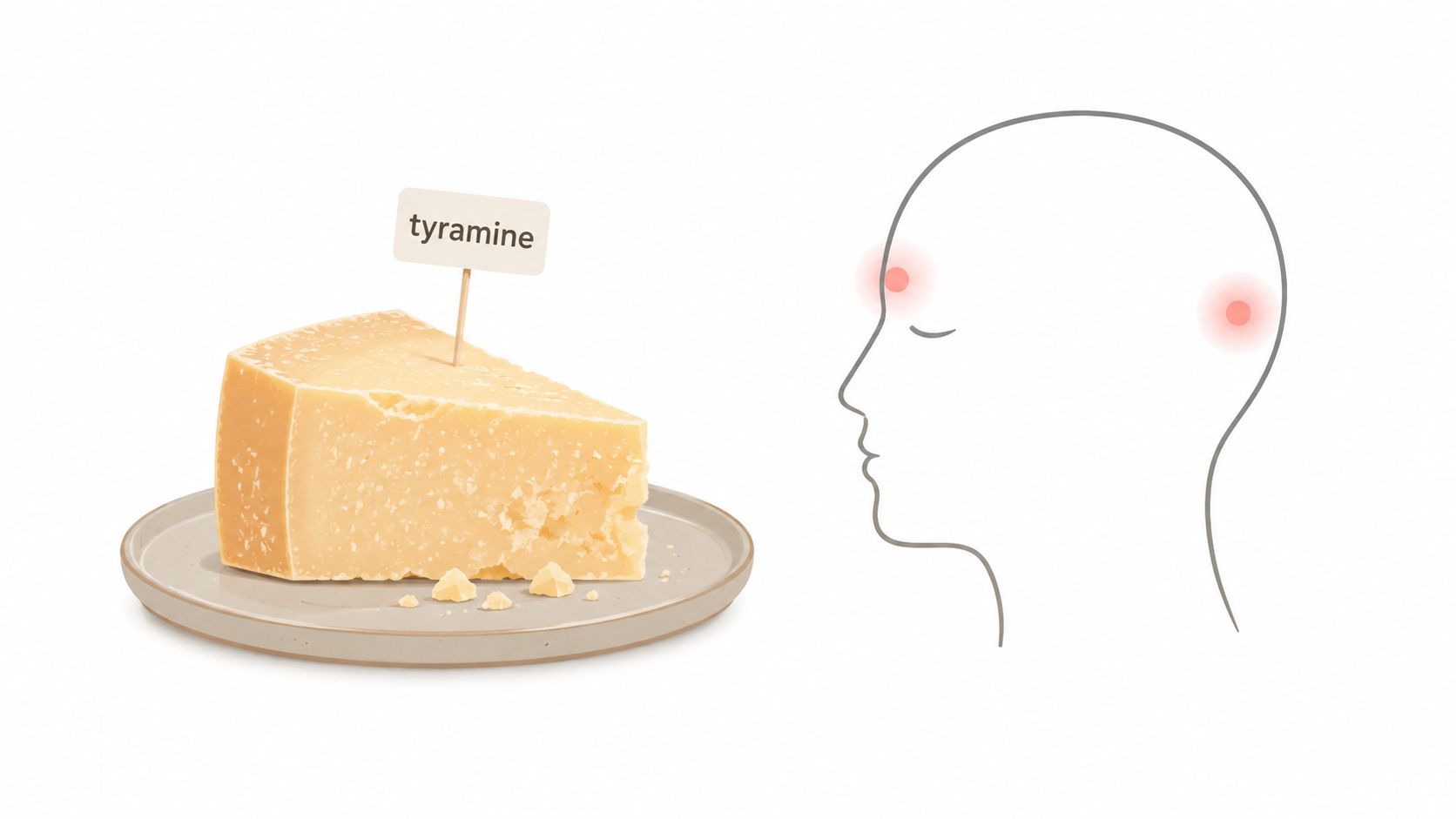
Could cheese be a trigger for you, or is it just showing up in meals that already stack the odds against you? That question matters because aged cheese is a common suspect, but the useful answer is rarely "avoid all cheese forever."
Aged and fermented cheeses come up often in migraine tracking because they contain compounds such as tyramine that may trigger attacks in some people. The key phrase is some people. In practice, I see much more progress when people test specific cheeses, amounts, and meal contexts instead of treating all dairy as one category.
Parmesan, aged gouda, blue cheese, cheddar, feta, gorgonzola. These foods often appear in otherwise ordinary meals, so exposure is easy to miss. A salad can have a small amount of blue cheese. Pasta can include parmesan at the table and in the sauce. A snack board can combine aged cheese with cured meat, alcohol, and a late meal, which makes the trigger harder to sort out.
Why this category needs careful tracking
Cheese reactions are often dose-dependent and type-specific. Fresh cheeses such as ricotta, cream cheese, cottage cheese, and fresh mozzarella may sit very differently than older, more fermented varieties.
That is why generic notes like "had dairy" usually do not help much.
Practical rule: Record the exact cheese and the rough amount.
A better log entry looks like "2 tablespoons parmesan on pasta at 7 p.m." than "Italian dinner." That level of detail gives you something you can test later. It also helps you separate cheese from nearby confounders such as processed meat, restaurant seasoning, missed meals, poor sleep, or alcohol.
If you use a tracking tool like Relief, this is one of the easiest categories to test well. Keep the meal as similar as possible, change only the cheese variable, and log timing and symptoms consistently for a few exposures. The goal is not to prove that cheese is bad. The goal is to learn whether a specific cheese, in a specific dose, is a repeatable trigger for you.
A practical way to start:
- Log the exact type: parmesan and fresh mozzarella should not be lumped together.
- Log the amount: a sprinkle on soup is different from a cheese-heavy sandwich or pasta dish.
- Log the setting: restaurant meal, packaged food, or home-cooked meal can change the picture.
- Log the time to symptoms: some people notice symptoms later the same day, while others notice a next-day pattern.
Broad restriction usually backfires. Start narrow, test aged cheeses first, and keep the rest of your routine as steady as you can. That gives you cleaner data and a better chance of keeping foods you tolerate.
2. Processed and Cured Meats
Processed meats are tricky because they rarely show up alone. Bacon at brunch, pepperoni on pizza, deli meat in a rushed lunch, sausage in a frozen breakfast sandwich. One meal can stack several possible migraine triggers at once.
As noted earlier, cured meats are a reported trigger for some people. The practical problem is that "processed meat" is too broad to test well. Salami, turkey slices, bacon, prosciutto, hot dogs, and pepperoni do not always behave the same way, and the amount matters.
Where this category gets confusing
In real life, the suspected trigger is often mixed into a larger meal. A sandwich may include aged cheese, restaurant bread, skipped hydration, and a stressful workday. Pizza night may involve pepperoni, alcohol, a late dinner, and poor sleep. If symptoms show up, you need cleaner notes than "ate out" or "had lunch meat."
A better approach is to change one variable at a time.
If a deli sandwich looks suspicious, keep the bread, toppings, and timing similar and switch from packaged slices to freshly cooked chicken or turkey. If pizza seems to be part of a pattern, compare a plain cheese version with a pepperoni version on separate, otherwise similar days. That kind of comparison gives you something you can learn from.
Restaurant and convenience meals often produce messy data because cured meat, aged cheese, sodium, alcohol, and irregular meal timing can all show up together.
What to log so the pattern is testable:
- Name the exact meat: bacon, salami, deli ham, pepperoni, or sausage.
- Estimate the amount: one strip of bacon is different from a meat-heavy breakfast platter.
- Note fresh versus packaged: that split can matter.
- Record the setting: restaurant, packaged meal, gas station snack, or home-cooked food.
- Track nearby factors: sleep loss, dehydration, travel, alcohol, and missed meals can change the result.
This is a good category for a tracking tool like Relief because it helps you compare repeated exposures instead of relying on memory. The goal is not to build a longer banned-food list. The goal is to find out whether a specific meat, in a specific dose and context, is a repeatable trigger for you.
3. Alcohol (Red Wine, Beer, and Dark Liquors)
Could alcohol be a trigger for you, or is it getting blamed for a cluster of other migraine risks that tend to travel with it?
Alcohol is a common suspect, but it is rarely a clean experiment in real life. A glass of red wine at home with dinner is one exposure. Two beers at a loud event after a missed lunch, poor sleep, and little water is a very different one. That difference matters if you want answers you can use.
Red wine gets the most attention, but beer and dark liquors come up often in migraine logs too. The challenge is that alcohol can be dose-dependent and context-dependent. Some people react to one drink but not half a drink. Others tolerate alcohol with food and water but run into trouble when they drink late, drink dehydrated, or stack it with stress and sleep loss.
A useful test looks for repeatability, not a one-off bad night.
What to record so alcohol patterns are easier to trust:
- The exact drink: cabernet, pinot noir, IPA, lager, bourbon, rum, or champagne
- The amount: half a glass, one cocktail, or several drinks
- Timing: afternoon, with dinner, late night, or spread over hours
- Food and hydration: whether you drank on an empty stomach, ate a full meal, or were already behind on fluids
- Nearby conditions: stress, poor sleep, heat, travel, and hormonal changes
Geisinger notes that food triggers, including alcohol-related ones, typically show up within 24 hours (Geisinger on foods that trigger migraines). That gives you a practical review window. If a drink seems suspicious, compare similar situations instead of avoiding every type of alcohol at once.
For example, if red wine keeps showing up before attacks, test a small serving on a well-hydrated evening with dinner and stable sleep, then compare that with a non-alcohol control night under similar conditions. A tracking tool like Relief helps here because it lets you spot whether the real pattern is red wine itself, the dose, or the combination of alcohol plus dehydration and a late meal.
The goal is a narrower answer than "alcohol is bad for me." The better question is whether a specific drink, in a specific amount and setting, is a consistent trigger for you.
4. Monosodium Glutamate (MSG)
Could MSG be the reason a restaurant meal hits harder than the ingredients suggest?
MSG comes up often in migraine tracking for a reason. Compared with many food suspects, it has a more established reputation as a possible trigger for some people with migraine. The practical takeaway is narrower than "avoid all savory foods." If attacks seem to follow takeout, packaged soups, or heavily seasoned meals, MSG is worth testing carefully instead of guessing.
The pattern is often about context and dose. A small amount in one meal may be fine. A larger exposure, or several MSG-containing foods eaten together, may be the setup that matters.
How to spot MSG in real life
MSG does not only show up in obvious takeout dishes. It can appear in instant noodles, flavored chips, broths, seasoning blends, frozen meals, canned soups, and restaurant sauces. Some labels list monosodium glutamate directly. Others include ingredients that increase the same savory profile, which can make a meal harder to assess if you are not tracking details.
A common example is a lunch that looks fairly ordinary: packaged soup, seasoned crackers, and a savory snack. Any one item might seem harmless. Logged together a few times, that combination can stand out.
Fast symptoms after a savory processed meal deserve a closer look.
What helps most is specific logging:
- Record the exact foods: not just "Asian food" or "snack foods," but ramen, canned tomato soup, ranch-flavored chips, or chicken bouillon
- Note timing: if symptoms start soon after eating, that timing is useful
- Track stacking: several savory packaged foods in one meal may matter more than one item alone
- Compare with a clean control meal: a simple home-cooked meal with plain ingredients gives you a better baseline than vague avoidance
At restaurants, ask whether a dish contains added MSG if the staff can answer clearly. At home, check labels on broths, seasoning packets, soup bases, and flavored snacks. Then look for repeatability in your log. Relief is useful here because it helps you compare similar meals and see whether the trigger is MSG itself, the amount, or the combination of MSG with other factors such as stress, poor sleep, or missed meals.
That approach usually gets you to a better answer than cutting out every savory food on day one.
5. Caffeine (Both High Intake and Withdrawal)
Could caffeine be helping one day and setting you up for a migraine the next? Yes. That is what makes it one of the harder triggers to sort out.
Caffeine has two different patterns to watch. A high dose can be a problem for some people. Withdrawal can be just as relevant, especially if your usual coffee or tea is delayed, skipped, or cut too fast. In practice, I see consistency matter more often than the drink itself.
A common pattern looks like this: one large coffee on Monday, three on Tuesday, then none on Wednesday because the day gets busy. That swing is often more informative than writing down "coffee."
Here's a quick visual break before the next point:
What consistency looks like
The goal is a repeatable routine you can measure. If caffeine is part of your day, keeping the amount and timing steady usually gives you cleaner data than making big changes based on one rough morning.
Track more than coffee cups. Tea, energy drinks, cola, chocolate, pre-workout powders, and some pain relievers all count. Timing counts too. A missed 8 a.m. coffee can matter even if total caffeine for the day looks similar by evening.
What usually works best is a short testing period with fewer variables:
- Log every source: coffee, tea, soda, energy drinks, chocolate, and caffeine-containing medications
- Record timing: note when you had it, and when a usual dose was delayed or skipped
- Watch the dose pattern: one extra-large drink may affect you differently than the same amount spread across the day
- Reduce slowly if needed: gradual changes make withdrawal easier to spot and easier to tolerate
A tracking tool such as Relief is especially helpful. It helps you compare caffeine amount, timing, and symptom onset across several weeks instead of guessing from memory. That often reveals whether the issue is too much caffeine, inconsistent caffeine, or caffeine combined with poor sleep, stress, dehydration, or a missed meal.
Caffeine does not need a blanket rule for everyone. A stable routine, careful logging, and small adjustments usually give a better answer than quitting abruptly or blaming a single cup.
6. Artificial Sweeteners (Aspartame, Sucralose, and Sugar Alcohols)
Artificial sweeteners are easy to miss because the trigger may not look like a "diet food." It might be gum at your desk, a flavored water after the gym, a protein bar, or a sugar-free cough drop.
This category is also tricky because people often switch to it while making other diet changes. If you start a low-sugar plan and also change caffeine, meal timing, hydration, and sleep, you won't know what mattered.
When labels matter more than the headline food
Diet soda is an obvious place to look. But sweeteners also show up in yogurt drinks, electrolyte mixes, chewing gum, protein powders, sugar-free desserts, and some medications.
If you want a clean test, pick one sweetener-heavy item you use often and remove only that. Keep everything else steady. That gives you a much better signal than trying to overhaul your entire pantry in one weekend.
A practical log entry here should include the product name. "Two sticks of mint gum" is fine. "Sugar-free item" is not very helpful later.
- Check common ingredients: aspartame, sucralose, sorbitol, xylitol, maltitol.
- Notice repeats: the same sweetener may appear in several products on the same day.
- Watch for stomach symptoms too: GI upset can overlap with migraine vulnerability for some people.
This is one of those categories where the packaging matters almost as much as the food.
7. Chocolate (High Theobromine Content)
Chocolate lands on many migraine trigger lists, but it is one of the easiest foods to misread. For some people, it is a genuine trigger. For others, it shows up because the migraine process had already started.
That distinction matters.
Chocolate cravings can be part of prodrome, the early phase before pain fully develops. A person may want chocolate, then get a migraine a few hours later and assume the chocolate caused it. Sometimes the sequence is real. Sometimes the craving was the clue.
If chocolate keeps showing up before attacks, log the craving itself, not just the food.
That gives you a cleaner pattern to review later. In practice, I would want to see timing, portion, and form before calling chocolate the problem.
Chocolate also comes in exposures that are not interchangeable. A small square of milk chocolate is different from a large dark chocolate bar. A brownie adds sugar, flour, and often dairy. Hot cocoa, protein snacks with cacao, and chocolate ice cream can all bring different co-factors with them. Generic avoidance lists miss that nuance.
A better test is specific and boring:
- Record the exact form: dark chocolate, milk chocolate, cocoa powder, dessert, ice cream, or snack bar.
- Note the amount: one bite, one square, a full dessert, or repeated small servings.
- Track timing: especially whether the craving started before you ate it.
- Watch the context: poor sleep, skipped meals, hormonal shifts, and stress can make a food look guilty when it was only along for the ride.
If chocolate is a recurring question, use a tracking tool to test dose and timing instead of cutting it forever based on suspicion. This guide on whether chocolate can cause headaches can help you sort out trigger, prodrome, and coincidence.
8. Citrus Fruits and Citric Acid
Citrus doesn't make every common trigger list, but some people do identify a pattern with oranges, lemons, grapefruit, lime, or foods loaded with citric acid.
This is a good reminder that "foods that can trigger migraines" includes both whole foods and additives. A fresh orange at breakfast is not the same exposure as a brightly flavored packaged drink or sour candy that uses citric acid.
Fresh fruit versus additive exposure
If you suspect citrus, separate the variables. Test fruit and additives differently. Otherwise you'll never know whether the issue was orange juice, a fizzy citrus drink, or the fact that you had it on an empty stomach after poor sleep.
A common real-world example is a "light" breakfast of grapefruit and coffee followed by a midmorning migraine. Was it the grapefruit, the caffeine, the lack of protein, or too little food? You only learn by tightening the log.
Try noting:
- The source: whole fruit, juice, flavored drink, candy, or packaged food.
- The timing: breakfast exposures can overlap with fasting and caffeine.
- The pairing: citrus plus alcohol or citrus plus missed meals can muddy the picture.
This category tends to require patience. Some people find no link at all. Others discover that citric acid additives bother them more than fresh fruit.
9. High Sodium and High Histamine Foods
Have you ever looked back at a migraine day and realized dinner included takeout, soy sauce, leftovers, and something cured or pickled? This category creates a lot of false leads because the exposures often show up together.
High-sodium and histamine-rich foods tend to cluster in real meals. Restaurant ramen, pizza with cured meat, a deli sandwich with pickles, smoked fish, canned soup, or a tomato-heavy pasta with parmesan can stack several possible triggers at once. The challenge is not memorizing a long avoidance list. The challenge is separating one repeatable pattern from a noisy meal.
Earlier research discussed in this article has linked migraine patterns with foods that are processed, aged, fermented, preserved, or stored for longer periods. That does not mean every salty or histamine-rich food is a problem for every person. Dose, timing, sleep, stress, hydration, and how many trigger categories showed up in the same meal all matter.
What to track instead of guessing
Start with the meal, not the theory. In practice, that usually gets better answers.
If attacks keep following sushi with soy sauce, leftovers after two or three days in the fridge, or convenience meals during travel, log the full context:
- How salty the meal was: restaurant food, packaged meals, broth-based dishes, sauces, and processed toppings
- How aged or stored the food was: fermented ingredients, cured meats, smoked fish, older leftovers
- What appeared together: tomato sauce, cheese, deli meat, pickles, alcohol, or missed water intake
- Whether the portion was larger than usual: some triggers are dose-dependent, not all-or-nothing
I see people get stuck when they cut out "histamine foods" broadly and still have attacks because the actual pattern was takeout plus dehydration plus a late meal. A tighter log is usually more useful than a stricter diet.
If you want a practical framework for building meals while you test patterns, this migraine diet plan guide gives you a steadier starting point without assuming you need to avoid everything in this category.
10. Skipped Meals and Dehydration (Dietary Patterns as Triggers)
Not every food-triggered migraine is really about a food. Sometimes it's about the absence of one. Skipped meals and dehydration are common migraine triggers in real life, and they're easy to overlook because they don't feel like "diet triggers" in the same way wine or cheese does.
People often want to know if a food caused this attack, when the bigger issue may have been going too long without eating, delaying breakfast, drinking coffee without enough water, or having alcohol on top of low hydration.
The pattern to watch
The classic day looks ordinary. You're busy, miss breakfast, grab coffee, eat lunch late, and realize by afternoon that you're thirsty and headachy. By evening, a full migraine attack lands.
What helps most here is routine. Not a perfect meal plan. Just fewer extremes.
- Protect your first meal: eating regularly can reduce the confusion created by fasting plus caffeine.
- Log hydration with context: travel, heat, alcohol, and exercise can change your needs.
- Notice timing gaps: attacks after long stretches without food are important clues.
If you're trying to build a steadier routine, ReliefMigraine's article on a migraine diet plan is a practical place to start.
Migraine Triggers: 10-Food Comparison
| Trigger | Implementation complexity 🔄 | Resource requirements ⚡ | Expected outcomes ⭐📊 | Ideal use cases 💡 | Key advantages ⭐ |
|---|---|---|---|---|---|
| Aged and Fermented Cheeses | Low–Moderate: easy to identify but often present in mixed dishes | Low: label checks, choose fresh-cheese substitutes, log consumption | ⭐⭐⭐ (High), elimination frequently reduces attacks in sensitive people | Users with suspected tyramine sensitivity; app users logging food onset | Clear cause-effect; simple substitutions; fast to test |
| Processed and Cured Meats | Moderate–High: common hidden ingredients and restaurant use | Moderate: label scrutiny, request modifications, choose fresh meats | ⭐⭐⭐⭐ (Very High), strong, repeatable trigger for many | Frequent deli/pizza consumers; those tracking nitrates/tyramine | Obvious labeling; nitrate-free alternatives available |
| Alcohol (Red Wine, Beer, Dark Liquors) | Moderate: multiple beverage types and dose-dependent effects; social factors | Low–Moderate: limit/avoid, hydrate, log type/amount | ⭐⭐⭐⭐ (Very High), strong correlation for many users | Social drinkers or those reporting attacks after drinking | Immediate feedback; easy to test by type and amount |
| Monosodium Glutamate (MSG) | High: often hidden under many ingredient names; restaurant use | Moderate: label literacy, explicit restaurant requests, home cooking | ⭐⭐⭐ (High), sudden, dose-dependent attacks in sensitive individuals | Regular consumers of Asian cuisine or processed foods | Once identified, avoidance is straightforward and confirmatory |
| Caffeine (Intake and Withdrawal) | High: dual mechanism (intake vs withdrawal); requires pattern control | Moderate–High: track all sources, maintain consistency or taper slowly | ⭐⭐–⭐⭐⭐ (Medium–High), effective with careful management; withdrawal risk if abrupt | People with variable caffeine use or frequent withdrawal episodes | Measurable; moderate intake can help some; clear taper strategies |
| Artificial Sweeteners (Aspartame, Sucralose, Sugar Alcohols) | Moderate: hidden in many "diet" products and meds | Low–Moderate: label checks, swap to alternatives, short elimination trial | ⭐⭐ (Medium), benefits for sensitive individuals after elimination | Users of diet products or frequent consumers of sugar-free items | Easily avoidable once identified; elimination diet confirms sensitivity |
| Chocolate (Theobromine, Phenylethylamine) | Low–Moderate: identifiable but cravings and mixed ingredients complicate | Low: limit dark chocolate, try substitutions, log type/amount | ⭐⭐–⭐⭐⭐ (Medium–High), reduction helps many, especially with dark chocolate | Those reporting attacks after sweets or dark chocolate consumption | Simple testing by eliminating dark chocolate; rapid feedback |
| Citrus Fruits and Citric Acid | Low: fresh citrus obvious, but citric acid additive is ubiquitous | Low–Moderate: avoid fresh juice/label-check processed foods | ⭐ (Low–Medium), affects a subset; outcomes variable | Individuals noticing attacks after citrus or citrus-flavored drinks | Easy to trial elimination; simple to log and monitor |
| High Sodium and High Histamine Foods | High: histamine overlaps many food groups; sodium is widespread | Moderate–High: broad diet changes, label checks, possible medical testing | ⭐⭐ (Medium), can help salt-sensitive or histamine-intolerant patients | Those with BP sensitivity, frequent fermented/aged food intake | Sodium reduction improves overall health; patterns detectable with tracking |
| Skipped Meals and Dehydration (Dietary Patterns) | Low: behaviorally simple but adherence can be challenging | Low: establish meal/hydration routines; use app reminders and logging | ⭐⭐⭐⭐ (High), consistent meals and hydration often prevent attacks | Busy schedules, irregular eaters, travelers, shift workers | Highly controllable; significant preventive potential; easy to monitor |
Turn Your Food Log into a Powerful Migraine Prevention Tool
Finding foods that can trigger migraines isn't about building a fear-based diet. It's about improving your signal. More random restriction isn't typically helpful. Better pattern recognition is what's required.
The biggest mistake I see is treating every attack after a meal as proof. Migraine timing is messy. Prodrome can include cravings. A same-day attack may relate to stress, skipped meals, poor sleep, alcohol, weather, or caffeine withdrawal instead of the lunch you just ate. That's why a log beats memory almost every time.
A useful log is specific. Write down the food, the amount, the time, and the context. "Pasta at 8 p.m." isn't enough. "Pasta with parmesan and red wine after skipping lunch" is much more useful. Over time, that level of detail helps you separate single-ingredient triggers from high-risk combinations.
If you want to test a food, keep the experiment narrow. Remove one likely trigger for a few weeks, then reintroduce it and watch the response. Broad elimination plans can become exhausting fast, and they often create more confusion if you change ten variables at once. A cleaner approach is slower, but it's more realistic and usually more informative.
Also remember that common doesn't mean certain. Alcohol, chocolate, MSG, aged cheeses, processed meats, canned foods, and preserved foods all show up in research and in real-world tracking. But your migraine pattern may point somewhere less obvious, like meal timing, leftovers, or repeated small exposures that only become a problem when sleep or stress is off.
This is also the point where medical support matters. If attacks are frequent, severe, changing, or difficult to interpret, talk with a healthcare provider. Seek immediate medical care for red-flag symptoms such as a sudden severe headache, headache with fever or stiff neck, new neurological changes like weakness, numbness, confusion, trouble speaking, or a headache after a head injury.
This article is for informational purposes and is not medical advice. Consult a healthcare provider for personalized guidance.
If you want to turn food tracking into something you can use, Relief helps you log meals, symptoms, and triggers quickly, then compare them with your migraine history so the patterns become clearer over time.


