Scientific evidence for chocolate as a major migraine trigger is surprisingly weak in the general population. In a 2020 review of 25 studies, reported trigger rates ranged from 1.3% to 33%, one electronic-diary study found chocolate in less than 1.5% of attacks, and the review concluded there is insufficient evidence to recommend routine avoidance of chocolate for migraine patients (review of chocolate and migraine studies).
You eat a piece of chocolate, then later a migraine attack builds, and your brain makes the connection instantly. That reaction makes sense. When you live with migraine, you learn to scan everything you did, ate, drank, or felt, looking for the thing that set it off.
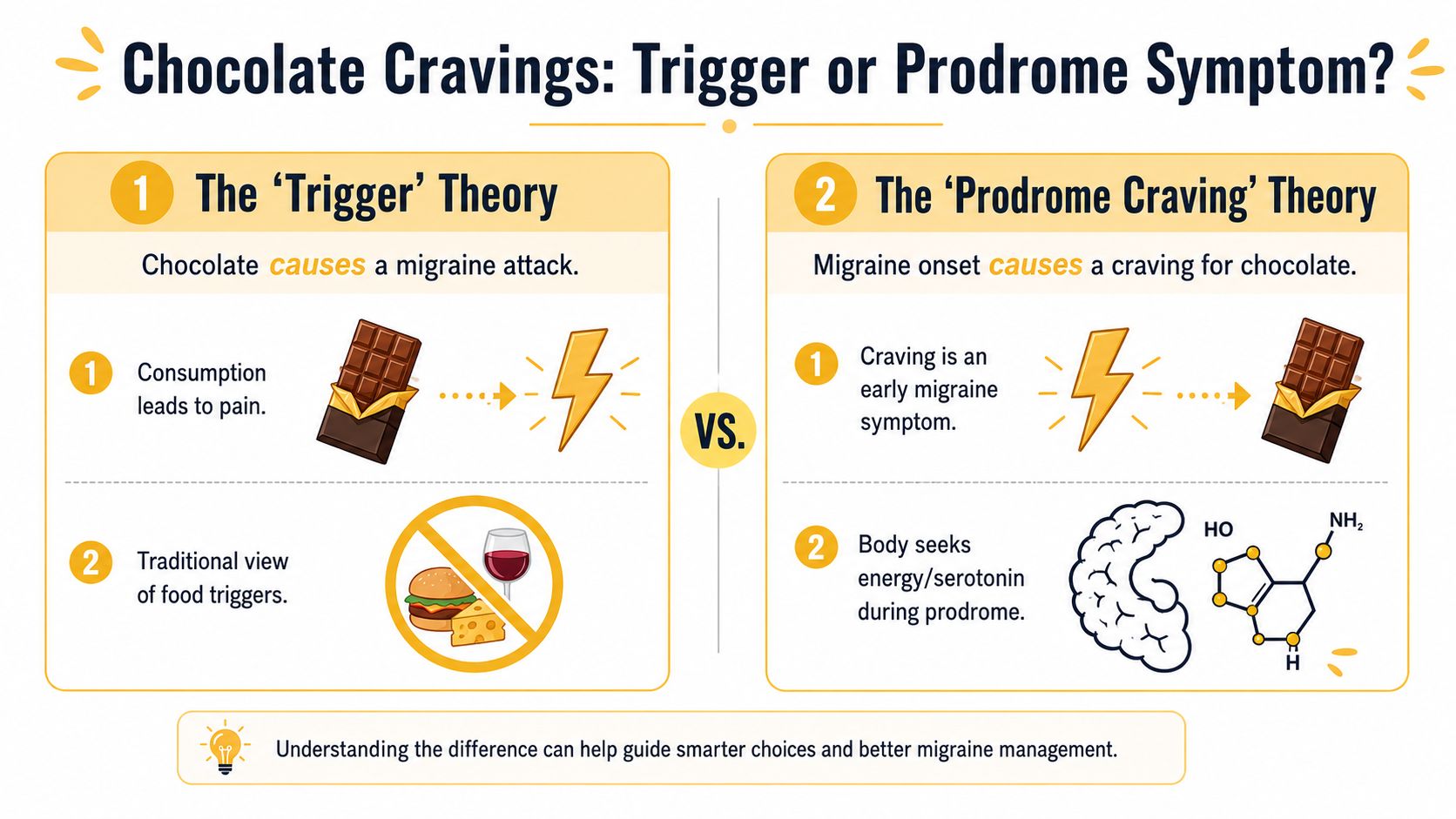
But with chocolate, the story often gets flipped. What feels like a trigger could be a clue. Craving sweets can show up in the prodrome, the early phase of a migraine attack before the head pain becomes obvious. So the more useful question often isn't “Did chocolate cause this?” It's “Was my migraine already starting, and was the craving part of it?”
That shift matters because fear around food can make life smaller than it needs to be. If you've been avoiding chocolate out of caution, or feeling guilty every time you eat it, you deserve a clearer and more practical way to figure out what's true for your body.
This article is for informational purposes and is not medical advice. Consult a healthcare provider for personalized guidance.
Table of Contents
That Moment of Fear After the First Bite
You finally sit down at the end of a long day. Maybe it's one square of dark chocolate after dinner, or a handful of chocolate chips while cleaning the kitchen. Then the thought lands fast: Was that a mistake?
A lot of people with migraine know this exact moment. Not because they're careless, but because they've been taught to treat chocolate like a known threat. Friends mention it. Articles repeat it. Sometimes even well-meaning clinicians list it alongside other “common triggers,” and the message sticks.
Why this fear feels so convincing
Migraine pushes you to become a detective. That's understandable. When an attack brings nausea, light sensitivity, sound sensitivity, head pain, brain fog, or aura, you want something concrete to blame.
The problem is timing. Migraine doesn't begin only when the pain starts. The attack can begin earlier, with subtle changes that are easy to miss in real time.
Important shift: If you crave chocolate before a migraine, the craving may be part of the attack itself, not proof that chocolate caused it.
That doesn't mean chocolate can never matter. For some people, it may still be a genuine personal trigger. But assuming it's guilty every time can create a cycle of fear, restriction, and second-guessing.
Headache and migraine are not the same
This point trips people up all the time. A headache is a symptom. Migraine is a neurological disease that can include head pain, but also symptoms such as aura, prodrome, nausea, dizziness, neck stiffness, and postdrome fatigue.
So if you get a “headache from chocolate,” the question to ask is narrower and more useful:
| Question | Why it matters |
|---|---|
| Was this a migraine attack or a non-migraine headache? | The same food may seem connected to one type of pain but not another. |
| Did symptoms start before I ate the chocolate? | Early migraine symptoms can be mistaken for triggers. |
| Was anything else happening that day? | Sleep disruption, stress, skipped meals, hormonal changes, and weather may overlap. |
You don't need to solve that in your head from memory. You just need a better way to observe the pattern.
What Does the Science Say About Chocolate and Migraines
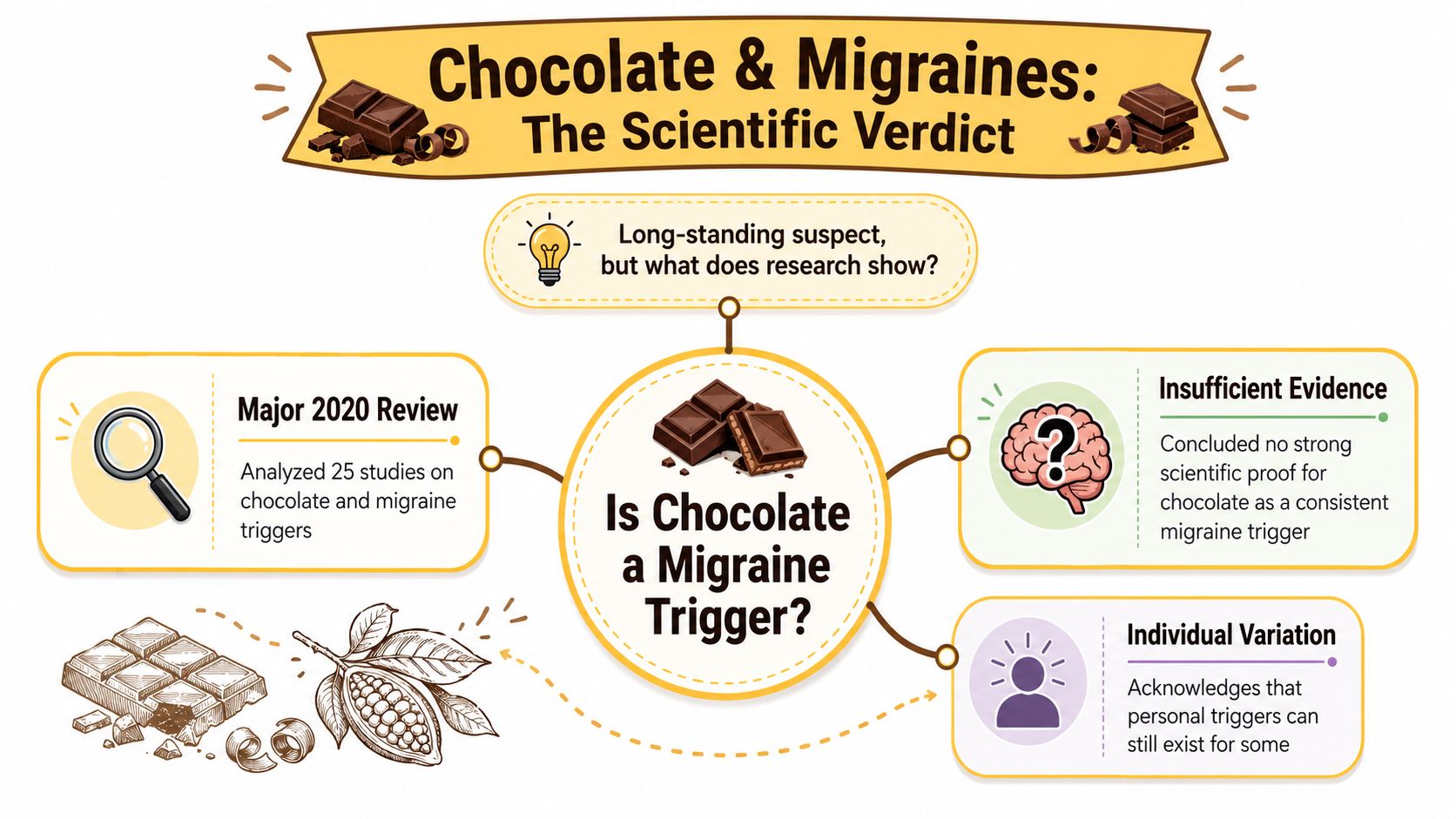
Research gives chocolate a much weaker case than its reputation suggests.
Across studies, chocolate shows up as a suspected trigger for some people, but the evidence does not support treating it as a standard migraine trigger that everyone should avoid. That distinction matters. A possible personal trigger is very different from a universal rule.
Why chocolate got blamed
Chocolate is easy to remember. It is sweet, specific, and often eaten in emotionally loaded moments, after a bad night of sleep, during stress, around hormonal shifts, or when you want comfort. Those same conditions can also line up with migraine risk.
That makes chocolate a bit like the friend who always seems to be present when something goes wrong. Presence is not proof.
Self-report adds another layer of confusion. If you already suspect chocolate, your brain is more likely to notice it, remember it, and connect it to the attack that followed. Meanwhile, less memorable factors such as poor sleep, a delayed meal, neck pain, or a changing schedule are easier to miss.
For a broader look at how several factors can stack together on the same day, ReliefMigraine explains this well in its article on what causes migraine headaches.
What stronger studies found
The practical takeaway is simple. Routine chocolate avoidance is not well supported by the research.
That does not clear chocolate for every person. It means the better question is individual: does chocolate predict attacks for you, under consistent conditions, or is it showing up near an attack for another reason?
This is the part many people skip. They move from “chocolate was nearby” to “chocolate caused it,” even though migraine attacks often build in stages and involve several overlapping influences. If a craving pulls you toward chocolate during the early part of an attack, chocolate can look guilty while the migraine process was already underway.
So the science points away from blanket food fear and toward careful observation. Chocolate may matter for a small subset of people. For many others, the more useful explanation is timing, context, and a brain that was already changing before the headache phase became obvious.
The Chicken or the Egg Cravings in the Migraine Prodrome
The most counterintuitive explanation is often the most useful one. You may crave chocolate because a migraine attack has already started.
That early stage is called the prodrome. It's the phase that can happen before head pain becomes obvious. People describe changes in energy, mood, concentration, appetite, neck discomfort, and sensory sensitivity. If you don't recognize prodrome, it's easy to mistake one of its symptoms for the trigger.
What prodrome means
Prodrome is migraine's early warning period. For some people it's subtle. For others it's obvious once they learn the pattern.
You might notice:
- Food cravings for sweets or specific comfort foods
- Neck stiffness that seems random at first
- Fatigue or yawning out of proportion to your day
- Mood changes such as irritability or feeling flat
- Trouble focusing before the pain phase
If chocolate shows up during that window, it can look guilty even when it's just present at the scene.
A good next step is learning your early warning signs in more detail. ReliefMigraine has a helpful guide on migraine warning signs.
Why expectation can distort trigger stories
A 1997 double-blind provocative study published in Cephalalgia tested chocolate against carob in 63 women with migraine, tension-type headache, or both, and found that chocolate was not more likely to provoke headache than carob in any diagnostic group. The result also did not depend on whether participants already believed chocolate was a trigger, which suggests expectation bias can shape perceptions of “chocolate headache” (double-blind chocolate vs carob study).
That study is powerful because it separates belief from biology more cleanly than everyday life can. If people think chocolate is dangerous, they may connect it to attacks more readily. That's a normal human pattern, not a personal failure.
Sometimes the craving comes first because the migraine comes first.
Once you understand that, the question changes. You stop asking only, “What did I eat?” and start asking, “What symptoms were already unfolding before I ate it?”
That question usually leads to better answers.
How to Run Your Personal Chocolate Experiment
If you want to know whether chocolate is a true trigger for you, casual guesswork won't get you there. You need a simple, repeatable test that reduces noise.
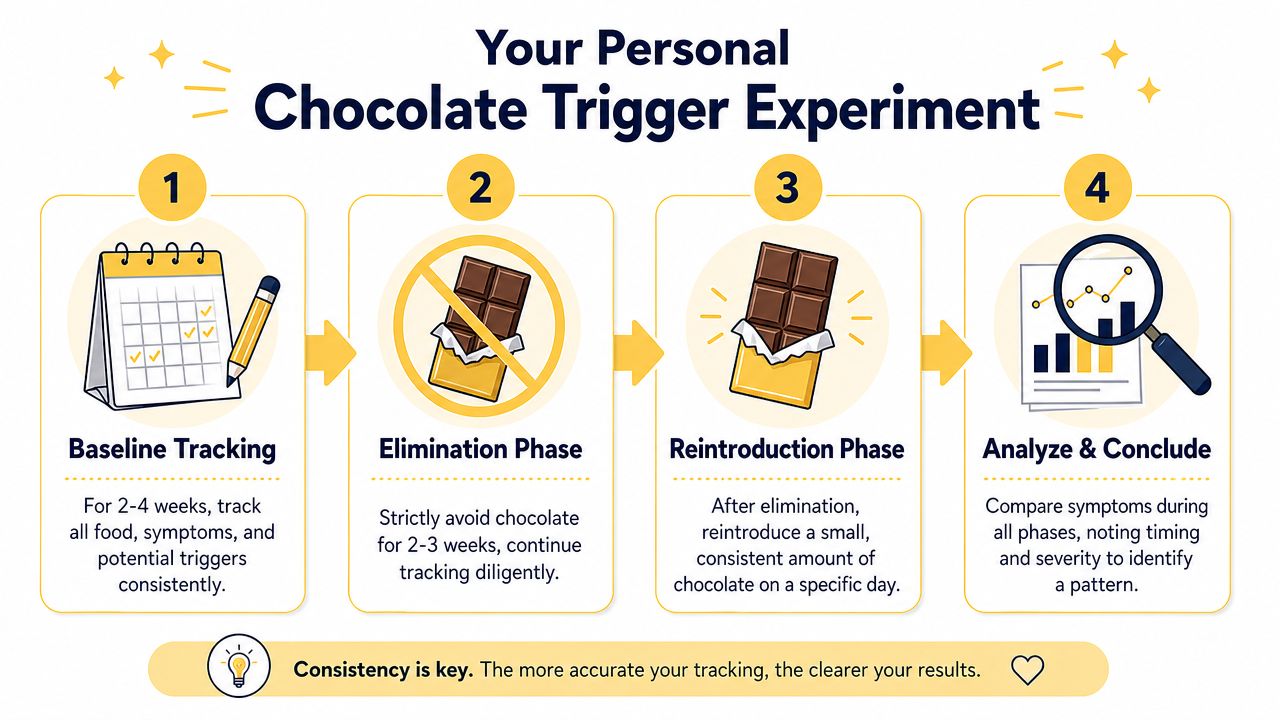
Start with the visual overview, then use the written steps below.
Set up a fair test
The goal isn't perfection. It's fairness. You want to make it easier to tell whether chocolate is associated with attacks when other variables are as steady as possible.
Track first, don't eliminate immediately.
Spend 2 to 4 weeks observing your usual routine. Log chocolate intake, headache or migraine symptoms, sleep, stress, meals, and anything else that seems relevant.Remove chocolate for a defined period.
Try an elimination phase of 2 to 3 weeks. Keep the rest of your routine as consistent as you reasonably can.Don't change everything at once.
If you start a new supplement, change caffeine habits, improve sleep dramatically, and eliminate chocolate all in the same week, you won't know what mattered.Choose a low-noise reintroduction day.
Re-test on a day when you feel stable, you've eaten normally, and you aren't already noticing prodrome symptoms.
Here's a practical walkthrough if video works better for you:
What to log after reintroduction
When you bring chocolate back in, be specific. “I had some chocolate” is usually too vague to interpret later.
Use a note like this:
| What to record | Example |
|---|---|
| Type | dark chocolate, milk chocolate, cocoa drink, dessert |
| Amount | a small, consistent portion |
| Time | exact time you ate it |
| Context | meal, stress level, sleep quality, skipped meal or not |
| Symptoms before | neck tightness, craving, irritability, fatigue, aura |
| Symptoms after | head pain, nausea, photophobia, phonophobia, brain fog |
Practical rule: If you already feel “off,” don't use that day as a chocolate test day. You may be catching a migraine in progress.
Repeat the reintroduction more than once if needed. What you're looking for is not a single bad day. You're looking for a repeatable pattern with a similar timing and symptom profile.
A true personal trigger tends to behave consistently. Misattribution tends to behave messily.
Living With Your Results What to Do Next
Once you've run the experiment, your next move becomes much less emotional. You're no longer reacting to fear. You're responding to evidence from your own life.
If chocolate really seems to be a trigger
If a specific form or amount of chocolate repeatedly lines up with migraine attacks in a predictable way, you've learned something valuable. That doesn't mean all chocolate is off the table forever. It may mean your threshold matters, or one type seems more troublesome than another.
Your plan might include:
- Avoiding a specific version rather than banning every chocolate-containing food
- Keeping notes on dose and timing so you understand your threshold
- Reviewing attack treatment options with your clinician, including lifestyle approaches, over-the-counter options, and prescription treatments
If chocolate isn't the problem
This result can be surprisingly emotional. Many people feel relief, then annoyance at how long they've been afraid of the wrong thing.
If your logs suggest cravings are part of prodrome, that's still useful. You've identified an early signal. That can help you rest sooner, adjust your day, use your clinician-approved treatment plan earlier, and stop blaming yourself for eating a food you enjoy.
- Keep the clue if chocolate craving tends to arrive before attacks
- Watch the whole pattern including sleep, skipped meals, stress, hormonal shifts, and sensory changes
- Drop unnecessary restriction if your data doesn't support it
Seek immediate medical care for any red-flag headache, especially a sudden severe thunderclap headache, or a headache with fever, stiff neck, confusion, seizure, double vision, weakness, or after a head injury.
This article is for informational purposes and is not medical advice. Consult a healthcare provider for personalized guidance.
Use Relief to Connect the Dots
Migraine memory is unreliable, especially when you're in pain or recovering. That's where tracking helps most. A consistent log can show whether “headache from chocolate” is a real pattern, a prodrome clue, or just a coincidence that kept repeating in your mind.
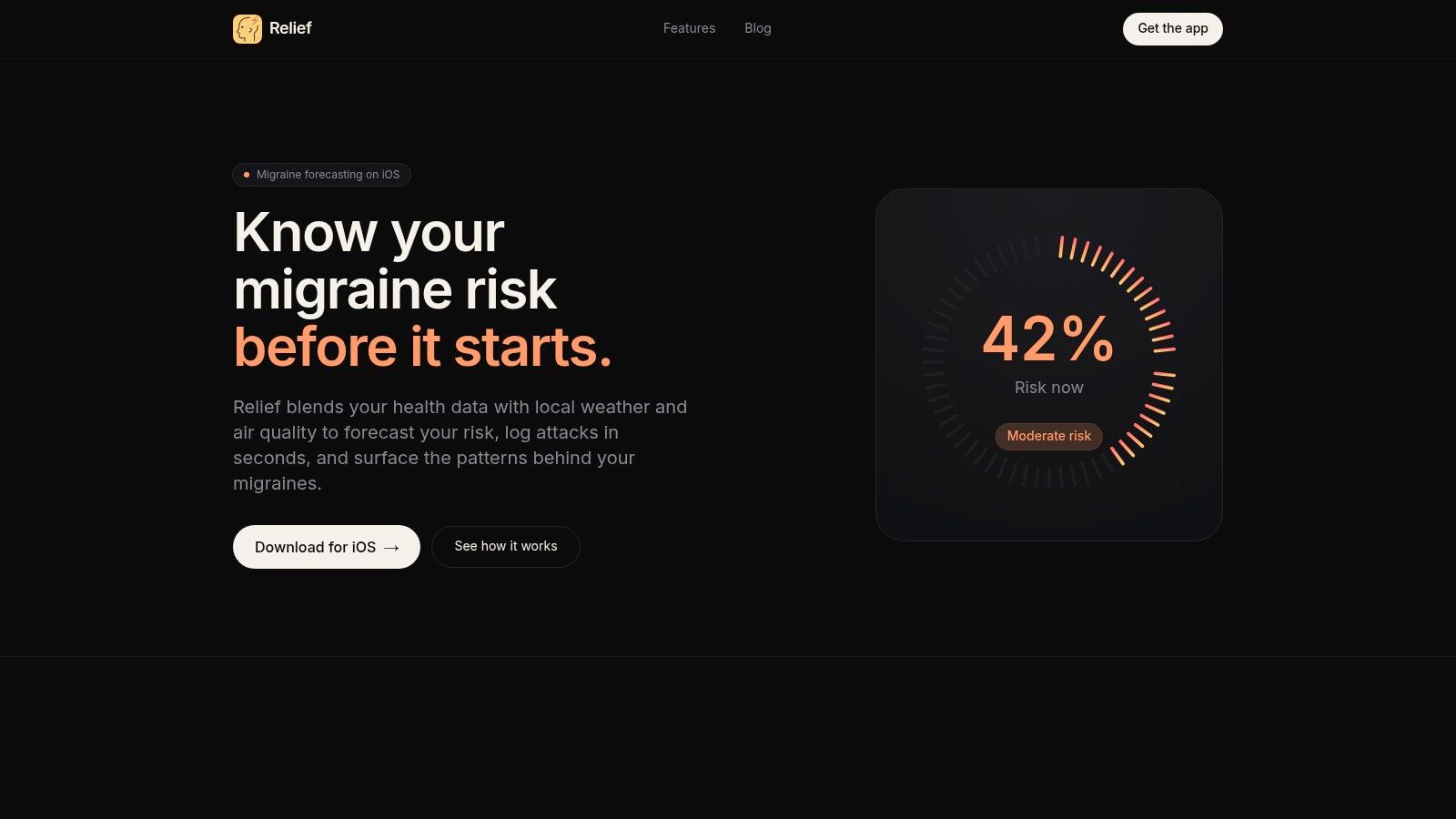
With an app-based record, you can log chocolate intake, attack timing, symptoms, and possible confounders instead of relying on memory. Over time, that makes it easier to compare what happened before the attack, not just what you remember most vividly after it.
If you want a dedicated system for that process, ReliefMigraine explains how a migraine tracking app can support trigger tracking and pattern recognition without turning every meal into a guessing game.
Relief can help you track chocolate, cravings, prodrome symptoms, weather, and attack timing in one place so you can spot patterns with more confidence and less food anxiety. Explore Relief if you want a practical way to turn migraine guesswork into usable data.


