
Have you ever caught yourself feeling off a day before migraine pain starts and wondered whether it means anything?
It often does. Migraine commonly begins before the headache phase, and early changes such as brain fog, irritability, food cravings, fatigue, or sensory sensitivity can be part of the prodrome. Those signs are useful because they give you a window to act instead of waiting for pain to confirm what is happening.
The practical question is not only, "Is this a warning sign?" It is, "What now?" Early recognition helps you make timely decisions about medication, hydration, food, light exposure, work demands, and rest. It also helps you avoid a common mistake I see often. People dismiss the first hints, push through, and lose the easiest chance to reduce the attack's impact.
This guide is built around that next step. For each warning sign, you will see when it tends to show up, what to do right away, and how tracking can help you tell a true pattern from a coincidence. If you want a simple way to spot those patterns, a migraine tracking app that logs symptoms and timing can make the early phase much easier to recognize.
This article is for informational purposes only and is not medical advice. Consult a healthcare professional for personal guidance.
Table of Contents
- Timing: when sleep changes are more likely to matter
- What to do: keep the response simple
- How tracking helps
1. Aura - Visual Disturbances
Have you ever had a flickering patch, zigzag line, or blind spot appear and wondered, "Is this the migraine starting?"
Aura often gives a clearer warning than other migraine signs. Visual aura can show up as shimmering shapes, bright spots, blind spots, distortion, or temporary loss of part of the visual field. Some people also get tingling, numbness, or speech changes along with it. The pattern usually builds and shifts over several minutes instead of staying fixed in one place.
Timing and what it can look like
Timing matters here. Aura tends to come before the headache phase, though it can also overlap with pain or, for some people, happen without much headache at all. The practical point is simple. If your vision starts changing in a familiar way, you may have a short window to act before the rest of the attack gains momentum.
A common example is reading on a screen and noticing a small sparkling area near the edge of vision. Ten minutes later, the patch has widened, words are harder to track, and concentrating takes more effort. That pattern is more useful than the symptom alone. The shape, spread, and timing can help you tell aura apart from general eye strain.
Tracking helps most when you capture the early phase, not just the pain. A dedicated migraine tracking app can help you log when the visual change began, what it looked like, and whether headache, nausea, or light sensitivity followed.
Here's a brief visual explainer if aura is new to you:
What to do right away
Treat aura as actionable information.
Stop visually demanding tasks. Dim the screen. Get out of bright or chaotic environments if you can. If driving feels unsafe or part of your vision is affected, pull over and wait until your vision clears. If your clinician has given you an acute treatment plan, this is usually the time to follow it rather than waiting to see how bad the pain gets.
There is a trade-off here. Some people hesitate because they do not want to over-treat an attack that might stay mild. In practice, waiting often means missing the easiest window to reduce the impact of the episode. If aura is part of your usual pattern, early action is usually more useful than watchful delay.
How tracking helps
Good notes make aura easier to discuss with a clinician and easier to recognize the next time. Keep it brief but specific:
- Start time: Record when the visual symptom began.
- Pattern: Note whether it was zigzag, flashing, shimmering, blurred, or a blind spot.
- Spread: Write down whether it stayed small or moved across part of your vision.
- What followed: Log headache, nausea, sensory sensitivity, or no pain at all.
- What you did: Include medication, rest, screen break, hydration, or stepping away from driving.
If aura is new for you, lasts longer than usual, changes character, affects only one eye, or comes with unusual weakness, confusion, or other neurological symptoms, get medical care promptly.
2. Neck Stiffness and Tension
Could that “stress neck” be one of your earliest migraine clues?
Neck tightness is easy to brush off because it has so many ordinary explanations. Poor sleep, a long desk day, heavy lifting, and stress can all do it. Migraine can too. Clinical references include neck stiffness among prodrome symptoms, and this phase can show up a day or two before the headache pain starts, as noted in Mayo Clinic's migraine symptoms guide.
Timing matters more than the symptom by itself.
If your pattern is a dull pull at the base of the skull in the morning, followed by shoulder tension, lower patience, and then head pain later, that sequence is more useful than asking whether the neck pain is “real” muscle strain or “real” migraine. For many people, it is part of the attack process.
What to do
Treat familiar neck tension as a cue to reduce load early.
Gentle heat, easy range-of-motion work, a brief walk, and a break from screens or static posture are usually reasonable first steps. If your clinician has already given you an acute migraine plan and neck tension is part of your usual lead-up, this is a sensible point to consider it. The trade-off is simple. Waiting may spare you treatment on a day that stays mild, but it can also mean missing your best window to limit the attack.
A few things tend to backfire. Hard stretching, deep tissue work on a very sensitive neck, and intense exercise can increase discomfort when the nervous system is already ramping up.
How tracking helps
Keep your notes short enough that you will use them:
- Timing: When did the stiffness start, and how long before the headache or other symptoms?
- Location: Base of skull, one side of the neck, both sides, shoulders, or trapezius.
- Feel: Tight, pulling, stiff, achy, or tender.
- Context: Sleep disruption, long computer use, stress, weather change, or no clear trigger.
- What helped: Heat, posture change, rest, medication, hydration, or a screen break.
That last part is where patterns become useful. If neck tension appears before several attacks, you can stop treating it like a random annoyance and start treating it like early information.
One safety note matters. Seek urgent medical care for headache with fever and stiff neck, a sudden severe headache, headache after head injury, or headache with confusion, weakness, numbness, or other neurological changes.
3. Mood Changes and Emotional Sensitivity
Could a sudden wave of irritability, anxiety, or feeling oddly flat be your migraine starting before the pain does?
Yes. Mood changes are a recognized part of the prodrome phase, the early stage that can show up before headache, according to the American Migraine Foundation. That matters because emotional shifts are easy to dismiss as stress, hormones, or a hard day. Sometimes they are. But if the same mood pattern keeps showing up before attacks, it is useful information, not overthinking.
A common pattern looks like this: a routine text feels disproportionately upsetting, background noise becomes harder to tolerate, or you feel unusually weepy, restless, or short-tempered for no clear reason. I usually tell patients to focus less on whether the feeling seems justified and more on whether the timing is familiar.
Timing
Mood changes can appear hours before head pain and sometimes before you notice more obvious signs. They also tend to overlap with other early clues such as yawning, food cravings, fatigue, or sensory sensitivity.
That overlap is what makes this sign more actionable.
What to do
Keep the response practical and proportional. You do not need to treat every emotional swing like a migraine emergency, but you also do not need to ignore a pattern that has been reliable for you.
Try this framework:
- Name the mood clearly: Irritable, anxious, low, tearful, wired, or emotionally raw.
- Lower stimulation early: Step away from noisy settings, postpone a nonurgent conflict, dim screens, or take a short quiet break.
- Review your acute plan: If mood change is one of your usual first signs, this may be the point to consider the plan you and your clinician already use.
- Reduce the day's friction: Simplify dinner, move one demanding task, or give yourself more recovery space if attacks often drain you afterward. Planning for the full arc can help, especially if your pattern includes a longer migraine recovery period after the pain phase.
There is a trade-off here. Acting early may help you limit the attack, but acting on every isolated bad mood can lead to overtreating ordinary life stress. Repeated timing is the piece that makes the difference.
How tracking helps
Keep your notes brief enough to use in real life:
- Timing: What time did the mood shift start?
- Type: Irritable, sad, anxious, restless, emotionally sensitive, or flat.
- Intensity: Mild, noticeable, or disruptive.
- Companion signs: Yawning, neck discomfort, appetite change, light sensitivity, trouble focusing.
- What helped: Quiet, food, hydration, rest, medication, canceling plans, or nothing.
After a few entries, patterns usually become easier to trust. If emotional sensitivity shows up before several attacks, you can treat it as an early cue rather than a personality problem.
One clinical note matters here too. If mood symptoms are severe, last beyond your usual migraine pattern, or come with thoughts of self-harm, seek medical or mental health support promptly. Migraine can affect mood, and separate mental health care may still be needed.
4. Fatigue and Energy Depletion
Could a sudden energy crash be one of your earliest migraine cues, not just a busy day catching up with you?
Fatigue in migraine often has a distinct feel. People describe heaviness, brain fog, slowed thinking, or a washed-out feeling that does not match how much they slept or what they have done so far that day. The American Migraine Foundation notes that fatigue can show up before the head pain begins and can also linger after the attack, which is why the drop in energy can feel bigger than the visible headache alone.
Timing matters more than intensity
For some people, the clue is not extreme exhaustion. It is a noticeable shift. You wake up reasonably well, then by late morning everything feels harder than it should. Email takes longer. Simple decisions feel sticky. Your body feels underpowered.
That pattern matters.
If fatigue tends to arrive in the same window before your attacks, treat it as an early warning sign. If it shows up randomly with no other migraine features, it may be ordinary tiredness, poor sleep, dehydration, illness, or too much caffeine rebound. The trade-off is simple. Respond early enough to reduce the load, but do not assume every low-energy day is migraine.
What to do when your energy drops fast
Start with damage control for the rest of the day. Lowering demand early is often more useful than pushing through until your brain forces a stop later.
A practical sequence helps:
- Trim one demanding task: Delay the meeting, shorten the workout, or swap a complicated errand for something easier.
- Cover the basics first: Have water, eat something steady, and take a short break before you decide what the fatigue means.
- Use your treatment plan based on your pattern: If fatigue reliably shows up with your other early signs, this may be the point to follow the plan you and your clinician already use.
- Be careful with caffeine: A small amount helps some people. Chasing fatigue with repeated doses can muddy the picture and create another problem later.
- Plan for the full arc: If your attacks regularly leave you drained after the pain eases, it helps to know what a longer migraine recovery period can look like instead of expecting full energy back right away.
Sudden fatigue is useful information when it repeats in a recognizable pattern.
How tracking helps
Keep the notes simple enough that you will use them:
- Timing: When did the energy drop start?
- Type: Sleepy, heavy, foggy, weak, or unrefreshed.
- Context: Normal sleep, poor sleep, missed meal, hard workout, stressful day.
- Companion signs: Yawning, neck tension, craving food, light sensitivity, trouble concentrating.
- What helped: Rest, food, hydration, medication, caffeine, reducing plans, or nothing.
After a few attacks, the pattern usually gets clearer. You are not just asking, “Was I tired?” You are asking, “Did this tiredness arrive in the same way, at the same time, with the same cluster of signs?” That is the difference between vague symptom spotting and useful early recognition.
5. Sensitivity to Light and Sound
Sometimes the room hasn't changed. Your brain's tolerance has.
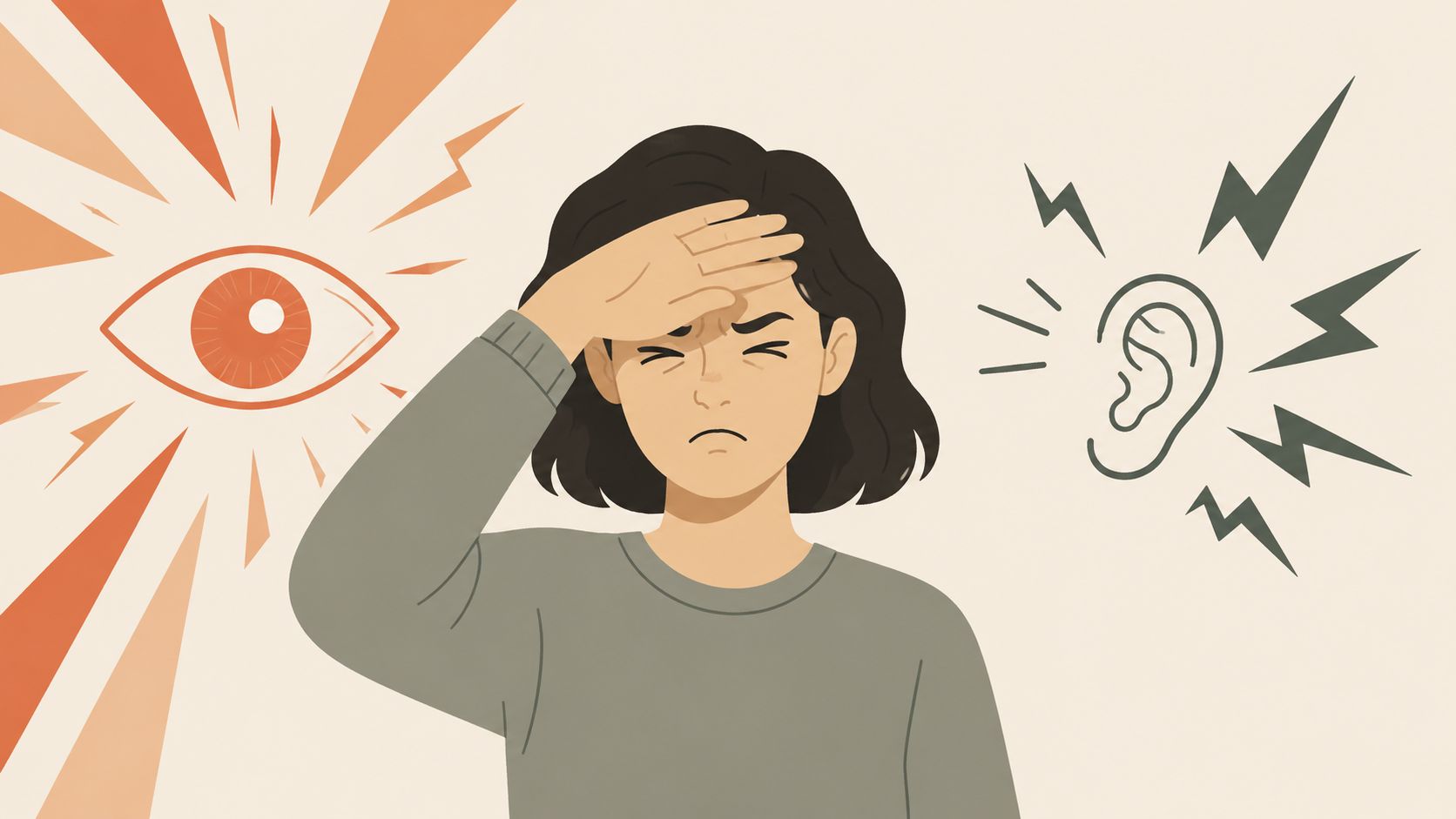
Early sensory overload is useful information
Light sensitivity is called photophobia. Sound sensitivity is called phonophobia. People often associate both with the pain phase, but they can start earlier and warn you that your threshold is dropping.
That may look like fluorescent lights suddenly feeling hostile, regular conversation volume becoming hard to tolerate, or your phone screen seeming much harsher than usual. If these shifts show up before pain for you, they are actionable signs, not background annoyance.
Simple adjustments that lower the load
This is one of the easiest warning signs to respond to quickly because environmental changes are concrete. You don't need to solve the whole attack. You just need to lower the load.
Try a short sequence:
- Change the light first: Dim screens, close blinds, or move away from glare.
- Reduce noise next: Use earplugs, noise-canceling headphones, or a quieter room.
- Cut visual clutter: Pause fast-moving video, multitasking, and rapid screen switching.
- Tell the people around you plainly: “I'm getting light and sound sensitive and need a lower-stimulation space.”
If your attacks seem linked to external conditions, migraine organizations recommend structured diaries that include sleep timing, meals, caffeine or alcohol, mood, weather, menstrual cycle, and lighting or noise exposure. The Migraine Trust also highlights temperature, barometric pressure, and humidity as relevant factors in personal pattern detection in its guidance on common migraine triggers and diary tracking.
That matters because “bright lights trigger me” can be too vague to use. “Office fluorescents plus poor sleep plus afternoon weather changes” is much more useful.
6. Changes in Appetite and Cravings
Do you suddenly want sugar, salt, or a very specific comfort food, then end up with a migraine later that day or the next? That pattern is easy to misread. The food may be part of the early migraine phase rather than the thing that caused it.
The American Migraine Foundation includes food cravings among common prodrome symptoms, along with changes such as yawning, mood shifts, and fatigue in its overview of migraine phases and early warning symptoms. In practice, this matters because repeated cravings can give you useful lead time.
A common example is craving chocolate before an attack. I often tell patients to pause before labeling that as a trigger. If the same urge shows up before pain again and again, the more useful question is: what should you do once you notice it?
Use cravings as a cue, not a verdict
Start with timing. Ask whether the appetite change showed up out of proportion to your usual routine. A sudden urge for sweets at 10 a.m., a skipped-lunch feeling that does not match your hunger pattern, or a strong craving paired with yawning, irritability, or neck discomfort is more informative than the food alone.
Then keep the response simple:
- Eat on schedule if you can: Long gaps without food can make an already sensitive system harder to settle.
- Choose something steady: A balanced meal or snack with protein, carbs, and fluids is often more helpful than chasing the craving alone.
- Notice appetite extremes: Low appetite and strong cravings can both matter.
- Avoid food panic: One craving does not prove you have identified a trigger.
Tracking is what turns this from guesswork into pattern recognition. Log the craving, the time it started, what else was happening in your body, and whether migraine pain followed. If you are trying to sort out whether certain foods are true triggers, prodrome signs, or both, a structured approach like this guide to building a migraine diet plan that focuses on consistency and personal patterns is more useful than cutting random foods.
Sometimes the best takeaway is very ordinary. Your body wanted steadiness, and the craving was the first clue.
A better question than “What food caused this?” is “What showed up first, and what helps me stay more stable once it starts?”
7. Sleep Disturbances and Insomnia
Ever notice that a bad migraine day sometimes starts the night before?
Sleep changes are one of the easier warning signs to dismiss because they can look ordinary. Trouble falling asleep, waking at 4 a.m., restless sleep, vivid dreams, or sleeping longer than usual can all show up before head pain for some people. The useful question is not just “Did I sleep badly?” It is “Was this sleep shift followed by my other usual migraine clues?”
The American Migraine Foundation notes that sleep problems and migraine often affect each other in both directions, which fits what many people see in real life: a vulnerable brain sleeps differently, then the attack becomes clearer later on (American Migraine Foundation on sleep and migraine).
Timing: when sleep changes are more likely to matter
A single rough night is common. A pattern is more informative.
Pay closer attention when the sleep disruption feels unusual for you or arrives with other familiar signs. You might wake earlier than normal and feel keyed up before the day has even started. Or you may sleep extra hours but still wake heavy, foggy, and unrefreshed. If that is followed by neck tension, fatigue, light sensitivity, or appetite changes, the sleep issue may be part of the migraine process rather than a separate problem.
What to do: keep the response simple
The goal is not perfect sleep. The goal is to reduce stress on an already sensitive system.
A practical response often looks like this:
- Keep your schedule as steady as possible: Big swings in bedtime and wake time can make the next 24 hours harder to predict.
- Lower the input at night: Dim lights, reduce screens, and skip the late push to finish one more task.
- Name the pattern clearly: Trouble falling asleep, frequent waking, early waking, sleeping late, vivid dreams. These are not interchangeable.
- Adjust the next day if you can: If poor sleep is one of your early warning signs, protect hydration, regular meals, and a lower-demand schedule.
There is a trade-off here. Extra sleep can help some people. For others, trying to catch up with a long sleep-in leaves the day feeling more unstable. That is why the pattern matters more than general sleep advice.
How tracking helps
Sleep tracking is most useful when it stays specific. Log what changed, when it happened, how rested you felt on waking, and what symptoms followed. Over time, this helps separate “I had insomnia” from “insomnia tends to be my first migraine warning sign.”
That distinction changes what you do next. If sleep disruption reliably shows up early in your attacks, you can treat it as a cue to simplify the next several hours rather than waiting for pain to confirm it.
Sometimes the first warning sign is that your night did not feel like your usual night.
8. Muscle Aches and Body Pain
Some migraine attacks start with a whole-body signal rather than a head signal. Achy shoulders, sore back, heavy legs, or a flu-like body discomfort can all show up before the headache phase for some people.
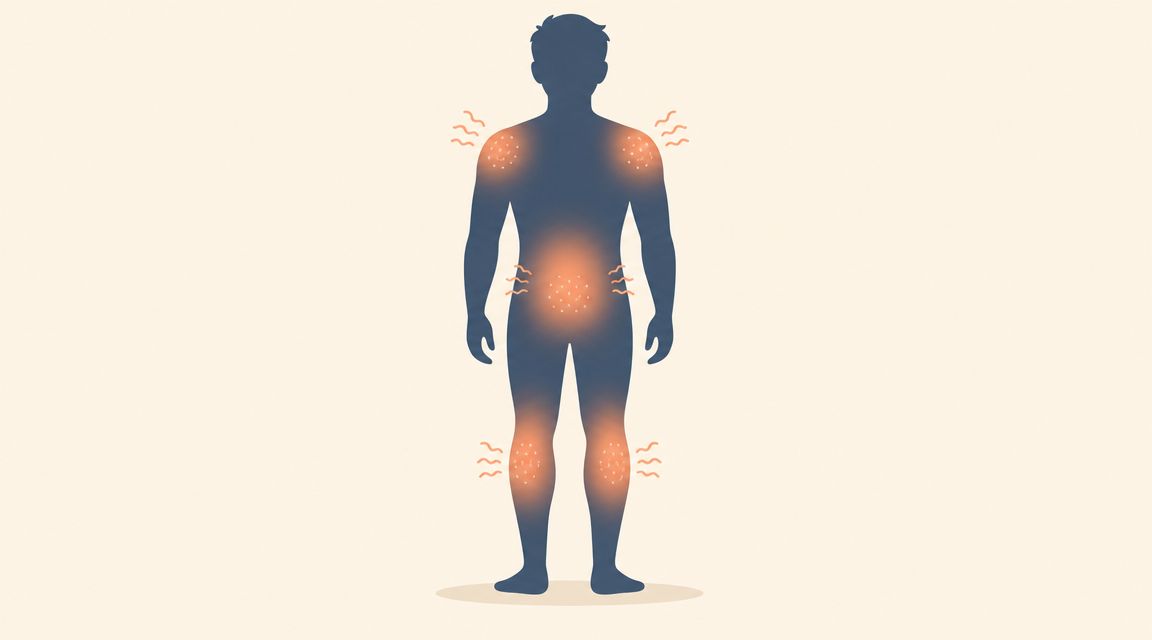
When body pain may be part of migraine
This one gets overlooked because it sounds nonspecific. But if your body aches tend to arrive with other familiar signs, they may belong to the same attack pattern rather than being random soreness.
One person might notice sore shoulders and upper back tenderness the day before pain starts. Another may describe an all-over heavy, achy feeling that doesn't match exercise, illness, or injury. The clue is consistency.
How tracking helps separate patterns from coincidence
Weather can complicate this picture because body pain and migraine triggers can both shift with environmental changes. Mainstream guidance acknowledges weather changes and barometric pressure as common migraine triggers, and one report summarized a Japanese study in which three out of four migraine sufferers reported onset with a drop in barometric pressure in Ivanhoe's discussion of migraine warning signs and weather.
That doesn't mean weather is always the answer. It means weather may be one layer worth testing against your own symptom timing.
A useful log for body pain includes:
- Where it hurts: Neck, shoulders, back, jaw, legs.
- How it feels: Tight, sore, heavy, throbbing, tender.
- What else is present: Fatigue, cravings, mood change, sleep disruption, light sensitivity.
- What happened outside your body: Workload, movement, hydration, and weather shifts.
When body aches repeat in the same sequence before migraine, you stop treating them like noise. You start treating them like an early signal.
Comparison of 8 Migraine Warning Signs
| Item | Complexity (🔄) | Resources / Effort (⚡) | Expected outcomes (📊⭐) | Ideal use cases (💡) | Key advantages (⭐) |
|---|---|---|---|---|---|
| Aura - Visual Disturbances | Low, distinct, stereotyped visuals | Minimal, self-observation & quick logging ⚡ | High predictability; short 20–60 min warning; ⭐⭐⭐ | Immediate pre-emptive meds, move to dark/quiet space | Most reliable early warning; highly actionable |
| Neck Stiffness and Tension | Moderate, subjective but observable patterns | Low–moderate, self-ratings, ergonomic checks, stretches ⚡ | Good lead time (24–48 h); variable specificity; ⭐⭐ | Prepare ergonomic fixes, PT, preemptive stretching | Extended preparation window; easy to self-treat |
| Mood Changes and Emotional Sensitivity | Moderate–high, subjective, variable | Low, daily check-ins, possible external validation ⚡ | 12–24 h warning; individualized patterns; ⭐⭐ | Reduce workload, schedule rest, alert caregivers | Personalizable signal that prompts behavior change |
| Fatigue and Energy Depletion | Low, common and easily recognized | Minimal, daily energy ratings, sleep/activity logging ⚡ | Very common (up to 80%); 12–24 h warning; ⭐⭐⭐ | Prioritize rest, reduce activity, adjust hydration | Highly prevalent and reliable for pattern detection |
| Sensitivity to Light and Sound | Low, overt and hard to ignore | Minimal, note exposures, adjust environment ⚡ | Short lead (2–6 h); strong immediate action value; ⭐⭐ | Rapid environmental adjustments (dim lights, ear protection) | Easily measurable and directly actionable |
| Changes in Appetite and Cravings | Moderate, variable directions (increase or loss) | Moderate, food/hydration logging, timestamps ⚡ | 12–24 h warning; inconsistent across individuals; ⭐⭐ | Nutritional stabilization, timed meals, hydration | Objectively trackable via food logs; actionable interventions |
| Sleep Disturbances and Insomnia | Moderate, multiple causes complicate interpretation | Moderate, sleep logs or wearables recommended ⚡ | 24–48 h warning; objectively measurable with devices; ⭐⭐ | Implement sleep hygiene, timed interventions, meds if needed | Measurable and addressable; offers extended warning window |
| Muscle Aches and Body Pain | Moderate, diffuse, may mimic other causes | Low–moderate, pain ratings, activity/hydration tracking ⚡ | 24–48 h warning; moderately specific when patterned; ⭐⭐ | Gentle movement, heat therapy, reduce exertion | Objective location/intensity tracking; motivates protective care |
From Warning Signs to Proactive Management
What do you do once you notice a warning sign?
The answer is not to monitor yourself constantly. It is to recognize your usual pattern early enough to make a better decision. Migraine often develops in stages, and those early changes can give you time to act before the attack becomes harder to manage.
That is the practical value of this article's framework. For each warning sign, ask three questions. When does it tend to show up. What action helps right then. How does tracking make the pattern clearer over time. That shift turns a symptom from something you endure into information you can use.
A visual aura may mean it is time to stop driving, reduce screen exposure, and follow the treatment plan you already have. Neck tension may be the point to pause heavy activity, hydrate, use heat, or check whether stress and posture are stacking up. Mood changes, fatigue, food shifts, sleep disruption, or sound sensitivity each have their own trade-offs. Sometimes the right move is to push through a commitment. Sometimes it is smarter to scale back early and protect the rest of the day. People usually do better when that choice is made on purpose instead of in the middle of worsening symptoms.
Tracking is what makes those decisions more accurate. Memory tends to flatten migraine into "I got a headache," but the sequence matters. What came first, how long it lasted, what you did next, and whether that helped are the details that turn a rough guess into a plan you can repeat. Even a short note in your phone is often enough if you record it close to the moment.
Keep red flags separate from your familiar migraine pattern. Get urgent medical care for a sudden severe headache, headache with fever or stiff neck, headache after head injury, or headache with new neurological symptoms such as weakness, numbness, confusion, double vision, or seizure-like activity. A known history of migraine does not rule out something else.
Start with the first sign, not just the pain. That one habit can make migraine feel less unpredictable.
If you want a simple way to connect early symptoms with weather, daily habits, and attack timing, Relief can help you log what happens before a migraine and spot patterns sooner.
If you want a simpler way to connect early symptoms with weather, daily habits, and attack timing, Relief can help you track what happens before a migraine so you can recognize your own warning signs sooner.


