If your partner, friend, or family member has just disappeared into a dark room, you may be wondering how to help someone with migraines without making things worse. Start by lowering light, noise, smells, and demands. Offer their usual treatment and water if they want it, then stay calm, use short questions, and let them control how much contact they need.
Migraine isn't “just a headache.” It's a neurological condition that can disrupt work, school, relationships, and ordinary household routines. Current estimates place worldwide migraine prevalence at 14% to 15%, affecting more than 1 billion people, and migraine accounts for 4.9% of global years lived with disability. It's also the leading cause of years lived with disability among people aged 15 to 49, according to a large-scale global burden analysis of migraine.
This article is for informational purposes and is not medical advice. Consult a healthcare provider for personalized guidance.
Table of Contents
- Prodrome can look like a personality change
- Aura needs calm observation
- The headache phase brings sensory overload
- Postdrome is still part of the attack
Understanding the Caregiver Role in Migraine Support
Dinner is half-served. The overhead light is still on. Your loved one has gone quiet, pressed a hand against their temple, and retreated to the bedroom. You want to solve the problem, so you offer water, suggest fresh air, ask whether they've eaten, and mention a remedy you saw online.
That instinct is understandable. It can also overwhelm someone whose nervous system is already struggling with pain, nausea, light sensitivity, sound sensitivity, or difficulty processing language. Your role isn't to cure the attack. Your role is to make the next few minutes easier.
Migraine is a neurological disease, not a character flaw, an excuse, or a failure to cope. Expert commentary on communication and caregiver involvement in migraine care highlights a practical gap: caregivers often receive little guidance about what to do during an attack, even though migraine can be largely invisible to everyone except the person experiencing it.
Quiet support beats constant problem-solving
Do the useful things without demanding a detailed explanation:
- Dim the room: Turn off overhead lights, close curtains, and reduce screen brightness.
- Take over practical tasks: Handle children, pets, food, phone calls, and household noise where you can.
- Protect their space: Keep visitors away and silence notifications.
- Ask once, then listen: “Do you want the room darker?” is better than a series of open-ended questions.
- Respect different needs: One person may want quiet company. Another may need complete solitude.
A simple message works well: “I'm here. The room is ready. You don't need to explain anything.” Support should reduce the number of decisions the person has to make, not create more.
For more about Relief's purpose and approach to migraine support, see Relief's migraine management information.
Recognizing the Four Phases of a Migraine Attack
A migraine attack can involve much more than the pain phase. The NHS describes four commonly recognized stages: prodrome, aura, the headache phase, and postdrome. Not everyone experiences every phase, and symptoms vary widely among people with episodic, chronic, vestibular, or hemiplegic migraine.
Prodrome can look like a personality change
Prodrome is the early-warning stage before head pain. The person may become unusually tired, irritable, withdrawn, restless, hungry, thirsty, or sensitive to stimulation. Neck stiffness, concentration problems, and changes in mood can also appear.
Don't treat irritability as a personal attack. If you know their usual early signs, help them reduce commitments, prepare their treatment supplies, and move somewhere calmer.
Aura needs calm observation
Aura refers to temporary neurological symptoms that can occur before or during the headache. The NHS lists visual symptoms such as zigzag lines or flashing lights, along with numbness or tingling, among possible aura experiences. Some people also have difficulty speaking or processing information.
Don't ask them to keep explaining what they see or feel. Use short, concrete language, and seek medical help if symptoms are new, unusually severe, or different from their established pattern.
The headache phase brings sensory overload
During the attack phase, pain may occur with nausea, vomiting, and sensitivity to light, sound, or smells. A person who appears unable to tolerate conversation isn't being rude. Their brain may be struggling to process ordinary sensory input.
Lower stimulation first. Offer their established treatment plan, a quiet room, a cool cloth, and water within reach.
Postdrome is still part of the attack
Postdrome is the recovery phase, sometimes called a migraine hangover. Pain may have eased, but exhaustion, brain fog, low mood, dizziness, or sensitivity can remain.
Don't assume the person is ready to resume normal activity because they've stopped rubbing their head. Keep plans flexible, offer simple food if tolerated, and avoid pressuring them to “catch up” immediately.
Immediate Actions to Reduce Pain and Sensory Overload
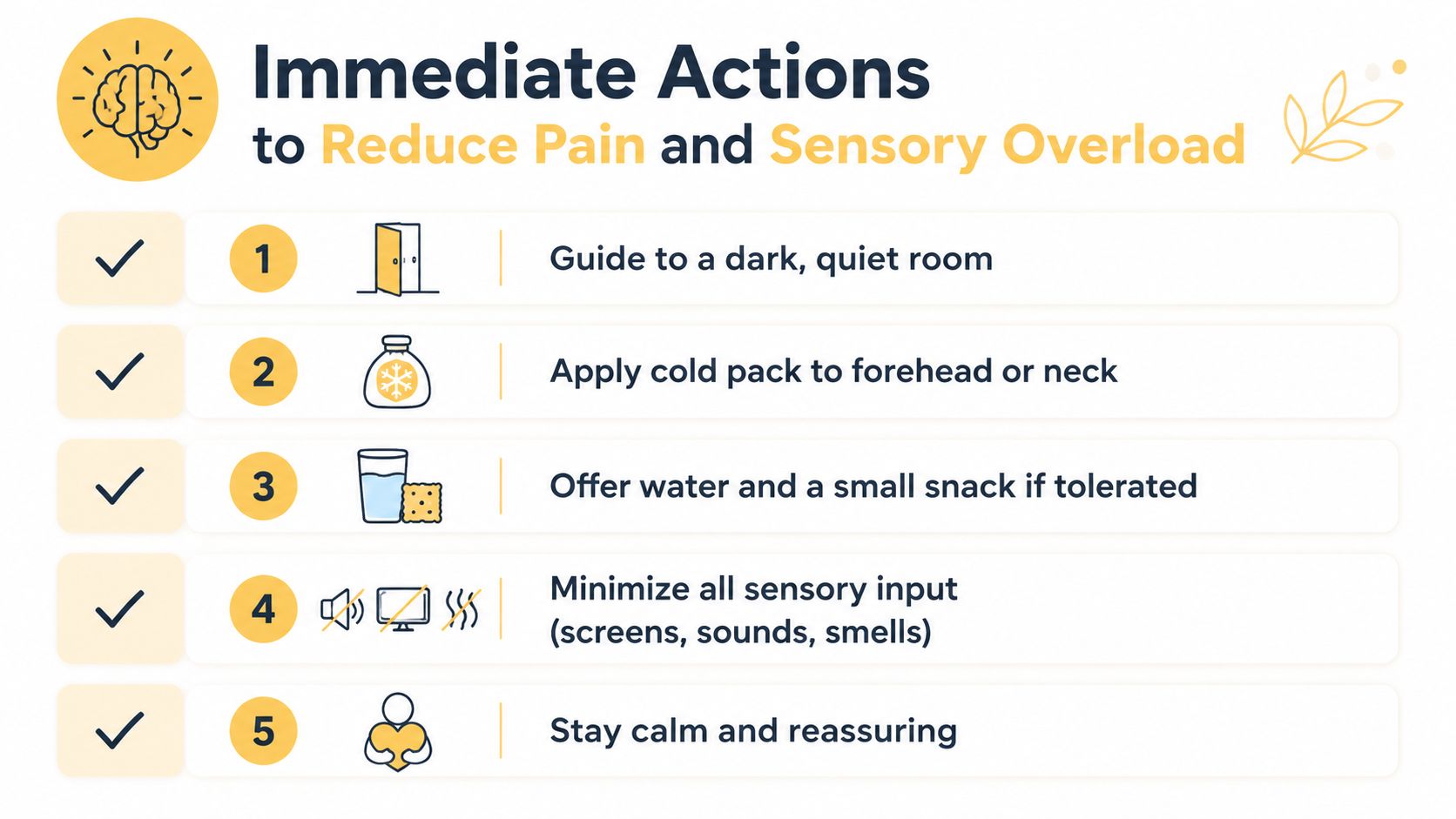
During an active attack, move with purpose but without creating urgency. Mayo Clinic recommends a quiet, darkened room and basic comfort measures for migraine, including rest or sleep, a cool cloth or ice pack on the forehead, and water.
Use this caregiver checklist
- Reduce light immediately. Switch off ceiling lights, close blinds, and remove glowing screens. A sleep mask can help if the room can't be darkened.
- Lower sound and smells. Silence phones, pause music, move pets away, and avoid cooking strong-smelling food nearby. Noise-canceling headphones may help if the person prefers them.
- Prepare a cool compress. Offer a cold cloth or wrapped ice pack for the forehead or neck. Never place ice directly against skin.
- Put fluids within reach. Leave water beside the bed so the person doesn't need to walk or ask. Don't insist if nausea makes drinking difficult.
- Offer a small snack only if tolerated. A light snack may be useful if they feel able to eat, but forcing food can worsen nausea.
- Protect the recovery space. Adjust the temperature if they feel too hot or cold, redirect children, and keep the room free from unnecessary conversation.
The person may want a different approach, including warmth, gentle pressure, or no physical contact at all. Ask before touching their head, neck, or shoulders.
Practical rule: Reduce sensory input before offering more advice. Comfort starts with the environment.
Managing Medication and Treatment Logistics
Acute migraine treatment generally works better when used early, while pain is still mild or within about one hour of onset, according to recent International Headache Society guidance on acute migraine treatment. That doesn't mean you should choose medication or change a treatment plan for someone else. It means a caregiver can remove logistical obstacles.
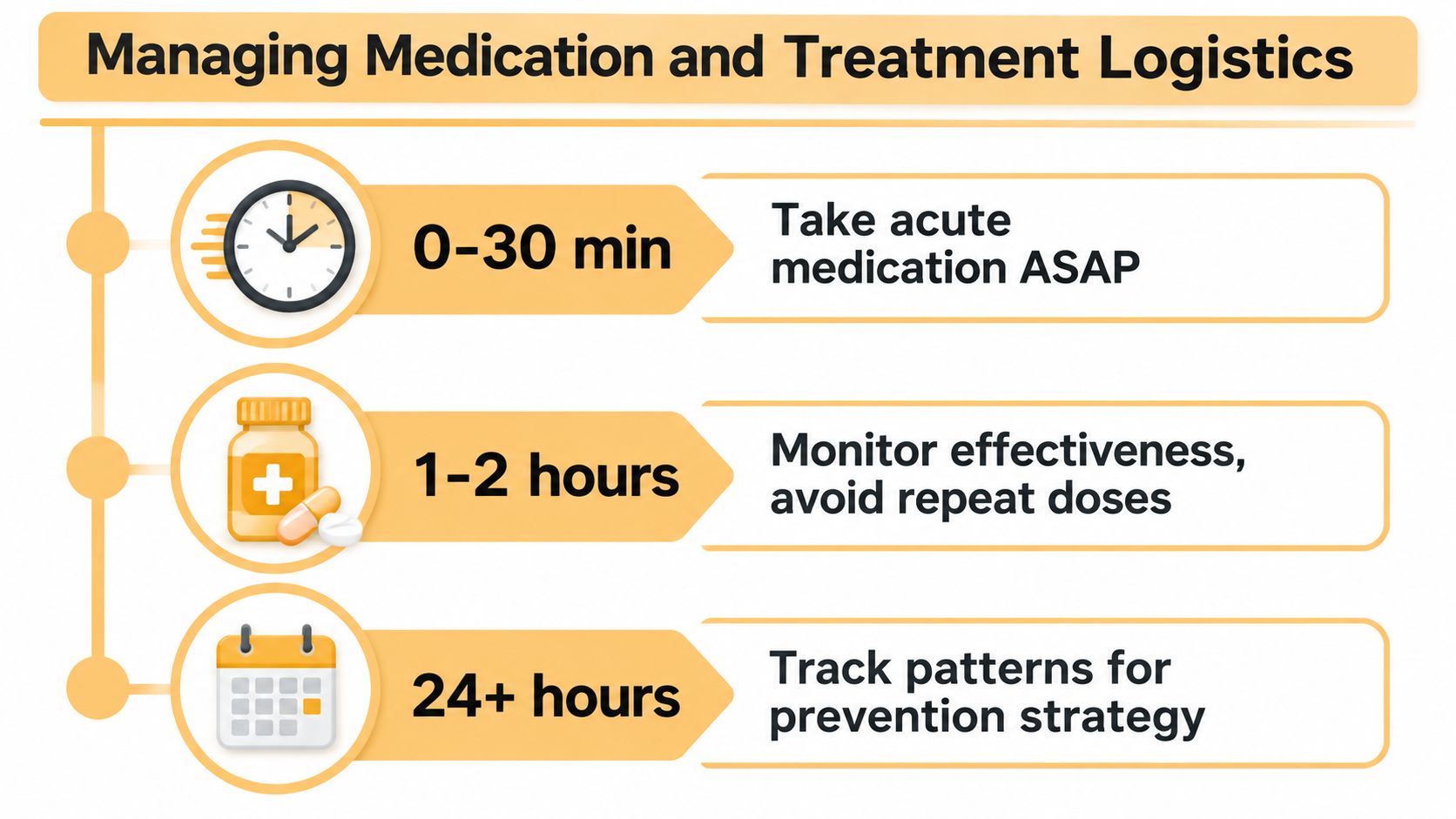
Keep their prescribed medicines and any preferred over-the-counter products in a known place. If they have a clinician-approved plan, you can fetch the medicine, bring water, read the label aloud, or help them record what they've taken. Only administer a nasal spray or injection if they've asked you to and you've been properly instructed.
Separate treatment categories
Migraine education becomes confusing when every treatment is called “pain relief.” Mayo Clinic separates over-the-counter, prescription acute, and preventive migraine treatments, and caregivers should keep those categories distinct:
- Over-the-counter options: Products such as ibuprofen, acetaminophen, and aspirin may be part of someone's clinician-approved plan.
- Prescription acute treatments: These are taken during an attack and may include medicines prescribed specifically for migraine.
- Preventive treatments: These aim to reduce future attacks and aren't substitutes for an acute plan during a current episode.
- Supportive care: Hydration, sensory reduction, rest, and anti-nausea support may accompany medical treatment.
Record the medicine name, time taken, and response in a simple log. This helps prevent accidental duplication and gives the healthcare provider clearer information than memory alone.
Medication overuse can perpetuate headache frequency and make it harder to judge whether a treatment plan is working. Don't police your loved one's medicine. Say, “I've noticed this has been needed more often. Would you like me to help you mention it at your appointment?”
Communication Strategies That Actually Help
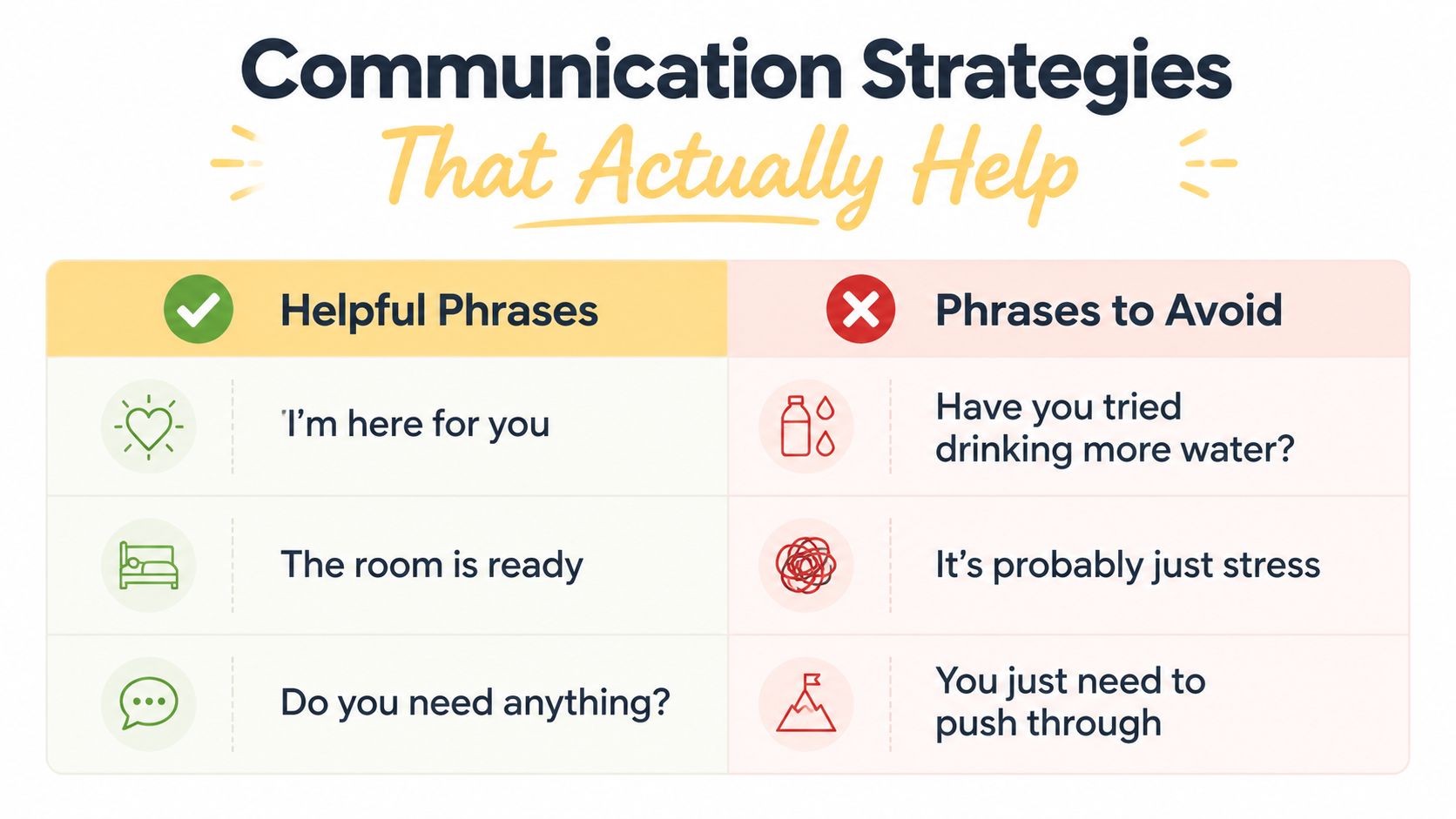
During a migraine, long conversations are a burden. The best caregiver language is short, neutral, and easy to answer with a nod, gesture, or one word.
Try these scripts:
- “Do you want the lights off?”
- “Should I bring your prescribed treatment?”
- “Do you want water nearby?”
- “Do you need quiet or company?”
- “I can handle dinner and the messages.”
Avoid questions that require a medical explanation, such as “What caused this?” or “Why didn't you take something earlier?” Avoid comparisons with ordinary headaches, unsolicited remedies, and comments about willpower.
Validation sounds like: “I can see you're in a lot of pain. I'm here, and you don't need to answer.”
Have the conversation between attacks, not during the worst pain. Ask what helps, what makes symptoms worse, whether they prefer touch or distance, and which tasks you should take over. Agree on a simple signal for “I need help” and another for “I need space.”
Cancelled plans also deserve a respectful response. Say, “I'm disappointed we missed it, but I know you didn't choose this.” Frustration is real, but making the person defend their illness adds shame to an already disabling condition.
Tracking Triggers and Patterns Together
A headache diary turns a vague question, “What keeps causing this?” into a record you can review with a clinician. NHS guidance recommends recording migraine and headache days so treatment response can be reviewed after 12 weeks, while the RightCare toolkit recommends tracking frequency and personal triggers in structured headache diary guidance.
The caregiver can make tracking easier by logging only what matters:
- Attack details: Start time, end time, symptoms, and severity.
- Possible exposures: Sleep disruption, missed meals, weather changes, hormonal changes, stress, fatigue, smells, or foods the person has already identified as relevant.
- Treatment response: What was used, when it was used, and whether symptoms changed.
- Context: Work demands, travel, illness, exercise, or unusual sensory exposure.
Don't declare a food or weather pattern to be a trigger after one attack. A diary-based trigger study indexed by PubMed found that retrospective questionnaires can overestimate or underestimate triggers, while diaries can better separate genuine associations from noise. Some experiences recorded during an attack may be premonitory symptoms, meaning early signs of the migraine rather than causes of it.
Review the record together periodically, without turning it into an audit. Tools such as Relief can support symptom, trigger, and medication logging while combining personal history with environmental information such as weather and air quality.
When to Seek Emergency Medical Care
Home support isn't enough for every headache. Seek immediate medical care for a sudden, severe headache that reaches maximum intensity within seconds, a headache with fever or a stiff neck, new neurological changes such as one-sided weakness or slurred speech, or a headache after a head injury.
Also escalate when the symptoms don't match the person's usual migraine pattern. New aura, unusual visual symptoms, significant balance problems, or weakness require prompt medical assessment rather than assumption that they're “just migraine.”
A severe attack lasting longer than 72 hours despite usual treatment also warrants urgent medical attention. The NHS-linked migraine guidance describes this as a reason to seek urgent help, particularly when dehydration, vomiting, or treatment failure is involved.
Bring or report the person's current medicines, allergies, known migraine pattern, symptom start time, and anything already taken. If emergency symptoms are present, don't drive the person yourself if doing so could delay care. Call emergency services and describe the warning signs clearly.
This article is for informational purposes and is not medical advice. Consult a healthcare provider for personalized guidance.
Relief helps you log attack timing, symptoms, triggers, and medications, then view personal patterns alongside local environmental signals such as weather and air quality. Visit Relief to make shared tracking and earlier planning easier for you and the person you support.


