You're awake at 5 a.m., holding half a bottle of water while pain builds behind one eye. There's ibuprofen in the drawer, an old sumatriptan prescription nearby, and a preventive medication your neurologist mentioned but you haven't started. The right migraine medication option depends first on whether you're treating an attack already underway, preventing future attacks, or managing an attack that hasn't responded to the usual plan.
This article is for informational purposes and is not medical advice. Consult a healthcare provider for personalized guidance.
Table of Contents
- Finding the Right Migraine Medication Option for You
- Migraine Basics You Need Before Choosing Medication
- The main acute classes
Finding the Right Migraine Medication Option for You
Migraine medication choices usually fall into two main categories. Acute, also called abortive, medicines are taken during an attack to reduce or stop symptoms. Preventive medicines are taken on a regular schedule to reduce how often attacks occur, how severe they become, or both. Rescue treatment sits beyond the usual acute plan, for attacks that remain disabling or when standard choices aren't safe or effective. Mayo Clinic's migraine treatment overview describes this same broad separation between acute and preventive care.
That distinction can make the 5 a.m. decision less confusing. If pain has started, you're generally discussing an acute option with your clinician. If attacks keep returning, interfere with work or sleep, or require frequent acute treatment, a preventive conversation may be appropriate. A rescue plan gives you and your clinician another path when the first approach falls short.
Your experience also matters more than a medication's reputation. One person may get useful relief from an over-the-counter anti-inflammatory, while another needs a migraine-specific prescription. Nausea, cardiovascular conditions, pregnancy, asthma, other medicines, and the presence of aura can all affect the safe choices.
Practical rule: Don't judge a medication from memory alone. Record what you took, when you took it, what symptoms changed, and how you felt afterward.
A simple log lets you compare this month with last month instead of relying on a painful, unreliable recollection. The useful question isn't only “Did it work?” It's also “How quickly did it work, did the attack return, could I function, and did side effects create another problem?”
Migraine Basics You Need Before Choosing Medication
Think of an acute medicine as a fire extinguisher. You use it after the fire starts. A preventive is more like fireproofing, because you use it regularly to make future fires less likely or less damaging.
You'll encounter these terms:
- Acute or abortive: A medicine taken during an established attack to reduce pain and related symptoms.
- Rescue: A treatment used when the first acute approach fails, cannot be taken, or isn't suitable.
- Preventive: A medicine taken regularly to reduce future migraine burden.
- OTC: “Over the counter,” meaning available without a prescription.
- Prescription: A medicine selected and monitored with a healthcare professional.
Migraine also has a timeline. Prodrome means subtle warning symptoms that can appear before pain, such as fatigue, mood changes, food cravings, or difficulty concentrating. Aura means a reversible neurological disturbance, often visual, such as shimmering lines or blind spots, though sensory or language changes can occur. Postdrome is the drained, foggy, or sensitive period after the main pain improves.
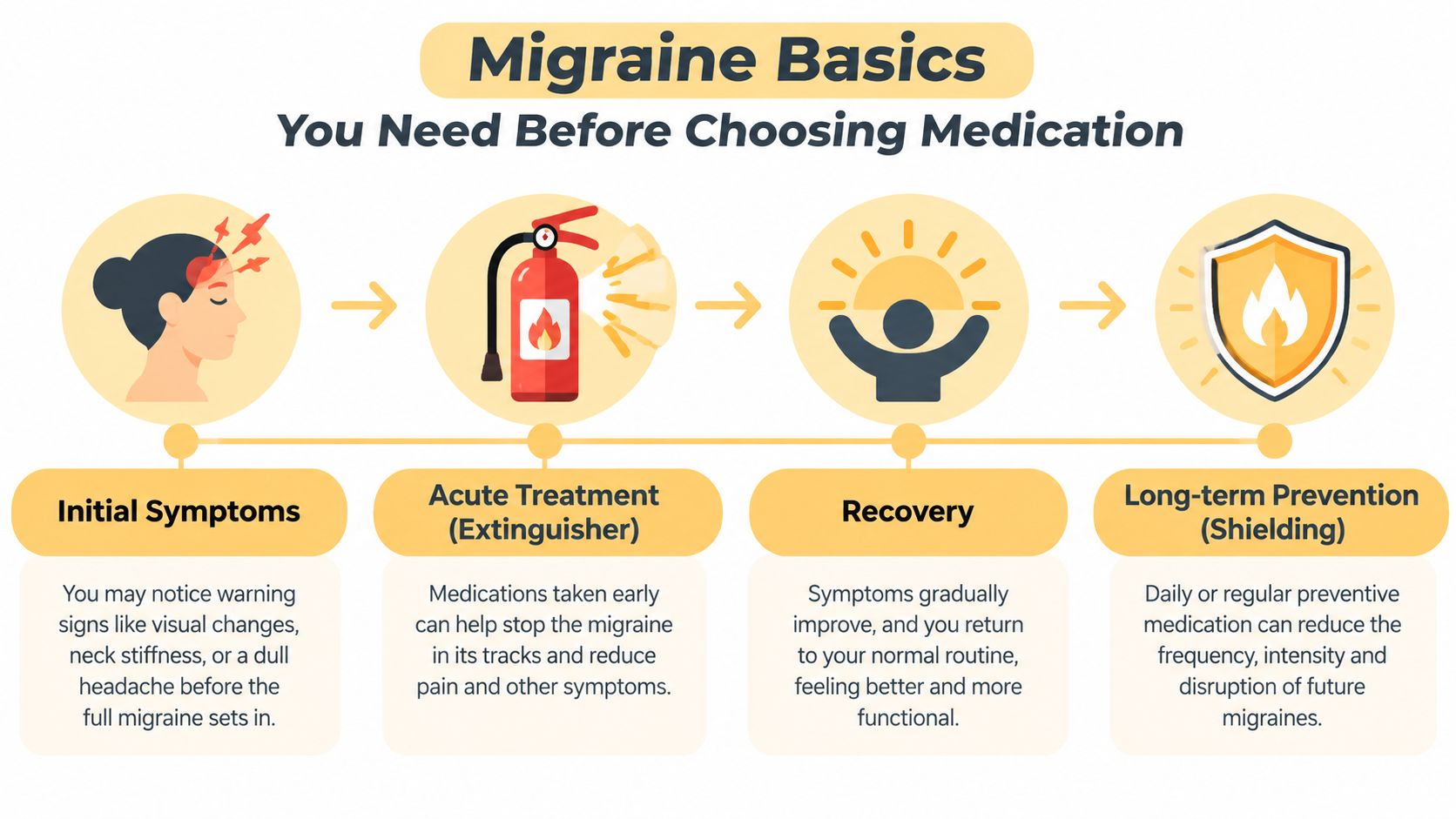
Timing matters because acute treatment often works better when taken early in the attack, before pain and associated symptoms intensify. A guideline summary supports starting with an NSAID or paracetamol early, then escalating to a triptan when needed, with an antiemetic added when nausea or vomiting is present. The independent migraine guideline summary explains this stepwise approach and why early treatment can matter.
Migraine isn't a generic headache. Nausea, vomiting, photophobia, meaning light sensitivity, and phonophobia, meaning sound sensitivity, can be part of the syndrome. A medicine that reduces head pain but leaves you unable to tolerate light or return to normal activity may not be meeting your actual treatment goal.
Acute Medication Options for an Active Attack
Acute migraine medication options are usually selected in stages. A simpler analgesic or NSAID may be reasonable for a mild attack when it's safe for you. A migraine-specific medicine may be considered when symptoms are moderate or severe, or when simpler treatment hasn't helped. Your clinician may also choose a different formulation if nausea makes oral medication unreliable.
The main acute classes
Pain relievers and NSAIDs include ibuprofen, naproxen, aspirin, and diclofenac. Some combination products pair acetaminophen or aspirin with caffeine. These medicines reduce pain or inflammation, but they can carry important risks for people with certain stomach, kidney, liver, bleeding, blood pressure, or medication-interaction concerns.
The evidence isn't identical for every product. In a Cochrane review, oral diclofenac potassium 50 mg relieved moderate-to-severe migraine pain to mild or no pain within two hours in about 55% of treated people, while about 22% were pain-free at two hours and 19% had pain-free sustained relief through 24 hours. Cochrane's diclofenac review provides the specific findings.
Triptans, including sumatriptan, rizatriptan, and eletriptan, activate serotonin receptors involved in migraine pathways. In plain language, they act more like a migraine-specific switch than a general painkiller. They're generally positioned for moderate-to-severe attacks or when simpler analgesics fail, but cardiovascular history and other factors can limit their use. Cochrane's review of oral sumatriptan found benefits across pain, nausea, light sensitivity, sound sensitivity, and functional disability.
Dihydroergotamine, or DHE, is an ergot alkaloid with a narrower role. It may be considered when other acute approaches haven't worked, but it has significant contraindications and interactions, so it requires clinician oversight.
Antiemetics, such as metoclopramide, can reduce nausea and vomiting. They may also help the body absorb an oral acute medicine when slowed digestion makes tablets less dependable.
Gepants, such as ubrogepant and rimegepant, block CGRP, a peptide involved in migraine signaling. They offer a non-triptan acute pathway for some people, including those who don't respond to triptans or whose health history makes triptans unsuitable.
Ditans, represented by lasmiditan, target serotonin pathways differently from triptans. They can be considered in particular situations, but side effects and activity restrictions need to be discussed with a clinician.
| Class | Representative drugs | How it works in plain language | Typical role in attack timeline |
|---|---|---|---|
| Pain relievers and NSAIDs | Ibuprofen, naproxen, aspirin, diclofenac | Reduces pain and inflammatory signaling | Early or milder attacks when appropriate |
| Triptans | Sumatriptan, rizatriptan, eletriptan | Activates migraine-related serotonin receptors | Moderate or severe attacks, or failed simple analgesics |
| CGRP antagonists | Ubrogepant, rimegepant | Blocks CGRP signaling | Acute alternative when triptans aren't suitable or effective |
| Ditans | Lasmiditan | Acts on a migraine-related serotonin pathway | Acute alternative in selected patients |
| Antiemetics | Metoclopramide | Reduces nausea and may support absorption | Added when nausea or vomiting complicates treatment |
| DHE | Dihydroergotamine | Acts on several migraine-related vascular and nerve pathways | More specialized or rescue-oriented treatment |
The American Migraine Foundation's acute treatment medication guide groups acute care into these six practical classes. The safest choice depends on your full medical history, not just attack intensity.
Preventive Medication Options to Reduce Future Attacks
Preventive treatment becomes relevant when migraine burden is frequent, disabling, or difficult to control with acute medicines. Guidance commonly considers prevention when migraine occurs on at least 2 days per month with meaningful disability, or around 4 migraine days per month in some pathways. The American College of Physicians guideline document also emphasizes gradual titration from the lowest effective dose and a meaningful response assessment over time.
Traditional oral options include beta blockers, such as propranolol or metoprolol, topiramate, amitriptyline, and candesartan. These medicines were originally used for conditions such as blood pressure problems, seizures, depression, or cardiovascular care, but they can influence the nervous-system excitability involved in migraine. A person with high blood pressure might discuss a beta blocker, while someone with insomnia or depression might discuss a different option. Those are conversation starters, not automatic matches.
Migraine-specific prevention
CGRP-targeting treatments have expanded the preventive options. Monoclonal antibodies include erenumab, fremanezumab, galcanezumab, and eptinezumab. Depending on the product, they may be administered on a monthly or quarterly schedule, which some people prefer to taking a daily tablet.
Preventive gepants include atogepant and rimegepant. They use the same broad CGRP pathway as acute gepants, but the treatment schedule and purpose differ. Recent guidance says CGRP antagonists, including monoclonal antibodies and gepants, may be considered even as first-line acute or preventive treatment when clinical status, preferences, or comorbidities justify them, although access remains a practical barrier. The recent guidance summary on CGRP therapies discusses first-line use, access, response checks, and switching or combination treatment.
Other preventive approaches may include onabotulinumtoxinA for chronic migraine and medicines aimed at nausea when nausea is a persistent part of the migraine pattern. These choices require a clinician to confirm the diagnosis, treatment goals, eligibility, and monitoring plan.
| Drug class | Examples | How it works | Trial length | Key considerations |
|---|---|---|---|---|
| Beta blockers | Propranolol, metoprolol | Modulates cardiovascular and nervous-system signaling | Often assessed over 6-8 weeks, sometimes longer | Asthma, blood pressure, heart rate, fatigue, and exercise tolerance matter |
| Antiseizure medicines | Topiramate | Calms overactive nerve signaling | Often requires gradual titration and sustained review | Cognitive effects, mood, other medicines, and pregnancy planning matter |
| Tricyclic antidepressants | Amitriptyline | Influences pain-processing and sleep-related pathways | Often assessed over 6-8 weeks or longer | Sedation, mood, dry mouth, and other side effects need review |
| Angiotensin receptor blockers | Candesartan | Modulates blood-pressure and pain-related pathways | May require 2-3 months for a meaningful trial | Blood pressure, kidney health, and pregnancy considerations matter |
| CGRP monoclonal antibodies | Erenumab, fremanezumab, galcanezumab, eptinezumab | Targets CGRP signaling directly | Response is often checked after about 3 months | Access, administration schedule, constipation or injection effects may matter |
| Preventive gepants | Atogepant, rimegepant | Blocks CGRP signaling | Response is reviewed over an appropriate clinician-guided trial | Drug interactions, access, and schedule should be discussed |
| OnabotulinumtoxinA | OnabotulinumtoxinA | Reduces signaling from pain-related nerve endings | Requires a planned series and follow-up | Used in selected chronic migraine cases |
A preventive can take time to show its full value. Stopping early because the first few days weren't dramatic may hide a gradual reduction in frequency or severity. Don't change or stop a preventive without discussing it with your healthcare provider.
What to Do When Standard Migraine Medications Fail
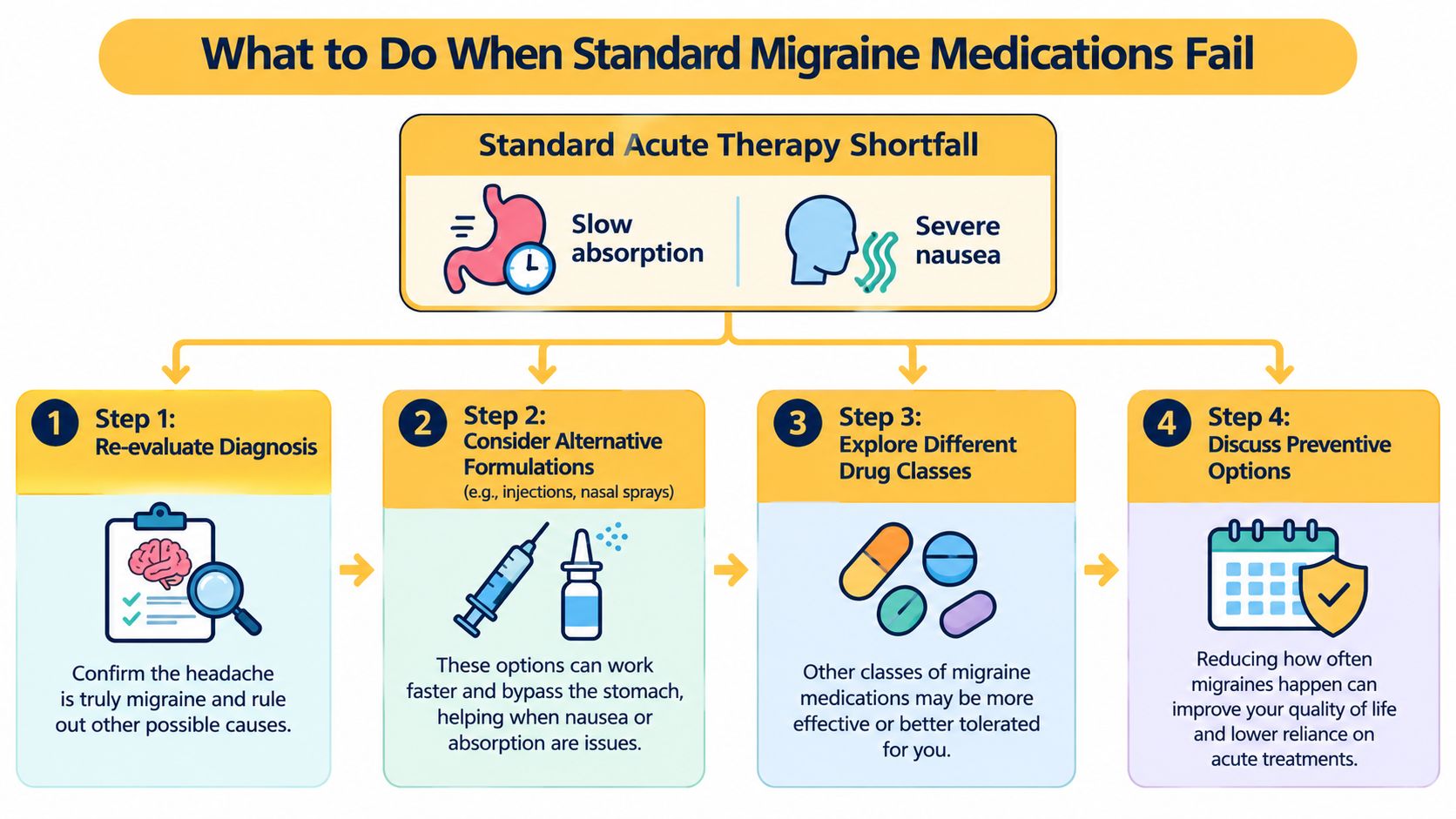
One failed prescription doesn't mean you've run out of options. Standard acute therapy can fall short because nausea or gastric stasis slows absorption, vomiting prevents tablets from staying down, a triptan isn't safe, or the medicine doesn't target your attack effectively.
The next conversation should be more specific than “nothing works.” Ask whether the problem is the drug, the timing, the formulation, the diagnosis, or the attack pattern itself.
A clinician-guided rescue toolkit
If oral medicine isn't staying down, a clinician may discuss antiemetic suppositories, nasal formulations, injections, or other non-oral routes. Subcutaneous sumatriptan and DHE delivered by nasal spray or injection are examples of routes that bypass some digestive limitations. A short steroid course may also be considered in selected cases to help interrupt a prolonged attack, but it isn't appropriate for everyone.
Some people with refractory attacks discuss nerve blocks or trigger point injections. These procedures target specific nerves or painful muscle areas and require assessment by a trained clinician. They're not a substitute for reviewing whether the original treatment plan fits the symptoms.
A failed tablet may be a delivery problem, not proof that the entire medication class has failed.
Newer gepants can provide another acute class when triptans are ineffective or unsafe. Recent acute-care guidance still places NSAIDs and triptans among common first-line choices, but it also notes that evidence for several emergency-department and rescue approaches is uneven. The same guidance rates IV hydromorphone and IV paracetamol as likely ineffective or treatments that shouldn't be offered in acute-care settings. The recent acute migraine treatment evidence review explains this gap.
Combination therapy can also be legitimate. A clinician might pair an NSAID with a triptan, or combine an antiemetic with a gepant, depending on safety, interactions, and symptom pattern. Don't combine products independently, especially when ingredients overlap or when you're using acute medicines frequently.
Working With Your Clinician on Migraine Medication Choices
A productive medication appointment is a partnership, not a handoff from a prescription pad. Bring a recent attack log, a list of medicines and supplements you take, and notes about what happened with previous treatments.
Prepare the information that changes decisions
Include:
- Attack pattern: When attacks start, how long they last, and which symptoms appear first.
- Treatment history: What you took, when you took it, whether it helped, and whether symptoms returned.
- Side effects: Include effects that seem minor if they changed your willingness to continue.
- Health context: Mention asthma, depression, blood pressure problems, pregnancy or pregnancy planning, cardiovascular concerns, and other diagnoses.
- Practical preferences: Tell your clinician whether you prefer tablets, injections, nasal options, infusions, or a less frequent schedule.
Ask direct questions:
- What are we trying to improve, pain intensity, attack frequency, function, nausea, or all of these?
- How long should I try this before we judge the response?
- Which side effects require a prompt call?
- What's the plan if this doesn't work?
- Could any current medicine or supplement interact with it?
- What should I use for breakthrough attacks?
Changing one main variable at a time often makes the result easier to interpret. If you start three treatments simultaneously and feel better or worse, you may not know which change caused the difference. Your clinician may still combine treatments when your situation calls for it, but the reasoning and monitoring should be clear.
Primary care can often begin evaluation and treatment. Ask about a neurology or headache-specialist referral when attacks remain disabling, the diagnosis is uncertain, standard options have failed, side effects are difficult, or preventive treatment needs more specialized planning. Telehealth can also support follow-up conversations about tolerability, symptom changes, and treatment adjustments between in-person appointments.
For more information about the publisher and its approach to migraine support, visit Relief's background and mission.
Tracking How Well Your Migraine Medication Works
A medication log turns “I think it helped” into something you can discuss. For each attack, record the start time, symptoms, medicine taken, dose as prescribed, time to relief, side effects, and next-day recovery.
You don't need a perfect diary. Capture enough to answer practical questions:
- Speed: Did pain begin to ease within the time your clinician said to expect?
- Completeness: Could you return to normal activity, or did light sensitivity and nausea remain?
- Durability: Did the attack return later that day or the next day?
- Tolerance: Did dizziness, sleepiness, stomach symptoms, or another side effect create a new limitation?
- Rescue use: Did you need an additional treatment?
For an acute medicine, focus on response speed, symptom completeness, recurrence, and side effects. For a preventive, look at the broader pattern, including headache-day frequency, severity trends, functional impact, and how often you reach for acute treatment.
Review the same therapy after several comparable attacks rather than judging it from one unusual episode. For prevention, use the trial period agreed with your clinician, which may extend over several weeks or months.
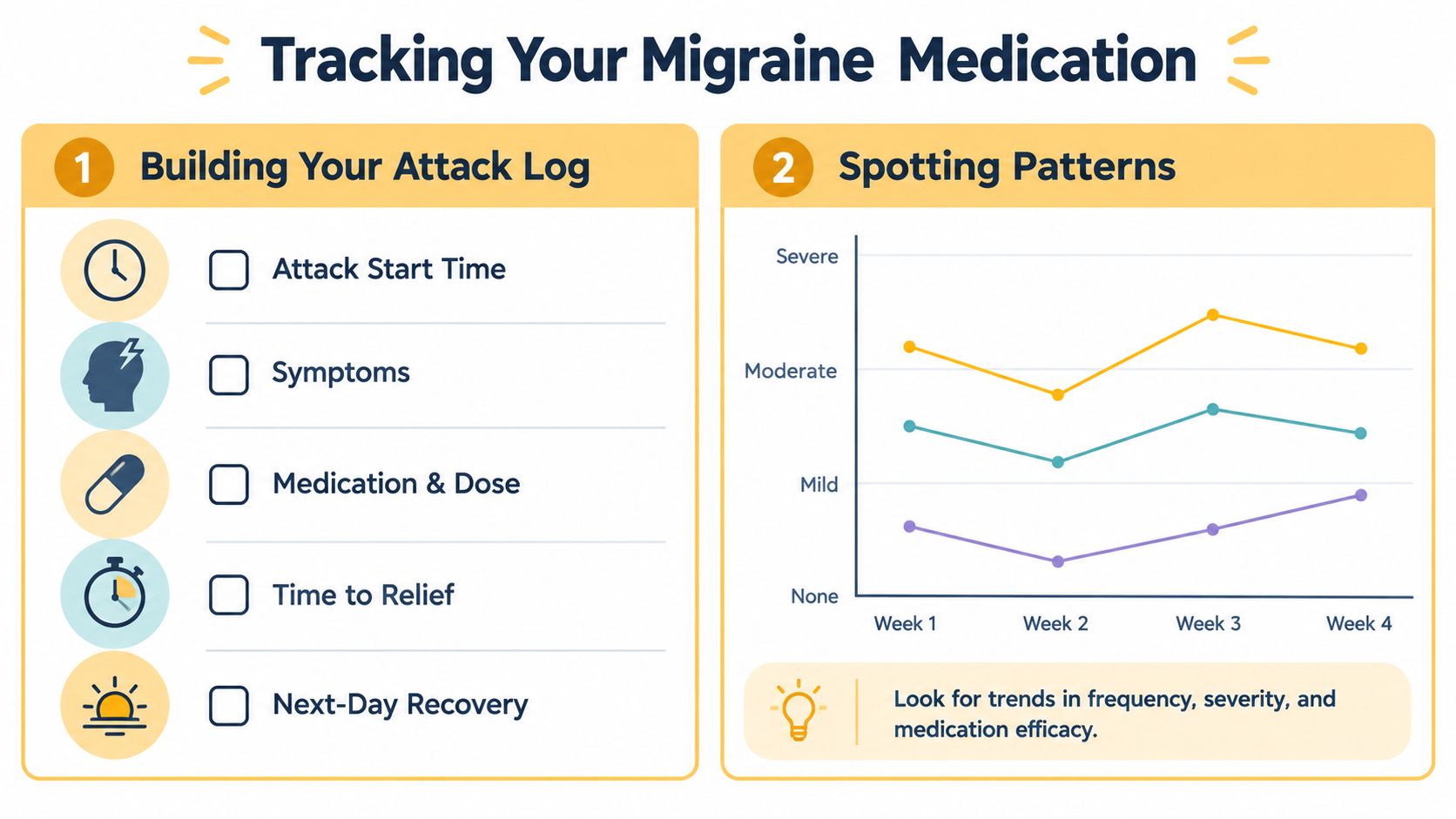
Relief provides one place to log attacks, symptoms, triggers, and medications, helping you review patterns before an appointment rather than reconstructing them from memory.
Bringing Migraine Medication Decisions Together
Match an acute treatment plan to the attack's timing, severity, symptoms, and your health history. Discuss prevention when attacks become frequent or disabling, and keep a clinician-approved rescue plan for breakthrough episodes or standard-treatment failure.
Finding the right migraine medication option is rarely a single decision. It's an iterative loop of trying, logging, reviewing, and adjusting, with a broader response check for preventive treatment rather than an immediate verdict.
Use your tracked patterns to make medication-review conversations with your clinician clearer and more productive.
Relief lets you log migraine severity, symptoms, triggers, and medications while bringing related health and environmental patterns into one view. Visit Relief to start building a record you can use to recognize patterns and prepare for your next treatment conversation.


