Personalized medicine uses your unique biology, environment, and health data to tailor prevention, diagnosis, and treatment instead of relying on one-size-fits-all averages. In oncology, biomarker-selected treatment arms have shown a median response rate of 30.6% versus 4.9% in non-personalized arms, while migraine care is still working toward reliable biomarkers.
Why should the same treatment work equally well for every person when migraine symptoms, triggers, medication responses, and recovery patterns can vary so much? If you've had to try treatment after treatment while feeling dismissed or exhausted, that question matters. Personalized medicine offers a way to make care more specific, but its meaning changes depending on the condition. Cancer clinics can often match a tumor marker to an approved therapy. For migraine, personalization currently looks more like careful symptom tracking, treatment-response patterns, and research into forecasting than a routine genetic prescription.
This article is for informational purposes and is not medical advice. Consult a healthcare provider for personalized guidance.
Table of Contents
- Genomic information reads the inherited instructions
- Phenotypic information observes what's happening
- Environmental information captures the conditions around you
- Data-driven systems look for patterns
- Is personalized medicine the same as precision medicine?
- Do healthy people need genetic testing?
- How is this different from personalized attention from a doctor?
- What can someone with chronic migraine do today?
Personalized Medicine Explained in Plain Language
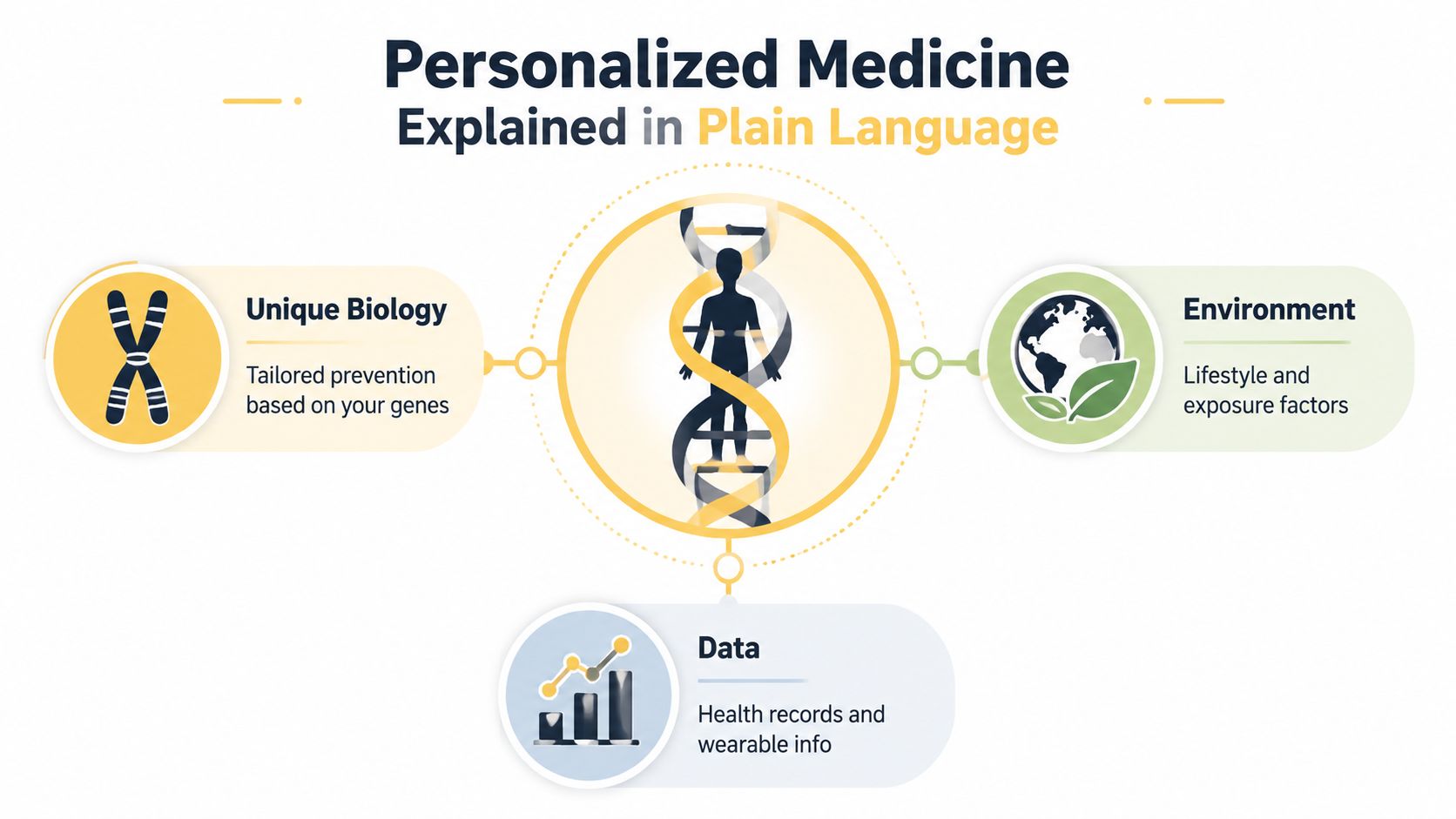
Personalized medicine is an approach that uses your unique biology, environment, and data to tailor prevention, diagnosis, and treatment. Instead of asking, “What usually works for the average patient?”, clinicians and researchers ask, “What information about this person can help guide a more suitable decision?”
That doesn't mean every treatment becomes completely custom-made. Consider fitting a pair of shoes. A population average tells you the common shoe size, but your foot measurements, walking pattern, activity, and comfort still determine what fits you. In healthcare, the relevant details might include DNA variants, blood markers, symptoms, sleep, environmental exposure, previous medication responses, and information from health records or wearable sensors.
The terms are related, but not identical
People often use personalized medicine, precision medicine, individualized medicine, and stratified medicine as if they mean exactly the same thing. In everyday healthcare writing, personalized and precision medicine are often interchangeable. Precision medicine usually emphasizes measurable biological differences and data, while personalized medicine can include the person's preferences, circumstances, and lived experience.
Individualized medicine highlights care designed for one person. Stratified medicine usually divides a larger patient group into subgroups based on a shared feature, such as a biomarker, rather than creating a unique treatment for every individual.
Migraine makes this distinction especially useful. Your clinician may personalize care by considering your aura, prodrome, medication history, sleep pattern, and priorities. That's different from proving that a specific gene predicts which preventive treatment will work for you.
The shift matters now because genomic testing, wearable sensors, electronic health records, and machine learning can bring more information into clinical decisions. Those tools can make individual tailoring more practical, but they don't automatically make every prediction accurate or useful.
How Personalized Medicine Came to Be
Could medicine really match treatment to the biology of each person? The idea developed gradually. Its roots extend through centuries of medical thinking, while modern personalized medicine became practical through molecular biology and genome science. A historical review of personalized medicine identifies DNA's double-helix discovery in 1953 and the completion of human genome sequencing in 2000 as major turning points. These advances made more individualized diagnosis and treatment possible.
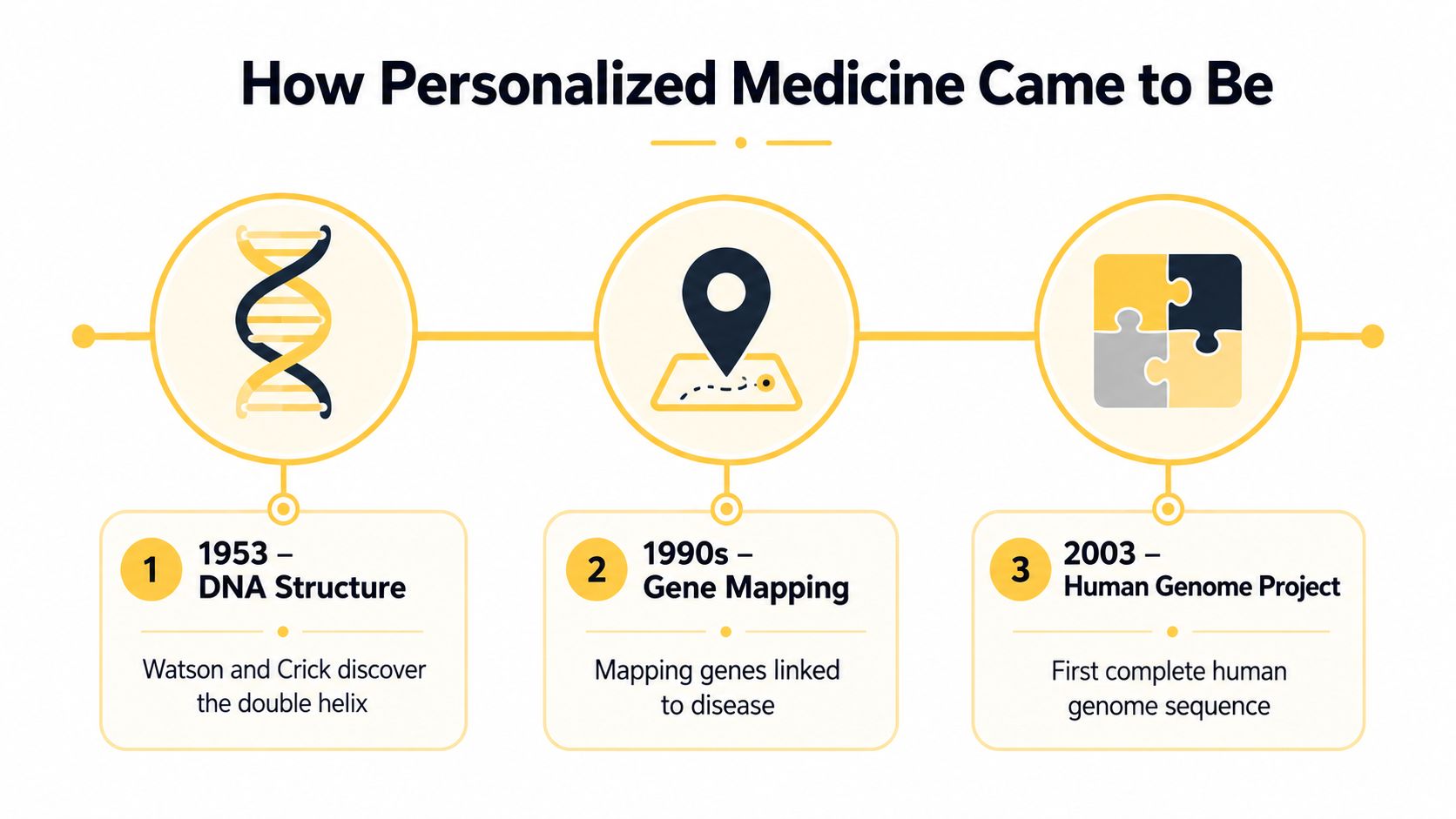
The phrase entered public discussion on April 16, 1999, in a Wall Street Journal article titled “New Era of Personalized Medicine: Targeting Drugs for Each Unique Genetic Profile.” Clinical examples soon made the concept easier to understand. The approval of trastuzumab in 1998 for metastatic breast cancer tumors that overexpressed HER2 showed how a tumor feature could identify patients for a targeted therapy. Imatinib followed around the turn of the century.
From scientific possibility to clinical practice
The Human Genome Project established genome sequencing as a major scientific achievement. Sequencing by itself, however, could not tell clinicians which treatment to choose. They also needed reliable biomarkers, validated tests, therapies that acted on those findings, and healthcare systems able to provide them.
Personalized medicine therefore developed unevenly. Oncology advanced early because some tumors contain measurable molecular changes that can guide treatment selection. A tumor marker can function like a label on a locked door, helping clinicians select a drug designed for that biological feature.
Migraine presents a different challenge. It involves interacting biological systems, symptoms that change over time, and environmental influences that vary between people. Tailoring migraine care to attack patterns, treatment history, and personal priorities is already possible. Forecasting exactly when an attack will occur is a separate and harder task.
Personalized medicine now has a substantial role in drug development. A 2025 summary reported that personalized medicines represented 38% of all new molecular entities approved by the FDA in 2023, compared with 21% in 2014. It also reported that 60% of newly approved personalized medicines in 2023 targeted rare diseases (FDA approval and personalized medicine market summary). The history supports the science, while clinical usefulness still depends on how well each tool works for a particular condition and patient.
The Four Core Approaches That Make It Work
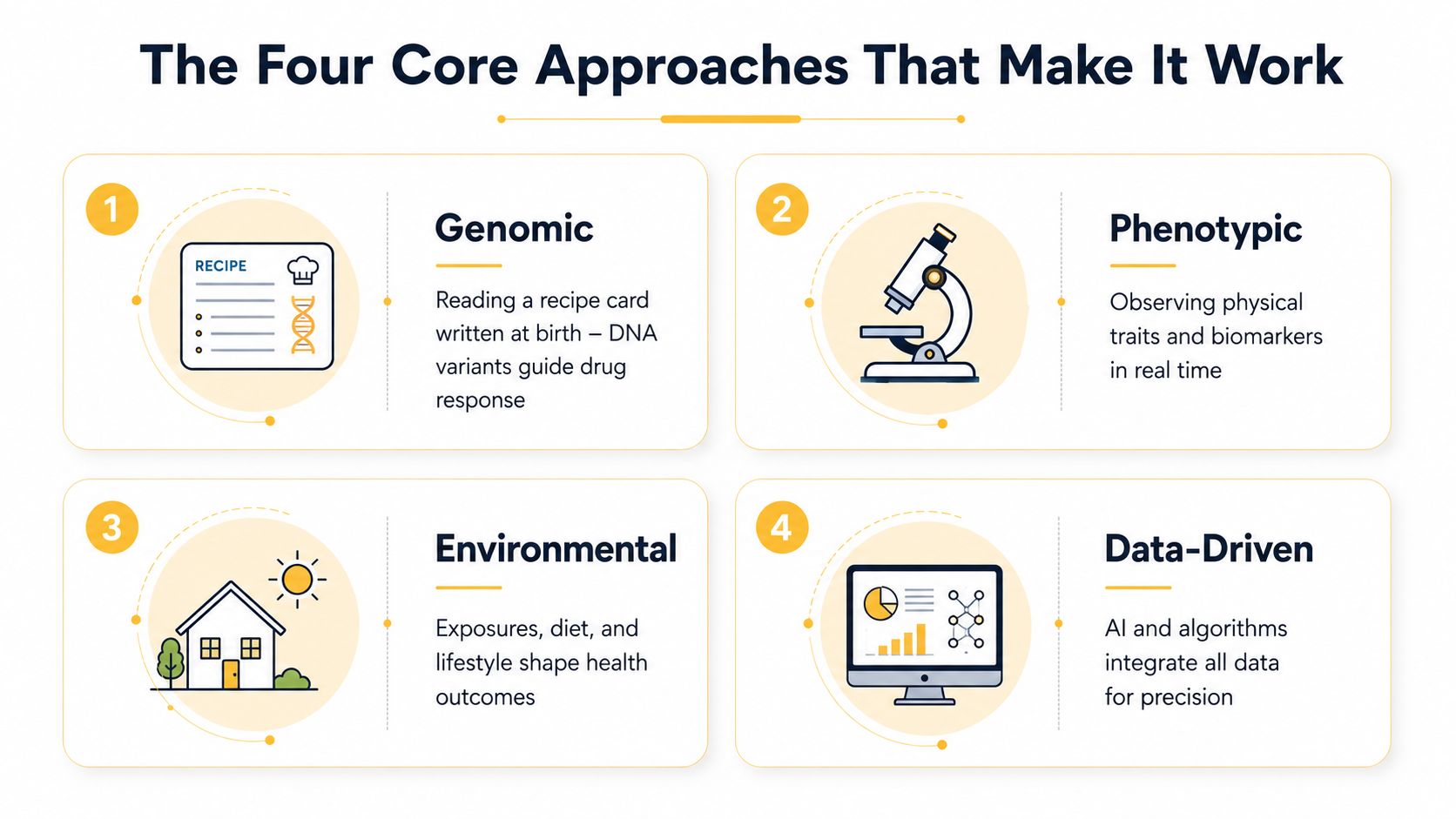
Personalized medicine usually combines several kinds of information. One test rarely tells the whole story, especially for a condition such as migraine.
Genomic information reads the inherited instructions
Your genome is like a recipe card written at birth, although it's a very complicated one. Genomics examines DNA and its variants. Pharmacogenomics focuses on how genetic differences may affect medication metabolism, effectiveness, or adverse effects.
A result may help a clinician understand why a medication could behave differently for you, but a genetic association isn't automatically a treatment instruction. The test needs appropriate validation, and the result needs to fit your symptoms, medical history, and current medicines.
Phenotypic information observes what's happening
Your phenotype means the measurable traits and signs your body shows. These may include symptoms, imaging findings, blood markers, hormone levels, or changes during treatment.
For migraine, phenotype can include the presence or absence of aura, a temporary neurological symptom such as visual disturbance; photophobia, sensitivity to light; and prodrome, symptoms that occur before the headache phase. The postdrome is the recovery period after the main attack, which can include fatigue or difficulty concentrating. These details can help describe your migraine pattern, even when no laboratory biomarker confirms it.
Environmental information captures the conditions around you
Sleep disruption, stress, meals, weather, air quality, hormones, and other exposures may influence symptoms for some people. That doesn't mean any factor is a universal trigger. It means your personal history may reveal whether a particular exposure repeatedly appears near your attacks.
Environmental information becomes more useful when you record it consistently and compare it with symptom timing rather than treating every coincidence as proof.
Data-driven systems look for patterns
Wearables, electronic health records, symptom logs, and machine-learning models can combine information across time. The system may identify a pattern that would be difficult to notice from memory alone, such as symptoms appearing after a specific combination of poor sleep and environmental change.
Modern personalized medicine blends these four approaches. DNA can provide one layer, symptoms another, and daily context a third. The final decision still requires clinical judgment, because an algorithm can organize evidence but can't replace a healthcare professional.
The following video offers another visual introduction to how data and biology can support individualized care.
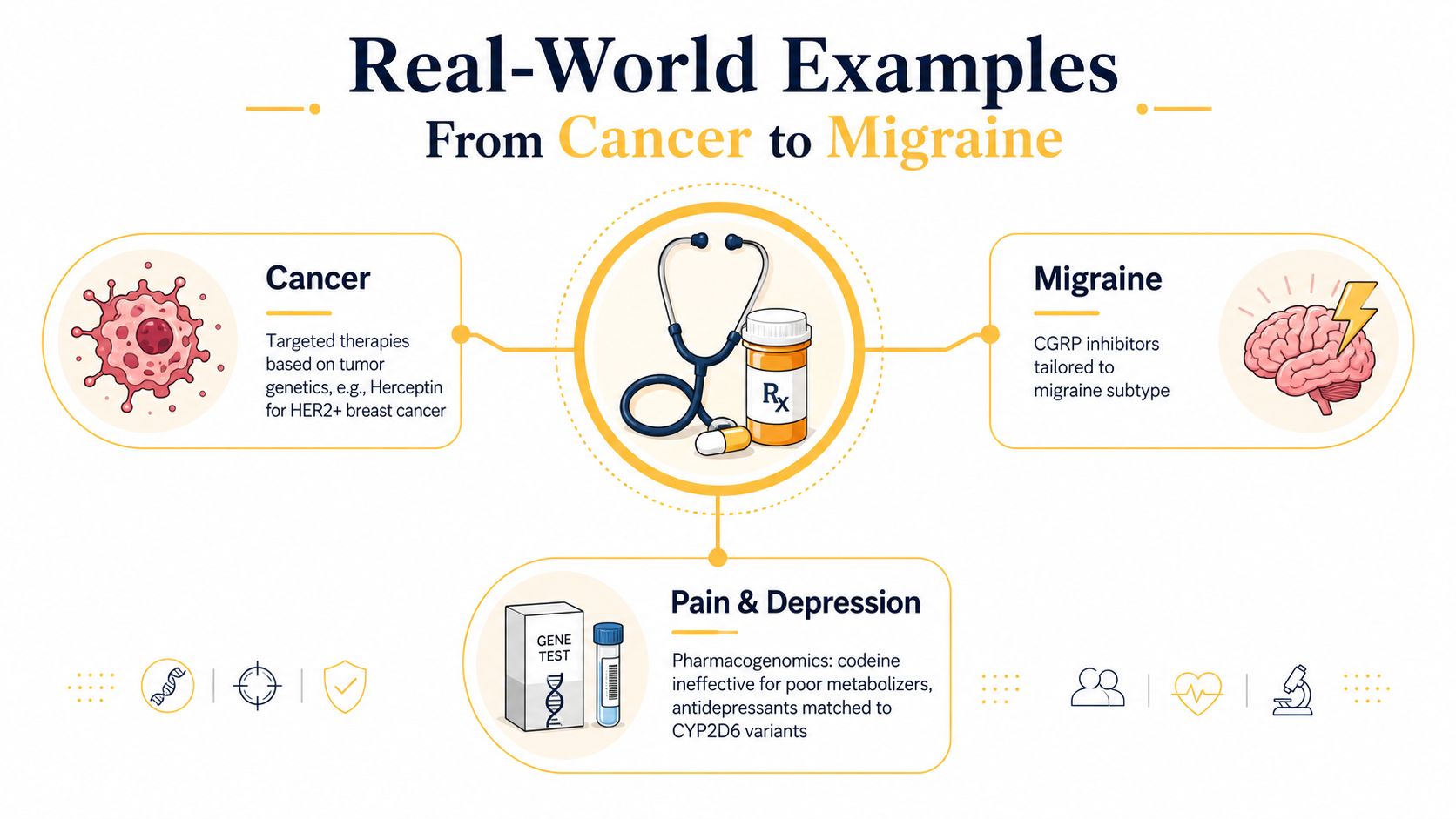
Real-World Examples From Cancer to Migraine
Could the same medical idea guide both cancer treatment and migraine care? Yes, but the level of personalization differs. A pharmacogenomic test can show whether genetic differences affect how someone processes a medicine. In migraine and other pain conditions, research has examined genetic variation that may influence drug metabolism, effectiveness, or adverse effects. These results may eventually reduce trial and error, although testing is not appropriate for everyone and should not guide medication changes without clinical advice.
Cancer provides the clearest established example. Oncologists can analyze a tumor for biomarkers such as HER2 expression or specific molecular alterations. Trastuzumab for HER2-overexpressing metastatic breast tumors and imatinib's approval around the turn of the century helped establish biomarker-guided treatment as a practical clinical model, as earlier milestones in personalized medicine show.
Migraine forecasting is a different kind of personalization
Migraine forecasting works somewhat like weather forecasting for the nervous system. An app can collect attack timing, symptoms, suspected triggers, and environmental information, then compare those details across your own history. It is a pattern-finding tool, not a diagnostic blood test.
The purpose is to identify a possible higher-risk window early enough to protect your schedule, plan rest, prepare questions for your clinician, or follow an existing care plan. It does not prove that one factor caused an attack. A forecast can still help with planning even when the biological cause remains uncertain.
Researchers are also studying migraine biomarkers. CGRP, or calcitonin gene-related peptide, is a promising candidate because plasma levels rise during an attack and fall with successful treatment. However, clinical validation remains premature, and controlled trials are still needed (CGRP and migraine biomarkers).
The practical distinction is clear. Personalized medicine already guides some prescriptions and cancer treatment choices. For migraine, it is developing through pharmacogenomics, biomarker research, and long-term tracking. Relief, a migraine tracking app is one example that combines logged migraine information with environmental data to provide an individualized risk forecast.
Benefits and Risks Worth Knowing
The strongest argument for personalized medicine is that average treatment results can hide important differences between patients. If a validated biomarker identifies people more likely to respond to a therapy, clinicians may be able to make a more informed choice. In a meta-analysis of 346 phase I oncology trials involving 13,203 patients, biomarker-selected arms had a median response rate of 30.6%, compared with 4.9% in non-personalized arms. Progression-free survival increased from 2.95 months to 5.7 months, and genomic biomarkers performed better than protein biomarkers in that analysis (oncology biomarker selection meta-analysis).
Potential benefits extend beyond treatment response:
- More targeted decisions: A biomarker may help identify a therapy that fits a disease feature.
- Fewer avoidable adverse effects: Pharmacogenomic information may reveal when medication metabolism differs.
- Earlier risk recognition: Biomarkers could support earlier testing or monitoring when they're validated for that purpose.
- More practical prevention: Combining environmental and health data may reveal patterns worth discussing with a clinician.
The edges are real
Personalized medicine also collects sensitive information. Genetic data can affect privacy, data-sharing, and questions about who controls biological information. Before using a test or app, review its data practices, retention policy, and deletion options. You can examine Relief's privacy information when evaluating how a migraine tracking service handles personal data.
Access is another concern. Advanced tests and specialist care may not be available to everyone, and reimbursement remains a major implementation barrier. One report described reimbursement as the top challenge to personalized medicine's integration into healthcare systems (precision medicine access and reimbursement report).
There's also a risk of over-interpreting weak correlations. A prediction can sound precise without being clinically useful, and learning that you carry a risk you can't act on may create anxiety. Personalized medicine is powerful when evidence, interpretation, access, and patient choice develop together.
Oncology Versus Migraine at the Clinic
Oncology and migraine show why the phrase personalized medicine can describe very different realities. Cancer care often has a defined biomarker-to-treatment pathway. Migraine care is more likely to use clinical history, symptom patterns, treatment response, and patient-led tracking while researchers continue searching for reliable biomarkers.
| Dimension | Oncology | Migraine |
|---|---|---|
| Biomarker role | Biomarkers such as HER2, EGFR, PD-L1, and BRCA-related findings can guide treatment decisions for particular cancers. | No biomarker is currently accepted for routine migraine diagnosis, so clinicians rely on clinical evaluation (migraine biomarker review). |
| Testing pathway | Molecular profiling can be integrated into treatment planning when clinically appropriate. | Genetic and biological testing remains largely investigational rather than routine care. |
| Treatment matching | Tumor features may identify a targeted therapy or immunotherapy pathway. | Preventive and acute treatment choices still depend heavily on symptoms, history, response, and tolerability. |
| Forecasting | Biomarkers often help select treatment after diagnosis. | Digital tools may try to estimate attack risk before symptoms, using personal logs and contextual data. |
| Main challenge | Ensuring eligible patients receive testing and the matched therapy. | Finding validated biomarkers for a complex neurological disorder and turning research into accessible care. |
Migraine has no currently accepted biomarker for routine diagnosis, whether the condition is episodic or chronic. A 2021 Lancet review describes progress across genetics, provocation modeling, biochemistry, and neuroimaging, while emphasizing that integrating these domains remains an evolving research area (Lancet review of migraine precision medicine).
That gap exists partly because migraine reflects interacting brain networks rather than one defining mutation. “Personalized” therefore doesn't always mean genetic. For migraine, it can mean using your own symptom history and context to support a more informed conversation with your clinician.
How to Evaluate a Personalized Medicine Tool
A polished interface doesn't prove that a personalized medicine tool works. Whether you're considering a migraine app, pharmacogenomic test, or clinic program, ask what it measures and how its recommendations were validated.
Use this checklist
Look for clinical evidence. Does the company cite peer-reviewed research, or does it rely on testimonials and broad promises? A credible claim should explain what was tested and what the results mean.
Identify the inputs. Does the tool use genomic data, wearable signals, weather, air quality, self-reported triggers, medication history, or some combination? A forecast is easier to evaluate when the inputs are visible.
Ask about oversight. Is the test regulated or cleared for its stated purpose? Does a qualified clinician interpret the result? A consumer score shouldn't become a diagnosis.
Read the privacy terms. Check storage, sharing, deletion, and ownership. Health and genetic information deserves more scrutiny than an ordinary app preference.
Demand an interpretable output. If a migraine forecast says risk is high, can you see whether the signal came from your attack history, sleep log, weather, or another factor? Explanations help you judge whether the result makes sense.
Compare cost with proven benefit. A more expensive test isn't automatically more useful. Ask what decision the result would change and whether your healthcare provider can act on it.
For example, a tool that clearly explains how barometric pressure or other environmental signals relate to your logged attacks is easier to assess than an app offering a vague “personal risk score.” Relief's approach to migraine forecasting combines tracking with environmental context, but you should still treat any forecast as supportive information, not medical advice.
Practical rule: If a tool can't tell you what data it uses and what evidence supports it, treat the marketing with skepticism.
FAQs and Practical Next Steps
Is personalized medicine the same as precision medicine?
The terms overlap and are often used interchangeably. Precision medicine tends to emphasize measurable biological and molecular differences, while personalized medicine can also include your preferences, circumstances, and goals. Neither term guarantees that care is individually designed in every detail.
Do healthy people need genetic testing?
Not necessarily. Testing can be useful in specific clinical situations, but a result may create uncertainty, uncover information you didn't expect, or fail to change your care. Discuss the purpose, limits, privacy implications, and possible next steps with a healthcare provider before ordering a test.
How is this different from personalized attention from a doctor?
A clinician can personalize care by listening to your history and adapting treatment to your symptoms and priorities. Personalized medicine adds structured biological or data inputs, such as biomarkers, genomic results, or longitudinal records. The two approaches work best together.
What can someone with chronic migraine do today?
You don't need to wait for a perfect migraine biomarker to start building useful information. Tracking can help you describe your attacks more clearly and identify patterns worth discussing, although it can't prove that a suspected trigger caused a migraine.
Try this action ladder:
- Log consistently: Record symptoms, timing, suspected triggers, sleep, and medication use for two weeks, if you're able.
- Review medication questions: Ask your clinician whether pharmacogenomic testing is relevant to your current medication list. Don't start, stop, or change medication based only on a test or app.
- Test one forecasting tool: Choose a digital tool that explains its data inputs and presents forecasts as estimates rather than diagnoses.
- Revisit the pattern: Review what you learned after 90 days with your clinician or care team. Look for repeated relationships, not isolated coincidences.
A headache isn't always a migraine, and a new or changing pattern deserves medical evaluation. Seek immediate medical care for a sudden severe headache, a headache with fever or stiff neck, neurological changes, or a headache after a head injury. This article is for informational purposes and is not medical advice. Consult a healthcare provider for personalized guidance.
Relief supports this process by helping you log attacks, symptoms, triggers, and medications while combining your history with local environmental signals. Visit Relief to start building a clearer record of your migraine patterns and risk windows.


