A barometric pressure migraine forecast uses weather data to estimate when you may have a higher risk of a migraine attack because of pressure changes in the air. Research has found that migraine frequency rises with pressure shifts of more than 5 hPa, which is why a forecast focuses on change over time, not just whether the day looks stormy.
You might be reading this because you already know the feeling. The sky looks normal, but your head feels off. Maybe you notice light sensitivity getting worse, your neck stiffening, or that vague unsettled feeling that often shows up before the pain. That early warning stage is called prodrome, which means the subtle symptoms that can happen before the main migraine attack begins.
When people say they can “feel a migraine in the air,” they're often trying to describe a real pattern. A barometric pressure migraine forecast is a tool that watches atmospheric pressure and other weather signals, then flags times when your migraine risk may be higher so you can prepare instead of getting blindsided.
This article is for informational purposes and is not medical advice. Consult a healthcare provider for personalized guidance.
Table of Contents
- That Feeling a Migraine Is in the Air
- What barometric pressure actually means
- Why your nervous system may react
- Use forecast days to prepare early
- Lower your total trigger load
- Plan work and home with less friction
That Feeling a Migraine Is in the Air
There's a particular kind of frustration in noticing the weather shift and wondering if your day is about to disappear with it. You may cancel plans, move meetings, or carry medication “just in case,” while also worrying that you're overthinking it because other people don't understand how strongly weather can affect you.
That tension is real. Migraine is not the same as a standard headache. A migraine attack can include nausea, photophobia (light sensitivity), sound sensitivity, dizziness, aura, and a wiped-out postdrome, which is the drained, foggy phase that can linger after the main pain eases.
A barometric pressure migraine forecast matters because it gives shape to something that often feels vague. Instead of “I think a storm is messing with me,” you get a more practical question: “Is pressure changing fast enough that today should be a lower-demand day?”
Practical rule: A forecast doesn't predict your future with certainty. It helps you spot higher-risk windows early enough to adjust.
That can mean different things depending on your pattern. One person may use a forecast to keep rescue medication close. Another may decide not to stack a hard workout, skipped lunch, and extra screen time onto an already risky weather day.
People also get confused about whether this is only about storms. It isn't that simple. Some migraine attacks show up before rain. Some don't. The useful part of forecasting is not trying to guess weather vibes. It's using measurable atmospheric change to support better decisions.
Why Barometric Pressure Can Trigger Migraine
What barometric pressure actually means
Barometric pressure is the weight of the air around you. When weather systems move in, that pressure can rise or fall. Your body doesn't experience that as a number on a weather app. It experiences it as an environmental shift.
A simple way to picture it is a balloon. If the pressure outside the balloon changes, the balloon responds to that change. Your head isn't a balloon, of course, but the analogy helps explain why pressure shifts may matter to a sensitive nervous system.
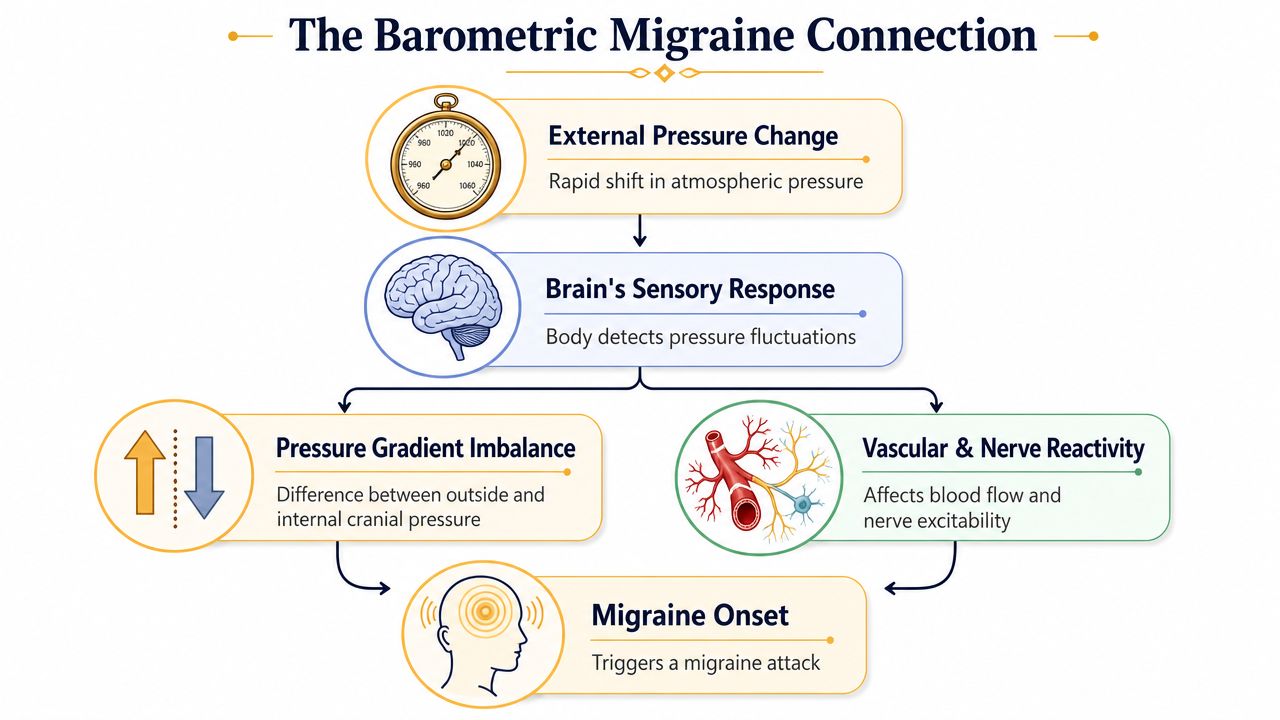
Clinical evidence indicates that 30% to 50% of migraine patients identify weather changes as a primary trigger, and the leading theory is that a drop in atmospheric pressure creates an imbalance between intracranial pressure and the external environment that may stimulate pain-sensitive nerves and trigger the migraine process, as explained by the University of Colorado Anschutz discussion of weather-triggered migraine.
Why your nervous system may react
Migraine brains tend to be more reactive to sensory and internal changes. That doesn't mean you're imagining it. It means your nervous system may be quicker to respond to a shift that other people barely notice.
Researchers think pressure changes may affect pain-sensitive nerves and blood vessel behavior, helping kick off the chain of events that leads to a migraine attack. That chain can involve head pain, nausea, visual symptoms, or dizziness, depending on your migraine type.
Here's a short explainer if seeing the mechanism helps it click:
Not everyone reacts the same way, and not every weather-linked attack starts with pain. For some people, the first signs are yawning, irritability, food cravings, or brain fog. Those are still part of migraine for many people, even if the headache phase hasn't started yet.
| Term | What it means |
|---|---|
| Prodrome | Early warning symptoms before the main attack |
| Aura | Temporary neurological symptoms, often visual, before or during migraine |
| Photophobia | Light sensitivity |
| Postdrome | The drained or “migraine hangover” phase after the attack |
Migraine often starts before the pain does. If weather is one of your triggers, the first clue may be a change in function, mood, or sensory sensitivity.
How Forecasts Predict Your Migraine Risk
Why the speed of change matters
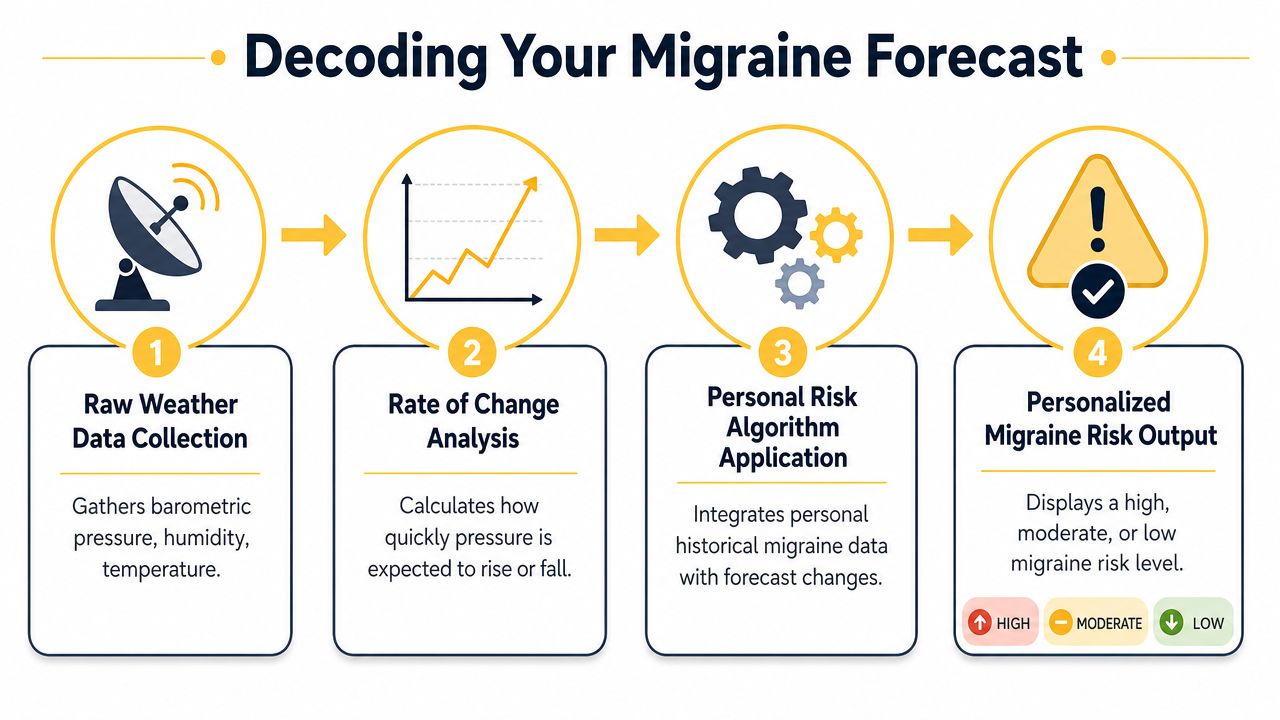
A good forecast doesn't just ask whether the pressure is high or low. It asks how quickly it's moving. That distinction matters because research has found that migraine frequency increased significantly when the barometric pressure difference between the headache onset day and the following day was lower by more than 5 hPa, which supports using dynamic pressure change as a forecasting threshold in this PubMed-indexed study on barometric pressure and migraine.
That's why “stormy day” isn't a precise enough signal. Two cloudy days can feel very different if one has a sharp pressure swing and the other is relatively stable.
What a useful forecast is really looking for
Think of a forecast as pattern recognition. It starts with weather inputs such as pressure trends, then looks for conditions that have been linked to higher attack risk. The more refined versions also compare those signals with your own migraine history instead of treating every user the same.
That's the difference between checking a general weather app and using a tool built around migraine risk. A migraine-focused approach watches the direction and pace of change, then translates that into something you can act on. If you want a clearer sense of how an app can use those signals, Relief's guide to a barometric pressure migraine app shows how weather data can be turned into practical alerts.
A forecast is most useful when it answers a simple question: “Should I treat today like a higher-risk day?” If the answer may be yes, you don't need certainty to benefit. You just need enough warning to prepare.
Turning Your Forecast into an Action Plan
Use forecast days to prepare early
A forecast only helps if it changes what you do next. Clinical guidance from a major medical institution notes that patients can use pressure-drop forecasts to anticipate attacks, keep acute rescue medication accessible, and use it early, before pain becomes severe, which may shorten or stop the attack, according to the Cleveland Clinic's guidance on barometric pressure headaches.
That doesn't mean taking medication automatically every time the weather changes. It means using your doctor's plan more intentionally on days when your risk looks higher.
What to ask yourself: If symptoms start today, do I know what my next step is, and do I have what I need with me?
This article is for informational purposes and is not medical advice. Consult a healthcare provider for personalized guidance before changing how you use medications or manage symptoms.
Lower your total trigger load
Weather is often only part of the picture. A pressure shift may be the spark, but poor sleep, missed meals, dehydration, heavy sensory input, or stress can make your system easier to tip into an attack.
On higher-risk weather days, try a “less stacking” approach:
- Protect your sleep: Keep your bedtime and wake time as steady as you can.
- Eat predictably: Don't let a busy day turn into skipped meals.
- Reduce sensory strain: Lower brightness, take screen breaks, or use a quieter workspace if photophobia or sound sensitivity tends to build early.
- Adjust exercise: If intense exertion can be a trigger for you, consider a lighter session instead of pushing through.
- Simplify plans: Move nonessential tasks if you already feel prodrome symptoms.
Plan work and home with less friction
You don't need to announce every risk day to everyone around you. You do need a simple script. If weather shifts often affect you, it can help to tell a partner, coworker, or manager what “high-risk” looks like in practical terms.
For example:
- At work: Block time for focused tasks earlier in the day if you're usually worse later.
- At home: Prep dinner earlier or choose an easier option.
- For travel or errands: Keep water, snacks, sunglasses, and your usual supplies within reach.
A forecast is not a command to cancel your life. It's permission to plan with less guesswork.
If you ever have a sudden severe headache, headache with fever or stiff neck, neurological changes, or a headache after a head injury, seek immediate medical care.
The Limits of Weather Data Alone
Why intuition can mislead you
Many people are sure weather triggers their migraine. Sometimes they're right. Sometimes the pattern is weaker than it feels in the moment. That mismatch matters because weather is easy to remember and easy to blame, especially when an attack hits on a stormy day.
Research highlights a real gap between belief and measured correlation. 49% of migraine patients self-report weather as a trigger, but only about 20% show a statistically significant weather correlation, which is why researchers describe this as overattribution bias in this review of weather sensitivity and migraine prediction.
That doesn't mean your experience isn't valid. It means memory alone isn't great at separating “this seems true” from “this is consistently true.” If humidity is part of your weather pattern too, this article on humidity and headaches can help you think more broadly about environmental triggers.
Why one forecast can't fit everyone
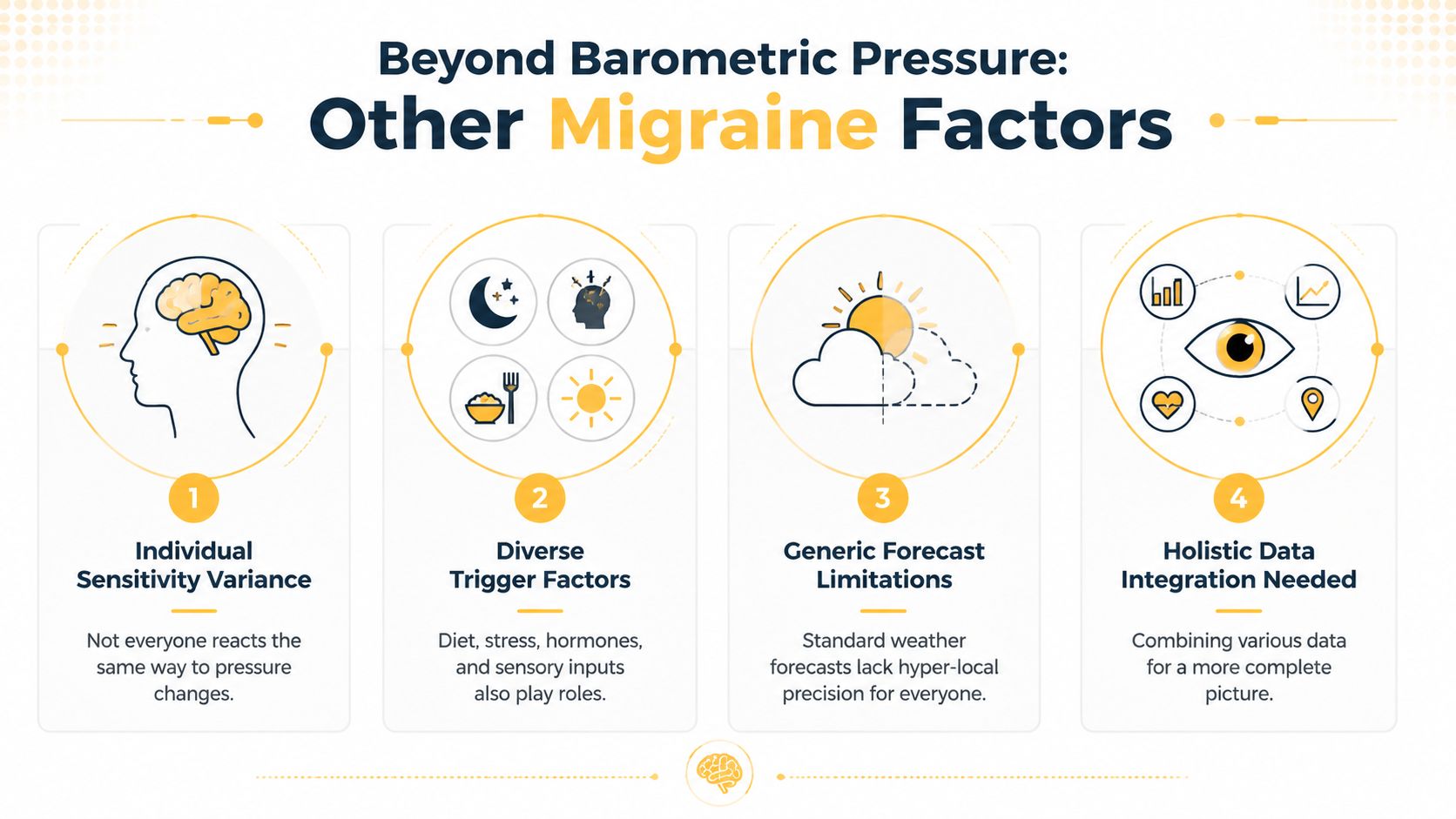
Migraine is a multi-factor condition. Two people can live in the same city, experience the same pressure change, and have completely different days. One may get aura and nausea. Another may feel nothing at all.
That's why a general weather-based risk estimate has limits. It can tell you a condition is more favorable for migraine, but it can't know whether that condition matters to you unless it's paired with your own logs.
A forecast becomes more trustworthy when it's tested against your actual attacks, not your memory of them.
This is also where confusion about headache versus migraine can matter. A mild pressure-related headache isn't the same as a migraine attack with sensory symptoms, nausea, aura, or prolonged postdrome. If you lump every bad head day into one bucket, your pattern gets muddy fast.
Combining Forecasts with Your Personal Health Data
The most useful forecast is the one that learns your pattern. Weather data can flag external risk, but your logs tell the missing part of the story: what symptoms started first, how severe the attack became, whether aura was present, and what else was happening that day.
That's why tracking matters more than intuition. When you record timing, symptoms, and context consistently, you can start to see whether pressure shifts are a strong signal for you, a weak one, or something that only matters when combined with other triggers.
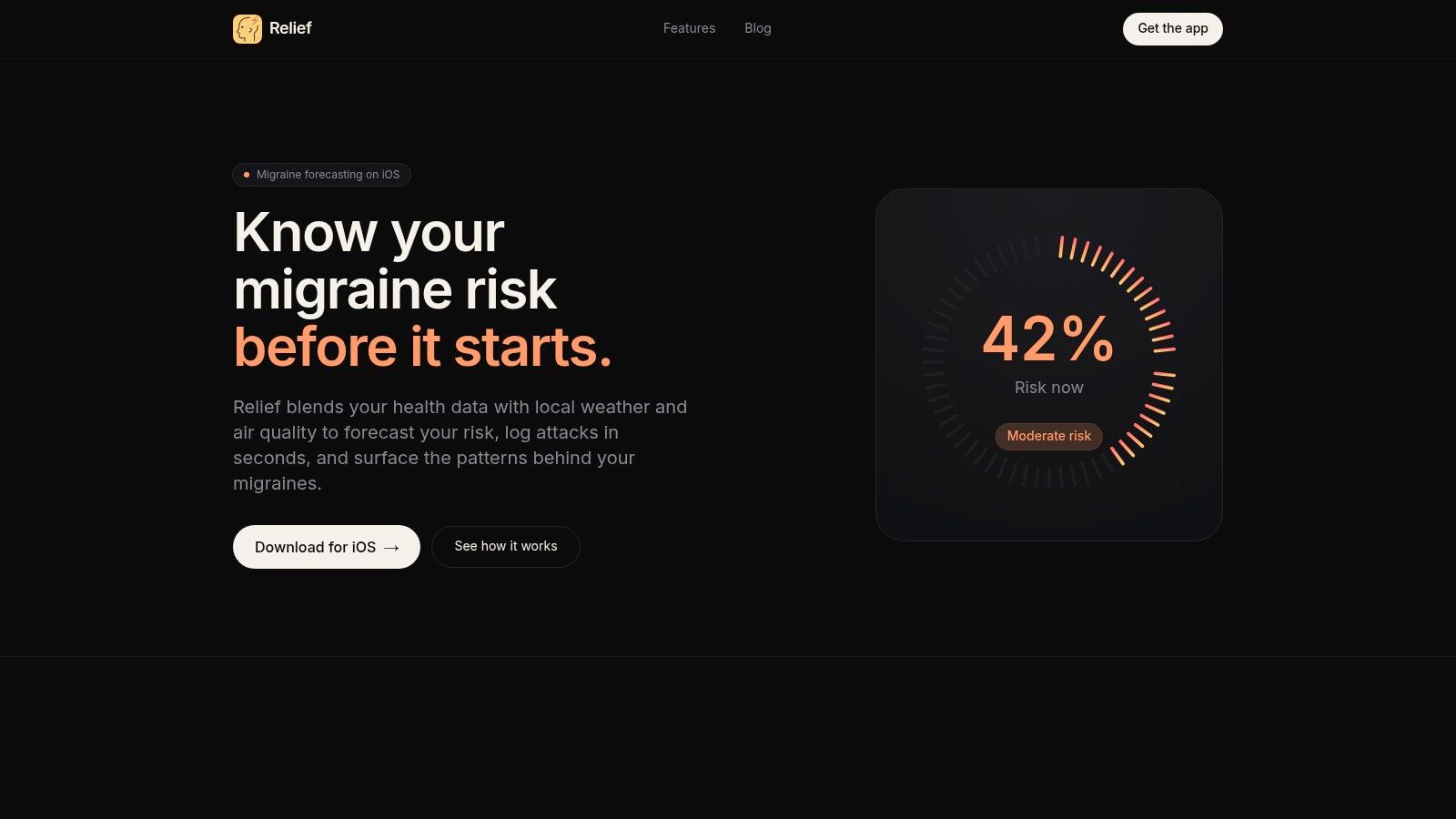
A tracking tool can make that process much easier than keeping scattered notes. If you want a simple place to start, this overview of a migraine tracking app shows how logging can help connect symptoms with patterns over time.
You don't need perfect data to learn something useful. You just need enough honest entries to stop guessing.
Relief helps you combine personal symptom logging with local weather signals so you can spot whether barometric pressure is part of your migraine pattern and plan your day with more confidence.


