No. Excedrin Migraine isn't recommended on an empty stomach, mainly because it contains aspirin 250 mg per caplet, and aspirin can irritate the stomach lining and raise the risk of stomach pain, nausea, vomiting, gastritis, and bleeding. If you're in that awful moment of trying to stop a migraine fast, the hard part is that the safer stomach choice and the faster-relief choice don't always feel like the same thing.
That's the dilemma many people run into at 2 a.m., first thing in the morning, or after hours of nausea when eating sounds impossible. You want relief before the migraine attack escalates, but you also don't want to trade head pain for stomach pain, or worse.
Migraine is not the same as a general headache. A migraine attack can involve prodrome (early warning symptoms), aura (temporary neurological symptoms such as visual changes for some people), nausea, photophobia (light sensitivity), phonophobia (sound sensitivity), and postdrome (the wiped-out phase after the main pain improves). When you're in the middle of that, medication timing matters.
This article is for informational purposes and is not medical advice. Consult a healthcare provider for personalized guidance.
Table of Contents
- That Urgent Question During a Migraine Attack
- Why aspirin is the main stomach issue
- What acetaminophen and caffeine add
- Get urgent care right away for these red flags
- Make a routine appointment if this pattern sounds familiar
That Urgent Question During a Migraine Attack
When a migraine attack is building, you're usually not weighing drug labels like a pharmacist. You're trying to stop the pain before the nausea deepens, the light gets harsher, or the whole day disappears.
The short answer is still no. If you're asking, can I take Excedrin on an empty stomach, it's not recommended, because the aspirin in it can irritate your stomach and increase the chance of gastrointestinal side effects. That's especially relevant if migraine already makes it hard for you to eat.
Practical rule: If your stomach is empty, think about how to add at least a small buffer before taking a medication that contains aspirin.
A lot of people also confuse severe migraine treatment with emergency treatment. If you're wondering how hospital care differs from home care, ReliefMigraine's guide to a migraine cocktail in the ER gives useful context on what clinicians may do when an attack becomes unmanageable.
What matters here is staying grounded. A migraine attack can feel urgent, but you still want to avoid choices that add another problem while you're already struggling.
Understanding Excedrin's Ingredients and Your Stomach
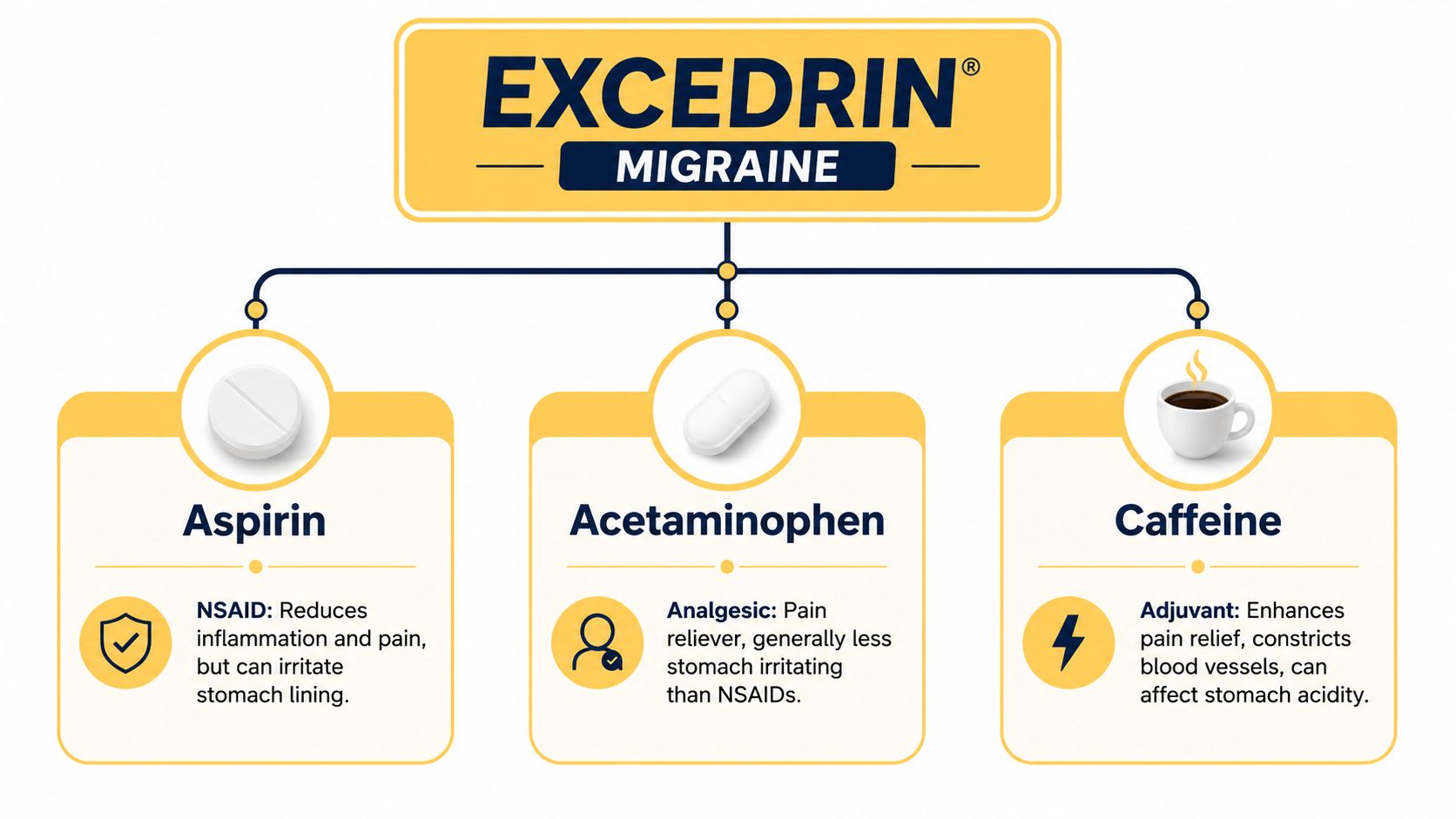
Excedrin Migraine combines three active ingredients, and each one matters for how the medication feels in your body. The stomach warning isn't random. It follows from how the formula works.
Why aspirin is the main stomach issue
The biggest reason Excedrin Migraine shouldn't be taken on an empty stomach is aspirin. It contains aspirin 250 mg per caplet, and aspirin is an NSAID that can irritate the gastric mucosa. Clinical guidance recommends taking it with food or milk to lower the risk of upset stomach, gastritis, and stomach bleeding, as explained in this review of Excedrin Migraine ingredients, side effects, and use guidance.
That “stomach upset” label can sound minor. It isn't always minor. Stomach pain, nausea, and vomiting are miserable enough during migraine, and aspirin can also increase the risk of more serious bleeding problems.
What acetaminophen and caffeine add
Acetaminophen is also present at 250 mg per caplet in the same source above. It's generally not the main reason people worry about stomach irritation here, but it matters for another safety reason. If you regularly drink alcohol, combining alcohol with acetaminophen can raise liver damage risk.
Caffeine adds a different layer. It can support pain relief by helping the medication act more effectively, but it can also make an empty stomach feel worse. Some people already notice that migraine itself makes their stomach more sensitive, and caffeine can add to that discomfort.
A simple way to think about the formula:
| Ingredient | Main role | Main concern relevant here |
|---|---|---|
| Aspirin | Pain and inflammation relief | Stomach lining irritation and bleeding risk |
| Acetaminophen | Pain relief | Liver risk becomes more important with alcohol use |
| Caffeine | Helps the pain-relief effect | Can feel harsher on an empty, sensitive stomach |
Excedrin's warning makes more sense once you stop thinking of it as “just a headache pill” and start thinking about what each ingredient is doing.
The Migraine Dilemma Food vs Fast Relief
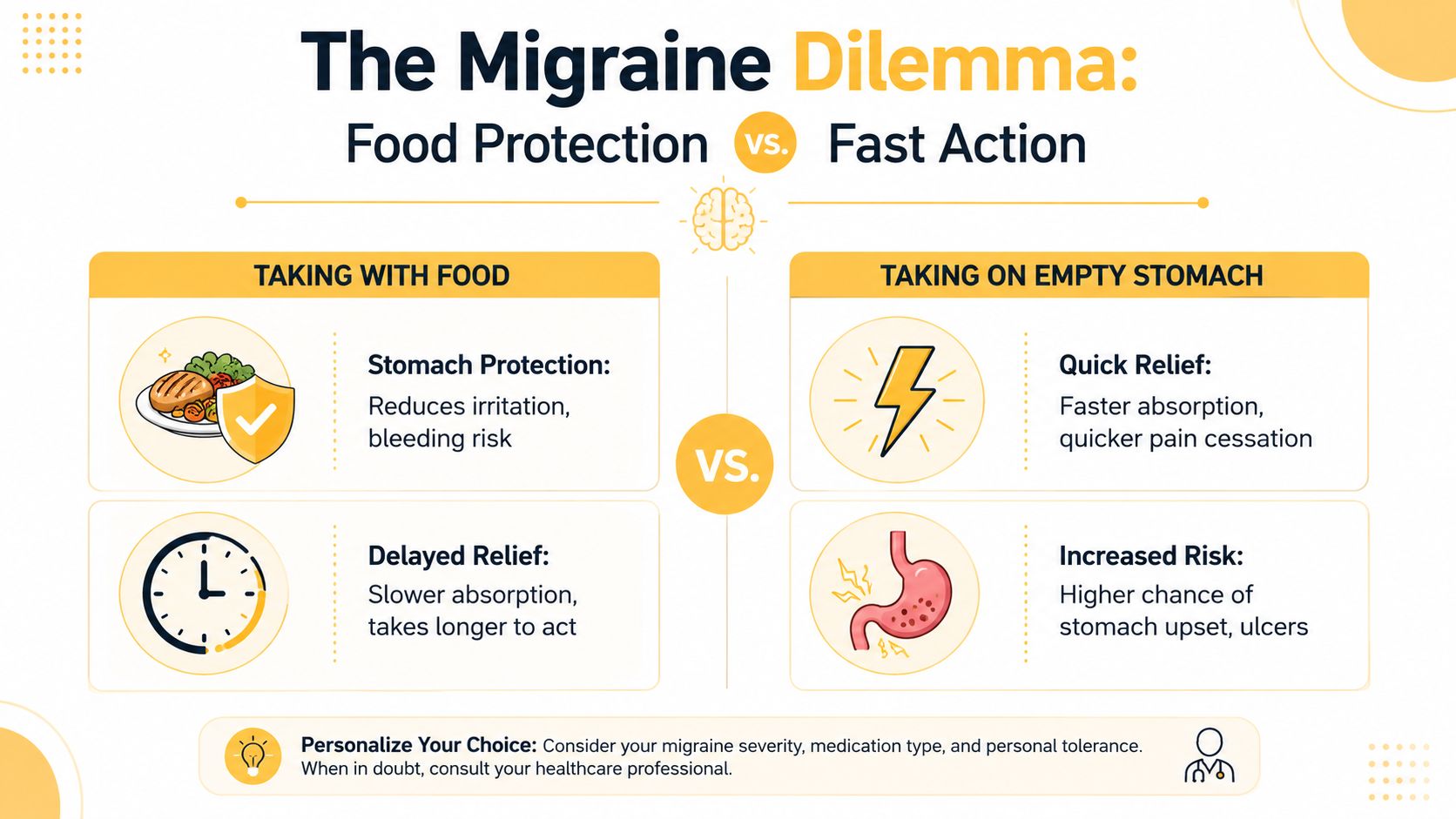
Generic advice says to take Excedrin with food. That's reasonable stomach advice. It's not always satisfying migraine advice.
Why standard advice can feel incomplete
Migraine treatment is often time-sensitive. For some people, once the attack gets established, the chance of quick relief drops. That's why the usual “just eat first” advice can feel frustrating when you know your attack is accelerating.
A source discussing this trade-off notes that, for migraine sufferers, food may delay absorption enough that pain isn't halted within the needed window, which may contribute to medication overuse headache, also called MOH or rebound headache, in some patterns of repeated use. It frames the dilemma clearly in its discussion of Excedrin on an empty stomach and delayed relief concerns.
That doesn't mean taking it fasting becomes a good idea. It means the decision can feel bad either way when you're trying to balance stomach safety with the need to stop an attack early.
A more realistic way to think about the trade-off
Instead of treating this like a simple right-or-wrong rule, treat it like a risk-management problem.
- If stomach safety is your immediate concern, taking Excedrin with at least a little food or milk is the more protective option.
- If fast migraine relief is your immediate concern, it's worth noticing how often you feel forced into risky timing decisions and bringing that pattern to a clinician.
- If alcohol is part of the picture, the decision gets even more complicated. ReliefMigraine's article on the alcohol migraine trigger can help you think through that overlap, especially if attacks often happen after drinking.
The real problem usually isn't that you're “taking it wrong.” It's that your current plan may not fit how your migraine attacks actually show up.
People with migraine attacks on waking, attacks with nausea, or attacks that escalate rapidly often need a more thoughtful strategy than “eat first and hope for the best.”
Who Is at Higher Risk for Stomach Complications
Some people can get away with occasional mistakes and only end up with a rough stomach. Others have a much narrower margin for error.
Risk factors worth taking seriously
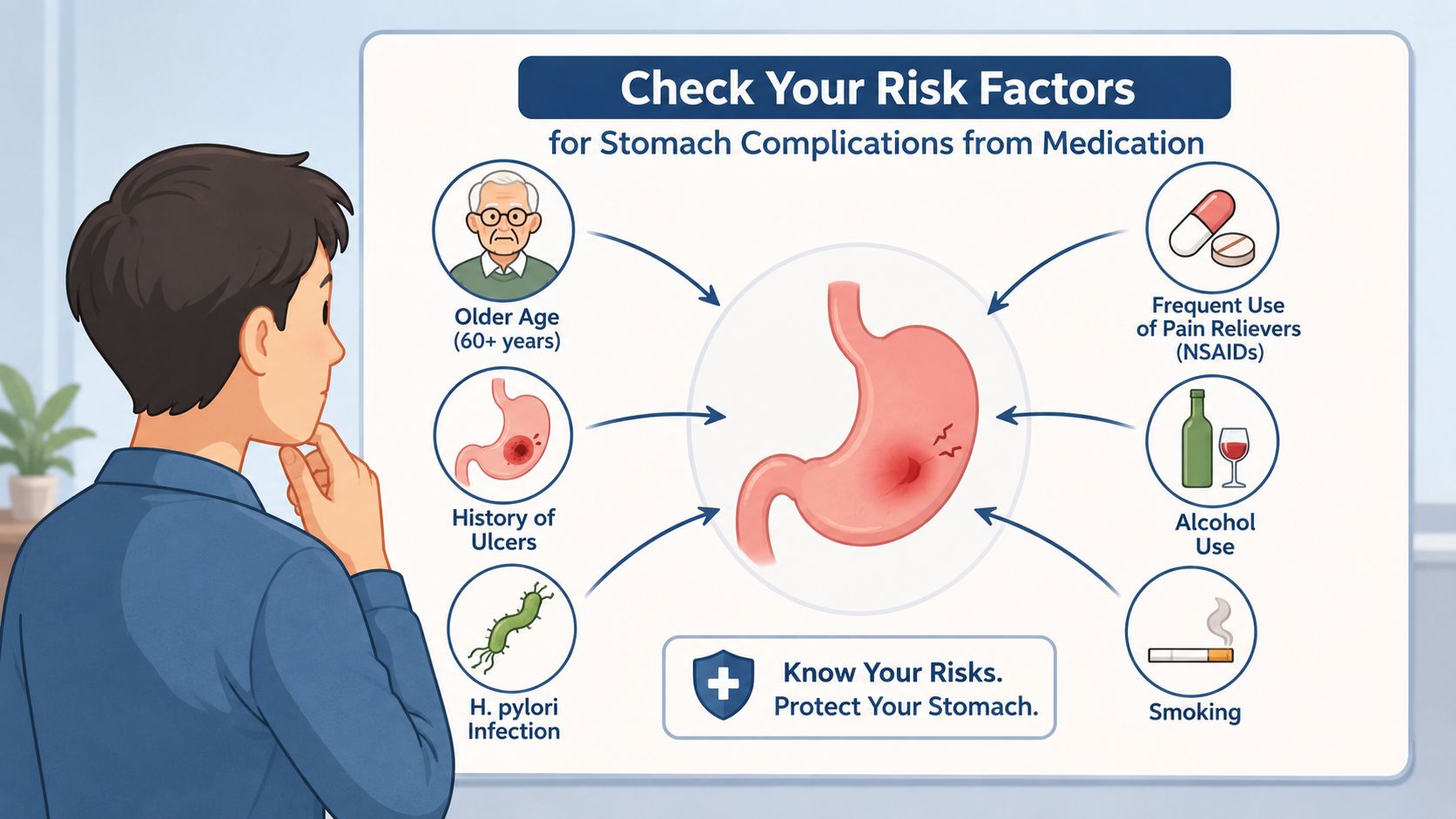
Clinical evidence indicates that aspirin alone can raise the risk of peptic ulceration and bleeding by 1.5- to 3-fold when taken on an empty stomach, and the combination of aspirin and caffeine can make gastric complications more likely because caffeine stimulates gastric acid secretion, according to this discussion of Excedrin, fasting, and gastric risk.
That matters more if any of these apply to you:
- Past stomach problems: A history of ulcers, gastritis, or previous gastrointestinal bleeding lowers your margin for risk.
- A sensitive upper GI tract: If you already deal with reflux, frequent nausea, or stomach burning, an aspirin-containing product may hit harder.
- Regular alcohol use: Alcohol can aggravate stomach irritation and also complicate the acetaminophen side of the formula.
- Repeated NSAID exposure: If you also use other over-the-counter pain relievers in the same drug family, the cumulative stomach burden can rise.
- Frequent need for acute medication: If you keep reaching for Excedrin over and over, the issue may no longer be just stomach irritation. It may be a sign your overall migraine plan needs updating.
A good question to ask yourself is not “Can my stomach handle this once?” It's “What happens if this becomes my pattern?”
Practical Strategies for Safe and Effective Migraine Relief
If Excedrin is the only thing you have available, the goal is harm reduction. You want to protect your stomach without making the attack harder to treat.
What tends to work better in real life
A full heavy meal often isn't realistic during migraine. A small buffer is usually more practical.
Consider options like:
- A few plain crackers: Small, bland, and often easier to tolerate when nausea is present.
- A banana or similar simple snack: Gentle enough for some people who can't face a full breakfast.
- Milk if you tolerate it well: Product guidance commonly mentions taking Excedrin with food or milk for stomach protection.
- Water first: Even when appetite is low, getting some fluid in can make medication feel less harsh.
Keep your approach simple. During a migraine attack, complicated routines tend to fall apart.
Small, tolerable food is often more realistic than “eat a real meal first.”
It also helps to build a migraine plan for the situations that catch people off guard most often. Think about early-morning attacks, overnight attacks, travel days, and attacks that come with nausea before pain peaks. Those are the moments when empty-stomach decisions happen.
What usually doesn't help much
Some habits sound sensible but often backfire:
- Waiting too long because you can't eat perfectly: If your only standard is a full meal, you may delay treatment until the attack is much harder to stop.
- Using Excedrin too often because it's familiar: That can pull you toward rebound patterns.
- Ignoring your monthly use pattern: Excedrin Migraine should not be used for 10 or more days per month, because frequent use beyond that threshold can cause medication overuse headache, which can worsen head pain and migraine frequency, as noted in this article on the Excedrin Migraine warning and MOH risk.
A practical notebook or app log can help you spot when “occasional rescue medication” has gradually become a routine. Write down the date, whether you ate first, whether nausea was present, how fast the medication seemed to work, and whether the headache returned.
When to Talk to Your Doctor About Headaches and Medication
Some medication questions can wait for your next appointment. Some headache symptoms should never wait.
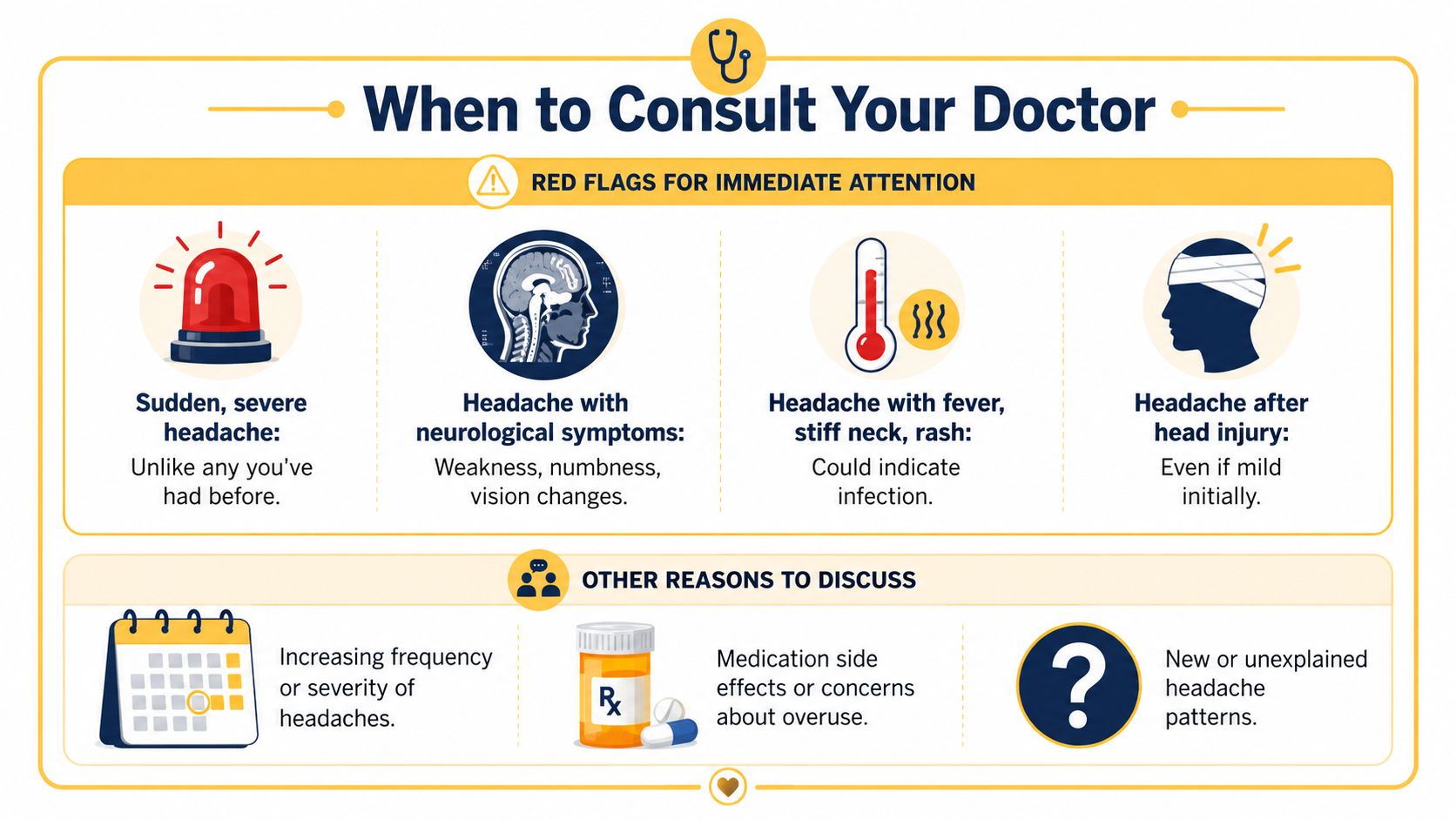
This visual guide helps separate the two.
Get urgent care right away for these red flags
Seek immediate medical care if you have:
- A sudden severe headache: Especially one that feels unlike your usual migraine pattern.
- Headache with fever or a stiff neck: This can signal something more serious than migraine.
- Neurological changes: Weakness, numbness, confusion, new trouble speaking, or vision changes need urgent evaluation.
- Headache after head injury: Even if the injury seemed minor at first.
This article is for informational purposes and is not medical advice. Consult a healthcare provider for personalized guidance.
Make a routine appointment if this pattern sounds familiar
Schedule a non-urgent discussion if:
- Your attacks are getting more frequent
- Over-the-counter medication isn't working reliably
- You're worried you're taking Excedrin too often
- Your stomach reacts badly whenever you use it
- Your headache pattern has changed
If you're considering a broader plan, ReliefMigraine's article on migraine prevention medication can help you prepare for that conversation in a more informed way.
Some people also find it easier to process this topic in video form:
Bring specifics to your appointment. Note when attacks start, whether you wake up with them, how nausea affects eating, what you took, and whether the medication worked before the pain escalated.
If you want clearer patterns before that conversation, Relief can help you track symptoms, triggers, and medication use so you can see what's happening instead of trying to reconstruct it from memory.


