
Chronic migraine is a headache on 15 or more days a month for more than 3 months, with at least 8 of those days having migraine features. That's the official chronic migraine definition, but in real life it can feel much less neat, especially when the pain never seems to fully switch off.
If you're reading this because your head hurts more days than it doesn't, you're not overreacting. One of the hardest parts of frequent migraine is that the textbook definition sounds tidy, while your actual experience may feel messy, blurry, and hard to count. You may wonder whether you're having separate attacks, one long attack, or just living in a constant “almost migraine” state.
That confusion is common. Chronic migraine is diagnosed with a formal set of criteria, but living with it often means symptoms overlap: head pain, light sensitivity, nausea, brain fog, neck discomfort, and fatigue can bleed from one day into the next. Understanding the definition can help you talk with your clinician more clearly and track what's happening with less guesswork.
This article is for informational purposes and is not medical advice. Consult a healthcare provider for personalized guidance. If you have a sudden severe headache, headache with fever or stiff neck, new neurological changes, or a headache after a head injury, seek immediate medical care.
Table of Contents
- Is It Chronic Migraine? An Introduction
- What counts as a migraine-feature day
- Lifestyle foundations that support treatment
- Medication and non drug options
- What progress can look like
Is It Chronic Migraine? An Introduction
When people search for the chronic migraine definition, they're usually not looking for theory. They're trying to answer a personal question: “Is this what's happening to me?”
The official answer is specific. The International Headache Society defines chronic migraine as headache on at least 15 days per month for more than 3 months, with at least 8 of those days featuring migraine characteristics such as throbbing pain, sensitivity to light, sensitivity to sound, or nausea, according to SingleCare's summary of ICHD-3 criteria and migraine statistics.
That gives doctors a clear threshold. It also gives you a practical starting point. If you've been saying, “I have migraines all the time,” this is the framework clinicians use to sort out whether those frequent headaches fit the chronic migraine diagnosis.
Practical rule: Count days, not just dramatic attacks. A lower-grade headache day still matters if it's part of the monthly pattern.
The tricky part is that migraine is not the same thing as “a bad headache.” Migraine is a neurological condition. Head pain is one part of it, but so are symptoms like photophobia (light sensitivity), phonophobia (sound sensitivity), nausea, and the washed-out feeling that can linger before or after the pain peaks.
If your symptoms feel hard to classify, that doesn't mean your experience is invalid. It often means you need a clearer way to log what's happening day by day, especially when symptoms aren't arriving in neat, isolated attacks.
The Official Chronic Migraine Definition Explained
Doctors use a formal checklist because chronic migraine can feel blurry from the inside. One day may be a clear migraine attack. The next may feel like leftover pressure, light sensitivity, neck pain, or a low-grade headache that never fully clears. The official definition gives that blur some structure.
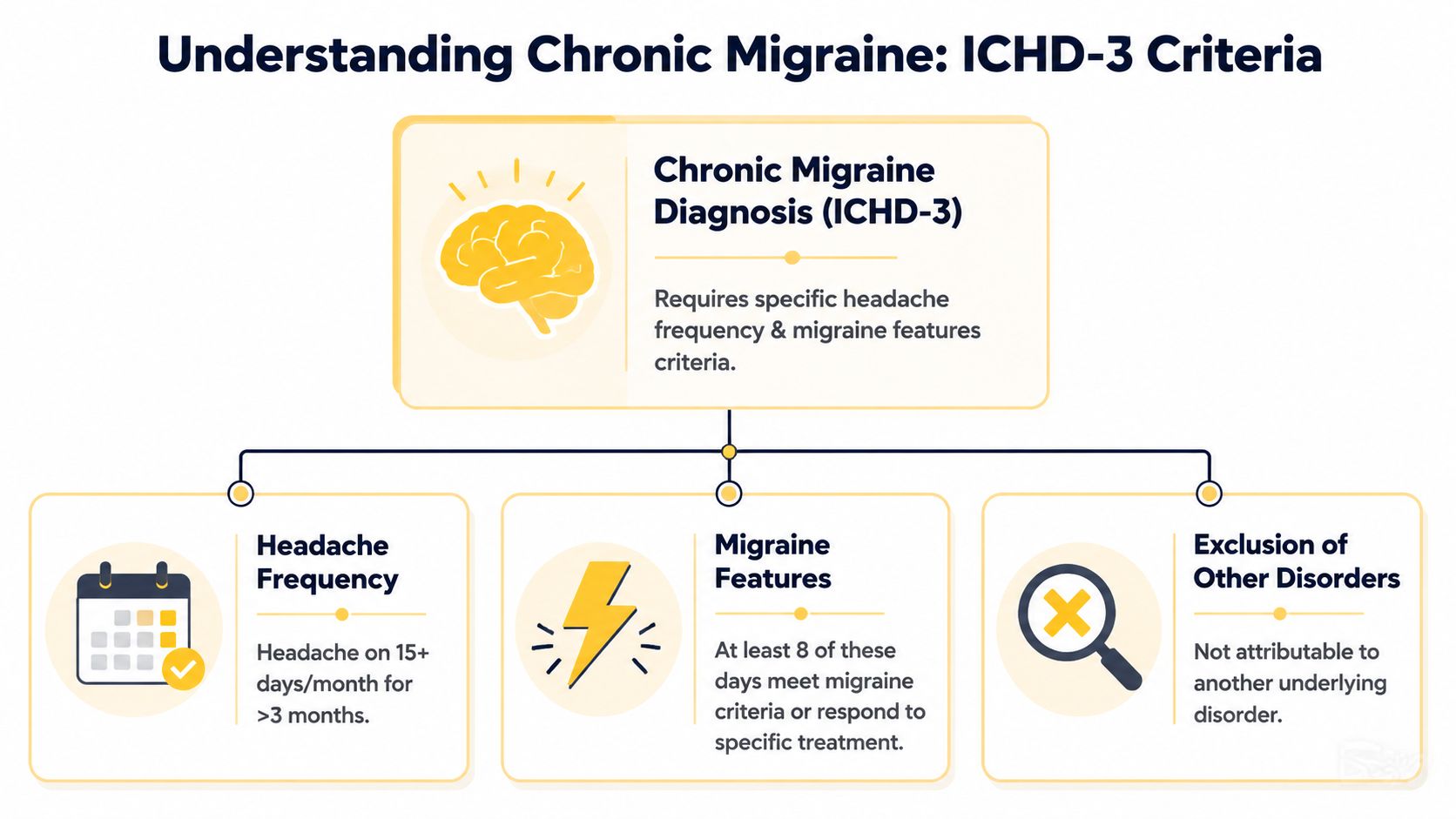
You will often hear this summarized as the 15/8 rule. It is shorthand, not the whole story.
A chronic migraine diagnosis generally means:
- At least 15 headache days per month
- For more than 3 months
- At least 8 of those days have migraine features
A helpful way to sort this out is to separate headache days from migraine-feature days. The first category is broad. It includes days when your head hurts, feels heavy, pressured, sore, or unusually tender. The second category is narrower. Those are days with symptoms that fit migraine, such as throbbing pain, nausea, sensitivity to light, or sensitivity to sound.
That distinction matters because many people only count the dramatic days.
In real life, chronic migraine often behaves more like bad weather that keeps drifting in and out than a single storm that starts and stops cleanly. You may have one unmistakable attack, then two or three “off” days afterward where the pain is milder but your brain still does not feel normal. Those lower-intensity days still matter when a clinician is figuring out whether the monthly pattern fits chronic migraine.
What counts as a migraine-feature day
A migraine-feature day does not have to be identical to every other one. Some people get pounding one-sided pain. Others mainly notice nausea, sound sensitivity, visual symptoms, or pain that worsens with routine activity. The pattern matters more than whether each day looks dramatic.
Here is a practical way to picture the difference:
Type of dayWhat it may feel likeHeadache dayYour head hurts, feels heavy, pressured, or sore enough that you notice itMigraine-feature dayHead pain comes with migraine symptoms such as throbbing, light sensitivity, sound sensitivity, or nausea
This is also where people get stuck. If your month contains a mix of severe attacks, faded-aftershock days, and background head pain, it can be hard to know what to count. That confusion is common. It is one reason symptom tracking helps so much. A calendar, app, or diary can show whether those scattered-feeling days are forming a repeated pattern.
Some months are easy to count. Other months feel like one long stretch of “I was never fully okay.”
The diagnosis is also about accuracy. A clinician has to ask whether another headache disorder, medication overuse, or another medical problem could better explain the pattern. Chronic migraine is a recognized diagnosis, but it is still a diagnosis that depends on careful history, not guesswork.
As noted earlier, chronic migraine is relatively common and can develop gradually from more occasional migraine rather than appearing all at once. That gradual shift is part of why tracking matters so much. It helps turn a vague sense of “something has changed” into a record a clinician can use.
How Chronic Migraine Differs From Episodic Migraine
You might have one month where migraine shows up as a few clear attacks with recovery days in between. Then, over time, the spaces between attacks start shrinking. The pain may become less dramatic on some days but more constant overall. That shift is often what makes the difference between episodic and chronic migraine feel confusing in real life.
The clinical difference starts with frequency, but the day-to-day difference is often about clarity. Episodic migraine means fewer than 15 headache days per month. Chronic migraine means 15 or more headache days per month for more than 3 months, with migraine features on at least 8 of those days. On paper, that looks tidy. In practice, it can feel more like weather that used to come in storms and now lingers in the air.
Episodic Migraine vs. Chronic Migraine at a Glance
FeatureEpisodic MigraineChronic MigraineHeadache frequencyFewer than 15 headache days per month15 or more headache days per month for more than 3 monthsMigraine-feature daysCan varyAt least 8 days per month have migraine featuresAttack boundariesOften easier to identifyOften harder to separate one attack from the nextSymptom-free timeUsually more distinct breaks between attacksMay include fewer clear breaksTrackingOften easier to log as separate eventsOften requires logging patterns, symptom drift, and background pain
The line is clear. The experience often is not.
A diagnosis needs a cutoff. Human bodies rarely follow one neatly.
Someone with episodic migraine may still be heavily affected, especially if attacks are long, disabling, or hard to predict. Someone with chronic migraine may not have severe pain every single day, yet still feel unwell often enough that work, family life, and planning become much harder. The main difference is not just "more pain." It is often less recovery, less separation between attacks, and less certainty about what kind of day you are having.
That blurry middle ground matters. If you have many headache days in a month, you may start asking questions that do not have obvious answers. Is this a new attack, a leftover migraine day, or a lower-grade headache that never fully resolved? Those details can sound small, but they affect treatment decisions and whether your pattern meets the formal definition.
A practical way to compare them is this:
- Episodic migraine often feels event-based. You can more easily point to an attack starting, peaking, and ending.
- Chronic migraine often feels pattern-based. Symptoms may drift, overlap, or fade without fully clearing.
- Episodic migraine usually leaves more visible breaks. Those breaks make counting simpler.
- Chronic migraine often creates a blur between attacks. That blur is one reason people undercount or misremember their headache days.
This can be frustrating, especially if you feel sick often but are not sure what "counts." You are not failing to describe your symptoms clearly. The condition itself can become harder to separate into tidy episodes as frequency rises.
That is also why tracking tools matter so much here. A calendar, app, or paper diary can work like a time-lapse view of your month. Instead of relying on memory alone, you can see whether you are having isolated attacks with recovery days, or whether symptoms are spreading into a more continuous pattern. For many people, that record is what turns a vague sense of "I feel off all the time" into something specific enough to discuss with a clinician.
The diagnosis uses a threshold. Living with migraine often feels more like a spectrum.
What Living With Chronic Migraine Feels Like
People often expect chronic migraine to feel like repeated severe attacks with clean starts and stops. For many, it doesn't.
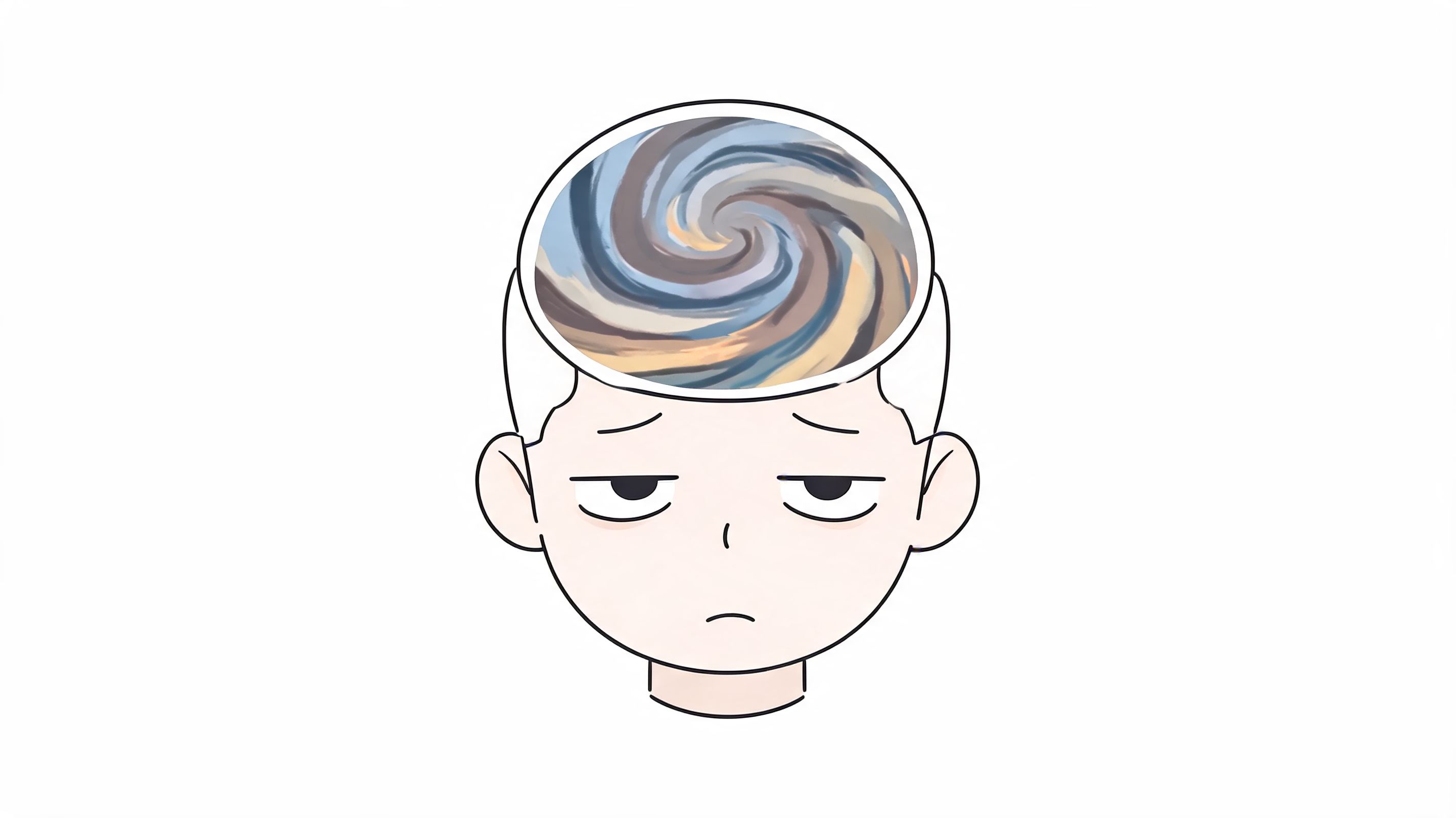
Why attacks can blur together
Research described in this PubMed Central article on chronic migraine as a neurological state transition explains that chronic migraine can involve a shift from discrete attacks to a continuous blur of overlapping pain and symptoms, making it hard to tell where one attack ends and another begins.
That “blur” is one of the most important practical parts of the chronic migraine definition, and it's also the part many short definitions leave out.
You might wake up with a low-grade headache, push through work, then notice light sensitivity by afternoon. By evening, nausea starts. The next morning, the sharp pain eases, but your brain still feels slow and your head still feels tender. Was that one migraine? Two? A lingering postdrome? A headache day that turned into a migraine day? Sometimes there isn't a clean answer.
What people often struggle to explain
Many people with chronic migraine describe a few recurring problems:
- Background pain: not always severe, but rarely fully absent
- Persistent sensitivity: light, sound, smell, or motion may stay bothersome even between stronger flares
- Mental exhaustion: it takes energy to decide whether symptoms are “bad enough” to count
- Uncertainty: you may start doubting your own memory because every week feels similar
This matters emotionally as much as medically. When symptoms blend together, it can become harder to answer simple questions from a doctor, employer, partner, or even yourself.
“Continuous blur” is a clinical idea, but it also describes a real daily frustration. You may know you're unwell without being able to neatly label each hour.
That doesn't mean you're tracking badly. It means chronic migraine often behaves in a way that resists simple counting. Better tracking doesn't erase that complexity, but it can make the pattern more visible.
Common Risk Factors and Associated Conditions
Not everyone with episodic migraine develops chronic migraine. Still, some patterns make progression more likely, and knowing that can help you have a more focused conversation with a clinician.
Why migraine can become more frequent
The risk of progressing from episodic to chronic migraine is about 2.5% per year, according to this ISPOR presentation on chronic migraine criteria and prevalence. The same source notes that 26% to 70% of people with chronic migraine can revert to an episodic pattern, and about 20% may experience remission within two years with appropriate management.
Those numbers are worth sitting with. Chronic migraine can be persistent, but it is not always fixed in one direction.
Research and clinical guidance often point to several contributors that may matter in real life:
- Medication overuse headache: frequent use of acute pain-relief medicines can complicate the picture for some people
- High stress load: stress doesn't “cause” migraine in a simplistic way, but it can make a vulnerable nervous system harder to calm
- Sleep disruption: poor sleep, short sleep, or irregular sleep can make patterns harder to stabilize
- Other health conditions: anxiety, depression, and chronic pain conditions can overlap with migraine and increase the overall burden
For a deeper overview, Relief Migraine's guide to migraine risk factors can help you organize what to bring up at your next appointment.
A red flag list you should not ignore
Frequent migraine can make it tempting to normalize every head symptom. Don't do that with red flags.
Seek immediate medical care for:
- Sudden severe headache: especially if it reaches peak intensity fast
- Headache with fever or stiff neck: this can signal a serious medical problem
- New neurological changes: such as weakness, confusion, vision loss, or trouble speaking
- Headache after head injury: even if you also have a history of migraine
If you already live with migraine, those warning signs can be easier to dismiss. They still deserve urgent attention.
Approaches for Managing Chronic Migraine
Managing chronic migraine usually means reducing frequency, lowering severity, and creating more symptom-light time. It rarely comes down to one perfect fix.
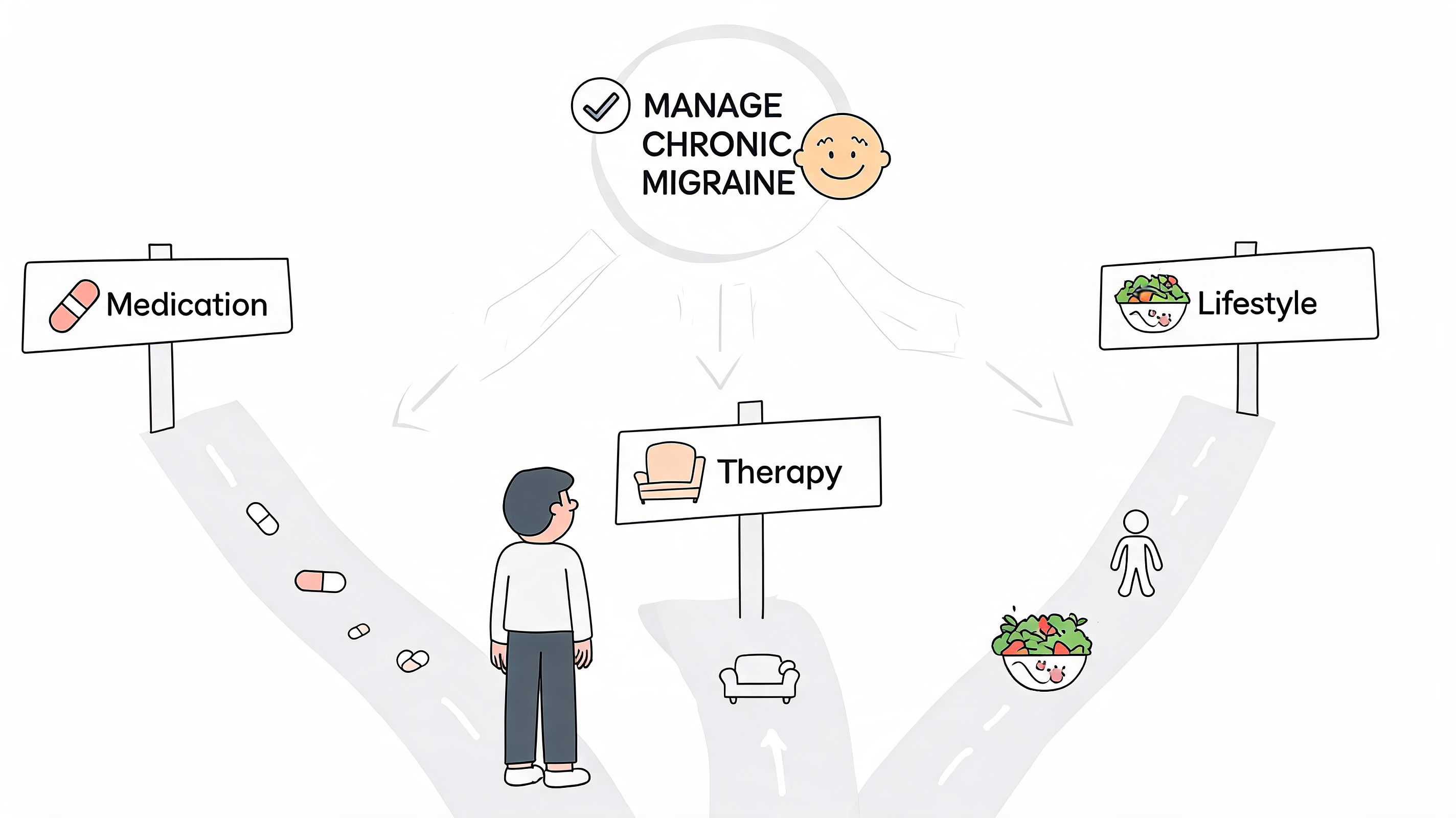
This article is for informational purposes and is not medical advice. Consult a healthcare provider for personalized guidance about symptoms, medications, and treatment choices.
Lifestyle foundations that support treatment
These steps won't “cure” migraine, but they can make your baseline more stable:
- Regular sleep: going to bed and waking up at roughly similar times can reduce one major source of nervous system disruption
- Steady meals and hydration: long gaps without food or fluid can make some people more vulnerable to attacks
- Stress regulation: that might mean therapy, relaxation training, mindfulness, or reducing overload where possible
- Pattern awareness: some people identify triggers linked to weather, air quality, missed meals, or routine changes
If food patterns are part of your migraine picture, ReliefMigraine's article on building a practical migraine diet plan may help you track possibilities without treating any food as a universal trigger.
Medication and non drug options
Migraine care often combines several treatment categories:
CategoryWhat it may includeOver the counter optionsNonprescription pain relief, used with medical guidance to avoid overuse problemsPrescription acute treatmentMedicines taken when a migraine attack startsPrescription preventive treatmentMedicines or procedures aimed at reducing how often migraine happensComplementary therapiesApproaches such as biofeedback, acupuncture, or behavioral therapy
Some people benefit most from acute treatment plus better routines. Others need a stronger preventive strategy because the attack frequency is too high to keep reacting one episode at a time.
A short educational overview can help if you're sorting through the options:
What progress can look like
Progress may be slower and less dramatic than you want. It may look like fewer severe days, shorter flares, less nausea, or more clear hours between symptoms.
That matters. A person moving from constant symptom spillover to more distinct attacks may feel improvement before they see a perfect month on paper.
You can also use tools to support this process. One example is Relief, an iOS app that combines symptom logging with local weather, air quality, and pollen data to help people notice patterns in migraine risk and attack timing. That kind of structured tracking can support, but not replace, medical care.
Improvement often starts as clarity. Once you can see the pattern, you and your clinician can respond to it more effectively.
Why Symptom Tracking Is Essential for Chronic Migraine
With episodic migraine, memory is sometimes enough. With chronic migraine, it usually isn't.
Tracking helps when memory does not
When symptoms overlap, your brain tends to compress the month into vague impressions. You remember the worst days and lose the quieter ones. But diagnosis and treatment decisions often depend on the full pattern, not just the most dramatic attacks.
The Migraine World Summit discussion of chronic migraine's “continuous blur” and remission patterns highlights why this is so difficult. Chronic migraine can make episodes hard to delineate, and about 20% of patients may remit within 2 years, which makes it important to spot what's changing when something starts helping.
What to log when everything feels blended together
If counting “attacks” feels impossible, try logging smaller, clearer units:
- Headache presence: did you have head pain today or not?
- Migraine features: light sensitivity, sound sensitivity, nausea, throbbing, one-sided pain
- Severity changes: morning, afternoon, and evening can look different
- Possible context: sleep disruption, stress, weather shifts, meals, caffeine changes, medications used
A tracking tool can help turn “I feel bad all the time” into something more usable: “I had head pain on most days, but nausea clustered after poor sleep,” or “light sensitivity spikes with weather changes even when pain stays mild.”
For people living in the blur, that's not just data. It's validation.
If you want a structured way to do that, a dedicated migraine tracking app can make daily logging faster and more consistent than trying to reconstruct a month from memory.
Relief can help you track headache days, migraine features, medications, and environmental patterns in one place, so you have clearer records for yourself and more useful information to bring to your healthcare provider.


