
A hot shower can help some headaches, but it isn't a universal fix. It's more likely to soothe tension-type headaches and can worsen migraines, so the best temperature depends on the kind of head pain you're having.
If you're reading this with one hand on the bathroom faucet, you're not overthinking it. When your head hurts, simple things matter. A shower is easy, immediate, and doesn't require another decision when you already feel maxed out. The tricky part is that migraine and headache aren't the same thing, and your body may react very differently to heat depending on what's driving the pain.
That's why it helps to treat temperature as information, not just comfort. If warmth eases tight neck-and-shoulder pain, that tells you one thing. If heat makes the pain throb harder or ramps up nausea, that tells you something else. Used carefully, a shower can become a small self-test that helps you learn your patterns.
This article is for informational purposes and is not medical advice. Consult a healthcare provider for personalized guidance.
Table of Contents
- That Moment You Wonder If a Hot Shower Could Fix Your Headache
- Heat can relax muscle-driven pain
- Steam may help when pressure is part of the problem
- Why blood flow changes can help or backfire
That Moment You Wonder If a Hot Shower Could Fix Your Headache
You feel the pain building, maybe behind your eyes, maybe across your forehead, maybe climbing up from your neck. You're tired, you want relief fast, and a hot shower sounds almost reasonable enough to believe in. Sometimes it helps. Sometimes it makes everything worse.
That uncertainty is frustrating, especially if you live with migraine and you've already had the experience of trying a “simple remedy” that backfired. One day warmth feels calming. Another day the same heat makes your head pound and your stomach turn. That doesn't mean you're doing anything wrong. It means your symptoms have context.
Practical rule: Don't ask only, “Does a hot shower help headaches?” Ask, “What happens when I use warmth during this specific kind of attack?”
That small shift matters. A dull, band-like ache with tight shoulders may respond differently than a throbbing attack with photophobia (light sensitivity), nausea, or aura (temporary neurological symptoms such as visual changes that can happen before or during a migraine attack).
Instead of treating the shower as a cure, treat it like a clue. Notice what your pain feels like before you step in. Notice what changes while the water runs. Notice what happens after. Over time, that gives you more than temporary relief. It gives you usable information.
How Hot Showers Affect Your Body and Brain
A hot shower changes more than your skin temperature. It can affect muscles, blood vessels, and the way pressure feels in your face and head.
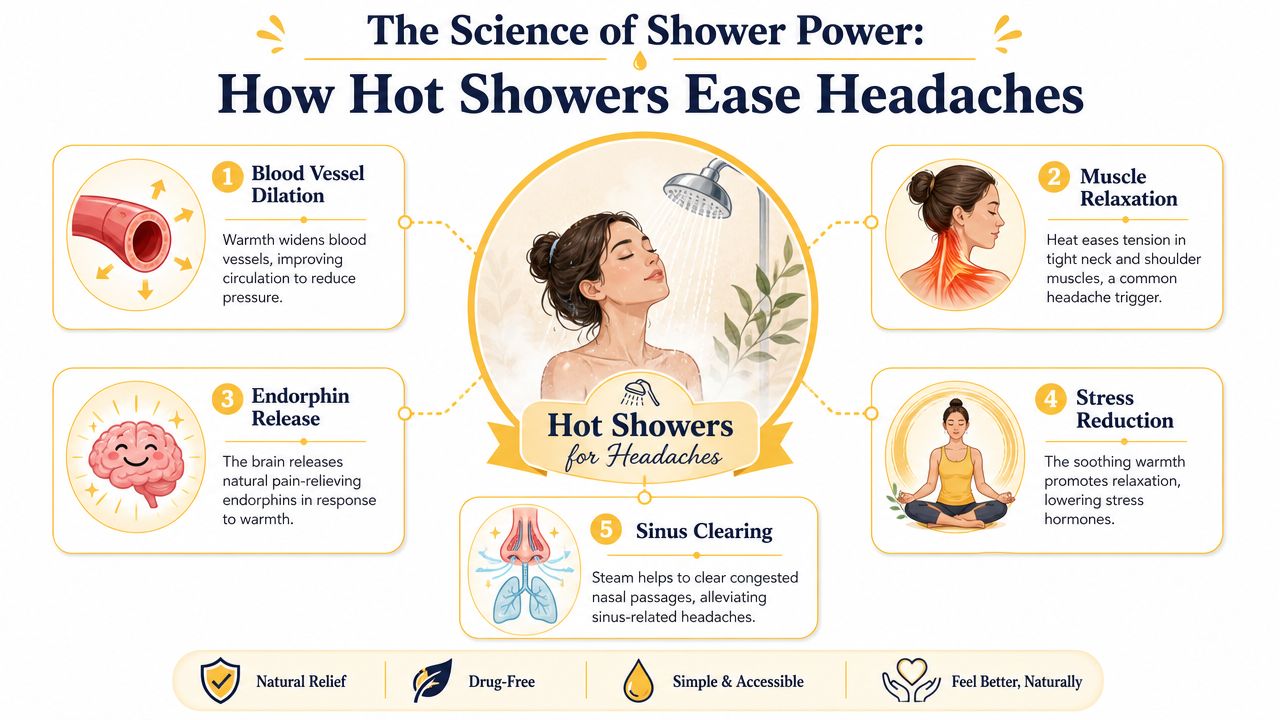
Heat can relax muscle-driven pain
For tension-type headache, hot showers are most plausibly helpful through heat-induced vasodilation and skeletal muscle relaxation. Warm water can reduce pericranial, neck, and shoulder muscle tension, which often amplifies this kind of pain, as explained in Medical News Today's overview of showers and headaches.
That sounds technical, but the day-to-day version is simple. If your shoulders are up near your ears and your neck feels ropey or stiff, warmth may help those tissues let go a little. That can make the headache feel less intense, even if it doesn't remove it completely.
If muscle tension is a common part of your attacks, it may help to also learn more about what causes migraine headaches, because migraine can overlap with neck pain without being caused by it.
Steam may help when pressure is part of the problem
Steam can feel helpful when head pain comes with congestion or sinus pressure. In that case, the shower isn't acting like a migraine treatment so much as a pressure-relief tool. When the nose and sinuses feel blocked, moisture and warmth may make breathing feel easier and reduce that heavy, stuffed sensation.
This is one reason people sometimes report that showers “help headaches” when they're really helping a sinus-related layer of discomfort.
Warmth tends to make the most sense when your pain feels tight, stiff, or pressure-heavy rather than throbbing and overstimulated.
Why blood flow changes can help or backfire
Heat also widens blood vessels. That's one reason it can feel soothing in tense muscles. But it's also why heat is a mixed tool. In one setting, increased circulation feels relieving. In another, it may intensify pulsating pain.
That's where confusion starts. The same hot water can relax your neck and at the same time aggravate a migraine pattern. So if you've ever thought, “Hot showers help my headaches, but only sometimes,” that inconsistency makes sense.
Why a Hot Shower Can Make a Migraine Worse
Migraine often behaves differently from a general headache, which is why broad advice about “heat for head pain” can fall apart fast.
A migraine attack can involve throbbing or pulsating pain, nausea, sensitivity to light or sound, dizziness, and sometimes aura. If that's the kind of attack you're having, heat may feel like adding volume to a system that's already overloaded.
Migraine is more than a bad headache
Heat can worsen migraines, and hot-water exposure is even linked to a rare trigger phenomenon called bath-related headache. A review noted about 50 reported cases from 2000 to 2017, involving showers, hot baths, and steam exposure, with prevention focused on avoiding the trigger rather than using heat as treatment, according to this review on bath-related headache and hot-water exposure.
You don't need to have that rare condition for heat to be a bad fit. Many people with migraine are sensitive to body temperature shifts, and a hot shower can worsen nausea or make pounding pain feel sharper. If your head pain is throbbing and you feel pulled toward a cool, dark room, that's useful information.
This is also why weather and environment can matter. If heat, humidity, or steam seem to change your attacks, tracking patterns around humidity and headaches can be more helpful than guessing.
Heat vs. Cold Therapy for Different Headache Types
| Headache Type | Hot Shower Effect | Recommended Action |
|---|---|---|
| Tension-type headache | May help by relaxing tight neck and shoulder muscles | Try gentle warmth and stop if pain escalates |
| Migraine-like headache with throbbing, nausea, or light sensitivity | May worsen symptoms | Choose lukewarm or cool temperature instead |
| Sinus-pressure pattern | May help steam loosen congestion and ease pressure | Try warm steam briefly and reassess symptoms |
| Heat-sensitive or hot-water-triggered pattern | May trigger or intensify pain | Avoid hot water and use a cooler approach |
If heat makes your pain pulse harder, causes dizziness, or worsens nausea, treat that as a “no” from your nervous system.
Your Guide to Using Heat and Cold Therapy Safely
The safest way to use temperature therapy is to treat it like a short experiment, not an endurance test.
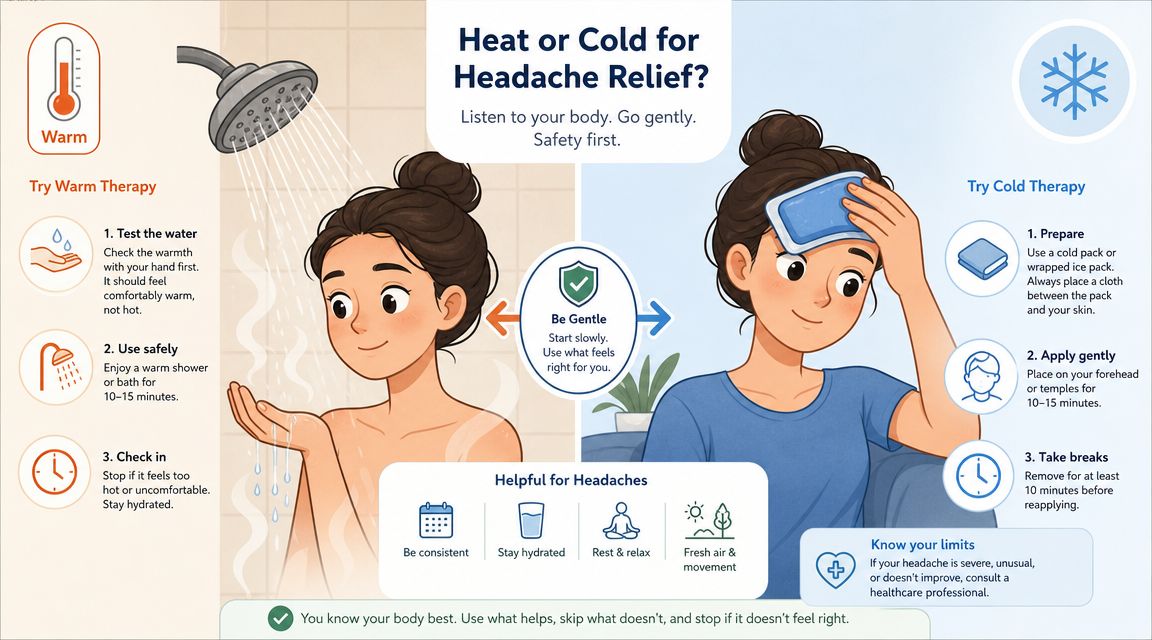
When to try a warm shower
Experts suggest limiting warm water exposure to 5–10 minutes for tension headaches and using only brief, gentler exposure when symptoms seem more migraine-like, as noted in this guidance on showers for headache relief.
A warm shower makes the most sense when:
- Your neck and shoulders feel tight: The pain seems to start in muscle tension.
- The headache feels dull or pressing: It doesn't have that pounding, wave-like migraine feel.
- Steam feels relieving, not overwhelming: Congestion or sinus pressure is part of the picture.
Keep the water warm, not extreme. Aim the spray at your neck, upper back, and shoulders instead of blasting your face with heat. If symptoms ramp up, get out.
When cold therapy makes more sense
Cold often fits better when the pain is throbbing, you feel nauseated, or light and sound are bothering you. You don't need an ice-cold shower if that sounds miserable. A cool washcloth or cold pack may be easier to tolerate.
Try this simple check:
- Notice the pain quality: Tight and stiff, or pulsing and sensitive?
- Pick one temperature tool: Warm shower, lukewarm shower, or cold compress.
- Reassess quickly: If the sensation turns worse instead of better, switch strategies.
A short video walkthrough can help if you want a visual guide to gentle relief habits during an attack.
The lukewarm middle ground
If you aren't sure whether heat helps or hurts, lukewarm is often the safest middle path. It lets you shower without pushing your body toward intense heat. That can be especially useful when you need to get clean during an attack but don't want to gamble on making it worse.
Try this test once: Log what the pain felt like before the shower, what temperature you used, and whether symptoms improved, stayed the same, or got worse.
Do that consistently enough and you stop relying on memory, which is unreliable when you're hurting.
Alternative Remedies When a Shower Is Not the Answer
Sometimes the best answer is to skip the shower entirely.
A few low-effort options to try
If heat has burned you before, keep your backup plan simple:
- Hydration: If you haven't had much to drink, fluids may help if dehydration is adding stress to the situation.
- A dark, quiet room: This is often more useful than any home remedy when sensory overload is driving the attack.
- Gentle neck support or stretching: Only if movement feels soothing, not forced.
- A small amount of caffeine, if it helps you personally: Some people find it useful early in an attack, while others find it aggravating. Your own pattern matters.
If you use devices or non-drug tools, you might also want to compare options like a TENS machine for headache relief, especially if muscle tension is part of your pattern.
What structured water therapy might mean
There is some evidence that water-based therapy may have a role beyond momentary comfort. A migraine hydrotherapy study found that 6 weeks of add-on hydrotherapy led to a significant decrease in headache frequency, intensity, and HIT-6 burden, along with improved vagal tone compared with medication alone, according to this PubMed Central study on migraine hydrotherapy.
That doesn't mean a random hot shower is a treatment plan. It does suggest that structured, repeated water therapy may influence the nervous system in a more meaningful way for some people. The useful takeaway is modest: showers may be one tool among many, not the whole toolbox.
When a Headache Is a Sign of Something More Serious
Most headaches are not emergencies. Some are.
Get urgent care for these red flags
Seek immediate medical care if you have:
- A sudden, severe headache: Especially one that feels like the worst headache of your life.
- Headache with fever or a stiff neck: Don't wait this out.
- Headache after a head injury: Even if it seemed minor at first.
- Neurological changes: Confusion, weakness, numbness, trouble speaking, or major vision changes.
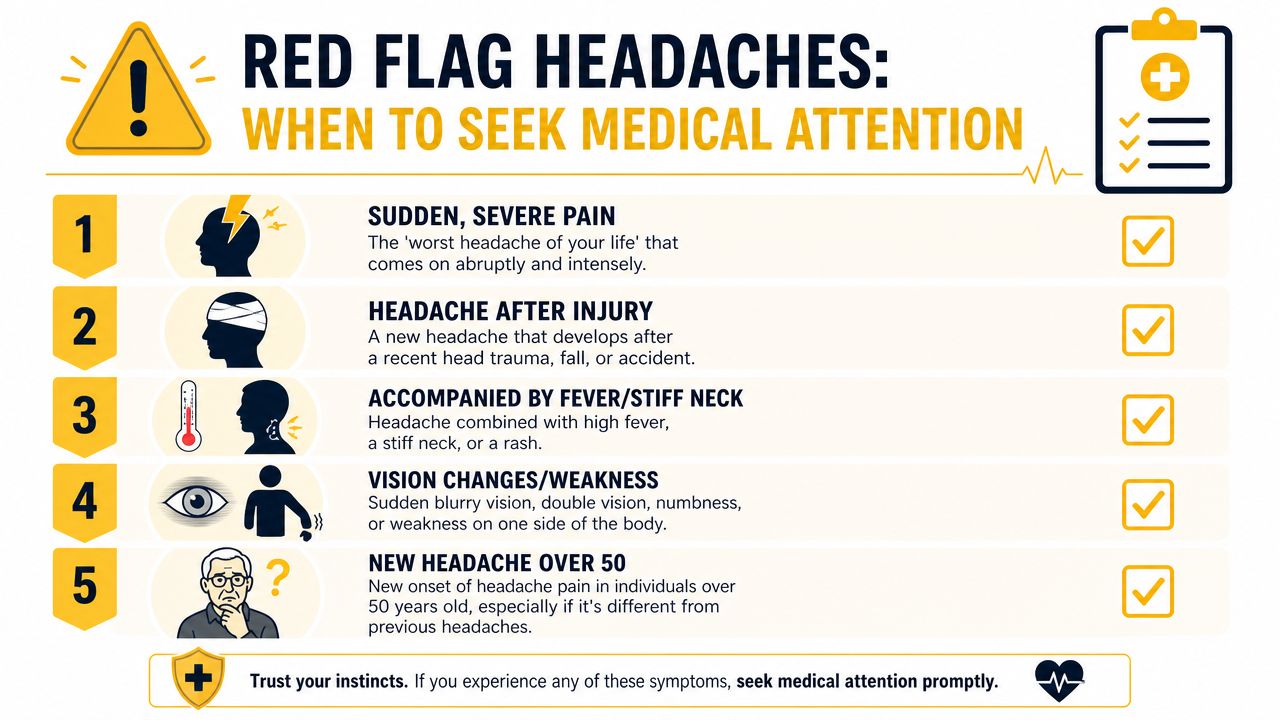
A new headache pattern also deserves attention if it feels distinctly different from what you usually get. Trust the part of you that says, “This isn't my normal.”
What a shower can and cannot tell you
When a warm shower does help a tension or sinus headache, relief is usually felt within 10 to 15 minutes and is typically temporary rather than long-term, as noted in this review of hot showers for headache relief.
That's why a shower should never be your only decision tool. It can help you notice a pattern, but it cannot rule out a dangerous cause. If something feels severe, unusual, or alarming, medical evaluation matters more than home experiments.
If you want to turn these patterns into something more useful than guesswork, Relief can help you log symptoms, temperature responses, and environmental triggers so you can see whether warmth, coolness, humidity, or other factors consistently line up with your attacks.


