
You go to bed tired, sleep for seven or eight hours, and still wake up with a sore neck, pressure behind your eyes, or the kind of head pain that makes the first hour of the day feel wasted. That pattern is common, and a pillow is one of the first things worth checking.
A pillow will not fix every headache. It can help when the problem is tied to neck strain, awkward sleep posture, pressure on the upper shoulders, or a pillow that traps heat and keeps nudging you awake. It is less likely to change headaches driven by dehydration, hormones, sleep apnea, illness, or migraine triggers that have nothing to do with how your head and neck are supported.
That distinction matters.
Some headaches improve because a pillow keeps the neck closer to neutral and reduces the overnight strain that can build into morning pain. Some migraine attacks are not caused by the pillow, but are made worse by sleeping hot, sleeping in a twisted position, or waking up repeatedly because the pillow no longer fits how your body feels that night. Latex has performed better than feather in clinical pillow research, and feather pillows tended to perform worst for waking symptoms, but material is only part of the story.
The goal is not just to match loft to sleep position. It is to choose a pillow that fits the kind of head pain you get, your usual posture, and the triggers that show up at night, especially temperature sensitivity and the fact that pain levels can change from one evening to the next.
Table of Contents
- That Morning Headache Could It Be Your Pillow
- Which headaches are most likely to respond
- Why neck position matters all night
- How long does it take to adjust to a new pillow
- What if my triggers change from night to night
- Can a pillow help if I grind my teeth
That Morning Headache Could It Be Your Pillow
Waking up with head pain makes you question everything. Was it the weather, poor sleep, stress, dehydration, a migraine attack starting overnight, or the pillow you've used for years without thinking about it?
Sometimes it really is the pillow. The most realistic way to think about good pillows for headaches is this: they help most when your pain is mechanically linked to your neck, shoulder position, or the way your head sits for hours while you sleep. That includes many tension-type headaches and cervicogenic headaches, and it can also matter for people with migraine when neck strain is one of their triggers.
A pillow is much less likely to solve a headache that has nothing to do with sleep posture. Migraine is a neurologic condition, not just a neck problem. A supportive pillow may reduce one trigger, but it isn't a universal fix.
Practical rule: If your headache often comes with morning neck stiffness, one-sided neck pain, shoulder tightness, or a sense that your head feels better once you get up and move around, your pillow is worth a closer look.
This article is for informational purposes and is not medical advice. Consult a healthcare provider for personalized guidance.
A few situations don't belong in the try-a-new-pillow category. If you have a sudden severe headache, headache with fever or stiff neck, neurological changes, or headache after head injury, seek immediate medical care.
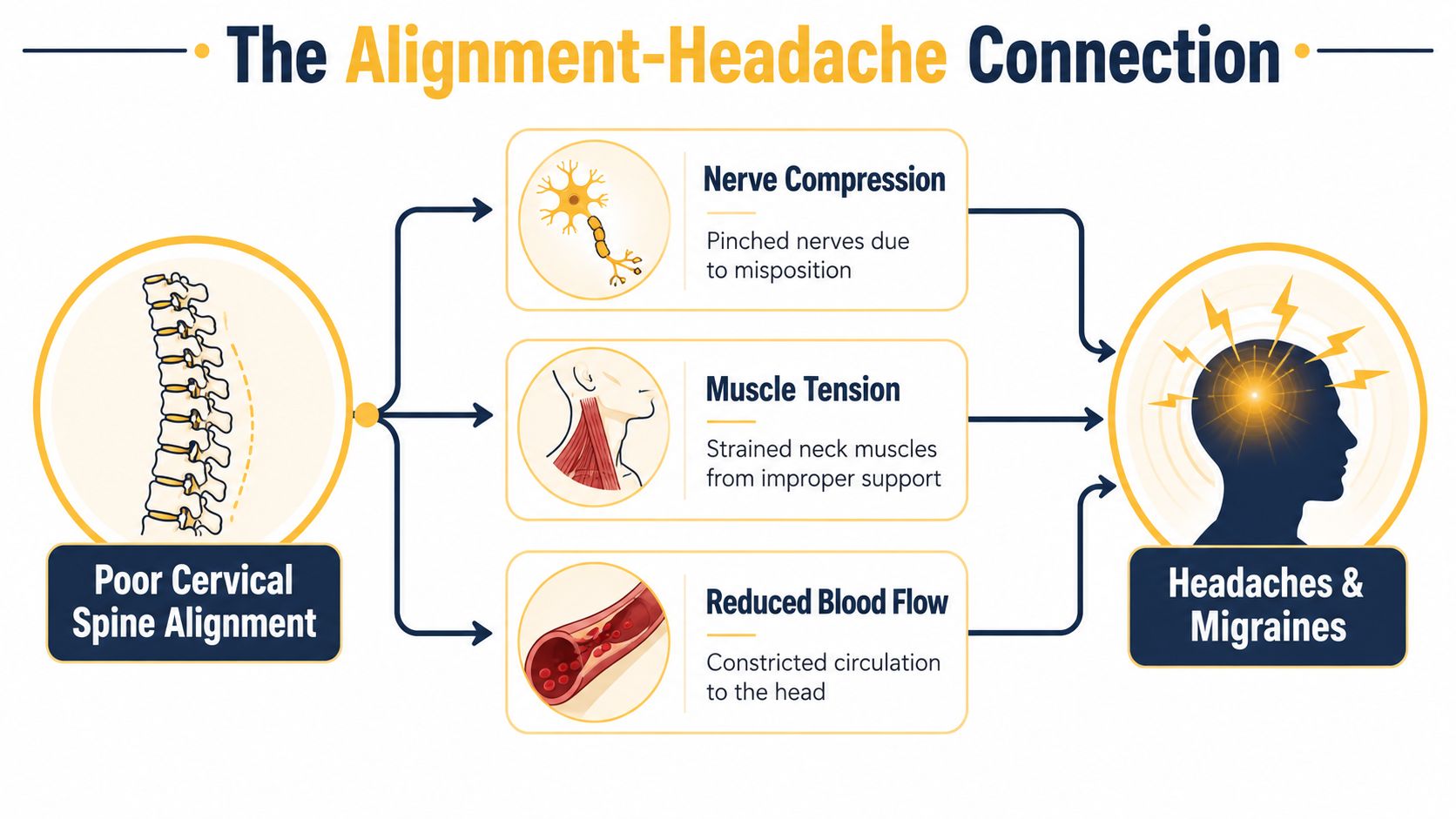
How Poor Alignment Triggers Headaches and Migraine
A bad pillow usually doesn't hurt because it's "bad" in some abstract way. It hurts because it puts your neck in a position your body has to fight all night.
Which headaches are most likely to respond
The most defensible claim is a narrow one. Pillows are most helpful for headaches mechanically linked to neck strain, such as tension-type or cervicogenic headaches. Because migraine is more complex, a better pillow may reduce one trigger without preventing every attack, as noted in this discussion of pillow support and mechanically linked headaches.
That distinction matters. A reader searching for good pillows for headaches often gets a list of products before anyone explains whether a pillow can realistically help their kind of pain at all.
Why neck position matters all night
Your head is heavy. If your pillow is too high, your neck stays bent forward or tilted sideways. If it's too low, your head drops back or slumps toward the mattress. Either way, your muscles have to hold that position for hours.
The easiest analogy is holding a bowling ball slightly off center. You might tolerate it for a minute. Hold it there long enough and your neck, shoulders, and upper back start to complain.
During sleep, that strain can build up. You don't notice it in real time, but you feel it when you wake up.
Common signs of poor overnight alignment include:
- Neck stiffness on waking: Especially if it improves after a hot shower or gentle movement.
- Pain that starts at the base of the skull: This pattern often points to tension around the neck and upper cervical area.
- One-sided shoulder or scapular discomfort: A clue that your pillow height may not match your body shape.
- More pain after sleeping in a different bed: Hotel pillows and guest-room setups often expose an alignment problem fast.
A pillow should support your head so your neck stays close to neutral, not force your body to adapt to the pillow.
For people with migraine, this matters in a second way. Poor support can worsen sleep quality, and disrupted sleep is a common part of the migraine picture. So even when the pillow isn't the whole cause, it can still be part of the nighttime stack that leaves you vulnerable by morning.
Find Your Neutral Spine A Guide by Sleep Position
Sleep position changes everything. The pillow that feels perfect for one person can be a headache trigger for someone who sleeps differently.
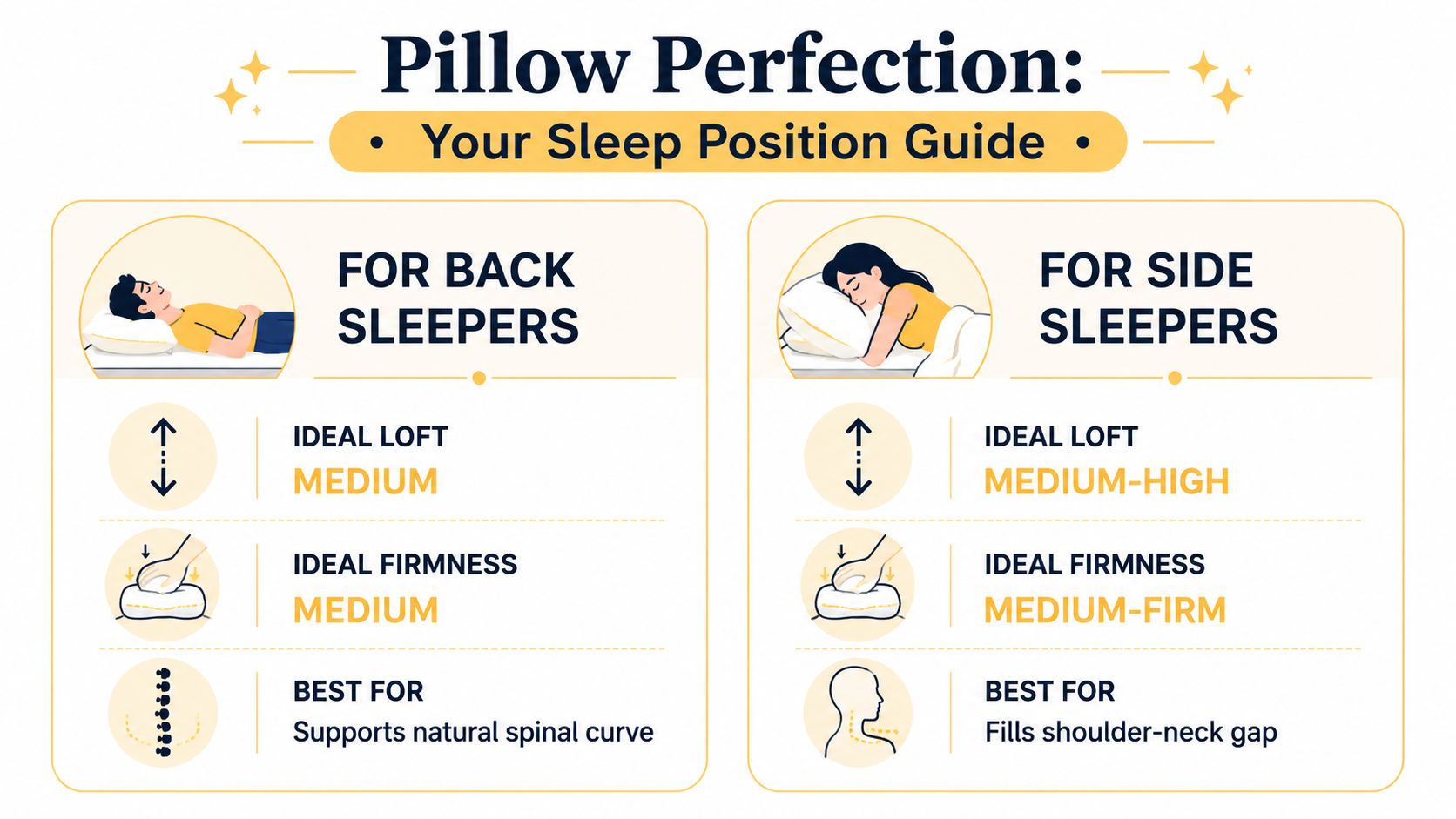
Clinical guidance suggests 3–4 inches of loft for back sleepers and 4–6 inches for side sleepers, with the broader principle that your pillow height should match your sleep position to keep your neck neutral. The same clinical discussion also points to a 1997 water-based pillow study that found reduced morning pain intensity, improved pain relief, and better sleep quality compared with a standard pillow or neck roll pillow in that context of cervical support clinical guidance on pillow loft and water-based support.
A visual guide can make this easier to judge at home.
Back sleepers
Back sleepers usually do best with a thinner pillow that supports the natural curve of the neck without pushing the head too far forward.
If your chin drops toward your chest when you lie down, your pillow is probably too tall. If your face angles upward and you feel compression at the base of the skull, it may be too flat or unsupportive.
Look for:
- Gentle support under the neck: Enough to cradle the cervical curve without forcing flexion.
- Stable fill: A pillow that doesn't collapse the moment your head settles.
- Moderate firmness: Soft enough for comfort, firm enough to hold shape.
A quick self-check helps. Lie on your back and have someone look from the side. Your nose should stay roughly in line with the center of your chest, not tilted sharply up or down.
Later, if you want to understand whether your neck symptoms fit a broader migraine pattern, this guide on stiff neck and migraine is a useful companion.
Side sleepers
Side sleepers usually need more loft because the pillow has to fill the space between the mattress and the side of the head. Broad shoulders often increase that gap, which means many side sleepers need more height and more firmness than they expect.
If your pillow is too low, your head drops toward the mattress. If it's too high, your neck bends away from the mattress. Both can leave you waking with temple pain, neck tightness, or soreness around the shoulder blade.
Good signs for side sleeping:
- Your head stays level: It shouldn't slope down or be propped upward.
- The pillow fills the shoulder-neck gap: Especially important if you have a wider frame.
- It keeps shape under load: A side-sleeper pillow that compresses too much may feel plush at first and painful by morning.
The video below walks through alignment basics in a way that's easy to compare with your own setup.
Stomach sleepers
Stomach sleeping is the hardest position for headache-prone people because it usually involves neck rotation for hours. Even a decent pillow can't fully fix that twist.
If this is your only comfortable position, use a very thin pillow or sometimes no head pillow, depending on comfort. Some people also do better placing a thin pillow under the chest or torso to reduce neck extension and spinal strain.
The best stomach-sleeper setup is often the one that helps you spend less of the night on your stomach.
Decoding Pillow Materials and Common Designs
A pillow can look right in your hand and still be wrong at 4 a.m.
For headache-prone sleepers, the material often decides what happens after body heat builds up, the fill compresses, and your sleeping position shifts. That matters even more if your symptoms are not the same every night. A person with migraine may care as much about heat and pressure points as about support. Someone who wakes with a stiff neck and base-of-skull pain may care more about whether the pillow holds its shape until morning.
What materials tend to work better
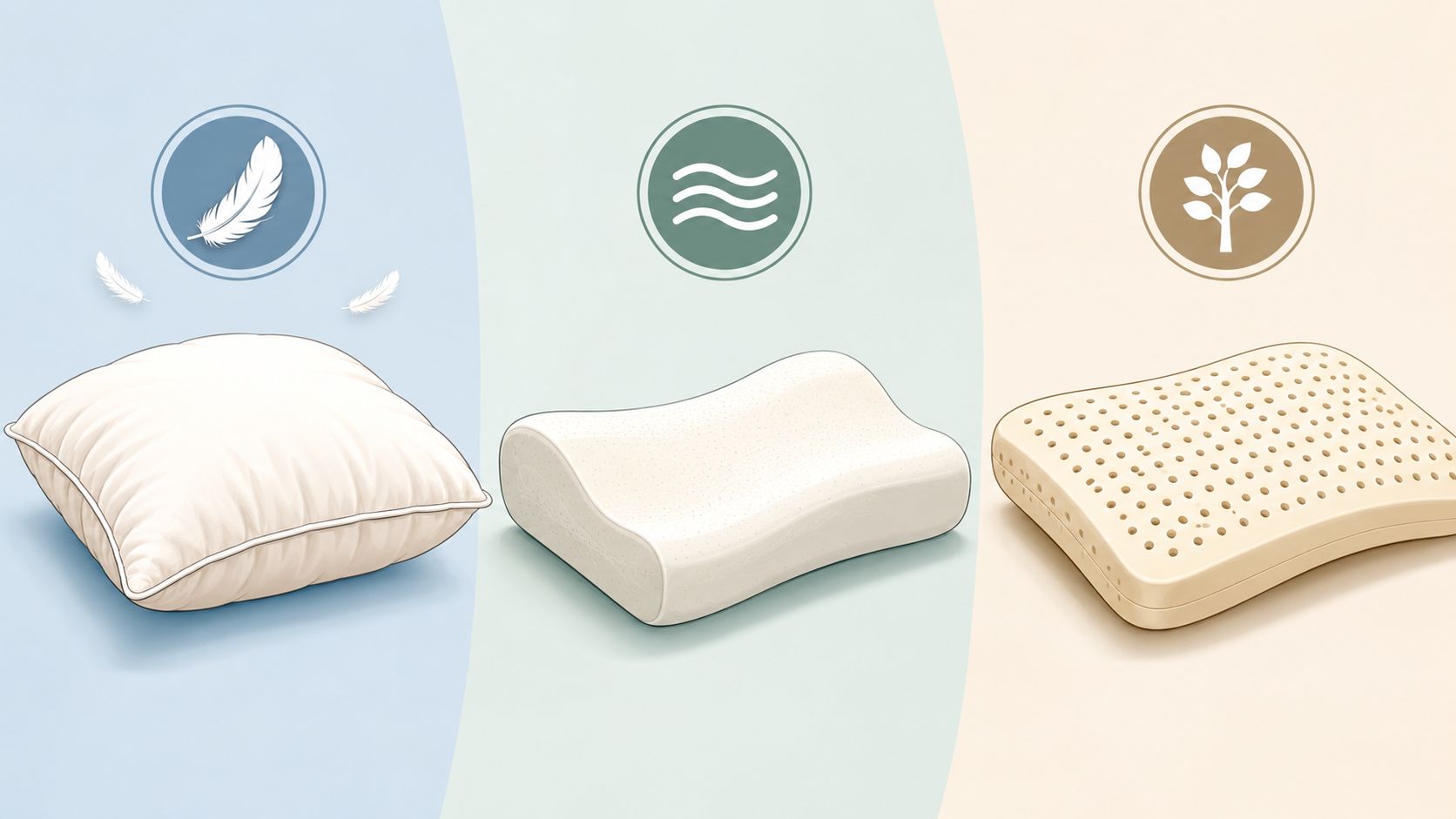
As noted earlier, research comparing pillow types found that latex performed better than participants' usual pillows for waking headache symptoms, while feather pillows performed worst. That lines up with what many headache sufferers notice at home. A pillow that collapses or bunches can leave the neck unsupported for hours, even if it feels cozy at bedtime.
Latex has a practical advantage. It stays springy, rebounds quickly, and usually holds a more consistent height through the night. That makes it a strong option for people whose headaches are linked to neck strain or morning misalignment.
Memory foam can also work well, especially for sleepers who want more contouring around the head and neck. The trade-off is heat. If warmth is one of your migraine triggers, some memory foam pillows can become irritating even when the shape is otherwise helpful.
Feather and down are the trickiest for headache relief. They are soft and easy to scrunch into place, but that same softness is often the problem. By the middle of the night, support may be gone.
Common designs and their trade-offs
Material is only half the story. Design changes how that material behaves.
| Pillow type | What tends to work | Main trade-off |
|---|---|---|
| Latex | Responsive support, good shape retention | Feel may be too springy for some |
| Memory foam | Contours to head and neck, helpful for pressure distribution | Some people notice heat retention |
| Feather or down | Soft, moldable feel | Can collapse too much and lose support |
| Contoured cervical pillow | Built to support the neck curve | Not everyone likes the fixed shape |
| Adjustable-fill pillow | Lets you fine-tune loft at home | Takes trial and error |
| Water-based pillow | Customizable support feel | Heavier and less familiar |
Contoured cervical pillows help some people a lot, especially if their pain starts in the neck and climbs into the head. They can also backfire if the curve hits your neck in the wrong spot or the height is off for your frame. I usually suggest them for people with fairly predictable sleep posture, not for restless combination sleepers who change position often.
Adjustable-fill pillows are often the safest middle ground. You can remove fill on lower-pain nights, add support during a neck flare, and adapt if your body shifts between back and side sleeping. That flexibility is useful for migraine sufferers whose sensitivity changes with the weather, hormone shifts, or a bad pain week.
A few practical buying notes:
- If heat triggers your headaches: Be cautious with dense memory foam and look more closely at latex or breathable adjustable-fill options.
- If your pain changes night to night: Adjustable-fill designs are usually easier to live with than fixed contoured pillows.
- If your pillow goes flat by morning: Feather is usually the first type to replace.
- If your headaches start with neck tightness: Latex, medium-firm memory foam, or a well-fitted cervical design are better starting points than very soft down.
The right pillow will not fix every kind of headache. It can help most with headaches tied to neck position, muscle tension, pressure buildup, or poor sleep quality. It is less likely to change headaches driven by dehydration, medication overuse, hormonal shifts, or untreated sleep disorders.
That distinction saves money and frustration. If your current pillow feels comfortable but you still wake with heat-triggered migraine, look at cooling and breathability. If you wake with one-sided neck pain that eases after you get up, support and shape deserve more attention than softness alone.
Pillow Adjustment Maintenance and Replacement
You don't need to buy a new pillow tonight to learn something useful. Start by changing height and support with what you already have.
How to test height before buying
Use folded towels inside or under your pillowcase to test loft. Add a little height for side sleeping or remove bulk for back sleeping. Sleep on the setup for a few nights and pay attention to how your neck feels when you wake up.
This works better than squeezing a pillow in a store for thirty seconds. Headache triggers show up after hours of pressure, not in a showroom.
Try this in order:
- Match your main position: Build more height for side sleeping, less for back sleeping.
- Check your wake-up pattern: You're looking for less neck tightness, less base-of-skull pain, and easier mornings.
- Change one thing at a time: If you alter pillow, mattress topper, and sleep position together, you won't know what helped.
When your pillow stops helping
Even a good pillow can stop being supportive if it sags, bunches, or loses resilience. If you constantly punch it into shape, fold it in half, or wake up with your head lower than where it started, the structure probably isn't doing its job anymore.
A pillow that feels soft in your hands can still be wrong for your neck if it doesn't hold you in place through the night.
Maintenance matters too. Keep it clean, follow the care instructions, and notice whether the fill has shifted or clumped. For migraine-related neck pain, the main target is still alignment. Side sleepers usually need more height, while back sleepers usually need a thinner profile, and stable support matters because poor sleep can worsen migraine vulnerability.
Track Your Patterns and Know When to See a Doctor
Changing your pillow is only useful if you can tell whether it changed anything. Migraine and headache patterns are messy, and memory gets unreliable fast once bad mornings start to blur together.
Get urgent care for red flags
Seek immediate medical care if you have:
- A sudden severe headache: Especially if it peaks fast or feels unlike anything you've had before.
- Headache with fever or stiff neck: This needs urgent evaluation.
- Neurological changes: Weakness, confusion, trouble speaking, fainting, new vision loss, or unusual numbness.
- Headache after head injury: Even if it seems mild at first.
This article is for informational purposes and is not medical advice. Consult a healthcare provider for personalized guidance.
Track the change instead of guessing
If you test a new pillow, log what changed for at least several nights. You don't need a perfect spreadsheet. You do need consistency.
Good things to track:
- Morning symptoms: Headache location, intensity, neck stiffness, shoulder pain.
- Sleep details: Position, awakenings, congestion, whether you ran hot overnight.
- Pillow variables: New pillow, towel adjustment, removed fill, added fill.
- Other likely triggers: Stress, skipped meals, weather shifts, alcohol, jaw clenching.
A simple tracking tool can help you spot whether a pillow change lines up with fewer bad mornings or whether the actual pattern points somewhere else. If you want a starting point, this migraine log template shows what to record.

Frequently Asked Questions About Pillows and Headaches
How long does it take to adjust to a new pillow
A brief adjustment period is normal, especially if your old pillow had been putting your neck in a poor position for a long time. Mild unfamiliarity is one thing. Worsening pain that persists is another. If a pillow keeps aggravating you, don't force it.
What if my triggers change from night to night
Many pillow guides often fall short. Your best setup, however, may change with congestion, heat, shoulder pain, or nights when you toss and turn more than usual. Guidance on adaptable setups notes that adjustable-fill and cooling material pillows can make more sense than a fixed one-loft solution when your needs vary guidance on choosing a pillow for varying nightly triggers.
If your symptoms change often, don't think only in terms of "my sleep position." Think in terms of "what support do I need tonight?"
For a broader look at different migraine triggers and patterns, this article on what causes migraine headaches adds useful context.
Can a pillow help if I grind my teeth
Maybe indirectly, but not always directly. A better pillow can reduce neck strain that sometimes overlaps with jaw tension. But headaches tied to bruxism often need a wider look at jaw clenching, dental factors, stress, and sleep quality. If you wake with jaw soreness, tooth sensitivity, or temple pain, a pillow change might be only one piece of the puzzle.
If you're trying to figure out whether your pillow is a real trigger or just one variable among many, Relief can help you log symptoms, sleep-related changes, and environmental patterns so you can see what lines up with your migraine mornings.


