If you've ever checked the forecast, seen a storm front moving in, and thought, “I'm going to lose tomorrow,” you're not imagining the pattern. For many people, how to prevent weather migraines starts with one honest truth: you can't control the weather, but you can often reduce how hard it hits you by tracking your own patterns, stabilizing your environment, and acting earlier instead of waiting for pain to arrive.
That matters because migraine is not the same as a standard headache. Migraine is a neurological condition that can include prodrome (early warning symptoms before pain), aura (temporary neurological symptoms such as visual changes in some people), photophobia (light sensitivity), nausea, sound sensitivity, and a wiped-out postdrome after the main attack. When weather is part of your trigger pattern, prevention often comes down to timing.
Table of Contents
- That Feeling When the Weather Report Is a Threat
- What your body may be reacting to
- Why this feels so personal
- Raise your migraine threshold first
- Use the forecast to choose when to act
- Lifestyle approaches and medication planning are not the same thing
That Feeling When the Weather Report Is a Threat
Some migraine triggers feel negotiable. Weather doesn't. That's part of what makes weather migraine so draining. You can skip a food, dim a screen, or leave a noisy room. You can't stop humidity from rising or a pressure system from moving in overnight.
Still, helpless isn't the same as powerless. The practical goal is not to “beat” the weather. It's to lower the odds that a weather shift turns into a full migraine attack, or at least reduce severity by seeing the pattern early and responding on purpose.
Practical rule: Treat the forecast like an early warning signal, not a verdict.
That shift in mindset helps. Instead of waking up in pain and scrambling, you're watching for your own clues: the day before a storm, a sudden drop in pressure, bright glare after a dark morning, or heavy humid air that seems to lower your tolerance for everything else.
For some people, the most useful prevention isn't dramatic. It's boring, repeatable, and effective:
- Protect sleep: A regular sleep schedule helps keep your migraine threshold steadier when weather changes pile on.
- Stay ahead on fluids: Hydration matters all the time, but especially during hot or humid conditions.
- Reduce avoidable stressors: If the weather already strains your system, this isn't the day to stack missed meals, intense light exposure, and overbooking.
- Prepare your space: Cool, dim, quiet, and consistent usually works better than trying to “push through.”
- Plan your response window: If your pattern starts before a storm, your actions may need to start before the pain does.
The rest of this guide focuses on that last piece. A lot of migraine advice says “prepare for weather changes.” That's incomplete. What helps more is knowing when your body usually starts reacting and matching your routine to that window.
Why Weather Changes Can Trigger Migraine Attacks
A weather-triggered migraine often starts before the weather looks dramatic. The sky may still be clear, but pressure is shifting, the air feels heavier, or glare suddenly gets harsher. That timing matters, because the body can start reacting hours before the forecast turns into rain, wind, or heat.
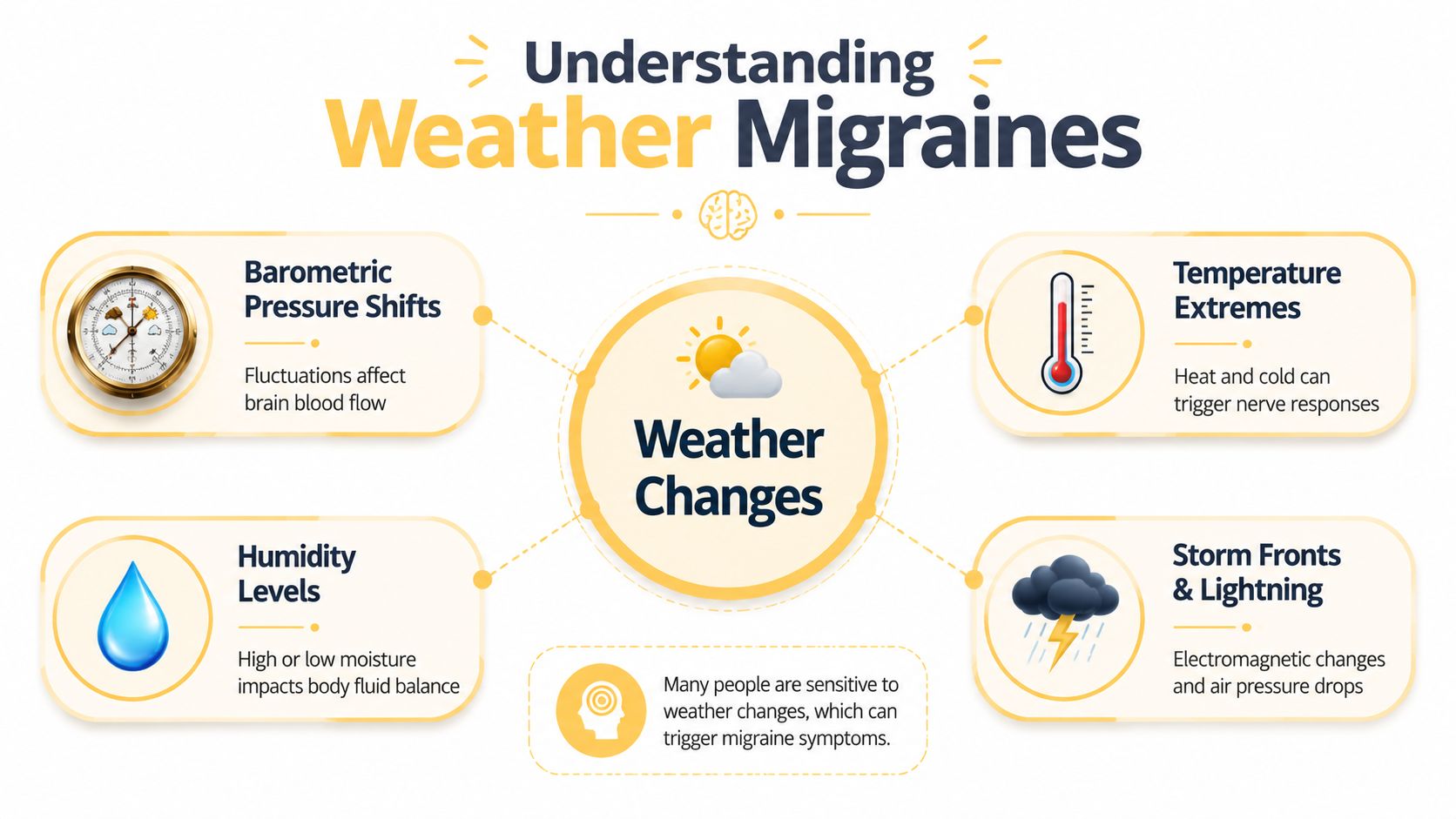
Weather migraine is not "just sensitivity." There are plausible biological reasons some nervous systems react to environmental change. According to the University of Colorado Anschutz report on weather-triggered migraine, many people with migraine identify weather patterns such as pressure changes, temperature extremes, and humidity as meaningful triggers.
What your body may be reacting to
One leading suspect is barometric pressure, the weight of the air around you. When that pressure changes quickly, some people seem to feel it before a storm arrives. The exact mechanism is still being studied, but researchers have looked at how shifts in outside air pressure may affect the head, sinuses, inner ear, and pain-sensitive pathways.
That helps explain why the danger window is often earlier than people expect. If your pattern starts during the pressure drop, waiting until rain begins may be too late to make the day easier.
Other parts of the forecast can matter too. Bright sunlight, heat, cold, humidity, dry air, and wind can all add stress to a migraine-prone brain. Sometimes weather acts as the main trigger. Just as often, it lowers your tolerance so that ordinary strain, poor sleep, dehydration, missed meals, screen glare, or stress push you over the line faster.
Why this feels so personal
Weather triggers are inconsistent across patients, and that is one reason they are frustrating. One person gets hit before thunderstorms. Another reacts to hot, humid afternoons. Someone else does fine with temperature changes but struggles with bright post-storm light.
The practical concept here is migraine threshold. On a steady day, your system may absorb a few minor stressors without much trouble. On a high-risk weather day, that buffer gets smaller. The same commute, workout, or late lunch can land very differently.
Weather often works like a threshold-lowering factor rather than a single isolated cause.
That is why timing matters more than generic advice to "watch the forecast." The useful question is narrower: how long before the attack does your weather pattern usually start? If your symptoms tend to show up 6 to 24 hours before a storm front, your response window is also 6 to 24 hours earlier. A migraine tracking app that lets you compare attack timing with local weather patterns can help you find that window, which is what turns a vague trigger into something you can act on.
How to Track and Forecast Your Personal Triggers
The most useful thing you can do is often the least glamorous. Clinical guidance from Neura Health says that keeping a detailed migraine diary with weather conditions alongside attack details is the single most useful step for identifying patterns with variables like barometric pressure.

If that sounds tedious, simplify it. You are not writing a memoir. You're gathering enough evidence to answer one question: what usually happens before your migraine starts?
What to log every time
Keep your notes short and consistent. The pattern matters more than perfect detail.
- Attack basics: Date, start time, duration, and severity.
- Migraine features: Aura, nausea, photophobia, sound sensitivity, dizziness, neck pain, or postdrome.
- Weather context: What the weather was doing that day and the day before. Pressure change, humidity, temperature swing, bright sun, wind, or storm conditions.
- Other threshold-lowering factors: Sleep disruption, dehydration, stress, missed meals, heavy screen exposure, or unusual exertion.
- What you tried: Rest, hydration, reducing light, over-the-counter treatment, or your prescribed acute plan.
A good tracker reduces friction. If you want a digital option, Relief has a guide to choosing a migraine tracking app that helps organize symptoms and trigger patterns.
How to turn logs into timing decisions
Once you have a few entries, stop asking only “Is weather a trigger?” Ask better questions.
| Question to ask | What you're looking for |
|---|---|
| Do attacks start before, during, or after a storm? | Your likely action window |
| Is pressure drop worse than humidity or glare? | Your highest-priority weather trigger |
| Do attacks happen only when weather combines with poor sleep or stress? | Your threshold pattern |
| Are mornings, afternoons, or evenings more vulnerable? | Daily planning clues |
Forecasts become useful. If your entries show attacks often begin the day before rain, then “storm tomorrow” means “protect today.” If your pattern is bright sun after a front passes, your window may be different.
Later, once you have a longer history, visual review helps. This walkthrough can help you think through the process:
Don't chase every weather change. Look for the weather changes that repeat in your own history.
That's the difference between useful prevention and living in constant alert mode.
Creating a Migraine-Friendly Environment
A weather trigger is hard to control. The room around you is not.
That difference matters on the days when the forecast suggests trouble. A steadier indoor setup can lower the extra sensory load that often turns a manageable day into an attack. The goal is not perfection. It is to make your space easier on a sensitive nervous system before symptoms start building.
What to change at home and work
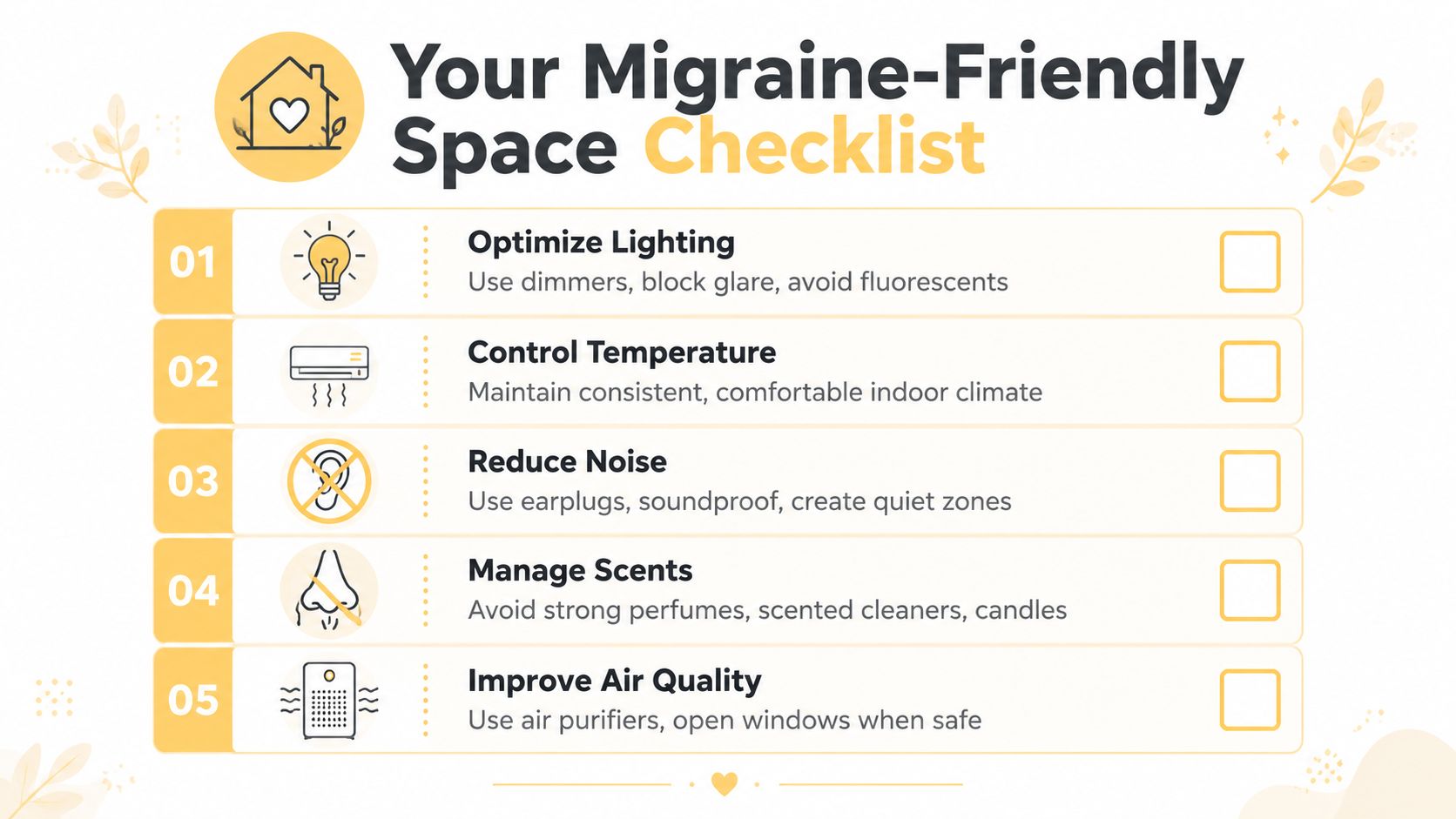
Start with the factors that shift fast. Light, temperature, glare, noise, and scent tend to stack. On a low-risk day, you may tolerate them. On a pressure-drop day, the same inputs can cost you more.
- Light control: Use blackout curtains in the bedroom, close blinds before strong sun hits the room, and dim screens early if your log shows symptoms often begin hours before pain.
- Temperature consistency: Keep rooms from swinging between hot and cold. Fans, air conditioning, heating, and sealed drafts can reduce that back-and-forth.
- Humidity management: If dry air irritates you or heavy air makes you foggy and headachy, use a humidifier or dehumidifier to keep the room comfortable.
- Glare reduction: Keep polarized sunglasses nearby for bright days. Indoors, reduce screen glare and avoid sitting where sunlight reflects straight into your eyes.
- Scent and noise: Skip strong candles, perfume, and extra background noise on forecast-risk days. These are common add-on stressors when your threshold is already lower.
Sleep setup matters too, especially if neck tension joins the party when weather shifts. If that sounds familiar, this guide on pillows that may help with headache comfort and support can help you adjust your bed setup.
A simple stability checklist
Use your forecast the same way you use your trigger log. If your attacks often start the evening before a storm, make these changes that afternoon. If bright post-storm sun is your problem, focus on glare and light control the morning the skies clear.
- Bedroom: Keep it dark, cool, quiet, and ready for a retreat without extra setup.
- Workstation: Lower brightness, reduce reflections, keep water within reach, and use headphones if office noise wears you down.
- Entry points: Close blinds and seal drafts in the rooms where you spend the most time.
- Car: Put sunglasses where you can grab them fast and set airflow before you start driving.
- Bag: Carry water, a snack, a hat, and any tools that reduce light or sound exposure.
A stable room will not prevent every migraine. It can give you a better chance of staying below your symptom threshold.
I tell patients to make the room easier before the body gets louder. Trying to fix light, noise, temperature, and hunger once symptoms are already climbing usually feels like catch-up. Early adjustments are simpler, and they often work better.
Syncing Lifestyle Habits and Treatments with the Forecast
Optimal timing is essential. Generic advice says to “prepare for a storm,” but that's too vague to be useful. A review in PubMed Central points to a real gap in migraine advice: the missing piece is the specific timing of pre-treatment for weather events, and emerging data suggests the best window depends on combining real-time pressure forecasts with your own trigger history.

Raise your migraine threshold first
Before medication even enters the picture, your daily baseline matters. The earlier source from the University of Colorado Anschutz notes that keeping regular sleep and hydration habits can reduce vulnerability when weather shifts arrive. In practice, these habits don't “cancel” a trigger. They give your brain and body more room before symptoms take over.
On likely weather-trigger days, the basics matter more than usual:
- Keep sleep regular: Even a short disruption can make a weather-sensitive day less forgiving.
- Eat regularly: Don't let a pressure-change day become a missed-meal day too.
- Hydrate steadily: Sip through the day rather than trying to catch up all at once.
- Trim optional stress: Reschedule what you can. Reduce sensory overload where possible.
- Protect recovery time: If your pattern includes prodrome fatigue or brain fog, don't book yourself as if nothing is happening.
Use the forecast to choose when to act
The key question isn't “Should I prepare?” It's “When does my pattern usually start?”
Use your diary to sort yourself into one of these rough timing patterns:
| Your usual pattern | What to adjust |
|---|---|
| Symptoms start the day before storms | Tighten sleep, hydration, light exposure, and schedule earlier |
| Symptoms start during rapid weather change | Reduce sensory load and keep your acute plan accessible |
| Symptoms hit after bright sun or heat | Shift outdoor tasks, protect against glare, cool your environment |
This is also the right frame for discussing “pre-treatment” with your clinician. If your attacks tend to cluster around a repeatable forecast pattern, your medical plan may need a timing component rather than a vague instruction to act “sometime before bad weather.”
Lifestyle approaches and medication planning are not the same thing
Over-the-counter options, prescription acute treatments, and preventive strategies each play different roles. Which category makes sense depends on your history, your diagnosis, how often attacks happen, and what other symptoms you get. There is no single “best” medicine for weather migraine.
This article is for informational purposes and is not medical advice. Consult a healthcare provider for personalized guidance.
What often doesn't work is blind pre-treatment every time the forecast looks messy. Weather is only part of the story for many people, and overreacting to every cloud can leave you frustrated. What works better is a plan tied to your actual pattern, not a generic weather alert.
When to Talk to Your Doctor About Weather Migraines
Self-management helps, but it has limits. Mayo Clinic's migraine guidance confirms that weather changes can trigger migraines through changes in brain chemicals like serotonin, and also emphasizes that healthy habits can buffer the number and severity of attacks. Buffer is the right word. Not cure.
Bring useful data, not just a bad memory
If your migraines are frequent, severe, changing, or not improving with your routine adjustments, it's time for a medical conversation. Bring your diary. A clinician can do much more with pattern data than with “I think storms trigger me sometimes.”
Bring notes on:
- Your attack pattern: when it starts, how long it lasts, and whether you get aura, vertigo, nausea, or postdrome.
- Your weather connection: what tends to happen before pressure shifts, bright sun, humidity, or storms.
- Your current response: what helps a little, what doesn't help, and what seems to make attacks worse.
- Your treatment goals: fewer attacks, less severe symptoms, better function at work, or a stronger acute plan.
If you're discussing preventive treatment categories with your clinician, this overview of CGRP monoclonal antibodies and how they fit into migraine care can help you prepare better questions.
Red flag symptoms that need urgent care
Seek immediate medical care for any of the following:
Get urgent help now if you have a sudden severe headache, a headache with fever or stiff neck, new neurological changes, or a headache after a head injury.
Those symptoms need prompt evaluation. Don't assume they're “just another migraine,” even if you live with migraine regularly.
The goal is partnership, not self-blame. If weather keeps knocking you off course, you deserve a plan that is specific, realistic, and built around how your migraine behaves.
Relief can support that process by helping you track symptoms, triggers, and forecasts in one place so you can spot patterns earlier and plan with more confidence. Explore Relief.


