If you're reading this in a dark room with your head pounding and sleep feels impossible, the short answer is this: the best way to sleep with a migraine is to lower stimulation fast, treat the attack early, and stop fighting for sleep once your bed starts feeling like a battleground. A cool, dark, quiet room, head elevation if nausea is part of the attack, and a calm reset if you can't fall asleep can make the night more manageable.
That struggle isn't in your head in the dismissive way people sometimes mean. It's a documented migraine pattern. About 66% of people with migraine have poor sleep quality, and research also shows that people with migraine spend less time in REM sleep, the stage most tied to restoration and recovery, according to this review on sleep and migraine in PubMed Central.
This article is for informational purposes and is not medical advice. Consult a healthcare provider for personalized guidance.
Table of Contents
- The Impossible Task Trying to Sleep With a Migraine
- Get the room ready before you need it
- Treat evening light as part of migraine prevention
- Treat early, and keep the plan simple
- Use supplements like part of a plan, not a last-minute experiment
The Impossible Task Trying to Sleep With a Migraine
Trying to sleep with migraine can feel cruel. You're exhausted, but the pain, nausea, photophobia (light sensitivity), and noise sensitivity keep your nervous system on high alert. Sleep may help some attacks feel more bearable, but you usually can't force it by just lying there longer.
What tends to work is simple, but not always easy. Reduce sensory input. Use the bed for rest, not struggle. Add targeted comfort measures that match the symptoms you're having, especially nausea, neck tension, and light sensitivity.
Migraine is not the same as a standard headache. It can involve multiple phases, including prodrome (early warning symptoms before pain), aura in some people (temporary neurological symptoms such as visual changes), the headache phase, and postdrome (the drained, foggy phase afterward). Sleep can get disrupted anywhere along that cycle.
Sleep problems during migraine aren't a personal failure. They are part of the condition for many people.
The hard part is that migraine and sleep push on each other in both directions. Poor sleep can help trigger attacks. The attack itself can then break up sleep again, leaving you more vulnerable the next night. That loop is one reason sleeping with migraine can feel harder than it "should" be.
A lot of people blame themselves for not having a better bedtime routine, not relaxing enough, or not falling asleep quickly enough. That self-blame usually makes the night worse. A better approach is to treat the moment in front of you. Lower stimulation, reduce nausea, and give your brain the cleanest possible path to rest.
Prepare Your Migraine Sleep Sanctuary
At 10:30 p.m., a room that felt fine an hour ago can suddenly feel hostile. A blinking charger light looks sharp. Fabric smells stronger. A pillow that usually works starts pulling on your neck. Setting up the room before the attack fully builds can lower the amount of input your brain has to process once you lie down.
Get the room ready before you need it
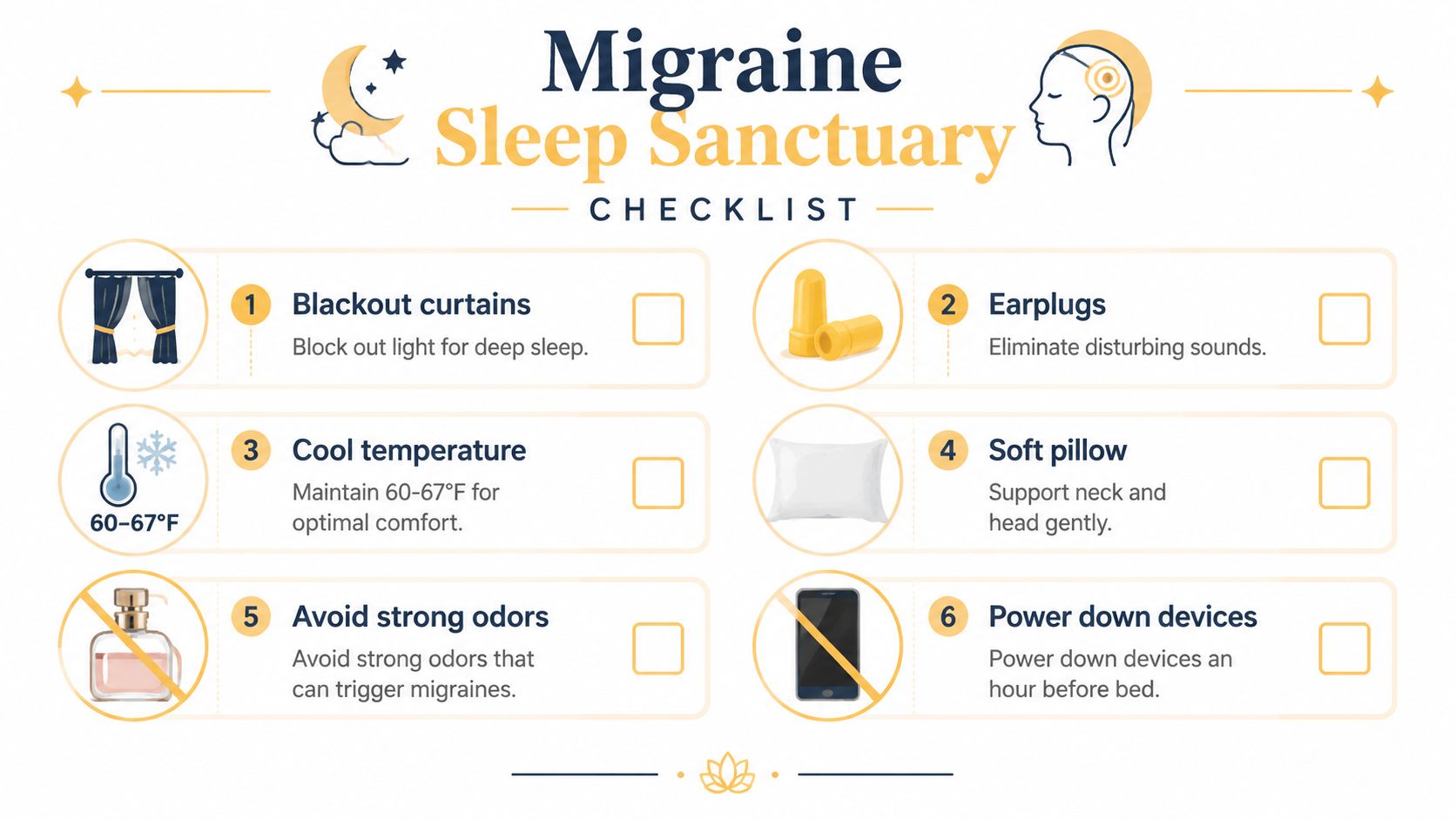
Keep the bedroom dark, quiet, and slightly cool. Many people with migraine sleep more comfortably in a cooler room, often around the mid to upper 60s Fahrenheit, but comfort still matters. If cooler air makes you tense or shiver, add a light blanket and keep your face and head area from overheating instead of forcing the thermostat lower.
A useful sanctuary usually includes a few practical adjustments:
- Block light at the source: Blackout curtains help, but small lights matter too. Cover charging LEDs, turn the clock away, and dim hall light that leaks under the door.
- Reduce unpredictable sound: Earplugs, a fan, or steady white noise can soften sudden noise spikes that keep the nervous system alert.
- Support the neck in a neutral position: A pillow should hold your head without pushing your chin toward your chest. If your current setup leaves you stiff or sore, this guide to good pillows for headaches can help you sort through the options.
- Remove scent triggers: Pause candles, diffusers, fragranced laundry spray, and strong skin products near bedtime.
- Keep supplies within reach: Water, an eye mask, earplugs, a vomit bag if nausea is common, and any rescue medication should be easy to grab without turning on bright lights.
Perfection is not the goal. Fewer triggers are.
Treat evening light as part of migraine prevention
Light control starts before your head hits the pillow. Bright screens, overhead LEDs, and rapid visual stimulation can be a problem for people who are already light-sensitive, especially during prodrome or early pain. Research on migraine and light sensitivity supports a cautious approach here, even if the exact cutoff time varies from person to person.
A practical rule is simple. Make the last hour before bed visually boring. Lower screen brightness, switch to warmer light, and avoid scrolling in a dark room with the phone close to your face. If you need to check something, keep it brief and keep the display dim.
This is also where long-term planning helps. If your attacks often start at bedtime or wake you a few hours after sleep onset, track that pattern for a few weeks in an app such as ReliefMigraine. Look for repeat signals: late screen use, missed meals, weekend schedule shifts, alcohol, weather changes, or supplement timing. Once the pattern is visible, you can forecast higher-risk nights and tighten the room setup earlier instead of scrambling after symptoms start.
Supplement timing can fit into that same plan. Magnesium, melatonin, and other options may help some people, but the best timing depends on the product, the dose, how sedating it feels for you, and whether your clinician wants you using it nightly or only in certain situations. The key is consistency and notes. Track when you took it and whether it changed sleep onset, nighttime waking, or morning grogginess. That record is often what turns a frustrating guess into a repeatable routine.
Immediate Comfort Measures You Can Use Tonight
The hardest moment is often 1:17 a.m. Your head is pounding, your stomach is turning, and every position feels wrong. At that point, the job is simple. Reduce sensory input, lower physical strain, and give your body the best chance to drift off without making the attack angrier.

Use position and temperature strategically
If nausea is part of the attack, a flat position can make the bed feel unusable. Raise your head and upper torso slightly with a wedge pillow or a couple of firm pillows. The goal is support, not folding your neck forward. A strained neck can keep the pain cycle going.
Then match the comfort tool to the symptom in front of you.
| Symptom | What to try | Why it may help |
|---|---|---|
| Nausea | Raise head and torso slightly | A more upright angle can ease queasiness enough to rest |
| Throbbing pain | Cold compress on forehead, temples, or neck | Cooling can dull pain and reduce the sense of pounding |
| Neck or shoulder tightness | Gentle warmth on the neck or shoulders | Looser muscles can remove one more source of discomfort |
| Light sensitivity | Eye mask or fully dark room | Less input gives an irritated brain less to process |
Cold tends to be the safer first choice on the head. Heat is more individual. Some people feel worse with it, especially if warmth seems to intensify throbbing. If neck tension is a regular part of your attacks, it helps to compare what happened after heat, showering, or steam exposure, and the trade-offs are covered in this article on whether hot showers help headaches.
This is also worth tracking later, not while you're miserable, but the next day. If ReliefMigraine or your notes show that cold on the forehead helps but heat on the shoulders helps only before pain peaks, that becomes a usable plan for the next high-risk night instead of another guess.
Know when staying in bed stops helping
There is a point where bed stops being restful and starts becoming a place to endure pain.
If you have been lying there for about 20 minutes and feel more irritated, more alert, or more focused on the clock, get up for a short reset. Keep the lights dim. Keep the environment quiet. Sit somewhere supportive, use your cold compress, and wait until your body feels heavier and sleepier before returning to bed.
A simple reset looks like this:
- Leave the bed calmly. Move slowly and keep your eyes away from bright light.
- Sit in a dim, quiet spot. A hallway nightlight is better than overhead lighting.
- Use one comfort measure at a time. Cold pack, eye mask, or supported upright posture.
- Keep your breathing easy. Slow exhale, relaxed jaw, unclenched shoulders.
- Return to bed when drowsiness comes back. Sleep usually comes easier when you stop chasing it.
The long-term value here is easy to miss. Nights like this create patterns. If your attacks repeatedly start after midnight, after weather shifts, or on nights when dinner ran late, log that pattern. Forecasting tools in an app such as ReliefMigraine can help you spot those clusters early, tighten your evening routine, and use the right comfort measure before the pain is fully in charge.
If you'd like a short visual walk-through for calming techniques, this may help:
Calm Your Mind to Relax Your Body
Migraine pain doesn't stay neatly physical. Once you've spent enough nights thinking, "If I don't sleep now, tomorrow is wrecked," the body often starts reacting to bedtime itself. Heart rate creeps up. Muscles brace. The room feels tense even when it's quiet.
That doesn't mean the pain is psychological. It means your nervous system is trying to protect you, and in migraine, that protective response can become part of the problem.
Start with breathing that doesn't ask much of you
The easiest breathing exercise during migraine is often diaphragmatic breathing, sometimes called belly breathing. Put one hand on your chest and one on your abdomen. Breathe gently so the lower hand moves more than the upper one.
Keep it simple:
- Inhale softly through your nose
- Pause briefly if that feels natural
- Exhale longer and slower
- Repeat without trying to be perfect
Longer exhales tend to feel more settling than big dramatic breaths. If deep breathing makes you feel worse, go smaller and slower.
You're not trying to out-think migraine. You're giving your body fewer reasons to stay activated.
Use simple visualization, not forced positivity
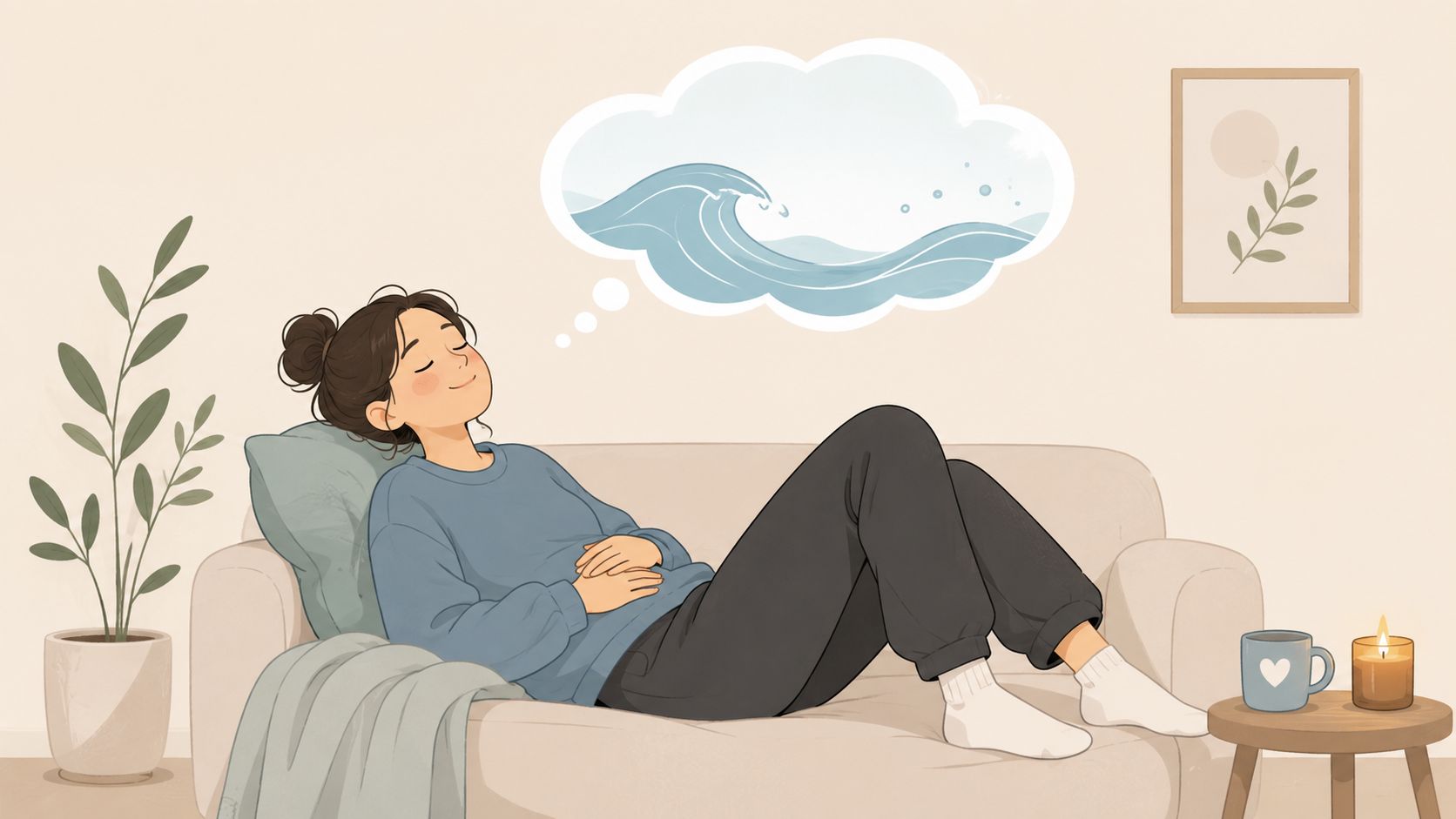
Visualization can sound fluffy until you use it in the dark at 2 a.m. and realize it gives your mind one neutral place to land. The point isn't to imagine yourself pain-free. The point is to stop cycling through threat-based thoughts.
Pick one low-effort scene. Ocean waves. Rain on a window. A quiet forest trail. Stay with the same image instead of searching for the perfect one.
A short script can help:
Notice the scene. Keep it dim, quiet, and repetitive. Let your attention rest there for a few breaths, then return when your mind runs off.
If guided audio helps you, keep it low and non-jarring. If sound worsens your migraine, skip it. This is all about reducing load, not adding a wellness assignment to an already bad night.
Using Medication and Supplements Wisely
It is 1:30 a.m., your head is pounding, and part of you still wants to wait another 20 minutes in case sleep somehow takes over. That delay is one of the most common ways a manageable night turns into a much harder one.
For many people with migraine, acute treatment works best when it is used early, while the attack is still building. If your clinician has given you a nighttime plan, use it. Bedtime does not change the basic rule of migraine care.
This article is for informational purposes and is not medical advice. Consult a healthcare provider for personalized guidance.
Treat early, and keep the plan simple
The goal at night is relief with the least added disruption. That usually means choosing the treatment you already know is appropriate for your migraine pattern, then giving it the best chance to work.
A practical nighttime plan often includes:
- Lifestyle support: A dark room, less noise, a cold pack, and as little extra stimulation as possible
- Over-the-counter medication: If your clinician has said it is safe for you, use the nonprescription option that fits your usual plan
- Prescription rescue treatment: Triptans, anti-nausea medication, or another acute treatment prescribed for your attacks
- Sleep-protective choices: Avoiding late caffeine and watching for anything that reliably makes it harder for you to fall back asleep
One trade-off matters here. Some treatments reduce pain but can upset the stomach, feel activating, or increase rebound risk if used too often. That is why the best rescue plan is specific, written down, and discussed before a bad night, not improvised in the dark while you are nauseated and exhausted.
Caffeine deserves caution. It helps some people early in a daytime attack, but close to bedtime it can make sleep lighter and more fragmented. If nocturnal attacks are part of your pattern, track whether late caffeine helps enough to justify the sleep hit the following night.
Use supplements like part of a plan, not a last-minute experiment
Magnesium has some evidence behind it in migraine prevention, but the details matter. The American Headache Society includes magnesium among commonly used preventive supplements, and reviews in the medical literature describe it as a reasonable option for some patients, particularly when discussed with a clinician and matched to the right dose and form. A better source than blog advice is this PubMed review of nutraceuticals for migraine prevention.
Timing matters too, even though the research on exact clock-time dosing is still limited. In practice, people who get nausea, loose stools, or stomach discomfort from magnesium often do better when they do not take it right at lights-out. If magnesium is part of your plan, ask your clinician about the form, dose, and whether earlier evening timing makes more sense for your body.
The same goes for other add-ons people try at night. Melatonin, magnesium, and light exposure all interact with sleep timing. A supplement that looks harmless on a label can still backfire if it worsens nausea, triggers GI symptoms, or leaves you groggy the next morning.
That is where tracking changes the game in a useful, concrete way. Log when the migraine started, when you took treatment, whether light exposure was heavy in the evening, what time you used supplements, and whether you woke with an attack or developed one during sleep. In an app such as ReliefMigraine, those patterns can become visible enough to act on. You stop guessing and start seeing whether your attacks cluster after bright late-night light, skipped meals, delayed rescue medication, or poorly timed supplements.
If your nighttime headaches are changing, becoming more intense, or coming with symptoms that do not fit your usual pattern, review the warning signs that separate typical migraine from emergencies in this guide to migraine vs aneurysm symptoms and red flags.
Bring these specifics to your next appointment:
- Attack timing: Before bed, during sleep onset, or early morning
- What you took and when: Including rescue meds, supplements, and caffeine
- Stomach side effects: Especially if nausea limits what you can use
- Sleep and light patterns: Evening screens, bright light exposure, or irregular sleep timing
- Frequency of nighttime attacks: Enough detail to decide whether prevention needs to change
That is how a desperate night starts turning into a prevention strategy.
When to Stop Trying to Sleep and Seek Care
Most migraine attacks, even severe ones, don't require emergency care. Some symptoms do. If a headache is new, explosive, or neurologically different from your usual migraine pattern, sleep is not the main issue anymore.
Red flags that need urgent evaluation
Seek immediate medical care if you have any of the following:
- A sudden severe headache: Especially one that peaks very fast or feels like a thunderclap headache
- Headache with fever or stiff neck: This needs prompt assessment
- Neurological changes: New weakness, confusion, trouble speaking, fainting, new vision loss, or seizure-like symptoms
- Headache after a head injury: Don't assume it's "just migraine"
- A major change in your usual pattern: New symptoms, much greater intensity, or a different type of attack than you've had before
If you're unsure whether the symptoms fit your usual migraine, err on the side of evaluation. This is especially important because migraine can involve neurological symptoms in some people, but not every neurological symptom during head pain is safe to self-manage.
For a fuller comparison of warning signs, this ReliefMigraine article on migraine vs aneurysm is a helpful safety read.
You should also contact a healthcare provider for non-emergency care if your migraines are becoming more frequent, more disruptive, less responsive to your usual treatment, or consistently disturbing your sleep.
From Reactive Nights to Proactive Planning
The most effective long-game strategy for how to sleep with a migraine is often less dramatic than people want. It's consistency. A brain that gets mixed sleep signals all week tends to be harder to calm at night.
Build sleep regularity that protects your brain
Expert benchmarks suggest that a consistent 7 to 8 hour sleep window with 90% sleep efficiency, meaning the proportion of time asleep compared with time in bed, can reduce both migraine frequency and intensity, according to Cleveland Clinic Journal of Medicine guidance on behavioral sleep treatment.
That matters because many people with migraine accidentally make sleep harder by doing understandable things:
- going to bed much earlier after a rough day
- sleeping in far later on weekends
- napping to compensate for bad nights
- using the bed for scrolling, worrying, or working
Those habits can blur the brain's association between bed and sleep.
A stable sleep schedule often feels boring. In migraine care, boring is useful.
The target isn't perfect sleep. It's a repeatable pattern that gives your nervous system fewer surprises.
Track patterns before the next night goes wrong
Nocturnal migraine rarely comes out of nowhere. Over time, you may notice clusters around late screen use, inconsistent sleep timing, stress-heavy evenings, skipped meals, travel, weather shifts, or changes in routine. You don't need to guess at those patterns if you track them carefully.
A useful log can include:
| What to track | Why it matters |
|---|---|
| Bedtime and wake time | Helps spot timing variability |
| Sleep quality | Shows whether rough nights precede attacks |
| Attack onset | Distinguishes bedtime, sleep-onset, and overnight patterns |
| Symptoms like nausea or aura | Clarifies whether the attack follows a familiar sequence |
| What you tried | Shows what actually helped, not just what sounded good |
The aim is practical. If your attacks tend to start after late device use, after weekend sleep shifts, or after an evening that runs too stimulating, that gives you something real to adjust with your clinician.
Relief can support that kind of pattern-finding by helping you log attacks quickly and spot links between sleep, symptoms, and changing risk, so you can make fewer nighttime decisions in the dark and plan earlier with Relief.


