
You search for a migraine specialist near me because regular care hasn't been enough. Maybe you've been told it's “just a headache,” handed a generic plan, or left trying to explain symptoms like nausea, light sensitivity, brain fog, or visual changes in a rushed visit. The short answer is this: finding the right migraine specialist usually takes a few deliberate steps, and the best first appointment happens when you bring organized symptom data, not just memories.
Migraine is not the same thing as a routine headache. It's a neurological disorder with phases that can include prodrome (early warning symptoms before the attack), aura (temporary visual, sensory, or speech symptoms), headache, and postdrome (the drained, foggy period after) as described by the American Migraine Foundation. Aura occurs in 25–30% of people with migraine in that source, which is one reason vague “headache” language can slow down the right diagnosis.
This article is for informational purposes and is not medical advice. Consult a healthcare provider for personalized guidance.
Table of Contents
- Start with the referral that actually helps
- Use search terms that narrow the field
- Consider telemedicine if local options are thin
- Why structured tracking beats memory
- What patterns to surface before the visit
- Data informed questions to ask your specialist
Your Search for a Migraine Specialist Starts Here
Why migraine care often feels frustrating
If you've spent months bouncing between urgent care, primary care, and internet searches for a migraine specialist near me, your frustration makes sense. Migraine symptoms often fluctuate, and many people have trouble describing the whole pattern in a short appointment. That doesn't mean your symptoms are unclear. It means migraine care often depends on details that are easy to miss unless someone is trained to look for them.
A lot of people with migraine have already tried to “push through” workdays, family plans, and basic chores before they ever seek specialist care. By the time they search for a specialist, they're not looking for reassurance alone. They want someone who can separate migraine from other headache disorders, identify attack patterns, and build a plan that makes daily life more predictable.
Practical rule: If your symptoms keep disrupting your routine, are changing, or your current care hasn't clarified what's going on, specialist evaluation is reasonable.
What makes migraine different from a headache
Migraine is a neurological disorder, not just head pain. The attack can begin before pain starts, with prodrome symptoms like fatigue, mood changes, food cravings, or neck discomfort. Some people then experience aura, which can include temporary visual changes, tingling, or speech disturbance before the headache phase per the American Migraine Foundation.
That distinction matters because treatment discussions are different when the problem is migraine instead of a nonspecific headache complaint. A specialist will usually ask about light sensitivity, sound sensitivity, nausea, activity intolerance, visual symptoms, timing, and what happens after the pain fades. Those details often tell a clearer story than pain intensity alone.
Here's the helpful mindset going in:
- Think in phases: Don't only describe the pain. Include what happens before, during, and after.
- Think in patterns: Note whether episodes cluster around sleep changes, stress, weather shifts, or skipped meals.
- Think in impact: Explain what the attack stops you from doing, not just what it feels like.
How to Find Potential Specialists in Your Area

Start with the referral that actually helps
A referral works best when you ask for something specific. Instead of saying you need “a neurologist,” ask whether your clinician can refer you to a headache specialist or a neurologist with a strong migraine focus. That wording matters because not every neurologist spends much of their practice on migraine management.
Bring a short one-page summary to that referral conversation. Include your main symptoms, how often attacks happen, what you've already tried, and what's still unresolved. That gives the referring clinician something useful to include in the chart, which can make triage easier at the specialist office.
The search is hard for a reason. The shortage is real. Only 750 U.S. specialists hold UCNS certification while around 3,700 are needed, and average waits for a new patient visit can run 3.7 to 6 months according to this migraine specialist access overview.
Use search terms that narrow the field
A broad search often returns everyone from urgent care clinics to general neurology practices. Better search terms usually produce a more useful shortlist.
Try combinations like these:
- Headache specialist near me
- UCNS certified headache doctor
- Migraine neurologist [your city]
- Headache medicine clinic [your region]
- Telehealth headache specialist [your state]
Then open each practice website and look for clues. You're trying to answer practical questions, not admire marketing copy.
| What to check | Why it matters |
|---|---|
| Headache or migraine listed as a focus area | Suggests migraine isn't just a small part of the practice |
| New patient process | Helps you understand waitlists, referrals, and required records |
| Telehealth availability | Useful if travel or local access is difficult |
| Insurance details | Saves time before you request records or book |
Consider telemedicine if local options are thin
If you live in a rural area, have limited transportation, or keep hitting long wait times, telemedicine may be the most realistic next step. It won't replace every kind of neurological evaluation, but it can still be valuable for history-taking, diagnosis review, treatment planning, and follow-up discussions.
Sometimes the best answer to “migraine specialist near me” isn't the closest office. It's the specialist you can actually see within a workable time frame and continue seeing consistently.
You can also call offices directly and ask three practical questions:
- Do you regularly treat migraine and headache disorders?
- What records should I send before the first visit?
- Is there a cancellation list?
That last question can matter more than commonly realized.
Choosing the Right Doctor Neurologist or Headache Specialist
The difference that matters in real life
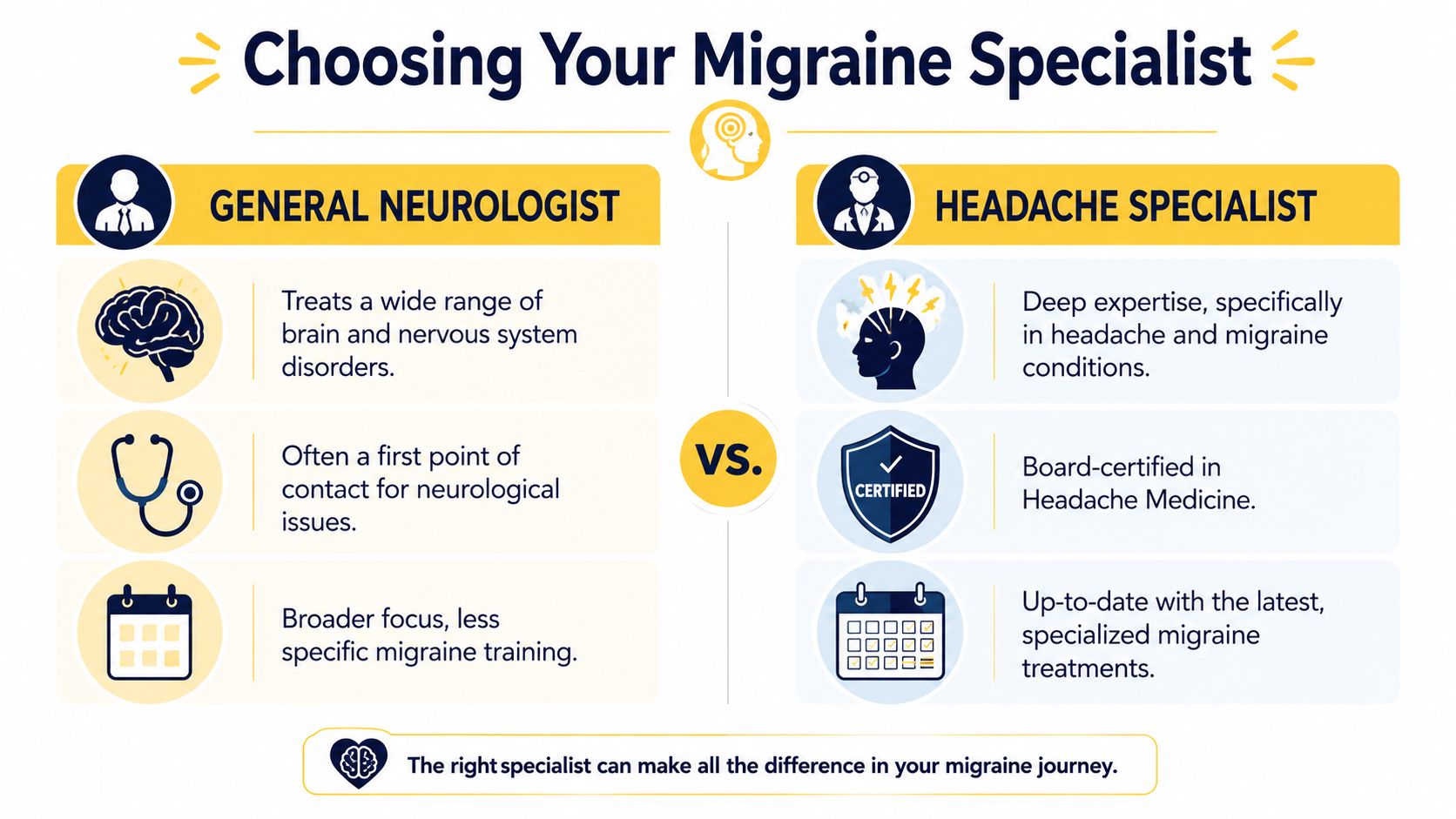
A general neurologist can absolutely help with migraine. For many people, that's a sensible place to start. But if your symptoms are complex, your diagnosis is unclear, or past treatment attempts haven't worked well, a dedicated headache specialist may offer a deeper level of migraine-specific expertise.
That difference isn't just theoretical. Consulting a specialist increases the odds of an accurate diagnosis by 2.38-fold compared with non-specialists, and only 4.5% of chronic migraine patients in the cited study successfully moved through the chain of getting care, receiving an accurate diagnosis, and being prescribed both acute and preventive treatment in this peer-reviewed analysis on chronic migraine care barriers.
A simple comparison
| Doctor type | Often a good fit for | Potential limits |
|---|---|---|
| General neurologist | Newer migraine evaluation, mixed neurological symptoms, initial workup | Broader practice may mean less migraine-specific depth |
| Headache specialist | Chronic migraine, unusual presentations, difficult-to-treat cases, complex medication history | Harder to access, longer waits, may need referral |
If your attacks are straightforward and you haven't had a thorough neurological review yet, a neurologist may be enough. If you've already tried several approaches, have aura or unusual neurological symptoms, or suspect medication-overuse issues, specialist care becomes more compelling.
For readers comparing treatment pathways, ReliefMigraine also has a helpful explainer on CGRP monoclonal antibody options that can make specialist conversations easier to follow.
How to vet the doctor before you book
Patient reviews can help, but they're easy to misuse. Focus less on complaints about parking or front desk delays and more on patterns in communication. Did patients feel heard? Did the doctor explain treatment choices clearly? Did the office have a process for follow-up?
A few smart checks before booking:
- Verify credentials: Look for headache medicine training or board-related headache credentials when available.
- Ask about migraine volume: You don't need a number. You need confirmation that migraine is a regular part of the doctor's practice.
- Confirm logistics early: Find out whether your insurance requires prior authorization or a referral before the appointment.
- Check follow-up style: Migraine care usually needs adjustment over time. Ask how the office handles questions between visits.
The right doctor isn't just the one with the fastest opening. It's the one whose practice can support the kind of follow-up migraine often requires.
How to Prepare for Your First Specialist Appointment
A specialist visit goes better when you arrive with a record instead of trying to reconstruct months of symptoms from memory.
Bring a record not a rough story
Specialists judge progress by changes in monthly migraine days, and preventive treatment response is commonly evaluated within 2–3 months as outlined in this review on migraine management. That means baseline information matters. If you don't know what your usual pattern looks like, it's much harder for the doctor to tell whether a new plan is helping.
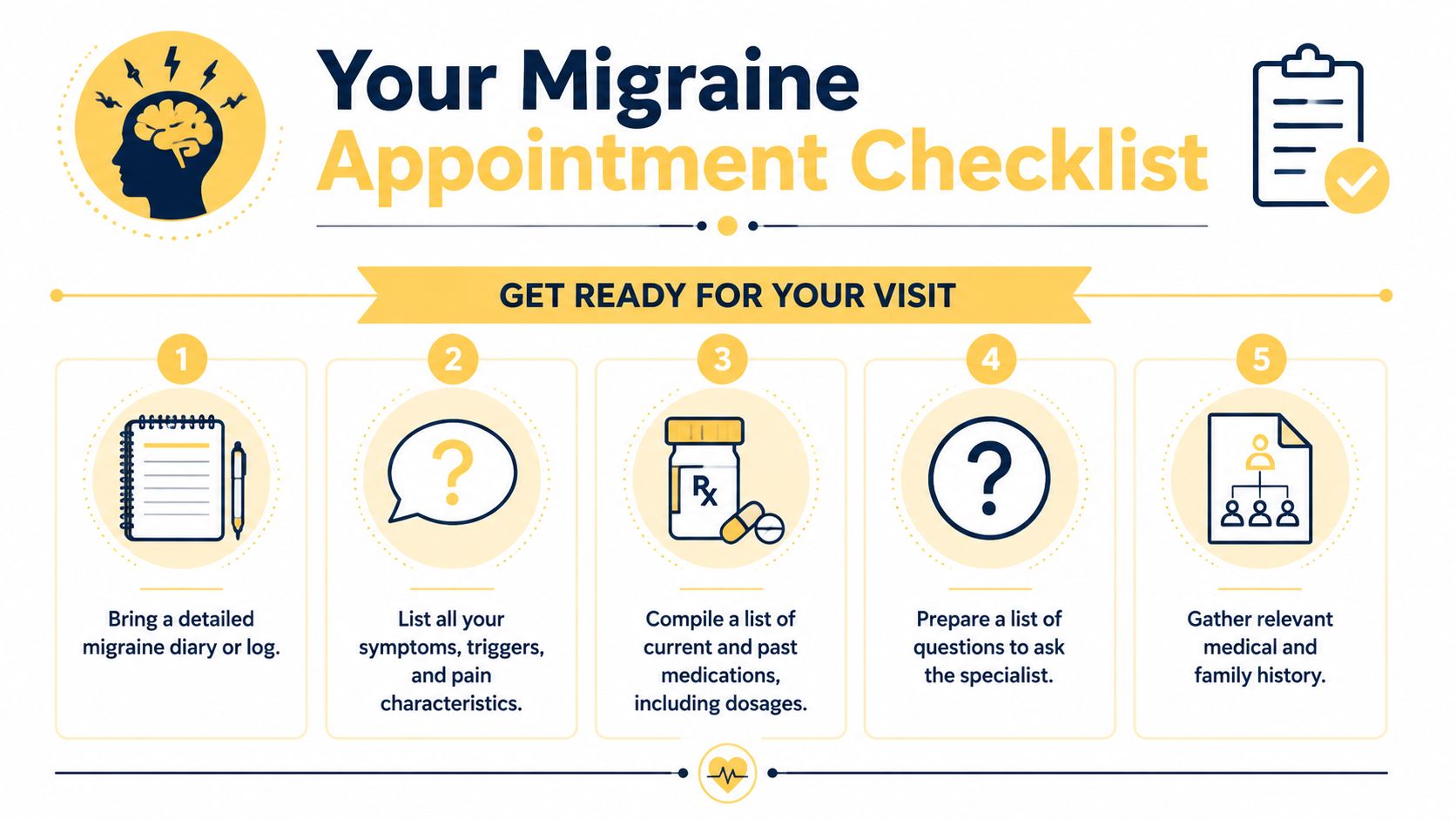
Bring these items if you can:
- A migraine log: Dates, duration, major symptoms, likely triggers, and whether you had aura.
- Medication history: Include over-the-counter products and prescriptions you've tried, plus what happened with each.
- Family and medical history: Especially other neurological conditions, headache patterns, and major health changes.
- A short symptom description: Where pain starts, whether it throbs or presses, whether movement worsens it, and whether you get nausea, photophobia, or phonophobia.
- Copies of prior testing: Imaging reports, emergency visit summaries, or previous neurology notes if you have them.
If you need a structure for that log, ReliefMigraine's migraine log template is a good place to start.
A visual walkthrough can also help before the visit:
Questions worth bringing to the visit
Write your questions down. Brain fog during or after migraine is real, and even a good appointment can feel blurry afterward.
Try questions like these:
- Diagnosis clarity: “What features make this look like migraine versus another headache disorder?”
- Treatment goals: “How will we measure whether this plan is working over the next few months?”
- Next steps: “If the first approach doesn't help enough, what do you usually reassess first?”
- Attack plan: “What should I track when an acute treatment seems to work poorly or inconsistently?”
- Lifestyle support: “Which daily habits are most worth stabilizing in my case?”
When to seek immediate care
This article is for informational purposes and is not medical advice. Consult a healthcare provider for personalized guidance.
Seek immediate medical care if you have:
- A sudden severe headache: Especially one that reaches peak intensity very quickly
- Headache with fever or stiff neck
- New neurological changes: Such as weakness, confusion, fainting, or major speech difficulty
- Headache after a head injury
Those symptoms need urgent medical evaluation, not a routine specialist waitlist.
Use Your Data to Drive a More Accurate Diagnosis
Why structured tracking beats memory
Individuals often don't remember migraine patterns as clearly as they think they do, especially when attacks blur together. They remember the worst episode, the latest episode, or the one that disrupted something important. Specialists need a fuller picture.
That's where personal tracking becomes powerful. 68% of patients want personalized pattern recognition in their care plan, while only 12% of headache centers explicitly promote data-driven models that learn from patient logging in this source discussing headache center approaches. In plain terms, many patients want more individualized care than they're being offered upfront.
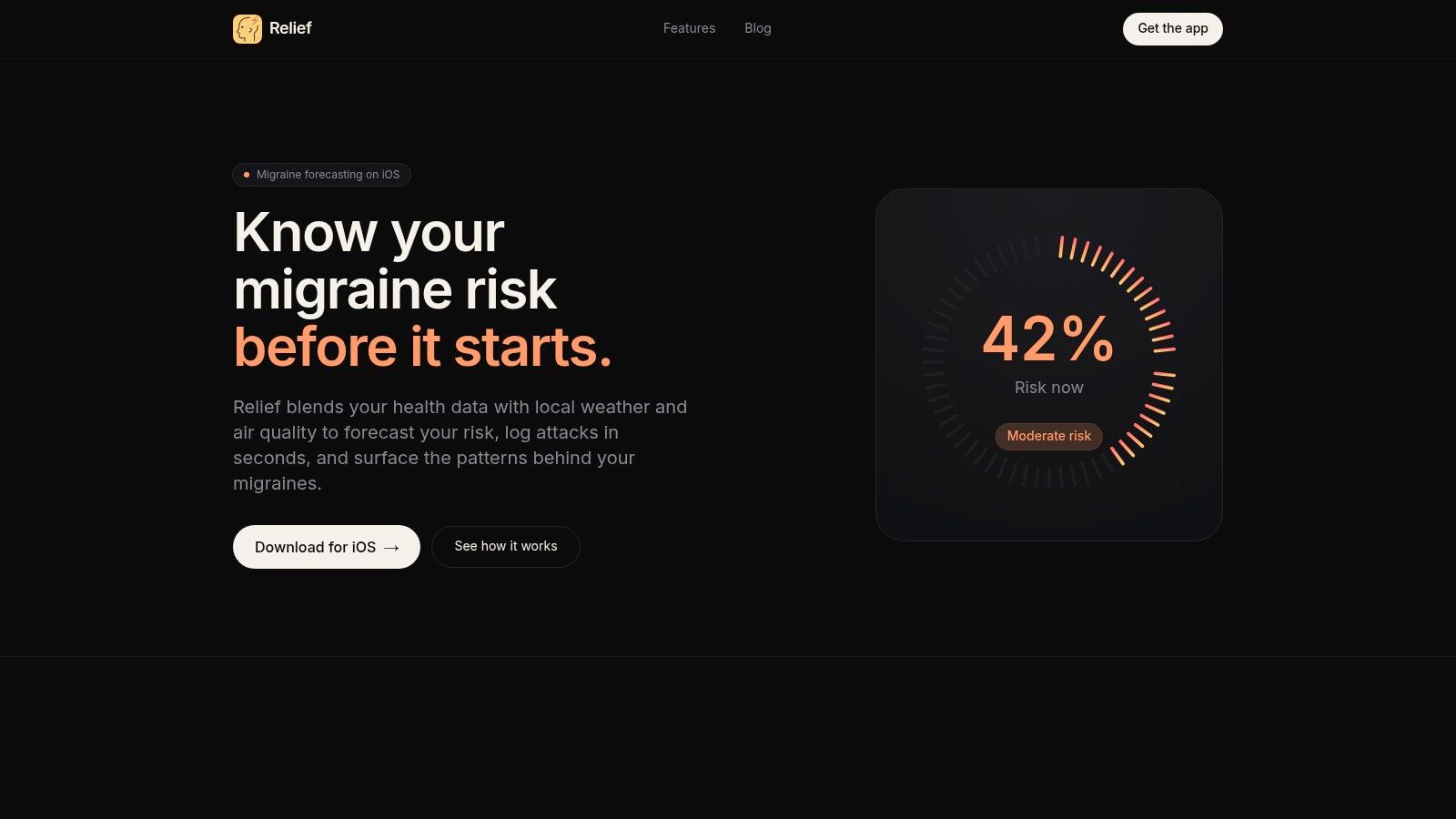
A paper diary is still useful. Structured app data is usually easier to review because it can sort entries, show trends, and surface correlations you might miss. If your tracking captures symptoms, timing, likely triggers, medication response, weather context, sleep disruption, and functional impact, you're no longer saying “I think stress is part of it.” You're showing a pattern.
What patterns to surface before the visit
You don't need a perfect spreadsheet. You need a few clean signals.
Bring evidence on things like:
- Frequency pattern: Are attacks scattered, clustered, or tied to certain parts of the month?
- Symptom signature: Do nausea, light sensitivity, dizziness, or aura appear consistently?
- Trigger context: Are there recurring links with sleep changes, hormonal shifts, weather, meals, travel, or screen-heavy days?
- Medication response: What seems to shorten attacks, what doesn't, and what causes side effects or rebound concerns?
- Disability pattern: Which attacks stop normal activity and which remain more manageable?
A specialist can make better decisions when you bring patterns, not guesses.
If you want a clearer way to describe attack intensity over time, this guide to a migraine severity scale can help you standardize what “mild,” “moderate,” and “severe” mean in your log.
Data informed questions to ask your specialist
Once you have a few weeks or months of tracking, your questions become sharper. That changes the appointment dynamic in a good way. You're not trying to impress the doctor. You're helping them make a more accurate call.
Useful questions include:
- “My logs show these symptoms together most often. Does that pattern fit migraine?”
- “These attacks seem linked to certain conditions. Do you think that correlation is clinically meaningful?”
- “My medication notes show mixed results. What would you want me to track next to clarify whether it's helping?”
- “Do these entries suggest one migraine subtype is more likely than another?”
- “What data would be most useful for follow-up?”
This kind of preparation helps you advocate for yourself without having to argue. The data does some of the talking.
Building a Partnership for Long-Term Migraine Management
What happens after the first visit
The first specialist appointment rarely solves everything in one shot. More often, it clarifies the diagnosis, identifies missing information, and starts a treatment plan that may include lifestyle work, acute treatment, and preventive treatment. Then comes the part people don't always expect. Adjustment.
Migraine care usually improves through follow-up. A doctor may revisit the diagnosis, refine the plan based on your response, and look again at adherence, timing, side effects, or trigger patterns if things aren't improving as hoped. That process can feel slow, but it's normal.
What helps and what usually doesn't
What helps is consistency. Consistent sleep, hydration, meal timing, stress management, and symptom tracking give both you and your clinician something stable to work from. Clear follow-up notes about what changed after treatment starts are often more useful than trying to summarize everything from memory months later.
What usually doesn't help is switching plans too quickly without enough tracking, assuming every headache is identical, or walking into each visit with only a vague sense that things are “better” or “worse.” Migraine management works best when both patient and clinician can see the pattern over time.
This article is for informational purposes and is not medical advice. Consult a healthcare provider for personalized guidance.
If you want an easier way to bring that kind of pattern-based evidence to your next appointment, Relief helps you log symptoms, triggers, medications, and environmental context so you can walk in with a clearer record of what your migraine is doing over time.


