Yes, migraines and heart palpitations can be linked through several pathways, including shared autonomic nervous system changes, anxiety, common triggers, and sometimes medication effects. The link is important enough that migraine is now included in the UK's QRISK3 cardiovascular risk tool, and research has found about a 2-fold increase in adjusted ischemic stroke risk in people with migraine in large meta-analyses.
If you're reading this because your heart started fluttering, pounding, or racing during a migraine attack, you're not overreacting. That combination can feel alarming. It's also confusing because some episodes are tied to dehydration, caffeine, stress, or the body's “fight-or-flight” response, while others deserve a proper medical workup.
Migraine is not the same thing as a typical headache. It's a neurological condition that can involve aura (temporary sensory symptoms such as visual changes), prodrome (early warning symptoms before pain starts), and postdrome (the drained, foggy phase afterward). For some people, the symptoms extend beyond the head and include dizziness, nausea, light sensitivity, and a noticeable change in heart rhythm or heartbeat awareness.
This article is for informational purposes and is not medical advice. Consult a healthcare provider for personalized guidance.
Table of Contents
- Your autonomic nervous system may be part of the story
- Anxiety can be real and physical
- Medications and overlapping triggers can muddy the picture
- Migraine is more than a pain problem
- The autonomic nervous system may be part of the link
- Why aura and arrhythmias get attention
That Scary Feeling When Your Heart Races During a Migraine
A lot of people describe the same moment. The migraine starts building. Maybe you notice light sensitivity first, or neck tightness, or that wiped-out feeling that tells you an attack is coming. Then your chest feels fluttery or your heart seems to pound harder than usual, and your brain jumps straight to, “Is this dangerous?”
That fear makes sense.
Palpitations are the sensation of being unusually aware of your heartbeat. It can feel like racing, pounding, skipping, fluttering, or a sudden thump in your chest or throat. During a migraine, that can happen for more than one reason, and not all of them mean there's something severely wrong. But it also shouldn't be brushed off automatically as “just anxiety.”
Important: New neurological symptoms, a sudden severe headache, headache with fever or a stiff neck, or headache after a head injury all need prompt medical attention. You can also review migraine warning signs that shouldn't be ignored if you're trying to sort out what deserves urgent care.
The tricky part is that migraine already affects the nervous system, blood vessels, and how your body handles stress. Add in common confounders like poor sleep, dehydration, caffeine, alcohol, or nicotine, and you can end up with symptoms that overlap in messy ways.
Some people feel palpitations only during the pain phase. Others notice them in the lead-up to a migraine, especially when they're also dizzy, shaky, nauseated, or lightheaded. That pattern can point toward a body-wide response rather than a problem limited to your head.
Why this feels so intense
Migraine often makes you more sensitive to normal body sensations. A heartbeat you'd usually ignore can suddenly feel loud and intrusive. If you're also in pain, nauseated, or worried about what's happening, the experience can snowball fast.
What matters most right now
You don't need to solve the entire mystery in one episode. What helps is separating three questions:
- What did it feel like? Fluttering, pounding, racing, or skipped beats.
- What else happened with it? Dizziness, chest pain, breathlessness, fainting, aura, nausea, sweating.
- What was going on around it? Standing up quickly, lack of sleep, caffeine, alcohol, stress, missed meals, medication use.
That information will matter much more than trying to guess the cause in the moment.
Why Migraines and Heart Palpitations Can Happen Together
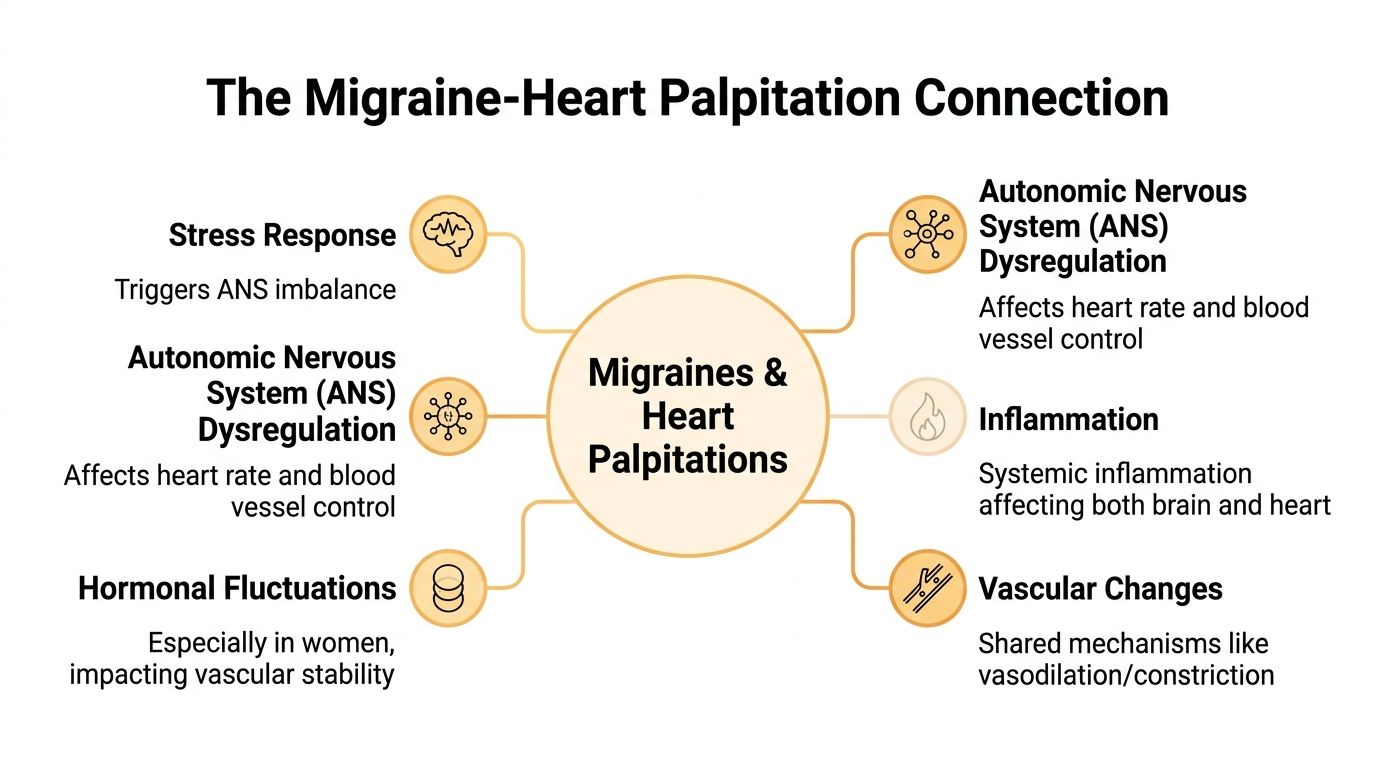
Some cases of migraines heart palpitations come down to a shared control system in the body. Others are more about stress chemistry, medication effects, or triggers that hit both the brain and the heart at the same time.
Your autonomic nervous system may be part of the story
Your autonomic nervous system is the background control panel for things you don't consciously run. Heart rate, blood vessel tone, blood pressure, sweating, and digestion all sit on that panel. When this system gets out of balance, you can feel it in several places at once.
One useful way to think about it is a car with an overly touchy accelerator. A migraine attack can push the system toward a stress-response state, and then your heart rate, blood vessel changes, nausea, shakiness, and head pain can show up together.
A notable aspect is that some people with migraine also have signs of dysautonomia, meaning the autonomic nervous system isn't regulating smoothly. That's one reason POTS (Postural Orthostatic Tachycardia Syndrome), a condition that causes a rapid heart rate on standing, often comes up in this conversation. Baptist Health's overview of migraine and heart health notes that POTS frequently co-occurs with migraine and suggests a shared neurovascular pathway rather than a simple anxiety explanation.
If your palpitations tend to happen when you stand up, shower, get overheated, skip meals, or feel suddenly lightheaded, that's useful information to bring to a clinician.
Sometimes the pattern matters more than the symptom. Palpitations with standing and dizziness tell a different story than palpitations after three coffees and poor sleep.
Anxiety can be real and physical
Anxiety is often used as a conversation stopper. It shouldn't be.
Migraine attacks can be frightening, painful, and unpredictable. Anxiety can absolutely intensify palpitations, and palpitations can intensify anxiety right back. That loop is real. But “anxiety” doesn't mean the symptom is imagined. It means your body may be releasing stress hormones, breathing differently, and becoming more alert to internal sensations.
For some people, the anxiety comes first. For others, the migraine or the heart flutter starts first, and the fear follows. Either way, the body response can feel nearly identical.
Medications and overlapping triggers can muddy the picture
Another reason this symptom cluster is hard to interpret is that the same factors can trigger both headache and palpitations. A clinical summary from Healthline's review of headache and palpitations causes notes that dehydration, stimulant exposure, anxiety, anemia, hyperthyroidism, and arrhythmias can all sit in the background when both symptoms appear together.
That's why tracking matters.
- Hydration changes: Darker urine, thirst, dizziness, and a racing heart can all fit with dehydration.
- Stimulants: Caffeine and nicotine can worsen both head symptoms and heartbeat awareness.
- Sleep disruption: A short night can lower your migraine threshold and make palpitations more noticeable.
- Alcohol: It can trigger migraine symptoms for some people and also make the heart feel irregular.
- Medication timing: If palpitations show up after a new medicine or after taking an acute migraine treatment, that timing deserves a note.
If you're sorting out food-related patterns too, this guide to histamine and migraine headaches may help you think more clearly about what's a trigger and what's a coincidence.
Understanding the Deeper Cardiovascular Connection
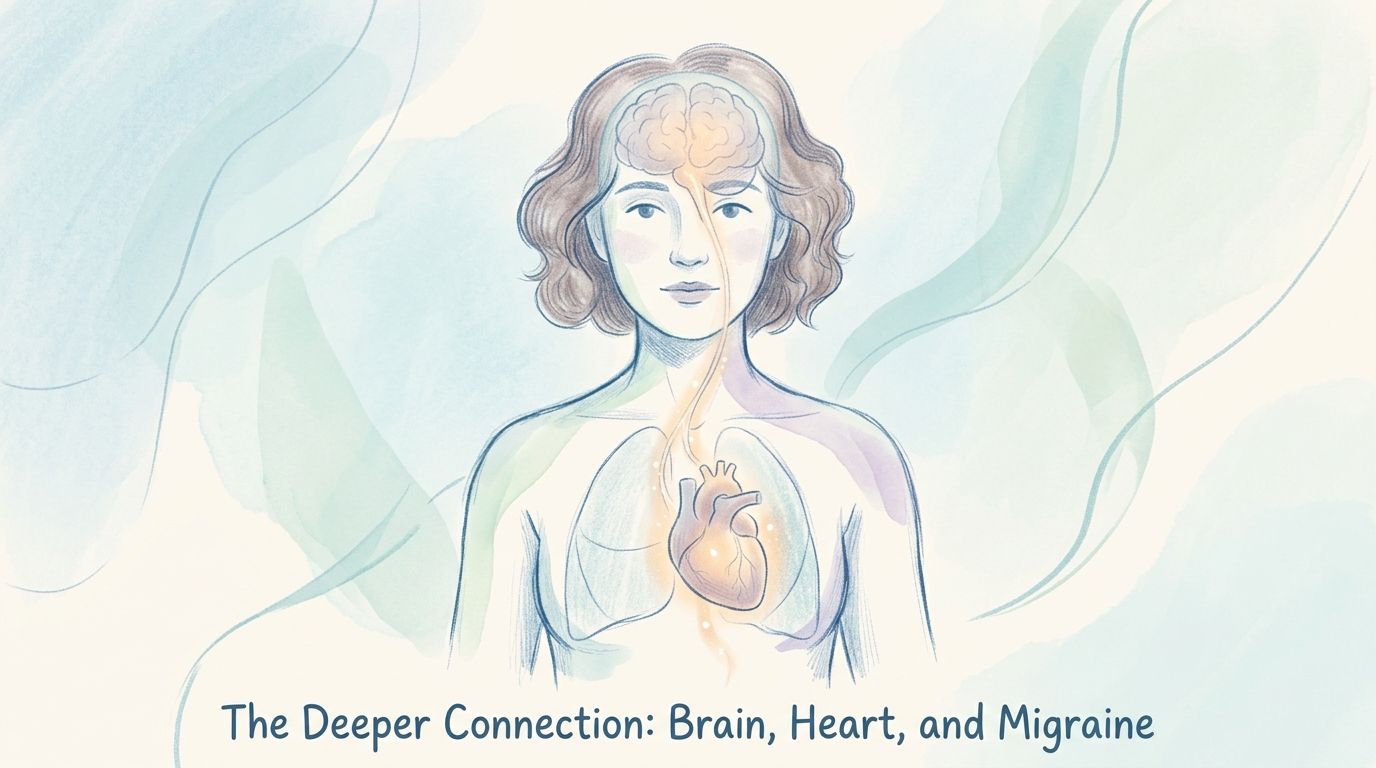
A migraine attack can feel like it starts in the head, but the body systems involved are much wider than that. Migraine is now understood as a neurovascular condition, meaning the brain, blood vessels, and the automatic control systems that regulate heart rate and blood pressure can all be part of the same event.
Migraine is more than a pain problem
Researchers have been looking at migraine through a broader cardiovascular lens for years. A review in the American Heart Association journal JAHA found that migraine is linked with higher long-term risk of ischemic stroke and other cardiovascular events, including myocardial infarction (JAHA review on migraine and cardiovascular disease).
That does not mean a person with migraine is destined to develop heart disease.
It does mean migraine should be treated as part of your overall health picture, especially if you also have blood pressure changes, fainting spells, unusual shortness of breath, or a new pattern of palpitations. A useful comparison is a sensitive home electrical system. If one circuit keeps flickering, you do not assume the whole house is failing, but you also do not ignore the possibility that the wiring deserves a closer look.
The autonomic nervous system may be part of the link
One reason these symptoms can cluster is autonomic nervous system dysfunction. The autonomic nervous system is the body's background control panel. It adjusts heart rate, blood vessel tone, blood pressure, sweating, and digestion without you having to think about it. In some people with migraine, that control panel appears to be more reactive or less stable.
When that system is off balance, several things can happen at once. Blood vessels may constrict or dilate in abnormal ways. Heartbeat awareness can increase. Standing up may trigger a bigger-than-expected jump in heart rate. A person can feel lightheaded, shaky, flushed, or suddenly aware of pounding in the chest while the migraine process is also unfolding.
This is one reason “it was just anxiety” can feel incomplete. Fear can absolutely intensify palpitations, but in some cases the body changes come first and the fear arrives seconds later.
Why aura and arrhythmias get attention
A separate review in PMC reports an association between migraine, especially migraine with aura, and cardiac arrhythmias, with atrial fibrillation discussed most often. That same review also notes that migraine was added to QRISK3 as a cardiovascular risk factor, reflecting growing recognition that migraine can matter outside the head alone (PMC review of migraine and arrhythmia risk).
Aura gets attention because it may signal a form of migraine with stronger vascular and electrical features. That does not mean everyone with aura has a heart rhythm disorder. It means the combination of aura, palpitations, near-fainting, marked heart rate swings, or blood pressure instability deserves a more careful conversation with a clinician.
A practical question to bring to that visit is simple: “Could these episodes reflect a migraine attack alone, or could autonomic dysfunction or an arrhythmia also be part of the picture?” That framing often leads to a more useful evaluation than stopping at stress alone.
Benign Palpitations vs When to Seek Medical Care
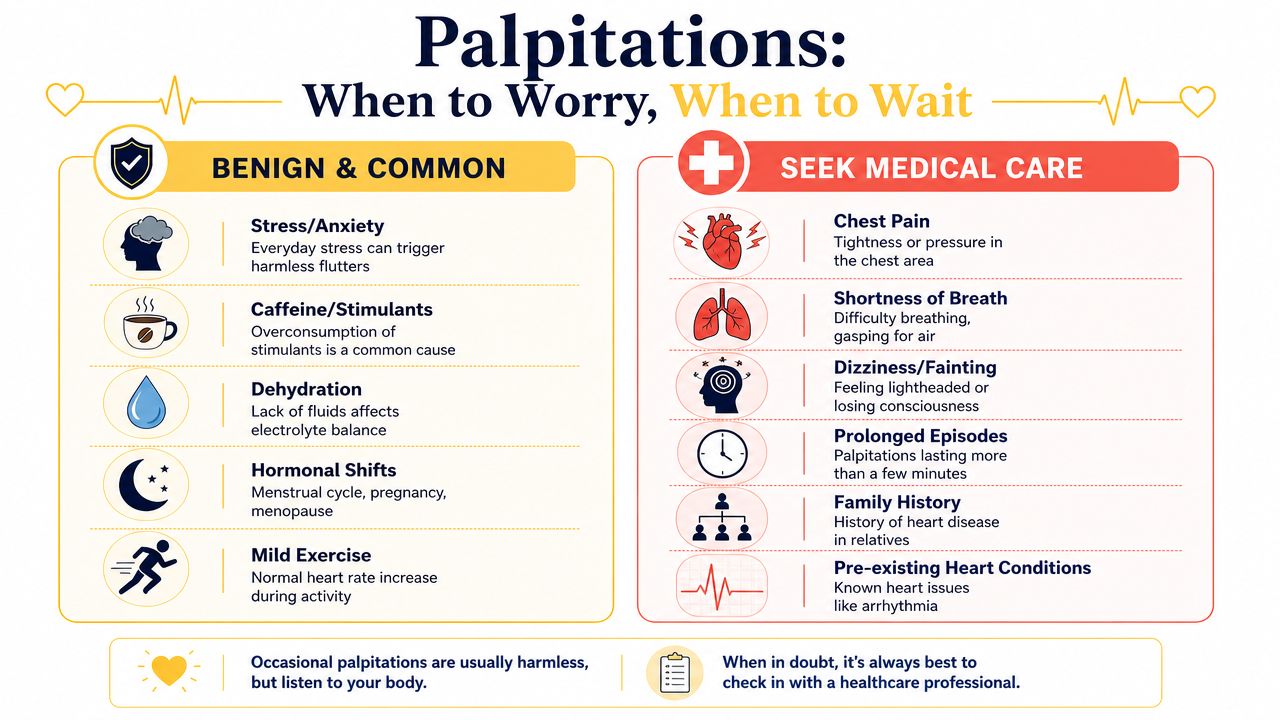
Not every flutter is an emergency. But some combinations of symptoms should move you out of “wait and see” mode.
Symptom Checker Benign vs Concerning Palpitations
| Symptom Feature | Often Benign | Potentially Concerning (Seek Medical Advice) |
|---|---|---|
| Timing | Brief fluttering during stress, after caffeine, or when overtired | New episodes with no clear trigger, frequent recurrence, or symptoms that keep worsening |
| Duration | Short, self-limited sensations that pass on their own | Sustained racing, pounding, or irregular heartbeat that doesn't settle |
| Body position | Mild awareness of heartbeat after standing quickly or during stress | Strong symptoms with standing plus repeated dizziness, fainting, or near-fainting |
| Associated symptoms | Mild anxiety, tension, or dehydration symptoms | Chest pain, shortness of breath, fainting, severe dizziness, or neurological changes |
| Migraine context | Happens around a familiar migraine pattern and resolves as the attack passes | New palpitations with a different kind of migraine, unusual weakness, or symptoms that feel unlike your baseline |
| Trigger pattern | Linked to missed sleep, alcohol, stimulants, or poor hydration | Happening despite trigger control, or after a medication change that worries you |
| History | No known heart condition and symptoms remain mild | Personal history of arrhythmia or other heart disease, or strong family concern |
A “benign” pattern doesn't mean “ignore it forever.” It means the episode may be less urgent while you track it and bring it up at a routine appointment.
Get urgent help if these symptoms show up
Seek immediate medical care if palpitations happen with any of the following:
- Chest pain or pressure
- Severe shortness of breath
- Fainting or nearly fainting
- A sudden severe headache
- Weakness, trouble speaking, facial droop, or other neurological changes
- Headache with fever or a stiff neck
- Headache after a head injury
If the heartbeat change feels severe, prolonged, or comes with collapse-level dizziness, treat it like a medical problem first and a migraine question second.
This article is for informational purposes and is not medical advice. Consult a healthcare provider for personalized guidance.
How to Talk to Your Doctor About Your Symptoms
A good appointment starts before you get to the office. When symptoms are vague, they're easy to dismiss. When they're tracked, timed, and described clearly, your doctor has something concrete to work with.

What to track before your appointment
Try to capture patterns instead of isolated events. A short note after each episode is enough.
- When it happened: Before the migraine, during the pain phase, or afterward in the postdrome.
- What the heartbeat felt like: Racing, pounding, fluttering, skipped beats, or irregular.
- How long it lasted: Even an estimate helps.
- What else came with it: Dizziness, nausea, sweating, chest discomfort, shortness of breath, aura, lightheadedness.
- What you were doing: Resting, standing up, exercising, showering, driving, lying down.
- Possible triggers: Sleep loss, missed meals, alcohol, caffeine, nicotine, dehydration, stress.
- Medication context: New medicines, recent changes, or whether symptoms happen after taking something.
Bring your log, even if it feels incomplete. A half-finished pattern is still a pattern.
“My palpitations happen within the same window as my migraine aura” is much more useful to a clinician than “I sometimes feel weird during migraines.”
What your doctor may ask about or test
Your doctor may ask questions that seem unrelated to headache at first. That's normal. They may be trying to separate migraine-related autonomic symptoms from anemia, thyroid problems, blood pressure issues, dehydration, POTS, or an arrhythmia.
Common evaluation steps may include:
- A symptom history focused on timing, triggers, and associated symptoms.
- Vital signs, including heart rate and blood pressure.
- An EKG to look at heart rhythm.
- A wearable monitor, such as a Holter monitor, if episodes come and go.
- Blood tests to look for things like thyroid issues or anemia.
This short video gives a useful overview of migraine symptoms and patterns that can help you prepare for that conversation:
If you suspect standing-related symptoms, tell your clinician clearly. Phrases like “my heart races when I stand and I feel lightheaded” can point the conversation in a more productive direction than “I think it's just stress.”
Proactive Steps to Reduce Your Risk and Worry
When migraines and palpitations show up together, the goal isn't to become hypervigilant about every heartbeat. The goal is to make the pattern clearer, reduce avoidable triggers, and know when symptoms have crossed the line into something that needs medical attention.
Focus on shared triggers first
Many of the same factors can trigger both headache and palpitations. Clinical sources note that dehydration, stimulants such as caffeine and nicotine, alcohol, and sleep disruption can all cause both symptoms, which is why tracking them is so useful when you're trying to separate triggers from an underlying heart or neurological issue.
A practical checklist helps:
- Hydrate consistently: If episodes tend to happen on busy days when you forget fluids, write that down.
- Watch stimulant timing: It's often not just whether you had caffeine, but when and how much compared with your usual routine.
- Protect sleep where you can: Even one rough night can lower your threshold.
- Review alcohol objectively: Some people notice delayed migraine symptoms and overnight palpitations.
- Note nicotine exposure: That includes occasional use, not just daily use.
If nutrition changes are part of your migraine routine, this article on low-carb diets and headaches may help you think through whether your eating pattern could be affecting symptoms indirectly.
Build a simple plan you can actually keep up with
You don't need a perfect spreadsheet. You need a repeatable system.
Try this:
- Use one symptom log: Keep migraine phase, palpitations, dizziness, and triggers in the same place.
- Flag changes from baseline: New symptom, stronger symptom, longer symptom, or symptom with fainting gets special attention.
- Review medications with a clinician or pharmacist: Especially if symptoms started after a change.
- Bring cardiovascular basics into the conversation: Blood pressure, thyroid checks, anemia screening, and rhythm evaluation may all be reasonable questions depending on your symptoms.
- Have an urgent-care threshold: Decide now what symptoms mean you won't wait it out at home.
If tracking by memory hasn't worked well, Relief is one option for logging migraine symptoms, triggers, and medication timing so you can bring clearer patterns to your healthcare appointments.
If you want a calmer way to spot patterns, Relief helps you track migraine symptoms, triggers, and timing in one place so it's easier to see whether palpitations follow the same pattern or need a closer look.


