
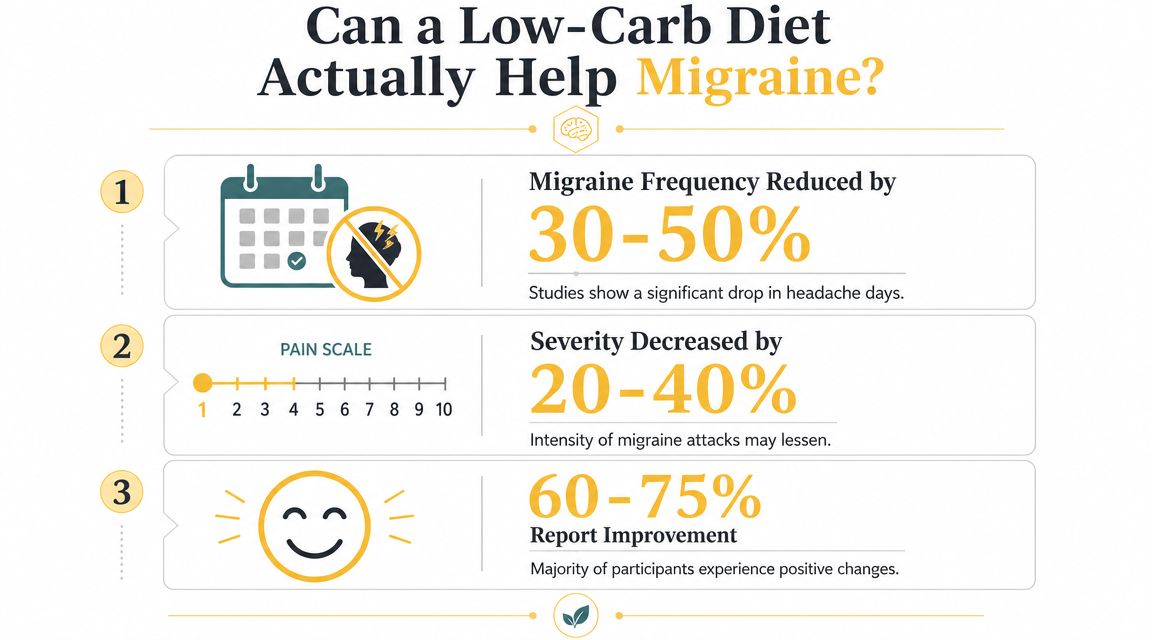
Low-carb diets can cause temporary headaches during the first 2 to 7 days because of fluid and electrolyte shifts, but that's not the same thing as a migraine attack. In some people with migraine, the longer-term picture looks different: after 3 months on a ketogenic diet, monthly headache days fell from 12.5 ± 9.5 to 6.7 ± 8.6, and 15 of 23 participants (65.2%) had at least a 50% reduction in headache days.
That contrast is what makes this so confusing. You change your diet hoping to feel better, then your head starts hurting and now you're left wondering whether the diet is harming you, triggering a migraine, or just putting your body through a rough adjustment phase.
If you live with migraine, that uncertainty matters. A dull, dehydration-related low-carb headache calls for one response. A true migraine attack, with your usual symptoms like nausea, photophobia, aura, or postdrome, may call for a completely different plan. Knowing the difference can help you decide whether to slow down, rehydrate, adjust electrolytes, or rethink the diet entirely.
This article is for informational purposes and is not medical advice. Consult a healthcare provider for personalized guidance.
Table of Contents
Why Does Going Low-Carb Cause Headaches
Starting a low-carb diet and getting a headache feels unfair. You're trying to improve your health, and instead you feel foggy, tired, and miserable.
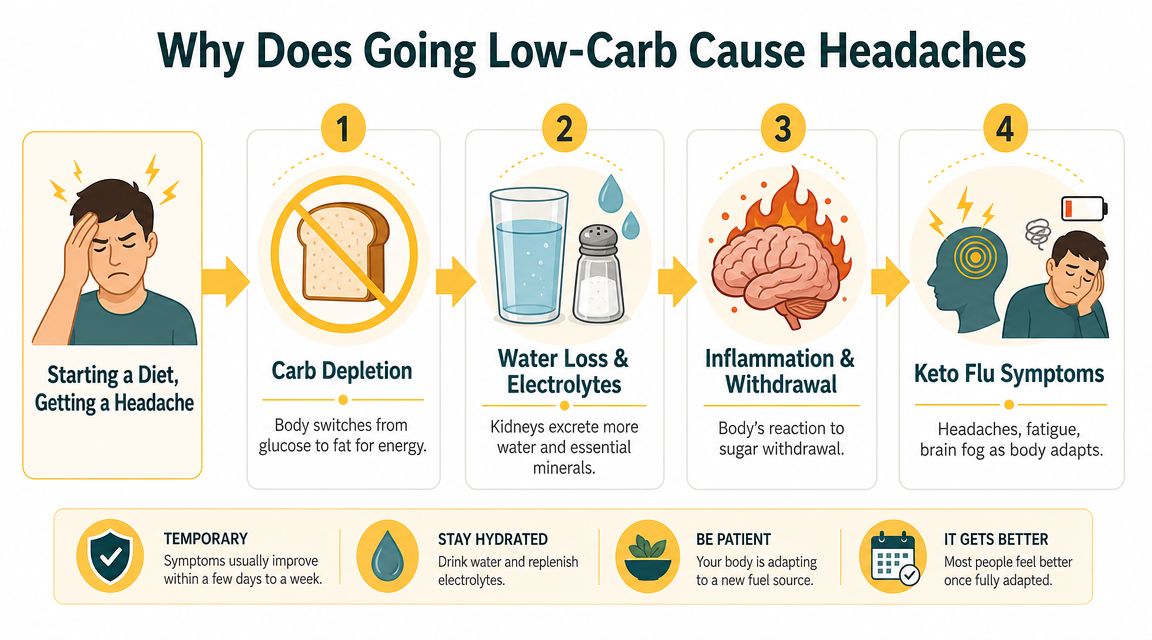
The most common reason is straightforward. When carbohydrate intake drops quickly, your body sheds water and loses electrolytes. Harvard Health notes that “keto flu” symptoms typically appear 2 to 7 days after starting a ketogenic diet and often include headache, foggy brain, fatigue, irritability, nausea, difficulty sleeping, and constipation, largely because of rapid fluid and electrolyte shifts as the body adapts (Harvard Health on keto flu).
What changes in the first week
Consider it a fuel switch. Your body is used to relying heavily on glucose from carbohydrates. When you cut carbs sharply, that easy fuel source drops, liver glycogen gets depleted, insulin falls, and your system has to adapt to using fat and ketones more efficiently.
During that handoff, the brain may be more sensitive to lower circulating glucose availability. That's one reason people often feel headache, fatigue, and brain fog early on. It's not necessarily a sign that ketosis itself is dangerous. It's often a sign that the transition is bumpy.
Three practical issues usually show up together:
- Water loss increases early. As carb stores fall, the body lets go of water.
- Electrolytes can drop with that fluid loss. Sodium is the big one people miss, but potassium and magnesium matter too.
- Meal timing suddenly matters more. If you cut carbs and also skip meals, you can pile low blood sugar on top of dehydration.
Practical rule: A lot of early low-carb headaches are less about the diet being “wrong” and more about the transition being too abrupt.
What usually helps and what usually doesn't
What helps is boring but effective. Fluids, regular eating, and electrolyte replacement tend to matter more than trying to “push through.”
What usually doesn't help is treating every headache during week one as proof the diet has failed. It also doesn't help to cut carbs hard while under-eating, sleeping badly, and ignoring thirst. That combination can create a perfect setup for a rough first week.
If you're dealing with low carb diet and headaches, it helps to remember that adaptation symptoms are usually time-linked. They tend to cluster near the beginning of the diet, especially in that first several-day window, then either improve or reveal that something else is going on.
Low-Carb Headache vs. Migraine Attack
For people with migraine, this is the part that matters most. A low-carb headache can overlap with a migraine, but they aren't automatically the same thing.
A transient low-carb headache often starts within 2 to 7 days of carb restriction and is commonly tied to fluid and sodium loss, while migraine follows a more complex neurological pattern and may not behave like a simple diet side effect (practical distinction between keto headache and migraine).
How the patterns differ
| Symptom | Typical Low-Carb Headache (“Keto Flu”) | Typical Migraine Attack |
|---|---|---|
| Timing | Often appears soon after major carb restriction | May follow your usual trigger pattern or occur without a clear diet-related timeline |
| Pain quality | Often more dull, steady, or pressure-like | Often throbbing or pulsating, though not always |
| Location | Can feel generalized | May be one-sided or shift sides |
| Associated symptoms | Fatigue, brain fog, irritability, feeling washed out | Nausea, photophobia, phonophobia, aura, worsening with activity, postdrome |
| Likely driver | Fluid loss, sodium loss, missed meals, adaptation stress | Underlying migraine process, often with multiple triggers |
| What may help | Fluids, electrolytes, regular meals, slowing the transition | Your usual migraine management plan plus trigger review |
| Course | Often improves as the body adapts | May follow your established attack pattern regardless of diet |
That table won't diagnose anything, but it can make the situation less murky.
A simple self-check
Ask yourself these questions:
- Did it start soon after cutting carbs hard? That leans toward an adaptation headache.
- Does it feel like your usual migraine? If you recognize your familiar pattern, take that seriously.
- Are you also dealing with photophobia, aura, nausea, or a postdrome crash? Those features fit migraine better than a simple low-carb headache.
- Did water, electrolytes, and food help within a reasonable time? If yes, that supports the adaptation explanation.
Some people don't have one clean category. They get a dehydration-related headache that then seems to tip into a migraine attack.
That overlap is why broad lists of migraine risk factors are useful. Diet changes rarely happen in isolation. Stress, poor sleep, under-eating, travel, hormone shifts, weather, and dehydration can all stack on the same day.
Can a Low-Carb Diet Actually Help Migraine
It can help some people with migraine, but the timing matters.
A rough first week does not automatically mean the diet is wrong for you. It also does not mean the diet will help once you adapt. Those are two different questions, and they often get blurred together.
What the study found
A 2022 prospective study published in Brain and Behavior reported that people in the ketogenic-diet group had fewer monthly headache days after 3 months, and 15 of 23 participants (65.2%) reached at least a 50% reduction in headache days. Acute medication use also fell over the same period (study details in Brain and Behavior).
That 3-month timeline is useful. It suggests any migraine benefit, if it happens, is more likely to show up after the early adjustment period rather than during the first several difficult days. In practice, that means a short-term headache from changing your diet and a longer-term improvement in migraine frequency can both be true in the same person.
The trade-off is clear. A ketogenic or very low-carb approach may reduce attacks for some patients, but it also asks a lot up front. Food choices become narrower, social eating gets harder, and under-eating or dehydration can make migraine management worse rather than better.
A short explainer may help if you want more context:
Why it might help some migraine brains
Researchers have proposed several reasons a low-carb or ketogenic pattern might help certain people with migraine. These include effects on brain energy use, inflammation, and neuronal excitability. The core idea is straightforward. Some migraine brains may function better with a different metabolic setup.
That is still a selective, not universal, effect.
In clinic-style decision making, the useful question is not “Is low-carb good or bad for migraine?” The useful question is “After the adaptation phase, are your attacks less frequent, less severe, or easier to treat?” If the answer is yes, the diet may be helping. If the answer is no, or if your attacks become more disruptive, forcing the diet rarely makes sense.
I encourage patients to judge this by pattern, not by one hard day. Early worsening usually happens on a short timeline. Meaningful migraine improvement, if it comes, usually takes longer and needs tracking rather than guesswork.
Practical Strategies to Prevent Low-Carb Headaches
You usually don't need more grit. You need a better transition.
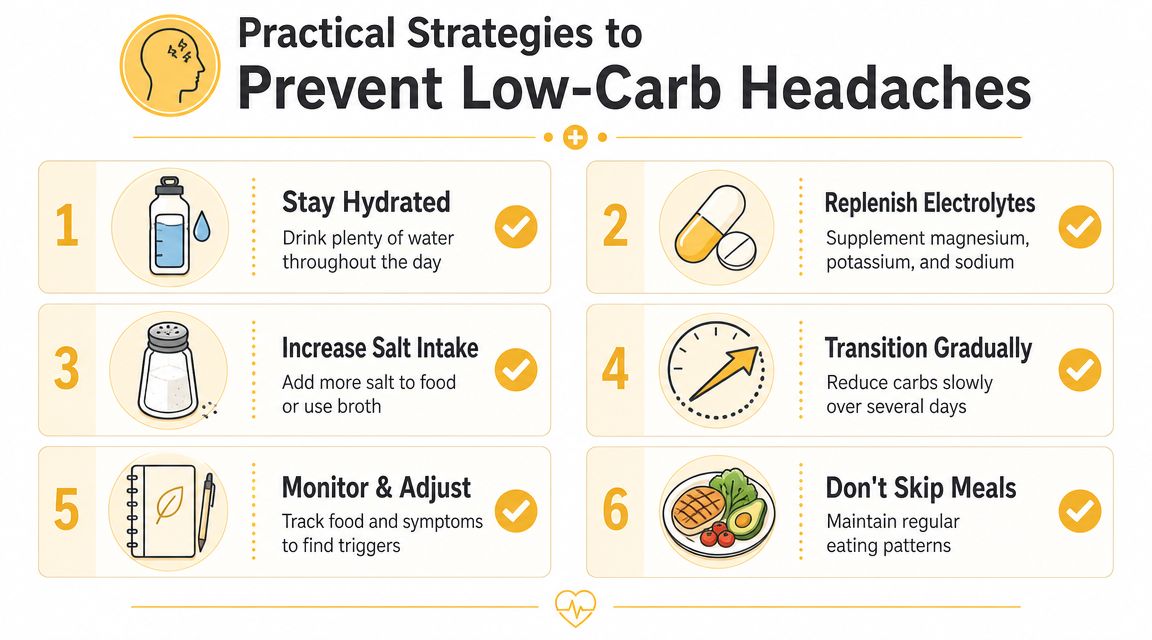
Virta Health emphasizes that keto-related headaches are often preventable, with the main interventions being hydration and proactive replacement of lost electrolytes like sodium, potassium, and magnesium (Virta Health on stopping keto headaches).
Start with hydration and electrolytes
A practical prevention plan often looks like this:
- Drink consistently throughout the day. Don't wait until you feel depleted.
- Replace sodium on purpose if you're losing fluid and suddenly eating less processed food.
- Pay attention to potassium and magnesium through foods and, if appropriate, clinician-guided supplementation.
- Keep meals regular during the transition so low intake doesn't pile onto dehydration.
Many people make a common mistake. They cut carbs, eat less overall, drink plain water only, and assume feeling awful means the diet is “working.” It usually means the setup needs fixing.
Make the transition easier on your brain
Going from a higher-carb pattern to very low carb overnight can be rough, especially if you already live with migraine. A slower reduction often gives your body more time to adjust.
A few habits are especially useful:
- Ease in rather than crash in. A gradual transition is often gentler than an abrupt cut.
- Don't skip meals just because appetite changes. Early appetite suppression can trick you into under-fueling.
- Protect sleep. A rough diet transition plus sleep loss is a bad combination for many people with migraine.
- Watch for stacking triggers. Intense exercise, alcohol, travel, and stress can make adaptation headaches more likely.
If a headache starts after a low-carb shift, the first correction is usually hydration plus electrolytes plus food, not more restriction.
When to See a Doctor About Your Headaches
Some headaches are inconvenient. Some are dangerous. That line matters.
Get urgent care for red flags
Seek immediate medical care if you have:
- A sudden, severe headache that peaks fast or feels unlike anything you've had before
- Headache with fever or a stiff neck
- Neurological changes such as confusion, weakness, trouble speaking, fainting, or new vision changes
- Headache after a head injury
This is not the time to assume it's keto flu, dehydration, or “just a migraine.”
Book a routine visit if the pattern isn't settling
You should also contact a healthcare provider if:
- Headaches keep going beyond the expected adjustment period
- Your attacks become more frequent or more severe
- You're unsure whether you're having migraine, a different headache type, or both
- You have other medical conditions or take medications that could make dietary shifts riskier
This article is for informational purposes and is not medical advice. Consult a healthcare provider for personalized guidance.
If you're not sure what's changing, structured logging can make that appointment much more useful. A dedicated migraine tracking app can help you walk in with a clearer timeline instead of trying to reconstruct symptoms from memory.
Tracking Your Diet and Symptoms to Find What Works
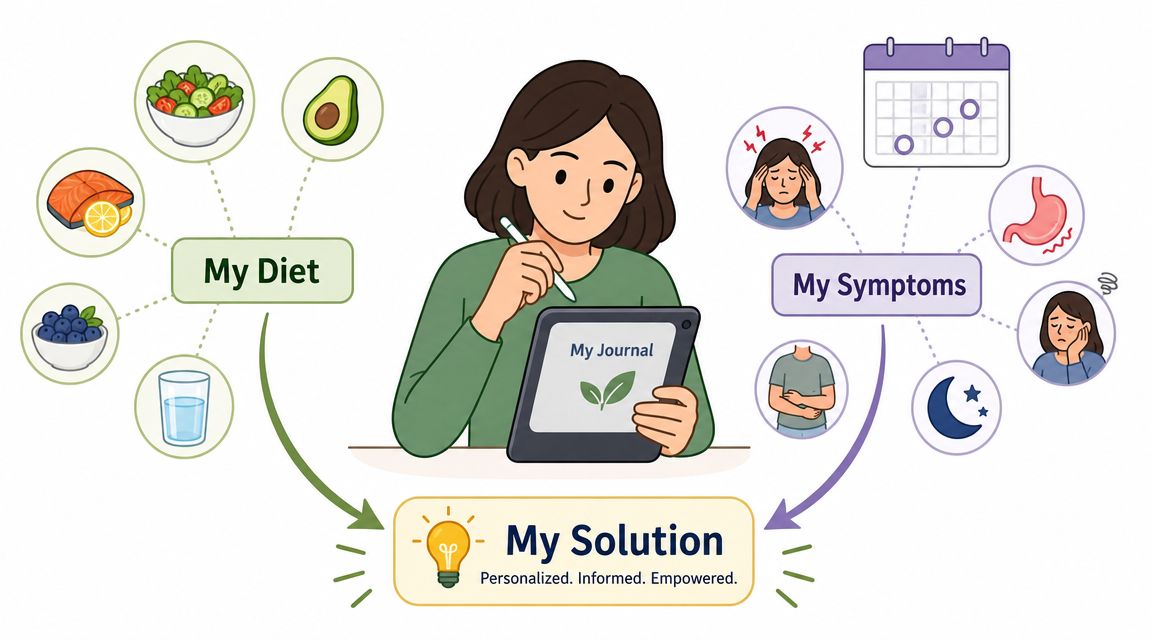
You cut carbs, and three days later your head is pounding. A week after that, you are not sure whether the diet is triggering migraine, exposing a hydration problem, or overlapping with your usual pattern. Tracking answers that better than memory can.
A short, structured log helps separate two very different problems. One is the temporary adaptation headache that can show up early after a carb drop. The other is a true migraine pattern that stays the same, gets worse, or improves over a longer stretch. Those timelines matter.
What to log
Keep it simple enough to maintain for at least two to four weeks. If your system is too detailed, you will stop using it right when the pattern starts to become clear.
Record:
- Carb changes, including when you reduced intake and whether the change was gradual or abrupt
- Head pain details, such as timing, severity, location, pressure vs throbbing, and whether it felt like your usual attacks
- Migraine features, including light sensitivity, sound sensitivity, nausea, aura, neck pain, and postdrome symptoms
- Hydration and electrolytes, especially on days with increased urination, exercise, heat exposure, or heavy sweating
- Meal timing, including skipped meals, long gaps without eating, and whether symptoms improved after eating
- Other variables, such as poor sleep, stress, menstrual cycle changes, alcohol, travel, weather shifts, or illness
I tell patients to pay close attention to sequence. Did the headache start within days of cutting carbs? Did it ease after fluids, sodium, and steadier meals? Or are the attacks following the same migraine pattern you had before?
How to read the pattern
A useful log does more than collect symptoms. It helps you test a few practical questions:
- Did symptoms cluster in the first several days after carb restriction, then settle?
- Did hydration or electrolyte changes reduce the head pain?
- Did migraine attacks change only after a longer period on the diet?
- Were clear non-diet triggers present on the same days?
That distinction keeps people from making the wrong call too early. Some people stop a low-carb trial because the first week is rough, even though the problem was an adaptation headache. Others push through repeated migraine flares assuming it is normal adjustment, when the diet may be a poor fit.
If you want more structure, a migraine diet plan for tracking food triggers and patterns can make the experiment easier to follow.
Relief can help you track food changes, symptoms, weather, and migraine patterns in one place, so you can tell whether a low-carb experiment is causing short-term headaches, affecting true migraine attacks, or not helping at all.


