
Significant weight loss is not a reported side effect of Nurtec ODT in clinical trials, and the most commonly reported side effects were low-frequency stomach-related symptoms such as nausea and indigestion. If you've noticed weight changes while taking it, the more likely explanation is something indirect, such as eating less because you feel nauseated, or another health factor happening at the same time.
If you're staring at a new migraine prescription and wondering what it might do to your body, that worry is understandable. Many people with migraine have already spent too much time being dismissed, trying new treatments, and scanning side-effect lists while exhausted or in pain. This article is for informational purposes and is not medical advice. Consult a healthcare provider for personalized guidance.
Table of Contents
Starting a New Migraine Medication Can Be Stressful

Starting a medication like Nurtec can bring relief and anxiety at the same time. You want fewer migraine attacks, less disruption, and a treatment plan that doesn't create a new problem.
That's why questions about Nurtec side effects and weight loss come up so often. Weight changes can feel personal, unsettling, and hard to interpret, especially if your eating habits already shift during migraine phases like prodrome (the early warning period before an attack) or postdrome (the drained, hungover-like period after it).
Why this question gets confusing
A lot of medication questions sound simple but aren't. “Does this drug cause weight loss?” can mean a few different things:
- Direct drug effect: The medication itself changes metabolism, appetite, or body weight.
- Indirect effect: The medication causes another symptom, like nausea, and that leads you to eat less.
- Coincidence: Something else changed around the same time, such as stress, a new diet, more activity, or a different health issue.
Practical rule: If a change in weight happens after starting a medication, it's worth paying attention to. But timing alone doesn't prove the medication is the direct cause.
What to keep in mind right now
If you've just started Nurtec, don't panic over every normal body fluctuation. What matters more is the pattern.
A single day of lower appetite after nausea isn't the same as a steady trend of unintentional weight loss over time. Looking at the whole picture usually makes the situation less scary and more manageable.
What Clinical Trials Show About Nurtec and Weight
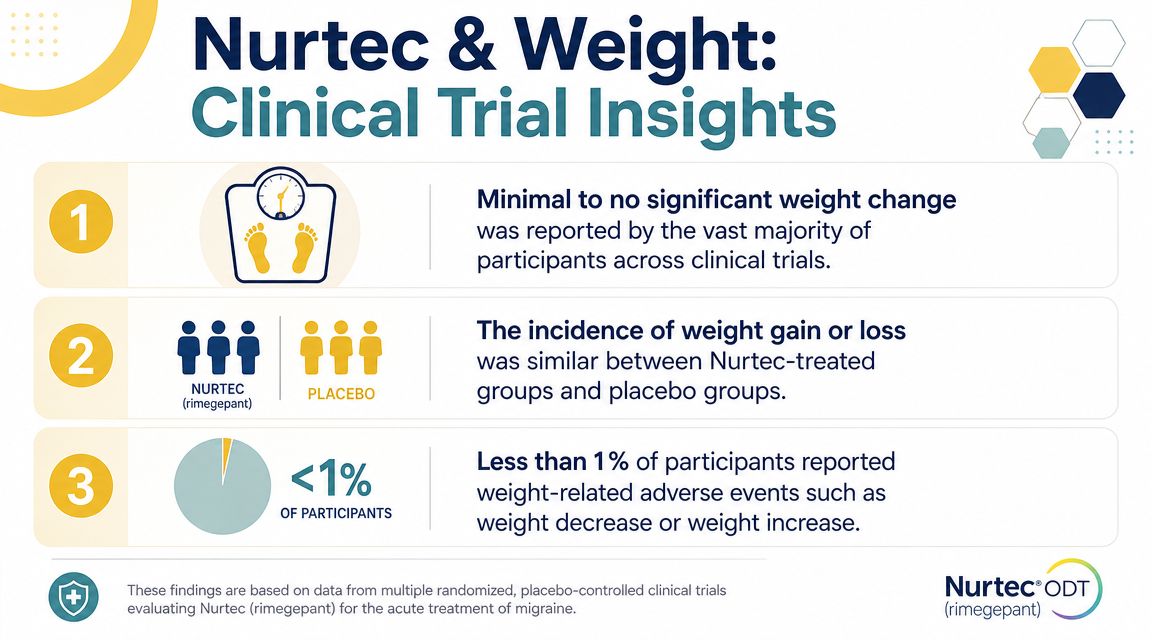
Clinical trials matter because they're designed to catch patterns across many people. They don't tell you everything about an individual experience, but they do show what side effects came up often enough to stand out.
What researchers actually looked for
In trial data summarized by the manufacturer, the common side effects were gastrointestinal, not weight-related. For acute treatment, nausea occurred in 2% of 682 treated patients versus 0.4% on placebo. For preventive treatment, nausea occurred in 2.7% of 370 patients versus 0.8% on placebo, and indigestion or stomach pain occurred in 2.4% versus 0.8% on placebo, according to Nurtec side effect trial information.
The same source notes that the FDA label lists nausea as the main adverse reaction at or above the reporting threshold in acute treatment, and weight loss is not identified as a labeled adverse reaction. That matters because if clinically meaningful weight reduction were a clear toxicity signal, you'd expect it to show up in those safety findings.
If you want to better understand how treatment studies work and why side effects may look different in trials versus real life, this guide to migraine clinical trials is a helpful starting point.
What the numbers mean in plain English
Here's the plain-language version. Nurtec didn't develop a reputation in trials for changing body weight. It developed a safety profile centered mostly on mild stomach symptoms in a small share of participants.
That doesn't mean your experience is impossible. It means weight loss is not an expected direct side effect based on the available trial data.
Most people reading a side-effect list are trying to answer one practical question: “What is this medicine known for doing?” With Nurtec, the answer is not weight loss. The answer is occasional GI upset in some people.
That distinction can save you a lot of unnecessary worry.
So Why Might You Notice Weight Changes Anyway
People often get stuck here. If the trials didn't identify weight loss as a side effect, why might someone still notice the number on the scale changing after starting treatment?
The answer is that a medication can affect your routine without directly affecting your weight biology.
Direct effect versus indirect effect
Major consumer drug references note that weight change was not reported in clinical trials or postmarketing summaries, and that the most consistently reported adverse effects are nausea, indigestion, and abdominal pain. They also explain that Nurtec is a CGRP receptor antagonist, and its observed side-effect profile looks more like gastrointestinal intolerance than a direct metabolism or appetite-suppression signal, according to Healthline's review of Nurtec side effects.
That's the key idea. A direct effect would mean the drug itself is pushing your body toward weight loss. An indirect effect would mean the drug makes you feel queasy, you eat less for a while, and your weight drops as a result.
Mild nausea can do more than people expect. You may not feel sick enough to call it a major side effect, but you might skip breakfast, eat smaller portions, or avoid foods that usually keep you satisfied.
Potential reasons for weight change while on migraine treatment
| Potential Cause | What It Might Look Like | What to Track |
|---|---|---|
| Mild nausea or indigestion after medication | Less appetite, smaller meals, avoiding certain foods | Timing of symptoms, appetite, meals skipped |
| Migraine itself | Poor intake during attacks, vomiting, dehydration, irregular eating | Attack days, nausea, vomiting, hydration, recovery eating |
| Lifestyle changes from improved migraine control | More activity, steadier routines, more regular sleep or meals | Activity patterns, energy, weekly routine changes |
| A separate health issue | Weight change that doesn't match medication timing | Other symptoms, duration, trends over several weeks |
Some people also change what they eat while managing migraine. That can be intentional, or it can happen because they're trying to avoid foods they suspect are triggers. If you've recently changed your diet, this article on low-carb diet and headaches may help you think through whether food-pattern changes could be part of the picture.
Weight changes during migraine treatment often come from the combination of symptoms, habits, and timing, not from a single simple cause.
When to Talk to Your Doctor About Weight Changes
You don't need to call your doctor because your weight moved a little from one day to the next. Bodies fluctuate. Meals, hydration, bowel habits, stress, and menstrual cycles can all shift the scale.
What matters is unintentional change that keeps going, especially if it comes with nausea, stomach pain, poor appetite, or trouble maintaining normal eating.
What deserves a call
Reach out if you notice a clear pattern, such as:
- A steady downward trend: Your weight keeps dropping over time instead of bouncing within your usual range.
- Less interest in food: You're eating less because of nausea, indigestion, or early fullness.
- Migraine recovery is harder: You're struggling to rehydrate or return to normal meals after attacks.
- Daily life is affected: Fatigue, weakness, or worry about eating is interfering with work, sleep, or routine.
Bring specific notes if you can. Doctors can usually help faster when they can see when the weight change started, whether it matches medication timing, and what other symptoms came with it.
Red flag symptoms that need urgent care
Seek immediate medical care for sudden severe headache, headache with fever or stiff neck, neurological changes such as weakness, confusion, trouble speaking, or vision loss, or any headache that starts after a head injury.
Also get urgent help if you develop signs of a possible serious allergic reaction after a medication, such as trouble breathing or rapidly worsening swelling.
How to Track Your Symptoms and Side Effects Effectively
When you're worried about a side effect, memory usually isn't enough. Migraine already makes recall messy. Symptoms blur together, meals get skipped, and by the time you have an appointment, it's hard to reconstruct what happened.
That's why tracking works best when it's simple and repeatable.
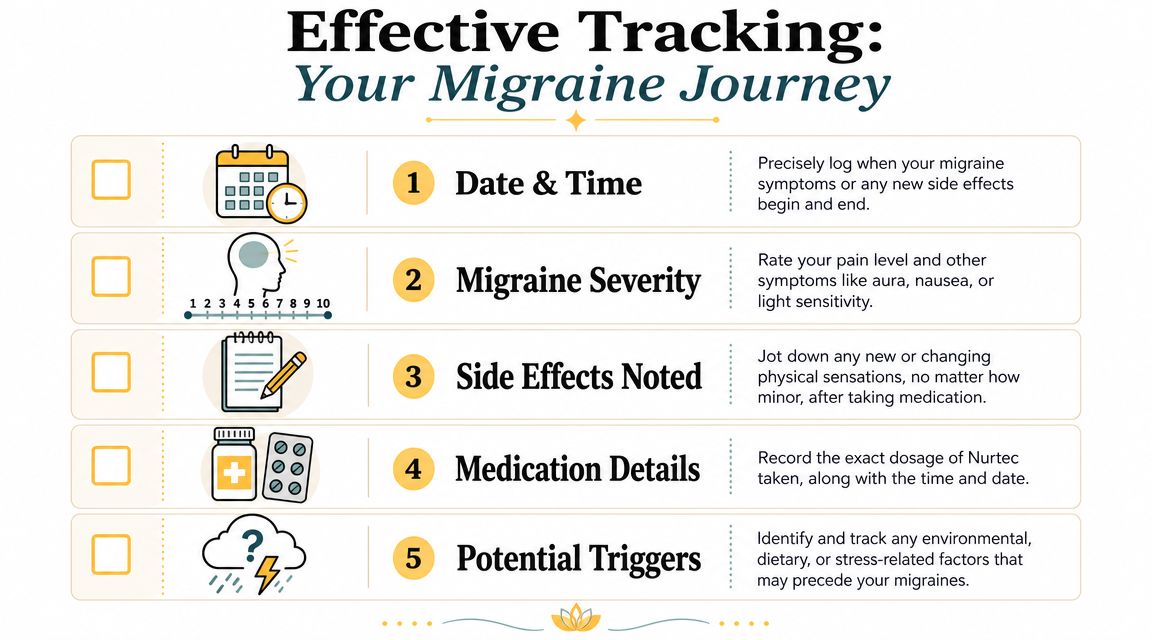
What to log after starting a new migraine medication
Independent drug-safety summaries note that weight changes were not reported in clinical trials or postmarketing surveillance, and that neither weight loss nor weight gain appeared as reported adverse effects in studies. In the key safety data highlighted by the manufacturer, the most common side effects were nausea at 2.7% and stomach pain or indigestion at 2.4%, which supports focusing your tracking on GI symptoms rather than assuming weight loss is a standard drug effect, as outlined in GoodRx's Nurtec side effects overview.
A useful log includes a few basics:
Medication timing
Write down when you took Nurtec. Precise timing helps you spot whether symptoms start soon after a dose or seem unrelated.Migraine features
Record whether you had aura, photophobia, phonophobia, nausea, vomiting, or head pain. Migraine symptoms themselves can change appetite and eating patterns.Appetite and meals
Don't overcomplicate this. A quick note like “normal lunch,” “barely ate dinner,” or “nausea, skipped breakfast” is enough.Weight trend
If weight is your concern, check it on a consistent schedule rather than repeatedly throughout the day. The goal is trend, not perfection.Other changes
Note travel, stress, illness, major diet shifts, and exercise changes. Those often explain more than people expect.
If you want a cleaner way to organize this information, a migraine tracking app can make patterns much easier to spot than scattered notes.
A simple weekly review that helps
Once a week, look back and ask:
- Did nausea cluster around medication use, migraine attacks, or both?
- Did appetite drop only on bad migraine days, or more often?
- Is the weight change consistent, or just noise?
- Have you made another change recently that could explain it?
Small notes taken consistently are more useful than perfect notes taken once.
This kind of record turns a vague fear into something concrete. Instead of telling your clinician, “I think this medicine is making me lose weight,” you can say, “My appetite dropped on the days I felt nauseated, and the pattern started after I began treatment.”
That's a much stronger conversation.
Feeling Confident in Your Migraine Treatment Plan
If you've been searching for answers about Nurtec side effects and weight loss, the big picture is reassuring. Clinical trial data did not identify significant weight loss as an expected side effect, and the better-known side effects are stomach-related symptoms in a small percentage of people.
Your experience still matters. If your weight is changing, the most useful question usually isn't “Is this definitely the drug?” It's “What pattern am I seeing, and what else is happening with my appetite, nausea, migraine frequency, and routine?”
That shift in thinking can make you feel more grounded. You don't have to ignore your symptoms, and you don't have to assume the worst either.
A careful symptom log can help you and your clinician sort out whether you're dealing with a temporary GI issue, migraine-related eating changes, or something separate that deserves attention.
Relief can help you track migraine symptoms, medications, appetite changes, and possible triggers in one place, so you can bring clearer patterns into your next healthcare visit with Relief.


