You wake up with that familiar pressure behind one eye, reach for the curtains, and see a calm, bright sky. Nothing about the morning looks like a migraine day. That disconnect is part of what makes weather triggers so frustrating.
A weather migraine forecast gives you a way to make sense of that pattern. It uses changing weather conditions to estimate when your risk may be rising, so you can prepare before symptoms build. The useful part is not just "weather might trigger migraine." It is the timing. Your brain may react to shifts that start well before rain, wind, or dark clouds make them obvious.
That matters because weather is often an invisible trigger. You can notice skipped meals, poor sleep, or a stressful meeting. Pressure changes, humidity swings, and incoming systems are harder to spot without help, even if your nervous system is sensitive to them.
A forecast turns those hidden changes into something you can use.
It also helps to place weather in context. Migraine rarely has one single cause. For many people, weather acts more like one load added to an already full backpack, alongside sleep loss, hormones, dehydration, or other migraine risk factors. Seeing hour by hour risk can help you decide when to protect your routine, carry rescue medication, adjust plans, or be less hard on yourself if your brain feels off.
That is the actual value of a weather migraine forecast. It is not a crystal ball. It is a practical tool for spotting patterns earlier and responding sooner, with more confidence and less guesswork.
Table of Contents
- What to do on a higher-risk day
- Medication planning needs a real medical plan
- When symptoms need urgent medical care
That Migraine That Came From a Clear Blue Sky
You wake up to a calm, bright morning and head out thinking it will be an easy day. By afternoon, you are squinting at the light, your stomach is off, and that familiar migraine feeling is building fast.
That kind of attack is maddening because it seems to come out of nowhere. The sky looks fine. The forecast may even say "pleasant." Friends or coworkers might assume weather could not possibly be involved.
But visible weather and migraine risk are not the same thing.
A weather migraine forecast tries to catch the part you cannot see yet. Air pressure, humidity, temperature swings, and approaching systems can start shifting before clouds roll in or rain begins. Your brain may react to those changes early, which helps explain why an attack can arrive on a day that looks completely ordinary.
That is why these forecasts matter. They are less like a rain app and more like an early warning signal for a sensitive nervous system. If standard weather forecasts tell you what the sky might do, a weather migraine forecast asks a different question. How likely is this stretch of weather to make your brain easier to tip into an attack?
What a forecast is actually trying to do
A useful forecast does not predict your day with certainty. It estimates whether current conditions may lower your migraine threshold.
That threshold works like your buffer. On an easier day, you might handle bright screens, stress, skipped water, or a late meal without much trouble. On a higher-risk weather day, the same stack of small pressures can hit differently. Weather is not always the whole cause. Sometimes it is the extra weight that makes everything else harder to carry.
That shift in perspective helps. Instead of asking, "Why did this happen when the weather looked fine?" you can ask, "Was my system already under strain before I noticed it?"
Some of the hardest migraine days feel random only because the trigger pattern is invisible at first.
Once you start using an hour-by-hour forecast this way, the goal changes. You are not waiting for pain to prove the forecast was right. You are using weather risk as one more clue, early enough to adjust your day, protect your energy, and make choices before symptoms snowball.
The Science Connecting Weather to Your Brain
Migraine lives in the nervous system, so it makes sense that shifts in the world around you can register as more than "just weather." A weather-sensitive brain can react to small environmental changes the way a smoke alarm reacts to steam. The signal is real, even if the room is not on fire.
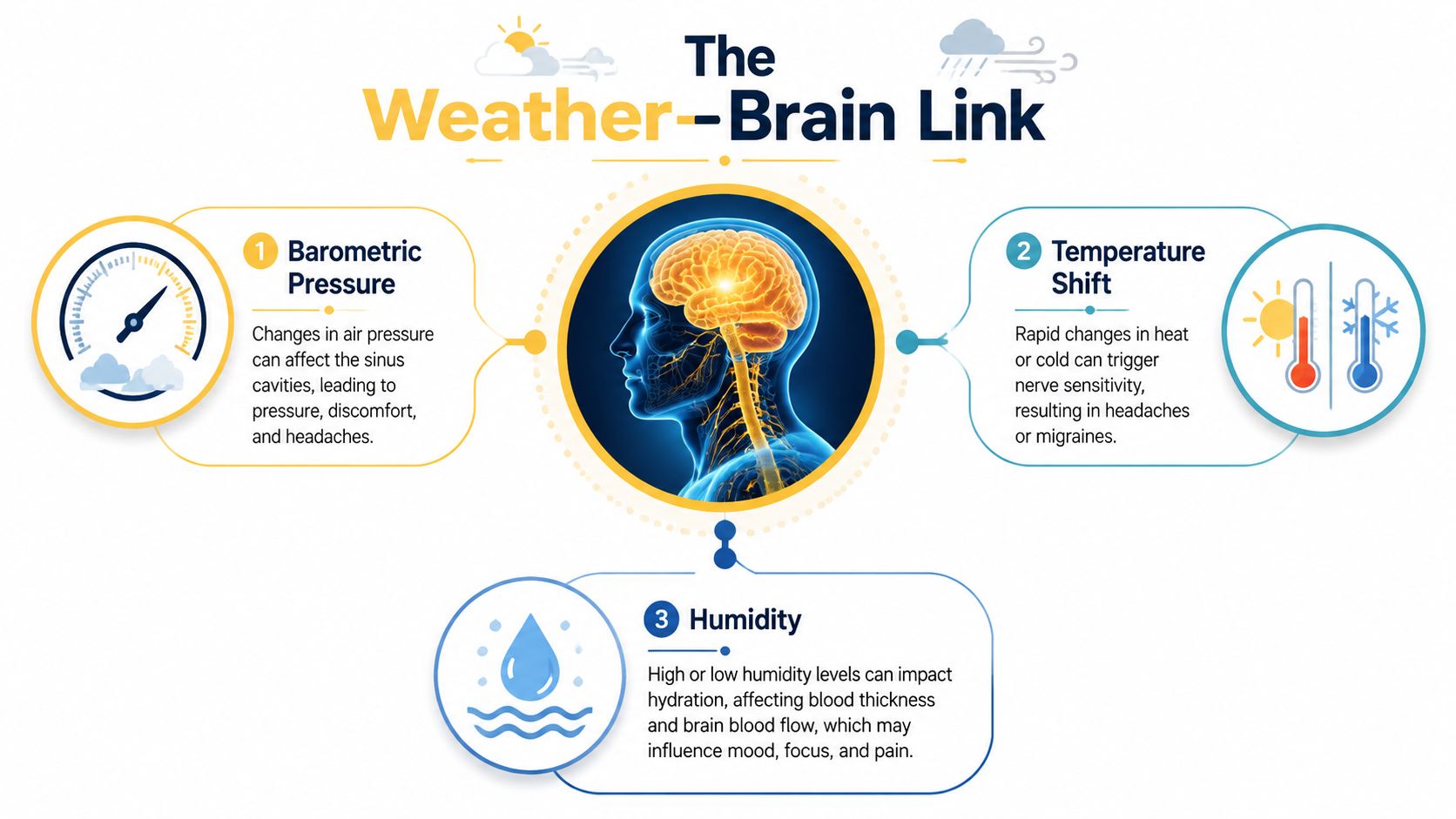
For many people, barometric pressure is the clearest example. That is the weight of the air around you. You already know your body can notice pressure changes if your ears pop on a plane or you feel off while driving through the mountains. Migraine adds another layer. In some people, those pressure shifts seem to irritate pathways involved in head pain, sensory sensitivity, and nausea.
Why pressure changes can feel personal
Research summarized by PressurePal's explanation of pressure-triggered migraine patterns suggests that rapid barometric drops are a common setup before attacks in some weather-sensitive patients and may show up hours before symptoms fully arrive. The same source explains one possible reason. Falling pressure may reduce oxygen availability slightly and activate the trigeminovascular system, one of the main pain pathways involved in migraine.
That term sounds dense, but the idea is fairly simple. Your brain, blood vessels, and pain-sensing nerves are always exchanging signals. If pressure changes disturb that system, the brainstem may become more reactive. Chemical messengers such as CGRP can then rise, which is one reason weather-triggered attacks can come with throbbing pain, light sensitivity, or that unmistakable "something is brewing" feeling.
This also helps explain why weather triggers can feel oddly specific. Ear fullness. Sinus pressure. Neck stiffness. A sense that a storm is coming before you have checked the forecast. Those experiences are easy to dismiss until they happen enough times to form a pattern.
Temperature and humidity matter too
Pressure gets most of the attention, but it is only part of the picture. Temperature swings and humidity changes can also add stress to an already sensitive system. Heat may increase dehydration and fatigue. Cold snaps can feel like a shock to the body. Heavy, sticky air can leave some people feeling drained before pain even starts.
What matters is not whether one weather factor is "the cause." Migraine usually works more like a stack than a switch. Weather can add one more layer to poor sleep, stress, hormones, bright light, missed meals, or dehydration.
Here is a practical way to read the main weather inputs:
Weather FactorWhat to Watch ForPotential Biological EffectBarometric pressureRapid drops or unstable pressure trendsMay stimulate pressure-sensitive pathways linked to migraine painTemperatureFast swings over a short periodCan stress the body and lower your migraine thresholdHumiditySudden increases or very muggy conditionsMay add physical strain and worsen overall sensitivity
Practical rule: Weather often acts less like a single cause and more like extra load on a sensitive brain.
If you want to place weather in the bigger picture, ReliefMigraine's guide to common migraine risk factors can help you spot the other pieces that may be stacking up on the same day.
How a Weather Migraine Forecast Is Built
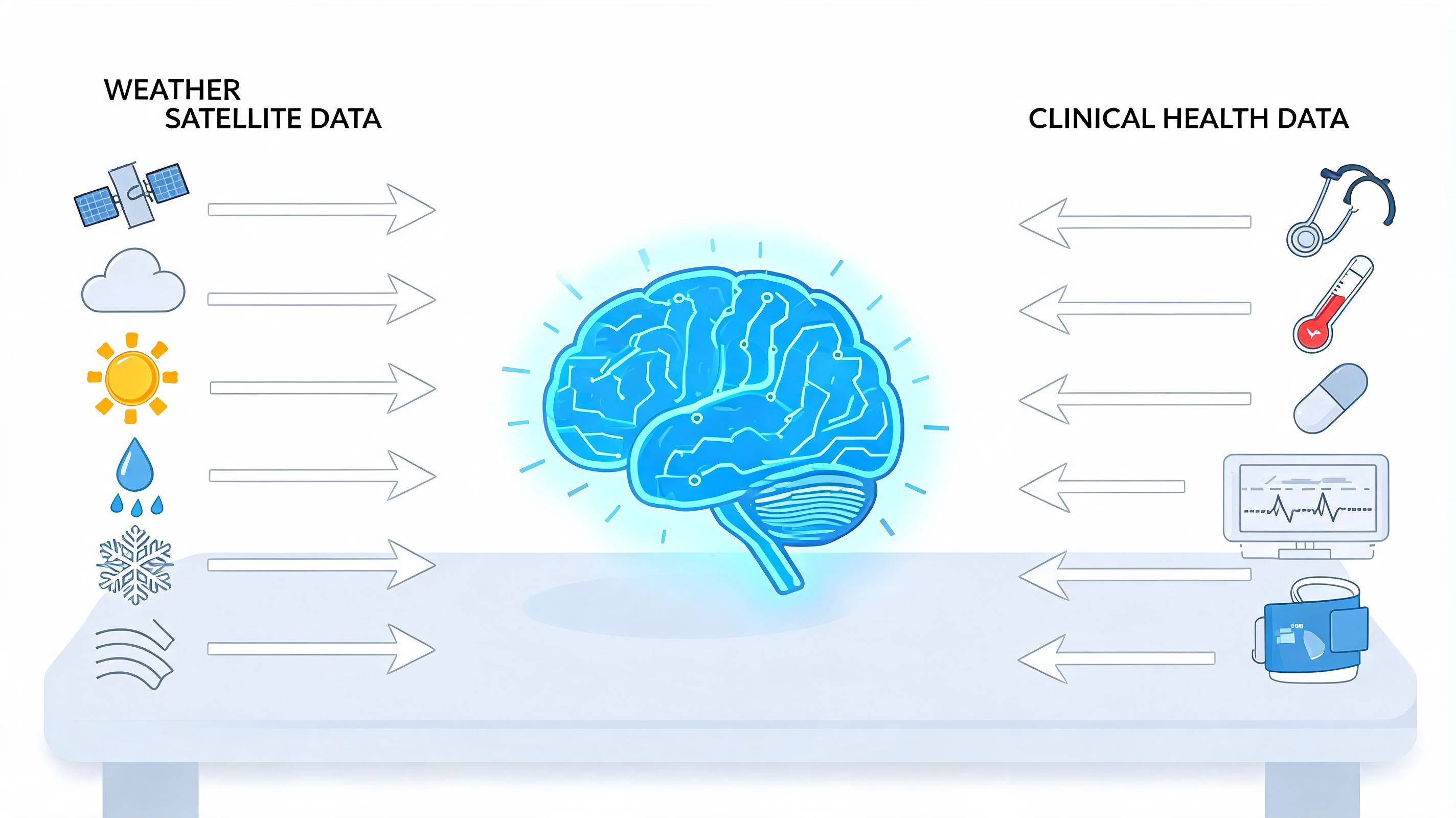
A weather migraine forecast is built more like a personalized risk model than a regular weather alert. A standard forecast says a front is coming. A migraine forecast tries to estimate whether that front, in combination with your history, tends to raise your odds of symptoms in the next few hours.
It starts with weather data
Most tools begin with the same raw ingredients that feed everyday weather apps: barometric pressure, temperature, humidity, and the timing of approaching systems. Some platforms also include pollen, air quality, wind, or storm likelihood.
The goal is not to treat weather as one simple trigger. It is to measure changing conditions the way a pilot watches several instruments at once. One dial moving a little may not matter. A few dials shifting together can signal a rougher stretch ahead.
According to Sonuby's overview of multifactor migraine forecasting, forecast models may combine multiple weather variables instead of relying on pressure alone. That matches what many people with migraine notice in real life. A pressure drop on a well-rested, low-stress day may be manageable. The same pattern during dehydration, skipped meals, or poor sleep may hit very differently.
Then it matches weather against your history
This is the part that makes the forecast useful.
Once an app has your symptom logs, it can compare past attacks with the weather patterns around them. The software is basically looking for repeats. Did headaches show up before storms. During fast pressure drops. On hot, humid afternoons. A few isolated matches do not mean much, but repeated matches can help the system estimate your personal risk windows.
The same source describes methods such as logistic regression and exposure tracking to refine predictions from logged attacks. In plain language, the app is asking a practical question: when these conditions happened before, how often did symptoms follow?
That is why hour-by-hour forecasting matters. Migraine risk is often about timing, not just the daily headline. A day labeled "stormy" is broad. A forecast that spots a sharper risk climb between noon and 5 p.m. gives you something you can use.
Relief can fit in as one option. It combines local weather signals with your health logs to produce hour-by-hour risk estimates, then adjusts those estimates as your check-ins build a clearer pattern over time.
Good tracking makes that pattern sharper. If your log also captures skipped meals, hydration, and other stacking triggers, the forecast becomes easier to interpret in context. A simple migraine diet plan for steadier meals and hydration habits can help reduce the non-weather noise that makes patterns harder to spot.
A generic weather alert tells you conditions are changing. A migraine forecast estimates whether that kind of change has lined up with your attacks before.
That difference can feel small at first, but it changes how you use the tool. You are no longer waiting to see whether the weather "causes" a migraine. You are learning when your threshold is more likely to be under pressure so you can act earlier.
How to Read Your Hour-by-Hour Risk
A weather migraine forecast is most useful when you stop treating it like a fortune teller and start reading it like a risk map. The question isn't "Will I definitely get a migraine at 3 p.m.?" The better question is "When does my migraine threshold seem most vulnerable over the next day or two?"
That shift in mindset makes the forecast less intimidating and more actionable.
Look at movement, not just the label
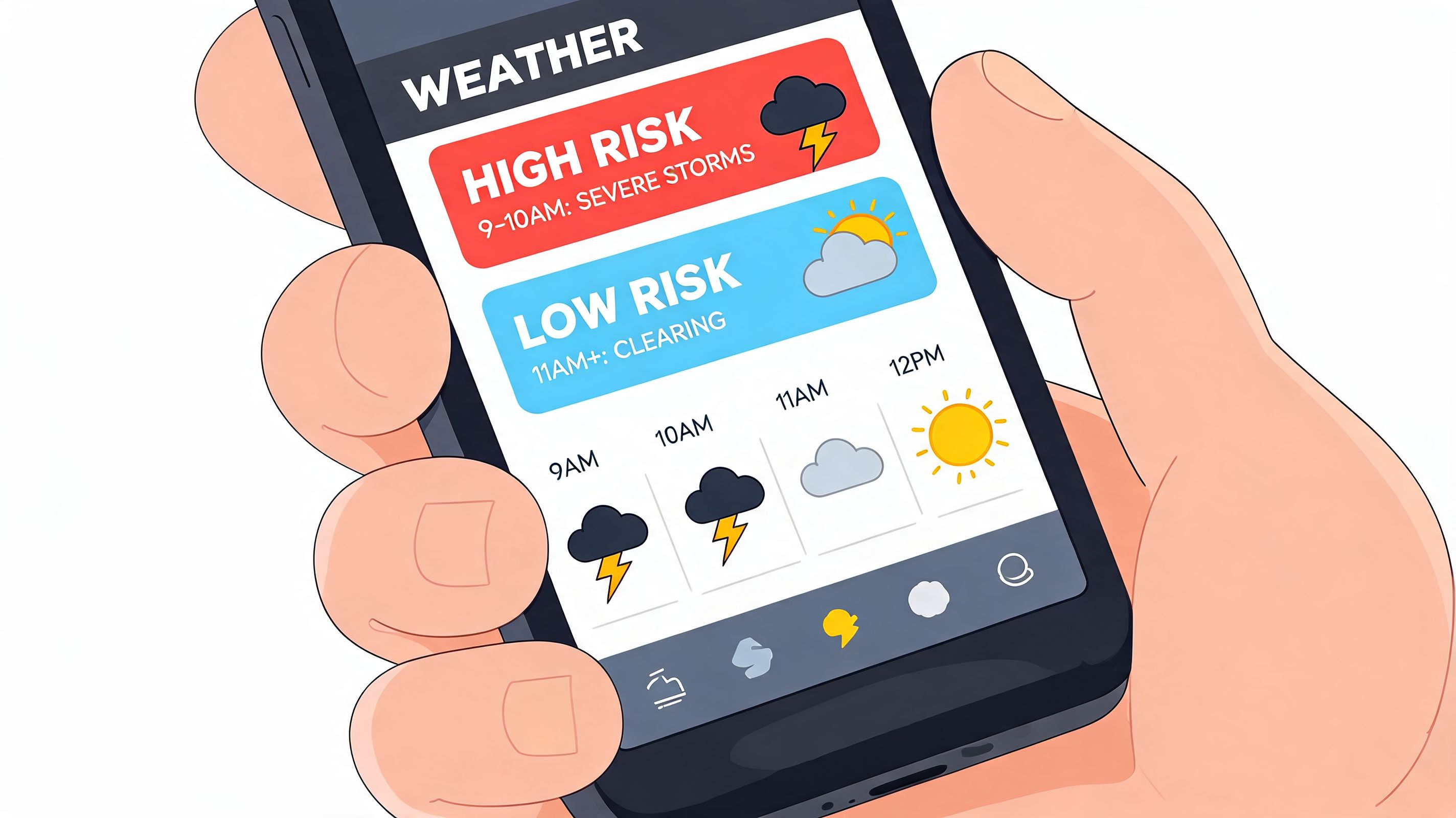
If your app shows low, medium, or high risk, don't stop at the color or label. Look at the trend underneath it.
A stable reading often matters less than a fast change. With pressure especially, the direction and speed of movement can be more meaningful than the absolute number on screen. A sharp drop over several hours may be a bigger warning sign for you than a steady pattern that stays low all day.
When you're scanning the next 24 to 48 hours, watch for:
- A visible downward pressure trend that starts before a front arrives
- Clustered changes where pressure, humidity, and temperature all shift in the same window
- Risk spikes during work or commute hours, which helps you plan around the time you're most exposed to added triggers like light, stress, or missed meals
What high, medium, and low really mean
It is common to interpret "high risk" as "migraine incoming." That is usually too literal.
A better interpretation is:
- Low risk means the weather isn't adding much extra pressure to your system right now.
- Medium risk means conditions may be making you more sensitive, so other triggers could matter more than usual.
- High risk means the environment may be lowering your threshold enough that ordinary stressors hit harder.
High risk doesn't mean certainty. It means the margin for error is smaller.
The hour-by-hour view provides value here. If your risk rises overnight and peaks late morning, you might protect that part of the day more carefully. If the forecast is calm until evening, you may decide that morning is the safer time for demanding tasks.
A good forecast isn't there to scare you. It's there to help you distribute your energy more wisely.
Turning Your Forecast Into an Action Plan
You check the forecast before bed and see a risk spike tomorrow at 10 a.m. That does not mean a migraine is scheduled to arrive at 10:01. It means your buffer may be smaller during that window, so your plan for the day needs a little more support.
That shift in mindset matters. A weather migraine forecast is most useful when you treat it like a road condition report. You still decide how to drive, what to bring, and whether to slow down.
This article is for informational purposes and is not medical advice. Consult a healthcare provider for personalized guidance.

What to do on a higher-risk day
The goal is to lower the total load on your nervous system. Weather may be one input, but it rarely acts alone. On higher-risk days, small choices often matter more because your brain may have less room to absorb extra stress.
A simple routine can help:
- Protect sleep the night before: If tomorrow's forecast looks rough, treat bedtime like part of your migraine care.
- Keep hydration and meals steady: Water, electrolytes if helpful for you, and regular meals can prevent other triggers from piling on.
- Reduce sensory strain early: Sunglasses, screen breaks, lower brightness, and quieter spaces can help if light or sound sensitivity tends to be your first clue.
- Adjust timing, not just workload: If you can, place demanding tasks in a lower-risk part of the day and leave yourself more margin during the spike.
- Skip trigger stacking: A weather-sensitive day may not be the best day for alcohol, extra caffeine swings, long screen sessions, or pushing through lunch.
For some people, food patterns are part of that plan too. If you are trying to sort that out, this guide to building a migraine diet plan can help you test patterns without assuming any single food affects everyone the same way.
A short visual guide can also help if you're trying to build a calm, repeatable routine:
Medication planning needs a real medical plan
Forecasts can tempt people to take medication early "just in case." That choice needs to be based on guidance from your clinician, not the forecast alone.
A better use of the forecast is to prepare, not guess. You might make sure your prescribed medication is with you, protect the time when symptoms usually begin for you, or follow a plan your clinician has already helped you set. That keeps the forecast in its proper role. It is a planning tool, not a prescription tool.
Your forecast can help you pay attention sooner. It should not replace your treatment plan.
When symptoms need urgent medical care
Migraine can be intense, and weather can muddy the picture. Still, some symptoms need urgent medical evaluation because they can point to something more serious.
Seek immediate medical care for:
- A sudden severe headache: Especially if it is abrupt or unlike your usual pattern
- Headache with fever or stiff neck: These symptoms need prompt assessment
- Neurological changes: New weakness, confusion, trouble speaking, or other unusual symptoms should be evaluated right away
- Headache after a head injury: Even if it seems mild at first
Those situations call for medical care, not forecast-watching.
Forecast Limits and the Power of Personal Tracking
A weather migraine forecast can be useful in the same way a traffic app is useful. It can warn you about conditions that often cause trouble, but it cannot tell you with certainty what your next hour will feel like.
That distinction matters.
Weather is only one input in a much bigger system. Your brain is also responding to sleep, stress, hormones, meals, light, noise, activity, and the stage of a migraine attack you may already be entering before the weather shifts. So a forecast can point to higher odds without being a reliable yes-or-no prediction for your body on that day.
Forecasts are patterns, not promises
A high-risk alert does not mean an attack is coming. A low-risk day does not mean you are in the clear.
If you have ever looked outside at calm weather and still ended up with migraine symptoms by lunch, you have already seen the limit of general forecasting. The model is reading the atmosphere. It is not reading your nervous system in real time.
That is why forecasts work best as planning tools. They can help you decide when to protect your schedule, keep water and medication close, reduce optional stress, or watch for your earliest warning signs. They are much less helpful if you expect them to explain every attack.
For some people, a forecast can also create tension. If an alert makes you brace for pain all day, the alert may stop being useful. A good forecast should help you prepare with less chaos, not make you monitor yourself with more fear.
Your records turn a general forecast into a personal one
The part that often makes the biggest difference is tracking your own pattern beside the weather.
As noted earlier, organizations that review these tools have pointed out that weather forecasts for migraine have limited evidence behind them. Their practical value grows when you pair them with your own symptom history. That is where the signal starts to get clearer.
After a few weeks or months, you can ask much better questions:
- Do fast pressure drops line up with my attacks, or do I just assume they do?
- Are humid, stormy days harder for me than cold, dry ones?
- Does weather matter most in the morning, during my commute, or overnight?
- Which early signs show up first for me when weather risk is high?
Those answers are far more useful than a generic risk score.
If you want a structured way to compare symptoms, timing, and possible triggers, this guide to choosing a migraine tracking app can help you decide what to log and what patterns to watch for.
The simplest way to say it is this. A forecast describes what the sky is doing. A tracker helps you learn whether your brain reacts to that change, how strongly, and how early.
If you want one place to track symptoms and compare them with hour-by-hour weather patterns, Relief can support that process by helping you log attacks, spot trigger patterns, and make your weather migraine forecast more personal over time.


