
Yes, weather can trigger migraine attacks for some people, especially when barometric pressure, temperature, or humidity change, but it doesn't affect everyone the same way. In one clinical study, 13% of people with migraine were clearly weather-sensitive when their attacks were compared with pressure, humidity, and temperature over a year, while 49% reported weather as a trigger in other research.
If you're reading this because a storm is moving in, the air feels strange, and your head already seems to know before the forecast does, you're not imagining it. Many people with migraine notice that certain weather patterns seem to line up with attacks. The tricky part is that weather triggered migraines usually aren't about one simple condition like "rain" or "heat." They're often about change, especially fast change.
That difference matters. It means the question isn't only, "Is humidity bad for me?" It may be, "Do I get attacks when humidity rises quickly?" Not just, "Is low pressure a problem?" but, "Do I get symptoms when pressure shifts over a few hours?" Once you start thinking that way, the pattern can become much more useful.
Table of Contents
- Do You Feel Like a Human Barometer
- What barometric pressure actually means
- Why fast weather transitions matter
- Other weather factors that can stack together
Do You Feel Like a Human Barometer
Some people with migraine describe this with eerie accuracy. The sky darkens. A storm hasn't started yet, but you feel pressure in your face, neck, or head. You get foggy, irritable, light-sensitive, or nauseated. By the time the rain arrives, the migraine is already underway.
That experience is common enough that many people start doubting themselves when others dismiss it. But weather sensitivity is a real pattern for some migraine patients. In a clinical study of 100 people with migraine tracked over 12 consecutive months, 13% were clearly weather-sensitive when attack timing was correlated with atmospheric pressure, humidity, and temperature, while other research summarized in the same paper found that 49% reported weather as a trigger (clinical study summary in PubMed Central).
Those two numbers help explain why this topic gets confusing. A lot of people feel affected by weather, but fewer show a clean statistical pattern when attacks are matched against weather data. That doesn't mean your experience isn't real. It means weather triggered migraines are often personal, messy, and mixed with other triggers.
Practical rule: If weather seems to matter for you, treat it like a possible pattern to investigate, not a universal law.
One person may react before a storm front. Another only during extreme heat. Someone else may blame "weather" when the more direct issue is glare, poor sleep, dehydration, or a stack of several triggers on the same day.
That's why the most helpful next step isn't arguing with yourself about whether weather is real. It's narrowing down which kind of weather change seems to matter for you.
The Science Behind Weather and Migraines
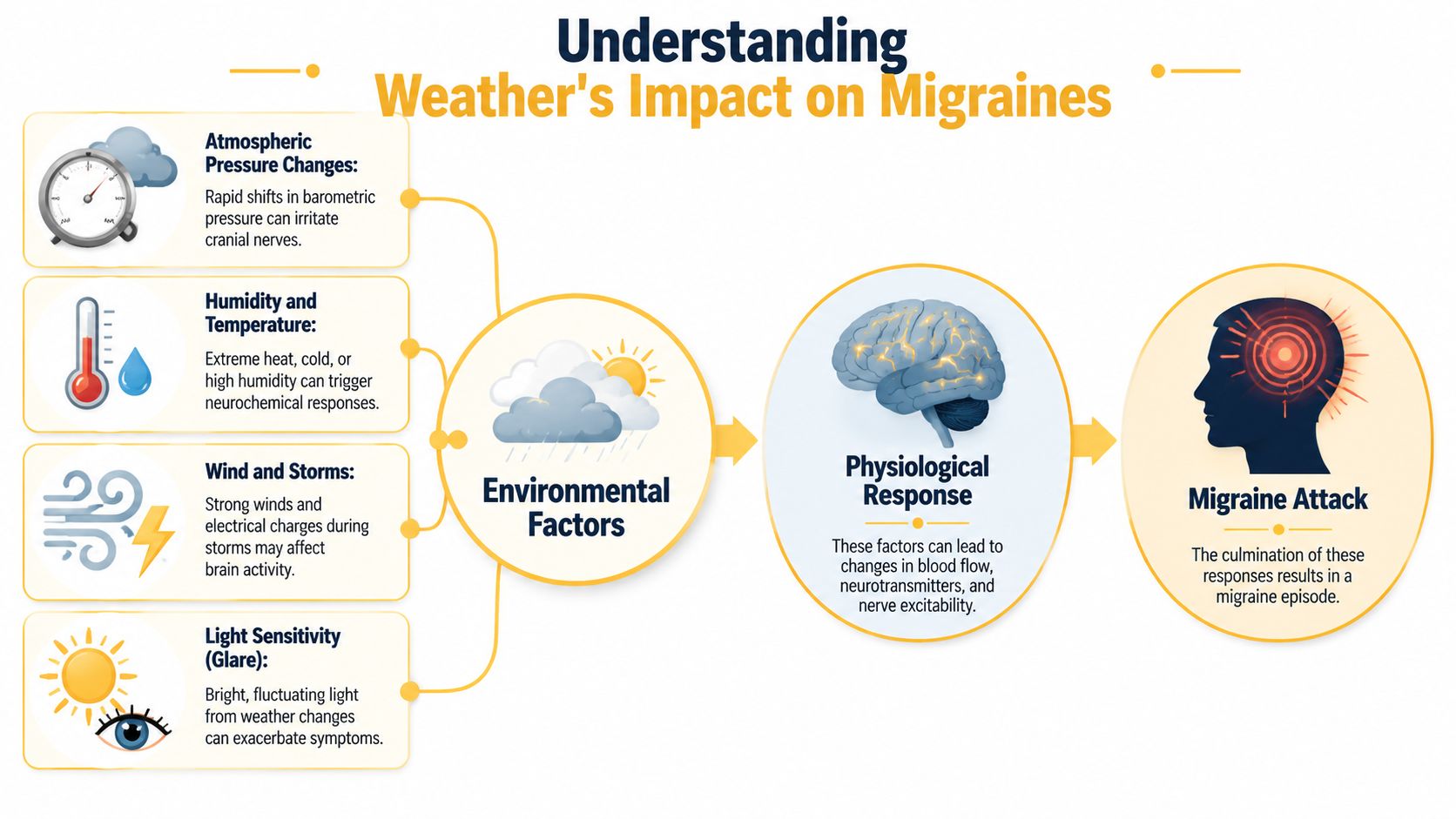
The science points in a clear direction. Weather triggered migraines are best understood as a response to rapid environmental change, not just a static weather condition. Clinical guidance from Mayo Clinic notes that barometric pressure shifts, temperature extremes, and humidity can trigger migraine for some people, and that weather changes may alter brain chemistry, including serotonin (Mayo Clinic explanation of weather-related migraine triggers).
What barometric pressure actually means
Barometric pressure is the weight of the air around you. You don't feel it the way you feel rain on your skin, but your body still exists inside that surrounding air pressure all the time.
A simple way to think about it is a balloon. If the pressure outside a balloon changes, the balance changes too. Your head is not a balloon, of course, but this analogy helps explain why some people may react when outside pressure shifts quickly. It may irritate sensitive systems involved in migraine, including nerves and brain pathways that already have a lower threshold.
People often get stuck on whether high or low pressure is the problem. For many, the bigger issue may be the movement itself.
Why fast weather transitions matter
An approaching storm is a good example. Pressure can shift, wind can pick up, humidity can rise, temperature can swing, and light conditions can change. That cluster may be more provocative than any single variable on its own.
This is why two days with the same temperature can feel completely different to your nervous system. A stable warm day may be fine. A warm day that follows a sudden pressure drop, building humidity, and bright glare may not be.
Weather may matter most when several exposures arrive together and your system has less room to adapt.
That also explains why weather can make an attack worse even when it didn't start the whole process. If your threshold is already lowered by stress, missed meals, poor sleep, hormonal changes, or sensory overload, a sharp weather shift may become the final push.
Other weather factors that can stack together
Weather discussions often focus only on pressure, but that's too narrow. Other common factors include:
- Humidity changes that can make the air feel heavy or contribute to dehydration indirectly
- Temperature extremes such as intense heat or cold
- Wind and storms that often arrive with multiple atmospheric changes at once
- Bright sunlight or glare that can aggravate photophobia, which means light sensitivity
Here's a simple way to view this:
Weather factorWhat may matter mostBarometric pressureHow quickly it changesTemperatureSudden swings or extremesHumidityRising or very high levels for some peopleStorms and windThe combined shift in multiple conditionsBright sun or glareSensory stress on an already sensitive brain
A weather trigger is still a migraine trigger, not a separate disease. The weather changes the context. Your nervous system does the reacting.
Common Symptoms and Who Is Most at Risk
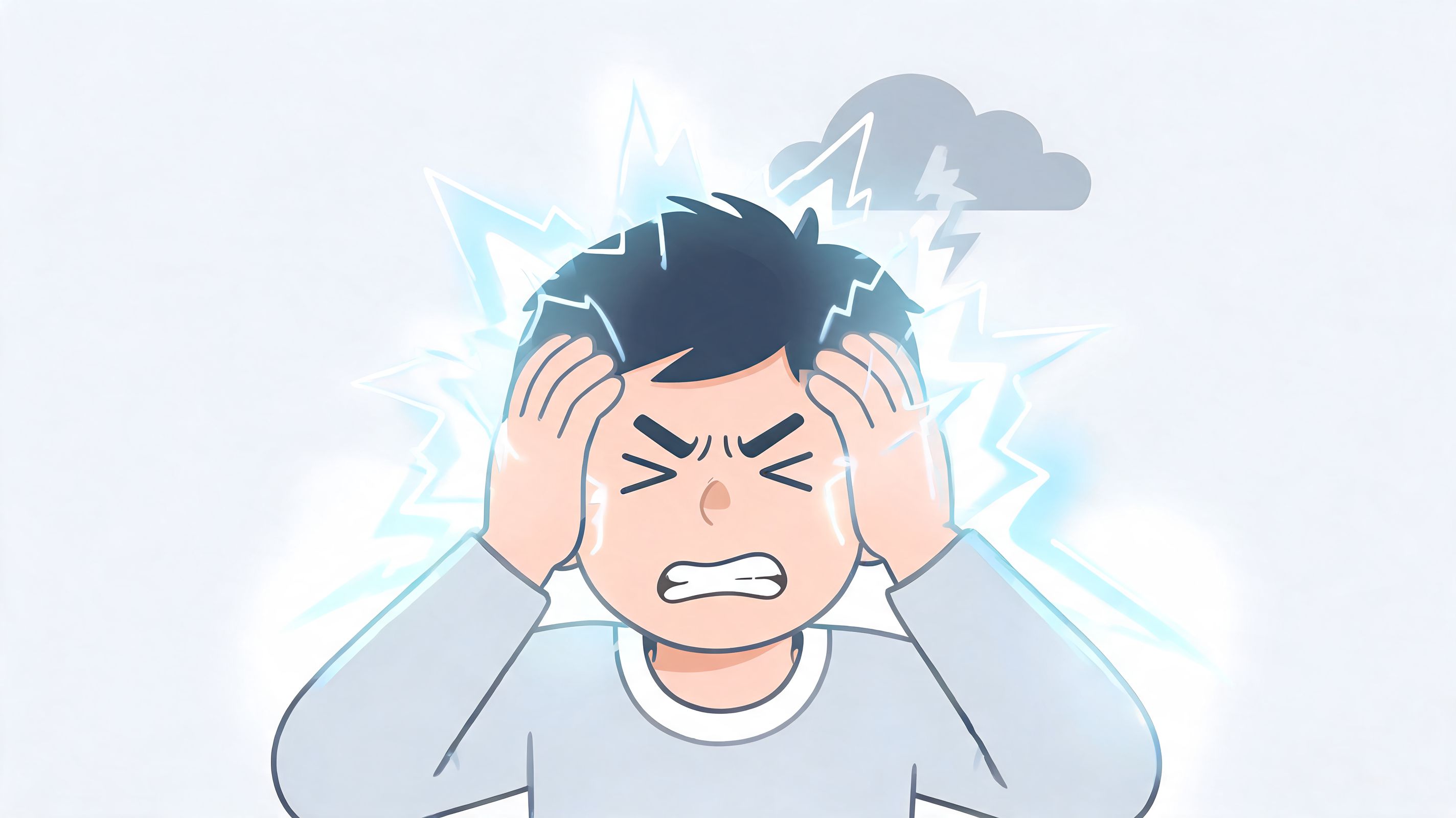
A weather-triggered migraine still looks like migraine. The symptoms can include throbbing or pulsing head pain, nausea, vomiting, photophobia (light sensitivity), phonophobia (sound sensitivity), dizziness, fatigue, brain fog, and sometimes aura, which is a set of temporary neurological symptoms such as visual changes before or during an attack.
The symptoms are migraine symptoms
What makes weather triggered migraines different is usually timing, not a unique symptom list. You might notice a pattern like this:
- Before storms you feel pressure, neck stiffness, yawning, or mood changes
- During rapid heat shifts you become light-sensitive and nauseated faster
- On bright, humid days your attacks start earlier or feel harder to stop
- After a weather swing you have a longer postdrome, sometimes called a migraine hangover
That pattern-based thinking can be more helpful than asking whether a symptom "proves" weather is the cause. Migraine symptoms overlap heavily across triggers.
Who might be more weather sensitive
The short answer is that anyone with migraine might be, but not everyone is. If you've had repeated attacks that line up with storms, sharp seasonal transitions, or quick changes in humidity or temperature, that's a clue worth tracking.
A helpful place to start is looking at your broader migraine risk factors and patterns. Many people don't have one isolated trigger. They have a lower threshold on certain days, and weather becomes one part of a larger picture.
If your attacks cluster around weather changes only when you're underslept, dehydrated, or stressed, the weather may be part of the story instead of the whole story.
People with migraine also vary by subtype and symptom profile. Some are more affected by light. Some by vestibular symptoms like dizziness. Some by strong sensory input in general. The main point is that weather sensitivity doesn't create a brand-new kind of migraine. It reveals how reactive your system may be under certain conditions.
Proactive Strategies to Reduce Weather-Related Attacks
You can't stop a front from moving in. You can reduce how many other stressors pile on when it does. That's where many people regain some control.
The Migraine Trust makes an important distinction here. Air pressure may be a direct trigger, while warm weather can trigger migraine more indirectly through sweating and dehydration, and long hot sunny days can also affect sleep and light exposure (Migraine Trust on direct and indirect weather pathways). That means your best strategy may not be "fight the weather." It may be managing the chain reaction the weather sets off.
Behavior changes you can control
On days with fast weather change, aim for boring consistency. That sounds unglamorous, but it helps.
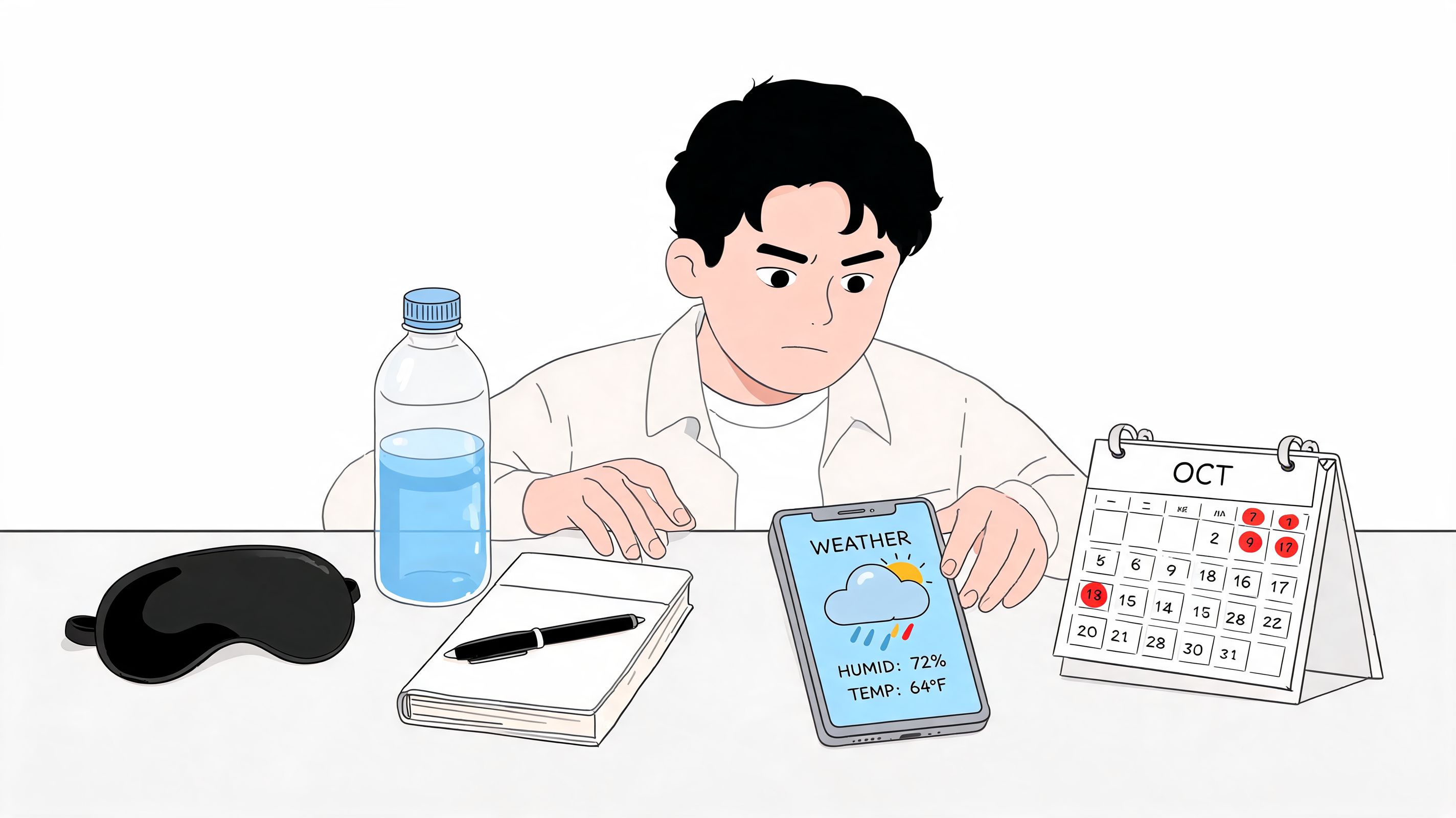
- Protect hydration: Heat and humidity can increase fluid loss. If weather often lines up with your attacks, pay extra attention to drinking fluids regularly through the day.
- Keep meals predictable: Skipping meals can lower your migraine threshold when weather is already adding stress.
- Defend sleep timing: Long bright evenings, storms, and heat can all disrupt sleep. Try to keep your sleep and wake times as steady as possible.
- Reduce stacked triggers: If a storm day is also a high-stress workday, that's a clue to simplify where you can.
If food timing is one of your personal variables, it may help to review a structured approach to building a migraine diet plan around consistency and pattern tracking.
Changes to your environment
Your surroundings matter more than people think, especially when weather affects you indirectly.
Try a few targeted adjustments:
- Manage glare indoors: Close blinds, use lamps instead of harsh overhead light, or wear light-filtering glasses if bright sky glare tends to set you off.
- Control indoor air when possible: Air conditioning, fans, a humidifier, or a dehumidifier may make your environment steadier than outdoor conditions.
- Cool down early: If heat is a common problem, don't wait until you're overheated to respond.
- Create a low-sensory fallback space: Keep one room darker, quieter, and cooler for days when your nervous system feels reactive.
A short explainer may help if you're sorting out what kind of migraine symptoms you're dealing with on changing-weather days.
Planning with your doctor
If weather regularly affects your migraine pattern, it's worth discussing with a healthcare provider. Bring a record of what you notice, especially whether attacks happen before storms, during rapid temperature swings, or after bright hot days.
That conversation can help you talk through options in clear categories:
Area to discussWhat to bring upAcute treatment planWhat to do at the first sign of an attackPreventive strategyWhether your overall migraine frequency suggests a preventive approachTiming questionsWhether certain high-risk days call for a more proactive planSymptom overlapWhether "sinus headache" episodes could actually be migraine
The most effective change is this. Instead of treating weather as one giant unavoidable trigger, break it into pieces you can influence: fluids, sleep, light, indoor temperature, schedule stability, and a clear care plan.
How Tracking and Forecasting Can Help You Stay Ahead
The most useful question usually isn't, "Does weather trigger migraines?" It's, "What kind of weather change tends to trigger my migraines?"
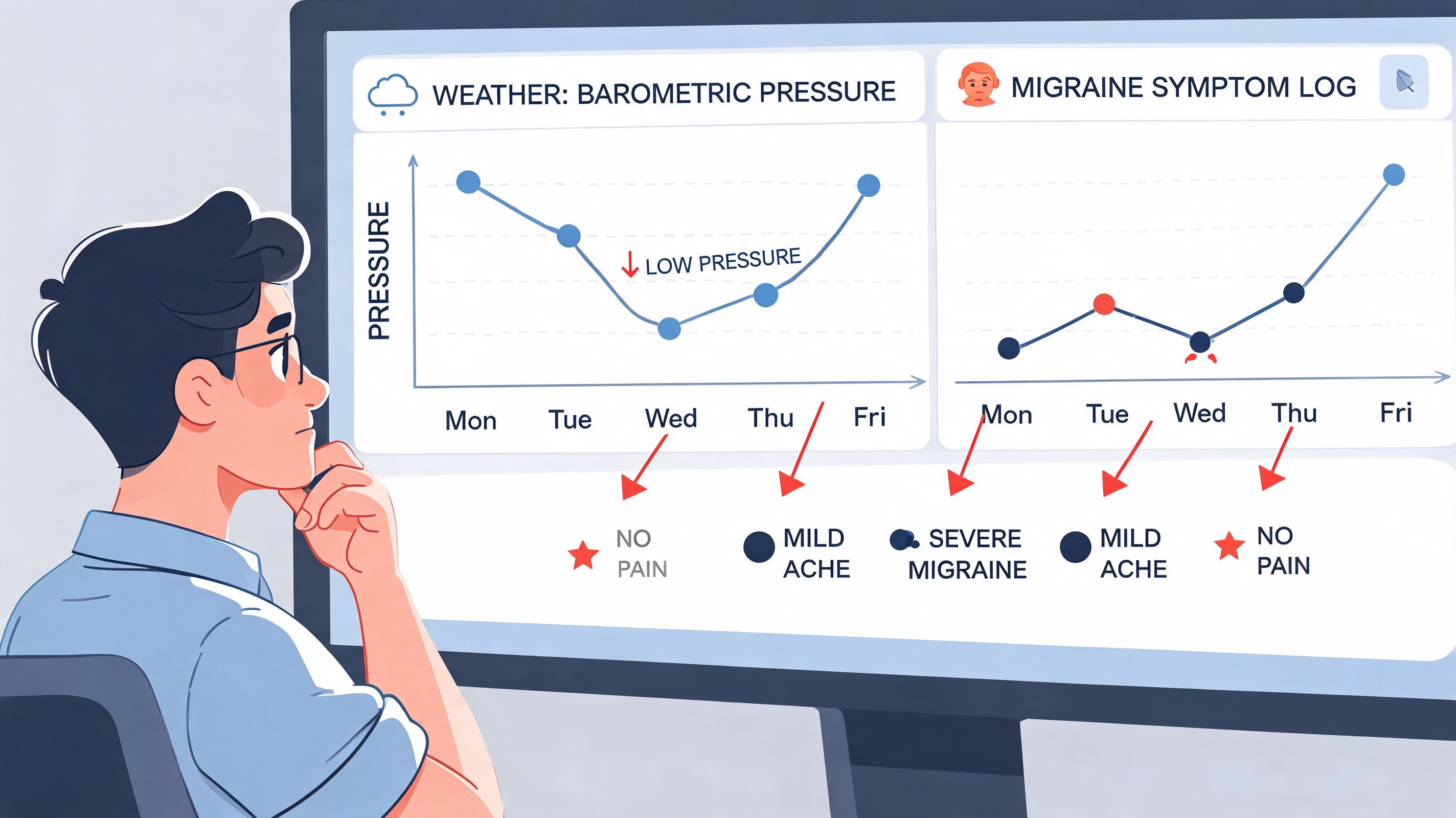
Research and clinical guidance suggest that the strongest practical signal is often the dynamic change in atmospheric pressure, not the absolute number. Cleveland Clinic notes that for some people, storms and shifting air masses create barometric variation that can trigger headache or migraine, and research summarized there suggests that meteorological change itself may matter more than any single universal threshold (Cleveland Clinic on barometric pressure headaches and changing conditions).
Look for your pattern, not a universal rule
Many articles conclude prematurely. They tell you weather can be a trigger, then leave you with a generic list. What truly helps is finding your own threshold.
For example, your pattern might be:
- a migraine the night before rain
- an attack when temperature jumps quickly
- worsening symptoms when pressure drops and sleep was poor the night before
- no issue with steady humidity, but trouble when humidity rises fast
That's more actionable than "weather bothers me."
What to track before an attack starts
If you're using a paper diary, spreadsheet, or a migraine tracking app built to connect symptoms with changing conditions, focus on timing. Log the early signs, not just the pain phase.
Useful details include:
- Prodrome symptoms: yawning, fatigue, food cravings, mood shift, neck pain
- Attack timing: when symptoms started, not just when you noticed them
- Environmental context: storm approaching, bright glare, sudden heat, strong wind
- What changed quickly: pressure, humidity, or temperature over hours rather than the whole day
- Other stacked triggers: poor sleep, dehydration, stress, alcohol, missed meals
Track the slope, not just the snapshot. A fast rise or drop may tell you more than a single weather reading.
This is the practical value of forecasting. If you know your attacks tend to happen during rapid shifts, an hourly weather-linked view can help you prepare earlier with rest, hydration, reduced sensory load, and your usual care plan.
When to See a Doctor About Your Migraines
Weather sensitivity is a recognized migraine issue. Major medical guidance from Mayo Clinic and Cleveland Clinic includes barometric pressure changes, sudden temperature swings, and humidity among common weather-related triggers, which is one good reason to bring this up with your clinician if you suspect a pattern (review summarizing major health system guidance).
Get immediate medical care for any of these red flags:
- Sudden severe headache: especially if it peaks very quickly or feels unlike your usual migraine
- Headache with fever or stiff neck
- New neurological symptoms: weakness, confusion, fainting, trouble speaking, or vision loss that is new for you
- Headache after a head injury
- A major change in your usual migraine pattern
This article is for informational purposes and is not medical advice. Consult a healthcare provider for personalized guidance.
A doctor can help confirm whether your symptoms fit migraine, rule out other causes, and build a plan for both day-to-day management and high-risk weather periods. If you've been calling these episodes "sinus headaches," that's especially worth discussing, because migraine is often mistaken for sinus trouble.
If you want a practical way to spot your own weather pattern, Relief can help you log symptoms and triggers alongside local conditions so you can see whether fast changes in pressure, humidity, or temperature line up with your attacks.


