
Prodrome means an early warning phase. In migraine, it can start several hours or days before the aura or headache phases, which is why it can feel like your body is hinting that an attack is coming before the pain fully arrives.
If you've ever caught yourself thinking, "Why am I suddenly exhausted, cranky, foggy, and craving something salty?" and then a migraine hits later, you're not imagining it. A lot of people notice subtle changes before the main attack, but those symptoms are easy to dismiss because they don't always look like what is typically considered 'migraine.'
That confusion gets even worse when people mix up prodrome and aura. They aren't the same thing. Knowing the difference can help you respond earlier, track your patterns more clearly, and have a more useful conversation with your doctor.
Table of Contents
- Symptoms people often notice in prodrome
- How long prodrome usually lasts
- A practical way to use this information
That Vague Feeling a Migraine Is Coming You Are Not Imagining It
You wake up feeling off. Not sick exactly. Just heavy, distracted, weirdly irritable, maybe stiff through your neck. By lunch, you're wondering whether you slept badly or overdid it. By evening, a migraine attack starts.
That earlier stretch may be prodrome, the first phase of a migraine attack. In plain language, prodrome is your body's warning phase before the more obvious parts of migraine show up.
Merriam-Webster defines prodrome as "one or more symptoms that signal the impending onset of disease or illness" in its dictionary entry for prodrome. The idea isn't new. The concept was described as far back as Hippocrates, which helps explain why clinicians still use the term today.
Why this phase gets missed
Prodrome often feels vague. That's the problem.
A lot of migraine symptoms in this phase don't scream "migraine" the way pounding head pain, nausea, or light sensitivity might. Instead, you may feel unusually tired, moody, unfocused, hungry, or physically tense. Those changes can look like stress, poor sleep, dehydration, or a busy week.
You're not overanalyzing if you notice a repeating pattern before attacks. Subtle symptoms still count.
Why the word matters
When you know what prodrome means, you stop treating those early changes like random noise. You start seeing them as possible migraine data.
That doesn't mean every tired day is a prodrome day. It means recurring symptoms before migraine are worth noticing, especially if they happen in a familiar cluster. For many people, naming the phase brings relief because it explains why they can feel "migraine-y" long before the headache phase begins.
Common Prodrome Symptoms and How Long They Last
Prodrome can feel like your body is sending fuzzy text messages instead of a fire alarm. The signals are real, but they are easy to misread while they are happening.
For many people, this phase starts hours to days before the headache phase. The pattern often becomes clearer only after you look back and realize, "I was unusually tired, my neck felt tight, and I could not focus." That hindsight matters because prodrome is less about one dramatic symptom and more about a repeatable cluster.
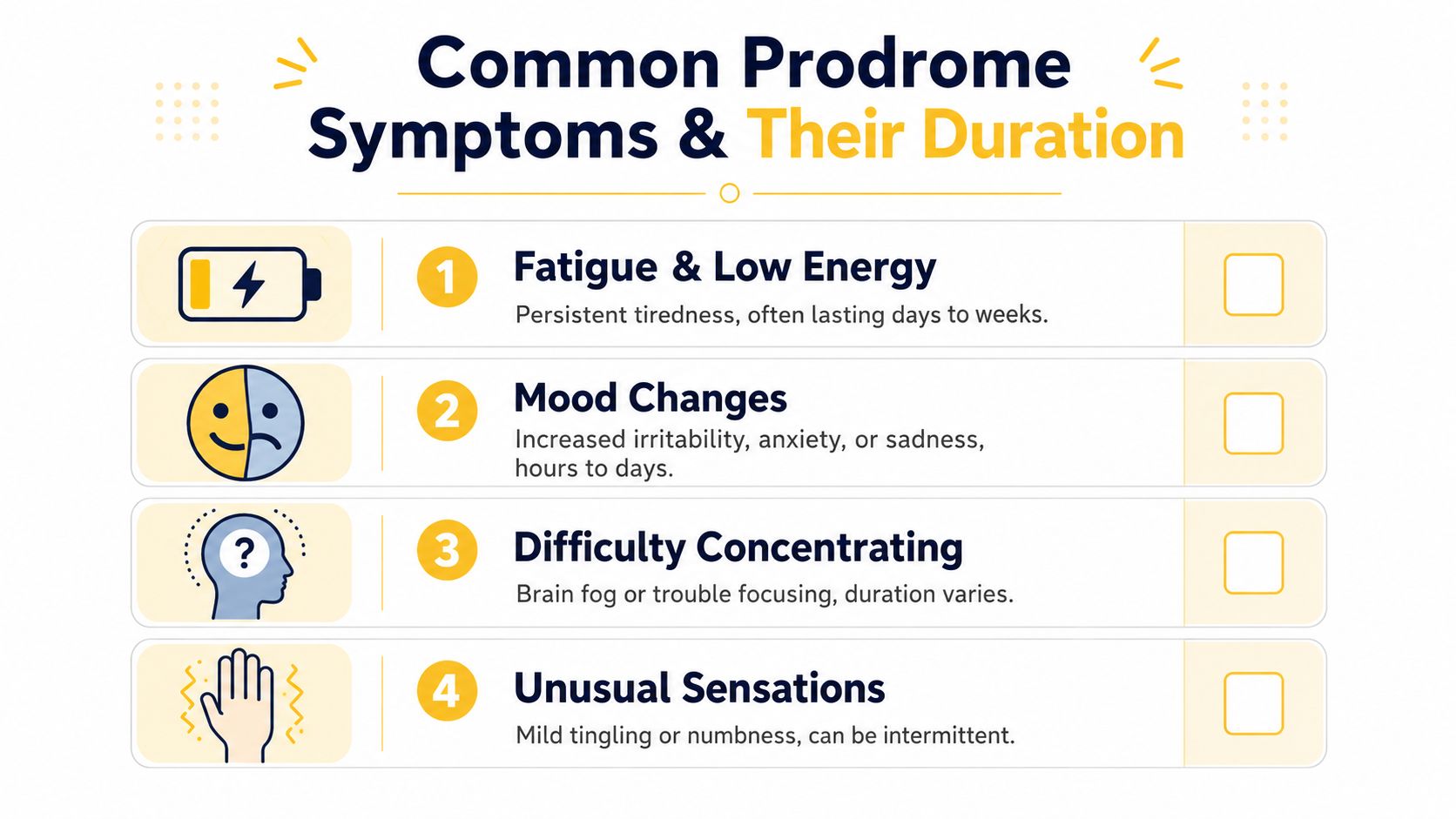
Symptoms people often notice in prodrome
A few signs show up again and again:
- Fatigue or low energy. You may feel drained well before head pain starts, even after an ordinary night of sleep.
- Mood changes. Irritability, sadness, anxiety, or a vague sense that you are emotionally off can appear early.
- Trouble concentrating. Many people call this brain fog. Reading, planning, or following a conversation may take more effort than usual.
- Frequent yawning. This can happen even when you are not especially sleepy.
- Food cravings or appetite changes. A sudden urge for specific foods can show up before the attack. This is one reason prodrome is often confused with a "trigger."
- Neck stiffness. Tightness or soreness in the neck and shoulders can begin before the headache phase.
Some people also notice sensitivity to light, mild nausea, or a heavy, slowed-down feeling. Others mainly notice behavior changes, like wanting to withdraw, needing extra caffeine, or struggling to get through normal tasks.
How long prodrome usually lasts
There is no single timeline that fits everyone. For some people, prodrome is a short warning window that lasts a few hours. For others, it stretches across a day or two.
That wide range is part of why this phase gets missed.
If a symptom shows up far ahead of the headache, it can look unrelated. Neck pain may get blamed on posture. Cravings may look like stress eating. Irritability may seem like a rough day. Migraine can blur those lines, which is also why people sometimes confuse early warning signs with the later migraine hangover symptoms that can linger after an attack.
A practical way to use this information
Instead of asking, "Was that definitely prodrome?" ask, "Does this same pattern keep showing up before my attacks?"
That question is more useful.
If the same two or three symptoms tend to appear before your migraine, write them down with the time they started. Over a few attacks, you may notice that your personal prodrome has a recognizable shape. That is the practical value here, especially before comparing prodrome with aura in the next phase. Prodrome is often broad and gradual, which gives you more time to track it and respond early.
Prodrome vs Aura How to Tell the Migraine Phases Apart
You wake up feeling strange. Your neck is tight, you cannot focus, and suddenly you want salty food and another coffee. Later, bright zigzag lines show up in your vision. Those experiences can belong to the same migraine attack, but they are not the same phase.
That distinction matters in real life because prodrome usually gives you a wider window to notice a pattern and respond early. Aura is different. It is a shorter, more clearly neurologic event.
Prodrome vs aura at a glance
| Characteristic | Prodrome (The Warning Phase) | Aura (The Neurological Phase) |
|---|---|---|
| Timing | Can begin hours or days before headache | Usually appears closer to the headache phase, or with it |
| Symptom type | Broad body and mood changes | Temporary neurologic symptoms |
| How it feels | "Something is off" | "A specific brain symptom is happening" |
| Examples | Fatigue, yawning, food cravings, irritability, neck stiffness | Visual changes, tingling, numbness, trouble speaking |
A useful way to separate them is to ask two questions.
First: Is this symptom vague and gradual, or specific and neurologic?
Second: Did it build over hours, or did it arrive as a distinct event?
Prodrome often feels like your system is drifting out of its usual rhythm. Aura usually feels more precise. People describe flashing lights, blind spots, pins and needles, or speech trouble that stands out from ordinary fatigue or stress.
That is why "I feel off" points more toward prodrome, while "I am seeing shimmering shapes" points more toward aura.
Both phases can happen in the same person. Some people get prodrome without aura. Some get aura without noticing prodrome. Some get both. Migraine does not always follow a neat script, so confusion here is common and understandable.
The practical difference is what you do with the information. Prodrome is often the phase to start tracking closely. Write down the time the symptom started, what the symptom was, and whether headache, aura, or other symptoms followed. Aura is also worth logging, but it tends to be easier to identify because it is more distinct.
Clear notes can make doctor visits more productive. They also help you separate early migraine symptoms from other phases, including the postdrome or migraine hangover symptoms that can show up after the attack.
If a symptom starts early and feels broad or hard to name, prodrome is the better first guess. If it is a temporary neurologic symptom with a clear start, aura is more likely.
Why Recognizing Your Prodrome Is a Superpower
You wake up feeling oddly irritable, your neck is tight, and concentrating takes more effort than usual. Nothing is dramatic enough to look like aura, but something feels off. For many people with migraine, that quiet shift is the part that matters most, because it gives you time.

Early warning changes what you can do
Prodrome works like the first rumble before a storm. Aura, by contrast, is usually sharper and easier to identify. That difference matters in real life. If you mistake prodrome for stress, hunger, or a bad night's sleep, you may miss your earliest chance to respond.
Recognizing prodrome gives you options sooner. That might mean following the plan you already made with your clinician, drinking water, eating if missed meals are a trigger for you, lowering sensory input, adjusting your schedule, or packing what you need before symptoms build.
Sometimes the win is smaller, but still meaningful.
You may not prevent the attack. You may still reduce the scramble around it. A little lead time can help you delay a meeting, arrange a ride, dim the lights, or tell someone at home, work, or school that you may need to step back. That kind of preparation can lower stress, and stress itself often makes an oncoming migraine harder to handle.
This is about pattern recognition, not perfection
Prodrome is easy to second-guess because it often overlaps with ordinary life. Fatigue can be fatigue. Brain fog can look like burnout. Food cravings can seem random. The skill is noticing which combination of symptoms tends to show up before your migraine attacks, and how that pattern differs from your usual day.
That is why consistent notes matter more than perfect certainty. A simple migraine symptom tracking template can help you spot whether your "off" days are random or part of a repeatable warning phase.
You will miss some prodromes. You will also have days that look like prodrome and do not turn into migraine. That does not mean you are bad at this. It means you are learning the difference between a broad early warning phase and other kinds of symptoms, including aura, which is often more distinct.
The goal is not perfect prediction. The goal is to notice your earliest pattern soon enough to respond with less disruption.
How to Track and Respond to Your Prodrome Symptoms
The tricky part about prodrome is that it can be obvious only in hindsight. In medicine, prodrome is often a retrospective concept, meaning you may only feel sure it was prodrome after the migraine attack fully unfolds, as discussed in this review on prodromal states and careful monitoring.
That doesn't make tracking less useful. It makes tracking more important.

Start with a simple log
You don't need a perfect system. Start with something you can keep doing.
Try logging these details whenever you suspect the warning phase might be starting:
- Time and date. When did you first notice feeling different?
- Early symptoms. Write down the exact changes, such as neck stiffness, brain fog, food cravings, fatigue, yawning, or irritability.
- What happened next. Did a migraine attack follow? If so, roughly when?
- Context. Note sleep disruption, stress, skipped meals, weather changes, or anything else that might matter for you.
If paper works best, use it. If you want structure, a migraine log template can make it easier to notice repeats.
Respond without overreacting
Tracking prodrome shouldn't turn into constantly scanning your body in panic. The goal is calm observation.
A helpful approach is to treat possible prodrome signs as a yellow light, not an emergency siren. You might check your plan, reduce avoidable stressors, and prepare for the possibility of an attack without assuming one is guaranteed.
That matters because symptoms like anxiety, sleep changes, and low energy can be nonspecific. They may be part of prodrome for you. They may also be unrelated on a given day.
Watch for repeated clusters, not isolated symptoms.
Use your notes to build a plan
After a few weeks or months, your notes may start to answer questions that feel impossible in the moment:
- Do your attacks often begin with the same warning signs?
- How much time do you usually have between early symptoms and headache?
- Which responses seem most helpful when you act early?
A short video walkthrough can make symptom tracking feel less abstract:
You can also bring those notes to a medical appointment. A clinician can often do much more with a clear symptom pattern than with a vague memory of "I felt weird before it started."
When to Talk to Your Doctor About Migraine Symptoms
If you're noticing recurring early symptoms before migraine attacks, it's worth bringing that pattern to your doctor. A clear log can help them understand whether you're describing prodrome, aura, postdrome, medication timing issues, or something else that needs attention.
Get immediate medical care if you have a sudden severe headache, a headache with fever or stiff neck, new neurological changes, or a headache after head injury. Those symptoms need urgent evaluation.
It's also time to check in with a clinician if your attacks have changed, your symptoms no longer fit your usual pattern, or you're unsure whether what you're experiencing is migraine. If you and your doctor are discussing prevention options, it may help to understand the broader range of treatments, including this overview of CGRP monoclonal antibody treatment.
This article is for informational purposes and is not medical advice. Consult a healthcare provider for personalized guidance.
Bring specific notes if you can. Useful details include when your early symptoms start, which ones repeat, whether aura is part of your attacks, and what you tried during the warning phase.
Relief can help you track early symptoms, spot patterns, and see how your migraine risk changes over time, so you're working with clearer information instead of guesswork.


