You wake before dawn with a familiar throbbing pain, nausea, or sensitivity to light, and the storm hasn't arrived yet. Barometric pressure changes may contribute to migraine attacks, especially when pressure falls or shifts quickly, although research doesn't show one universal trigger threshold for everyone. Your experience isn't imaginary, and understanding your own weather pattern can help you prepare more intelligently.
A migraine is more than an ordinary headache. It's a neurological condition that can include throbbing pain, aura, nausea, and photophobia, meaning unusual sensitivity to light. This article is for informational purposes and is not medical advice. Consult a healthcare provider for personalized guidance.
Table of Contents
- Start with a simple monitoring routine
- Prepare without overreacting
- Know when symptoms need urgent attention
- Can high pressure trigger migraine, or do only drops matter?
- How long after a pressure change might symptoms begin?
- Do several triggers increase risk together?
- What should you tell your doctor about weather-triggered migraine?
Why Your Head Knows a Storm Is Coming
You wake with pain behind one eye, a pulsing temple, or the familiar heaviness that often precedes an attack. Hours later, clouds gather or rain starts. The timing can feel as though your head sensed the storm first.
That pattern deserves serious attention. People with migraine are sometimes dismissed as imagining weather sensitivity, yet researchers have repeatedly examined connections between atmospheric conditions and migraine attacks. A 2025 systematic review screened 979 records and included 14 eligible studies involving 2,696 participants. Results varied across studies, while several reported associations between falling pressure or rapid fluctuations and more frequent migraine. The full review is available through the National Library of Medicine.
The research does not support a universal storm signal. One person may react to a falling reading, another to a rapid swing, and someone else may notice no consistent effect. Sleep loss, stress, illness, and other personal triggers can also lower the threshold for an attack, making weather one part of a larger pattern.
Your own record can reveal more than a single forecast. Compare the pressure trend before attacks with your symptoms, sleep, stress, and other possible triggers. A repeated pattern gives you something practical to monitor and discuss with a healthcare professional, rather than leaving you to wonder whether the connection is real.
What Barometric Pressure Actually Is
A weather app may show a falling pressure reading before the sky changes. That number represents barometric pressure, the force produced by the weight of the air above you. Forecasts usually express it in hectopascals, or hPa, so you can follow atmospheric changes without calculating the force yourself.
An airplane cabin offers a useful comparison. During descent, your ears may pop because the pressure outside the middle ear changes faster than the pressure inside it. Weather systems create a similar physical shift more gradually. The body usually has time to adjust, though some people notice changes in their ears, sinuses, head, or nervous system.
The trend often provides more context than one reading. A slow pressure drift may be easier to tolerate than a sharp fall before a front. A stable high or low value may not correspond with symptoms, while the direction and speed of change may fit your personal pattern more closely.
Pressure doesn't behave like a simple storm switch
Falling pressure often arrives with an incoming weather system, yet rising pressure can also coincide with headache risk. A prospective diary-based analysis found that a ridge of high pressure increased the risk of headache occurrence, while lower mean daily wind speed increased migraine occurrence. The finding points to an interaction among weather conditions rather than a single automatic trigger. You can review the diary-based analysis in PubMed Central.
A storm can bring several possible influences at once, including humidity, temperature, wind, light levels, and disrupted sleep. As a result, “storms trigger my migraine” may accurately describe your experience without showing which part of the weather change matters most.
Track the pressure trend alongside symptoms and these surrounding conditions. Over time, that comparison can help distinguish a pressure pattern from other weather-related triggers and give you a clearer routine for monitoring attacks.
How Pressure Shifts Trigger Migraine in the Brain
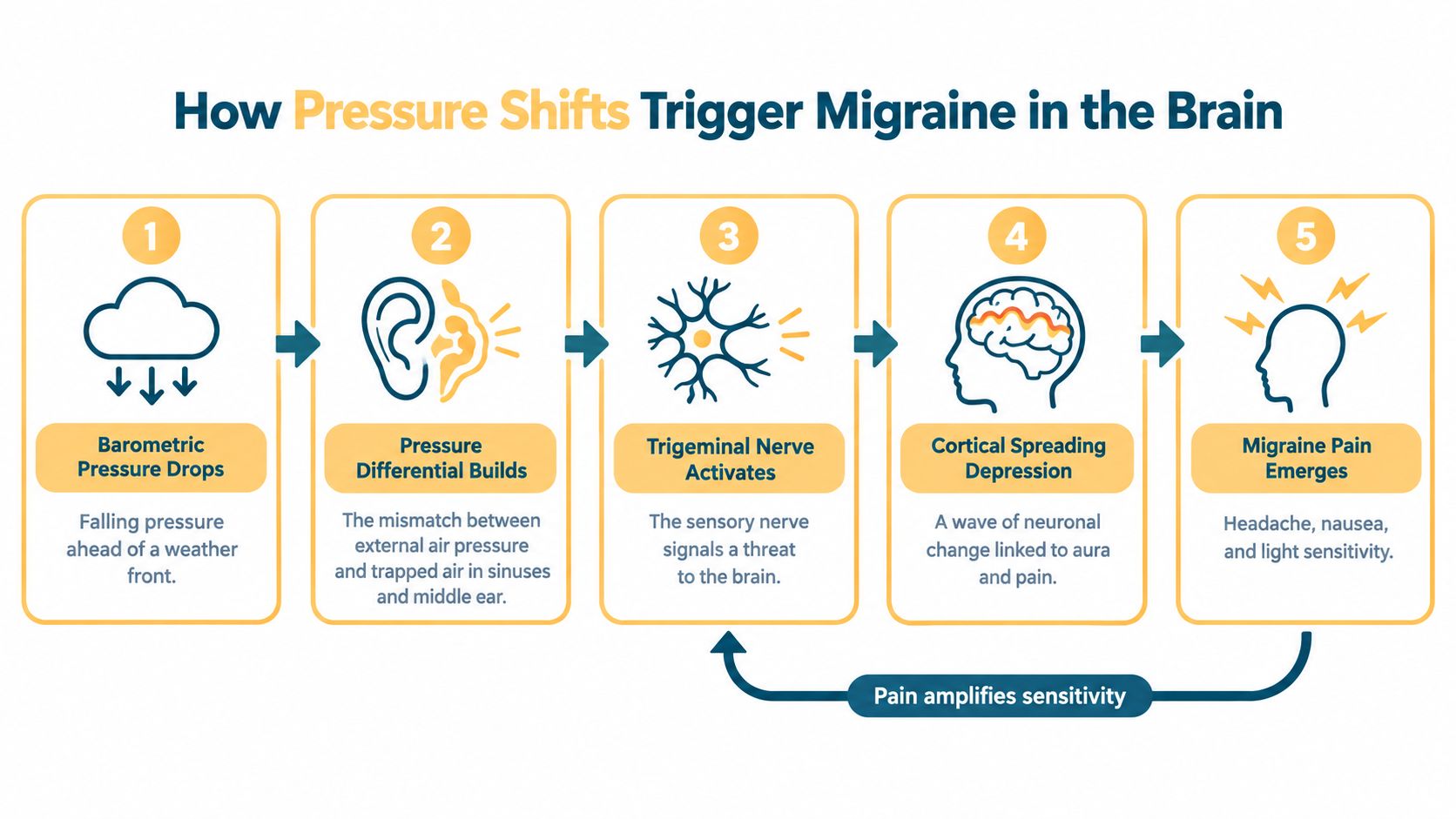
A storm may still be hours away, yet your migraine symptoms can begin. That timing makes more sense once you look at how weather shifts interact with the nervous system, rather than treating atmospheric pressure as a force that just presses on the skull.
The trigeminal nerve system carries sensory signals from much of the head and face. In someone with migraine susceptibility, a change in the surrounding environment may make this system more reactive. The shift is better understood as a possible trigger for an already sensitive pain network, not as proof that pressure alone causes every attack.
The meninges, protective membranes around the brain, contain pain-sensitive structures and blood vessels. If a pressure change alters how these structures respond, the trigeminal system may release signaling chemicals involved in neuroinflammation. In this context, neuroinflammation describes increased nerve and immune signaling around the brain's coverings. That activity may move the nervous system closer to an attack.
Atmospheric pressure does not physically “squeeze” the brain in a simple way. Migraine involves several systems at once, including sensory processing, blood vessels, the autonomic nervous system, and the brain's threshold for initiating an attack. Pressure may be one influence among several, especially when poor sleep, light, temperature, humidity, or stress are present.
Migraine has stages, not just pain
A prodrome is the period before the main pain phase. It can include fatigue, yawning, mood changes, food cravings, neck discomfort, or difficulty concentrating. An aura is a temporary neurological symptom, such as visual changes, altered sensation, or speech difficulty, that may occur before or during some attacks.
Photophobia means light sensitivity, and phonophobia means sound sensitivity. Nausea and movement sensitivity can accompany migraine as well. These features can help distinguish migraine from an ordinary headache, although a qualified clinician must assess your symptoms and diagnosis.
A person becomes more vulnerable when the nervous system is already near its migraine threshold. That threshold varies widely. Someone with episodic migraine, chronic migraine, vestibular migraine, migraine with aura, or another migraine presentation may respond differently to the same weather pattern. The difference reflects individual neurological susceptibility, not weakness or imagination.
Because the mechanism likely involves trigeminal sensitization rather than direct mechanical pressure, symptoms may start before the weather visibly changes. That is one reason trend-based tracking can be more useful than waiting for a storm or reacting only after pain begins.
The Pressure Thresholds Research Has Identified
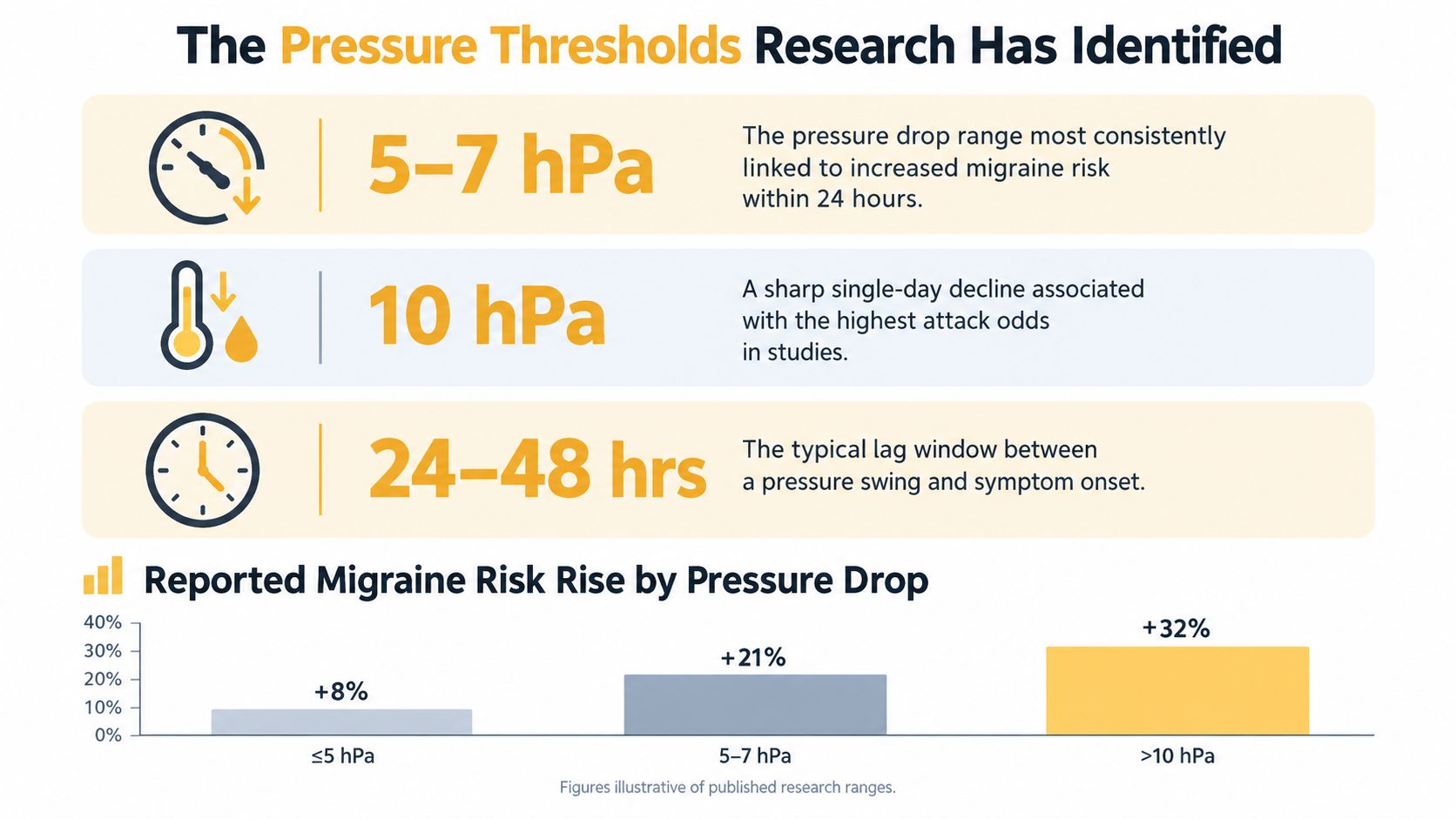
Pressure research becomes more useful when you translate it into observations you can make directly. One prospective clinical study found migraine attacks clustered when atmospheric pressure fell to approximately 1003 to 1007 hPa. That represented a decline of roughly 6 to 10 hPa from the standard 1013 hPa reference used in the study. The clinical study is published by SpringerPlus.
This isn't a universal cutoff. It's a research reference point that may help you notice whether a moderate decline tends to precede your attacks. A weather app may show the pressure trend directly, and some apps display whether the value is rising or falling. You don't need specialist equipment to begin observing the pattern.
A separate 2011 study of 28 people with migraine found that weather change was associated with migraine development in 18 participants, or 64%, and that migraine frequency increased when barometric pressure fell by more than 5 hPa from the attack day to the next day. The study is available in PubMed Central.
Treat thresholds as clues, not alarms
These findings point toward a practical idea: moderate pressure drops may matter, not only dramatic storms. A drop of several hPa can occur during an approaching front without extreme weather at ground level. The timing may also vary, with some people noticing symptoms before the weather feels different and others noticing them later.
Your personal threshold could be smaller, larger, or unrelated to pressure alone. To test the pattern, log the pressure direction, the approximate change, the time symptoms began, and other conditions such as sleep, stress, humidity, and wind. A monthly overview can reveal whether pressure is a consistent factor or merely appears alongside another trigger.
For a broader look at how pressure, temperature, and humidity may interact, see this guide to temperature, humidity, and barometric pressure.
When Weather-Related Head Pain Is Actually Migraine, Not Sinus Pressure
A storm approaches, your forehead and cheeks begin to ache, and the sensation feels like pressure behind your eyes. It is easy to label that pain as a sinus problem, especially when weather changes seem to precede it.
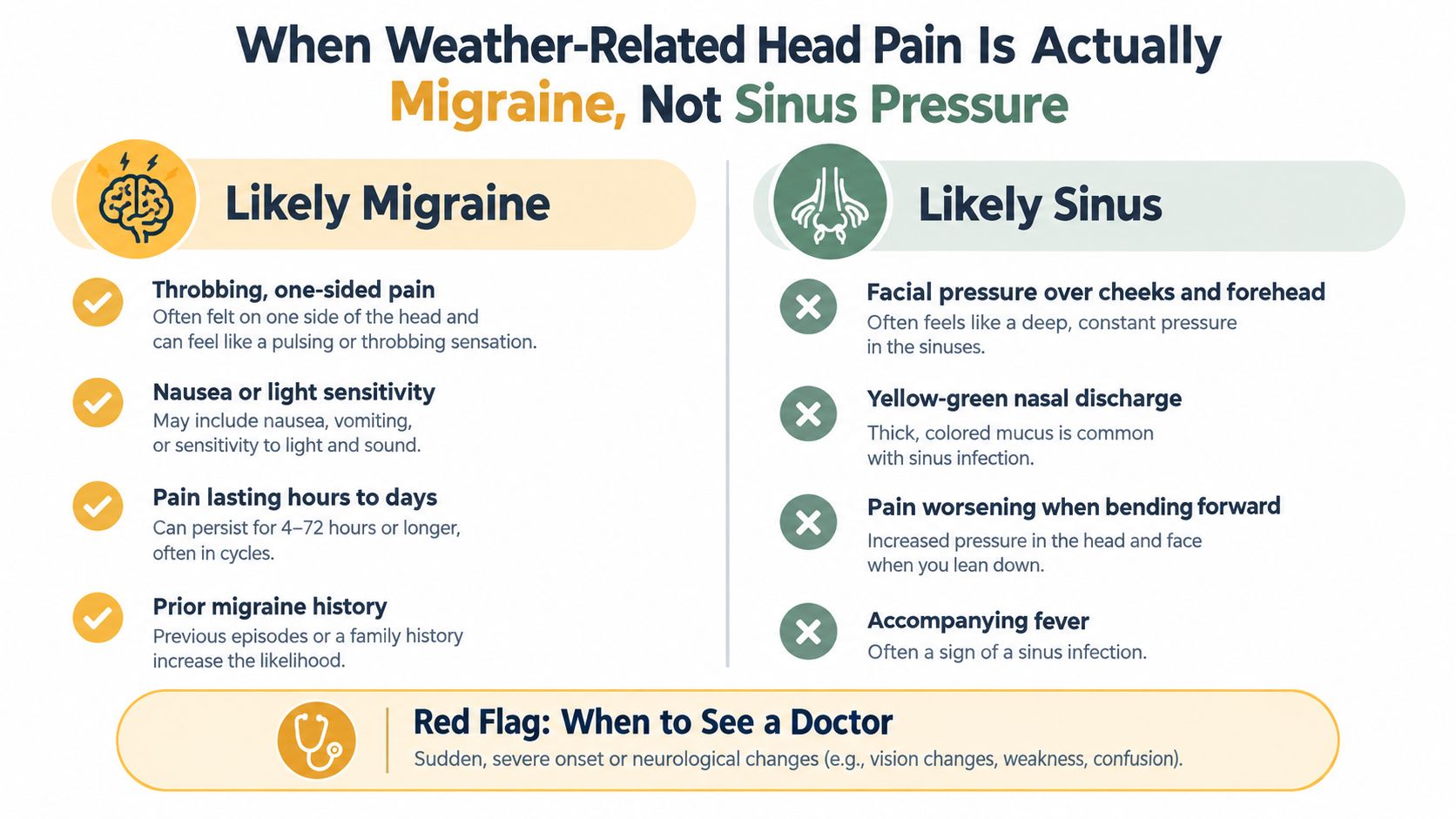
Routine weather changes do not appear to cause barosinusitis in the way many people assume. A 2023 NIH review found no evidence supporting barosinusitis from routine weather changes and concluded that facial pain during weather shifts is more likely to be migraine-related. Review the evidence on weather-related facial pain and migraine.
That distinction affects treatment and tracking. Repeated sinus remedies may not address the underlying problem when migraine drives the symptoms. Instead of recording only “sinus pressure,” note where the pain occurs, whether it throbs, and whether nausea, light sensitivity, nasal symptoms, fever, or a particular episode length accompanies it.
Why the two experiences get confused
Migraine can produce pain across the forehead or face, along with nasal congestion or watery eyes. Sinus illness can also create facial pressure, particularly when nasal discharge or fever is present. The overlap makes symptom notes useful, but symptoms alone cannot establish a diagnosis.
| Feature | May occur with migraine | May occur with sinus illness |
|---|---|---|
| Pain quality | Throbbing or pulsing pain | Facial pressure or tenderness |
| Associated symptoms | Nausea, light sensitivity, sound sensitivity | Nasal discharge, congestion, fever |
| Timing | May last hours to days | Often follows an infectious pattern |
| Weather connection | May follow pressure or other weather shifts | Routine weather change alone does not establish sinus disease |
Research estimates that 30% to 50% of people with migraine identify weather change as a commonly reported trigger. If sinus remedies have not brought lasting relief, ask a clinician whether your pattern warrants a migraine-focused evaluation. Ear fullness can also complicate the picture, so review this guide to headache with ear pressure or popping when those symptoms occur together.
Practical Ways to Monitor and Respond to Pressure Changes
The most useful response to weather sensitivity is usually not trying to control the weather. It's building a record that shows whether a specific pressure pattern repeatedly appears before your attacks.
Start with a simple monitoring routine
Use a weather app that displays atmospheric pressure and its direction of change. Each day, record:
- Pressure trend: Note whether pressure is falling, rising, or relatively stable.
- Migraine timing: Log when prodrome symptoms, aura, or pain begin.
- Other conditions: Include sleep quality, stress, hydration, temperature, humidity, wind, and air quality.
- Attack details: Record severity, symptoms, duration, and any treatment you used.
Don't treat one matching day as proof. A pattern becomes more useful when the same combination appears repeatedly and you also record days when pressure changed without a migraine. That comparison helps prevent confirmation bias, the tendency to notice evidence that supports an existing belief while overlooking exceptions.
Practical rule: Track the exposure and the outcome, including the days when the expected migraine doesn't happen.
Prepare without overreacting
When your log shows that falling pressure often coincides with attacks, protect the basics that may reduce vulnerability. Keep sleep timing as consistent as your circumstances allow, drink fluids regularly, and plan short breaks if stress tends to build. These steps aren't cures, and they won't prevent every attack, but they can reduce the number of variables competing with your observations.
Lifestyle changes should support, not replace, medical care. Over-the-counter treatments and prescription acute treatments may help some people manage an attack, while preventive approaches may be appropriate for others. Discuss options, side effects, and safe use with your healthcare provider rather than changing medication on your own.
You can use a tracking tool such as this guide to identifying migraine triggers to organize observations over time. Relief can combine personal migraine logs with local weather signals, including barometric pressure, and show whether a changing environmental factor has correlated with previous attacks. It's a tracking and awareness tool, not a medical treatment or substitute for clinical care.
Know when symptoms need urgent attention
Seek immediate medical care for a sudden severe headache, a headache with fever or a stiff neck, new or major neurological changes, or a headache after a head injury. Neurological changes can include new weakness, confusion, fainting, trouble speaking, or a significant change in vision.
Contact a healthcare provider about recurring attacks, changing symptoms, frequent use of acute treatments, or headaches that interfere with work, sleep, or daily activities. Bring your weather and symptom log so the conversation starts with specific observations rather than a vague sense that “weather makes it worse.”
Frequently Asked Questions About Pressure and Migraine
This article provides general information, not medical advice. Consult a healthcare provider for guidance based on your symptoms and medical history.
Can high pressure trigger migraine, or do only drops matter?
High pressure can affect some people too. As noted earlier, diary research linked headache risk with high-pressure ridges, so your log should include rising-pressure days as well as falling pressure and storm fronts. Weather may influence migraine in more than one direction, and a personal pattern matters more than a single forecast.
The diary analysis is available through PubMed Central.
How long after a pressure change might symptoms begin?
The timing varies. Symptoms may appear while pressure is shifting or later, making one weather reading difficult to identify as the sole cause. Record when pressure began changing, when prodrome appeared, and when head pain started. After several entries, your log may show whether your symptoms tend to follow a same-day change or a delayed pattern.
Do several triggers increase risk together?
They can. A pressure shift may occur alongside poor sleep, stress, dehydration, or another personal trigger. This overlap is often called trigger stacking. It does not mean every combination will cause an attack, especially because weather research has produced mixed findings. Recording the factors together can show whether a particular combination repeatedly precedes your migraine.
What should you tell your doctor about weather-triggered migraine?
Bring a concise log with pressure direction, approximate change, symptom start time, migraine features, sleep, hydration, stress, and other relevant conditions. “My attacks often follow falling pressure” gives a clinician more to assess than “weather causes headaches.” Mention that recognized headache organizations, including the American Migraine Foundation and the International Headache Society, describe migraine as a neurological condition and weather sensitivity as a clinical topic worth discussing.
Relief lets you record migraine timing, symptoms, triggers, and medications alongside local weather signals such as barometric pressure, humidity, temperature, wind, and air quality. Visit Relief to see how its iOS tracking and forecasting tools could fit your routine.


