In a 2026 comparison, side sleeping was reported by 60.71% of people with migraine, while prone, or stomach, sleeping was reported by 14.29%. A practical starting point is side sleeping with a neutral neck, although carefully supported back sleeping may suit you better if breathing, reflux, or neck comfort point in that direction.
Could your sleep position be worsening morning migraine? Waking with head pain, neck stiffness, or photophobia, the medical term for unusual sensitivity to light, can make it feel as though rest has worked against you. Migraine is more than an ordinary headache. It can involve throbbing pain, nausea, visual symptoms called aura, and changes before or after the main attack, known as the prodrome and postdrome.
There isn't one universally proven best sleeping position for migraine. The evidence is stronger for steady sleep, comfortable cervical alignment, and avoiding neck strain than for any position directly preventing migraine. Sleep-disordered breathing, which means repeated interruptions or reductions in breathing during sleep, can also affect morning symptoms and may change which position is safest or most comfortable for you.
The seven setups below are ranked by practical usefulness. The first approaches focus on neutral alignment and lower strain. Later options are harm-reduction experiments for people whose habits, nausea, reflux, breathing, or pressure sensitivity make a single position difficult.
This article is for informational purposes and is not medical advice. Consult a healthcare provider for personalized guidance. Relief can support symptom and sleep-pattern tracking, but it isn't a treatment or replacement for medical care.
Table of Contents
1. Side Sleeping with Neck Support
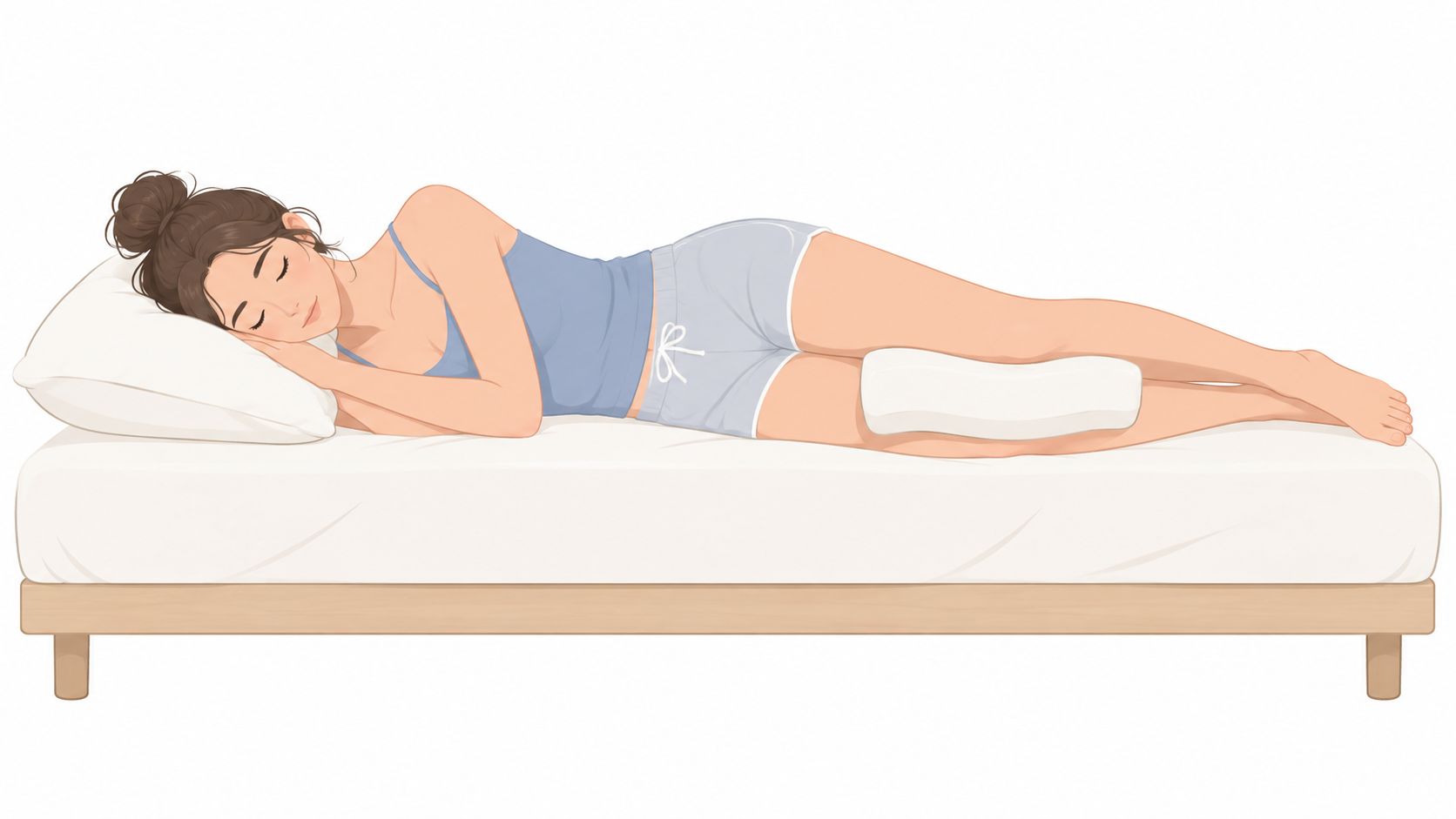
Side sleeping is the most sensible first experiment for many adults with migraine, especially when lying flat on your back worsens snoring, nausea, or discomfort. Your head should stay level with your spine rather than tipping toward the mattress or upward toward the ceiling.
A pillow should fill the space between your ear and shoulder without pushing your head sideways. Mattress firmness changes that gap, so the same pillow may feel appropriate on one bed and too high on another. Keep your shoulders relaxed, and let your knees bend naturally instead of pulling them tightly toward your chest.
A neutral neck means your cervical spine, the part of the spine running through your neck, isn't forced into rotation, extension, or forward flexion. That matters because neck strain can amplify pain for some people, even though a painful neck doesn't automatically mean your migraine is cervicogenic, meaning driven primarily by structures in the neck.
A 2026 retrospective study compared 112 people with cervicogenic headache with 112 age- and sex-matched people with migraine. The study found that one-sided sleeping or prone sleeping with the head turned to one side occurred in 35.71% of the migraine group and 74.12% of the cervicogenic headache group. That finding doesn't prove side sleeping prevents migraine, but it supports testing a neutral lateral position rather than sleeping with your head rotated for long periods. Read the research on migraine and sleep posture.
Try this tonight
- Support your knees: Place a thin pillow or rolled towel between your knees if your hips or lower back pull your torso forward.
- Check your head: Ask someone to look at your neck from behind, or take a side-view photo while lying down. Your head shouldn't droop toward the mattress.
- Relax your shoulders: Keep them away from your ears rather than hunching around the pillow.
- Track the result: Log whether you slept on your side, which side you used, your pillow setup, and whether you woke with migraine, neck pain, or shoulder tension.
If your symptoms resemble a neck-related headache, the practical differences are explained in this guide to sleeping posture for cervicogenic headache. Use the experiment to notice patterns, not to diagnose yourself.
2. Back Sleeping with Support Under the Knees
Back sleeping can be a good alternative when side sleeping irritates your shoulder, hip, jaw, or neck. It distributes pressure more evenly and avoids holding your head turned to one side, but it only works well when your pillow doesn't push your chin toward your chest.
Try a thin or gently rounded-support pillow that preserves the natural curve of your neck. Your face should point toward the ceiling, not toward your feet. A pillow under your knees can make the position feel easier by reducing the pull through your lower back, which may help you stay relaxed rather than bracing through your shoulders.
The key test is alignment, not a particular pillow shape. From the side, your ear, shoulder, and hip should appear reasonably aligned. If your head sits noticeably higher than your torso, or if you wake with jaw and neck tension, the pillow may be too tall or too firm.
Back sleeping deserves a lower ranking than side sleeping when you snore heavily, wake gasping, or have suspected sleep apnea. A review from the American Migraine Foundation on posture and migraine notes that sleep apnea can complicate headache patterns and that side sleeping may help some people. That doesn't make back sleeping wrong. It means breathing symptoms should influence your choice.
A simple alignment check
Lie down for several minutes before bedtime and notice whether your chin feels tucked, your throat feels compressed, or your shoulders are uneven. Remove extra pillows under your arms if they rotate your shoulders, and use a rolled towel under your knees only if it makes the position more comfortable.
For your experiment, compare back-sleeping nights with side-sleeping nights. Record morning neck stiffness separately from migraine symptoms. A position that reduces neck tightness but worsens snoring may not be the right setup for you.
3. Inclined Support for Nausea or Reflux
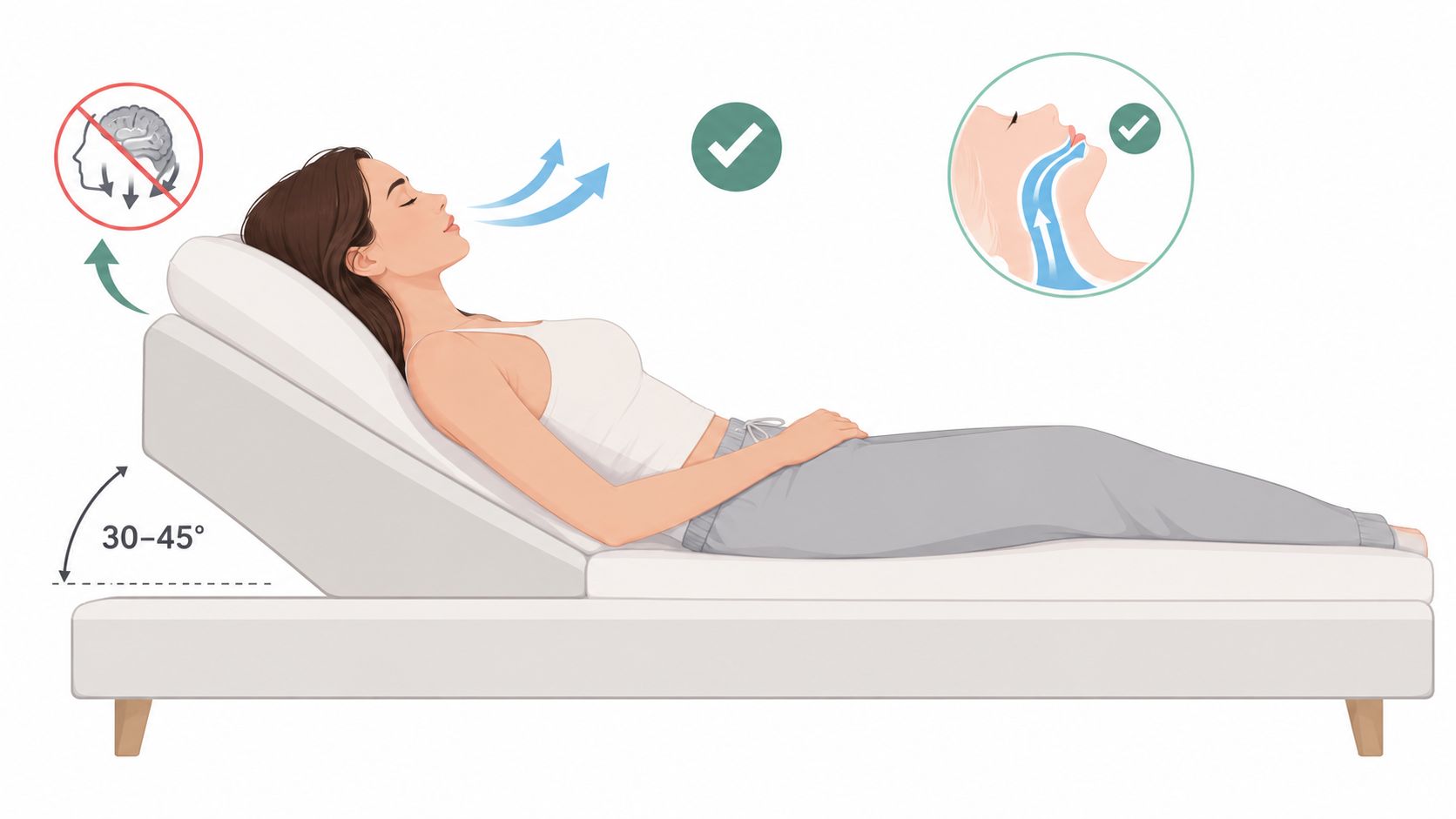
Could a gentle incline make sleep easier when lying flat worsens nausea or reflux? It may help some people rest more comfortably, but it is a symptom-management option, not a proven migraine treatment. Treat the setup like a gradual ramp for your torso. The right angle is the one that reduces discomfort without forcing your neck forward.
Aim for a 20-30 degree torso incline with a firm sleep wedge rather than two or three soft pillows. Place the wedge under your upper back and torso so your head, neck, and chest follow one line. A wedge or adjustable bed usually stays more stable than loose pillows, which can compress overnight and sharply bend the neck.
This ranks as a conditional, lower-evidence strategy in a seven-position comparison. It may be worth testing if an attack begins after you lie down, or if nausea or reflux makes a flat position difficult. Test it for one night and log the original reason for choosing it, then compare sleep quality, nausea or reflux, neck stiffness, head pressure, and morning migraine symptoms.
Keep the neck neutral while inclined
Place one supportive pillow over the wedge, using only enough height to keep your chin level. Excessive pillow height is discouraged in sleep guidance from NHS Grampian, which also recommends regular sleep timing and cautions against using too many pillows.
Stop or adjust the setup if you slide toward the foot of the bed, develop neck pain, feel pressure behind your head, or notice worse breathing discomfort. Frequent or painful reflux, swallowing problems, or persistent breathing symptoms deserve medical advice rather than reliance on a sleeping position alone.
4. Modified Fetal Position with Gentle Flexion
A modified fetal position keeps you on your side but allows your knees to bend without pulling them tightly toward your chest. It can feel secure and natural, particularly if you change position often during an attack or find a fully extended posture uncomfortable.
The distinction between gentle flexion and a tight curl matters. When your shoulders, neck, and hips all roll forward, your head may also bend toward the mattress. That can leave you waking with a stiff neck even if you slept on your side.
Try placing a pillow between your knees and using a body pillow in front of your chest. The support can prevent your upper shoulder from collapsing forward. Keep your head level with your spine, and avoid cradling it on several pillows.
Practical rule: If your knees are pulled tightly toward your chest, release the curl before adding more pillow height.
This is a lower-evidence, comfort-focused option rather than a proven migraine-prevention position. Its value is practical: it may help you maintain side sleeping without forcing your body into a rigid posture.
Test comfort, not perfection
Notice whether you wake with less neck stiffness, fewer pressure points, or better sleep continuity. Also record whether the position increases hip pain, shoulder pressure, or jaw clenching. If it does, switch to a more open side position or test supported back sleeping instead.
Migraine symptoms vary widely. A person with migraine with aura may have a different sleep experience from someone with vestibular migraine, chronic migraine, or attacks dominated by nausea. Your response to a modified fetal position should be treated as personal information, not a general rule.
5. Prone-Adjacent Position for Habitual Stomach Sleepers
Full stomach sleeping is usually a poor first choice for migraine-related sleep positioning because it commonly requires the head to remain turned to one side. That rotation can keep the neck and shoulders under uneven load for hours.
If you naturally fall asleep on your stomach and cannot transition immediately, use this as a harm-reduction experiment rather than an ideal recommendation. Position your torso partly toward your side, keep the pillow low enough to avoid lifting your head sharply, and use a body pillow to discourage a complete roll onto your abdomen.
Don't force your head into an extreme turn or stay in a position that causes neck pain, numbness, weakness, or significant morning stiffness. Alternating sides naturally is preferable to deliberately setting an alarm or repeatedly waking yourself to rotate your head. Fragmented sleep can create its own problems.
Know when to stop
The 2026 posture study found that prone sleeping was much more common in the cervicogenic headache group than in the migraine group, while side sleeping was more common among people with migraine. The finding supports reducing prolonged neck rotation, but it doesn't establish that stomach sleeping causes migraine.
Track whether you wake with pain at the base of your skull, restricted neck movement, or a migraine that develops soon after waking. If those patterns recur, transition toward supported side sleeping or back sleeping and raise the issue with a clinician. Persistent neck pain deserves evaluation rather than repeated pillow experimentation.
6. Alternating Between Supported Positions
You don't have to remain in one position all night. Natural movement can relieve pressure on a shoulder, hip, or area of neck muscle that becomes uncomfortable after prolonged stillness.
A practical approach is to prepare both a side-sleeping setup and a back-sleeping setup before bed. Put the second pillow or knee support within reach, then change positions during a natural waking moment. Don't set repeated alarms to force movement. The priority is restorative sleep, not maintaining a perfect schedule of rotations.
This strategy may suit people who already shift positions, wake briefly because of pain, or find that one position feels good at bedtime but uncomfortable later. It can also reveal whether your migraine pattern is tied to one sustained posture or to sleep disruption more generally.
Log the transition
In Relief, note your starting position, any position changes you remember, pillow arrangement, sleep quality, and morning symptoms. If you wake naturally during the night, record whether the change relieved pressure or increased discomfort. Avoid treating a single night as proof.
The Migraine Trust's sleep guidance describes a series of posture adjustments among people experiencing migraine, including pressure on the painful side, head elevation, neck extension, and face-down lying. That pattern supports an important practical point: people often move toward whatever feels less painful, and no single posture fits every attack.
Use position cycling as a way to reduce sustained discomfort, not as a formal treatment. If changing positions repeatedly leaves you more awake, return to the setup that best supports uninterrupted sleep.
For additional comfort ideas during an attack, see this practical guide on how to sleep with a migraine.
7. Cervical Pillow Integration
A cervical pillow is designed to support the natural curve of the neck rather than raise the head. It can be used with side sleeping, back sleeping, or a gentle incline, but the pillow's shape matters less than whether it keeps your neck comfortable and level.
Cervical pillows come in contour, foam, water-filled, and adjustable designs. A contoured pillow may suit someone who sleeps on their back, while a broader side-sleeper pillow may better fill the space between the shoulder and ear. A water-based pillow can be adjusted, but adjustability doesn't guarantee a good fit.
Don't buy a pillow because it promises to prevent migraine. Test whether you wake with less neck tension, fewer pressure points, and no new jaw or shoulder discomfort. A pillow that feels supportive for a few minutes in a shop may behave differently after several hours on your mattress.
Match the pillow to the position
- Side sleeping: Look for enough height to keep your head level with your spine, without pushing it away from the mattress.
- Back sleeping: Choose support that fills the neck's natural curve without forcing your chin toward your chest.
- Prone-adjacent sleeping: Use less height, and reconsider the position if your neck remains rotated or painful.
- Changing positions: Select a flexible design that doesn't create a sharp ridge when you roll from your side to your back.
Extra pillows aren't automatically better. The Relief guide to good pillows for headaches explains why pillow height should match sleeping position and why neutral neck alignment matters. Change one pillow variable at a time, then log morning migraine symptoms, neck stiffness, and sleep quality so you can separate a useful adjustment from a coincidental good night.
7-Position Comparison: Best Sleep Postures for Migraine Relief
| Position / Strategy | 🔄 Implementation complexity | ⚡ Resource requirements | ⭐📊 Expected outcomes | 💡 Ideal use cases | ⭐ Key advantages | 💡 Quick tip |
|---|---|---|---|---|---|---|
| Side Sleeping with Neck Support (Lateral Position) | 🔄 Low, easy posture change with pillow adjustments | ⚡ Low, medium-loft pillow (3–5 in); periodic replacements | ⭐📊 Moderate–High, reduces neck tension, may lower morning migraines | 💡 Cervical-tension or mild sleep-disordered breathing-related migraines | ⭐ Promotes airway openness and neutral cervical alignment | 💡 Use medium-loft pillow; thin pillow between knees |
| Back Sleeping with Pillow Under Knees (Supine with Lumbar Support) | 🔄 Low, simple positioning and knee support | ⚡ Low, thin head pillow (2–3 in) + knee roll/pillow | ⭐📊 Moderate, evens spinal load; helps posture-related migraine triggers | 💡 Migraines tied to postural strain or lower back pain | ⭐ Even weight distribution; straightforward adjustments | 💡 Keep ears, shoulders, hips aligned; pillow under knees |
| 45-Degree Semi-Elevated Position (Inclined Support) | 🔄 Medium, needs setup and angle tuning | ⚡ Medium–High, wedge pillow or adjustable bed (higher cost) | ⭐📊 High for apnea/reflux-related migraines; lowers head blood pooling | 💡 People with sleep apnea, reflux, or early-morning migraines | ⭐ Opens airway; reduces intracranial pressure and reflux | 💡 Start ~30° and increase to 30–45°; elevate torso, not just head |
| Modified Fetal Position with Proper Support (Semi-Flexed Lateral) | 🔄 Low, adopt gentler curl and pillow placement | ⚡ Low, standard pillows; body or knee pillow recommended | ⭐📊 Moderate, reduces stress-related muscle tension if maintained | 💡 Those who prefer a flexed position or have anxiety-related sleep issues | ⭐ Combines side-sleep airway benefits with grounding comfort | 💡 Keep knees ≤90°; place pillow between knees; avoid tight curl |
| Prone-Adjacent Position with Head Turn Alternation (Modified Stomach Sleep) | 🔄 Medium, requires conscious head-turning/alternation | ⚡ Low, thinnest pillow (1–2 in); body pillow helps discourage full prone | ⭐📊 Low–Moderate, harm-reduction for habitual stomach sleepers | 💡 Habitual stomach sleepers unable to adopt side/back positions | ⭐ Better than full stomach sleeping; minimal equipment | 💡 Use 1–2 in pillow; alternate head side periodically; avoid >45° rotation |
| Alternating Position Strategy with Scheduled Transitions (Position Cycling) | 🔄 High initially, requires practice and timing cues | ⚡ Low, proper pillows for chosen positions; no special gear | ⭐📊 Moderate–High, reduces localized muscle fatigue and pressure triggers | 💡 People with pressure-point or sustained-position migraine triggers | ⭐ Distributes load across muscle groups; reduces morning stiffness | 💡 Use mental cues or set pillows in place; practice for 2–4 weeks |
| Cervical Pillow Integration with Postural Alignment (Specialized Support) | 🔄 Medium, requires fitting/trial-and-error | ⚡ High, quality cervical pillows often $80–300+; replace 18–36 mo | ⭐📊 High, evidence-backed reduction in neck pain and related headaches | 💡 Migraine sufferers with cervical trigger points or persistent neck pain | ⭐ Maintains natural cervical curve; works with any sleep position | 💡 Measure neck-to-shoulder distance; buy from flexible-return retailer |
Build Your Own Migraine-Friendly Sleep Experiment
The strongest setup is the one that supports comfortable alignment without worsening breathing, neck pain, or sleep quality. Start with side sleeping and neutral support if it feels comfortable, then compare it with carefully supported back sleeping. Consider an incline only when nausea, reflux, or breathing discomfort makes lying flat difficult.
Keep the experiment simple. Change one variable at a time, such as your sleeping position, pillow, knee support, or upper-body elevation. Record the setup, how long you slept, whether you woke during the night, your morning symptoms, and whether you experienced migraine features such as photophobia, nausea, aura, or neck stiffness.
Also record possible environmental factors. A dark room, noise, temperature, stress, unusual schedule, illness, and changes in routine may affect sleep and migraine independently of your pillow. The purpose of tracking is to identify patterns worth discussing, not to assume that one position caused or prevented an attack.
A practical sleep checklist
- Keep your schedule steady: NHS guidance advises regular bed and wake times, avoiding too much or too little sleep, and allowing time to wind down.
- Protect the sleep environment: Keep the room quiet and dark if light or sound aggravates your symptoms.
- Avoid major disruptions: Don't treat a late night followed by unusually long sleep as a reliable recovery strategy. A review of sleep-related headache notes that sleep can relieve an attack for some people, while excess sleep can contribute to “weekend migraine.” The NHS also notes that more than 8 hours of sleep at a time can bring on a headache. Review the NHS migraine guidance.
- Review patterns over time: Look for repeated associations across your logs rather than drawing conclusions from one night.
Seek immediate medical care for a sudden severe headache, a headache with fever or stiff neck, new neurological changes such as weakness, confusion, trouble speaking, or major vision changes, or a headache after a head injury.
Arrange a clinician evaluation if you regularly wake with migraine, suspect sleep apnea because of loud snoring, gasping, or witnessed breathing pauses, or have persistent neck pain. These symptoms may need assessment beyond changing your sleeping position.
This article is for informational purposes and is not medical advice. Consult a healthcare provider for personalized guidance. Relief can help you log symptoms, sleep context, environmental signals, and recurring patterns so you can bring useful observations to a healthcare provider.
Relief lets you record migraine severity, symptoms, sleep-related changes, and possible triggers alongside weather, air quality, pollen, and other environmental signals. Visit Relief to start tracking which sleep setups and morning patterns appear together for you.


