
You're halfway through your day, you skip your usual coffee, and by evening your head starts pounding. Or maybe it's the weekend, your routine changed, and a migraine shows up like it came out of nowhere. Caffeine withdrawal migraines can feel confusing because the trigger is often not too much coffee, but a sudden change in how much you usually drink.
This article is for informational purposes and is not medical advice. Consult a healthcare provider for personalized guidance.
Table of Contents
- The Link Between Your Coffee Cup and Your Migraine Attack
- The first day after your last cup
- The peak window
- How long it can linger
The Link Between Your Coffee Cup and Your Migraine Attack
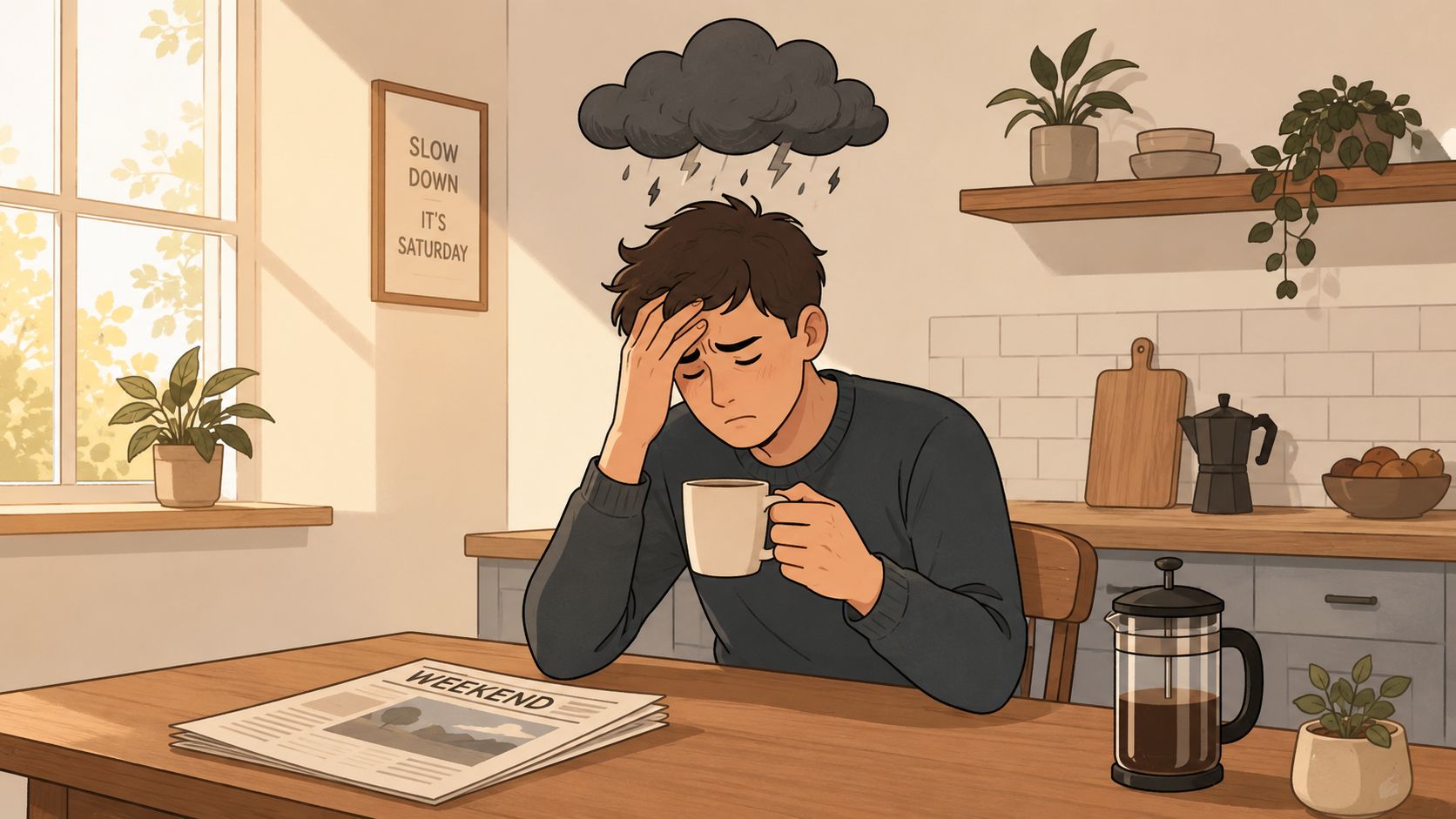
A migraine can hit after a day without your usual coffee and feel like it came out of nowhere. If your routine changed suddenly, such as skipping weekday coffee on a slow weekend, caffeine may be part of the pattern even when nothing else in your day seems different.
Caffeine-withdrawal headache is a recognized diagnosis, not just a casual “coffee headache.” The International Classification of Headache Disorders defines it as a headache that develops within 24 hours of stopping regular caffeine intake of more than 200 mg/day for at least 2 weeks (ICHD-3 criteria and clinical review). Clinical reviews also note that symptoms such as headache, fatigue, and impaired concentration usually begin 12 to 24 hours after withdrawal, can peak around 20 to 51 hours, and may last 2 to 9 days.
That timing matters because migraine and headache are not the same thing. A headache is the pain itself. A migraine attack can also bring photophobia, which means sensitivity to light, phonophobia, which means sensitivity to sound, nausea, and sometimes aura, the neurological symptoms some people get before or during the attack.
The practical question is whether your symptoms keep showing up in the same window after a caffeine change. If they do, that pattern is worth tracking instead of writing off as a random bad day. A tracking app can help you compare your coffee intake with symptom timing, so you can see whether caffeine withdrawal is acting like a personal trigger or whether something else is driving the attack.
Understanding the Caffeine Withdrawal Timeline
The first clue is usually the clock. Caffeine withdrawal often follows a pattern that is clear enough to compare with your own symptoms, which helps separate a random rough day from a likely withdrawal pattern.
The first day after your last cup
Symptoms often start 12 to 24 hours after the last caffeine intake, according to the University of Maryland Medical System. That early stretch can feel like heavy fatigue, mental fog, or a dull pressure that sits behind your eyes. If you already get migraine, that same window can be enough to turn discomfort into a full attack.
The peak window
The pain often becomes more noticeable within the first 48 hours, and the same medical source notes that headache pain may be at its worst around 20 to 51 hours after the last caffeine. A small physiologic study found that after 24 hours without caffeine, 10 of 11 participants developed moderate-to-severe headaches, and symptoms improved within 1 hour after caffeine was given again.
How long it can linger
Symptoms can last 2 to 9 days. That can surprise people who expect the pain to fade quickly after rest, water, or a meal. If you are in the middle of it, the better question is whether the timing fits withdrawal, because that pattern is often more informative than how intense the pain feels in the moment.
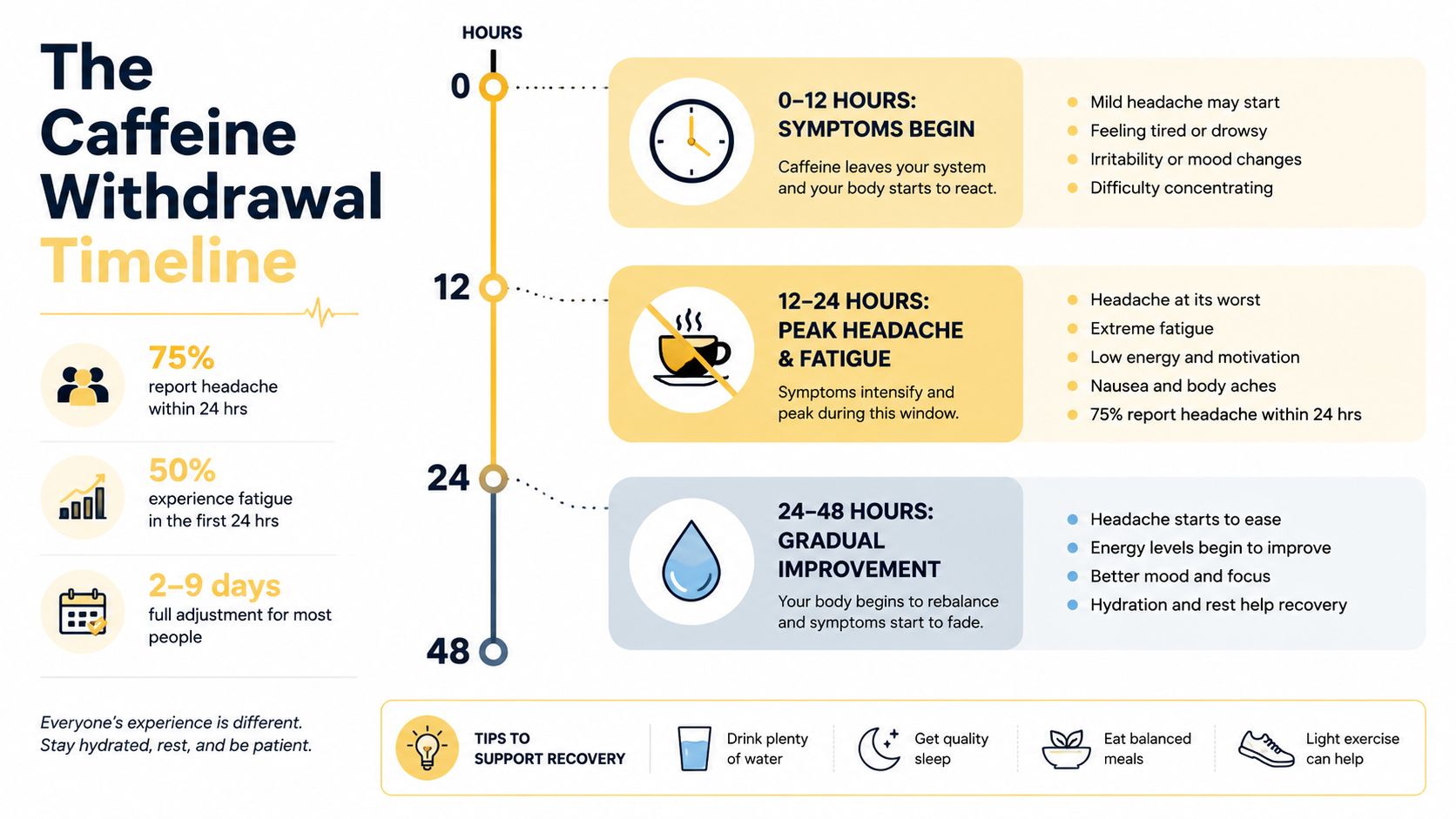
If the attack starts the day after a missed coffee and peaks on the second day, the clock is giving you a clue worth tracking.
A symptom-tracking app can make that clue easier to see. Log the time of your last coffee, the amount you had, and when the headache or migraine symptoms begin. After a few days, the pattern may show whether caffeine withdrawal is your personal trigger or whether something else is lining up with the attacks.
Why Stopping Caffeine Can Trigger a Migraine
Stopping caffeine suddenly can set off a migraine because caffeine changes how your brain and blood vessels act every day. Regular caffeine use blocks adenosine receptors, and adenosine is one of the brain's natural signals for tiredness and relaxation. When caffeine disappears all at once, that balance shifts quickly, and a migraine-prone nervous system may react.
The change can feel a bit like releasing pressure from a stretched rubber band. While caffeine is in your system, things are held in one direction. When it drops away, the system can rebound fast, and that rebound may be enough to trigger an attack in someone who is already susceptible.
What the rebound means in the brain
A physiologic study found that after caffeine abstinence, transcranial Doppler velocities rose in major cerebral arteries, then fell within 30 minutes after caffeine was reintroduced, with symptom relief within 1 hour. That does not mean caffeine treats migraine itself. It shows that withdrawal can shift cerebrovascular tone quickly enough to matter.
That timing helps explain why some people feel the change so sharply. The brain is not just reacting to “less coffee.” It is responding to a sudden change in the signals that help regulate alertness and vessel tone, and those changes can line up with migraine biology.
Why migraine sufferers feel this differently
A migraine trigger study concluded that sudden caffeine cessation is a potent trigger for migraine attacks in migraine patients. The same study also noted that caffeine or caffeine withdrawal was reported as a trigger in a minority of migraineurs, with rates ranging from 2% to 30%, which points to individual vulnerability rather than a rule that applies to everyone.
That is the part many people miss. You may tolerate caffeine well on a regular schedule, then change that schedule, and your migraine threshold drops. The amount matters, but the timing matters too. A steady pattern can be easier on the brain than a cycle of stop, start, and sudden changes.
A symptom-tracking app can help sort out whether this is your pattern. Log the time of your last coffee, how much you had, and when the headache or migraine symptoms begin. After a few days, the record may show a clear withdrawal pattern, or it may show that something else is lining up with the attacks.
A Practical Plan to Safely Reduce Caffeine
Quitting all at once is often the hardest route. A gradual taper gives your nervous system time to adjust and is the safer place to start if caffeine changes have been lighting up your migraine pattern.
Start with a slower reduction
Medical guidance recommends reducing caffeine by about 25% per week to limit withdrawal symptoms (University of Maryland Medical System guidance). A major medical center also advises migraine sufferers to cut back slowly or keep intake consistent, and notes that many people can tolerate around 150 to 200 mg per day (WebMD migraine trigger guidance).
Make the taper easy to follow
You don't need perfection. You need consistency.
- Keep the same wake-up routine: Drink caffeine at the same time each day so your body isn't guessing.
- Reduce the volume first: If you usually make a full mug, pour a smaller one before you change the bean type.
- Use half-caf or mix in decaf: This helps you lower intake without making your routine feel empty.
- Swap one serving: Replace one coffee with tea, then later with a lower-caffeine option if that feels manageable.
- Keep weekends steady: Big weekday-weekend swings can create the kind of stop-start pattern that's hard to spot without tracking.
Follow a simple weekly shape
If you're a regular drinker, start by trimming about a quarter of your usual intake, hold that level for a week, then trim again. If you feel shaky, stay at the current level longer instead of forcing another drop.
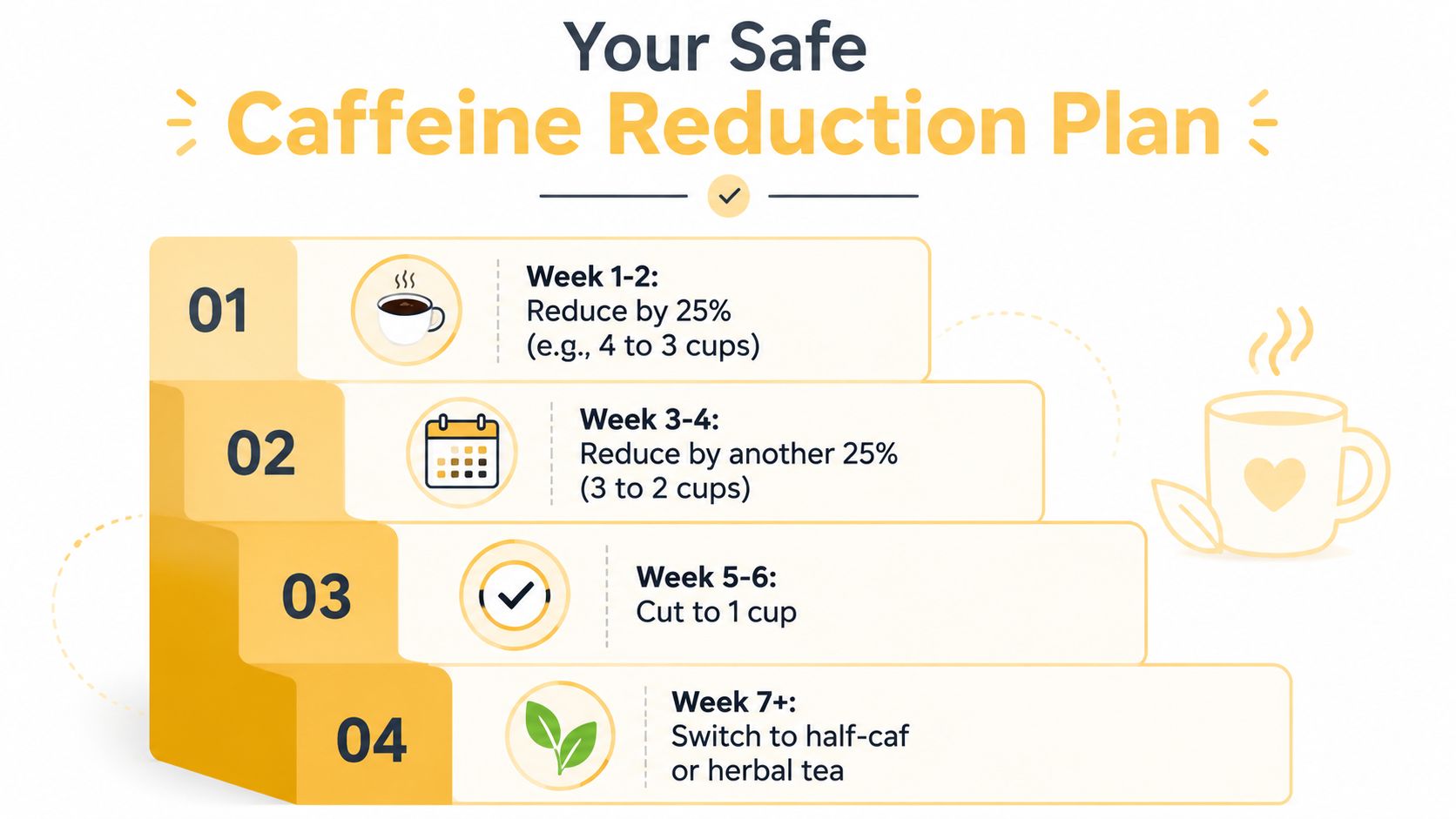
The goal isn't to prove you can suffer through it. The goal is to keep your brain from getting hit with a sudden shift.
How to Manage an Acute Caffeine Withdrawal Migraine
If the pain has already started, treat it like a real migraine attack, not a moral test. The basics matter here. Rest in a dark, quiet room, drink water, and reduce sensory input as much as you can.
If you normally use over-the-counter migraine treatments, follow the label directions and ask a pharmacist or clinician if you're unsure how they fit your health history. Some people also get short-term relief from reintroducing a small amount of caffeine, but that can restart the cycle, so it's better thought of as a tradeoff than a cure.
What you can do right away
Hydration won't erase the attack, but it can support you if withdrawal and missed fluids are both in the mix. Food can help if you haven't eaten, since low intake can make a migraine feel more punishing. Rest is not optional when your nervous system is already overloaded.
Red flags that need immediate medical care
Seek immediate medical care if you have any of the following:
- A sudden, severe thunderclap headache
- Headache with fever and a stiff neck
- New neurological changes, such as weakness, confusion, trouble speaking, or vision loss
- Headache after a head injury
These symptoms are not something to monitor at home while assuming it's just caffeine withdrawal.
This article is for informational purposes and is not medical advice. Consult a healthcare provider for personalized guidance.
Using Data to Uncover Your Caffeine Trigger Pattern
Caffeine becomes tricky when your intake changes without you noticing the pattern. Weekdays, weekends, work travel, long meetings, and late-night deadlines can all shift intake just enough to make a migraine trigger hard to see by memory alone.
That's where tracking helps. If you log caffeine alongside migraine timing, you can compare what happened before the attack, not just what hurt afterward. Over time, that turns a vague suspicion into a pattern you can act on.
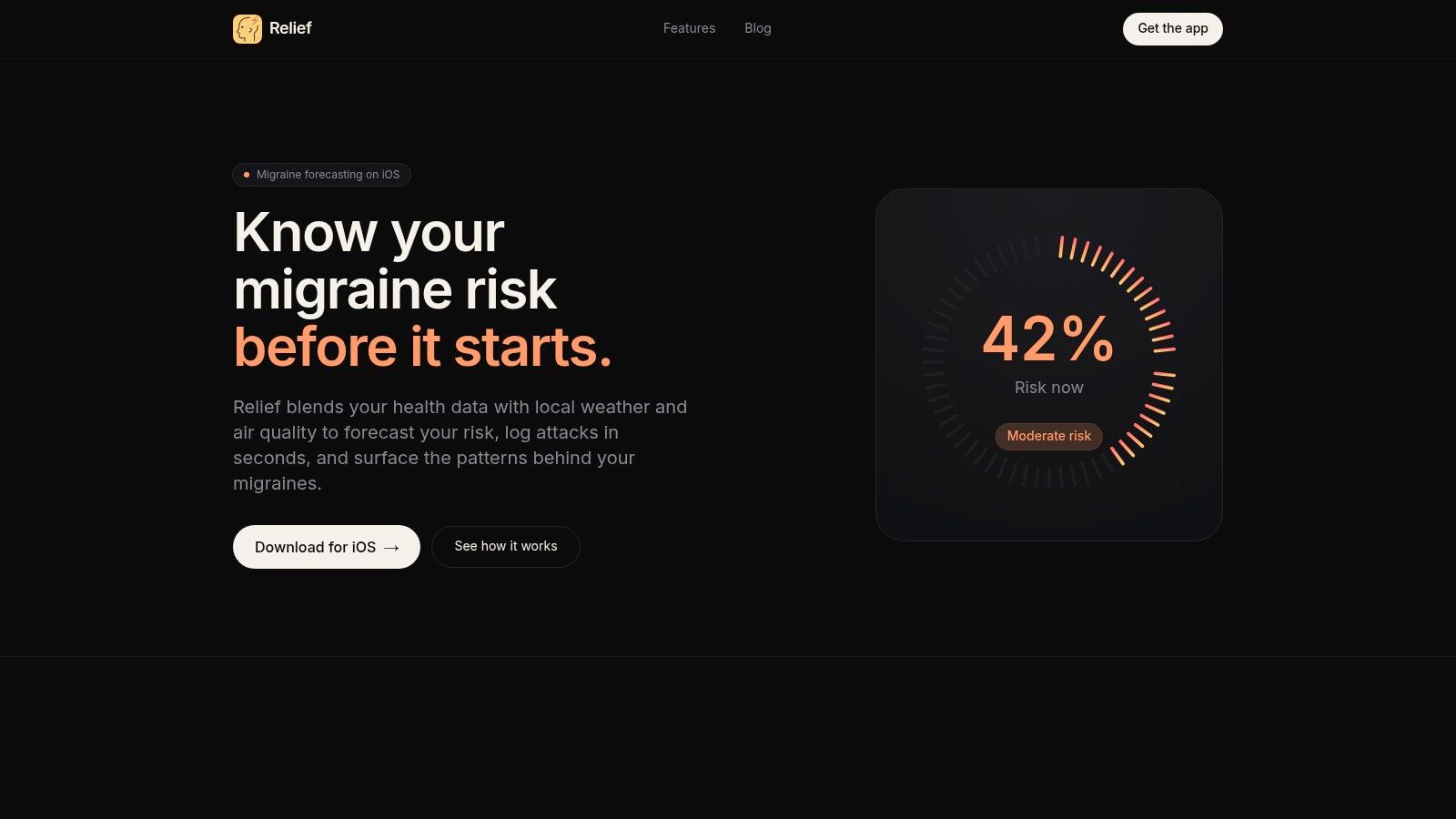
A simple log can capture whether your migraine followed a coffee drop, a skipped afternoon drink, or a weekend reset. If your body reacts to inconsistency more than to caffeine itself, that's useful information, because it points you toward a steadier pattern rather than guessing at random triggers.
The Relief migraine tracking app can help you record symptoms, triggers, and timing in one place, then review the patterns that repeat across attacks. Visit Relief if you want a cleaner way to spot whether caffeine changes line up with your attacks.
Caffeine Migraines vs Medication Overuse Headaches
Caffeine withdrawal and medication-overuse headache can overlap, but they're not the same thing. The difference matters if you use combination headache products that include caffeine, because the product may ease pain quickly while also keeping your caffeine cycle unstable.
The review on caffeine and migraine notes that caffeine overuse may contribute to migraine chronification, sudden withdrawal may trigger attacks, and caffeine-containing combination products can relieve pain fast but reintroduce caffeine and prolong withdrawal (review on caffeine, migraine, and medication cycles). That's the loop to watch for: pain leads to a product, the product contains caffeine, and the next withdrawal becomes part of the next headache.
The safest mindset is simple. Track all caffeine sources, not just coffee. That includes tea, energy drinks, and combination pain relievers, because the total pattern is what your brain experiences.
If you're trying to figure out whether caffeine is part of your migraine pattern, start logging it today instead of relying on memory. Relief can help you see the timing, the consistency, and the trigger overlaps that are easy to miss when you're exhausted. Visit Relief and use your own data to make the next migraine a little less mysterious.


