If you're asking, can allergies cause migraines, the evidence points to a meaningful association: allergic diseases are linked with a 1.52-fold higher risk of migraine overall, while allergic rhinitis has an odds ratio of 2.16, according to a 2025 meta-analysis. Allergies don't directly create the neurological disease of migraine, but allergic inflammation and histamine release can lower your attack threshold and help trigger severe episodes.
You might recognize the pattern. You wake with a blocked nose, itchy eyes, and repeated sneezing. By midday, the pressure has become throbbing head pain, light feels harsh, and nausea makes ordinary tasks difficult.
That experience can be confusing, especially when people dismiss it as “just sinus pressure.” Migraine is more than a headache. It's a neurological condition that may include aura, temporary visual, sensory, or language changes; photophobia, sensitivity to light; nausea; and a period of fatigue or mental fog afterward.
Allergies may be one factor among several, alongside sleep disruption, weather changes, air quality, stress, and individual triggers. Understanding the difference between an association and direct causation can help you track the right signals without blaming yourself or assuming every headache comes from pollen.
Table of Contents
Waking Up to Allergies and Migraine Pain
You open your eyes already congested. Your throat feels irritated, your eyes itch, and one side of your head has begun to pulse. You may recognize the early phase of migraine, called prodrome, before the pain fully arrives. Prodrome can involve fatigue, mood changes, yawning, or difficulty concentrating.
The direct answer is reassuring and nuanced. Allergies don't cause the underlying neurological disease of migraine, but they can act as a significant risk factor or trigger for someone who is already susceptible. Inflammation, histamine, poor sleep from congestion, and exposure to irritating air can combine to make an attack more likely.
That distinction matters because allergy symptoms and migraine symptoms often overlap. Nasal congestion can create facial pressure, while migraine can cause pain around the eyes, forehead, or nose. A migraine may also bring nausea, light sensitivity, sound sensitivity, or pain that worsens with routine movement.
A practical distinction: Nasal symptoms may accompany a migraine, but facial pressure doesn't automatically mean the pain comes from your sinuses.
It's also possible to have both conditions at the same time. An allergy flare can leave you sleeping poorly and feeling inflamed, then a migraine can develop on top of that already strained system. Your experience isn't imaginary, and it isn't necessarily “just stress.”
The useful question isn't only whether pollen caused an attack. Ask whether allergic inflammation, air quality, weather, and disrupted routines appeared together before your migraine. That broader view can reveal patterns that a simple pollen count misses.
The Statistical Link Between Allergies and Migraine
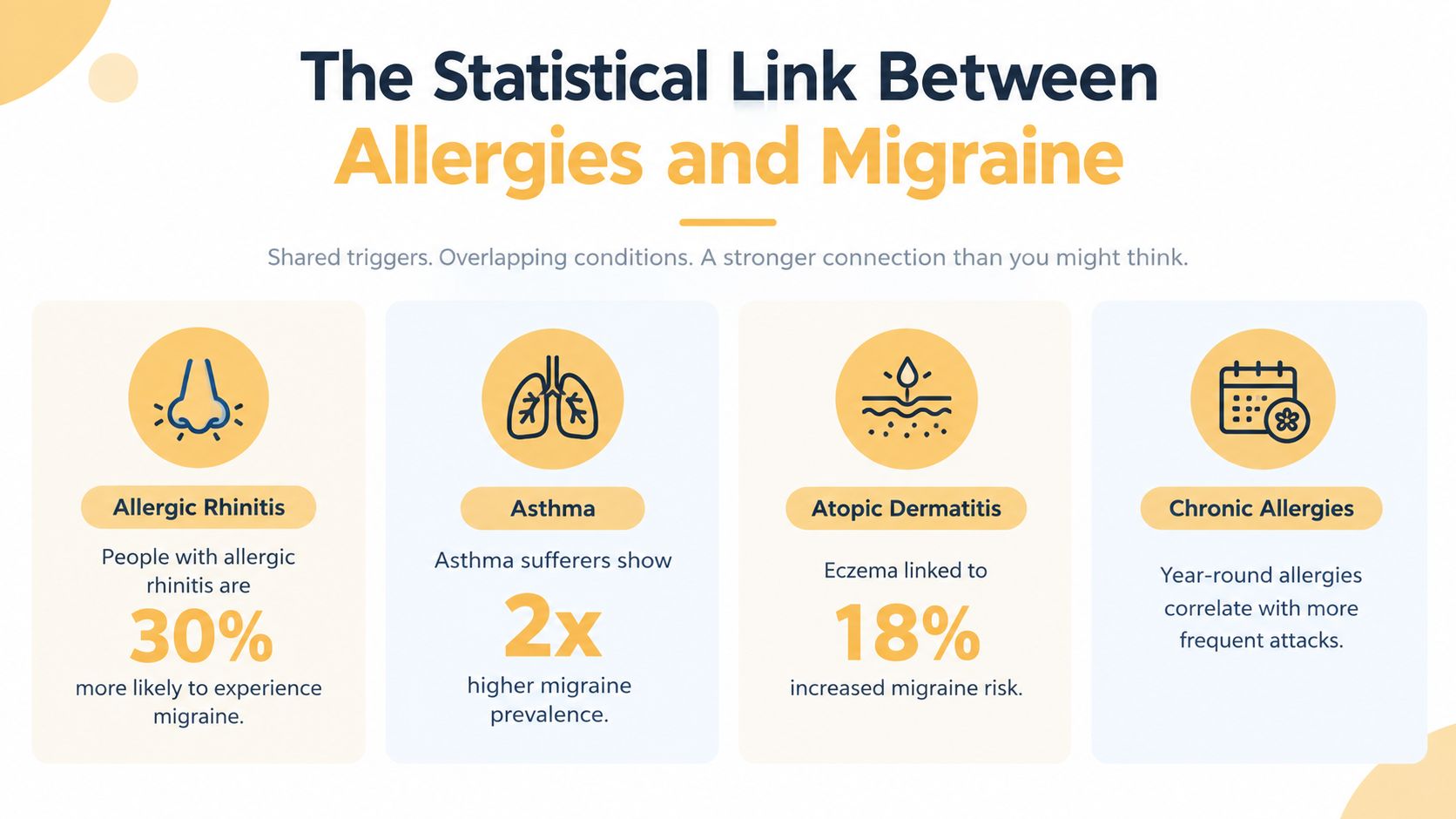
Large population studies support what many people notice in daily life: allergic disease and migraine often occur together. A 2025 meta-analysis pooled 10 studies involving 14,952,953 participants and found that people with allergic diseases had a 1.52-fold higher risk of migraine overall, with a 95% confidence interval of 1.40 to 1.65. The findings show an association, not proof that allergies directly cause every migraine attack. (Read the 2025 meta-analysis on allergic disease and migraine)
The association differed by allergic condition. Allergic rhinitis had an odds ratio of 2.16, asthma had an odds ratio of 1.49, and allergic conjunctivitis had an odds ratio of 1.74, all reported in the same analysis. An odds ratio describes how strongly two conditions are associated in a dataset. It doesn't tell you that one condition produces the other.
Why the numbers need context
An earlier 2006 study of 294 survey respondents reported migraine headaches in 34% of patients with allergic rhinitis, compared with 4% in a non-allergic rhinitis control group. The study calculated an odds ratio of 14.3, which indicates a much higher association in that sample. (Review the study details and later evidence in Frontiers)
However, newer genetic evidence complicates a simple cause-and-effect explanation. A 2024 Mendelian randomization study using 8,547 migraine cases found no significant causal correlation between allergic rhinitis and migraine. It reported odds ratios of 0.816 for any migraine, 0.690 for migraine with aura, and 1.022 for migraine without aura. Those results don't erase the lived connection between the conditions. They suggest that shared biology, overlapping exposures, and other factors may help explain why they frequently coexist.
If allergies and migraine appear together for you, that doesn't mean your attacks are imagined or inevitable. It means allergy symptoms deserve a place in your migraine history, alongside sleep, weather, medication use, and other possible contributors. Tracking those variables can help you and a healthcare provider decide whether the relationship is consistent enough to investigate.
You can use Relief's migraine tracking platform to record symptoms and possible environmental patterns while keeping medical decisions with your healthcare team.
How Histamine and Inflammation Trigger Attacks
Think of your migraine threshold as a cup. Your nervous system can often tolerate an isolated trigger, such as a poor night of sleep or a weather shift. Allergic inflammation may add more liquid to the cup, leaving less room for another trigger before it overflows into an attack.
The process starts when your immune system encounters an allergen. Mast cells, immune cells involved in allergic reactions, become activated and release histamine and other inflammatory mediators. Histamine contributes to the familiar symptoms of allergy, including itching, swelling, and changes in nasal blood flow.
Histamine may also influence migraine biology. A 2023 review describes histamine's vasodilatory effects, meaning it can widen blood vessels, and discusses its possible role in migraine pathophysiology. This doesn't prove that every histamine response produces a migraine, but it offers a plausible explanation for why allergy flares and migraine attacks can overlap. (Read the review on histamine and migraine)
From nasal inflammation to pain sensitivity
The trigeminal nerve carries sensation from the face, sinuses, and head to the brain. During migraine, parts of this pain-processing network can become sensitized, meaning ordinary signals feel more intense or painful.
Research reviews describe a possible mast-cell, histamine, and neuroinflammation pathway. Allergen exposure can activate mast cells, inflammatory mediators can sensitize trigeminal afferents, and these signals may amplify calcitonin gene-related peptide, or CGRP, a molecule involved in migraine pain signaling. (Explore the review of mast cells, histamine, and migraine mechanisms)
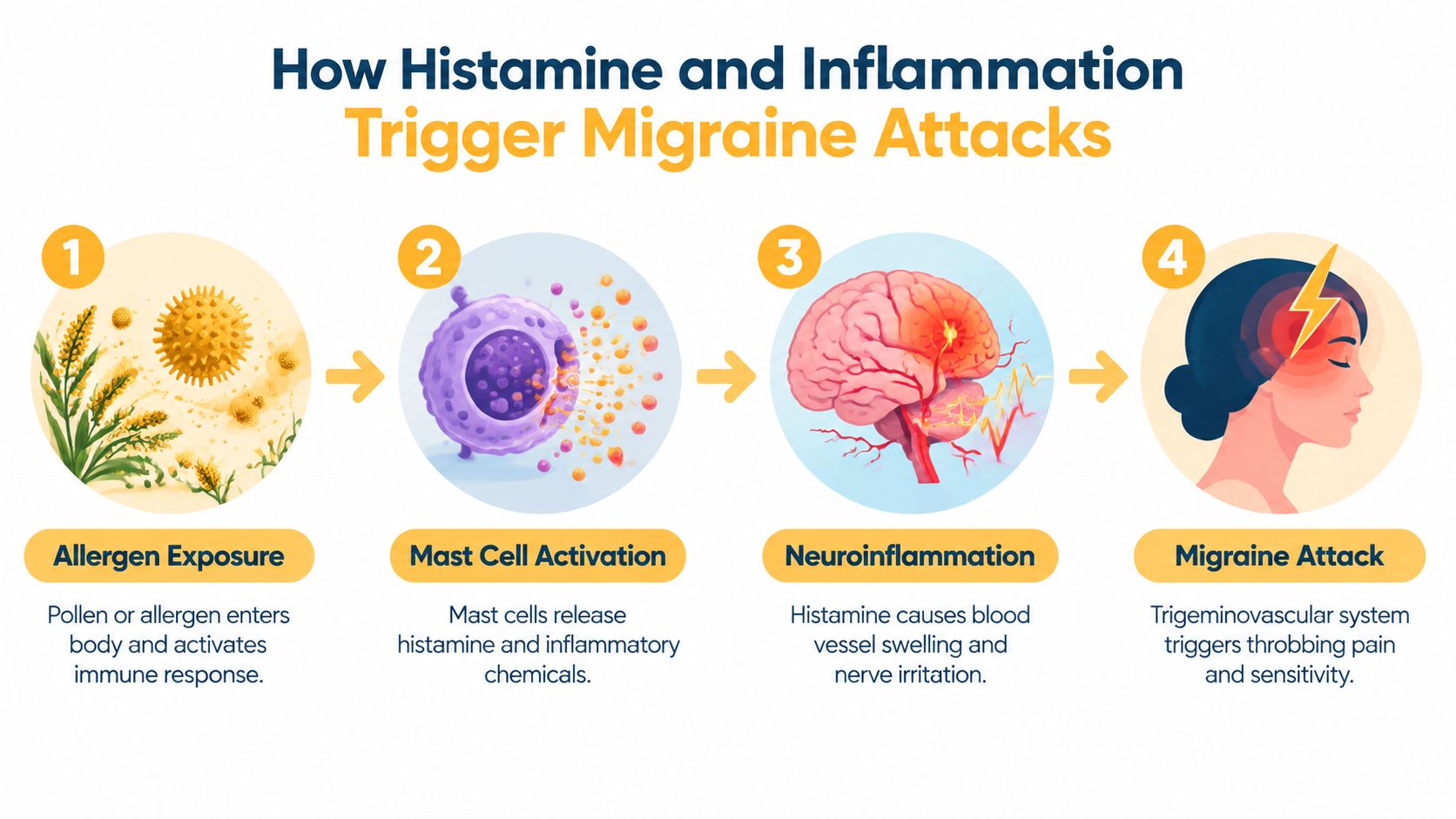
The same pathway helps explain why treating only head pain may not address the whole pattern. If nasal inflammation is repeatedly disturbing sleep or increasing nerve sensitivity, your migraine plan may need to consider both conditions.
This short educational video can provide another visual explanation of the relationship between allergic inflammation and migraine pathways:
Allergic Triggers Versus Environmental Exposures
Not every reaction that feels like an allergy is an allergic reaction. Allergic rhinitis involves an immune response to allergens such as pollen or indoor allergens. Non-allergic rhinitis can involve nasal symptoms after exposure to irritants or environmental changes, without the same classic allergic mechanism.
That difference matters for migraine tracking. You may record a high pollen count, yet the more relevant combination could be polluted air, heat, nasal irritation, and poor sleep. Recent evidence has found migraine prevalence to be higher in both allergic and non-allergic rhinitis, with allergic rhinitis showing the highest prevalence and disability scores in the cited dataset. (Review the evidence on rhinitis subtypes and migraine)
| Feature | Allergic Rhinitis | Non-Allergic / Environmental |
|---|---|---|
| Typical pattern | Symptoms may follow exposure to pollen, dust, mold, or other allergens | Symptoms may follow pollution, strong odors, weather shifts, temperature changes, or dry air |
| Nasal symptoms | Sneezing, itchy nose, runny nose, and itchy or watery eyes are common | Congestion, runny nose, or irritation may occur without prominent itching |
| Migraine relevance | Immune activation and histamine may add inflammatory load | Nasal irritation and environmental stress may still increase sensitivity |
| What to track | Allergen exposure, symptom timing, and allergy-test results if available | Air quality, heat, humidity, wind, pressure changes, and irritants |
| Best interpretation | A repeated pattern may suggest allergic inflammation contributes to attacks | A repeated pattern may suggest the environment, rather than pollen alone, matters |
Air pollution research has reported point estimates mostly above 1.00 for carbon monoxide, nitrogen dioxide, ozone, and particulate matter in relation to migraine, although the strength and consistency of those associations vary. Older systematic evidence found synergy between heat and air pollutants, but not a clear three-way interaction involving heat, pollution, and pollen. The practical lesson is to track combined conditions, not just one environmental number.
Practical Management and Trigger Tracking
Start with the basics that protect your migraine threshold. Keep sleep and meal timing as consistent as your schedule allows, drink fluids regularly, and reduce avoidable irritants during an allergy flare. If congestion disrupts your sleep, discuss allergy-focused options with a healthcare provider rather than assuming every morning headache is a migraine.
Separate management choices
Lifestyle approaches can reduce the number of stressors arriving at once. On days when outdoor air is irritating, you might keep windows closed, change clothes after spending time outside, or use an air purifier in your sleeping area. These steps won't eliminate migraine, but they may reduce exposure for some people.
Over-the-counter options may include antihistamines, saline nasal products, or pain relievers, depending on your symptoms and health history. Read product labeling and ask a pharmacist or clinician about interactions, contraindications, and medication-overuse concerns. Don't start combining products because they target different symptoms.
Prescription treatments can address allergic rhinitis or migraine through different pathways. A clinician may consider nasal treatments, allergy evaluation, migraine-specific acute treatment, or preventive treatment based on your symptoms, medical history, and attack pattern. No prescription option is universally best, and you shouldn't change medication without professional guidance.
Emerging and longer-term approaches include allergy immunotherapy and continued research into immune and CGRP-related mechanisms. These options require an individualized assessment, especially if attacks remain frequent or disabling despite routine care.
Track exposure stacking, not just single triggers
A useful diary entry goes beyond “migraine after pollen.” Record the conditions surrounding the attack:
- Nasal symptoms: Note congestion, sneezing, itchy eyes, drainage, and when they began.
- Outdoor exposure: Record pollen conditions when available, time outside, and contact with suspected allergens.
- Air quality: Include smoke, pollution, strong odors, and whether indoor air felt irritating.
- Weather: Log temperature, humidity, wind, and noticeable weather changes.
- Migraine features: Record pain intensity, aura, nausea, photophobia, sound sensitivity, and duration.
- Context: Include sleep quality, meals, stress, hydration, and medications taken.
A 2017 study of migraine patients found that allergy-test-positive patients had more frequent attacks than allergy-test-negative patients, with a statistically significant difference reported as p = 0.001. The study identified house dust, birch, hazel, olive, nettle, and wheat among common triggers, but that list shouldn't be treated as a universal trigger menu. (Review the allergy-testing study in PubMed)

The goal isn't to avoid everything. It's to identify whether a combination, such as congestion plus poor sleep plus polluted air, appears before your attacks more often than chance would suggest. Relief can help you log symptoms, triggers, medications, and daily conditions so you can review patterns with greater clarity. Learn more about how Relief supports migraine awareness and tracking.
This article is for informational purposes and is not medical advice. Consult a healthcare provider for personalized guidance.
When to Seek Immediate Medical Care
Allergy symptoms can make head and facial pain feel familiar, but familiarity shouldn't override warning signs. Seek immediate medical care for a sudden, severe headache, especially if it reaches maximum intensity rapidly or feels unlike your usual migraine.
Get urgent help if head pain occurs with fever and a stiff neck, confusion, fainting, a seizure, or a new neurological change. Neurological changes can include new weakness, numbness, trouble speaking, severe imbalance, or vision loss that doesn't match your established aura pattern.
You should also seek immediate medical attention for a headache after a head injury, particularly if symptoms worsen or you develop vomiting, unusual drowsiness, confusion, or weakness. Don't wait for allergy medication or your usual migraine routine to work when red flags are present.
Contact a healthcare provider for a non-emergency evaluation if your attacks are changing, becoming more frequent, lasting longer, or interfering with work, sleep, relationships, or daily activities. Bring a record of allergy symptoms, environmental conditions, migraine features, and medication use. That information can help distinguish migraine from other causes of head or facial pain.
This article is for informational purposes and is not medical advice. Consult a healthcare provider for personalized guidance.
Relief helps you log migraine severity, symptoms, possible triggers, medications, pollen, air quality, weather, and other daily conditions in one place. Visit Relief to start identifying whether combined environmental patterns are linked to your attacks and to bring clearer information to your next healthcare conversation.


