Pollen can plausibly trigger migraines, especially if you have allergic rhinitis. A 2025 meta-analysis found that people with allergic rhinitis had 2.94 times the odds of migraine, although pollen isn't a universal trigger and individual responses vary.
If your headaches appear during tree, grass, or weed pollen season, you're not imagining the pattern. The connection may involve allergy-related inflammation, histamine, congestion, disrupted sleep, changing weather, or several factors arriving together. Migraine is a neurological condition, not just a bad headache, and it can include throbbing pain, nausea, photophobia (sensitivity to light), phonophobia (sensitivity to sound), aura, and postdrome, the drained or foggy period after an attack.
This article will help you separate a possible pollen pattern from an allergy-related pressure headache, understand the biology without getting lost in jargon, and build a practical tracking plan. This article is for informational purposes and is not medical advice. Consult a healthcare provider for personalized guidance.
Table of Contents
Can Pollen Trigger Migraines or Is It Something Else
Yes, pollen can contribute to migraine attacks, particularly in people whose immune systems react strongly to seasonal allergens. That doesn't mean every headache during allergy season is a migraine, or that pollen causes every attack. Migraine thresholds differ widely, even among people with similar allergy symptoms.
A useful way to think about it is trigger stacking. Pollen exposure may be one added strain, while poor sleep, dehydration, stress, a weather shift, congestion, or another allergen pushes you past your personal migraine threshold. The pollen may not be the sole cause, but it can be part of the combination.
A large body of evidence supports an allergy and migraine overlap. The association is meaningful, but association isn't proof that pollen directly causes a particular person's attack. Your own symptom pattern still matters.
Practical rule: Treat pollen as a hypothesis to test, not a diagnosis to accept automatically.
Start by asking three questions:
- Do attacks cluster during a particular pollen season?
- Do nasal symptoms, itchy eyes, or sneezing appear before the head pain?
- Do migraines occur more often on days with high pollen, poor sleep, or changing weather?
A pattern is more useful when you record it consistently rather than relying on memory after a painful week. Individual sensitivity to pollen differs, so personal observations can help you and a clinician decide whether allergy management deserves a place in your migraine plan.
How Pollen and the Immune System May Spark Migraine
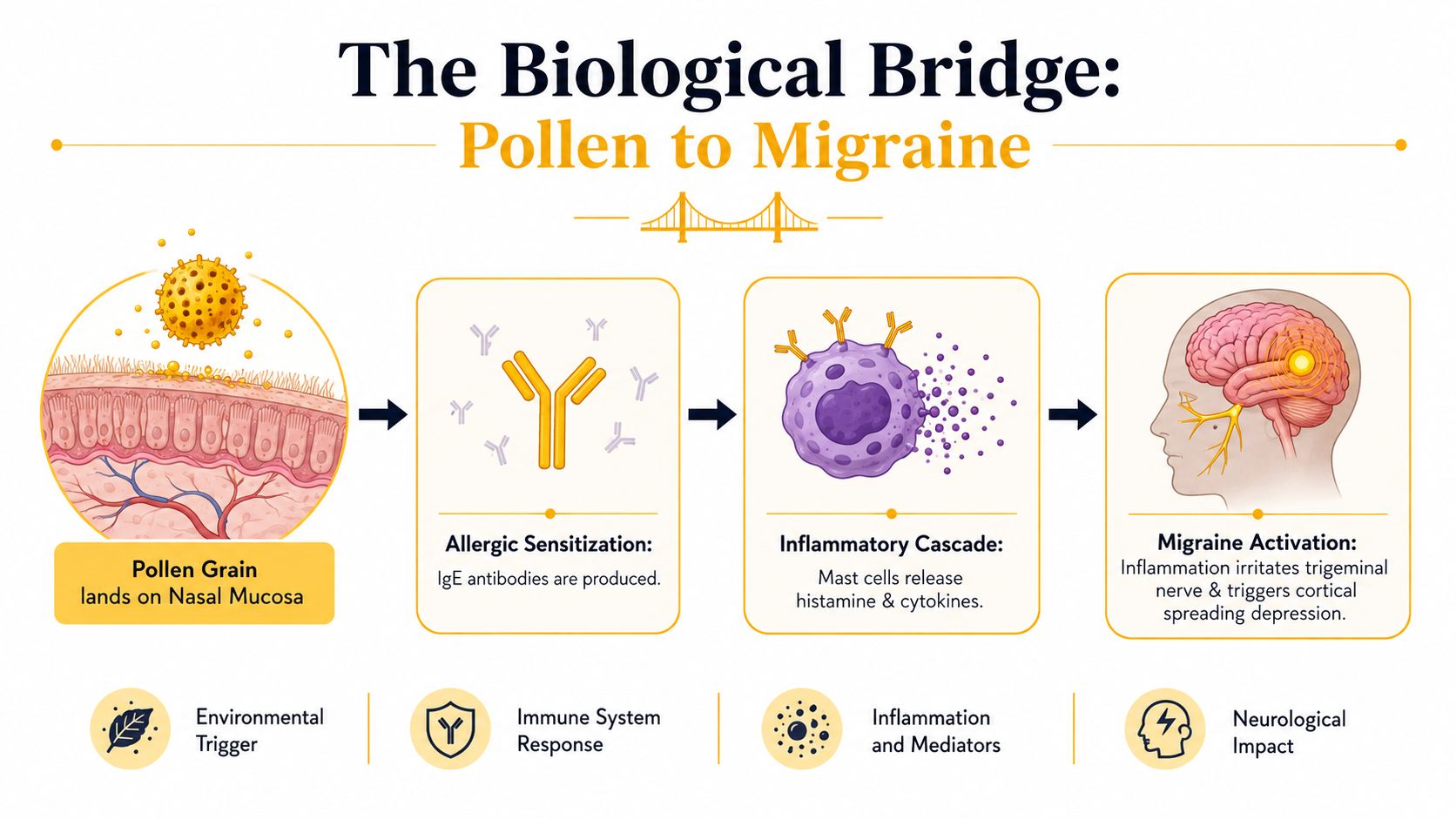
Pollen becomes relevant when your immune system identifies its proteins as a threat. In allergic rhinitis, airborne allergens can activate IgE-related immune responses involving mast cells and basophils. These cells release histamine and other inflammatory mediators, which can contribute to nasal swelling, runny nose, itching, and congestion.
Histamine may also intersect with migraine biology. Clinical literature describes histamine and nitric oxide as involved in vasodilation and neurogenic inflammatory pathways linked with migraine pain, while broader reviews discuss histaminergic signaling and trigeminal pain pathways. You can think of the trigeminal nerve as a pain alarm around the head and face. In some people, allergy activity may make that alarm easier to activate.
Why inflammation isn't the whole story
Migraine involves complex neurological signaling. Trigeminal nerve activation can release inflammatory neuropeptides, including CGRP and substance P, which may amplify pain signaling. Allergy symptoms can also affect breathing comfort, sleep quality, concentration, and daily stress, all of which may influence whether an attack develops.
This is a working biological model, not proof that pollen activates migraine in everyone. Some people with severe seasonal allergies never develop migraines, while someone with migraine may notice attacks after pollen exposure without classic sneezing or itchy eyes. The most sensible conclusion is that allergic inflammation may lower the threshold for susceptible people, especially when other triggers are present.
What the Research Actually Shows About Allergies and Migraine
The strongest evidence connects allergic rhinitis with migraine, rather than proving that a specific pollen grain causes a specific attack. A 2025 systematic review and meta-analysis pooled 11 observational studies involving 4,704,591 participants and reported a pooled migraine odds ratio of 2.94 for people with allergic rhinitis compared with people without it. The reported 95% confidence interval was 2.02 to 4.29, with p < 0.0001, as detailed in the 2025 systematic review and meta-analysis.
The same analysis reported a pooled relative risk of 2.27 from two cohort studies involving 925,360 people with allergic rhinitis and 3,604,807 controls. These findings show a strong association across very large populations, but observational research can't establish that pollen directly caused each migraine.
Earlier clinical observations point in the same direction. A 2023 review of allergy and migraine research described evidence stretching back to at least 1927, including a Finnish prospective study that followed 1,205 children for 15 years and found allergy and asthma were comorbid with the development of headache. The review also discussed a clinical study reporting migraine in 50% of patients with allergic rhinitis versus 18.75% of controls, with 95% of those migraine cases being migraine without aura.
| Study type | Population | Key finding |
|---|---|---|
| Meta-analysis | 11 observational studies, 4,704,591 participants | Allergic rhinitis was associated with migraine, pooled odds ratio 2.94 |
| Cohort evidence | 925,360 people with allergic rhinitis and 3,604,807 controls | Pooled relative risk was 2.27 |
| Prospective childhood study | 1,205 children followed for 15 years | Allergy and asthma were associated with headache development |
| Clinical comparison | Patients with allergic rhinitis and controls | Migraine occurred in 50% versus 18.75% |
The evidence supports pollen as a plausible contributing trigger for some people, not a universal cause. It also means that treating allergy symptoms may be worth discussing with a healthcare professional, particularly when attacks repeatedly coincide with seasonal symptoms.
Allergy Headache vs Migraine How to Tell the Difference
The word “sinus” often gets attached to any headache that occurs with congestion, but facial pressure and migraine can overlap. Use the comparison below as a self-screening tool, not a diagnosis.
| Feature | Allergy headache | Migraine |
|---|---|---|
| Pain quality | Steady pressure, heaviness, or fullness | Throbbing or pulsating pain |
| Typical location | Forehead, cheeks, nose bridge, or behind the eyes | Often one-sided, though it can affect both sides |
| Other symptoms | Sneezing, nasal congestion, runny nose, itchy or watery eyes | Nausea, light sensitivity, sound sensitivity, and sometimes aura |
| Activity | May feel linked to congestion or facial pressure | Movement can make pain feel worse |
| Relief clues | May improve as nasal symptoms settle | Often requires migraine-specific evaluation and management |
An allergy-related headache usually feels like pressure across the face and comes with clear nasal or eye symptoms. Migraine is more likely when the pain pulses and arrives with nausea, photophobia, phonophobia, or visual, sensory, or language symptoms associated with aura.
Mixed presentations are common. Nasal congestion can accompany a migraine, and someone with allergic rhinitis can also experience a genuine migraine attack. A family history of migraine, recurring attacks with similar neurological symptoms, or a postdrome marked by fatigue and brain fog can provide useful context, but none of these features confirms a diagnosis by itself.
Keep notes on location, quality, duration, nasal symptoms, nausea, light sensitivity, sound sensitivity, aura, and what helped. Bring that record to a clinician instead of trying to label every seasonal headache alone.
Tracking Pollen and Your Migraine Pattern
A simple diary can turn “I think pollen triggers me” into a clearer pattern. You don't need perfect data. You need the same core observations recorded often enough to compare lower-exposure and higher-exposure days.
Build the daily record
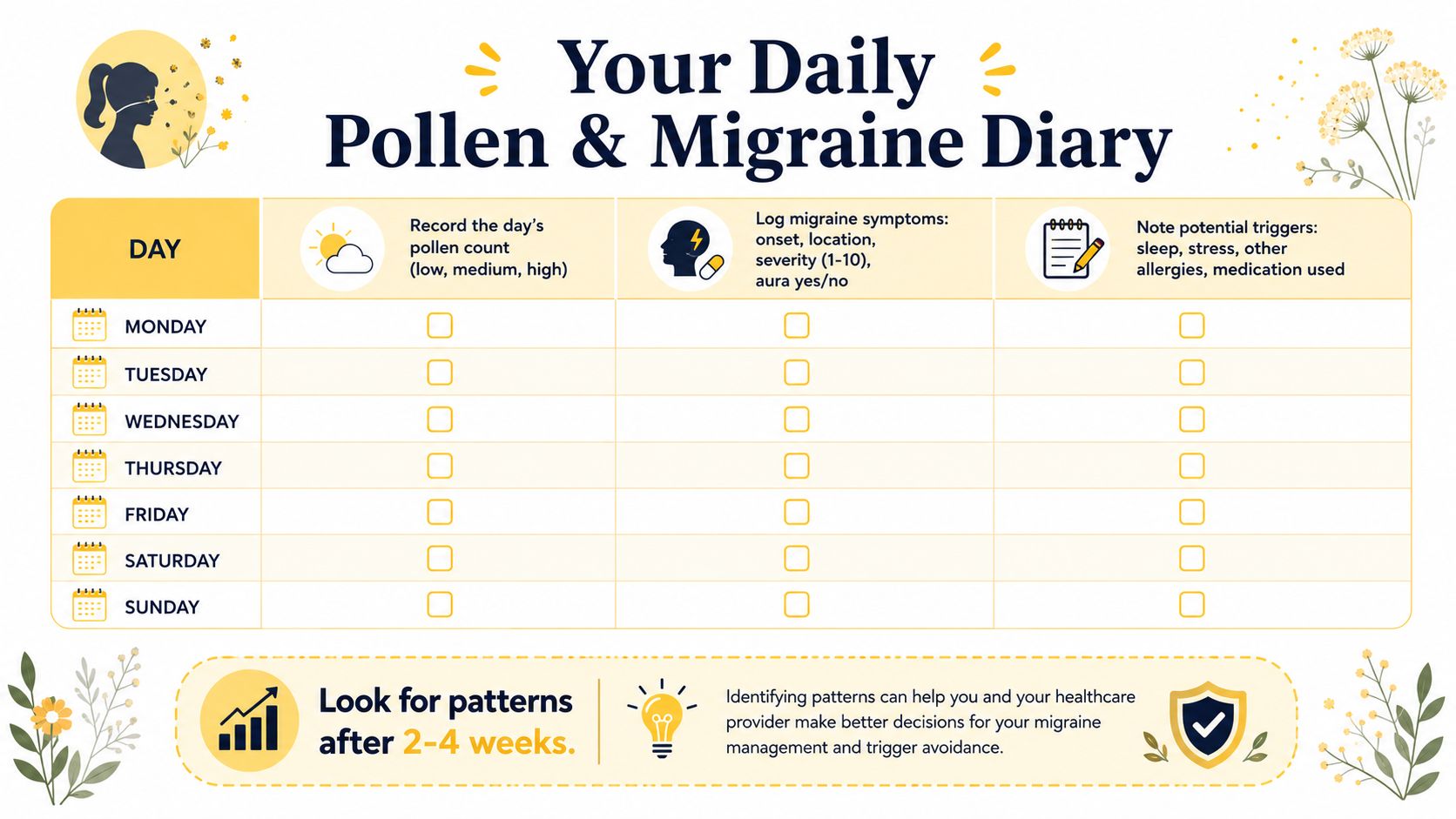
Each day, note:
- Headache status: Record whether you had no headache, a migraine, or another type of head pain.
- Attack details: Log onset time, location, severity, duration, aura, nausea, light sensitivity, and sound sensitivity.
- Allergy symptoms: Mark sneezing, congestion, itchy eyes, cough, or throat irritation.
- Exposure: Check a local pollen forecast and record whether tree, grass, or weed pollen was low, moderate, or high according to the service you use.
- Context: Add sleep quality, meals, hydration, stress, outdoor time, weather changes, humidity, wind, and relevant hormonal or menstrual-cycle information.
- Treatment record: Note any allergy or migraine medication used, without changing treatment based on the diary alone.
Look for timing, not just matching dates
An attack may not begin while you're outdoors. Exposure, congestion, poor sleep, and inflammation can precede pain, so compare symptoms later the same day and on the following day. Review the diary weekly at first, then examine it over a longer period for recurring seasonal patterns.
Your aim isn't to prove pollen is guilty. It's to find out whether pollen repeatedly appears before attacks more often than it appears before migraine-free days.
If tracking becomes exhausting, use a short version: pollen level, migraine yes or no, allergy symptoms, sleep, and weather. Consistency is more useful than a detailed log you abandon after a few days.
Practical Ways to Reduce Pollen Triggered Migraines
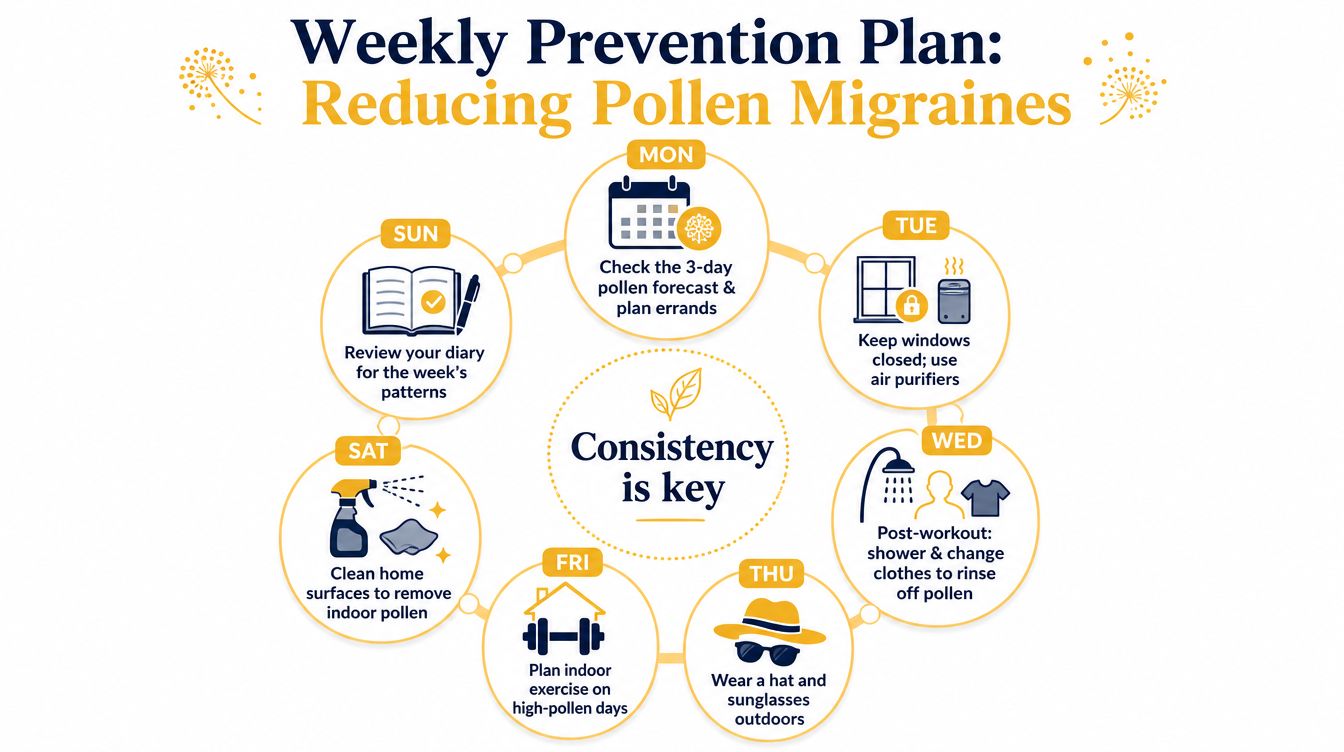
You can reduce exposure without trying to eliminate every outdoor activity. Use forecasts to plan errands, exercise, gardening, or long periods outside when pollen conditions are more manageable for you. A forecast is a planning aid, not a guarantee, because local conditions and your sensitivity vary.
At home, close windows during periods that reliably worsen your symptoms, consider HEPA filtration, and clean surfaces where outdoor particles settle. After time outside, showering and changing clothes can reduce the pollen carried into your bedroom or living space. Sunglasses and a hat may also limit exposure around the eyes and hair.
Keep your migraine threshold steadier
Environmental control works better when basic routines aren't swinging sharply from day to day. Aim for regular sleep, regular meals, adequate hydration, and manageable stress. These steps won't cure migraine, but they may reduce the number of additional pressures acting alongside pollen.
If allergy symptoms are frequent, ask a clinician or pharmacist about appropriate options, including antihistamines or nasal corticosteroids. Medication choice depends on your health history, other treatments, symptom pattern, and possible side effects. Don't start, stop, or combine medicines based only on an article.
This article is for informational purposes and is not medical advice. Consult a healthcare provider for personalized guidance.
When to See a Doctor About Pollen and Migraine
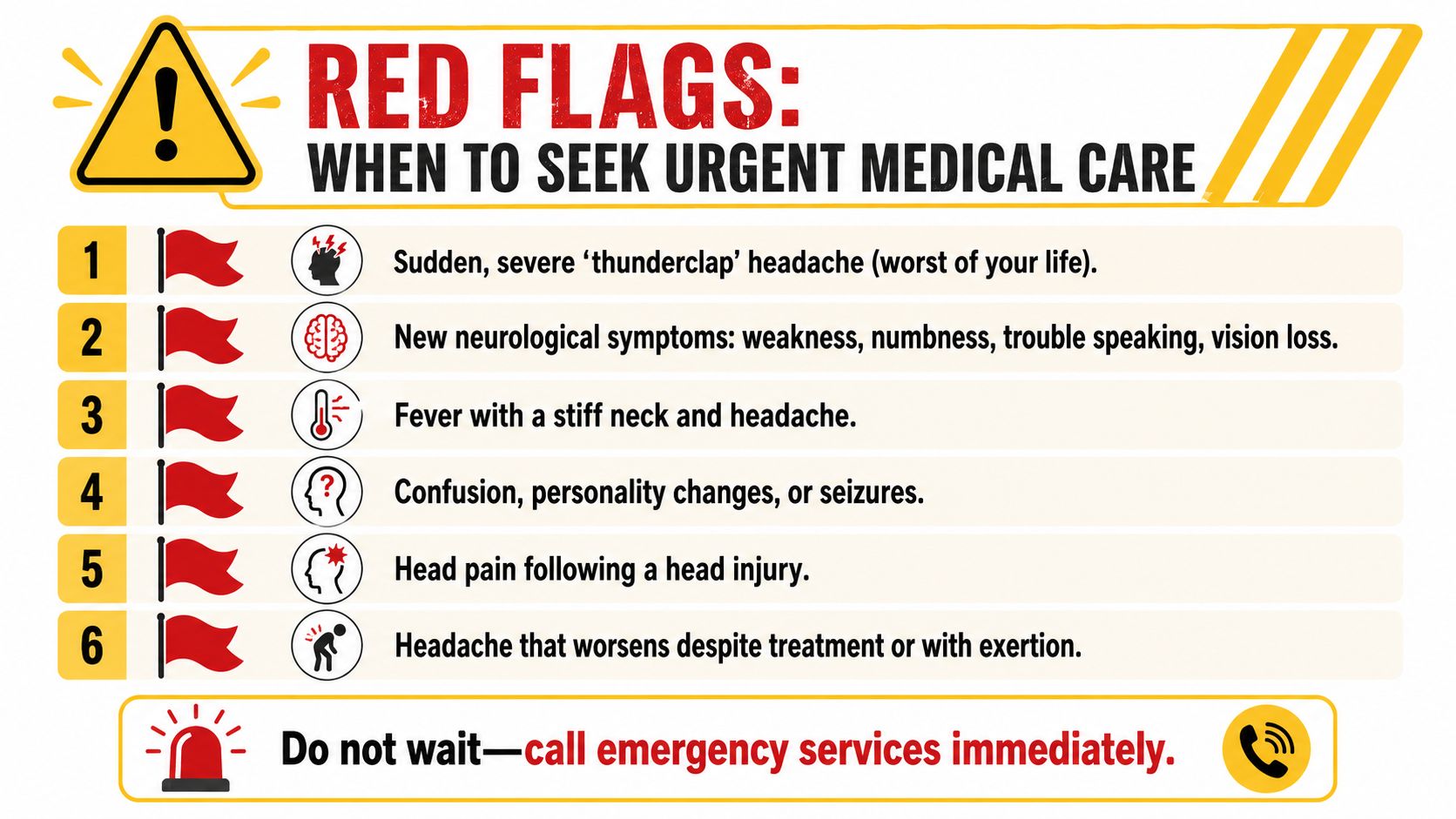
Seek immediate medical care for a sudden, severe headache, especially if it feels like the worst headache of your life. Urgent evaluation is also needed for a headache with fever and a stiff neck, confusion, seizures, new weakness or numbness, trouble speaking, vision loss, or head pain after an injury.
Arrange a routine appointment if attacks are becoming more frequent, pain is escalating, over-the-counter treatment isn't helping, or you suspect medication overuse. Persistent sinus symptoms, or asthma that worsens alongside seasonal allergy symptoms, also deserves medical attention. New migraine-like symptoms later in life should be evaluated rather than assumed to be pollen-related.
Before your appointment, bring a diary showing attack timing, symptoms, suspected pollen exposure, sleep, weather, and treatments used. A healthcare professional can assess whether allergic rhinitis, migraine, sinus disease, or more than one condition may be involved. You can also learn more about ReliefMigraine and its approach to migraine support.
This article is for informational purposes and is not medical advice. Consult a healthcare provider for personalized guidance.
Putting It All Together and Planning Around Pollen
Check your local pollen forecast in the morning, then record whether you experienced allergy symptoms or migraine symptoms during the day. Add sleep, hydration, weather, outdoor exposure, and allergy treatment to the same log. Review the record regularly for repeated sequences, such as high pollen followed by congestion and then migraine, rather than reacting to one isolated attack.
Your pattern may not match someone else's. Personal tracking can help you decide whether pollen deserves attention in your prevention plan and gives a clinician more useful information than a vague seasonal memory.
Tools such as ReliefMigraine can bring pollen, environmental conditions, symptom logs, and migraine patterns into one place, helping you compare exposure with attacks over time. Recognizing a pollen-related pattern won't make migraine predictable overnight, but it can help you plan more carefully during high-pollen periods and respond earlier when familiar warning signs appear.
Relief combines migraine symptom logging with local pollen, weather, and air-quality signals, including an hourly risk forecast to help you spot patterns before an attack disrupts your day. Visit Relief to start tracking pollen exposure alongside your migraine symptoms and build a clearer, more personal prevention routine.


