Coenzyme Q10 and L-carnitine are two supplements with growing evidence for reducing migraine frequency and severity, likely by supporting cellular energy and reducing inflammation in the brain. In one trial of 84 adults with episodic migraine, taking both for 8 weeks reduced migraine severity by 3.03 points, duration by 7.67 days per month, and frequency by 5.42 attacks per month.
If you're here, there's a good chance you've already tried the usual advice. Drink more water. Sleep better. Reduce stress. Avoid your triggers. Sometimes that guidance helps. Sometimes it feels painfully incomplete when you're dealing with a condition that can bring head pain, nausea, photophobia (light sensitivity), phonophobia (sound sensitivity), fatigue, brain fog, and the wiped-out postdrome phase after the main attack ends.
Migraine is not the same as a regular headache. It's a neurological condition, and for many people it involves a whole sequence of symptoms, including prodrome (the early warning phase before pain), aura (temporary neurological symptoms such as visual changes, for some people), the attack itself, and the recovery period.
This article is for informational purposes and is not medical advice. Consult a healthcare provider for personalized guidance.
If your search for answers has left you wary of overhyped supplements, that's understandable. A lot of “energy support” products promise far more than the science can deliver. A more grounded approach is to look at what coenzyme Q10 and L-carnitine may do in migraine, where the evidence is strongest, where the limits are, and how to track whether they help your own pattern with a tool like ReliefMigraine.
Table of Contents
- What CoQ10 seems to do on its own
- What happened when CoQ10 and L-carnitine were combined
- Symptoms beyond pain
- Why more is not always better
- Who should be especially cautious
- When urgent medical care matters more than supplement questions
- Start with your clinician and your migraine pattern
- Choose products carefully and track like it matters
- What to log during a supplement trial
Your Search for Migraine Relief Brought You Here
Some readers arrive at this question after a late-night search during a postdrome fog. Others are trying to make sense of a pattern that keeps interrupting work, parenting, plans, or sleep. Either way, looking into supplements doesn't mean you're gullible. It usually means you're tired of being told to “just manage stress” when your nervous system clearly has other ideas.
What makes coenzyme Q10 and L-carnitine worth discussing is that migraine research has moved beyond vague “energy booster” claims. These compounds are being studied because migraine may involve problems with how the brain produces and uses energy, and because inflammation also appears to play a role.
Migraine care works better when it matches the biology of migraine, not when it treats every symptom like an ordinary headache.
That distinction matters. A headache is a symptom. Migraine is a neurological disorder that can include sensory sensitivity, nausea, dizziness, aura, fatigue, and cognitive slowing, with or without severe head pain.
When people get confused
A lot of supplement content mixes together three very different ideas:
- General wellness claims that sound broad but aren't migraine-specific
- Disease-specific evidence that may not apply to otherwise healthy adults
- Migraine prevention research that deserves its own separate discussion
That muddling leads people to expect too much, too fast.
What a realistic goal looks like
A realistic goal isn't “cure my migraines.” It's more practical than that:
| What you might hope to improve | Why it matters |
|---|---|
| Attack frequency | Fewer migraine days can improve planning and reduce disruption |
| Attack duration | Shorter attacks can mean less lost time and a gentler recovery |
| Severity | Even partial relief may make coping easier |
| Associated symptoms | Nausea, light sensitivity, and sound sensitivity often matter as much as pain |
If you're exploring supplements, the most helpful mindset is curiosity plus caution. You want evidence, not hype. You also want a plan for deciding whether something is helping your migraine pattern, instead of judging based on one good week or one terrible one.
Understanding Coenzyme Q10 and L-Carnitine
Coenzyme Q10 and L-carnitine both relate to energy production, but they don't do the same job. That's one reason they keep coming up together in migraine conversations.
Why these two nutrients get paired together
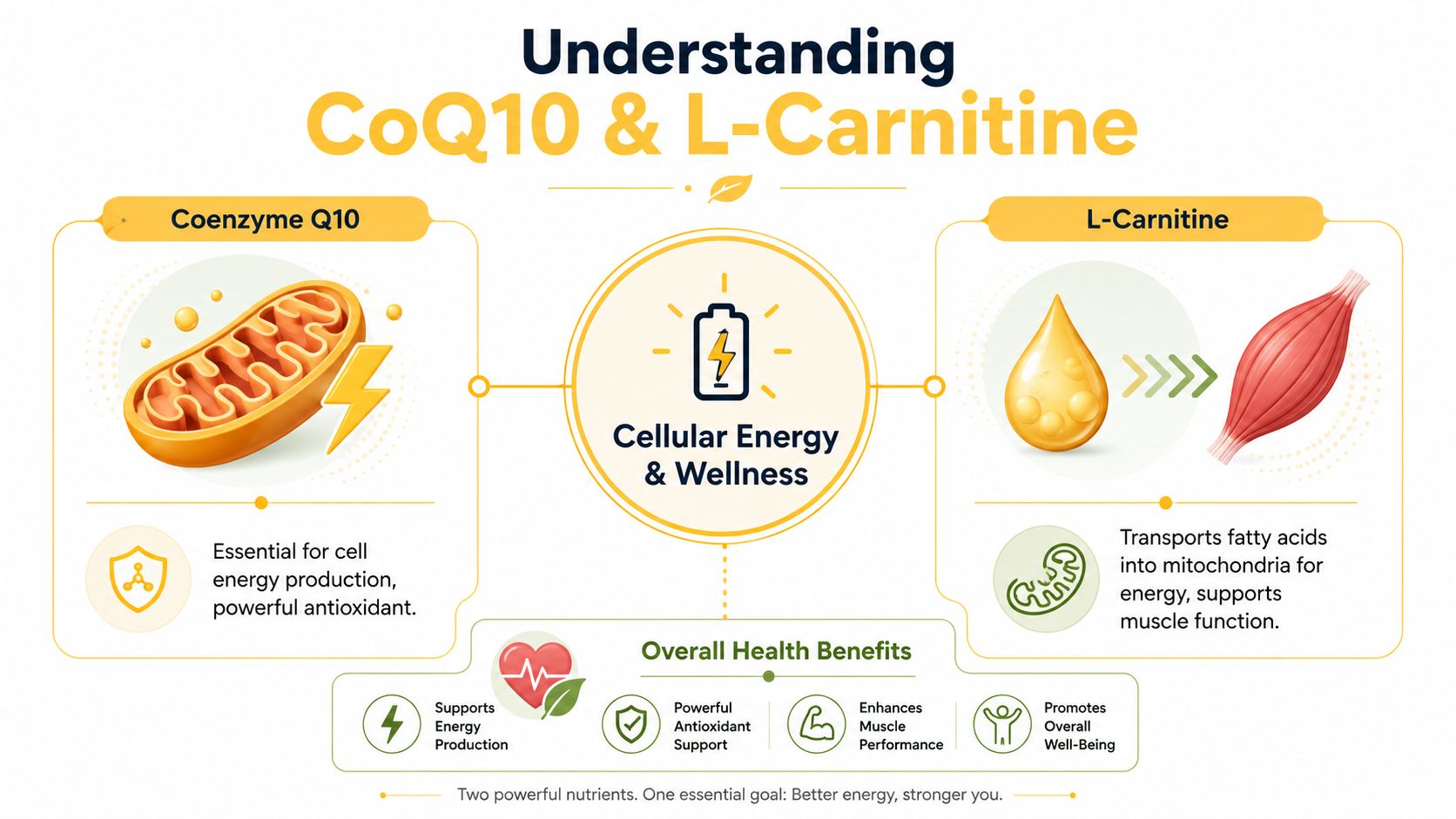
Think of your cells as tiny power plants. Inside them are mitochondria, structures that help turn nutrients into usable energy. Researchers studying migraine have long been interested in whether some people with migraine have brains that are less efficient at meeting energy demands, especially during vulnerable phases.
Coenzyme Q10, often called CoQ10, helps the mitochondria do their work. If you like analogies, you can think of it as a spark plug in the energy system. It supports the process that turns food into cellular energy.
L-carnitine does a different job. It acts more like a fuel truck, helping transport fatty acids into the mitochondria so they can be used for energy.
A simple way to picture the difference
If the mitochondrion were a kitchen:
- CoQ10 helps the stove run
- L-carnitine helps bring ingredients into the kitchen
- Both together may support smoother energy production
That doesn't mean everyone with migraine is deficient in either one. It means researchers have a plausible reason to test them in a condition where energy regulation may be part of the story.
Practical rule: If a supplement is described only as “boosting energy,” that isn't enough. For migraine, the important question is whether it fits known migraine mechanisms.
There's another reason this matters. Outside migraine and certain disease contexts, CoQ10 is often marketed as a universal fix for fatigue. But a review from Oregon State University notes that clinical evidence doesn't show a proven therapeutic benefit for general fatigue or athletic performance in healthy people, and it also reports no benefit in early Parkinson's disease and that 600 mg/day CoQ10 failed to alter functional decline in Huntington's disease in the data it summarizes. That's why migraine-specific evidence is much more useful than broad wellness language when you're deciding what's worth your attention. See the Oregon State University review of Coenzyme Q10.
The Migraine and Energy Metabolism Connection
Many people with migraine know the feeling of energy dropping before the pain peaks. You might notice yawning, mental fuzziness, unusual hunger, irritability, or a leaden fatigue in the prodrome. After the attack, the postdrome can feel like your brain has run a marathon.
Why migraine researchers care about mitochondria
One leading theory is that migraine involves mitochondrial dysfunction, meaning the brain may struggle to produce or use energy efficiently under certain conditions. If your brain has a lower energy reserve, it may also have a lower threshold for an attack.
That doesn't mean every migraine starts the same way. Triggers vary widely. Hormonal shifts, sleep disruption, weather changes, missed meals, sensory overload, and stress letdown can all matter. But the energy-metabolism theory helps explain why these different triggers might all push a vulnerable brain in the same direction.
A useful way to think about it is this: if your brain is already operating with less energy flexibility, it has less room to adapt when something changes.
Where inflammation fits in
Migraine isn't only about energy. Inflammation around pain pathways matters too. According to Migraine Canada's overview of CoQ10 and L-carnitine for migraine prevention, L-carnitine works by modulating inflammatory signaling pathways to attenuate neurogenic inflammation associated with migraine attacks, which is distinct from CoQ10's mitochondrial energy support. The same source notes that when combined, the two have shown synergistic effects in reducing migraine days, severity, and duration more effectively than placebo, and that the combination also lowered blood lactate, a marker tied to impaired cerebral energy metabolism during prodrome and postdrome phases.
That helps answer a common question. Why not just take one “energy” supplement and call it a day? Because the biology being studied isn't one-dimensional. CoQ10 and L-carnitine appear to target related but different parts of the migraine process.
Some migraine symptoms make more sense when you think of migraine as a brain energy problem plus an inflammatory signaling problem, not just a pain problem.
What the Clinical Evidence Suggests for Migraine
The research is promising, but it's not a blank check. The strongest way to read it is: these supplements may help some people reduce migraine burden, especially in prevention, but they aren't guaranteed and they don't replace a full migraine care plan.
What CoQ10 seems to do on its own
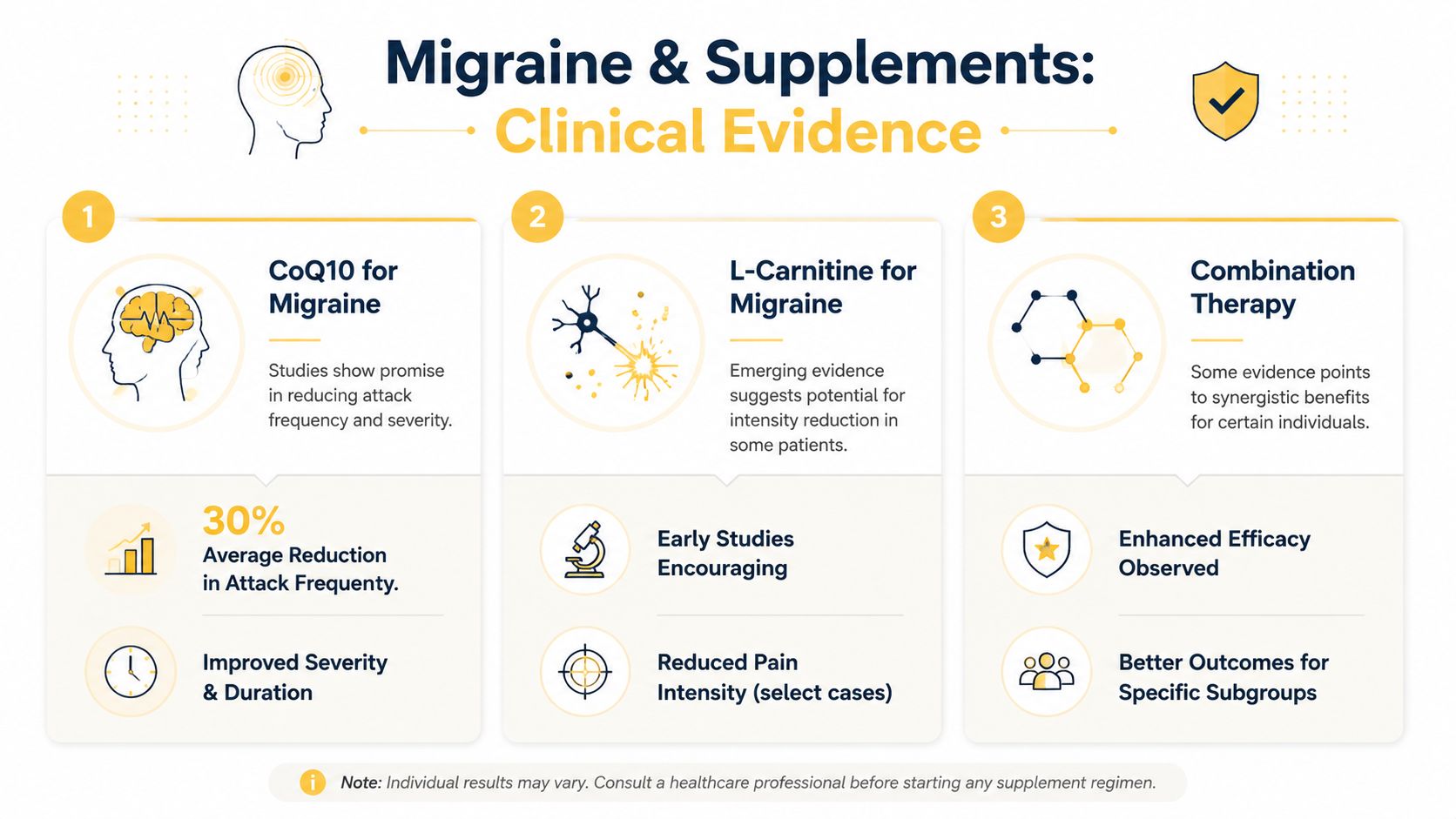
A meta-analysis in BMJ Open found that CoQ10 alone, at doses studied in randomized trials, reduced migraine attack duration by about 0.19 hours per month and frequency by 1.52 attacks per month across six randomized controlled trials involving 371 participants. The same analysis found no statistically significant reduction in headache severity.
That pattern is useful. It suggests CoQ10 may help more with how often attacks happen and how long they last than with dulling pain intensity once an attack is underway.
What happened when CoQ10 and L-carnitine were combined
The combination data is what has drawn a lot of attention. In a double-blind, placebo-controlled PubMed-indexed trial, 84 adults with episodic migraine took 150 mg Coenzyme Q10 twice daily and 100 mg L-carnitine twice daily for 8 weeks. Compared with placebo, they had a statistically significant reduction in:
- Migraine severity by 3.03 points
- Duration by 7.67 days per month
- Frequency by 5.42 attacks per month
The same study also reported a 2.28 mg/dl drop in serum lactate levels, which supports the idea that improving energy metabolism may be connected to symptom improvement.
One trial doesn't settle everything. Still, this is the kind of migraine-specific evidence that matters more than broad claims about “supporting vitality.”
Symptoms beyond pain
Migraine burden isn't just pain severity. For many people, the disabling parts are the nausea, sensory sensitivity, emotional drain, and reduced ability to function normally.
A review in PMC on CoQ10 and migraine reports that Coenzyme Q10 supplementation has been shown to reduce nausea, photophobia, and phonophobia, while also improving quality of life and decreasing anxiety and depressive symptoms in migraine patients, with no serious adverse effects reported across multiple dosing regimens.
That matters because a “successful” preventive approach should ideally make the whole attack less disruptive, not only reduce the pain score.
Safety Dosing and Potential Interactions
Supplements can feel gentler than prescription options, but “natural” doesn't automatically mean simple. A careful approach is part of migraine self-care, not a barrier to it.
Why more is not always better
Migraine studies have used specific dose ranges, and those research doses don't translate into “more must work better.” The more useful question is whether a product has been studied in migraine at all, whether it fits your medical history, and whether your clinician thinks it's appropriate with your current medications.
The image below gives a broad overview of the kinds of dosing ranges often discussed in migraine studies, but it shouldn't replace medical guidance.
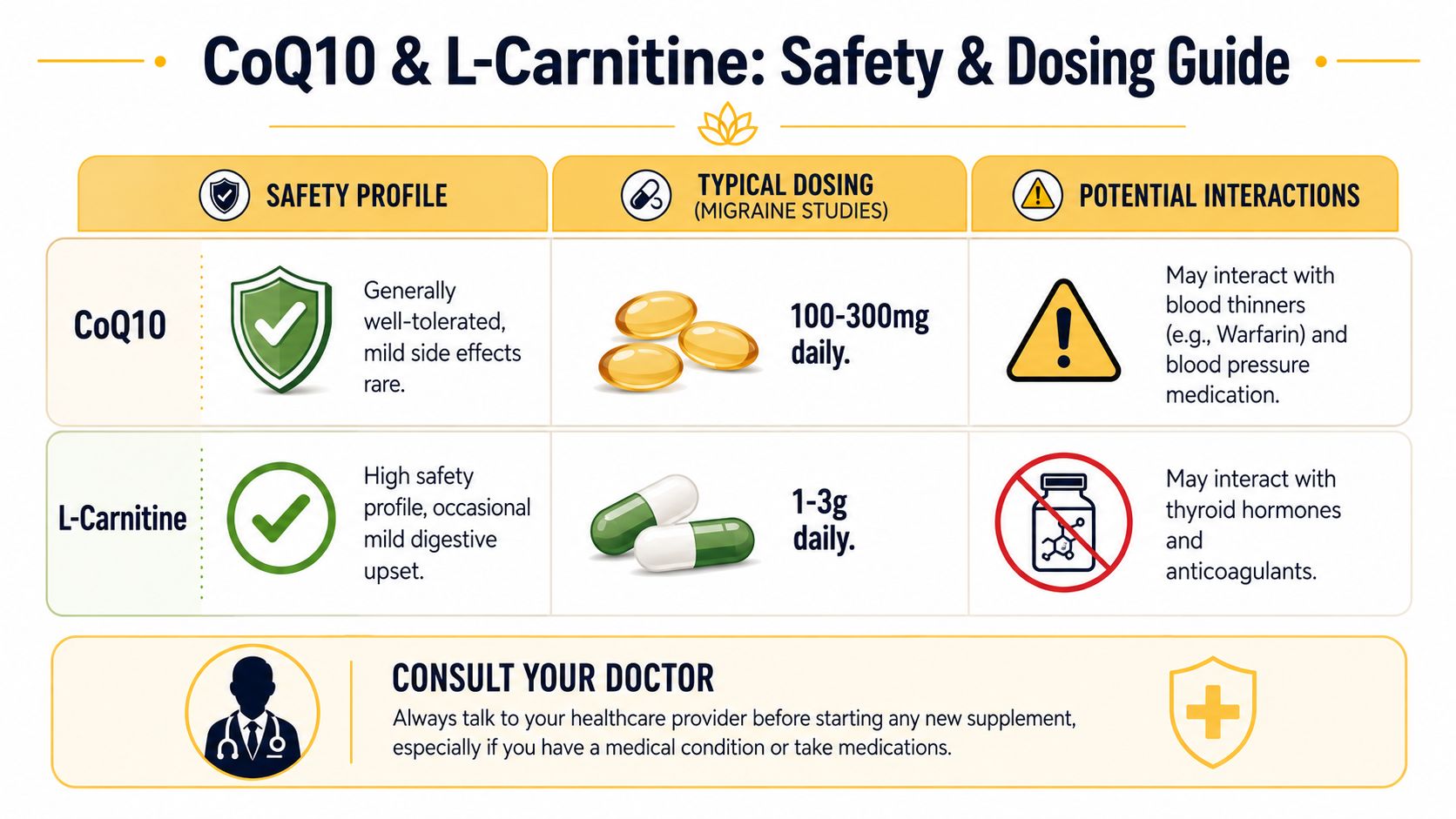
Potential interactions are another reason to slow down. CoQ10 may interact with blood thinners and blood pressure medicines. L-carnitine may interact with thyroid hormones and anticoagulants. If you're pregnant, breastfeeding, managing multiple health conditions, or taking several medications, getting personalized guidance matters even more.
Who should be especially cautious
One of the most important under-discussed cautions involves cancer treatment. According to PeaceHealth's medical topic review on CoQ10, observational studies of 1,134 breast cancer patients found that antioxidant supplements, including CoQ10, taken before and during treatment may correlate with increased recurrence and decreased survival.
That doesn't prove cause and effect. But it does mean blanket advice like “antioxidants are always safe during treatment” is too simplistic.
A second point of caution is expectation-setting. CoQ10 is often marketed as an anti-fatigue supplement for everyone, yet the broader evidence base doesn't support a proven benefit for general fatigue in healthy adults, as noted earlier. So if your main goal is migraine prevention, evaluate these supplements on migraine outcomes, not on broad promises about energy.
Use the same standard for supplements that you'd want for any treatment. What problem is it supposed to help, what evidence supports that use, and what risks matter in your situation?
When urgent medical care matters more than supplement questions
Some symptoms should move you out of “should I try this supplement?” mode and into urgent evaluation.
Seek immediate medical care for:
- Sudden severe headache that peaks fast
- Headache with fever or stiff neck
- New neurological changes such as weakness, confusion, or trouble speaking
- Headache after head injury
Those symptoms need prompt medical assessment.
This article is for informational purposes and is not medical advice. Consult a healthcare provider for personalized guidance.
A Practical Guide to Trying These Supplements
If you and your clinician decide that coenzyme Q10 and L-carnitine are reasonable to consider, a structured trial is much more useful than a casual one.

Start with your clinician and your migraine pattern
Bring a short list of questions to your appointment:
- Medication fit. Could either supplement interact with what you're already taking?
- Migraine type. Does your pattern make a preventive supplement trial reasonable?
- Timing. How long should you assess before deciding it isn't helping?
- Safety. Are there any reasons you personally should avoid one or both?
Migraine varies a lot. Consequently, episodic migraine, chronic migraine, migraine with aura, vestibular migraine, and hemiplegic migraine don't always call for the same plan.
Choose products carefully and track like it matters
Look for third-party testing from groups such as USP or NSF when possible. Quality control is not exciting, but it can make the difference between a meaningful trial and a confusing one.
Then keep the trial clean. If possible, avoid changing five other things at once. New sleep schedule, new caffeine habit, new supplement stack, and a medication change all in the same month can make it hard to tell what did what.
A supplement trial only teaches you something if your tracking is detailed enough to separate hope from a real pattern.
A short explainer can help if you want a visual overview before you start logging details.
What to log during a supplement trial
Track the outcomes that matter most to daily life, not just whether you had a migraine.
- Frequency. How many migraine attacks or migraine days are you having?
- Severity. Is the pain milder, the same, or worse?
- Duration. Are attacks ending sooner?
- Associated symptoms. Note nausea, photophobia, phonophobia, dizziness, and fatigue.
- Function. Could you work, think clearly, drive, care for family, or exercise?
- Side effects. Record anything new, even if it seems minor.
That broader symptom picture matters because CoQ10 has been associated not only with prevention-related benefits but also with reductions in nausea, photophobia, and phonophobia, along with improved quality of life and fewer anxiety and depressive symptoms in migraine patients, as noted in the earlier review.
A practical checklist helps many people stay consistent:
- Start only after you know your recent baseline pattern.
- Use the same symptom terms each time you log.
- Review trends over weeks, not day by day.
- Share your notes with your healthcare provider before deciding whether to continue.
If you want a simpler way to notice patterns in symptoms, triggers, and migraine timing while you trial changes, Relief can help you log attacks consistently and spot whether your migraine pattern is shifting.


