If bright light, screens, or supermarket fluorescents can send your migraine into a spiral, you're not alone. FL-41 lenses for migraines are a rose-tinted, wavelength-selective filter designed to reduce the specific light band that tends to aggravate photophobia, especially around 480 to 520 nm. They're not a cure, and they're not just tinted sunglasses, but they can be a practical tool for some people whose attacks are strongly tied to light exposure.
This article is for informational purposes and is not medical advice. Consult a healthcare provider for personalized guidance. If you ever get a sudden severe headache, headache with fever or a stiff neck, neurological changes, or headache after head injury, seek immediate medical care.
Table of Contents
- What FL-41 Lenses Are and Why Migraine Sufferers Try Them
- How FL-41 Works and What Photophobia Really Means
- What those numbers do and don't mean
What FL-41 Lenses Are and Why Migraine Sufferers Try Them
FL-41 is a tinted lens people try when light feels like more than brightness, it feels like a trigger. The point is not to make the world dimmer in a general way. It is to filter the wavelengths that tend to feel most aggravating in migraine, especially the blue-green band that can make office lighting, screens, and a sunny drive feel harsher than they should.
FL-41 first emerged in the early 1990s in the UK as a response to discomfort from fluorescent lighting. Since then, it has become one of the most studied tinted-lens approaches for photophobia and migraine-related visual discomfort, and major medical summaries describe it as a rose-pink tint that selectively blocks the troublesome blue-green band rather than the whole visible spectrum FL-41 treatment overview.
That distinction matters because two lenses can both look pink and still behave differently. One pair may filter more of the wavelengths that bother you, while another may only soften brightness in a way that feels pleasant but not especially useful. FL-41 works more like a targeted filter than a shade, so it is often discussed for indoor fluorescent environments, screen-heavy work, and other predictable light-trigger settings where “less bright” is not the same as “less irritating.”
A useful way to judge it is by the setting, not the label. If your worst attacks cluster around glare, flicker, or indoor artificial light, FL-41 is worth understanding. If your migraine pattern is driven more by other triggers, the tint may still help, but it is less likely to handle the whole problem on its own.
ReliefMigraine can be useful here because the question is not whether a lens is “good,” it is whether it matches your own trigger pattern. ReliefMigraine helps you track those patterns, and that matters because a lot of people try one pair of glasses and give up too soon, when the better move is to test the tint in the exact settings that usually set them off.
How FL-41 Works and What Photophobia Really Means
Think of FL-41 like noise-canceling headphones for one band of light, not blackout curtains for everything. It doesn't make the world dark, it selectively quiets the blue-green range around 480 to 520 nm that's often tied to migraine-related visual sensitivity FL-41 spectral filtering explanation.
That's why the word photophobia matters. Photophobia means light sensitivity, and in migraine it can show up before an attack, during an attack, or as lingering irritation afterward. Aura is a temporary neurological symptom, often visual, such as flashing lights or blind spots. Prodrome is the early pre-attack phase when your body starts hinting that a migraine is coming. Postdrome is the after-phase, when you may feel foggy, tender, or wiped out.
The reason FL-41 gets attention is that it targets a band overlapping with retinal pathways implicated in migraine photophobia. The idea isn't that blue light is evil in general. It's that some people's nervous systems react badly to a fairly specific slice of light, especially in fluorescent and LED-heavy spaces.
A few people expect an instant “I can finally see normally again” moment. Sometimes the difference is subtler, like less harshness, less squinting, or fewer moments when you feel the room is working against you.
Simple test: if a tint helps most when the environment is bright, flickery, or high contrast, you're probably testing a light-management tool, not a general headache fix.
That distinction is important because migraine is not the same thing as a regular headache. Migraine is a neurological disorder with phases, sensory symptoms, and trigger patterns. Headache is only one possible part of it, and FL-41 makes the most sense when light is a meaningful piece of the picture.
What the Research Says About FL-41 for Migraine
The research story starts small, and that is still useful. Early pediatric work summarized in later medical reviews reported that 20 children with migraine who wore rose-tinted or FL-41-style lenses went from about 6 migraines per month to fewer than 2 over up to 4 months of follow-up medical review summary. The same review line also describes a 74% reduction in migraine frequency over 4 weeks in a 30-patient chronic migraine sample medical review summary.
What those numbers do and don't mean
The sample sizes are small, so nobody should treat those results as proof that FL-41 works for everyone. They do show something useful, though. Some people with light-linked migraine patterns had measurable improvement, which is enough to justify a careful trial when photophobia is a big part of the problem.
Independent neurology guidance also cites a 2016 placebo comparison in which people wearing FL-41 sunglasses had less light sensitivity than placebo neurology institute guidance. Recent clinical work adds a different kind of evidence. In a 2024 PMC study, 76% of patients with chronic ocular pain, dry-eye symptoms, and photophobia reported clinically significant improvement in light-evoked unpleasantness with FL-41 use, and the researchers also observed changes in brain activity linked to pain processing PMC study.
That history matters because FL-41 has moved from a practical fix for fluorescent discomfort into migraine and photophobia research, and now into studies of neural processing as well as comfort. It is more than a style choice. It is still not a universal fix.
| Lens Type | Wavelengths Filtered | Best For | Key Limitation |
|---|---|---|---|
| FL-41 | Around 480 to 520 nm, with some sources describing broader selective blocking | Migraine-related photophobia, fluorescent-light intolerance, screen-heavy environments | Results vary by person and by product design |
| Dark sunglasses | Broad reduction of visible light | Outdoor brightness and glare | Doesn't selectively target trigger wavelengths, can be too dark indoors |
| Generic blue-blocking lenses | Often a broader high-energy visible range | General screen comfort | May miss the more migraine-relevant band |
| Clip-on tints | Depends on the clip-on and base lens | Quick on-off convenience | Quality and optical consistency can vary |
| Newer precision tints | Selective wavelength filtering | People seeking individualized light management | Product claims and real performance may differ |
FL-41 Compared to Other Light-Management Options

FL-41 sits in a middle ground that's easy to misunderstand. It's more targeted than generic blue-light glasses, but less blunt than dark sunglasses. That middle ground is why some people find it easier to wear indoors, especially when they still need to see colleagues, paperwork, or screens clearly.
The biggest comparison point is specificity. Standard blue-light lenses often aim at a wider high-energy visible range, while FL-41 focuses on the blue-green band more closely linked to migraine photophobia. Newer precision tints, including products marketed around selective wavelength filtering, point in the same direction, but the details matter because two lenses that sound similar may not behave the same in real life.
How the tradeoffs look in practice
- Dark sunglasses: good for cutting total brightness outdoors, not great if you're trying to work inside without turning the room into twilight.
- Generic blue-blockers: often useful for general screen comfort, but they may not reach the migraine-relevant wavelength range as precisely.
- Clip-ons: convenient if you wear prescription frames, but the optical quality can vary.
- Precision tints: promising for personalized light management, though you still need to verify what they filter.
A newer source on tinted lenses notes that the field is moving toward more individualized light management, including alternatives such as Avulux, which underscores a broader point. Migraine glasses are no longer just about “making things pink,” they're about matching the filter to the visual problem.
The practical question isn't which category sounds smartest. It's which one fits your daily environment. If your worst hours are spent under office fluorescents, FL-41 may make more sense than a dark outdoor tint. If your worst symptom is bright daylight glare, you may need a different setup or a layered approach.
Who Is Most Likely to Benefit From FL-41
Not every migraine pattern is driven by light, and that's where a lot of online advice gets sloppy. The clearest signals for FL-41 are in people with prominent photophobia, those who react badly to fluorescent or harsh artificial light, and some pediatric or screen-sensitive cases. If your attacks are reliably worse in bright indoor spaces, this is the lens category most worth trialing.
FL-41 is usually more of a preventive tool than an acute rescue. That means it tends to make more sense before exposure to a known trigger, like a long workday under fluorescents or a car trip in intense daylight, rather than as something you throw on after pain is already peaking. One source also notes it may help during light exposure without being clearly effective once an attack is fully underway migraine lens guidance.
When FL-41 is less likely to be the star
If your attacks are mostly tied to hormonal patterns, vestibular symptoms, food triggers, or other non-light drivers, FL-41 may still reduce discomfort, but it probably won't change everything. That doesn't mean the lens failed. It may just mean light wasn't the main lever in your migraine pattern.
Here's the useful mindset shift. Don't ask, “Do FL-41 lenses work?” Ask, “Do my migraines get worse in the exact settings FL-41 is designed to blunt?”
That question is more honest and more actionable. It also keeps you from expecting a single pair of glasses to solve a multi-trigger disorder. Migraine usually isn't one thing, and light management is only one part of the picture.
A practical fitting mindset
Choose a lens based on the environment you're trying to control, then test it in that same environment. A light indoor tint may be a better first trial than a very dark shade, because it lets you judge whether the filter helps without making the world too dim to function in.
How to Get Fitted, Choose a Lens, and Use It Day to Day
The first decision is whether you need prescription lenses or can test an over-the-counter pair first. If you already wear glasses, ask an optometrist whether FL-41 can be made into your prescription, what tint specification is being used, what lens material is involved, how the frame will sit on your face, and what the return policy is if the color or comfort does not fit your needs.
That detail matters more than people expect. A true FL-41 lens is not just “pink.” Tint can vary by manufacturer, lens material, and application method, so two products sold as FL-41 may not perform the same migraine lens guidance. If the seller cannot explain the filter clearly, treat that as a warning sign.
What to ask before you buy
- Tint verification: ask how the lens was identified as FL-41, not just described as rose-colored.
- Material choice: check whether the lens can be made in your needed prescription without distorting vision.
- Fit and coverage: make sure the frame blocks your main light angles without digging into your nose or temples.
- Trial window: give yourself 2 to 4 weeks of honest use before deciding whether it is helping.
- Use log: note where you wore them, for how long, and what the next day felt like.
Use them where the light is most predictable and most annoying. That can mean indoor fluorescents, screen-heavy work, or car rides, depending on your triggers. If you only wear them once in a random setting, you will probably learn very little.
Practical rule: do not judge FL-41 by a single afternoon. Judge it by the pattern across a few weeks, in the environments that usually bother you most.
A simple trial log works better than memory. Write down the light setting, how long you wore the lenses, and whether the next 24 hours felt calmer, unchanged, or worse. If the tint helps, you will usually notice the benefit in your real-world settings before you can explain it neatly.
| Step | What to Do | Why It Matters |
|---|---|---|
| Identify the trigger setting | Pick one environment, like office lighting or screen work | You cannot test a lens if the light exposure keeps changing |
| Verify the tint | Confirm it is a genuine FL-41-style filter | Rose color alone does not prove performance |
| Check prescription needs | Match the lens to your visual correction needs | Comfort matters if you will wear it often |
| Trial consistently | Wear it in the same settings for 2 to 4 weeks | Short tests can miss gradual benefit |
| Log symptoms | Note light exposure and the next day's migraine pattern | Helps separate real benefit from a lucky day |
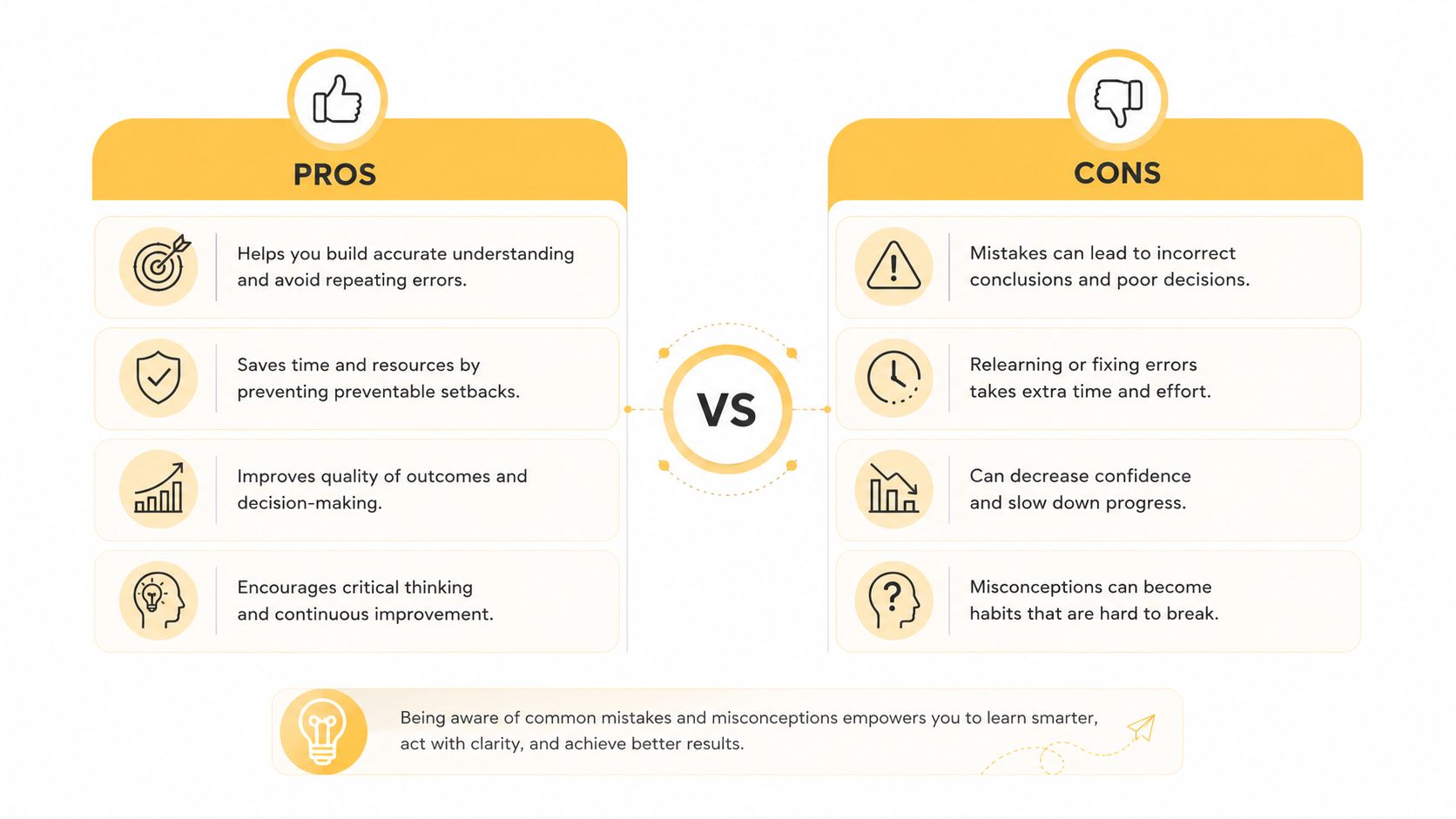
Common Mistakes and Misconceptions to Avoid
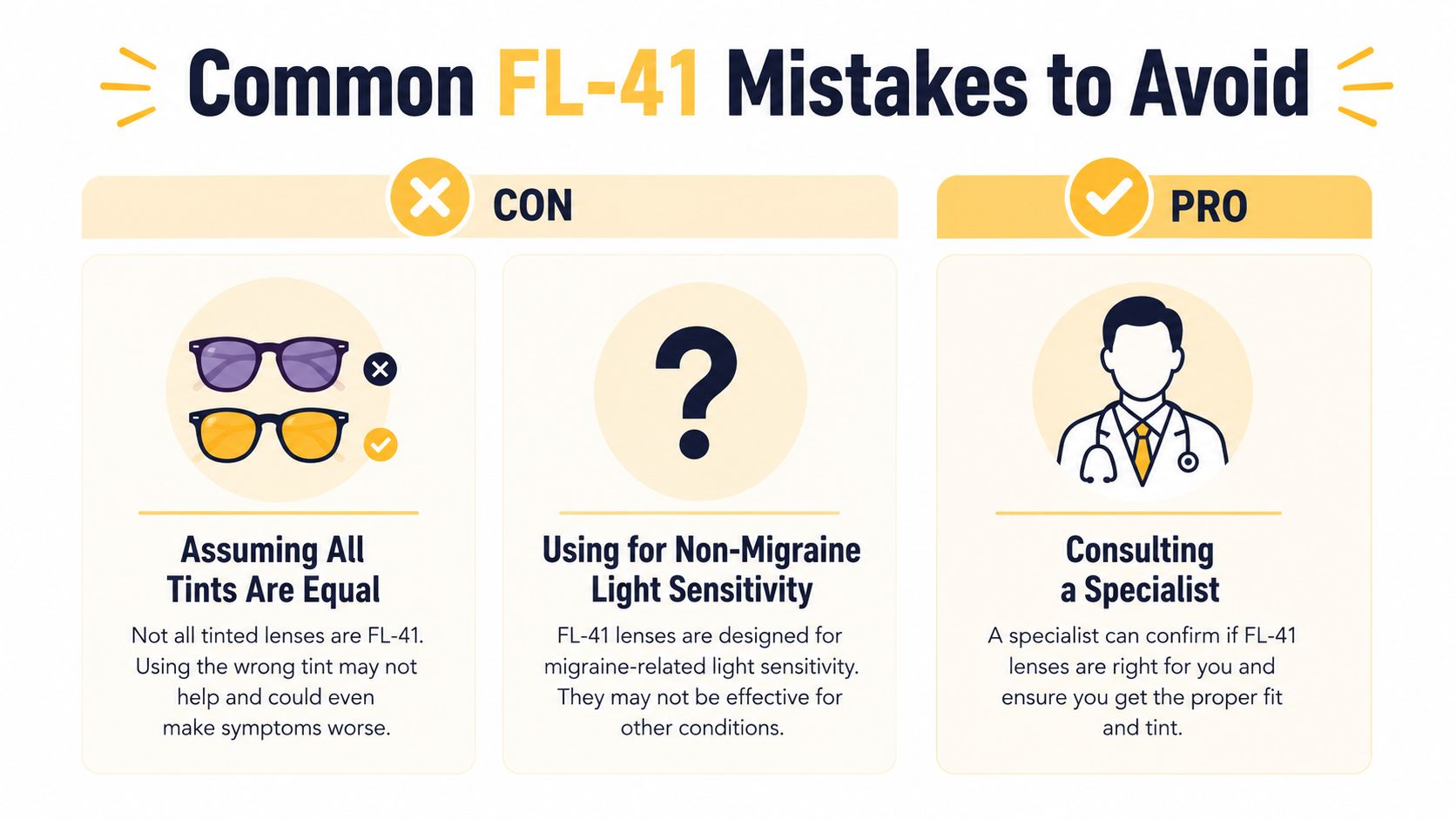
The most common mistake is assuming all FL-41 products are interchangeable. They aren't. Tint depth, manufacturer method, and lens material can all change how the glasses feel and how much light they filter, which is why a pair that disappoints you might be the wrong product rather than the wrong idea.
Another trap is wearing a very dark lens indoors all day because it feels comforting at first. That can make the room seem easier in the moment, but it can also leave you over-reliant on darkness and less comfortable when you step into normal light again. The aim is selective filtering, not hiding from the world.
A third mistake is expecting the glasses to fix every migraine trigger. If your attacks also track sleep shifts, stress, dehydration, hormonal changes, or other triggers, FL-41 may only reduce one piece of the puzzle. That's still useful, just not magical.
Do and don't checklist
- Do: test the lens in the exact lighting where you struggle most.
- Do: give the trial enough time to show a pattern.
- Do: keep notes on symptoms, exposure, and comfort.
- Don't: assume a pink tint automatically means therapeutic FL-41.
- Don't: wear an overly dark lens indoors if it makes ordinary light feel worse later.
- Don't: blame the lens for failing if the main trigger was something else entirely.
The point isn't to become obsessive about the details. It's to avoid fooling yourself with a quick impression that doesn't match your actual migraine pattern. If you test carefully, even a disappointing result is informative.
When to Get Help and What to Track Next
If your migraines are getting more frequent, your light sensitivity is changing, or you're seeing new neurological symptoms, bring that to a clinician rather than trying to solve it with lenses alone. FL-41 can be part of a practical plan, but it doesn't replace medical evaluation, especially when the pattern shifts or red-flag symptoms show up.
That's also where tracking becomes helpful. If you log light exposure, wear time, weather, and symptom severity over time, you can see whether FL-41 is helping in specific settings, or whether your worst days line up with something else. A clean record gives your next appointment something concrete to work from instead of a vague feeling that “it sort of helped.”
Migraine management gets easier when the pattern is visible. If you want to understand whether FL-41 is worth keeping in your routine, start tracking the light conditions where you wear it, then compare that with the next day's symptoms, so you can bring real evidence to your care team.
If you want a simple way to start, use Relief to log light exposure, wear times, and symptom patterns alongside your migraine history, then see whether FL-41 lines up with fewer bad days in the settings that usually hit you hardest.


