
You notice the warning signs before the pain arrives: an inexplicable yawn, a tight neck, a craving for something sweet, or a sudden need to retreat from light and noise. Learning how to stop a migraine before it starts means recognizing that early window, responding to it promptly, and tracking the patterns that make it predictable. You may not be able to prevent every attack, but you can often give yourself a better chance of reducing its intensity or avoiding a fully developed episode.
Migraine isn't just a bad headache. It's a neurological condition that may involve aura, nausea, photophobia, which means sensitivity to light, phonophobia, or sensitivity to sound, and a distinct pre-attack phase. This article is for informational purposes and is not medical advice. Consult a healthcare provider for personalized guidance.
Table of Contents
Recognizing Your Migraine's Early Warning System
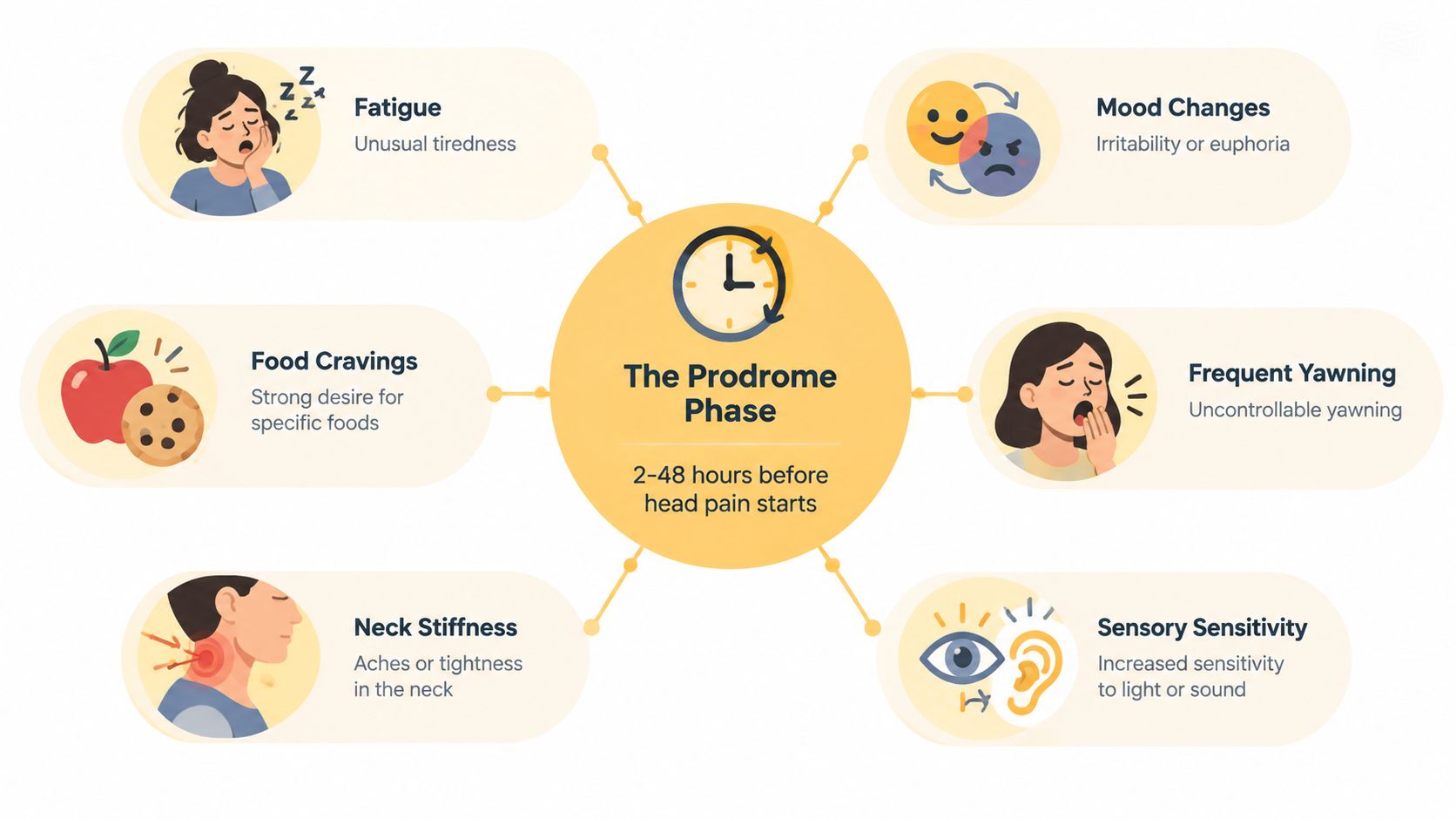
The earliest phase of migraine is called the prodrome. The International Classification of Headache Disorders, or ICHD-3, defines it as a pre-attack phase in which symptoms may warn of an impending migraine 2–48 hours before head pain begins. That window can give you time to adjust your surroundings, protect sleep and meals, and follow the acute-treatment plan your clinician has already prescribed. The ICHD-3 prodrome definition and its clinical context explain why an attack can be underway before pain appears.
Prodrome isn't the same as aura. Aura is a separate phase that may include visual, sensory, or speech symptoms and can occur before the headache phase. Some people experience migraine without aura, some experience aura, and some notice prodrome symptoms without recognizing them as part of migraine until they begin tracking them.
Treat symptoms as clues, not a checklist
Prodrome symptoms vary, and they can look like ordinary changes in your day. Mayo Clinic's overview of migraine warning signs includes constipation, mood changes, food cravings, neck stiffness, increased urination, fluid retention, and frequent yawning. Fatigue, difficulty concentrating, or increased sensitivity to light and sound can also become meaningful clues when they repeatedly precede your attacks.
Start with one question: What changed before my last several migraines? You might notice that yawning comes first, while another person notices irritability, neck tightness, or an unusual craving. A single symptom doesn't prove that an attack is coming. A repeated sequence is more useful.
Write down the symptom, when it appeared, what happened afterward, and whether head pain developed. Over time, this record can help you distinguish a genuine early signal from normal tiredness, stress, or a random change in appetite.
Practical rule: Your most useful prodrome symptom is the one that reliably appears before your migraine, not the one that appears on a generic trigger list.
Taking Action During the Prodrome Phase
Once you recognize a familiar warning sign, shift from ordinary routine into low-stimulation, steady-care mode. The aim isn't to force the attack away. It's to remove avoidable strain while you decide whether to use the acute plan provided by your healthcare professional.

Use a simple first-response checklist
- Reduce stimulation: Move to a darker, quieter room if light or sound is becoming uncomfortable. Lower screen brightness and silence nonessential notifications.
- Drink steadily: Sip water if you may be dehydrated. Avoid making a sudden, large change to your usual caffeine routine, since abrupt caffeine cessation can be a trigger for some people.
- Protect food timing: If you've missed a meal, choose something familiar and easy to tolerate rather than experimenting with a restrictive diet.
- Cool the body: A cold pack on the forehead or neck may feel soothing. Keep a cloth between the pack and your skin.
- Remove the next stressor: If possible, postpone a nonessential task, ask for practical help, or create a quiet break before symptoms intensify.
- Follow your plan: If your clinician has given you an acute medication plan, follow those instructions at the earliest sign they specify. Don't add, combine, or repeat medicines outside that plan.
Mayo Clinic's migraine guidance on triggers and management emphasizes regular sleep and meals, hydration, stress management, regular exercise, and caution with frequent pain-reliever use. Overuse of acute medication can contribute to medication-overuse headache, so keeping a record of medication use matters as much as recording pain.
The timing of acute treatment is personal. Some medicines work best when taken early in an attack, but the right option depends on your health history, other medicines, migraine type, and clinician's instructions. This article isn't a dosing guide, and you shouldn't change prescription or over-the-counter treatment without professional advice.
Use this short video as a reminder to build a calm, repeatable response rather than waiting until pain forces every decision:
Identifying Your Personal Migraine Triggers
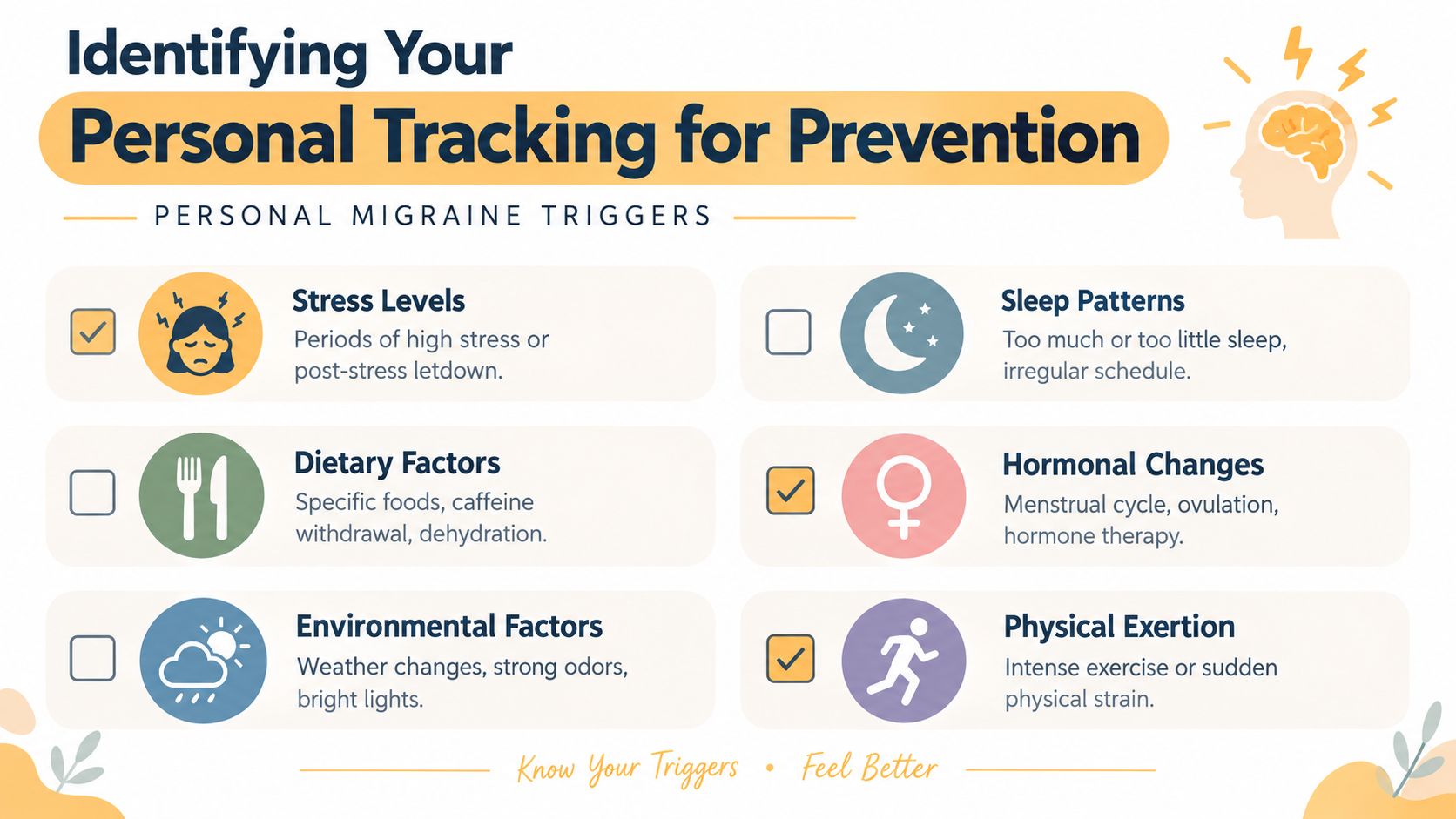
Generic trigger lists can create more anxiety than clarity. Bright light, skipped meals, stress, odors, weather shifts, hormonal changes, and caffeine changes are recognized possibilities, but your migraine threshold is personal. A food that appears on a popular list may be irrelevant to you, while a disrupted sleep schedule or post-stress letdown may matter much more.
The SEEDS framework offers a practical way to organize prevention: Sleep, Exercise, Eat, Diary, and Stress. A peer-reviewed review describes SEEDS as a lifestyle counseling model for reducing migraine frequency and severity, with the diary used to identify personal patterns over time. The SEEDS framework and migraine lifestyle counseling support tracking as a central part of prevention, not an administrative extra.
Track relationships instead of banning everything
A useful diary records context, not just pain. Log sleep timing, meal timing, hydration, stress level, menstrual or other hormonal context when relevant, exercise, environmental conditions, prodrome symptoms, migraine symptoms, and medication use. Then compare ordinary days with attack days.
Look for combinations. A late night alone may not matter, but a late night plus a skipped meal and intense workday might precede an attack. That distinction helps you make targeted adjustments without treating your entire life as dangerous.
Hormones deserve their own line in the diary. If attacks cluster around a predictable menstrual window, discuss short-term prevention with a healthcare provider. Expert guidance supports timing naproxen or a long half-life triptan from 2 days before menstruation for about 5–7 days, but the appropriate choice depends on your medical history and must be clinician-directed. International Headache Society guidance on migraine treatment and prevention also highlights an important trade-off: strict avoidance isn't always the most effective response. In one randomized study, graded exposure and learning to cope with triggers produced the only significant responder advantage versus a waiting list and reduced medication use.
That doesn't mean you should deliberately expose yourself to a known severe trigger. It means fear-driven avoidance can become unnecessarily restrictive, and a clinician-guided approach may be more useful for manageable triggers.
Building a Proactive Lifestyle for Fewer Attacks
Prevention works best as a routine, not as a rescue ritual you begin only after symptoms appear. Regular sleep and meal timing can reduce abrupt changes in your body's baseline, while manageable movement supports general health without demanding intense training.
Try making one adjustment at a time. Keep your wake time steadier, prepare a reliable meal for busy mornings, carry water, or add gentle movement that you can repeat consistently. If exercise itself seems connected to attacks, record intensity, hydration, food timing, heat, and recovery instead of assuming all activity is harmful.
Make SEEDS practical
Sleep: Aim for consistency rather than chasing perfect sleep. Note late nights, oversleeping, shift changes, and restless nights in your diary.
Exercise: Choose sustainable activity. A short walk, stretching, or another clinician-approved option may be easier to maintain than an ambitious routine that creates exhaustion.
Eat: Don't routinely skip meals. Track suspected foods as observations, not permanent bans, and consider caffeine changes as part of the context.
Diary: Record prodrome clues, attack timing, severity, symptoms, relief measures, and medication use. This gives you and your clinician something more reliable than memory during a difficult appointment.
Stress: Use brief techniques you can repeat, such as paced breathing, mindfulness, progressive muscle relaxation, or a quiet transition after a demanding task. Stress release can matter too, so log the period after pressure ends, not only the stressful event itself.
Proactive care is appropriate even when migraine isn't daily. A widely cited prevention framework recommends considering prevention at 6 or more headache days per month, 4 headache days with some impairment, or 3 headache days with severe impairment or bed rest, and considering it at 2–5 migraine days per month depending on disability. The clinical prevention framework shows why measured burden matters more than whether someone believes their attacks are “frequent enough.”
For background on how Relief supports awareness and tracking as part of a broader self-management routine, visit Relief's approach to migraine support.
Using Forecasts and Data to Stay Ahead
Your diary captures your internal pattern. Environmental data can add context, especially when weather or air conditions repeatedly appear near attacks. That signal shouldn't dictate your life, because weather effects differ between people and may be modest, but it can help you decide when to be more deliberate about hydration, meals, rest, and access to your acute treatment plan.
A 2025 systematic review and meta-analysis found a significant association between self-reported weather changes and migraine attacks, with a risk difference of 0.47, while temperature was associated with an odds ratio of 1.15 and ambient pressure with an odds ratio of 1.07. The 2025 weather and migraine meta-analysis supports personalized monitoring, not a universal rule that every weather change causes migraine.
Turn a forecast into a decision cue
A risk forecast is most useful when it changes a small, sensible action. If your personal history shows that pressure changes often coincide with prodrome, you might avoid skipping lunch, reduce unnecessary sensory load, and keep your usual acute-care supplies accessible. You don't need to cancel every plan because an app flags environmental risk.
Relief combines user-entered logs with local weather, air quality, and pollen information to provide an hour-by-hour migraine risk forecast. Its tracking features include symptoms, triggers, medications, and environmental factors, allowing you to compare your own history with conditions such as humidity, temperature, barometric pressure, wind, and air quality. You can explore the Relief migraine forecasting and tracking app as one tool for organizing that information.
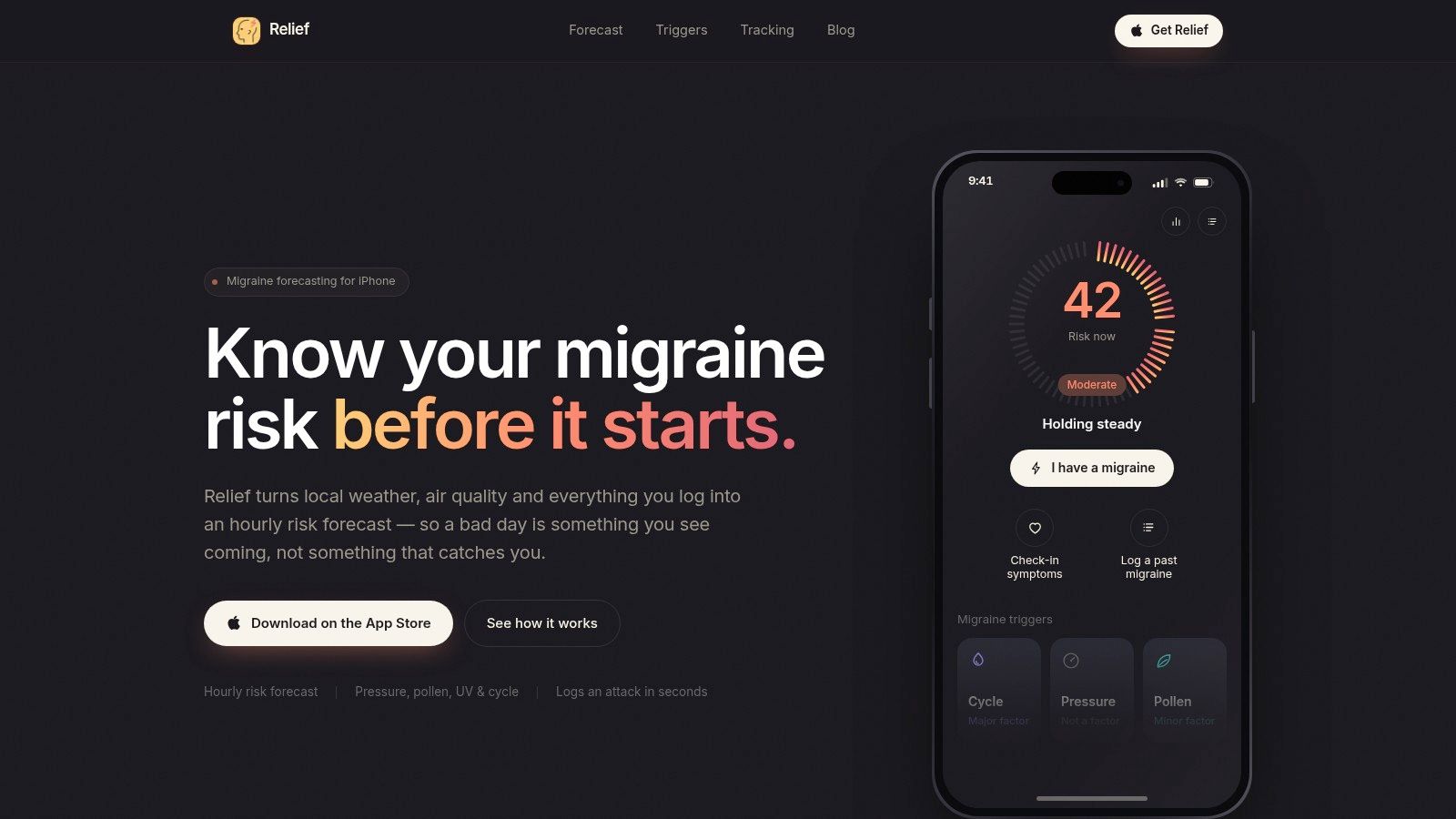
The important distinction is between forecasting and certainty. A high-risk period isn't a diagnosis or a guarantee that migraine will occur. A low-risk period doesn't cancel your prodrome signals. Combine the external forecast with what your body is telling you, then use the result to make practical choices rather than broad, exhausting avoidance.
When to Talk to Your Doctor About Prevention
Self-management can make your care more organized, but it shouldn't replace a clinical assessment. Arrange a dedicated prevention discussion if you have 4 or more headache days per month, if attacks are debilitating, or if acute treatment isn't controlling them adequately. Preventive treatment is generally considered in these situations, and a successful response is often defined as a 50% reduction in attack frequency or severity. Primary-care guidance on preventive migraine treatment also describes starting at the lowest effective dose, gradual titration, and allowing enough time to judge a treatment, decisions your clinician must individualize.
Bring your diary. Include headache days, prodrome symptoms, aura, duration, disability, medication use, suspected triggers, and what helped or failed. This gives your provider a clearer basis for discussing lifestyle prevention, short-term preemptive strategies, acute treatment, or prescription prevention.
Seek immediate medical care: Get urgent help for a sudden, severe headache, a headache with fever or stiff neck, new neurological changes, or a headache after a head injury.
This article is for informational purposes and is not medical advice. Consult a healthcare provider for personalized guidance.
Relief helps you log symptoms, triggers, medications, and attack patterns while combining those records with local environmental information to support earlier planning. Visit Relief to start building a clearer picture of your prodrome signals and migraine risk.


