You stand up from your desk, the room seems to tilt, and a migraine is beginning to build. Feeling light-headed can be part of migraine, even when head pain isn't the main symptom. Migraine is a neurological disorder, not just a bad headache, and it can affect balance, sensory processing, blood-pressure regulation, and concentration before, during, or after an attack.
That doesn't mean every dizzy spell is migraine. Dehydration, low blood sugar, medication effects, inner-ear disorders, and urgent neurological conditions can feel similar. This guide helps you recognize common migraine patterns, understand why light-headedness happens, try low-risk self-management steps, and know when to seek medical care.
This article is for informational purposes and is not medical advice. Consult a healthcare provider for personalized guidance.
Table of Contents
Why Migraines Can Leave You Feeling Light Headed
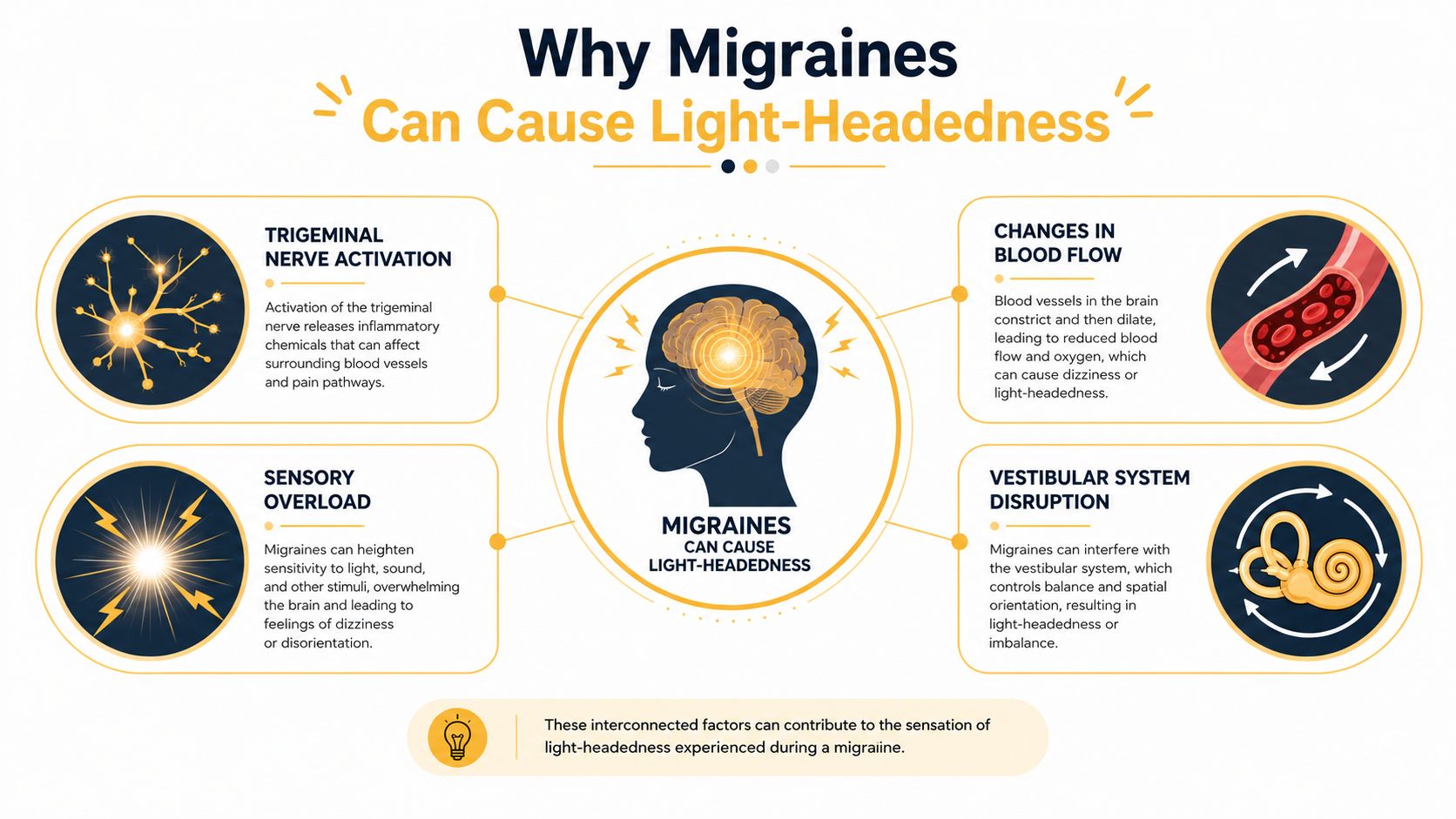
Migraine and light-headedness overlap because an attack can involve several connected brain and body systems at once. The autonomic nervous system helps regulate automatic functions such as heart rate and blood pressure. When that system doesn't adjust smoothly as you stand, you may feel woozy, weak, or close to fainting.
A second pathway involves the vestibular system, the inner-ear and brain network that helps you sense movement and orientation. During migraine, the brain may process balance signals, visual motion, and pain signals differently. You might feel that the room is moving, that you're rocking on a boat, or that turning your head makes you unsteady, even when nothing around you is moving.
The third factor is altered sensory and vascular regulation during an attack. Changes in how the brain handles pain, light, sound, motion, and blood-flow signals can create a combination such as throbbing head pain, tunnel-like vision, nausea, and light-headedness. The exact experience varies widely between people and from one attack to another.
The autonomic connection
Orthostatic intolerance describes difficulty maintaining stable circulation after standing. In a migraine cohort, researchers found peripheral autonomic deficits on skin biopsy in 45% or more of patients, and described symptoms that can include dizziness, light-headedness, weakness, near-fainting, or fainting, rather than head pain alone. You can review the clinical findings in the Journal of Headache and Pain report on autonomic dysfunction among migraineurs.
A practical example is feeling relatively comfortable while seated, then becoming faint or blurred in vision when you stand. Recurrent posture-related symptoms deserve medical discussion, particularly if they happen between attacks or occur with clammy skin, unusual blood-pressure readings, or persistent weakness.
Why naming the mechanism helps
You don't need to identify the exact pathway yourself. You can use the pattern to choose a safer first response: sit or lie down if standing worsens the feeling, reduce sensory stimulation, sip fluids if you may be under-hydrated, and avoid driving while your balance or vision feels impaired.
If the symptom is new, unusually severe, or paired with neurological changes, don't assume it's migraine. The pattern matters more than the label you already know.
How Light Headedness Shows Up Across Migraine Stages
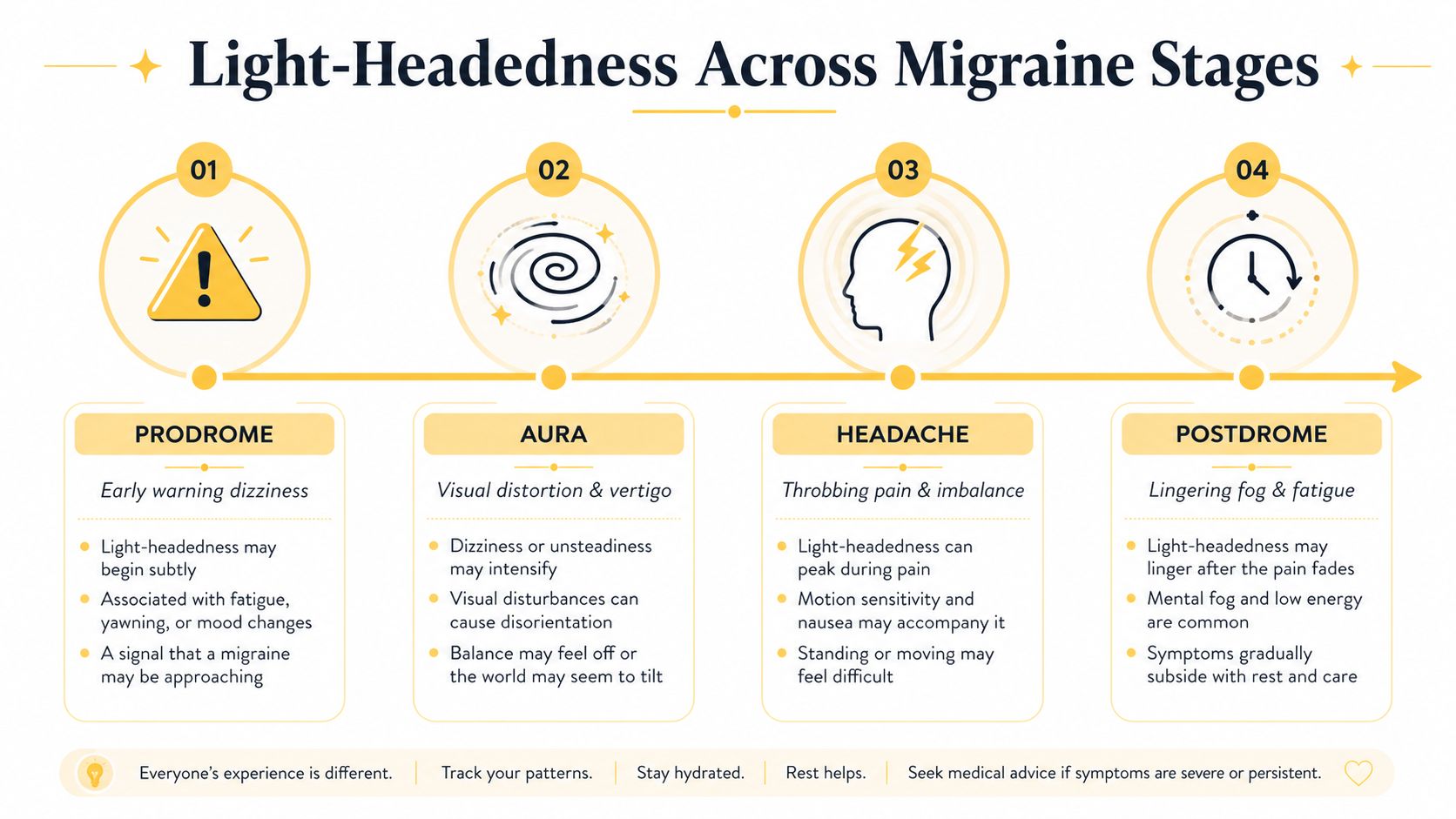
Light-headedness may appear before the headache, alongside it, or after the pain has eased. Migraine phases can overlap, and not everyone experiences prodrome, aura, headache, and postdrome in a fixed sequence.
A prodrome is the early warning phase. It can include fatigue, yawning, brain fog, mood changes, nausea, or subtle dizziness before head pain arrives. One example is feeling strangely unsteady during a morning meeting, then developing familiar migraine pain later that day or the next.
During aura, temporary neurological symptoms can affect vision, sensation, speech, or coordination. Visual distortion can make ordinary movement feel disorienting. If light-headedness appears with new double vision, weakness, speech difficulty, or loss of vision, treat that as a reason for urgent assessment rather than automatically calling it aura.
During the headache phase
The acute headache phase often combines pain with nausea, photophobia, which means light sensitivity, phonophobia, or movement sensitivity. A person may need to lie still because lifting the head, looking at a screen, or walking across a room intensifies the dizzy feeling.
A meta-analysis of 2,698 migraine patients found dizziness during the headache phase in 35.7% of participants and vertigo in 33.9%. During prodrome, dizziness was reported by 9.0% and vertigo by 3.3%, as described in the peer-reviewed meta-analysis of dizziness and vertigo in migraine. These figures describe groups, not your personal risk.
In the postdrome, sometimes called a migraine hangover, you may feel drained, foggy, weak, or light-headed after the pain fades. Mayo Clinic Health System describes this washed-out period as lasting up to a day in its explanation of migraine stages, available through its headache and migraine treatment information. If you feel tippy while bending to load a dishwasher the morning after an attack, that may fit your established pattern, but a changed or persistent symptom still deserves review.
Vestibular Migraine and Other Causes Worth Knowing
Vestibular migraine is a recognized migraine subtype in which dizziness, vertigo, motion sensitivity, or imbalance can dominate. Headache may be mild or absent, which is why people sometimes describe the experience as light-headedness rather than migraine.
Vestibular migraine can involve recurrent episodes lasting from seconds or minutes to, in some cases, up to 72 hours or longer, according to the Mersey Care vestibular migraine patient guide. A spinning sensation, rocking, visual-motion sensitivity, nausea, or worsening with head movement can point toward vestibular involvement. Clinicians still need to distinguish it from other vestibular syndromes, a diagnostic challenge highlighted in a 2025 neurology review.
Other explanations can overlap. Dry mouth and concentrated urine may fit dehydration. Shaking, sweating, and improvement after eating may fit low blood sugar. Symptoms that occur mainly after standing and improve after sitting may suggest orthostatic intolerance. A symptom that began after a medication change should be reviewed with the prescriber or pharmacist rather than managed by changing the medication independently.
| Condition | Key Symptoms | Typical Timing | What Makes It Better |
|---|---|---|---|
| Vestibular migraine | Dizziness, vertigo, imbalance, nausea, motion or visual sensitivity, with or without prominent headache | May occur before, during, or after a migraine pattern, and can last from brief episodes to longer attacks | Quiet rest, reduced motion, regular meals, fluids, and an individualized migraine plan may help |
| Dehydration | Thirst, dry mouth, weakness, darker urine, light-headedness | Often follows inadequate fluid intake, heat, sweating, vomiting, or diarrhea | Gradual fluid replacement may help, but ongoing symptoms need assessment |
| Low blood sugar | Shakiness, sweating, weakness, hunger, confusion, or light-headedness | Often follows missed or delayed meals, or occurs in people with relevant medical conditions or treatments | Eating may help, but recurrent episodes need medical evaluation |
| Orthostatic intolerance | Light-headedness, weakness, blurred vision, racing heart, or near-fainting after standing | Closely linked to posture changes | Sitting or lying down may reduce symptoms, but recurring episodes warrant clinical review |
| Medication side effect | Dizziness, fatigue, nausea, or blood-pressure changes | May follow starting, stopping, or changing a medication | A clinician or pharmacist can review the timing and treatment safely |
Don't use this table to diagnose yourself. The Cleveland Clinic overview of vestibular migraine explains why migraine-specific assessment may be appropriate when dizziness is triggered by head motion or visual motion, especially with imbalance.
Red Flag Symptoms That Need Emergency Care
The phrase “it's probably just my migraine” can become dangerous when an attack feels different from your usual pattern. Sudden, severe, or unfamiliar symptoms need urgent evaluation, even if you have a history of migraine.
Call emergency services or seek immediate medical care for a sudden severe headache, especially one that reaches maximum intensity abruptly. Do the same for headache with fever and a stiff neck, symptoms after a head injury, or new neurological changes such as one-sided weakness, facial drooping, slurred speech, confusion, sudden vision loss, or difficulty walking.
Sudden hearing loss, double vision, fainting, or a first migraine-like attack later in adulthood also deserves prompt medical attention. A symptom that appears suddenly, affects one side of the body, or doesn't improve with rest shouldn't be dismissed because dizziness has happened during previous migraines.
| Symptom | Likely Migraine Pattern | Seek Emergency Care |
|---|---|---|
| Onset | Familiar symptoms build in a recognizable pattern | Headache or neurological symptoms begin suddenly |
| Balance | Mild or moderate unsteadiness linked to known migraine features | Sudden inability to walk, severe coordination trouble, or fainting |
| Vision | Familiar, temporary visual symptoms | New vision loss, double vision, or persistent visual change |
| Speech and strength | No new weakness or speech change | Slurred speech, confusion, facial droop, or one-sided weakness |
| Systemic symptoms | Usual nausea or sensory sensitivity | Fever with a stiff neck or marked change in alertness |
| Injury | No recent trauma | Headache or light-headedness after a head injury |
When calling for help, say: “I have a sudden severe headache and new light-headedness with [specific neurological symptom]. The symptoms began at [time].” That timing helps emergency clinicians assess conditions such as stroke, bleeding, or arterial dissection instead of assuming a routine migraine.
Privacy matters when you record symptoms or share health information. Review Relief's privacy information before using any digital tracking tool.
Practical Self Management and Prevention Tips
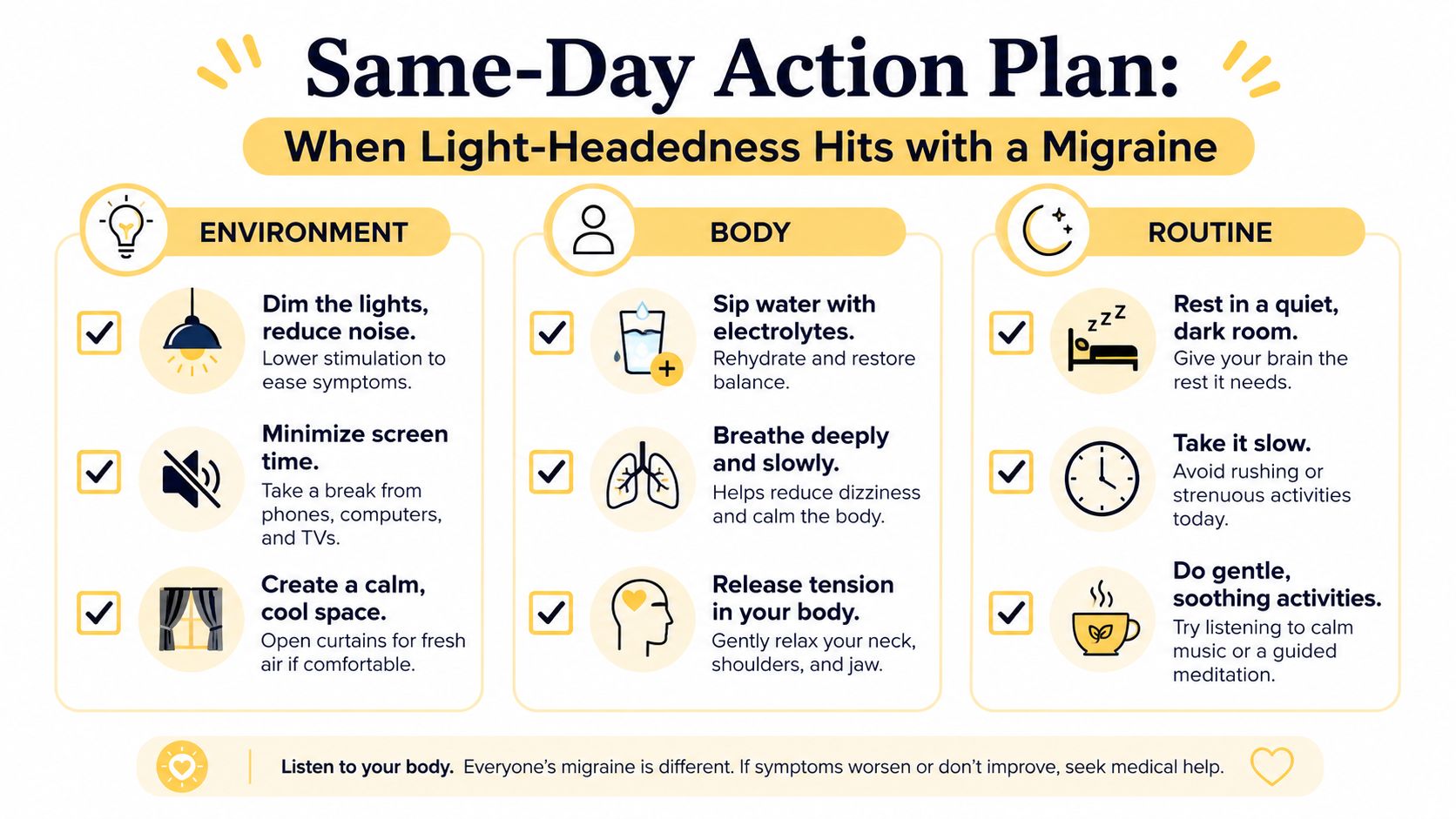
When light-headedness starts, focus first on safety and sensory load. Sit down, stop driving, and move away from stairs or situations where losing balance could cause injury.
Change the environment
Dim bright lights, reduce noise, and limit screen movement. Rest in a cool, dark room with your head supported if lying down feels better. Keep a 500 ml bottle on your desk as a visual reminder to sip, and consider an electrolyte drink if sweating, vomiting, or poor intake may have contributed. Avoid forcing fluids quickly if nausea is strong.
Stand in stages. Roll onto your side, sit for a moment, place both feet on the floor, and rise slowly while holding a stable surface. Avoid sudden head turns, rapid bending, and visually busy environments when motion sensitivity is active.
Support your body
Slow diaphragmatic breathing can reduce the sense of panic that often follows a sudden wave of dizziness. Let your abdomen expand as you inhale, then breathe out gently without straining. Stop if breathing exercises make you feel worse.
Regular meals and snacks can help you notice whether delayed eating contributes to attacks. A 90-minute meal reminder may be useful on a busy workday, but don't treat any food as a universal trigger. Caffeine can affect people differently, so track its timing and avoid changing it abruptly without discussing your pattern with a healthcare professional.
Move carefully after the attack
Once acute pain and severe dizziness have settled, gentle neck range-of-motion exercises may be reasonable for some people. Vestibular rehabilitation uses individualized balance and gaze-stabilization exercises, and a 2026 systematic review found improvements across 10 studies in vertigo, dizziness, imbalance, headache, anxiety, and depression. The review is summarized in this report on vestibular rehabilitation research, but exercises should be selected with a qualified clinician when symptoms are persistent or easily provoked.
Practical rule: If movement makes you suddenly much worse, return to a safe resting position and seek professional guidance rather than pushing through.
For medication questions, separate over-the-counter options, prescription treatments, and non-drug care. Don't start, stop, or alter medication based on an online article. A 2025 randomized trial found that rizatriptan did not outperform placebo within the first hour for vestibular migraine attacks, with no significant improvement in vertigo, dizziness, headache, or nausea, so symptom-specific treatment deserves an individualized discussion.
Using Tracking and Forecasting to Predict Your Risk
A symptom log becomes useful when it captures more than pain. Record when light-headedness starts, whether it feels like faintness or spinning, what position you're in, sleep quality, meals, fluids, caffeine, medications, stress, menstrual-cycle timing if relevant, and environmental conditions.
Look for relationships rather than isolated events. For example, you might notice a light-headed migraine window after poor sleep, a recurring pattern before menstruation, or a connection with changes in weather pressure. Don't treat any of these as proven triggers after a single occurrence. Repeated entries can show whether a suspected exposure consistently appears before symptoms.
What to record
- Symptoms: Note light-headedness, spinning, rocking, imbalance, nausea, visual changes, sound or light sensitivity, and head pain separately.
- Context: Record posture, screen use, travel, exercise, heat, missed meals, and sleep disruption.
- Treatment response: Log what you used and whether the dizziness, pain, or nausea changed.
- Environment: Where available, compare symptoms with barometric pressure, humidity, temperature swings, air quality, and pollen.
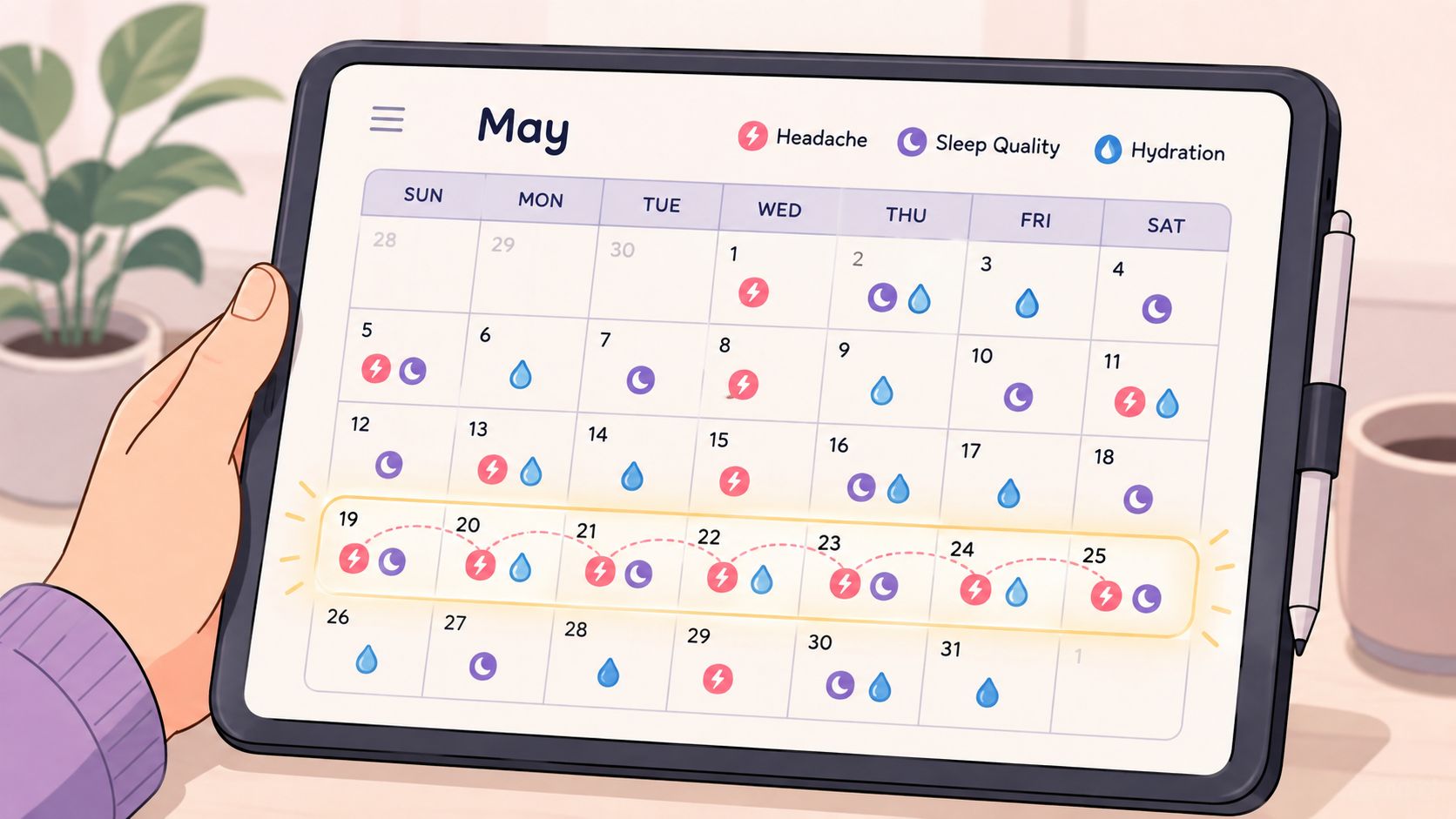
Forecasting is probabilistic, not a promise that an attack will occur. A risk window can help you plan fluids, meals, rest, caffeine timing, or a lighter workload, but it shouldn't replace diagnosis or medical treatment.
Relief combines symptom, trigger, and medication logging with environmental information such as weather, air quality, pollen, UV, heat, and cycle data to provide an hour-by-hour migraine risk forecast on iOS. Use any forecast as a planning aid and bring meaningful patterns to your clinician, especially if episodes are becoming more frequent or changing character.
Putting It All Together Your Next Steps
Use this simple decision map when light-headedness appears.
- If it occurs within a familiar migraine pattern, has no new features, and improves with your usual care, then sit or lie down, reduce sensory input, sip fluids, change position slowly, and follow the acute plan your clinician has given you.
- If dizziness or imbalance is the dominant symptom, especially with motion sensitivity or symptoms that continue after head pain, then arrange a clinician visit to discuss possible vestibular migraine or another balance-related cause.
- If the episode includes sudden severe pain, new weakness, facial drooping, speech trouble, confusion, vision loss, fever with a stiff neck, or symptoms after head injury, then seek emergency care immediately.
- If attacks are increasing, lasting longer, or responding differently to treatment, then start structured tracking and discuss preventive options with a prescriber.
Try this seven-day starter plan:
- Set three hydration checkpoints, such as on waking, midday, and late afternoon.
- Take two posture resets during work, rising slowly and noting whether standing changes symptoms.
- Review one possible trigger without imposing a blanket restriction.
- Complete one data review, looking for timing, symptom type, sleep, meals, medication use, and environmental context.
Naming whether you feel faint, spinning, rocking, or visually unsteady gives your healthcare provider better information than writing “dizzy.” That distinction can guide a broader workup and help reduce surprises.
For more about how the app fits into proactive migraine management, visit Relief's approach to migraine forecasting.
This article is for informational purposes and is not medical advice. Consult a healthcare provider for personalized guidance.
Relief lets you log light-headedness, symptoms, triggers, medications, and environmental conditions on one timeline, helping you spot patterns before they disrupt your day. Visit Relief to explore migraine tracking and risk forecasting on iOS.


