
You're already tired, maybe a little sweaty, and trying to figure out whether the clammy feeling is part of the migraine or something else entirely. The short answer is yes, migraine and sweating can be connected, and sweating can show up as part of the attack itself, before the pain starts, or alongside other body signals that migraine activates. It can also mean something else, so the pattern matters.
Table of Contents
- That Clammy Feeling Is Real Your Migraine and Sweating Explained
- Your Autonomic Nervous System The Control Center Behind Migraine Sweating
- Prodrome before the pain
- Aura and headache
- Postdrome after the pain
That Clammy Feeling Is Real Your Migraine and Sweating Explained
You're in the middle of a migraine, and your skin suddenly feels damp, your forehead turns clammy, or your face feels hot and sweaty for no clear reason. That can feel strange, especially if sweating is not part of your usual migraine pattern. It is real, and it fits with how migraine can affect the body, not just the head.
Sweating is one of the cranial autonomic symptoms that can happen during a migraine. These symptoms come from nerve-controlled responses around the head and face. One study summary found that about 57% of people with migraine reported at least one cranial autonomic symptom during attacks, and forehead or facial sweating was part of that pattern (study summary in the headache literature). That does not mean every sweaty migraine follows the same pattern, but it does show the connection is common enough to pay attention to.
Practical rule: if sweating shows up with your migraine again and again, treat it as a symptom pattern worth tracking, not as a vague afterthought.
The bigger picture helps, too. The World Health Organization reports that headache disorders affect about 40% of the population, or 3.1 billion people in 2021, and that migraine's global age-standardized prevalence was estimated at 14.4% overall, including 18.9% in women and 9.8% in men; in the United States, migraine has stayed relatively stable for about 30 years, while moderate-to-severe disability among people with migraine rose from 22.0% in 2005 to 42.4% in 2018 (WHO headache disorders fact sheet). That context matters because sweating can be part of a long-running, disabling condition, not just an isolated bad headache.
Your Autonomic Nervous System The Control Center Behind Migraine Sweating
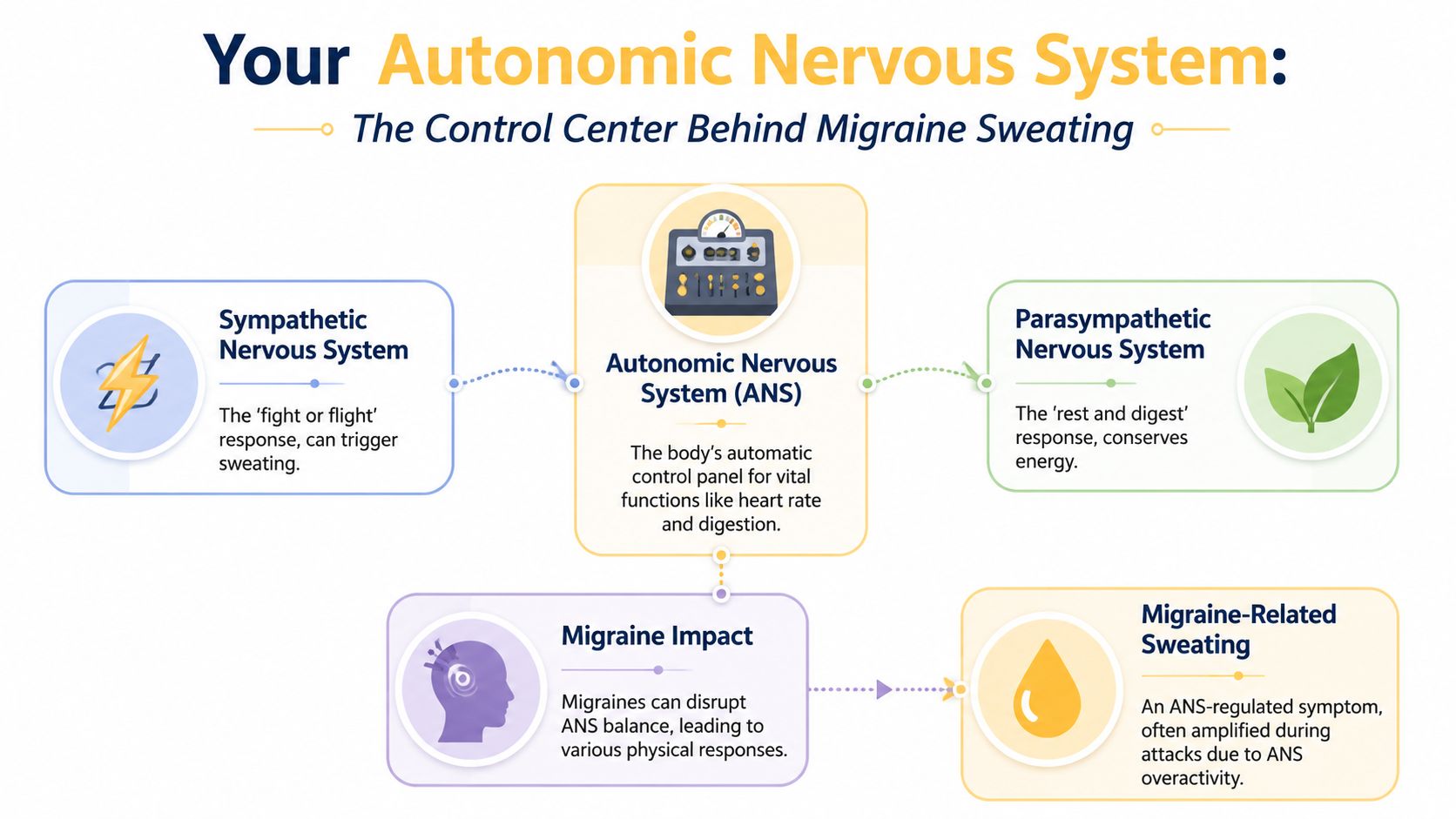
The autonomic nervous system is your body's automatic control panel. It helps regulate heart rate, digestion, blood vessel tone, and body temperature without you thinking about it. When migraine hits, that system can get out of balance, and sweating is one of the ways that imbalance can show up.
A simple way to think about it is this. Your body has a built-in thermostat and alarm system, and migraine can make both act jumpy at once. The parasympathetic and trigeminovascular pathways involved in migraine attacks can produce cranial autonomic symptoms such as sweating, lacrimation, and flushing (neurologic explanation). So the sweat isn't the main event, it's part of the same neurological storm that produces the migraine.
There's also a useful distinction here. Sweating during a migraine is usually an autonomic symptom, not a primary sweat-gland problem. That's why it often comes with other body changes, like facial flushing, watery eyes, or nasal symptoms, instead of appearing alone. In plain language, your nervous system is sending mixed signals, and your skin is one place those signals show up.
The older physiology literature adds another clue. Sweat-gland responsiveness was reduced between attacks in people with migraine after pilocarpine stimulation, which supports the idea that migraine can involve baseline autonomic differences, not just symptoms during pain. That matters because it helps explain why some people feel “off” even before the headache peaks.
Sweating Patterns Across the Four Migraine Phases
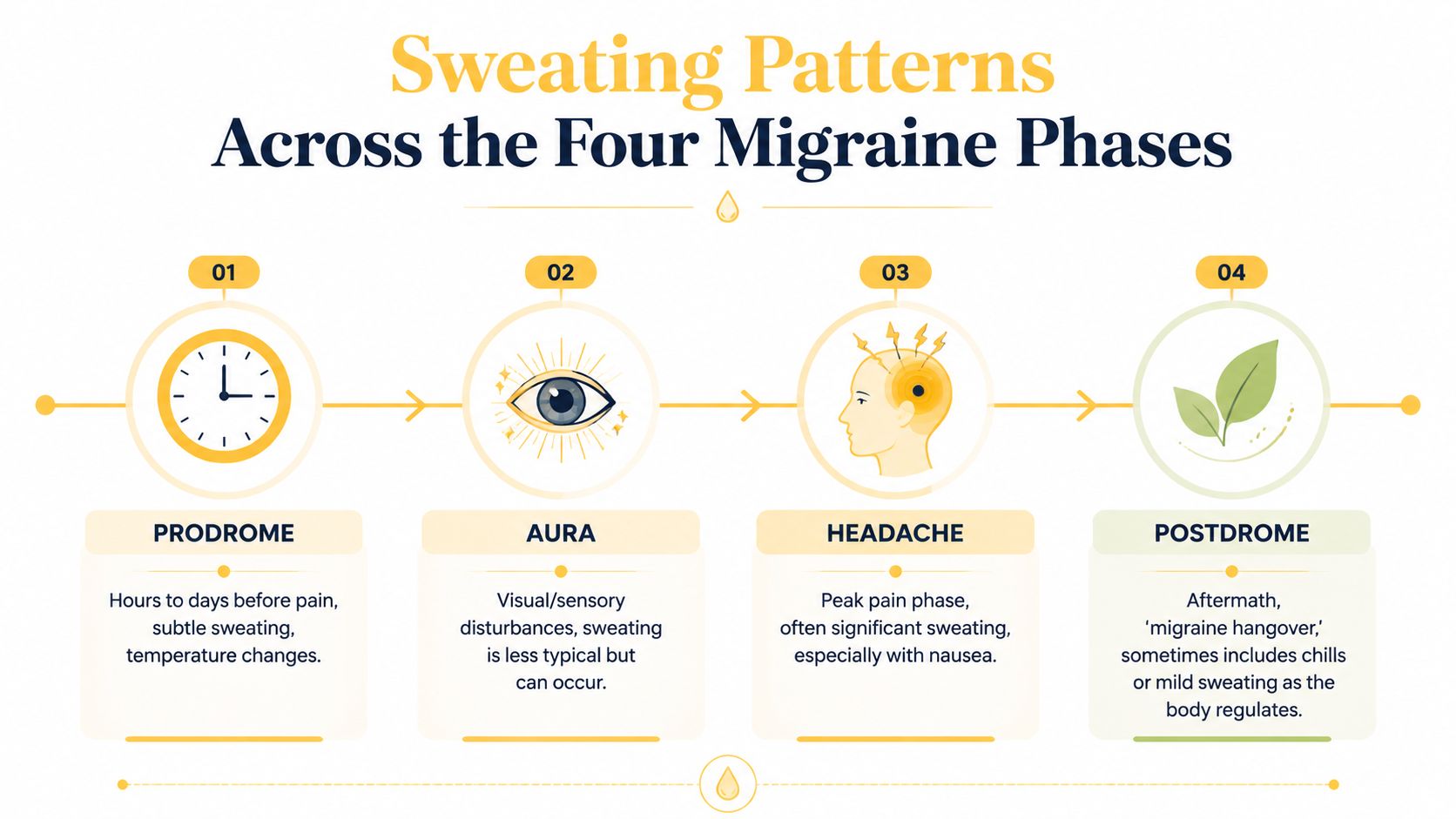
Sweating doesn't have to mean the headache has fully arrived. It can show up at different points in the migraine cycle, and timing gives you useful clues.
Prodrome before the pain
The prodrome is the pre-headache phase. It can begin hours to days before the pain and often brings small body changes that are easy to dismiss, like yawning, fatigue, flushing, or sweating. Clinical writing on migraine and sweating links this to hypothalamic activity, which is part of the brain's temperature and autonomic control system (prodrome discussion).
If you notice that sweaty, “something's coming” feeling before head pain starts, that can be an early warning sign. It doesn't prove a migraine is guaranteed, but it can help you prepare sooner with quiet, rest, or whatever your clinician has already recommended for your attacks.
Aura and headache
Aura means temporary neurologic symptoms, such as visual changes, sensory changes, or speech difficulty, that can happen before or during migraine for some people. Sweating is less typical in aura than in prodrome or the pain phase, but migraine patterns vary, and autonomic symptoms can overlap with other phases. During the headache phase, sweating may become more noticeable, especially if nausea, light sensitivity, or heat intolerance are part of your attack.
Postdrome after the pain
Postdrome is the recovery phase, sometimes called the migraine hangover. People can feel drained, foggy, chilled, or still a little sweaty as the body settles back down. That lingering body reset matters, because migraine doesn't always end the moment the pain softens.
If your sweating keeps appearing in the same phase each time, that pattern is worth logging. Phase timing can tell you more than the symptom itself.
Is It the Migraine or Something Else
Sweating with headache can fit migraine, but it can also point to another cause. That's why the question isn't just “Can migraine cause sweating?” It's also “Does this combination fit my usual migraine pattern, or does it look different?”
The American Migraine Foundation notes that cranial autonomic symptoms can occur in up to 74% of migraine patients, but red-flag causes like infection, medication effects, hypoglycemia, or heat illness need to stay on the list when headache and sweating happen together (American Migraine Foundation). That's the useful mindset shift. Don't assume every sweaty headache is “just migraine,” and don't assume every sweaty headache is dangerous either.
A quick way to compare possibilities
- Migraine pattern: the sweating matches your usual attack timing, comes with nausea, light sensitivity, or your familiar pain pattern, and improves when the migraine settles.
- Heat or exertion pattern: sweating is heavy first, you feel overheated, thirsty, weak, or wiped out after being in heat, humidity, or after exercise.
- Illness pattern: fever, stiff neck, or feeling acutely unwell points away from a routine migraine.
- Medication pattern: new sweating started after a medication change, which is worth discussing with a clinician.
The goal isn't self-diagnosis. It's better interpretation. If the sweating is new, extreme, or paired with symptoms that don't fit your usual migraine history, that deserves attention.
Red Flags When to Seek Immediate Medical Care
This article is for informational purposes and is not medical advice. Consult a healthcare provider for personalized guidance.
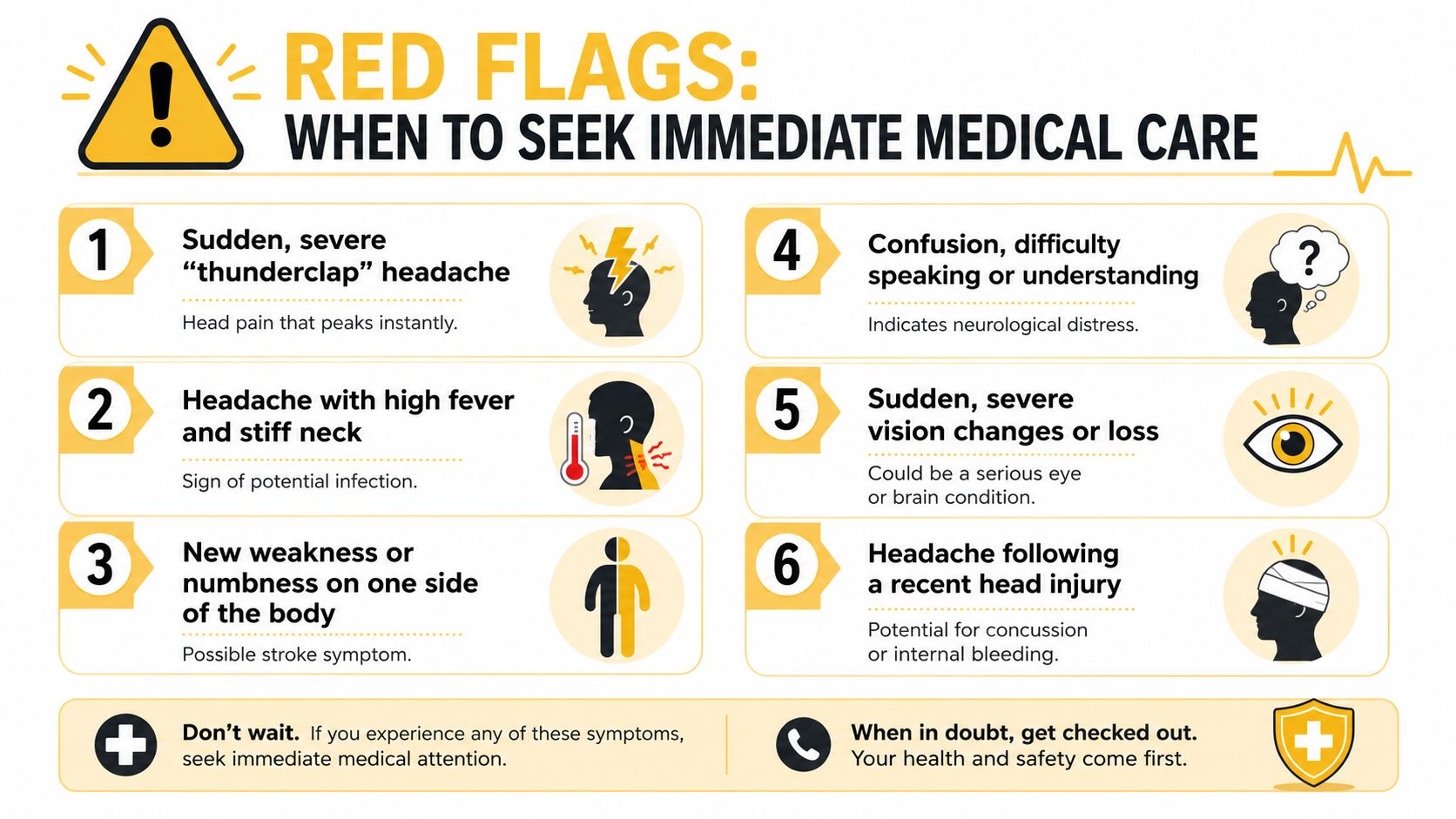
Get immediate medical care if headache and sweating come with any of these:
- Sudden, severe “thunderclap” headache
- Headache with high fever and stiff neck
- New weakness or numbness on one side of the body
- Confusion, difficulty speaking, or trouble understanding
- Sudden, severe vision changes or loss
- Headache after a recent head injury
Those symptoms can signal infection, stroke, bleeding, concussion, or another urgent problem. If you're unsure, it's safer to seek help quickly than to wait it out.
How to Track and Manage Migraine-Related Sweating

Heat, stress, and exertion can all act as trigger amplifiers for migraine. Johns Hopkins notes that thermoregulation and migraine both involve the hypothalamus, and that logging attacks against temperature, humidity, and stress levels is a clinically relevant way to spot individual patterns (Johns Hopkins Medicine). That matters because sweating can be both a symptom and a clue.
A practical log works best when it captures the whole picture, not just the headache pain. Note when the sweating started, whether you were indoors or outside, what the temperature felt like, whether you'd exercised, and whether you were under stress. If you also track hydration, sleep, and meal timing, you'll have a better chance of seeing whether sweating tends to show up before attacks, during them, or after them.
What to track in plain language
- Body signs: sweating, chills, flushing, nausea, light sensitivity.
- Environment: heat, humidity, sun exposure, busy commutes, crowded rooms.
- Activity: walking, workouts, long meetings, errands, or physical strain.
- Context: sleep disruption, skipped meals, stress spikes, or recent medication changes.
Small patterns can be easy to miss in the moment. A tracker helps you spot them later, especially if your migraine timing shifts with weather or daily routine.
Relief can help you keep those details in one place so you can see what lines up with your attacks, instead of guessing from memory alone.
If sweating keeps showing up with your migraines, start logging the timing, context, and other symptoms today, because those details can help you and your healthcare provider understand what your body's trying to tell you.


