
You're probably here because aura feels unpredictable. One month you might get shimmering zigzags twice, then nothing for weeks, then a migraine attack arrives with no aura at all. Migraine aura frequency is typical in one very specific way: it's often variable. Aura is common among people with migraine, but it isn't universal, and even when you do get aura, it may show up only in some attacks rather than every time.
That uncertainty can be unsettling, especially when you're trying to decide whether what you're noticing is still “normal for you” or something worth bringing up with a clinician. The useful shift is this: instead of looking for one universal number, treat aura frequency as a personal pattern that can be tracked over time.
This article is for informational purposes and is not medical advice. Consult a healthcare provider for personalized guidance.
Table of Contents
- Introduction How Often Migraine Aura Really Happens
- Aura is a phase, not the headache
- What people often notice first
- One diagnosis, many patterns
- What intermittent aura looks like
- Why your own pattern matters more than the average
- Changes can be part of migraine, but they still deserve attention
- When to contact a clinician soon
- When to seek immediate care
- Start with one simple entry per aura event
- Use three metrics you can review monthly
- Review in short windows
Introduction How Often Migraine Aura Really Happens
You wake up, start your day, and then your vision changes. A blind spot drifts across a screen. Maybe there's tingling in your hand, or words suddenly feel harder to find. If you've had this happen more than once, one of the first questions is usually simple: How often is migraine aura supposed to happen?
The short answer is that aura happens in a substantial minority of people with migraine, and its frequency can be very different from one person to the next. For some people, aura appears only occasionally. For others, it becomes a regular part of their migraine pattern.
That matters for two reasons. First, it can be reassuring to know that inconsistent aura doesn't automatically mean something is wrong. Second, tracking the pattern can help you time your response better, spot changes earlier, and give your clinician clearer information.
Practical rule: Don't judge your aura pattern by one attack. Judge it by the trend across several weeks or months.
Some readers assume aura should happen before every migraine if they “have migraine with aura.” That's a common point of confusion. In real life, many people have aura only with some attacks. Others may have visual symptoms sometimes, sensory symptoms at other times, or aura without much head pain afterward.
A better question than “Is this normal?” is often: What does my own aura pattern look like lately? That's where calm, useful tracking comes in. You don't need perfect notes. You need enough detail to notice whether your aura is rare, intermittent, clustered, or becoming more frequent.
What Migraine Aura Is and How It Unfolds
Aura is a phase, not the headache
Migraine is a neurological condition. Headache is one possible part of a migraine attack, but it isn't the whole event. Aura is a separate, fully reversible neurological phase that some people experience before or during an attack.
Under the International Classification of Headache Disorders, migraine aura diagnosis requires at least 2 attacks with fully reversible aura symptoms such as visual, sensory, or speech and language changes. Each aura symptom should last 5 to 60 minutes, and headache should begin during the aura or within 60 minutes afterward, according to the ICHD diagnostic criteria table.
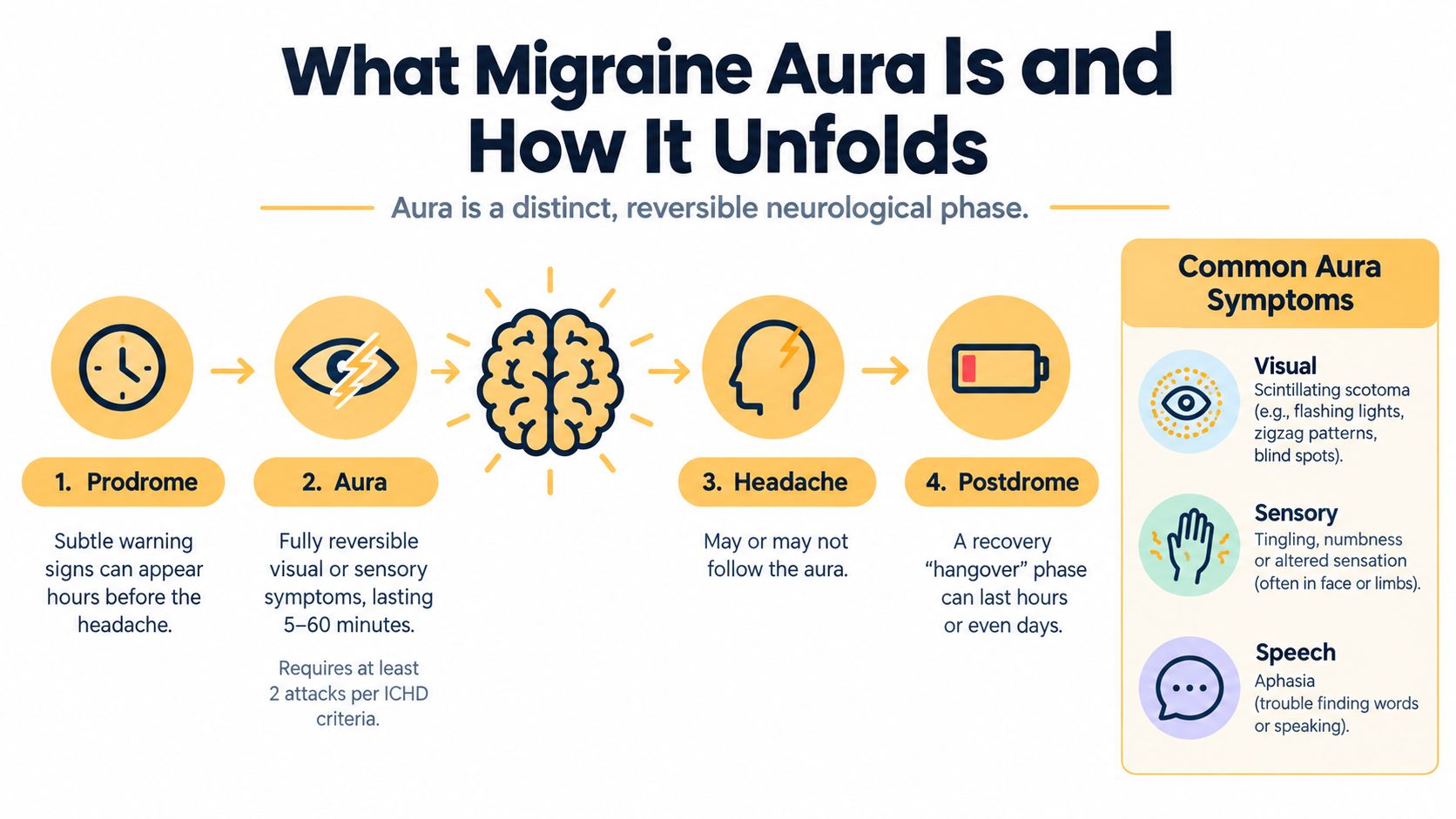
You can think of aura as a temporary wave of neurological disruption. It may affect what you see, feel, or say, but it resolves. That's different from prodrome, which is the early warning phase before an attack, and different from postdrome, the drained or foggy period after it.
If you want a fuller explanation of symptom types and examples, ReliefMigraine's guide on what migraine aura is can help put names to what you're experiencing.
What people often notice first
Visual symptoms are the classic example. You might see flashing lights, shimmering edges, jagged lines, or a blank area in your vision. Other people notice tingling that spreads, numbness, or brief speech and language difficulty.
A simple way to log it is:
- What changed first. Vision, sensation, or speech.
- How long each symptom lasted. Keep it approximate if needed.
- Whether head pain followed. Note if it started during aura, soon after, or not at all.
Later in the attack, this timing gets fuzzy. Writing even a few words while it's happening can be more useful than trying to reconstruct it hours later.
A short visual explainer can make the sequence easier to picture:
Aura is a neurological event with a time pattern. Once you understand the sequence, it becomes much easier to track.
How Common Aura Is Among People With Migraine
Aura is common, but not universal
A lot of public health content accidentally makes aura sound rare. It isn't. Across multiple clinical and population-based sources, about one-quarter to one-third of people with migraine experience aura, including 25% in general references, 29.4% in a population sample over the previous year, and summaries reporting up to 30%, as described in this Scientific Reports study.
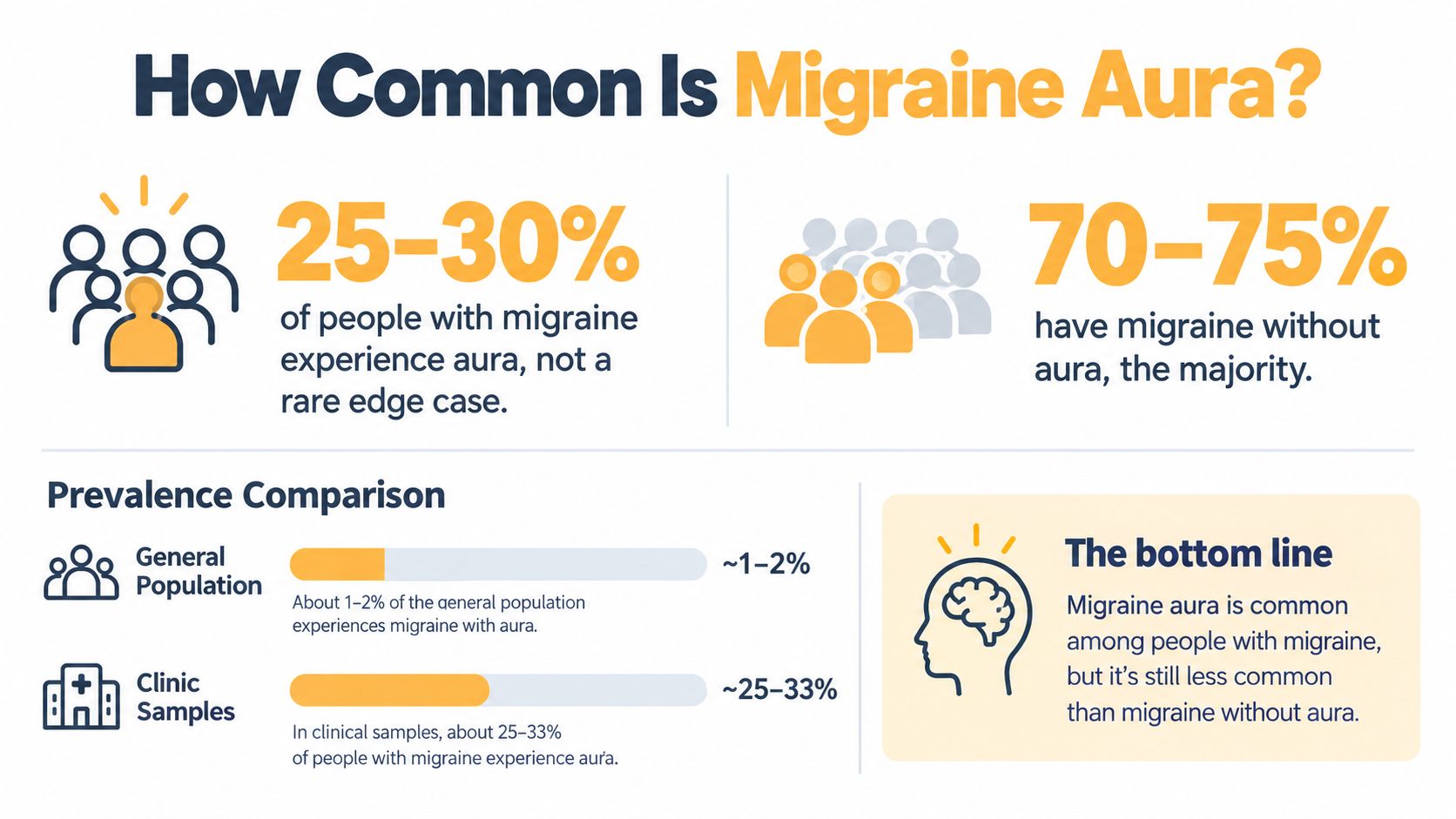
That means aura sits in an important middle ground. It's not the majority experience, but it's far from an edge case. If you have migraine with aura, you're not dealing with something bizarre or vanishingly uncommon.
Why some studies show higher numbers
Readers often get mixed messages. In specialist or tertiary-care settings, the measured frequency of aura is often higher than in general population samples. The same Scientific Reports source notes historically higher rates in more severe or specialist populations, including a 2004 tertiary headache-clinic study where 38% of 952 migraine patients reported aura, and 37.5% among patients meeting IHS migraine 1.1–1.5 criteria in that setting.
That doesn't mean aura is suddenly “becoming more common” inside a clinic. It usually means the clinic is seeing a more selected group of patients, often with more severe, more complex, or more treatment-resistant migraine.
If you compare your experience to online averages, remember that those averages may come from very different groups of people.
For day-to-day life, the takeaway is straightforward. If you have migraine and sometimes get aura, your experience fits within a well-recognized subgroup. If you never get aura, that also fits. Population numbers tell you aura is meaningful. They don't tell you how often it should happen in your body.
Why Aura Frequency Varies So Much From Person to Person
One diagnosis, many patterns
This is the part that frustrates people most. You can meet criteria for migraine with aura and still have aura only now and then. Someone else can have aura regularly. Both patterns can exist within migraine.
In a prospective diary-aided study of migraine with aura, the mean frequency was 21 attacks per year, with a range from 2 to 130 attacks annually, according to the Cephalalgia review and study summary. That range is wide enough to explain why generic advice often feels unsatisfying.
Another clinical study found aura accompanied headache in an average of 19.7% of headaches, the mean aura duration was 27.3 minutes, and headache followed aura by about 10.4 minutes on average, as reported in this tertiary-care migraine study.
What intermittent aura looks like
A population-based study adds an important reality check. Visual aura in 100% of headache attacks was uncommon at 4.0%, while the most common pattern was aura in 10% to 24% of attacks, according to this population study on visual aura frequency.
That helps explain a very common experience: “I have migraine with aura, but not every migraine has aura.” In fact, intermittent aura may be more typical than all-or-nothing aura.
| Pattern | What Studies Show |
|---|---|
| Rare aura | Some people in diary-based research had as few as 2 aura attacks per year in the Cephalalgia study. |
| Intermittent aura | The most common pattern in a population study was aura in 10% to 24% of attacks, not every attack, in the visual aura frequency study. |
| Frequent aura | Diary data showed some people had up to 130 aura attacks annually in the Cephalalgia study. |
| Aura in every attack | This was uncommon. Only 4.0% reported visual aura in 100% of headache attacks in the population study. |
| Short warning window | In one clinic study, headache followed aura by about 10.4 minutes on average, which can matter for early planning in the PubMed study. |
Why your own pattern matters more than the average
The big clinical lesson isn't just that aura varies. It's that your recurrence pattern is useful information. If your aura tends to appear in clusters, or usually shows up before a more intense attack, that's actionable. If it usually lasts around the same amount of time, that's trackable too.
Averages can orient you, but they won't forecast your next week. Your own log can.
What Changing Aura Frequency May Signal and When to Seek Care
Changes can be part of migraine, but they still deserve attention
Migraine patterns aren't frozen. Aura frequency can shift over time, and it can look different across migraine subtypes. Clinical guidance notes that some people have fewer than 5 aura attacks yearly, while 15.3% have aura at least weekly, and it also highlights aura without headache, prolonged aura, and rarer subtypes such as brainstem, hemiplegic, and retinal aura in the bpac clinical review.
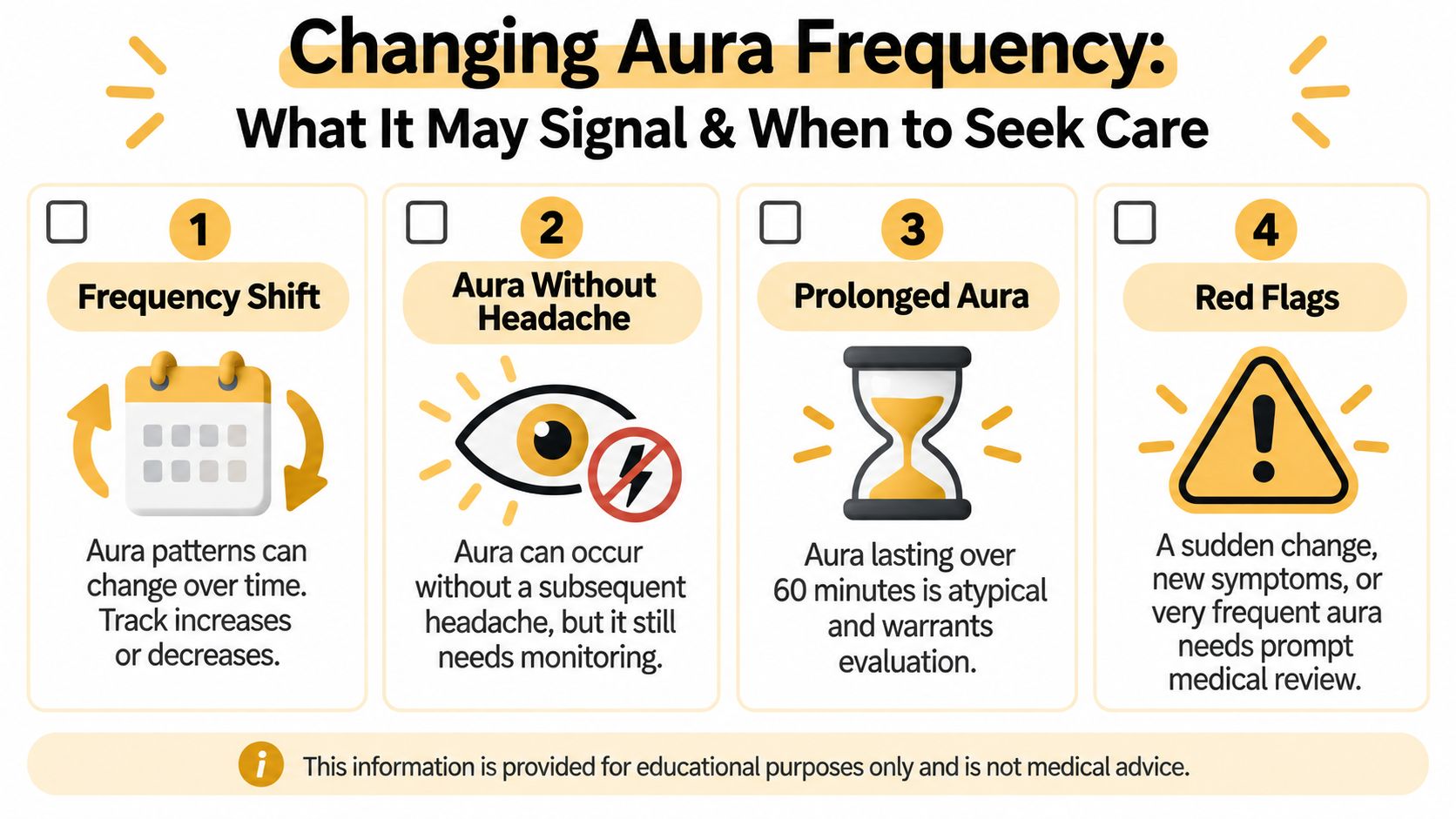
That's one reason frequency changes shouldn't be dismissed, even if you've had aura for years. A shift doesn't automatically mean danger, but it does mean the pattern has changed, and changed patterns are worth documenting.
If you want a structured list of symptoms to compare against your usual attacks, this migraine symptom checklist can help you note what's familiar and what feels new.
When to contact a clinician soon
Bring it up with a healthcare provider if your aura starts happening much more often than usual, lasts longer than your usual pattern, appears without the headache pattern you normally get, or includes symptoms you haven't had before. The same clinical literature also notes that formal diagnosis requires at least two fully reversible aura episodes, which is one reason accurate logging matters in early evaluation.
A simple note for your appointment can include:
- Recent frequency change. More often, less often, or clustered.
- Symptom pattern. Visual only, sensory, speech, or mixed.
- Timing change. Longer, shorter, or headache no longer follows the same way.
- Functional impact. Trouble working, driving, reading, or speaking.
A changing aura pattern is easier for a clinician to evaluate when you can describe timing and recurrence, not just how scary it felt.
When to seek immediate care
Some symptoms need urgent evaluation rather than watchful tracking. Seek immediate medical care for any of the following:
- Sudden severe headache. Especially if it feels abrupt and unlike your usual migraine.
- Headache with fever or stiff neck. This needs prompt medical attention.
- Neurological changes that don't fully resolve. Persistent weakness, confusion, speech trouble, or vision loss should be evaluated urgently.
- Headache after head injury. Don't assume it's “just migraine.”
This article is for informational purposes and is not medical advice. Consult a healthcare provider for personalized guidance.
How to Track Aura Frequency and Spot Your Personal Trends
Start with one simple entry per aura event
Tracking doesn't need to become a second job. The goal is to capture enough information to see patterns. If you prefer paper, use a notebook. If you prefer digital logging, use a notes app, spreadsheet, or migraine tracker.
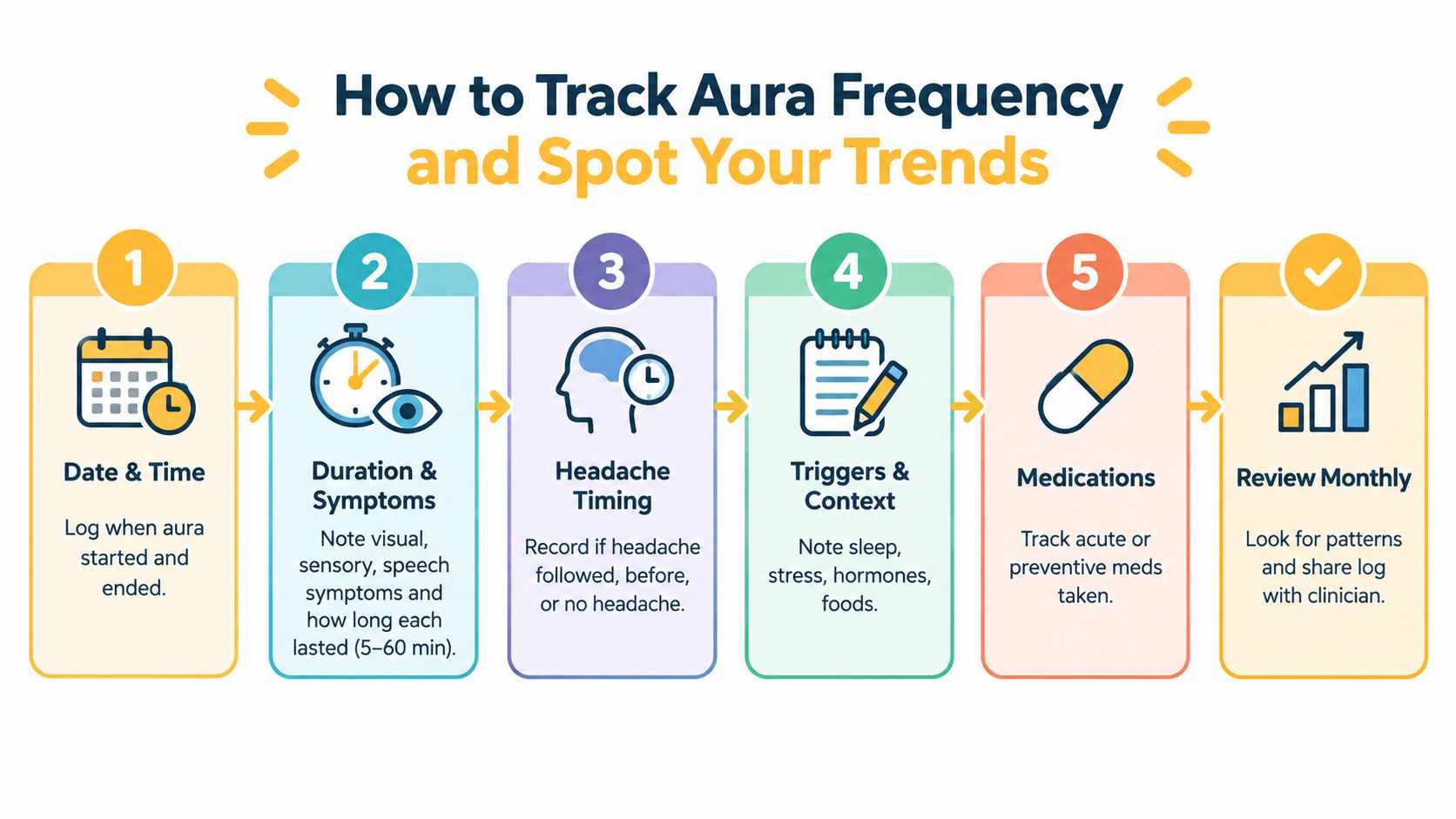
A useful entry includes:
- Date and start time. When the aura began, and when it ended if you can tell.
- Symptom type. Visual, sensory, speech and language, or a combination.
- Duration. Estimate each symptom if they came in sequence.
- Headache timing. During aura, after aura, before aura, or no headache.
- Context. Sleep disruption, stress, skipped meals, screen exposure, weather shift, or other factors you personally suspect.
- What you did. Rest, dark room, over-the-counter option, prescription treatment, hydration, food, or nothing.
For a digital approach focused on migraine logs over time, ReliefMigraine's guide to migraine headache tracking gives a practical framework for recording symptoms consistently.
Use three metrics you can review monthly
Instead of staring at single entries, turn them into simple trend lines.
Aura days per month
Count how many days included aura, even if you had more than one symptom in a single attack.Share of migraine attacks that include aura
If you had several migraine attacks in a month, how many included aura? This helps distinguish “more migraine” from “more aura within migraine.”Typical duration
Write down your usual duration range. If it starts changing, that's useful to note.
“Track consistency, not perfection.” Missing a few entries matters less than keeping the same basic format over time.
Review in short windows
Look back every 4 to 8 weeks instead of every day. That's usually long enough to notice whether aura is stable, drifting upward, clustering around certain conditions, or separating from your usual headache pattern.
When you review, ask:
- Is aura appearing more often than before?
- Is it tied to specific contexts?
- Does it usually lead to a headache, or is that changing?
- Are the symptoms themselves staying familiar?
This is also where environmental details can help. If you already monitor weather, air quality, pollen, sleep, and stress, place aura events next to those variables and look for repeatable overlap rather than one-off coincidences.
Using Frequency Trends to Adjust Management and Forecast Risk
Turn the pattern into a plan
Once you know your migraine aura frequency pattern, you can use it in practical ways. If aura tends to cluster during stressful weeks, after poor sleep, or around environmental shifts, that's a cue to tighten the basics: regular meals, hydration, steadier sleep, reduced sensory load, and early pacing of your day.
If your aura usually acts as a warning before head pain, the timing matters. In one study, headache followed aura by about 10.4 minutes on average in that cohort, as noted earlier in the clinical literature. Your personal timing may differ, but once you know your usual sequence, you can prepare your environment faster, limit driving or screen demands if needed, and follow your clinician's care plan earlier in the attack.
Forecasting helps most when it's personal
Generic migraine advice often stops at “track your triggers.” A better step is to connect aura timing with your broader migraine record. If you use an app, look for tools that let you timestamp symptoms, review recurrence, and compare attacks against context like sleep and environmental exposures. Relief is one example. It combines symptom logging with hour-by-hour risk forecasting based on personal history and local conditions, which can help you notice when rising aura frequency is part of a broader pattern rather than a random bad week.
This article is for informational purposes and is not medical advice. Consult a healthcare provider for personalized guidance.
If aura feels random, Relief can help you turn scattered episodes into a visible pattern by logging symptoms, timing, triggers, and medications in seconds. Over time, you can compare aura events with weather, air quality, and your broader migraine history so you have something concrete to review, both for your own planning and for conversations with your clinician.


