
You wake in the dark with pain already established, perhaps with nausea, light sensitivity, or the unmistakable pressure of a migraine attack. Migraines at night can happen during sleep or upon waking because sleep, circadian timing, and migraine biology influence one another. The pattern is recognized in sleep medicine, and managing it involves more than trying to sleep longer.
This article is for informational purposes and is not medical advice. Consult a healthcare provider for personalized guidance.
Table of Contents
Why Migraines Strike at Night
You may fall asleep feeling fine, then wake several hours later with throbbing pain and no obvious explanation. Or you may open your eyes near morning with nausea and photophobia, meaning sensitivity to light, before you've even left bed. That experience can feel random, but nighttime attacks often follow a recognizable pattern.
Sleep-related migraine has a formal definition. It describes attacks that occur during nocturnal sleep and/or upon awakening, with one widely used research threshold requiring at least 75% of attacks to occur in that window. Research also found that this pattern increased with age, from 16% among patients aged 20 to 30 to 58% among patients aged 61 to 70 (sleep-related migraine research).
That doesn't mean every headache that wakes you is migraine. Migraine is a neurological condition that may include moderate or severe pain, nausea, photophobia, phonophobia, or aura. Aura refers to temporary neurological symptoms, such as visual changes or tingling, that can occur before or during an attack. A headache can occur without migraine features, while migraine can sometimes occur with little head pain.
Why timing matters
Nighttime attacks may reflect altered circadian regulation, the internal timing system that helps coordinate sleep, wakefulness, hormones, and other daily rhythms. This makes the clock itself relevant. The same person may have different risks after a stable sleep schedule than after irregular bedtimes, overnight work, or repeated awakenings.
Night-onset patients have also been linked with poorer sleep quality, insomnia, and lower sleep duration in the evidence base (sleep and migraine review). Those findings validate the experience without reducing it to “you didn't sleep well.” Your migraine may be interacting with sleep timing, arousal, and brain sensitivity in a way that deserves proper tracking and medical attention.
Practical rule: If attacks repeatedly occur during sleep or on waking, record the timing as a symptom pattern, not just as another trigger.
The Sleep-Migraine Connection Explained
Sleep and migraine operate like two systems connected to the same control panel. A fragmented night can raise vulnerability to an attack, while pain, nausea, anxiety, or treatment effects can make sleep more difficult. This bidirectional relationship means an attack may begin after disturbed sleep, yet the migraine itself can then prolong the disruption.
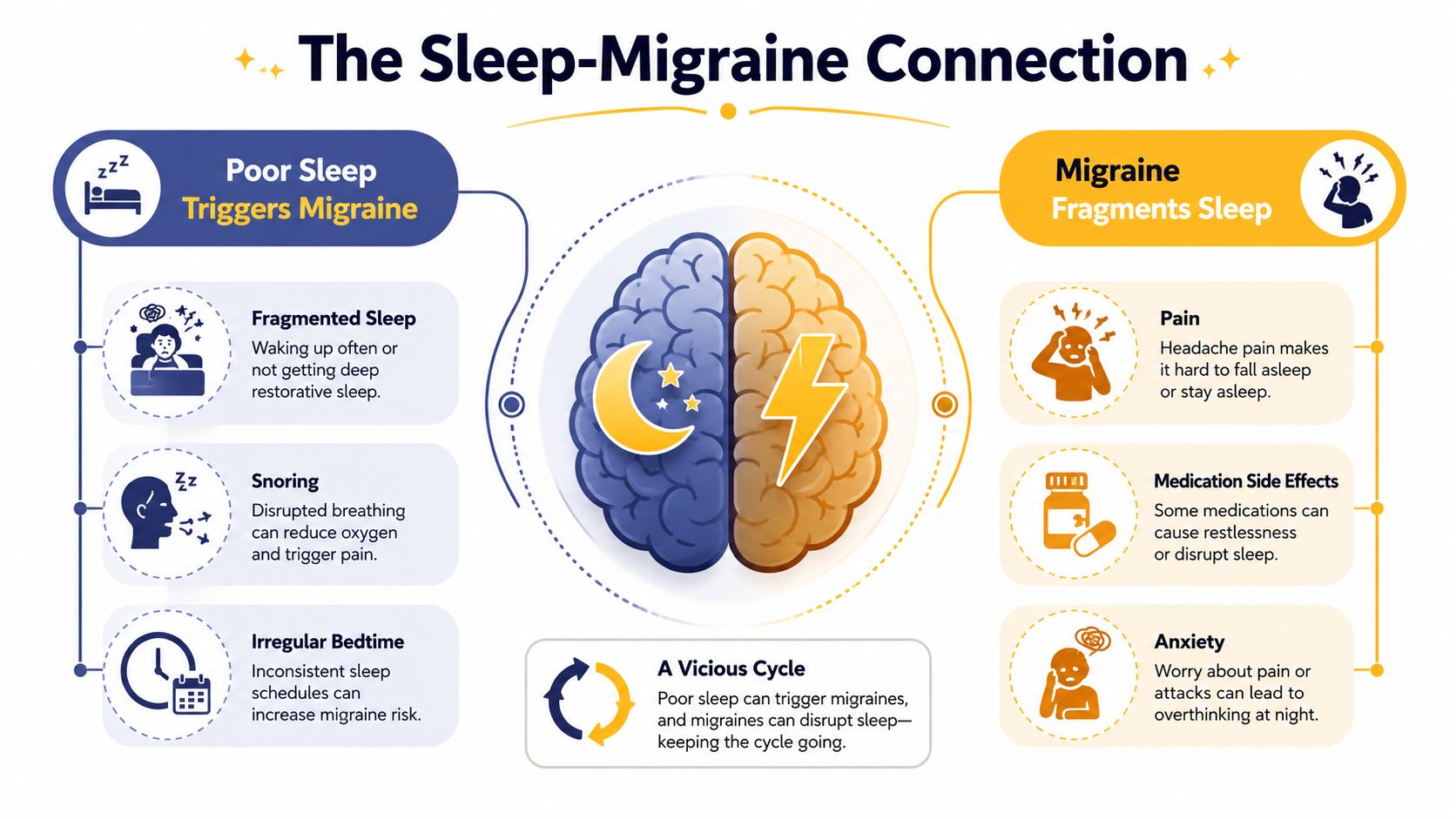
REM sleep and pre-attack physiology
Research has identified a measurable relationship between nighttime migraine and REM sleep, the stage linked with vivid dreaming and distinctive brain activity. In one polysomnographic study, the nights before migraine attacks included reduced REM activity, a tendency toward lower total REM density, longer REM latency, and a marginal increase in slow-wave sleep compared with control nights (polysomnographic study of migraine and REM sleep).
Sleep-stage transitions may matter too. Reviews describe arousals from sleep as more likely during REM, and some people with migraine show altered REM-related EEG arousal patterns. These findings do not show that REM disruption causes every nighttime attack. They do suggest that overnight arousal can affect migraine risk even when your total time in bed seems reasonable.
A prospective cohort study also challenges the simple advice to “just sleep more.” Headache days were followed by only about 7.3 minutes of extra objectively measured sleep, with no meaningful worsening in sleep efficiency, wake after sleep onset, or objective sleep quality (prospective sleep and migraine cohort). In that study, subjective low sleep efficiency was associated with 39% higher odds of headache the following day, with an odds ratio of 1.39 and a 95% confidence interval of 1.06 to 1.81.
The useful distinction is between sleep duration and sleep continuity. Staying in bed longer may not restore sleep that is repeatedly interrupted. Frequent awakenings can leave the brain without the steady, predictable pattern it needs.
Circadian misalignment adds another layer
Circadian disruption may result from rotating schedules, overnight work, irregular bedtimes, or changes in the light-dark routine. A 2025 meta-analysis found that irregular night shifts were associated with higher migraine odds, with an odds ratio of 1.61, a 95% confidence interval of 1.27 to 2.04, across 13 studies involving 38,798,271 people (night-shift migraine meta-analysis). The same evidence reported higher odds in females.
A separate 2026 study reported that daylight saving time changes nearly doubled migraine frequency while reducing deep sleep (night-shift and circadian migraine evidence). Together, these findings place circadian timing beside sleep quality as a separate risk layer. A person can have enough hours in bed and still face added risk when the sleep-wake schedule conflicts with the body's internal clock.
Common Nighttime Migraine Triggers
At night, a quiet bedroom can still gather several migraine risks in one place. Warm air, repeated noise, an irregular bedtime, alcohol, or a delayed meal may affect one person and leave another unchanged. Triggers are personal variables, not universal rules.
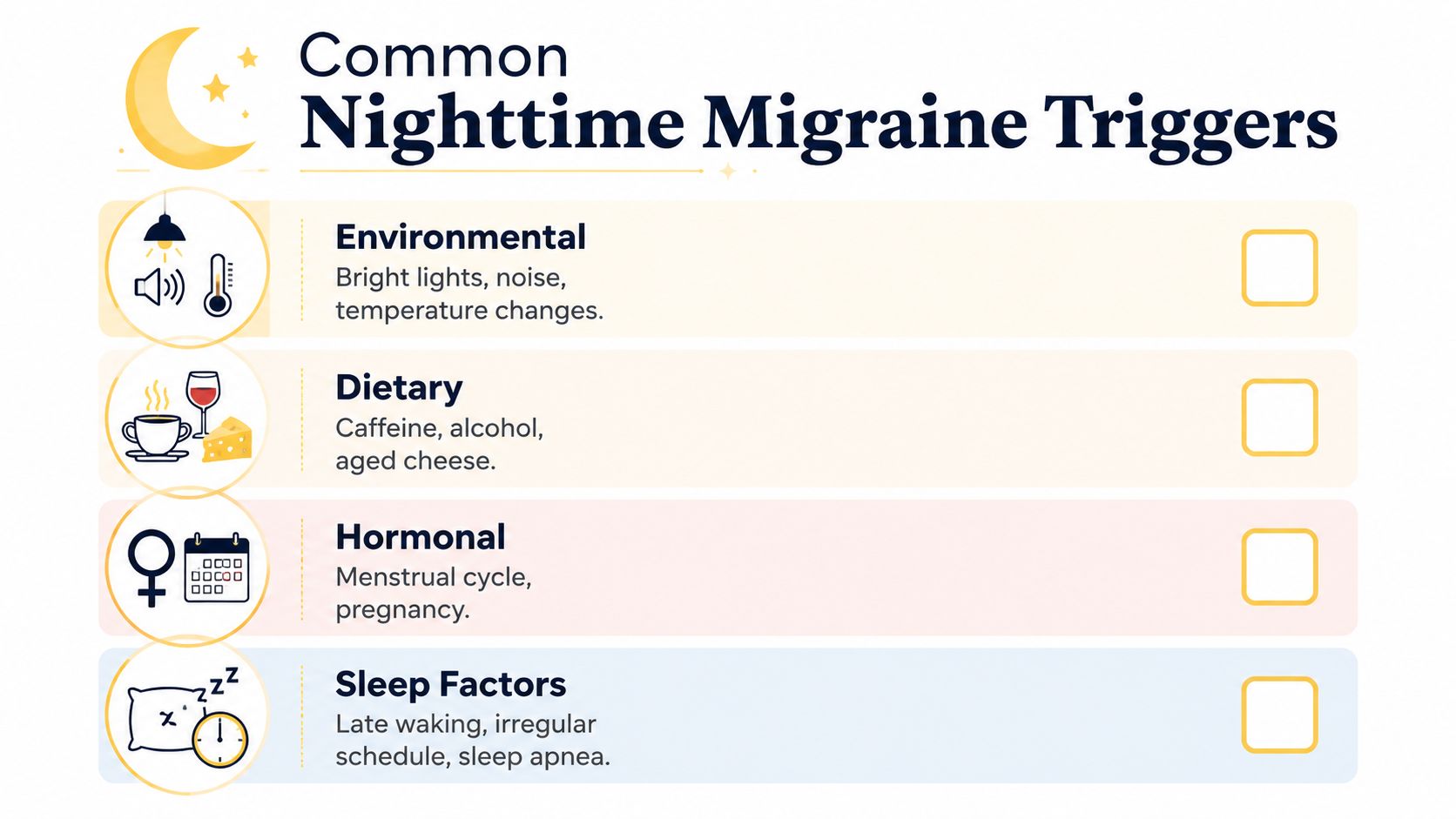
Sort possible triggers into categories before you start tracking. A clear framework works better than a vague record of everything that happened during the day.
Sleep and schedule variables
Inconsistent bedtimes, sleeping much later than usual, and repeated awakenings can all matter. Sleep fragmentation is like a broken rhythm rather than a simple shortage of hours. Snoring, gasping, or suspected obstructive sleep apnea can interrupt that rhythm and should be discussed with a healthcare provider, not dismissed as a minor nuisance.
Night-shift exposure belongs on the same tracking list. Irregular work hours and daylight saving time changes suggest that circadian misalignment may contribute independently of sleep loss. Your body clock can therefore become a risk factor even when time in bed seems adequate.
Environmental conditions
Check whether attacks follow changes in:
- Temperature and humidity: An unusually warm or stuffy room may disturb sleep.
- Light and noise: Streetlights, early daylight, alarms, pets, or household activity can cause repeated arousals.
- Air conditions: Weather changes, air quality, pollen, wind, and barometric pressure may correlate with attacks for some people.
- Physical comfort: Neck strain, an unsuitable pillow, or a mattress that leads to frequent repositioning can weaken sleep continuity.
These conditions are possible contributors, not confirmed causes, until your own records show a repeated pattern.
Evening intake and routine
Caffeine, nicotine, alcohol, and heavy meals near bedtime may interfere with stable sleep. Some people also identify foods such as aged cheese, but no food should be treated as a trigger without a consistent personal association.
Use a simple log. Record bedtime, wake time, awakenings, suspected snoring, evening intake, unusual weather, and whether pain began during sleep or after waking. Repeated associations are more useful than conclusions drawn from one difficult night.
Prevention Strategies That Work
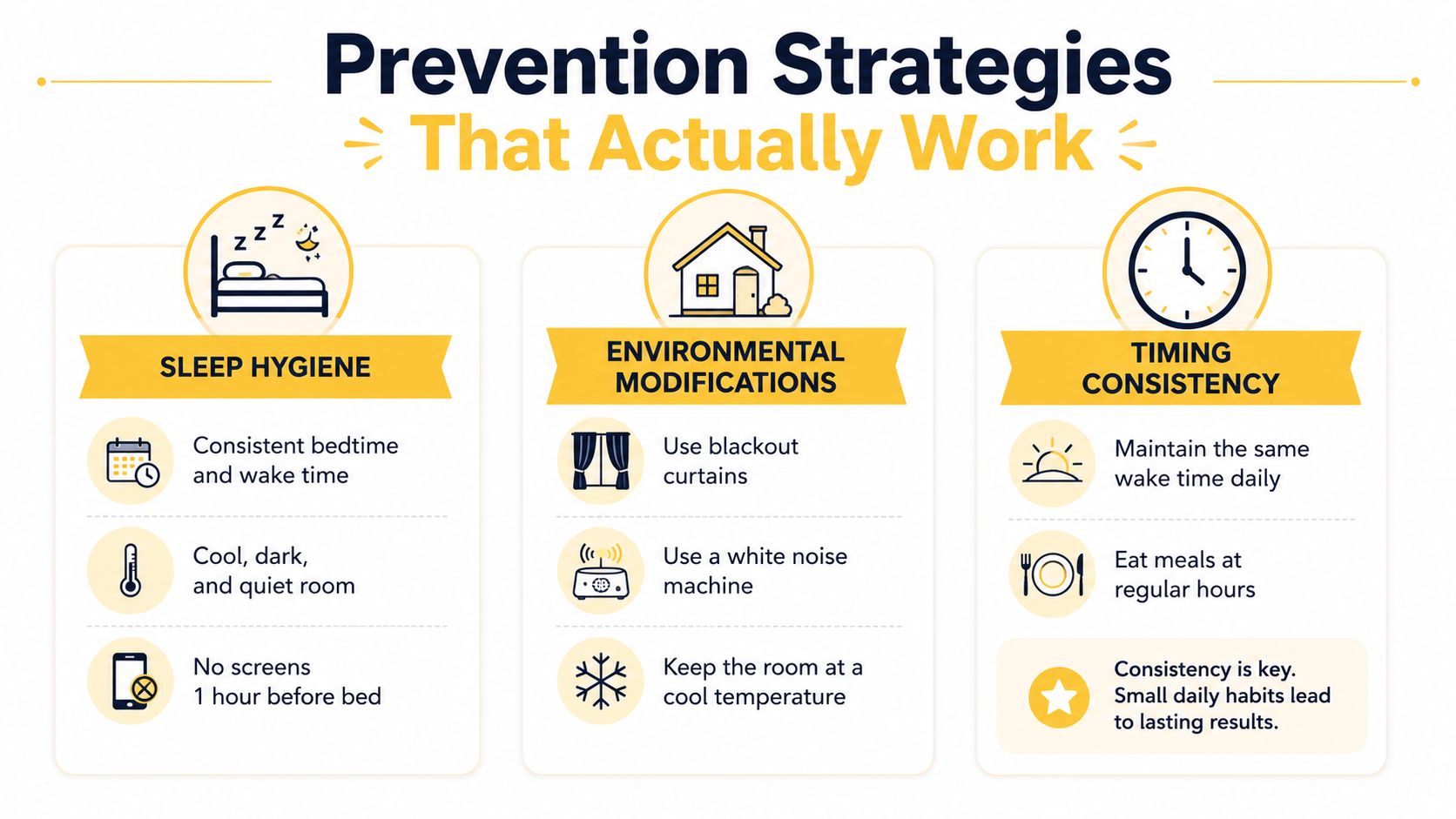
A stable sleep pattern gives your brain fewer abrupt changes to manage. Start with one practical adjustment, keep it steady, and watch whether nighttime attacks change. Prevention is less like flipping a switch and more like tuning a clock, small repeated changes make patterns easier to recognize.
Stabilize the clock
Keep bedtime and wake time as consistent as your circumstances allow, including weekends. Regular timing supports your circadian rhythm and creates a clearer baseline for seeing whether schedule changes coincide with attacks.
If you nap, keep it brief. The Mayo Clinic recommends limiting naps to 20 to 30 minutes, alongside consistent bed and wake times (Mayo Clinic migraine and sleep guidance). A late or extended nap can shift sleep pressure, making nighttime sleep more fragmented.
Regular meals may also help prevent going to bed overly hungry or uncomfortably full. Notice whether caffeine, nicotine, or alcohol forms part of your evening pattern, without assuming any one item is a trigger for everyone.
Reduce overnight disruption
Your bedroom should support uninterrupted sleep. Blackout curtains, an eye mask, earplugs, or steady background noise may help if light, sound, or household activity causes repeated arousals. Keep screens out of bed where possible, since scrolling can prolong wakefulness and add light stimulation.
The goal is not perfect sleep. It is fewer interruptions that can disturb sleep stages, including REM patterns, and leave your nervous system more vulnerable by morning. Mayo Clinic guidance also supports reducing screen use in bed and avoiding caffeine, nicotine, alcohol, and heavy meals before sleep.
Build a repeatable wind-down
Use the same low-stimulation sequence each night. Dim the lights, prepare the room, and practise slow breathing or another relaxation method. If worry keeps you alert, write tomorrow's tasks down before bed so your mind does not have to rehearse them while you are trying to sleep.
Consistency beats intensity. A modest routine you can repeat provides more useful information than a dramatic change abandoned after a few nights.
Use Relief migraine tracking to record sleep timing and attack patterns alongside daily observations. It is a tracking and awareness tool, not a medical treatment or substitute for professional care.
Managing Attacks When They Happen
When a migraine wakes you, reduce stimulation first. Keep the room cool, dark, and quiet if possible. A cold pack wrapped in fabric, slow breathing, hydration if you can tolerate it, and a comfortable position may help you manage the immediate sensory load.
Acute treatment and prevention serve different purposes. Acute treatment aims to reduce an individual attack after it starts. Depending on your health history and clinician's advice, this may include an over-the-counter option or a prescribed treatment. Follow the product label or your healthcare provider's instructions, and don't combine medicines or repeat doses without appropriate guidance.
If you recognize a prodrome, the early phase that can include fatigue, mood changes, food cravings, or neck discomfort, note it. Some people also experience aura, while others don't. Your clinician can explain whether an agreed treatment plan should begin at a particular stage.
| Approach | Main purpose | What to discuss |
|---|---|---|
| Environmental steps | Reduce sensory stimulation during an attack | Darkness, quiet, cooling, and a low-demand space |
| Over-the-counter options | Address an individual attack when appropriate | Safety, interactions, medical conditions, and label directions |
| Prescription treatment | Treat acute attacks or reduce future frequency | Which treatment category fits your symptoms and history |
| Preventive care | Lower attack frequency or severity over time | Recurring nighttime attacks, sleep disorders, and treatment goals |
A headache diary can help your clinician distinguish attacks that need acute care from a pattern that may call for prevention. If attacks keep waking you, occur frequently, or interfere with work and daily life, schedule an evaluation rather than repeatedly managing them alone. You can review Relief's privacy information before deciding whether its tracking approach fits your preferences.
How Tracking Reveals Your Personal Patterns
Nighttime migraine patterns are difficult to remember accurately. You may recall the pain but forget whether you woke once or several times, ate late, worked overnight, noticed a weather change, or went to bed at an unusual time. Structured tracking turns those details into a timeline.
Record the basics soon after waking or once the attack settles:
- Timing: Note when you went to bed, when you woke, and whether pain began during sleep or on awakening.
- Sleep continuity: Log awakenings, difficulty falling asleep, suspected snoring, and how rested you felt.
- Migraine features: Record severity, nausea, aura, photophobia, phonophobia, and postdrome, the recovery phase after the main attack.
- Possible exposures: Add evening caffeine, alcohol, meals, stress, weather, air quality, pollen, and schedule changes.
- Treatment response: Note what you used and whether the attack changed, without changing medication instructions on your own.
Relief combines health data with local weather, air quality, and pollen information to provide an hour-by-hour risk forecast. Its logs can include severity, symptoms, triggers, and medications, while summaries show migraine-free streaks, total migraine hours, average attack time, and changing severity. Those features can help you compare sleep timing with environmental signals instead of assuming every nighttime attack came from the same cause.
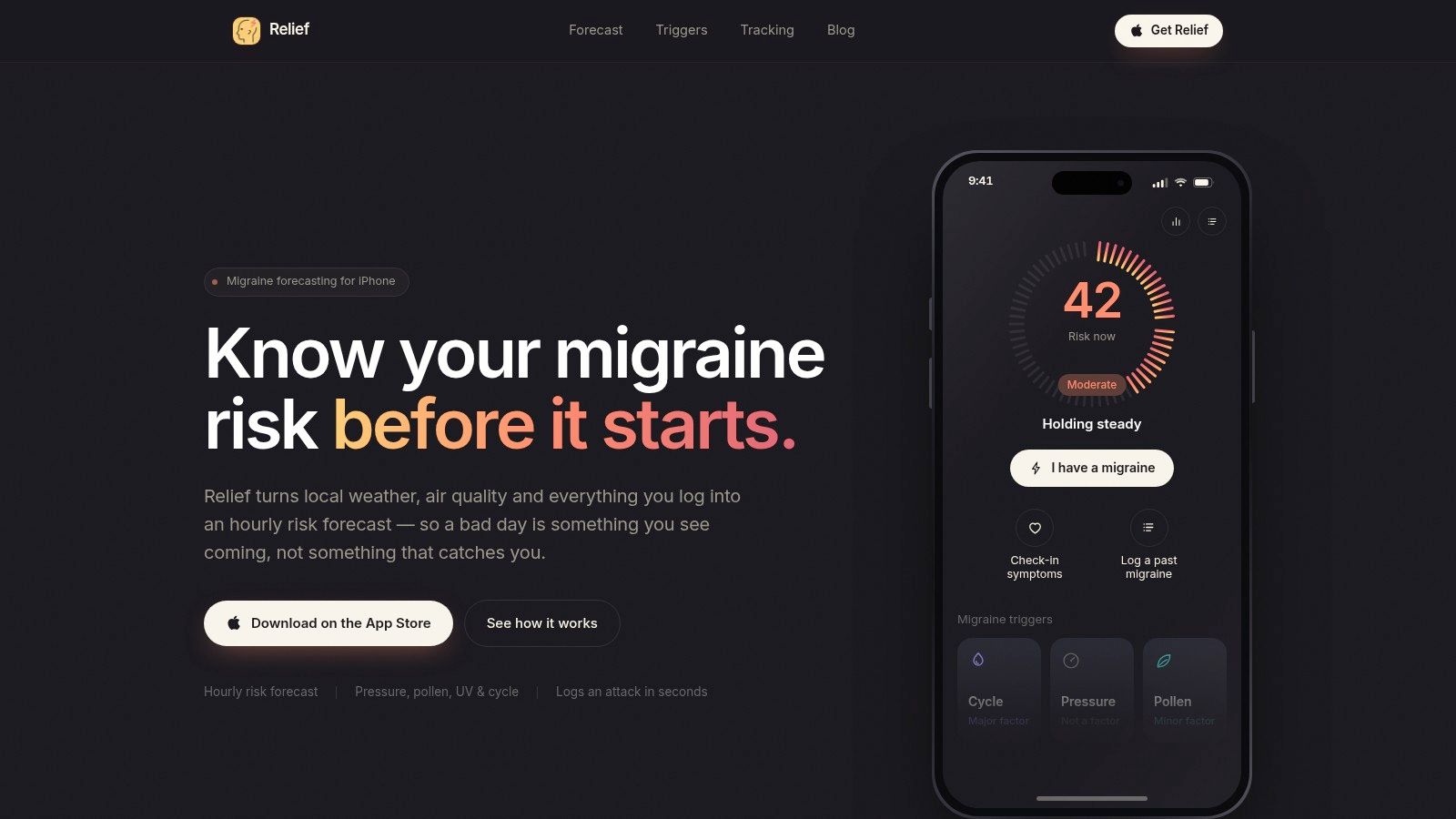
The goal isn't perfect data. A useful record is one you can maintain during difficult weeks and bring to a healthcare appointment. Learn more about Relief's approach to migraine tracking, and treat any pattern it surfaces as a question to investigate, not a diagnosis.
When to Seek Medical Help
Seek immediate medical care for a sudden, severe headache, a headache with fever or stiff neck, new or unusual neurological changes, or a headache after a head injury. Neurological changes can include new weakness, confusion, trouble speaking, fainting, or major vision changes.
You should also arrange a healthcare appointment if migraines repeatedly wake you, your pattern changes, attacks become more frequent or disabling, or you suspect sleep apnea because of loud snoring, gasping, or repeated awakenings. A clinician may need to distinguish migraine from other headache disorders and assess sleep-related contributors.
This article is for informational purposes and is not medical advice. Consult a healthcare provider for personalized guidance.
Relief helps you log nighttime attacks, sleep timing, symptoms, medications, and possible environmental signals so you can recognize patterns before they become harder to manage. Visit Relief to explore a practical tracking tool that supports awareness and planning without replacing medical care.


