If you're a man dealing with pounding head pain, nausea, light sensitivity, or that wiped-out feeling after an attack, you're not overreacting and you're not dealing with "just a headache." Migraines in men are real, common, and often under-recognized, partly because many men get told to push through symptoms that deserve medical attention.
A migraine is a neurological condition, not merely head pain. It can involve prodrome (early warning symptoms), aura (temporary visual or sensory changes for some people), the attack itself, and postdrome (the drained, foggy aftermath). Knowing that full pattern can help you respond earlier and more effectively.
Table of Contents
Why Migraines in Men Are Different and Often Overlooked
A lot of men hear some version of "drink water," "take something and move on," or "it's probably stress." That response misses the point. Migraine can knock out concentration, tolerance for light and sound, exercise capacity, and your ability to function normally, even when you don't look visibly ill.
The numbers matter
Men are affected far more often than many people assume. In Europe, 12% of adult men ages 18 to 65 are estimated to have migraine, with an overall rate of 9% across all male ages, according to a review in the Journal of Headache and Pain hosted on PubMed Central. The same source notes that migraine was identified by the Global Burden of Disease Survey 2010 as the thirteenth leading cause of disability for men in Europe, responsible for 2.2% of all years of life lost to disability, and that nearly 1% of men live with a chronic form involving headaches on 15 or more days per month.
That matters because the stereotype is still backwards. Migraine is more common in women, but it is not a women-only condition. It is a major neurological disorder in men too.
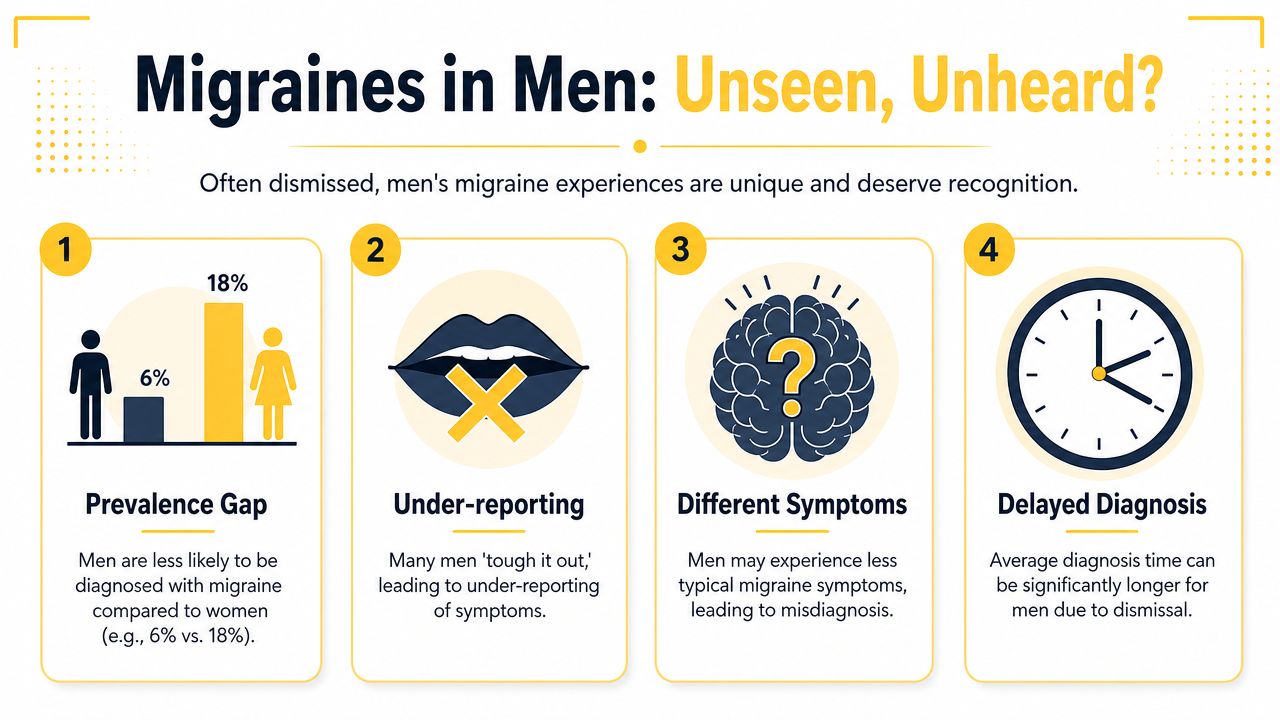
Why men often go unrecognized
The biology is only part of the story. The social side matters too.
Many men minimize symptoms because migraine doesn't fit the script of what they think they should tolerate without complaint. That can delay diagnosis, muddy the history you give a clinician, and keep you from spotting patterns early. Instead of saying, "I had a migraine attack," a lot of people say, "I had a rough headache after the gym," or "I was just off all day."
Practical rule: If pain comes with nausea, light sensitivity, sound sensitivity, visual disturbance, or a need to stop normal activity, treat that history seriously when you talk with a clinician.
Men may also frame symptoms around performance problems instead of migraine symptoms. They describe poor focus, irritability, needing darkness, skipping workouts, or feeling wrecked the next day. Those details matter because migraine often shows up as a whole-body event, not just head pain.
A useful shift is to stop judging the attack by toughness. Judge it by function. If it repeatedly disrupts work, exercise, driving, parenting, sleep, or recovery, it deserves proper migraine evaluation.
Recognizing Symptoms Beyond Just a Bad Headache
A migraine attack often starts before the pain does and can keep affecting you after the pain fades. If you've been calling the whole thing a "bad headache," you may be missing the early and late phases that make management easier.
The four phases of a migraine attack
Not everyone gets every phase, and not every attack looks the same. But these patterns are common.
Prodrome
Prodrome is the early warning phase. It can show up before the main attack and may include mood changes, unusual fatigue, neck discomfort, food cravings, trouble concentrating, or feeling "off" in a hard-to-name way.
For men, this phase is easy to dismiss as poor sleep, stress, or a tough workday. That's one reason tracking the full pattern matters.
Aura
Aura is a temporary neurological disturbance that happens in some, not all, migraine attacks. It can involve flashing lights, zigzag lines, blind spots, tingling, numbness, or language trouble.
Aura is not required for a migraine diagnosis. Some men assume that if they don't see visual effects, they can't be having migraine. That's false.
Attack
The attack phase is the most commonly recognized aspect. It may involve throbbing or pulsating head pain, often on one side, plus photophobia (light sensitivity), phonophobia (sound sensitivity), nausea, vomiting, and worse pain with physical activity.
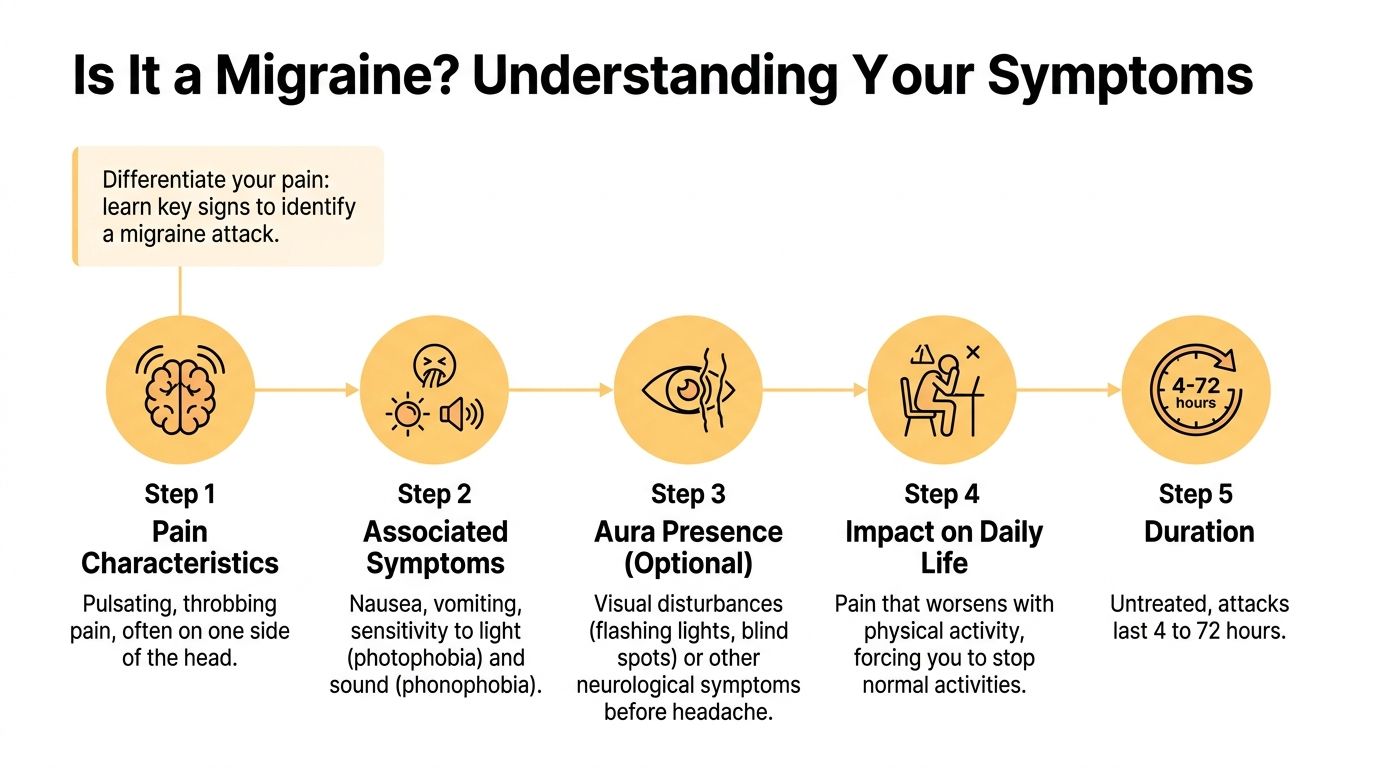
A key clue is that ordinary activity can make it worse. Walking up stairs, lifting, screen exposure, and bright environments may become hard to tolerate.
Postdrome
Postdrome is the aftermath. Many people call it a migraine hangover. You may feel wrung out, mentally slow, irritable, or unusually sensitive even after the worst pain ends.
A lot of people don't realize the attack isn't over when the pain stops. The recovery day counts too.
Migraine attacks in men are often reported to be worst in early adulthood, especially in the 20s, 30s, and 40s, according to the University of Colorado Anschutz report on sex differences in migraine. That age pattern supports what many men notice in real life. Symptoms often peak during years when work pressure, exercise intensity, and family demands are all high.
Migraine compared with an ordinary headache
| Feature | Migraine | More typical non-migraine headache |
|---|---|---|
| Pain quality | Often throbbing or pulsating | Often pressure or tightness |
| Activity | Physical effort may worsen it | Daily movement may be tolerable |
| Light and sound | Sensitivity is common | Less prominent |
| Nausea | Common in many attacks | Less common |
| Before and after effects | Prodrome and postdrome may occur | Usually less layered |
If you've been trying to "man up" through an attack, this is the part to rethink. The more precisely you identify the pattern, the more useful your treatment plan becomes.
Common Migraine Triggers in Men
Triggers aren't universal, and they aren't moral failures. They're clues. The goal isn't to avoid life. It's to learn which combinations tend to stack the deck against you.
The exertion paradox
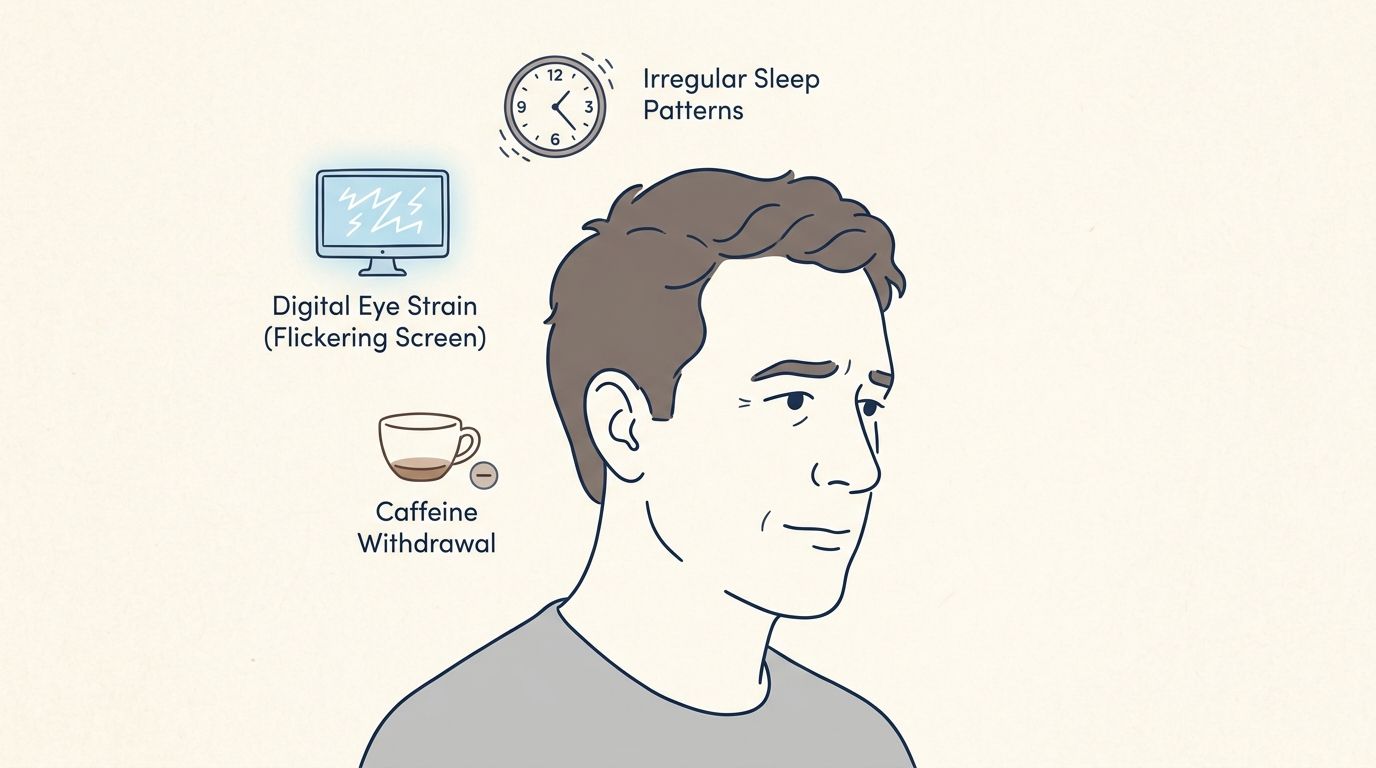
Exercise can help many people over time, yet physical exercise is also reported more often by men as a migraine trigger, alongside alcohol and certain foods, in a 2020 study summarized on PubMed Central. That doesn't mean you should stop moving. It means intensity, timing, heat, hydration, and recovery may matter more than you think.
A common pattern looks like this. You skip food, push a hard workout, get overheated, then develop head pain and light sensitivity later. The workout gets blamed as the sole cause, but the actual trigger may be the stack of factors around it.
What tends to work better
- Ease into intensity: Build gradually instead of jumping from sedentary days into all-out sessions.
- Respect warm-ups and cooldowns: Sudden exertion is harder on some migraine-prone nervous systems.
- Watch the full context: Sleep debt, dehydration, missed meals, and bright heat can turn a manageable workout into a trigger.
- Modify during warning signs: If prodrome symptoms show up, a lighter session or recovery day may be smarter than pushing through.
Sleep changes, alcohol, and routine disruption
That same study found excessive sleep is a significantly more frequent trigger for men than for women. This catches people off guard because sleep is usually treated as only a good thing. In practice, "too much sleep" often means a disrupted rhythm. Weekend sleeping in, vacation schedule drift, long naps, and late nights followed by catch-up sleep can all shift the system.
Alcohol can work similarly. For some men, it isn't the fact of drinking alone. It's the combination of alcohol, dehydration, poor sleep, loud environments, and delayed meals.
This short explainer is useful if exercise seems to trigger attacks for you:
A better approach than blanket avoidance is a short experiment.
- Pick one suspect trigger at a time: Don't change everything at once.
- Track the setup: Note sleep timing, workout intensity, alcohol, food timing, weather, and stress.
- Look for patterns, not perfect rules: A trigger may matter only when combined with other stressors.
How to Get an Accurate Diagnosis
Self-diagnosis has limits. Migraine can overlap with other headache disorders, and some serious conditions can also cause severe head pain. A formal diagnosis helps you rule out dangerous causes, choose the right treatment path, and document the condition clearly if it affects work or daily functioning.
This article is for informational purposes and is not medical advice. Consult a healthcare provider for personalized guidance.
What to bring to your appointment
A good migraine appointment usually gets better when you bring specifics instead of general impressions. "I get bad headaches sometimes" doesn't give a clinician much to work with.
Bring a simple record that covers:
- Attack pattern: When they happen, how long they last, and whether they cluster around weekends, workouts, travel, or poor sleep
- Symptoms beyond pain: Aura, nausea, vomiting, photophobia, phonophobia, dizziness, brain fog, neck pain, or postdrome fatigue
- Function impact: Missed work, leaving social situations, needing darkness, avoiding screens, or stopping exercise
- What you've tried: Over-the-counter medicines, rest, caffeine, hydration, cold packs, or lifestyle changes
If you're a man who's been downplaying symptoms, be direct. Say whether the pain stops you from functioning normally. That's clinically useful information.
When to seek immediate medical care
Some headache symptoms need urgent evaluation, not a routine migraine discussion.
Seek immediate medical care for a sudden severe headache, a headache with fever or stiff neck, neurological changes such as weakness or confusion, or a headache after a head injury.
There is another reason not to shrug this off. Male migraine patients appear to face higher cardiovascular risk. Harvard Health notes that epidemiological data indicates men with migraine have approximately a 2.5-fold increased risk of stroke compared with men without migraine. That doesn't mean every man with migraine will have a stroke. It does mean migraine deserves proper medical attention and, in some cases, broader cardiovascular discussion.
When you meet with a clinician, ask focused questions:
- Could this be migraine or another headache disorder?
- Do my symptoms suggest migraine with aura or without aura?
- Should I be screened for other conditions based on my history?
- When should I worry that a headache is not migraine?
A careful diagnosis is not overkill. It's the base layer for everything that follows.
A Practical Guide to Treatment and Relief
Once migraine is diagnosed, treatment usually works best when you think in categories instead of hunting for one perfect fix. Some tools help reduce frequency. Others help early in an attack. The best plan is the one you can use consistently.
This article is for informational purposes and is not medical advice. Consult a healthcare provider for personalized guidance.
Lifestyle approaches
Start with the basics because they often shape how well everything else works.
Regular sleep and wake times matter more than heroic catch-up weekends. Consistent meals help some people avoid the blood sugar swings that can make attacks more likely. Hydration, stress management, and pacing physical activity also matter, especially if your attacks cluster after disrupted routines.
A realistic lifestyle plan looks like this:
- Stable sleep timing: Aim for regularity rather than perfection.
- Predictable meals: Long gaps without eating can be a problem for some people.
- Screen management: Lower brightness, use breaks, and reduce glare if screens worsen attacks.
- Stress decompression: Short daily routines often work better than waiting until you're overwhelmed.
Over-the-counter options
Many people use non-prescription pain relievers for acute relief. These can help some attacks, especially when taken early enough, but they're not a complete strategy for everyone.
What usually doesn't work is taking them late, taking them inconsistently, or relying on them so often that you end up in a cycle of rebound or medication-overuse headaches. If you find yourself needing frequent rescue treatment, that's a sign to talk with a clinician about a broader plan.
Use over-the-counter treatment as one tool, not your whole system.
Prescription treatments
Prescription treatment generally falls into two buckets. Acute treatments aim to stop or reduce an attack once it starts. Preventive treatments aim to reduce how often attacks happen or how disabling they become.
A clinician may choose among several medication classes based on your symptom pattern, attack frequency, other health conditions, and how you respond to prior treatment. There isn't one best option for everyone, and it's worth saying that clearly. Personal fit matters more than hype.
A productive discussion with your clinician often includes:
- Whether you need acute treatment only or prevention too
- How early you should treat an attack
- What side effects to watch for
- How to avoid overusing rescue medication
Emerging research and devices
Some people also explore neuromodulation devices, which use targeted stimulation to try to reduce migraine symptoms or frequency. These may be useful in certain cases, especially when medication side effects or contraindications are a concern.
Emerging options can be promising, but don't assume newer always means better for you. The right question is whether a treatment fits your pattern, your risk profile, and your daily life.
If you also want more practical support, related ReliefMigraine articles on migraine triggers and routines, migraine at work, and how to talk to a doctor about recurring attacks can help you prepare for the next step.
Proactive Management for Work and Life
Migraine management isn't only about what you do in a dark room once the pain starts. It's also about how you structure an ordinary week so you're less likely to get blindsided.
That matters because the cumulative incidence of lifetime migraine in men is approximately 18%, meaning nearly one in five men will experience migraine at some point, according to the Journal of Headache and Pain. This isn't rare, and it isn't something you have to treat as a personal weakness.
At work during a real attack
A common scenario is the workday migraine that starts as eye strain, irritability, or trouble focusing. You tell yourself you'll finish one more task. Then the light sensitivity ramps up, sound becomes abrasive, and everything gets slower.
In that moment, "powering through" often makes the rest of the day worse. A better approach is to have a simple plan you don't need to invent while impaired.
| Situation | More helpful response | Less helpful response |
|---|---|---|
| Symptoms are building | Reduce light, pause screens, hydrate, use your acute plan early | Waiting until pain is severe |
| You need to communicate | Send a short direct message that you need a break for a medical issue | Overexplaining while you're foggy |
| You're in meetings all day | Step out briefly, reset in a quiet space, reschedule if needed | Staying visible at all costs |
Building a life with fewer surprises
Prevention usually looks less dramatic than treatment. It's often about regular routines and fewer self-inflicted spikes.
Try these habits:
- Protect consistency: Weekends, travel, and heavy social nights can break the routine that keeps attacks quieter.
- Train below your trigger threshold: Exercise is valuable, but all-out sessions when you're underslept or under-fueled may backfire.
- Notice food patterns without creating fear: Some people identify specific food links. Many don't. Look for your own patterns instead of copying someone else's trigger list.
- Talk about migraine plainly: At work and at home, a straightforward explanation usually works better than minimizing until you're nonfunctional.
You don't need to perform toughness to handle migraine well. You need systems that reduce friction when your brain is under stress.
Tracking and Forecasting Your Migraines
Migraine patterns are often obvious only after you've logged them. Before that, it's easy to misread coincidence as cause, or miss combinations that matter more than any single trigger.
Track what happened before, during, and after each attack. Include symptoms, possible triggers, sleep changes, exercise intensity, alcohol, meals, medications, weather shifts, and recovery. Over time, that record can help you and your clinician see whether your attacks follow a pattern tied to routine disruption, exertion, or environmental changes.
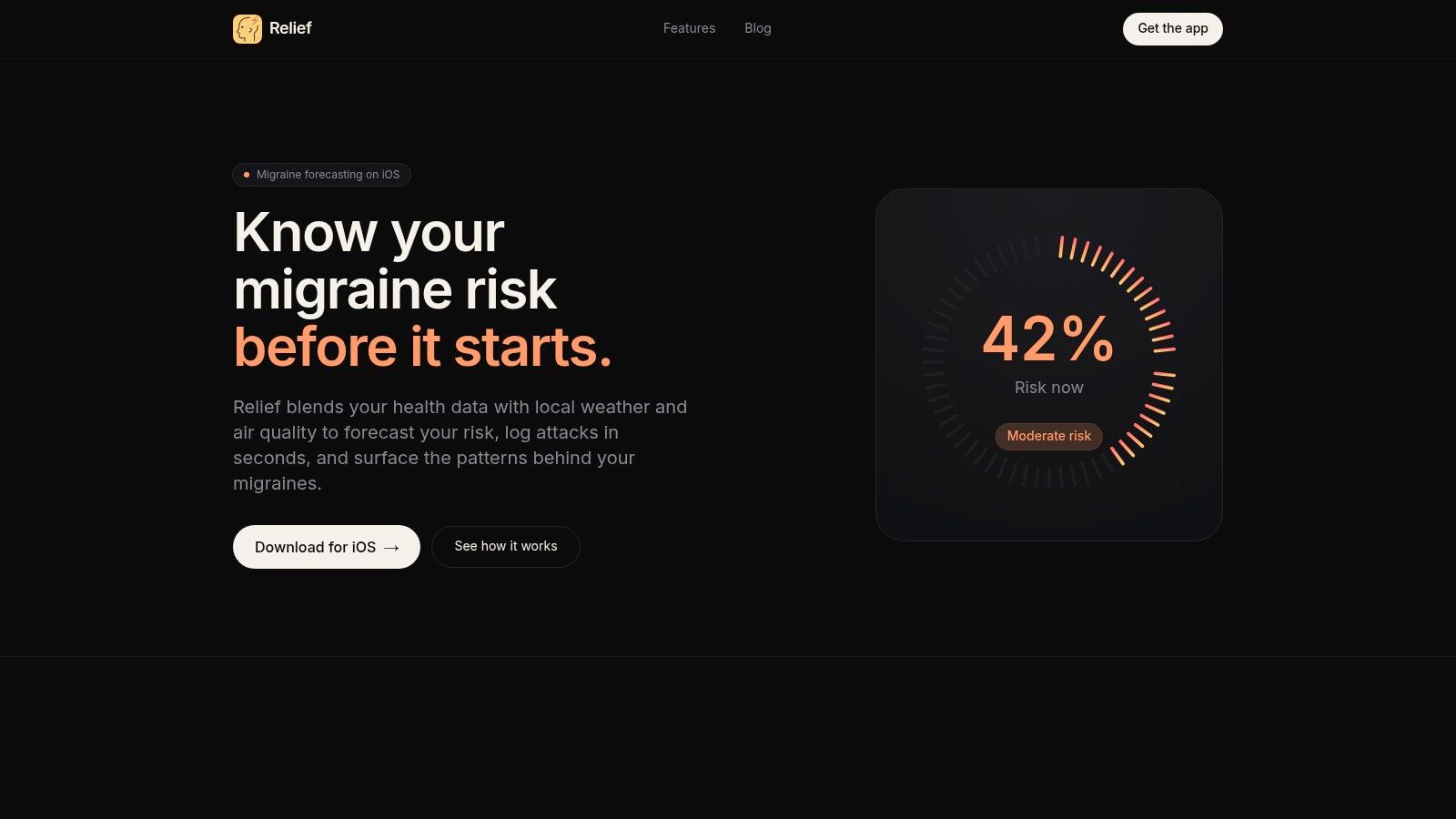
A dedicated tool can make that much easier than scattered notes. The Relief migraine tracking app lets you log attacks quickly and supports pattern awareness by combining your personal history with environmental factors like barometric pressure and air quality. For many people, that kind of structured tracking is what turns vague hunches into useful decisions.
If you want a calmer, more practical way to spot patterns and prepare for higher-risk hours, Relief can support your tracking and awareness without replacing medical care.


