You can have a headache that feels like a migraine, a neck that feels tight or sore, and still wonder whether the problem started somewhere else. Yes, a pinched nerve in the neck can cause headaches, and clinicians usually talk about that pattern as cervicogenic headache rather than a simple “bad headache.” This article is for informational purposes and is not medical advice. Consult a healthcare provider for personalized guidance.
Table of Contents
When Your Headache Starts in Your Neck
You wake up with pain at the base of your skull, turn your head, and the pain climbs upward. Maybe your neck feels stiff first, then your head starts throbbing, and someone tells you it is “just tension.” That pattern can happen when a pinched nerve in the neck or another cervical problem is driving the head pain, and the clinical label is often cervicogenic headache.
This gets missed often, especially if you already have a migraine diagnosis. Migraine and neck-related headache can overlap, but they are not the same thing, and the distinction matters because the treatment focus changes when the neck is the source.
A cervicogenic headache is uncommon but well established. Cleveland Clinic notes that symptoms often begin after age 30, many people do not seek care until their late 40s, and one review reports a mean diagnosis age of 49.4 years (Cleveland Clinic). That delay is one reason people can spend years treating the head while the neck keeps re-triggering the pain.
Practical rule: if head pain reliably follows neck movement, sustained posture, or a stiff upper neck, do not assume it is a primary headache disorder.
How a Neck Nerve Sends Pain to Your Head
The reason a neck problem can feel like a head problem is referred pain. That means the body sends pain from one place, but your brain interprets it somewhere else because the signals overlap. In the upper neck, the nerves from C1 through C3 feed into the trigeminocervical nucleus, a shared pain-processing area that also receives input from the trigeminal nerve, which carries sensation from the face and head (NCBI Bookshelf).
What referred pain means
Crossed phone lines. The “call” starts in irritated cervical tissue, but the switchboard mixes the message with head-related pain pathways, so you feel it in the occiput, temples, or behind the eyes. That's why a neck lesion can produce pain far from the actual source.
The technical term for the incoming pain fibers is nociceptive afferents. You don't need the jargon to understand the effect, though. Your nervous system is receiving danger signals from the neck, and because of where those signals converge, the pain is felt as head pain.
Why the upper neck matters so much
Upper-cervical structures are especially important because they're tightly linked to head pain referral. PM&R KnowledgeNow reports that the C2-3 zygapophyseal joint is responsible for about 70% of cervicogenic headache cases, with the atlantoaxial joint and C3-4 joint also common pain generators (PM&R KnowledgeNow). That's one reason movement, posture, and joint irritation can matter so much.
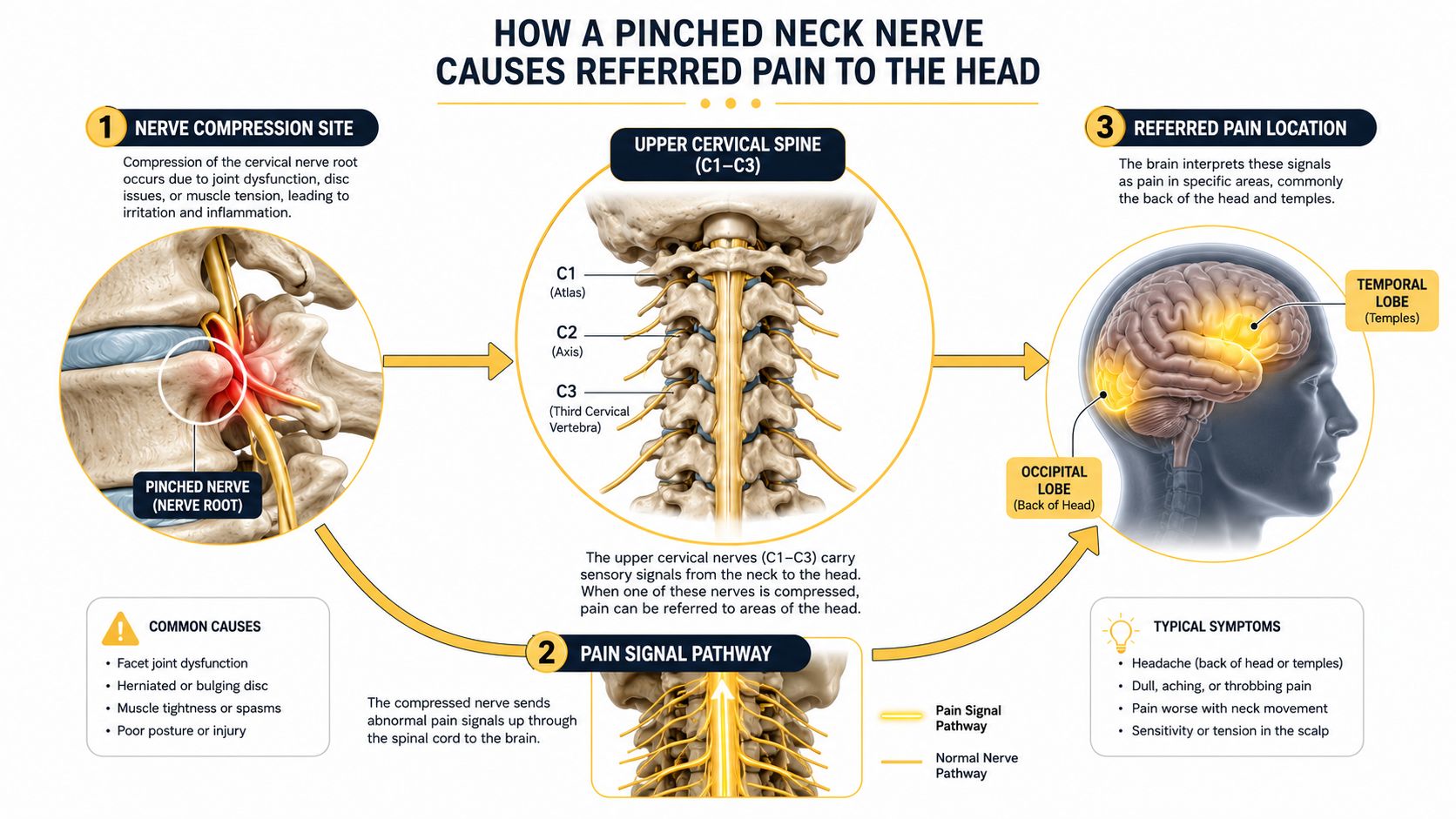
When the upper neck keeps sending irritated input, the head can hurt even if the brain itself isn't the problem. That's the key idea behind neck-related headache, and it's why a focused neck exam can be more useful than treating every head pain as the same thing.
Cervicogenic Headache vs Migraine Spotting the Difference
People often ask this question because the symptoms can look similar on a bad day. The easiest way to separate them is to watch what happens with neck movement, posture, and associated body symptoms. Cervicogenic headache usually behaves like a neck-driven pain pattern, while migraine usually behaves like a migraine, even when neck discomfort shows up alongside it.
Symptom patterns that point toward the neck
A neck source is more likely when the head pain is one-sided, starts in the back of the head, and worsens when you turn your head, hold it in one position, or press on irritated cervical structures. It can also come with shoulder pain, arm numbness, tingling, or weakness. Healthline notes that a pinched nerve in the neck can cause a throbbing pain in the back of the head, and symptoms often intensify when turning the head or holding the neck in one position for a long time (Healthline).
Migraine can also be one-sided and throbbing, so the pain quality alone doesn't settle it. The pattern around the pain matters more.
Symptom patterns that lean migraine
Migraine is more often accompanied by nausea, photophobia, which means light sensitivity, phonophobia, which means sound sensitivity, and sometimes aura, a temporary neurological symptom such as visual changes before the head pain begins. Those features don't rule out a neck contribution, but they do make primary migraine more likely than a pure cervicogenic pattern.
| Feature | Cervicogenic Headache | Migraine |
|---|---|---|
| Pain start | Often begins in the neck or base of skull | Often begins as head pain without a clear neck trigger |
| Side of pain | Often one-sided, usually matching the neck issue | Can be one-sided or both sides |
| Neck movement | Often worsens with turning, bending, or sustained posture | May be present, but is not usually the main trigger |
| Arm or shoulder symptoms | Can include tingling, numbness, or weakness | Not typical |
| Common associated symptoms | Neck stiffness, pain referral behind the eyes or to the occiput | Nausea, photophobia, phonophobia, aura |
| Main clue | The neck clearly drives the episode | The head symptoms lead the episode |
One important point. Migraine and cervicogenic headache can coexist. A migraine diagnosis doesn't cancel out a neck problem, and a neck problem doesn't mean every future head pain is cervicogenic. It just means your history deserves a closer look than “it's all in your head.”
ReliefMigraine app can help you spot whether movement, posture, or other triggers keep showing up in the same pattern over time.
Common Causes of Cervical Nerve Compression
A pinched nerve in the neck does not have one single cause. Discs, joints, muscles, and injury-related changes can all reduce the space around a nerve root or irritate upper cervical structures that send pain upward into the head. In real life, more than one factor is often involved at the same time, which is why the pattern can be easy to miss.
Structural problems that can set it off
Wear-and-tear changes are common culprits. A herniated disc can press on nearby nerve tissue, and osteophytes, also called bone spurs, can narrow the openings where cervical nerves travel. Arthritis, a prior fracture, sprained muscles, tumor, and whiplash are also listed by Cleveland Clinic among conditions associated with cervicogenic headache (Cleveland Clinic). A disc bulge or irritated joint can change how the neck moves, and that altered movement can keep the nerve or joint sensitive.
Cervical radiculopathy is the medical term for a pinched nerve in the neck. A prospective study found that many people with cervical radiculopathy also reported headache, often on one side and on the same side as the nerve problem; after selective nerve root block, many of those headaches improved or resolved, which suggests that treating the neck source can change the head pain pattern (PMC study). That does not mean every neck headache needs a procedure. It does show that a headache can be driven by a cervical pain source rather than starting in the head itself.
Everyday strain that keeps the neck irritated
Poor posture, prolonged desk work, and repetitive strain can load the neck over time. The problem is usually not posture in isolation, it is the repeated stress the neck takes when the head stays forward for long periods. Whiplash can also leave the neck sensitive long after the original injury.
If your headache shows up after long screen time, driving, or sleeping in a bad position, pay attention to the neck before you assume the pain is random.
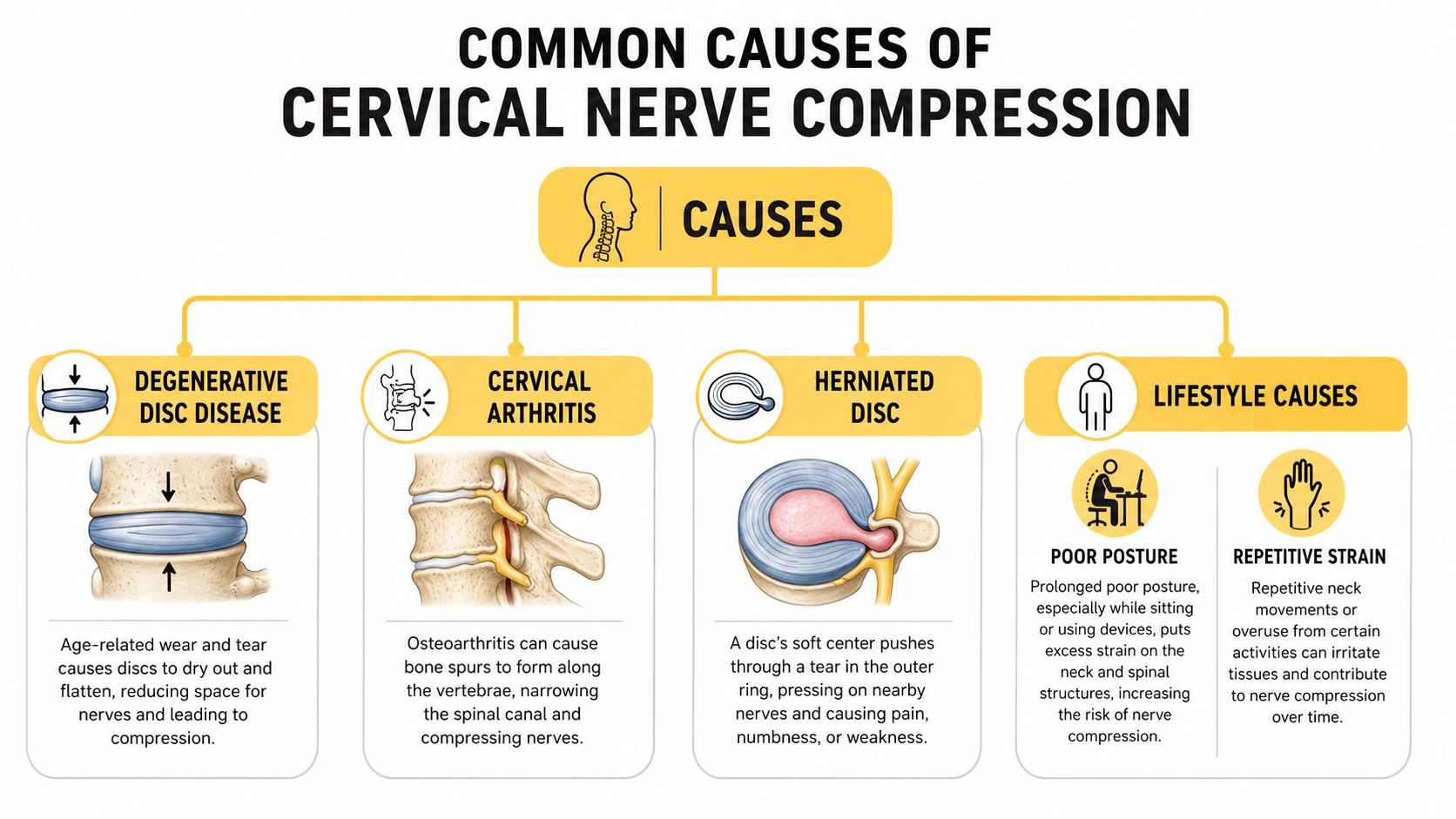
A useful way to think about this is simple. A nerve can be irritated by structure, by movement, or by both. A herniated disc may flare with bending or looking down, while osteophytes and arthritic joints may complain most with turning the head or holding one position too long. If the same daily habits keep provoking the same side of the neck and head, that pattern is worth tracking and reviewing with a clinician who understands cervical headaches.
Evidence-Based Treatments and Self-Care Strategies
Treatment depends on what's driving the symptoms. A neck-related headache doesn't automatically need a procedure, but it also shouldn't be managed like a generic headache if the pattern is clearly mechanical. The most helpful approach is usually a mix of symptom relief, movement retraining, and, when needed, targeted medical care.
What you can try at home
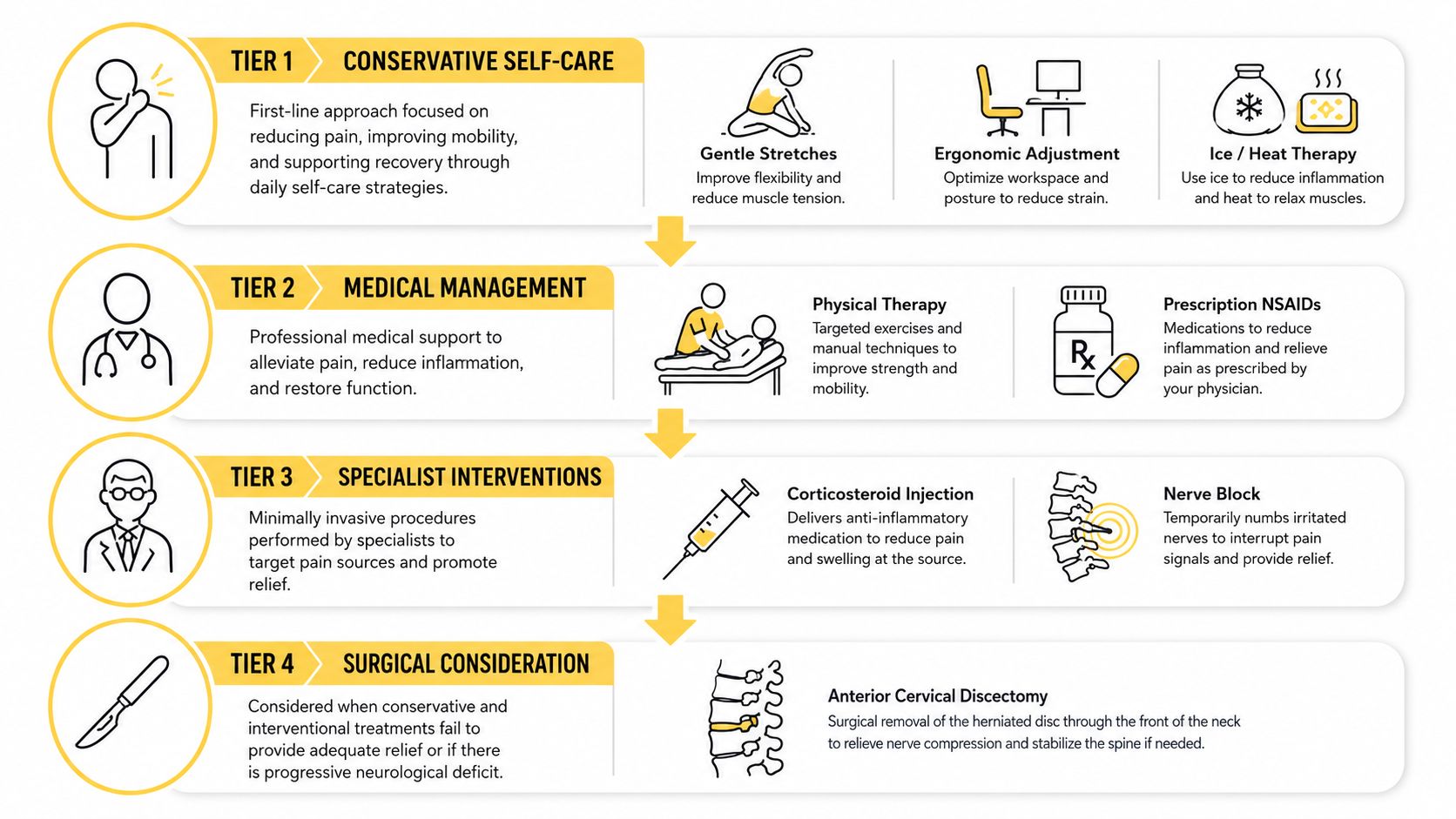
Start with the basics that reduce irritation rather than chasing pain after it peaks. Gentle neck mobility work, better ergonomics, heat or cold for comfort, and posture changes during the day can all help calm a sensitive neck. Over-the-counter pain relief may help some people, but it's best used responsibly and in line with a clinician's guidance.
Physical therapy is often a strong next step because it can address the specific movement problem instead of only the symptom. Programs commonly focus on deep neck control, restoring comfortable range of motion, and improving how the neck tolerates daily load.
- Gentle mobility: small, pain-aware neck movements can help you find positions that don't flare symptoms.
- Workstation changes: screen height, chair setup, and fewer long static positions can reduce sustained strain.
- Heat or cold: some people prefer warmth for stiffness, others like cold for a more irritated feeling.
- Symptom logging: note what the neck was doing before the headache started.
What usually needs a clinician
Prescription treatments, nerve blocks, and in rare cases surgery may be considered when symptoms persist or the nerve is clearly compressed. In the radiculopathy study above, selective nerve root block was associated with meaningful headache improvement for many patients, which suggests that targeted treatment can matter when the neck is the generator (PMC study).
The right treatment depends on the source. A stiff joint, a disc issue, and an irritated nerve root are not the same problem, so they shouldn't be managed as if they are. The goal is to match the treatment to the driver, not to throw a generic stretch routine at every neck headache.
Red Flag Symptoms That Require Immediate Medical Attention
Most headaches linked to the neck are not dangerous, but some symptoms mean you need urgent evaluation rather than another stretch or heat pack. A lot of people get stuck here, because neck pain can feel routine until it doesn't. A dangerous cause can sit in the same region as a harmless one, so the warning signs matter.
Signs that should not be watched at home
Seek immediate medical care for a sudden severe headache unlike anything you've had before, headache with fever and stiff neck, vision changes, altered mental state or confusion, incontinence, or numbness or weakness that is spreading or severe. A headache after a head injury also needs prompt attention.
Those signs matter because head and neck pain can come from more serious problems, not just a pinched nerve. MedicalNewsToday notes that neck-related head pain can also be linked to conditions such as tumors, trauma, arthritis, cervical disc disease, diabetes, or blood vessel inflammation (MedicalNewsToday). That doesn't mean those are common. It means the label “pinched nerve” is sometimes too narrow.
What ordinary pinched-nerve symptoms usually look like
Ordinary cervical nerve irritation more often causes localized neck pain, shoulder discomfort, mild arm tingling, or weakness that doesn't spread rapidly. The key difference is stability versus escalation. A mechanical neck problem can be miserable, but it usually doesn't produce the sudden neurological or infectious signs that need emergency care.
If the headache is new, severe, fast-moving, or paired with fever, confusion, weakness, or injury, get medical help now.
Tracking Your Symptoms to Identify Patterns
A good symptom log can reveal what your memory misses on a bad week. If you write down where the pain starts, which side it's on, whether neck movement changes it, and what you were doing beforehand, patterns usually become clearer over time. That matters because cervicogenic headache is uncommon, affects about 0.4% to 4% of people who have headaches worldwide, and many people don't seek care until their late 40s (Cleveland Clinic).
Track the basics in plain language:
- Pain location: base of skull, behind the eye, temple, or across the head.
- Neck link: did turning, looking down, or holding one position make it worse?
- Associated symptoms: nausea, light sensitivity, arm tingling, shoulder weakness, or aura.
- Context: desk time, driving, sleep position, exercise, stress, or recent injury.
Over time, that record can help you separate migraine patterns from neck-driven episodes and make a better case for the right evaluation. Relief's tracking tools can make that process easier by logging severity, symptoms, triggers, medications, and environmental signals in one place, so the pattern is easier to see when the next episode hits.
If your headaches keep circling back with neck pain, posture strain, or movement-based triggers, start tracking the pattern now instead of waiting for the next flare to explain itself. Relief helps you log symptoms quickly and see what's lining up with your attacks, so you can bring clearer information to your next appointment and advocate for the right kind of care.


