
If you're reading this because a headache exploded from nowhere and hit full force almost instantly, treat that as an emergency. Thunderclap headaches symptoms are different from migraine symptoms because the pain reaches maximum intensity within seconds, not gradually over minutes or hours, and that timing changes what you should do next.
Many people with migraine are used to severe pain, nausea, light sensitivity, aura, or a predictable pattern. A thunderclap headache breaks that pattern. It can feel terrifying because it is terrifying, and it needs immediate medical attention rather than home treatment.
Table of Contents
What Is a Thunderclap Headache
A thunderclap headache is a sudden, severe headache that reaches its maximum intensity within 60 seconds, a definition codified in the International Classification of Headache Disorders. It is uncommon, with an estimated incidence of 43 per 100,000 adults per year, according to this overview of thunderclap headache.
This isn't a wait-and-see headache. This article is for informational purposes and is not medical advice. A thunderclap headache is a medical emergency; consult a healthcare provider or seek emergency care immediately.
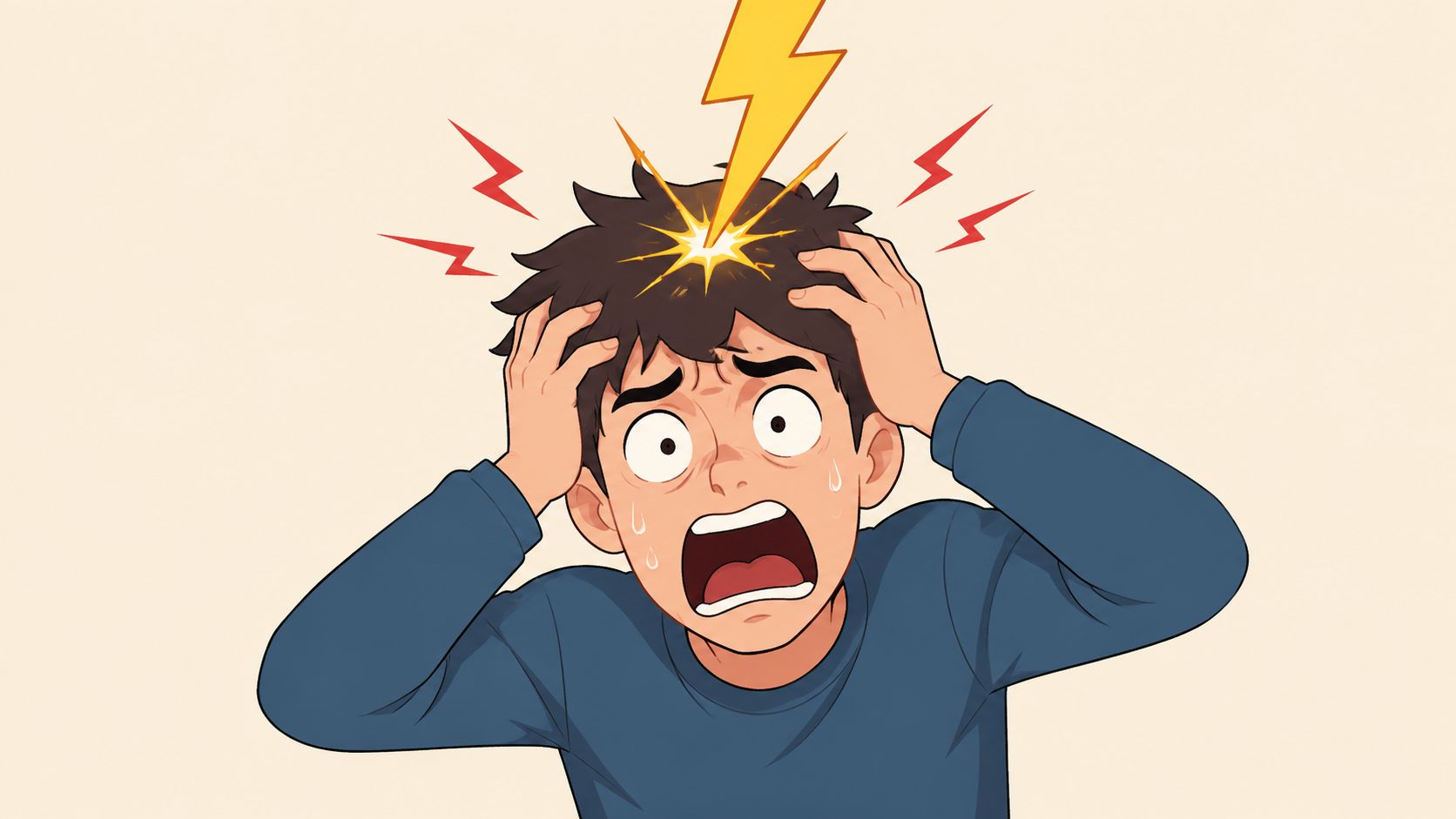
The defining symptom is speed
What makes this different isn't only that the pain is severe. It's how fast it becomes severe.
People often describe it as the worst headache of their life because the pain doesn't build in stages. It hits hard, very quickly, often before you have time to decide whether this feels like your usual migraine pattern.
Practical rule: If a headache goes from normal to maximum or near-maximum intensity in under a minute, treat it as a thunderclap headache until a clinician tells you otherwise.
For someone who lives with migraine, that distinction matters. Migraine can be disabling and intensely painful, but it often comes with a prodrome, aura, or a more gradual rise in symptoms. A thunderclap headache doesn't usually give you that runway.
Why this is an emergency
A thunderclap headache is a warning sign, not a minor variation of a bad headache day. In emergency medicine, the sudden explosive onset is what raises concern for serious problems inside the head or blood vessels around the brain.
That doesn't mean every thunderclap headache turns out to be the same cause. It does mean you should not try to self-sort it at home based on pain tolerance, past migraine history, or whether the pain starts to ease.
A few points are worth keeping in mind:
- Your migraine history doesn't protect you: Having migraine doesn't make a new explosive-onset headache less urgent.
- Pain severity alone isn't enough: Some migraines are severe. The emergency clue is the abrupt jump to peak intensity.
- Temporary improvement doesn't rule out danger: If the pain backs off, that still doesn't make it safe to ignore.
A sudden severe headache that peaks almost immediately belongs in the ER, not in tomorrow's appointment slot.
Key Thunderclap Headache Symptoms to Recognize
The hallmark symptom is still the explosive onset. But when clinicians assess thunderclap headaches symptoms, they also ask about everything happening around the pain.
Some of these symptoms can overlap with migraine. The concern changes when they appear alongside a headache that arrived at full strength almost instantly.
Symptoms that matter in the moment
Use this checklist to describe what happened as clearly as you can:
- Sudden severe head pain: The pain reached maximum or near-maximum intensity within seconds.
- Nausea or vomiting: These can happen with migraine too, but with abrupt-onset severe headache they become part of an emergency picture.
- Stiff neck: This can suggest irritation involving the tissues around the brain and should be reported immediately.
- Confusion or unusual behavior: If you're foggy, disoriented, slow to answer, or someone notices you're not acting like yourself, that matters.
- Fever: Headache plus fever needs urgent evaluation, especially if the neck is stiff.
- Seizure: Any seizure with a sudden severe headache is an emergency.
- Weakness or numbness on one side: This may point to a neurological problem and needs immediate attention.
- Vision changes: Blurred vision, double vision, or sudden visual disturbance should be mentioned right away.
- Loss of consciousness or near-fainting: Even brief collapse changes the urgency.
A quick report for emergency staff
If you're able to speak, give the timeline first. That's often more useful than trying to describe the pain poetically.
Tell them:
- When it started: Exact time if possible.
- How fast it peaked: Say clearly that it went to full intensity in under a minute.
- What you were doing: Resting, exercising, showering, coughing, straining, sex, or waking from sleep.
- What came with it: Vomiting, neck stiffness, weakness, confusion, seizure, or vision changes.
- How it compares with your usual migraine: If it felt completely different, say that plainly.
If you have sudden severe headache plus fever, stiff neck, neurological changes, or a headache after head injury, seek immediate medical care.
Thunderclap Headache vs Migraine How Are They Different
For people with migraine, this is the hardest part. A severe migraine can absolutely feel overwhelming. It can also come with nausea, vomiting, photophobia (light sensitivity), phonophobia (sound sensitivity), aura, and a need to stop everything.
But thunderclap headache belongs in a separate category because of the onset. A Patient.info overview of thunderclap headache describes it as pain reaching maximum intensity within 30 to 60 seconds, unlike typical migraines that often build over time and may include a prodrome (early warning symptoms before the headache) or aura (temporary neurological symptoms such as visual changes before or during an attack).
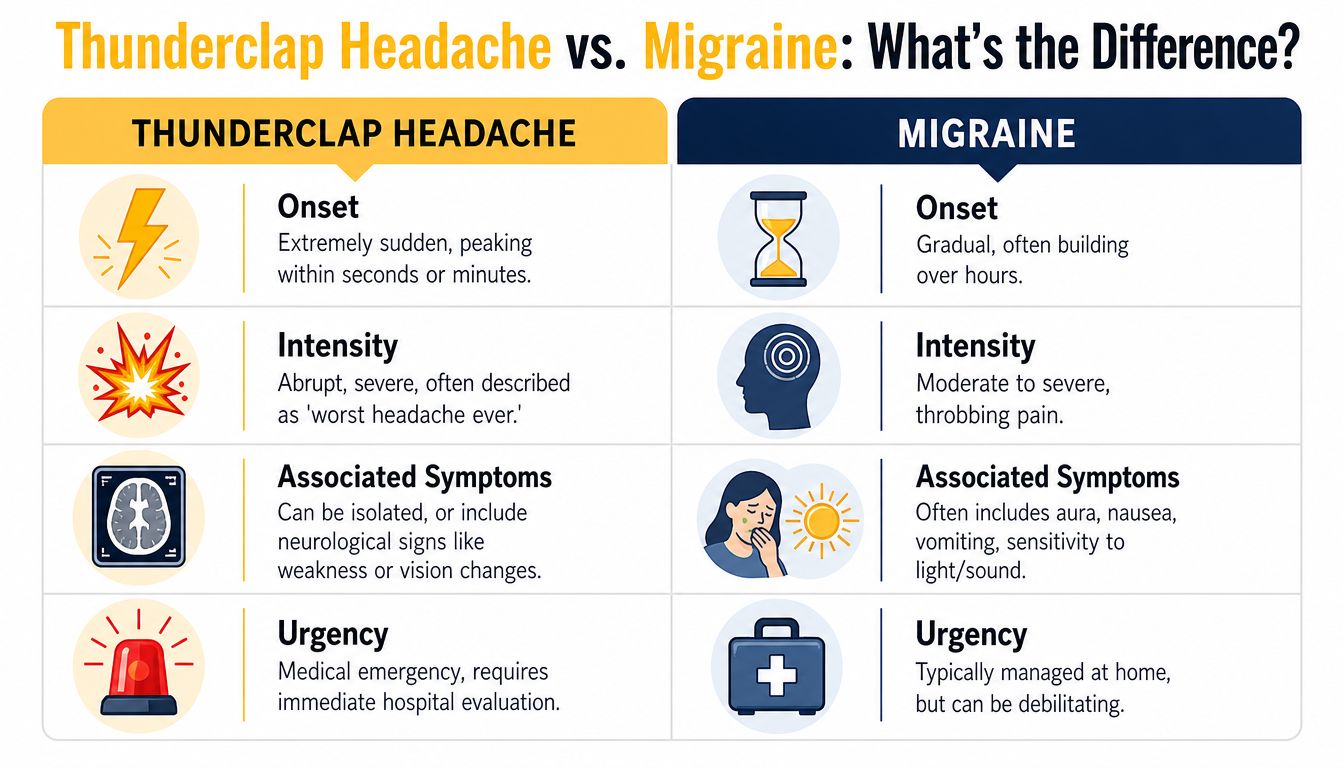
The timing is the biggest difference
If you usually get migraine, you probably know your own sequence. Maybe you feel off first. Maybe you notice neck pain, fatigue, food cravings, mood change, aura, or sensitivity to light before the headache peaks.
Thunderclap headache doesn't usually respect that pattern. It arrives abruptly. That's why a person with long-standing migraine still shouldn't assume an explosive new headache is "just a bad one."
For broader migraine tracking and pattern awareness, tools like Relief's migraine tracking approach can help you document your usual attacks over time. That history becomes useful when a headache clearly breaks your normal pattern.
Thunderclap Headache vs Migraine Attack
| Feature | Thunderclap Headache (TCH) | Migraine Attack |
|---|---|---|
| Onset speed | Reaches peak intensity within 30 to 60 seconds | Often builds more gradually |
| Warning signs | Usually no warning | May include prodrome or aura |
| Pain pattern | Abrupt, explosive, instantly severe | Often progressive, may throb or pulse |
| Associated symptoms | May include neurological symptoms such as weakness, confusion, seizure, or vision change | Often includes nausea, vomiting, photophobia, phonophobia, and sometimes aura |
| Urgency | Medical emergency requiring immediate evaluation | Often managed with a personal treatment plan, unless red flags are present |
| Meaning | A symptom that may point to a serious underlying cause | A primary neurological disorder with varied patterns |
Severe migraine can be awful. Thunderclap headache is different because the clock starts with a medical emergency.
What Causes a Thunderclap Headache
A thunderclap headache is not a final diagnosis. It's a symptom that tells clinicians to look for the underlying cause quickly.
Some causes are immediately dangerous. That's why the symptom gets treated with urgency even before anyone knows the full explanation.
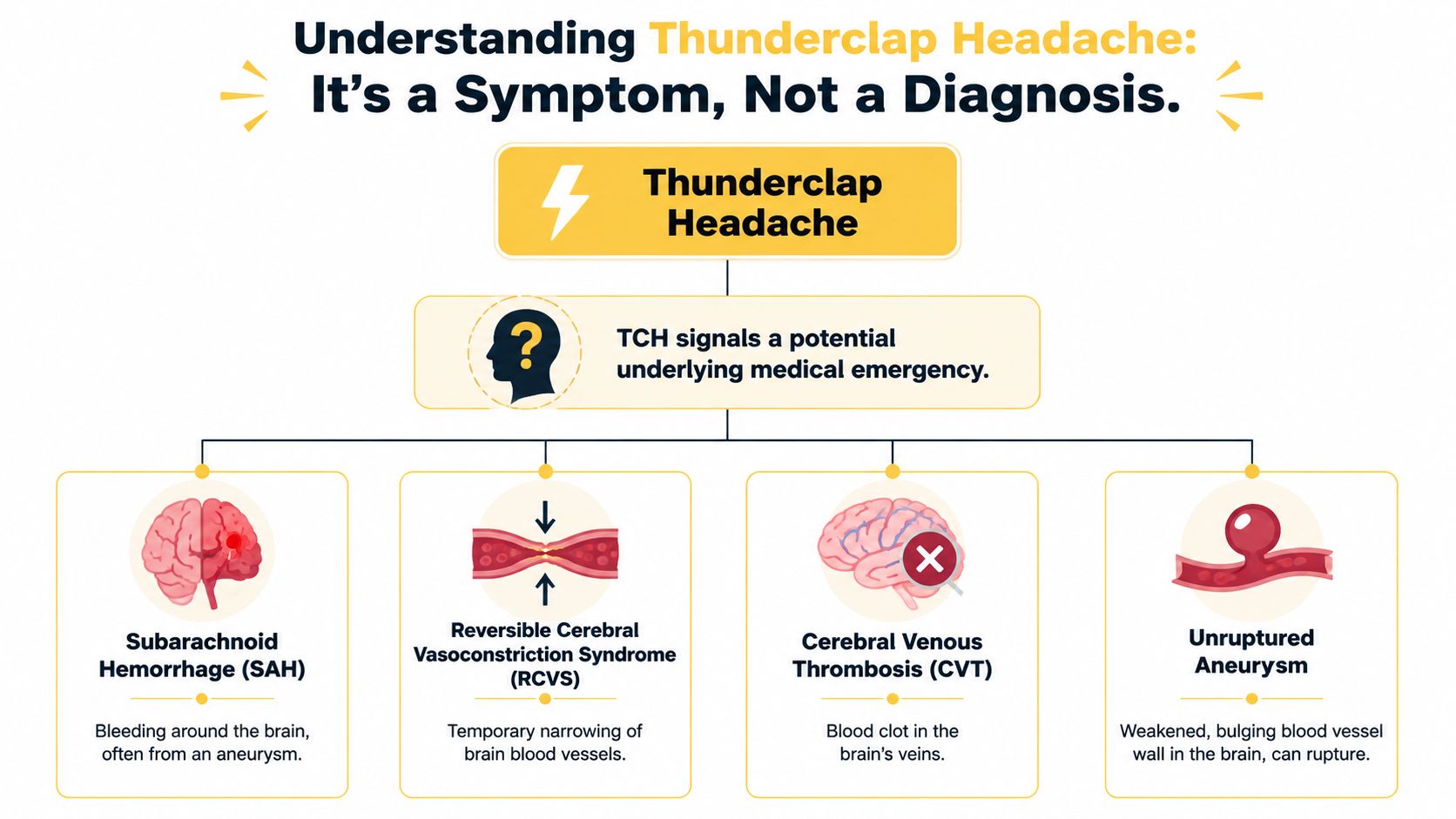
A symptom, not a final diagnosis
Emergency teams often evaluate for causes such as:
- Subarachnoid hemorrhage: Bleeding around the brain. This is one reason the symptom is treated so seriously.
- Cerebral venous thrombosis: A clot involving the brain's veins.
- Arterial dissection: A tear in the wall of a blood vessel.
- Unruptured or ruptured aneurysm: A weakened blood vessel can become a major concern depending on the clinical picture.
- Primary thunderclap headache: Sometimes no dangerous cause is found, but that conclusion comes after emergency assessment, not before it.
The practical trade-off is simple. It is generally preferable to go in and learn the cause wasn't catastrophic than to stay home and miss something time-sensitive.
Why recurrent attacks matter
This is the nuance many articles skip. Thunderclap headaches are often presented as a single catastrophic event. Sometimes they are. But sometimes they recur.
According to Cleveland Clinic's discussion of thunderclap headaches, recurrent thunderclap headaches can occur over days or weeks and may point toward Reversible Cerebral Vasoconstriction Syndrome (RCVS), a condition involving temporary narrowing of blood vessels in the brain.
That matters because a second or third explosive headache isn't reassuring. It's not evidence that the first one was harmless. In some cases, the repeating pattern is exactly the clue doctors need.
A one-off thunderclap headache is an emergency. A repeated thunderclap pattern is also an emergency, and it may push clinicians to consider causes such as RCVS.
What works here is precise history. What doesn't work is vague memory after the fact. If the event repeats, details such as exact onset speed, activity at onset, and any neurological symptoms can make a major difference in follow-up care.
What to Do During a Suspected Thunderclap Headache
If you think this may be happening, call 911 or go to the nearest emergency room immediately. This is not the time to monitor symptoms at home, sleep it off, or schedule urgent care for tomorrow.
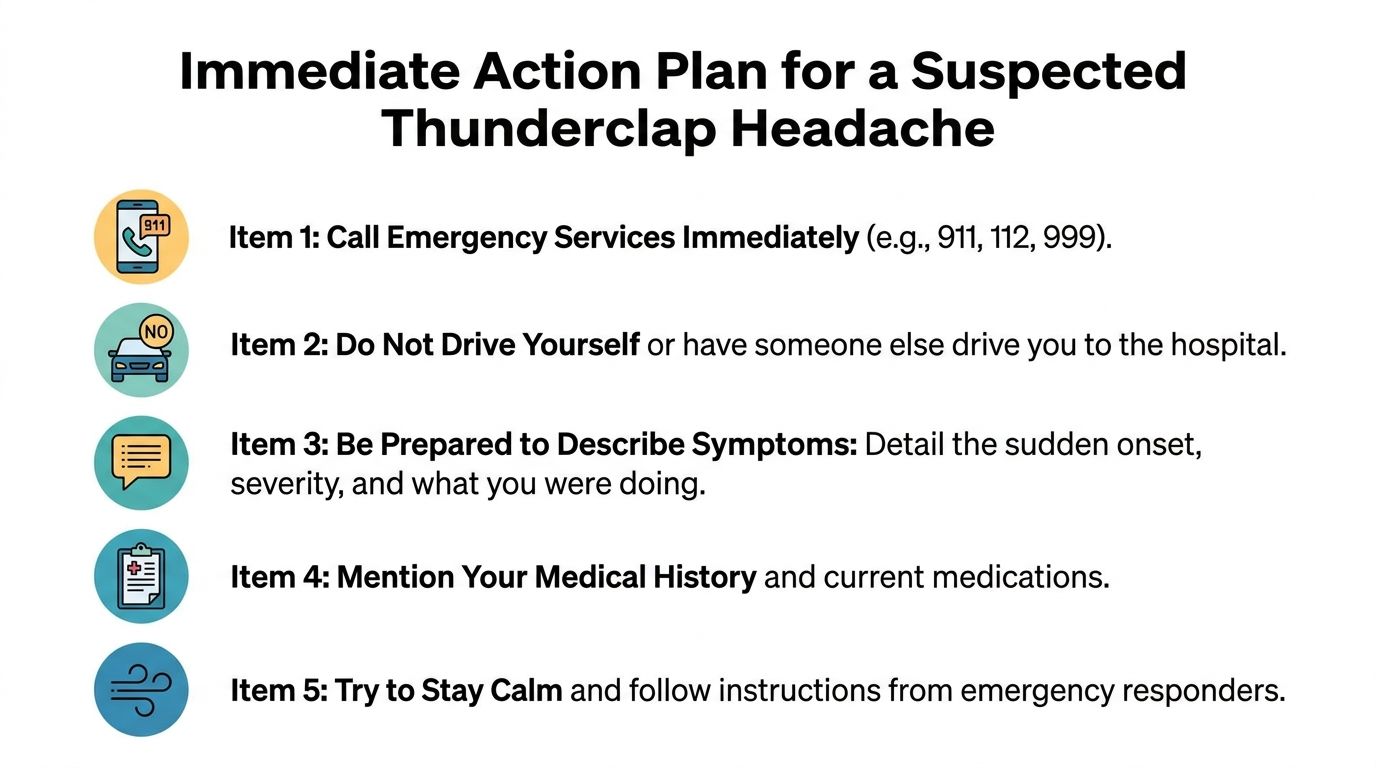
The right move right now
In real life, people often hesitate for the same reasons. They don't want to overreact. They have migraine and think maybe this is just an extreme attack. They hope medication, darkness, and sleep will handle it.
That is the wrong call for a suspected thunderclap headache.
Take these steps:
- Call emergency services now: Use your local emergency number.
- Don't drive yourself: If symptoms worsen on the way, you need medical support, not a steering wheel.
- Say the timing clearly: Tell responders the headache hit maximum intensity in under a minute.
- Report all red flags: Mention vomiting, neck stiffness, weakness, confusion, seizure, fever, vision changes, or collapse.
- Bring medication information if possible: A list, photo, or pill bottles can help the team quickly.
A short explainer may help if you're panicking about what happens next:
Don't wait it out. Don't take pain medicine and go to bed. Don't decide it's migraine just because you've had migraine before.
What to expect at the hospital
Emergency evaluation usually starts with basic stabilization and a focused neurological exam. Clinicians will ask when the headache started, how fast it peaked, what you were doing, whether you've had anything like it before, and whether you have symptoms such as weakness, numbness, confusion, or neck stiffness.
They may order imaging, often including a CT scan of the head, to look for serious causes. Depending on the situation, the workup may continue beyond that.
This article is for informational purposes and is not medical advice. Consult a healthcare provider for personalized guidance.
After the Emergency Next Steps and Management
Even after the emergency visit, follow-up still matters. If doctors identify a cause, you'll need a plan with the appropriate specialist, often your primary care clinician, a neurologist, or both.
What follow-up usually looks like
Sometimes the ER finds a clear explanation. Sometimes the initial emergency workup doesn't show an immediate dangerous cause. Either way, don't assume the story is over without follow-up.
What helps after discharge is a clean record of any future episodes:
- Exact onset pattern: Did it peak instantly or build?
- Severity and duration: Write down what you can remember.
- Associated symptoms: Note vomiting, visual changes, weakness, confusion, fever, or neck stiffness.
- Context: Record what you were doing when it began.
This is especially important if another sudden severe headache happens later. Repetition can be clinically meaningful, and memory gets unreliable fast after a frightening event.
If you want a simple way to log headache timing, symptoms, medications, and possible patterns after emergency care, Relief can help you keep a clearer record for your own awareness and for follow-up conversations with your clinician.


