Have you ever found yourself reaching for sunglasses indoors, desperate for relief from the painful glare of a lamp or screen? If so, you're not alone. Wearing sunglasses inside can be a huge help during a migraine attack, but it's best used as a temporary tool, not a permanent fix. This is because while it provides immediate relief, long-term use can sometimes make your light sensitivity worse.
We'll explore why light feels so painful during a migraine, the right way to use sunglasses for relief, and smarter alternatives that won't create new problems down the road.
This article is for informational purposes and is not medical advice. Consult a healthcare provider for personalized guidance.
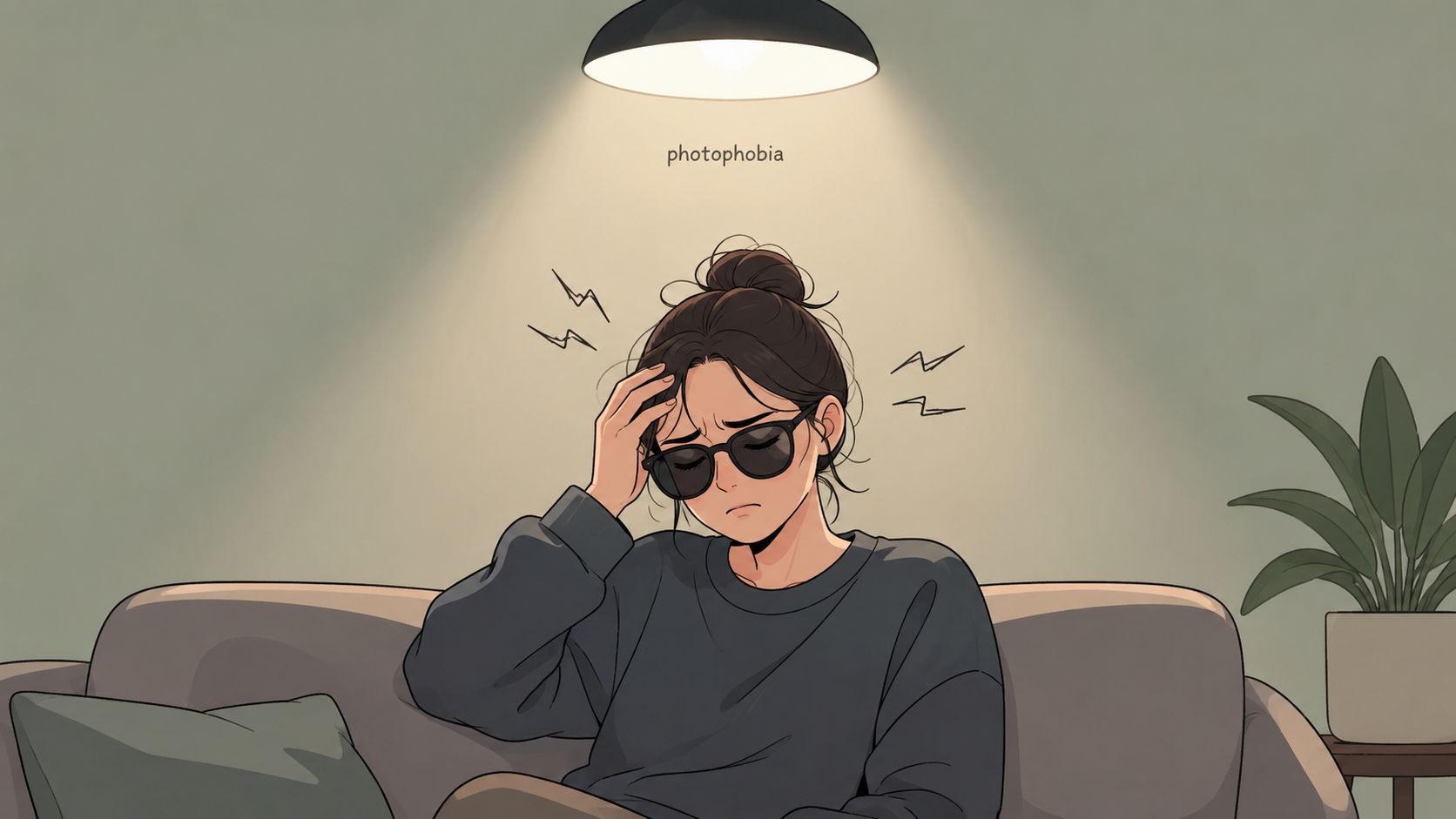
Table of Contents
- 1. Optimize Your Lighting
- 2. Adjust Your Digital Screens
- 3. Choose the Right Tint (If You Need Lenses)
- Can wearing sunglasses inside make my light sensitivity worse?
- What kind of glasses are best for indoor light sensitivity?
- When should I see a doctor about light sensitivity?
- How can I stop relying on sunglasses so much?
How Light Affects the Migraine Brain
When you're in the middle of a migraine, light doesn't just feel bright—it can feel like a direct physical assault. This isn't just a dislike of bright light; it's a neurological symptom called photophobia, where normal light levels actively worsen pain.
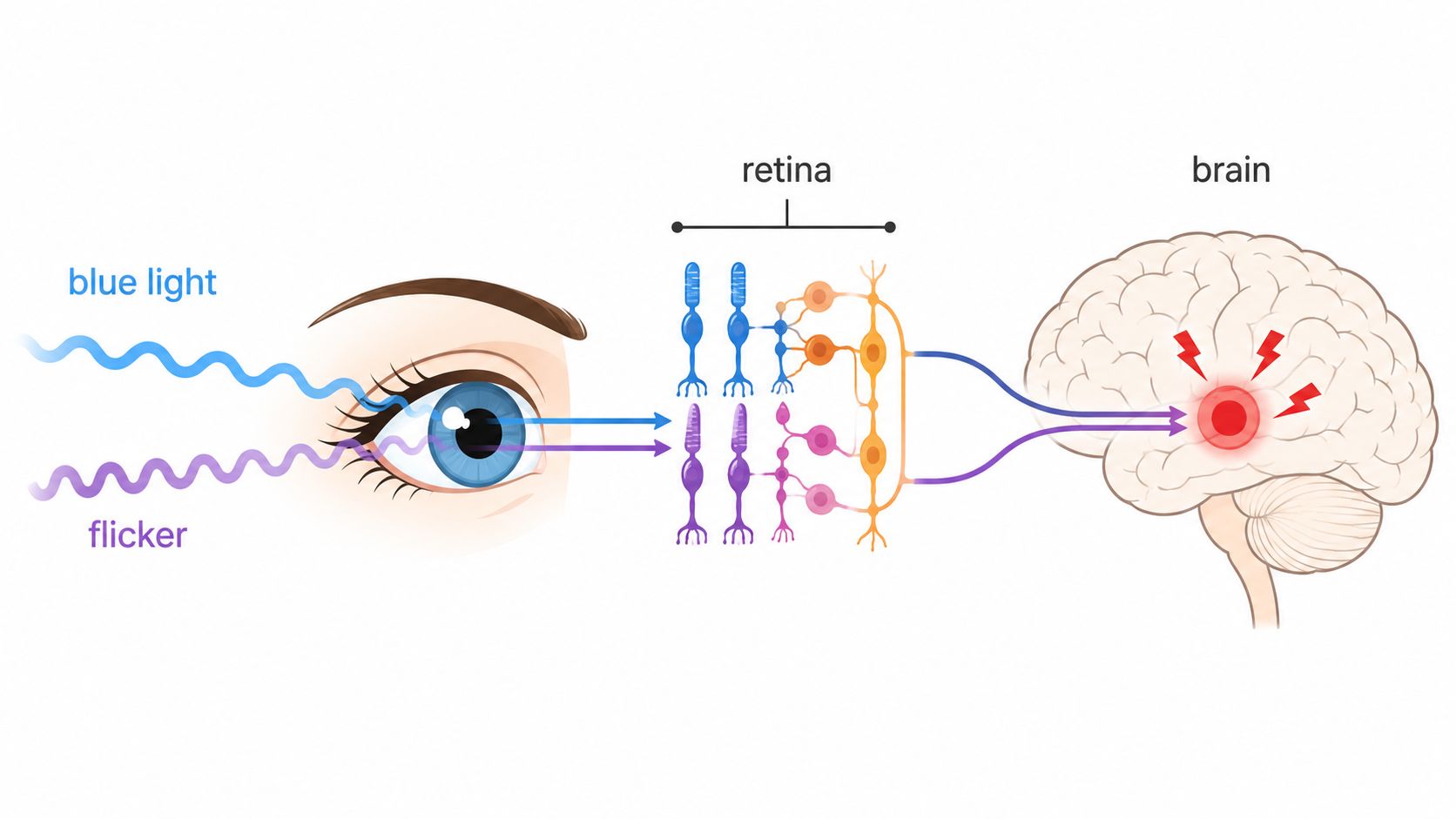
Here’s a simplified look at what happens:
- Light enters your eye and hits the retina.
- Specialized cells in the retina send signals directly to brain regions that process pain.
- In people with migraine, these signaling pathways are hypersensitive. Your brain essentially misinterprets normal light as a threat, amplifying pain signals.
This is why even modest indoor lighting can feel unbearable during an attack. It's not your imagination; your nervous system is genuinely overreacting. Photophobia can appear at any stage of a migraine attack—during the prodrome (the warning phase), with aura (sensory disturbances), during the main headache phase, or even in the postdrome (the "migraine hangover").
Why Sunglasses Offer Temporary Relief
Wearing sunglasses indoors provides a quick fix by dampening the input to these overactive pain networks. By reducing the amount of light hitting your retina, you give your overwhelmed brain a break.
- It blunts the harshness of overhead fluorescent or LED lights.
- It reduces the piercing glare from computer screens and windows.
- It can lessen the visual stress that contributes to nausea and dizziness.
However, this is just a temporary shield. The real goal is to manage the underlying sensitivity without making it worse.
The Social Side: Dealing with Judgment About Indoor Sunglasses
Let's be honest: walking into a room wearing sunglasses can get you some strange looks. When you're already drained from a migraine, navigating comments and stares is an extra burden you just don't need.
Most people don't understand that your shades are a medical tool, not a fashion statement. They’re a shield against the neurological pain of photophobia. This misunderstanding can lead to judgment, with people perceiving you as rude, dramatic, or even hungover. This social stress can, unfortunately, make migraine symptoms even worse.
A CivicScience poll from a few years back found that 58% of Americans considered wearing sunglasses indoors 'lame,' while only a small fraction approved. Read the full poll findings to see the breakdown. While attitudes may be slowly changing, the stigma is real.
How to Handle Common Social Scenarios
Your health comes first, but you can minimize friction with a few simple strategies. You don't owe anyone a detailed medical history.
- At work: If a coworker asks, keep it brief and professional. "The light is aggravating my migraine—these help a lot."
- With family or friends: A simple "Bright lights are a major trigger for my migraines" is enough.
- In public: If you feel self-conscious, a hat with a brim can make sunglasses less noticeable while also blocking overhead light.
Remember, migraine is a recognized neurological disorder. Using a tool that helps you function is a valid choice, regardless of what others might think.
When to Wear Sunglasses Inside (The Smart Way)
Timing is everything. Using sunglasses strategically during a migraine attack can provide significant relief without causing long-term problems.
Think of indoor sunglasses like a crutch for a sprained ankle: essential for getting through the acute phase, but not something you want to rely on forever.
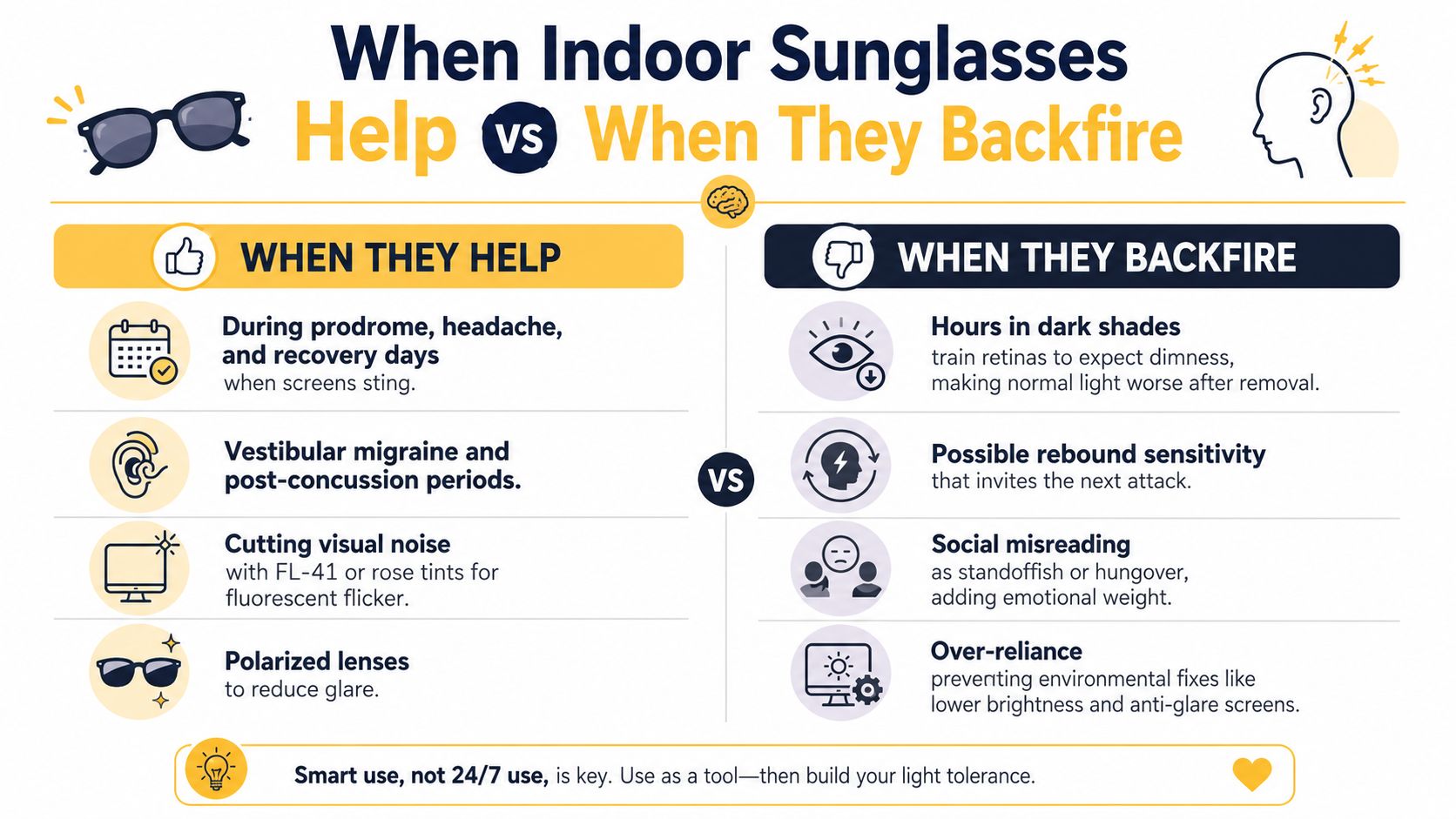
Use Sunglasses During These Key Moments:
- During the prodrome or aura: When you first feel light becoming uncomfortable, sunglasses can help delay or reduce the severity of the coming headache.
- During the peak headache phase: When light is actively painful, shades can provide enough relief to allow you to rest or for medication to kick in.
- For specific migraine types: In conditions like vestibular migraine, where visual stimuli can trigger dizziness and nausea, sunglasses can help stabilize your environment.
- In unavoidable trigger environments: If you're stuck in a location with harsh fluorescent lighting or intense glare that you can't control, sunglasses are a necessary shield.
The key is to use them as a rescue tool, not a constant accessory.
When Wearing Sunglasses Inside Backfires
While helpful in the short term, wearing dark sunglasses indoors all day can quietly make your light sensitivity worse over time. This phenomenon is sometimes called dark adaptation.
When you spend hours in a darkened environment (created by your sunglasses), your visual system recalibrates. It becomes accustomed to low light. When you finally take the glasses off, normal indoor lighting can feel shockingly bright and painful. This rebound sensitivity can sometimes be enough to trigger another migraine attack, creating a frustrating cycle.
Signs You Might Be Overusing Indoor Sunglasses:
- You find yourself wearing them from morning until night, even on good days.
- Normal indoor lights feel intensely painful the moment you take your glasses off.
- You rely on sunglasses as your only strategy for managing light sensitivity.
If you find yourself needing shades constantly, it’s a sign that your environment needs adjusting, not that your eyes need constant darkness.
If your photophobia is new, has suddenly worsened, or is accompanied by "red flag" symptoms like a sudden, severe "thunderclap" headache, fever, stiff neck, or neurological changes (like weakness or vision loss), seek immediate medical care.
Smarter Alternatives to Constant Sunglass Use
The most effective long-term strategy is to make your environment less hostile, so you don't need to live behind dark lenses.
1. Optimize Your Lighting
- Swap your bulbs: Replace harsh, cool-toned fluorescent or LED bulbs with warmer, dimmable options.
- Use task lighting: Instead of bright overhead lights, use lamps to illuminate only the areas you need.
- Add bias lighting: Place a soft light source (like an LED strip) behind your computer monitor or TV. This reduces the sharp contrast between the bright screen and the dark wall, which can significantly ease eye strain.
- Control natural light: Use blinds or curtains to manage the glare and intensity of sunlight. Sit perpendicular to windows rather than directly facing them.
2. Adjust Your Digital Screens
Our screens are a primary source of eye strain and migraine triggers.
- Lower the brightness: This is the simplest and most effective change you can make.
- Use dark mode: Most apps and operating systems offer a "dark mode" that uses a dark background with light text, which many people find more comfortable.
- Enable night shift: Use your device's built-in feature to shift the screen color to a warmer tone in the evening.
- Try an anti-glare screen protector: These matte films can cut down on painful reflections from overhead lights.
3. Choose the Right Tint (If You Need Lenses)
If environmental adjustments aren't enough, specialty-tinted glasses can be a lifesaver. However, not all tints are the same. Precision tints are designed to filter specific wavelengths of light that are known to be particularly bothersome for the migraine brain.
| Lens Type | Best For | Limitations |
|---|---|---|
| FL-41 / Rose Tint | Filtering the specific wavelengths of light from fluorescent lights and digital screens that are known to trigger migraine. | Can slightly alter color perception. Less effective against outdoor glare. |
| Polarized Lenses | Cutting intense glare from reflective surfaces like water, snow, or wet roads. Excellent for driving. | Does not filter the flicker from fluorescent lights or screens. |
| Dark Sunglasses | Blocking intense, broad-spectrum outdoor sunlight. | Not suitable for indoors; can lead to the dark adaptation problem. |
For indoor use, an FL-41 tint is often the most recommended option by headache specialists because it targets the problem without darkening your entire environment.
Take Control by Tracking Your Triggers
Do you find yourself reaching for sunglasses on days with dropping barometric pressure? Or after a poor night's sleep? Understanding why you're light-sensitive on a given day is the key to prevention.
Tracking your symptoms, environmental factors, and coping strategies can reveal powerful patterns. An app that logs your personal data alongside local weather can show you, for example, that your light sensitivity spikes when a storm is coming. This knowledge empowers you to be proactive—you can dim the lights and adjust your screens before the pain even starts.
By logging when you use sunglasses, you can see if it's a true rescue need or a developing habit. This insight helps you shift from a reactive cycle of pain and darkness to a proactive strategy of prevention and control. Tracking these small details in a tool like Relief can help you build a smarter plan to manage your migraine.
Frequently Asked Questions
Can wearing sunglasses inside make my light sensitivity worse?
Yes, if you wear them constantly. Overuse can cause your eyes to "dark adapt," making normal light feel painfully bright when you take the glasses off. It's best to use them only as a temporary tool during acute migraine phases.
What kind of glasses are best for indoor light sensitivity?
For indoor use, glasses with an FL-41 tint are often recommended. They are specifically designed to filter the wavelengths of light from screens and fluorescent bulbs that are most likely to trigger migraine, without making everything too dark.
When should I see a doctor about light sensitivity?
You should always discuss ongoing photophobia with your healthcare provider. However, seek immediate medical care if your light sensitivity is new and severe, or if it's accompanied by symptoms like a sudden "thunderclap" headache, fever, stiff neck, confusion, or weakness on one side of your body.
How can I stop relying on sunglasses so much?
Start by optimizing your environment. Use dimmable, warm-toned lighting, add bias lighting behind screens, and use anti-glare filters. Reserve your sunglasses or tinted lenses for acute attacks or unavoidable trigger environments. You can read more about Relief tracking and forecasting to help identify your specific patterns.


