A storm front moves in, and a familiar ache starts behind your eyes. Soon, your temples throb, indoor light feels harsh, and even ordinary sounds become difficult to tolerate. Weather headache symptoms can include migraine pain, nausea, light and sound sensitivity, neck tension, fatigue, and visual disturbances, but weather isn't a universal trigger and it doesn't affect every headache sufferer in the same way.
Migraine is more than a generic headache. A weather change may be one part of a wider pattern involving sleep, stress, hydration, temperature, air quality, and your own neurological sensitivity. This article will help you recognize the symptoms, separate them from other headache types, track your personal patterns, and respond safely.
This article is for informational purposes and is not medical advice. Consult a healthcare provider for personalized guidance.
Table of Contents
What Weather Headache Symptoms Feel Like
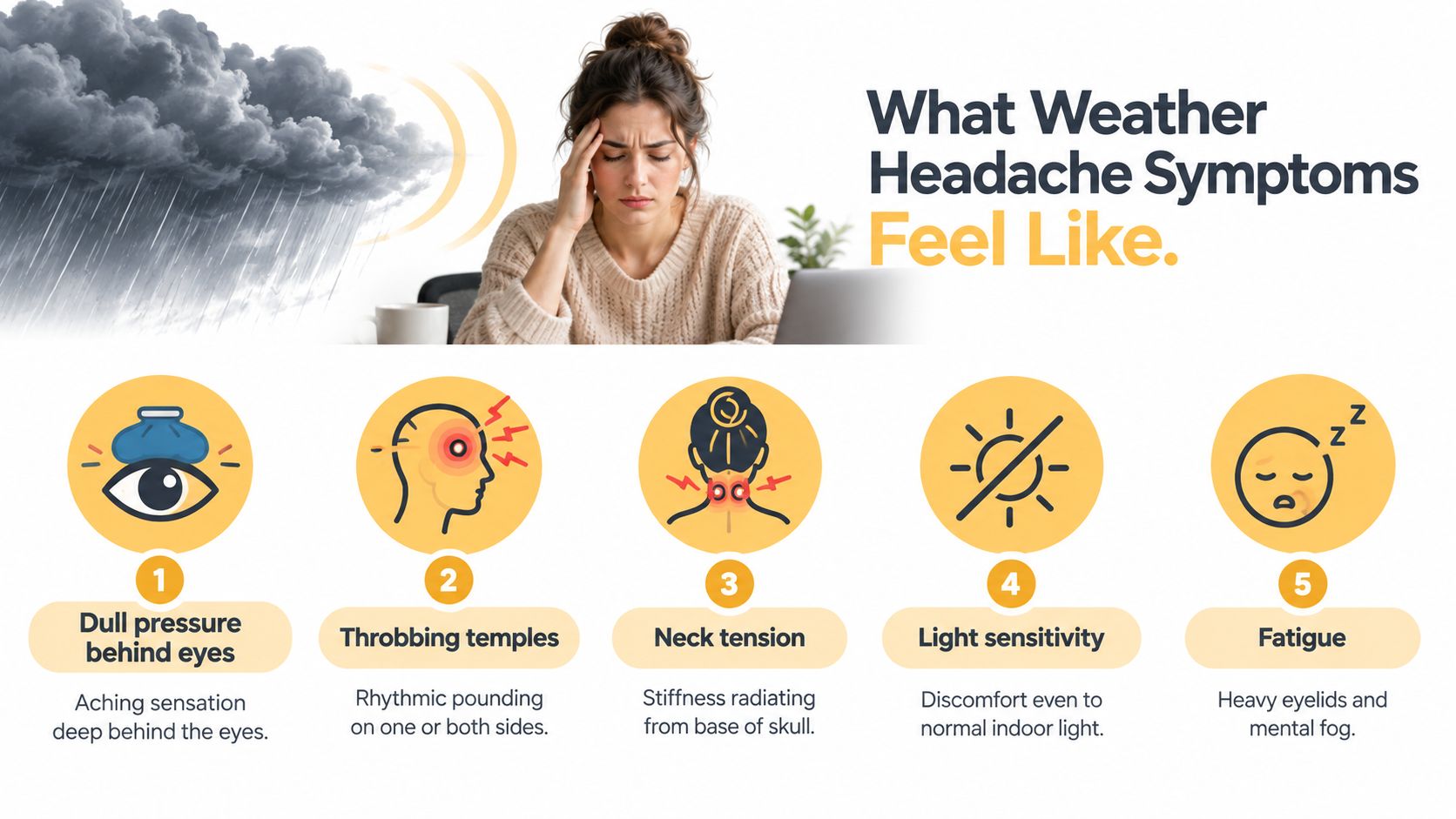
A weather shift can start with a dull ache behind the eyes or pressure across the temples. As conditions change, the discomfort may build into one-sided, rhythmic throbbing, making ordinary movement harder. A rapid pressure change may feel different from a day with high or low pressure, so the pattern matters more than a single forecast reading.
常見感受包括:
- 眼後壓力: 深層痠痛,感覺不像只在頭皮表面。
- 太陽穴抽痛: 頭部一側或兩側規律地跳痛。
- 頸部緊繃: 僵硬感可能從頭骨底部向上延伸。
- 畏光: 室內燈光、陽光或眩光都可能令人不適。
- 疲倦與腦霧: 眼皮沉重、思考變慢,注意力也可能下降。
偏頭痛發作也可能伴隨噁心、嘔吐,以及對聲音、氣味或觸碰敏感,並出現視覺症狀。先兆是可逆的神經症狀,可能在發作前或發作中出現,例如閃爍光點、鋸齒線、感覺改變或說話困難。Mayo Clinic 的偏頭痛指引將這些感官與神經特徵列為偏頭痛表現,而不只是單純的天氣痠痛。
留意預警期
疼痛出現前,你可能反覆打呵欠、頸部僵硬、突然想吃特定食物,或變得異常易怒、情緒改變。這個早期階段稱為 前驅期,可能在疼痛前 12 至 24 小時開始,但每個人的時間都不同。
逐漸增強的不適,可能與大氣條件緩慢變化同時出現。突然的溫度轉折、快速移動的鋒面,或污染加劇,也可能讓症狀迅速發作。記錄症狀與天氣變化,有助於使用 Relief 對照預報,提早安排補水、休息與避開強光。你的模式不必和別人相同,症狀仍然真實。
How Weather Headaches Differ From Other Headache Types
A forecast change does not automatically mean a weather headache. The stronger clue is the full pattern: migraine often brings one-sided or pulsating pain, nausea, and increased sensitivity to light or sound. An attack may last 4 to 72 hours and can become worse with walking, climbing stairs, or other routine physical activity, as noted in the earlier migraine overview.
A tension-type headache usually feels like steady pressure, similar to a tight band around the head. It commonly affects both sides and may cause tenderness in the scalp, neck, or shoulders. Nausea and marked sensory sensitivity are less typical than they are with migraine.
A true sinus headache points to inflammation or infection in the sinuses. Facial fullness, nasal blockage, thick discolored discharge, and pain that increases when bending forward fit that pattern more closely. Weather may irritate the sinuses, but facial pressure by itself does not show that the sinuses caused the headache.
The timing can also help. A weather-triggered migraine may begin after an atmospheric shift, yet the weather acts more like a possible switch than a diagnosis. Sleep disruption, dehydration, stress, and other triggers can overlap with the same episode.
Photophobia means sensitivity to light. An aura consists of reversible visual, sensory, or speech disturbances. Prodrome describes the early warning phase before the main pain, so these terms describe different parts of the migraine experience.
Comparing headache types at a glance
| Feature | Weather-Triggered Migraine | Tension-Type Headache | Sinus Headache |
|---|---|---|---|
| Pain quality | Pulsating, throbbing, or pressure that may become intense | Steady, pressing, or band-like | Facial pressure or fullness |
| Typical location | Often one-sided, though both sides can hurt | Usually bilateral | Forehead, cheeks, nose, or around the eyes |
| Sensory symptoms | Light and sound sensitivity, nausea, possible aura | Sensory symptoms are less prominent | Nasal symptoms are more characteristic |
| Activity | Routine activity may worsen pain | Activity often has less effect | Bending forward may increase facial pressure |
| Weather connection | May follow atmospheric changes in a sensitive person | Can worsen with muscle tension or stress | May accompany environmental irritation or infection |
A weather link becomes more convincing when a recognizable change repeatedly precedes attacks with migraine features. A forecast can help you prepare, but it cannot establish the cause of one headache on its own.
The Weather Variables That Research Links to Migraine
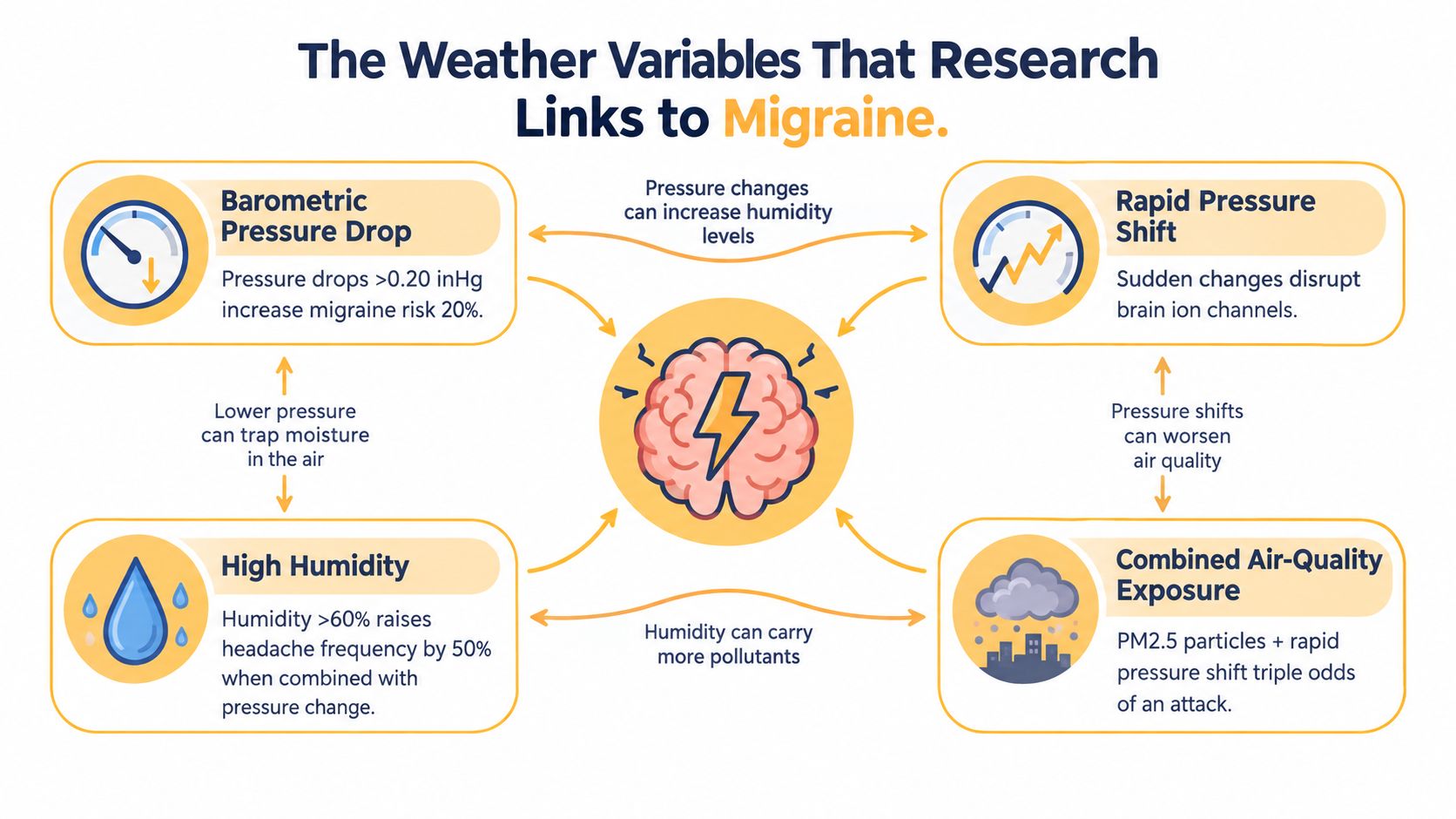
Barometric pressure is often treated as the whole explanation, but the more useful question is what changed, and how quickly. A year-long diary study of 28 migraine patients found that migraine frequency increased when pressure changed by more than 5 hPa from the headache day to the next day, while monthly mean pressure showed no association. In that study, 18 of 28 patients, or 64%, identified weather change as a trigger, supporting the importance of rapid shifts rather than an absolute pressure reading alone. See the published diary study on pressure changes and migraine for the findings.
The evidence isn't uniform. A 2025 systematic review found mixed results, with several studies associating pressure drops or rapid fluctuations with migraine frequency, fewer linking pressure with severity, and no included evidence supporting a relationship between barometric pressure and attack duration. The systematic review of barometric pressure and migraine reflects why forecasting should be treated as a personal aid, not a certainty.
Look beyond pressure
Mayo Clinic's weather-trigger guidance lists bright sunlight, glare, extreme heat or cold, high humidity, dry air, wind, storms, and pressure changes as possible migraine triggers. These factors may overlap. Heat can increase physical strain, glare can intensify photophobia, and dry or humid conditions can change how your body responds to the environment.
Air quality is another important piece. A 2025 case-crossover study linked temperature and ambient pressure with migraine attacks, with odds ratios of 1.15 for temperature and 1.07 for pressure, while humidity wasn't significant. The same study associated migraine-visit risk with several pollutants, including PM10, PM2.5, nitrogen dioxide, carbon monoxide, and ozone. Read the 2025 study on weather, pollutants, and migraine visits for the complete analysis.
The mechanism isn't settled, so avoid assuming that pressure physically pushes on your skull. Researchers are investigating neurological responses involving sensory pathways, including the trigeminal system, and other biological responses to environmental change.
For a practical explanation of how temperature, humidity, and pressure can overlap, see this guide to weather variables and migraine.
Tracking Your Own Weather Headache Patterns
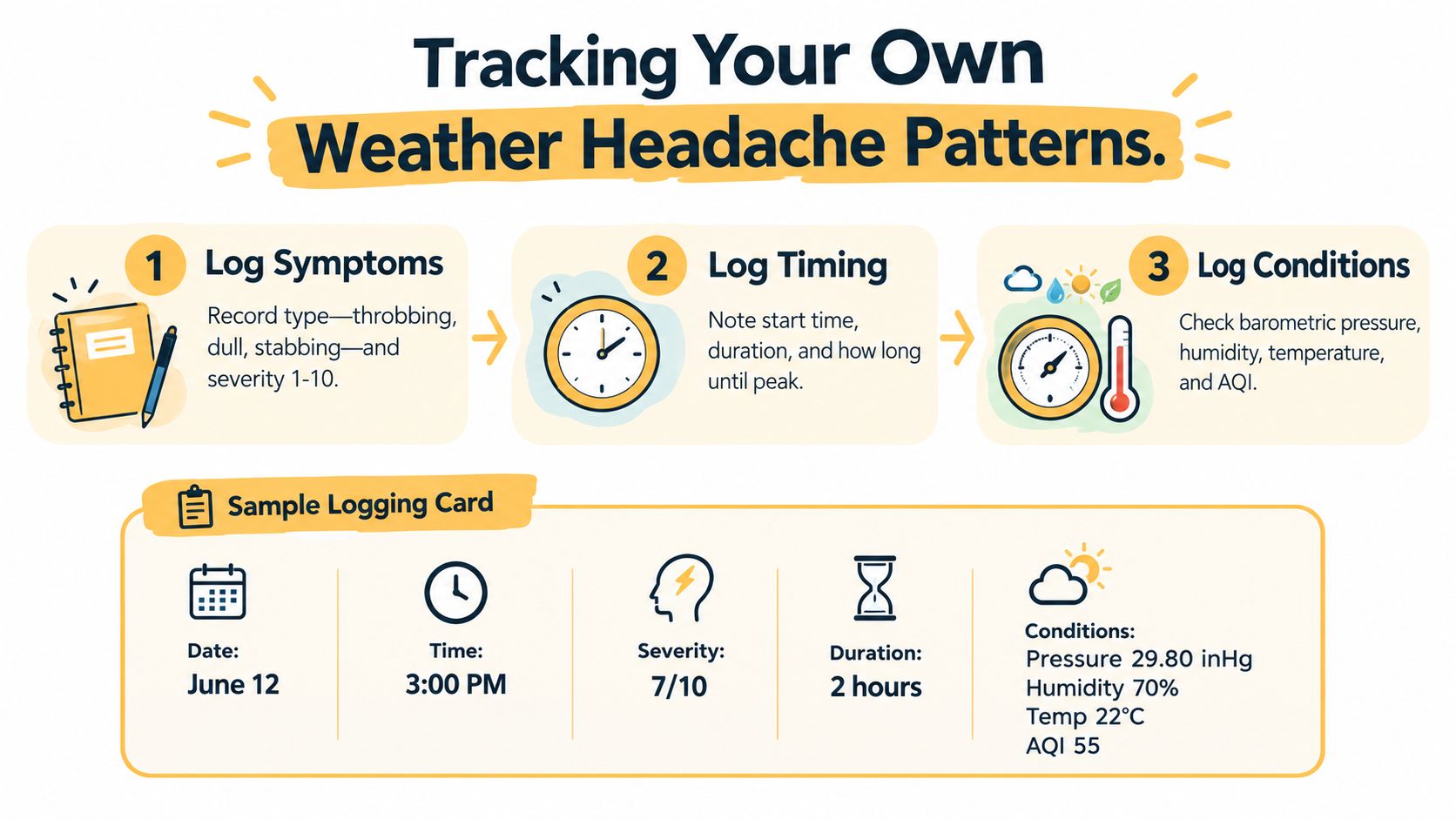
Forecasts become more useful when you compare them with your own symptoms. Instead of recording only “storm” or “pressure,” log the pain type, start time, location, severity, duration, and the environmental conditions around the attack.
A useful entry might look like this:
Example log: Tuesday, 2 p.m. Barometric pressure dropped 8 mb in three hours. AQI was 142. Pain was 6/10, with right-temple throbbing and light sensitivity.
Include context that could change your sensitivity. Note sleep quality, hydration, meals, stress, unusual exertion, and menstrual-cycle timing if relevant to you. These details don't prove that weather caused an attack, but they help you see whether weather repeatedly appears alongside other factors.
Build a log you can actually maintain
- Record the symptom pattern. Write “right-sided throbbing with nausea” rather than only “headache.”
- Capture timing. Note when symptoms began, when pain peaked, and when it eased.
- Add the conditions. Check pressure, temperature, humidity, wind, and air quality near the time symptoms started.
- Review for repetition. Look for the same combination appearing across separate attacks.
A prospective diary study found substantial individual variation. In a study of 100 patients, only 13 participants, or 13%, could be clearly identified as weather-sensitive for migraine, as reported in the study published in Cephalalgia. Your goal isn't perfect prediction. It's a usable personal profile that helps you notice an early warning and prepare.
You can also review how to map barometric pressure against headache patterns while building your own record.
Responding to Symptoms Before, During, and After an Attack
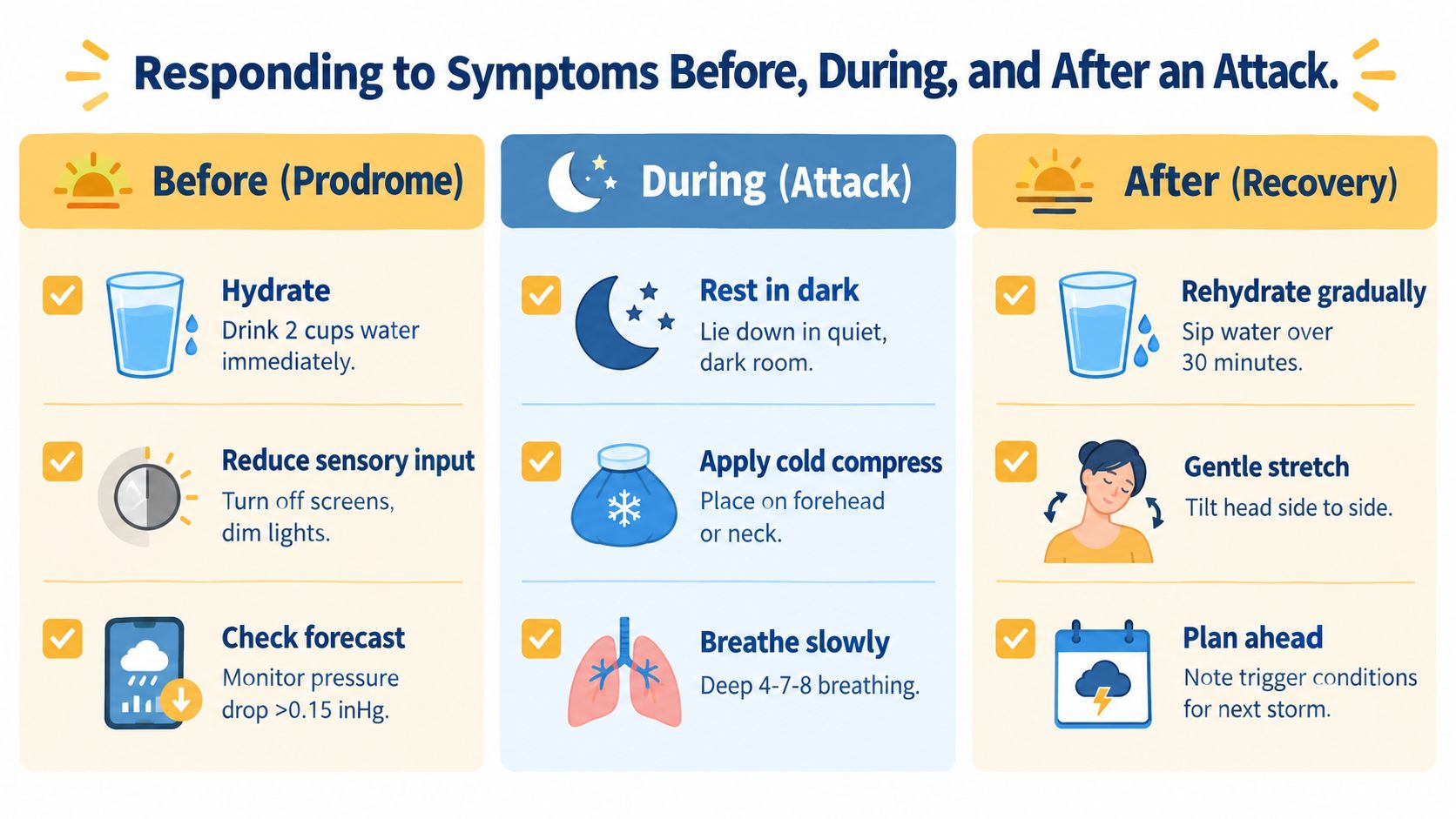
The most helpful response may depend on the phase you're in. Treat the following as options to test, not rigid rules. Your comfort and medical history should guide what you use.
Before pain peaks
During prodrome, reduce the demands placed on your nervous system. Drink fluids if you can, dim lights, limit unnecessary sound, and prepare a quiet place before pain becomes severe. Checking the forecast may help you compare a suspected pressure shift with your early symptoms, but it shouldn't replace attention to your body.
During the attack
A dark, quiet room can reduce sensory load. Some people prefer a cold compress on the forehead or neck, while others find warmth more soothing, especially when neck muscles feel tight. Gentle neck movement may be comfortable, but stop if it increases pain, dizziness, or nausea.
Screens deserve special attention. Lower brightness, use a larger font, or step away entirely if visual stimulation makes symptoms worse. Caffeine may help some people early in an attack, but it can worsen later rebound pain for others, so track your response rather than assuming it will help.
After the pain fades
The postdrome is the recovery phase after the main pain. Fatigue, mental fog, reduced concentration, and a tender or drained feeling may remain for hours or longer. Rest, gradual rehydration, gentle movement, and a slower return to normal tasks can help you avoid treating the end of pain as full recovery.
Resume tracking when you can think clearly. Record what you tried, which environmental conditions were present, and whether the attack followed the pattern you've seen before. For more practical ideas, compare weather-pressure headache relief strategies.
Common Misconceptions About Weather and Headaches
A weather change doesn't affect every person with migraine. In the 2025 meta-analysis, self-reported weather change was significantly associated with migraine attacks across pooled studies, with a risk difference of 0.47, 95% CI 0.40 to 0.54. The same analysis found smaller associations for temperature, with an odds ratio of 1.15, and ambient pressure, with an odds ratio of 1.07. See the 2025 meta-analysis of weather and migraine for the full results. These findings show a real association, not a universal rule.
Low pressure isn't the only explanation. Rapid changes may matter more than whether pressure is “low.” The diary evidence described earlier found no association with monthly mean pressure, which makes a sudden shift more relevant for some people than a static reading.
Moving climates may not eliminate attacks. Every climate has changing temperatures, pressure patterns, humidity, wind, sunlight, and air quality. A move could change which exposures are common, but it can't guarantee that environmental triggers disappear.
Pain location doesn't identify the trigger. A migraine related to heat, glare, pollution, or pressure can produce overlapping pain locations. Your symptom combination and timing provide more useful information than whether pain is behind one eye or in one temple.
Pollution, wildfire smoke, and ozone can also coincide with weather patterns. A large UK cohort following 407,792 people for 12 years reported more migraine cases among people with higher nitrogen dioxide exposure and more extreme summer and winter temperatures, as described by National Geographic's coverage of climate-related migraine risks. Weather headache symptoms are best understood as a multifactorial sensitivity, not a single-cause puzzle.
When to Seek Care and How Relief Helps You Stay Ahead
A familiar weather-linked migraine pattern can be frightening, but certain symptoms need urgent evaluation rather than home management. Seek immediate medical care for:
- Sudden severe pain: A headache that reaches extreme intensity abruptly, especially if you've never experienced it before.
- Neurological changes: Weakness, confusion, fainting, trouble speaking, new loss of balance, or other unusual neurological symptoms.
- Fever and stiff neck: Head pain with fever and neck stiffness can signal a serious illness.
- Head injury: Seek care for a headache that begins after a blow or other head injury.
- New symptoms later in life: A new or substantially different headache after age 50 should be medically assessed.
Also contact a healthcare provider when attacks are becoming more frequent, changing character, interfering with daily life, or no longer responding to your usual plan. Migraine types and experiences vary, including episodic, chronic, vestibular, hemiplegic, and migraine with or without aura, so an accurate clinical assessment matters.
Relief can serve as a tracking companion by letting you log pain onset, location, severity, symptoms, triggers, medications, and environmental conditions such as temperature, humidity, pressure, wind, air quality, and pollen. It combines those entries with local environmental data to create an hour-by-hour risk forecast, helping you compare suspected weather headache symptoms with your personal history and prepare questions for a healthcare visit.
This article is for informational purposes and is not medical advice. Consult a healthcare provider for personalized guidance.
Relief lets you record symptoms and environmental conditions in one place, so you can identify patterns instead of relying on memory after an attack. Visit Relief to start tracking your weather-related migraine patterns and plan more deliberately around forecast changes.


