
Interdisciplinary care is a team-based model in which clinicians from different disciplines share responsibility for an integrated plan over time, rather than working in parallel silos. In hospital-based definitions, the team often includes three or more professionals who jointly solve problems and make decisions around a patient's care.
If you're managing migraine, that distinction can matter on the days when your neurologist discusses medication, your physical therapist addresses neck tension, and your psychologist helps with sleep or stress, yet nobody seems to connect the pieces. You may be left repeating your history, tracking symptoms alone, and wondering which advice should guide your next step.
This article explains what interdisciplinary care means for migraine, how it differs from a group of separate specialists, what each professional can contribute, and how you can help your team coordinate care.
This article is for informational purposes and is not medical advice. Consult a healthcare provider for personalized guidance.
Table of Contents
Why Migraine Care Often Feels Fragmented
You might start with a primary care appointment after headaches begin disrupting work or sleep. A referral to a neurologist follows. Later, a physical therapist suggests exercises for your neck, while a psychologist discusses stress and sleep. Each recommendation may make sense by itself, but the appointments can feel like separate conversations rather than parts of one plan.
That fragmentation is exhausting. You may need to explain your migraine history repeatedly, remember which symptoms appeared first, and reconcile recommendations that weren't designed together. Migraine itself can involve more than head pain, including aura, temporary sensory or neurological symptoms; photophobia, sensitivity to light; nausea; dizziness; and changes before or after an attack. Different professionals may notice different parts of that pattern.
A coordinated model treats those observations as connected information.
Practical rule: You shouldn't have to be the only person carrying the full story between appointments.
The difference coordination makes
In interdisciplinary care, clinicians communicate around shared goals and an integrated care plan. A neurologist may review the overall migraine pattern, a nurse may organize symptom tracking, a physical therapist may address posture or cervical spine concerns, and a psychologist may work on sleep, stress management, or the emotional burden of recurring attacks.
The point isn't to send you to every possible specialist. The team should expand or contract according to your needs. A person with frequent migraine and medication overuse may need a different structure from someone whose main difficulty is dizziness or neck-related discomfort.
Migraine care has become increasingly visible as a formal team model since the 1960s, when healthcare teamwork gained recognition as a way to improve quality. An early integrative review found only 10 comparative studies of team-based care published between 1951 and 1975, showing how recently the approach developed into a studied healthcare model. You can read the historical and evidence review in this review of interdisciplinary teamwork and patient outcomes.
What Is Interdisciplinary Care and How It Differs From Multidisciplinary Care
The simplest answer to what is interdisciplinary care is this: professionals from different fields actively combine their expertise, agree on shared goals, and make decisions together over time. They don't provide separate opinions. They use those opinions to build and adjust one plan.
A multidisciplinary team may include the same types of professionals, but each person can work mostly in parallel. You might see a neurologist, physical therapist, and psychologist, yet receive separate plans with limited communication. Interdisciplinary care resembles an ensemble rehearsing the same piece from a shared score. Multidisciplinary care is closer to several musicians playing their own songs in the same room.
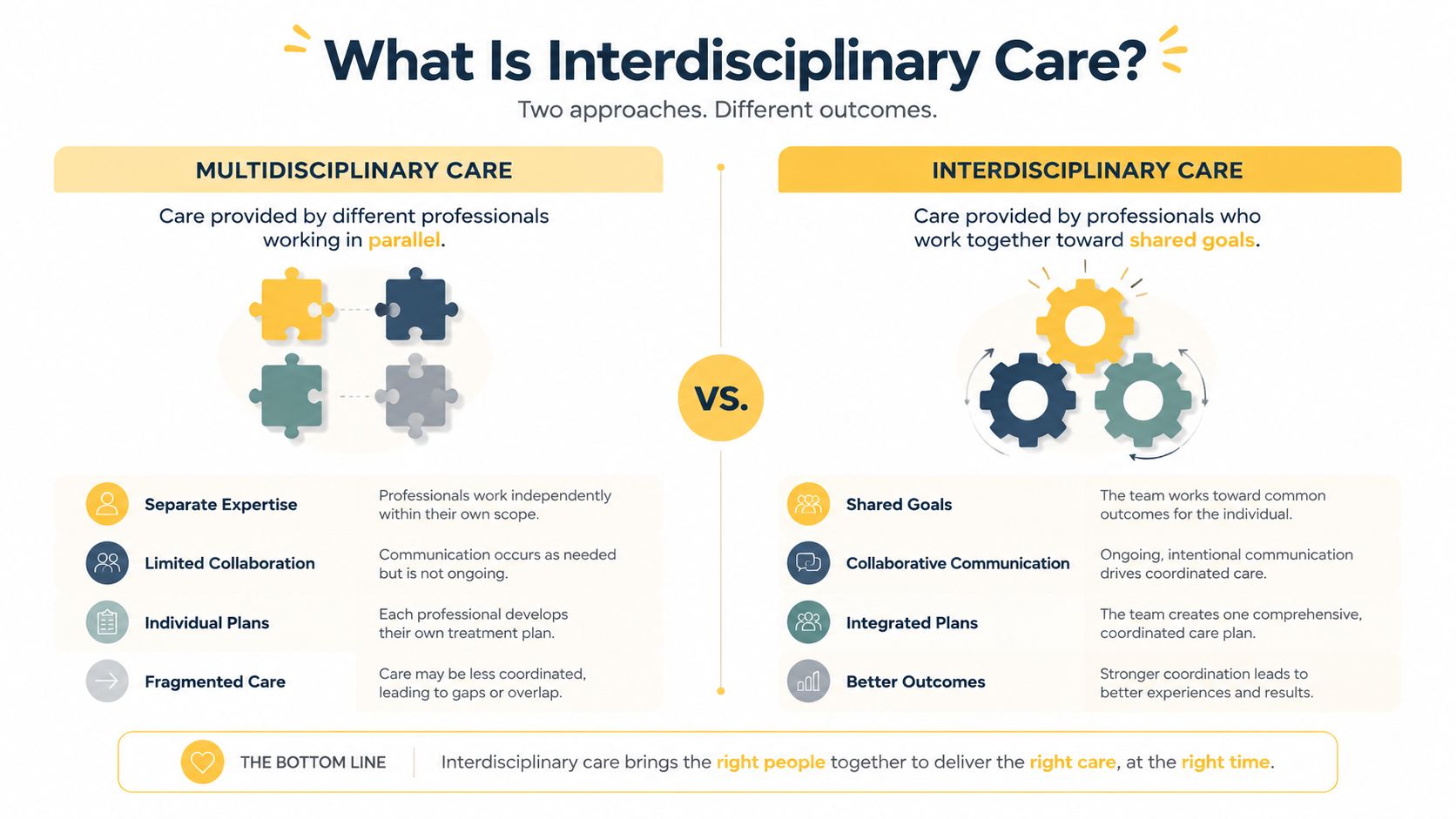
A side-by-side comparison
| Feature | Multidisciplinary Care | Interdisciplinary Care |
|---|---|---|
| Team structure | Different professionals may work separately | Different professionals work as a coordinated team |
| Goals | Each clinician may define goals within their own area | The team agrees on shared goals |
| Communication | Information may pass through referrals or notes | Clinicians actively exchange information |
| Decisions | Providers may make separate recommendations | Providers jointly solve problems and adjust the plan |
| Patient experience | You may need to connect the advice | The team helps connect the advice for you |
| Migraine example | A neurologist, therapist, and psychologist each offer separate guidance | The team aligns medication planning, movement therapy, sleep support, and self-management |
The distinction matters because migraine often involves overlapping factors. Sleep disruption can affect symptoms, neck pain can complicate movement, medication use can influence attack patterns, and anxiety or low mood can make self-management harder. These relationships don't prove that one factor caused another, but they make disconnected care difficult to manage.
The National Center for Biotechnology Information description of team-based care defines interdisciplinary practice around shared responsibility, collaboration, joint problem solving, and coordinated decision-making. That level of integration is the feature to look for, not the number of clinicians listed on a clinic website.
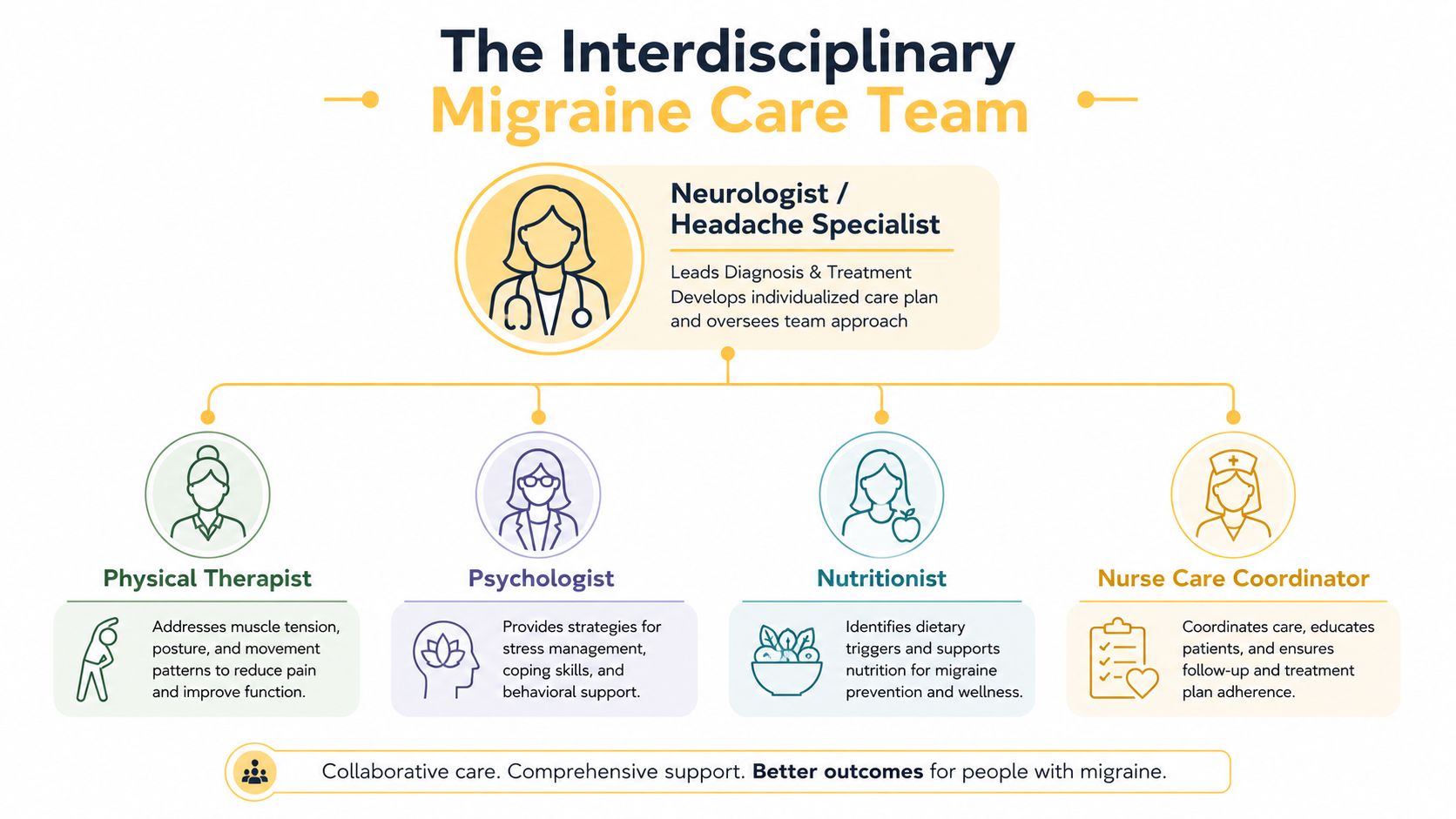
Who Makes Up an Interdisciplinary Migraine Care Team
An interdisciplinary migraine team doesn't follow one fixed template. The professionals involved depend on your symptoms, medical history, treatment response, access, and goals. A Canadian primary-care headache guideline was created by providers and specialists using a consensus process and produced 91 specific recommendations for adults with primary headache disorders, including migraine. It identifies possible contributors such as family physicians, physical therapists, occupational therapists, nurses, nurse practitioners, pharmacists, psychologists, and chiropractors in the published headache guideline.
What each professional may contribute
- A neurologist or headache specialist assesses the migraine pattern, considers diagnostic questions, and oversees medical treatment decisions. This clinician may also coordinate referrals when symptoms require additional expertise.
- A primary care clinician keeps the broader health picture in view, including other conditions, preventive care, and access to referrals.
- A headache nurse or nurse coordinator can help organize diaries, explain the care plan, support self-management, and identify changes that should be reported.
- A physical therapist may address cervical spine movement, posture, endurance, and physical activity when those areas are relevant to your symptoms.
- A psychologist may support stress management, sleep routines, coping skills, behavioral strategies, and the emotional strain of living with recurring attacks.
- A pharmacist can review medication lists, possible interactions, and patterns of acute medication use with the prescribing team.
- An occupational therapist may help you adapt daily activities, work demands, sensory environments, or routines around your symptoms.
The team works best when these roles connect. For example, a sleep plan from a psychologist should fit with the timing and practical demands of the neurologist's medical plan. A physical therapist's recommendations should account for dizziness, aura, pain, or other symptoms you've documented rather than treating neck tension in isolation.
Not every patient needs every professional. Integrated headache programs can also be organized in levels of intensity. A prospective 12-month study described a three-tier modular program combining outpatient and inpatient treatment, demonstrating that multidisciplinary headache care can be structured around different levels of patient need. The program is described in the study of modular integrated headache care.
You can also learn how a migraine-focused organization approaches patient support through Relief's information about its approach.
Measurable Benefits of Interdisciplinary Care for Migraine Patients
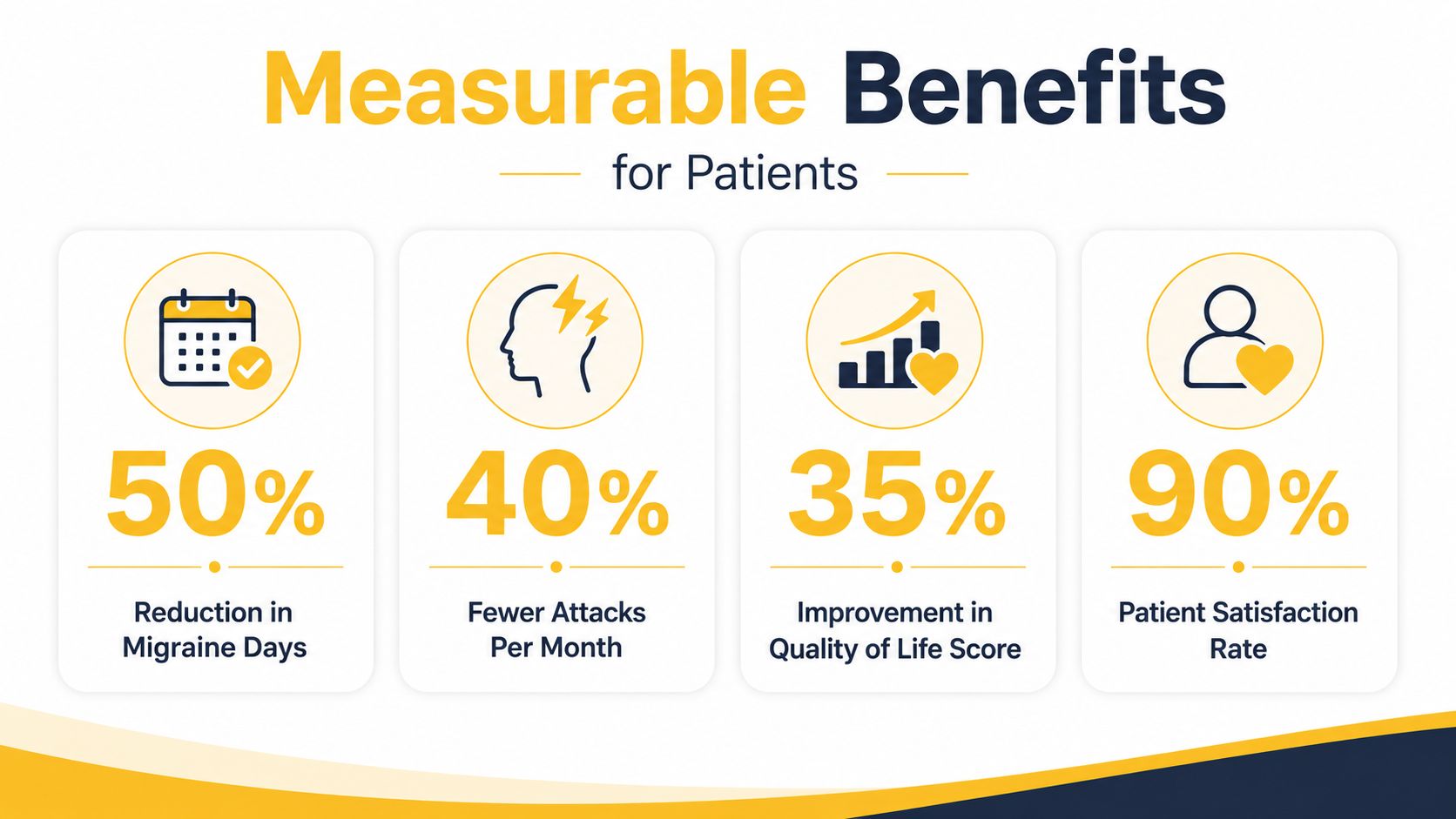
The strongest case for interdisciplinary care isn't that every patient will experience the same result. The evidence suggests that coordinated programs can improve several outcomes, especially when the team addresses migraine symptoms alongside sleep, mood, movement, medication use, and daily functioning.
An intensive multidisciplinary headache treatment study reported statistically significant reductions in migraine days, migraine attack frequency, and depression scores at approximately 22 weeks of follow-up. The study also found that a 96-hour program produced stronger reductions in migraine days and depression scores than a 20-hour program for the outcomes examined. Those findings come from the intensive multidisciplinary headache treatment study. They don't mean a longer program is automatically appropriate for you, but they show that care can be delivered at different intensities.
What the broader evidence shows
In a scoping review of 51 interprofessional primary-care studies, 41 reported clinical outcomes and 25 reported humanistic outcomes. Of the clinical studies, 27 showed significantly positive results, while 15 of the 25 humanistic studies found improved patient or caregiver outcomes. The review is available through this analysis of interprofessional primary care.
The same body of evidence highlights areas where expectations should remain realistic. A systematic review of 30 studies involving 66,548 patients found that 70% of interventions didn't reduce length of stay, 80% didn't reduce readmissions, and 93% didn't affect mortality. However, 50% reduced complications of care, suggesting that interdisciplinary teamwork may be especially valuable for detecting and preventing avoidable problems rather than guaranteeing every utilization measure will improve. See the systematic review of interdisciplinary team care.
A separate review summarized by PSNet's discussion of team-based interventions reported significant reductions in adverse events and mortality when providers participated in team-based interventions compared with conventional care. These findings come from healthcare settings broadly, so they shouldn't be treated as a promise about an individual migraine program.
How to Find and Access Interdisciplinary Migraine Care
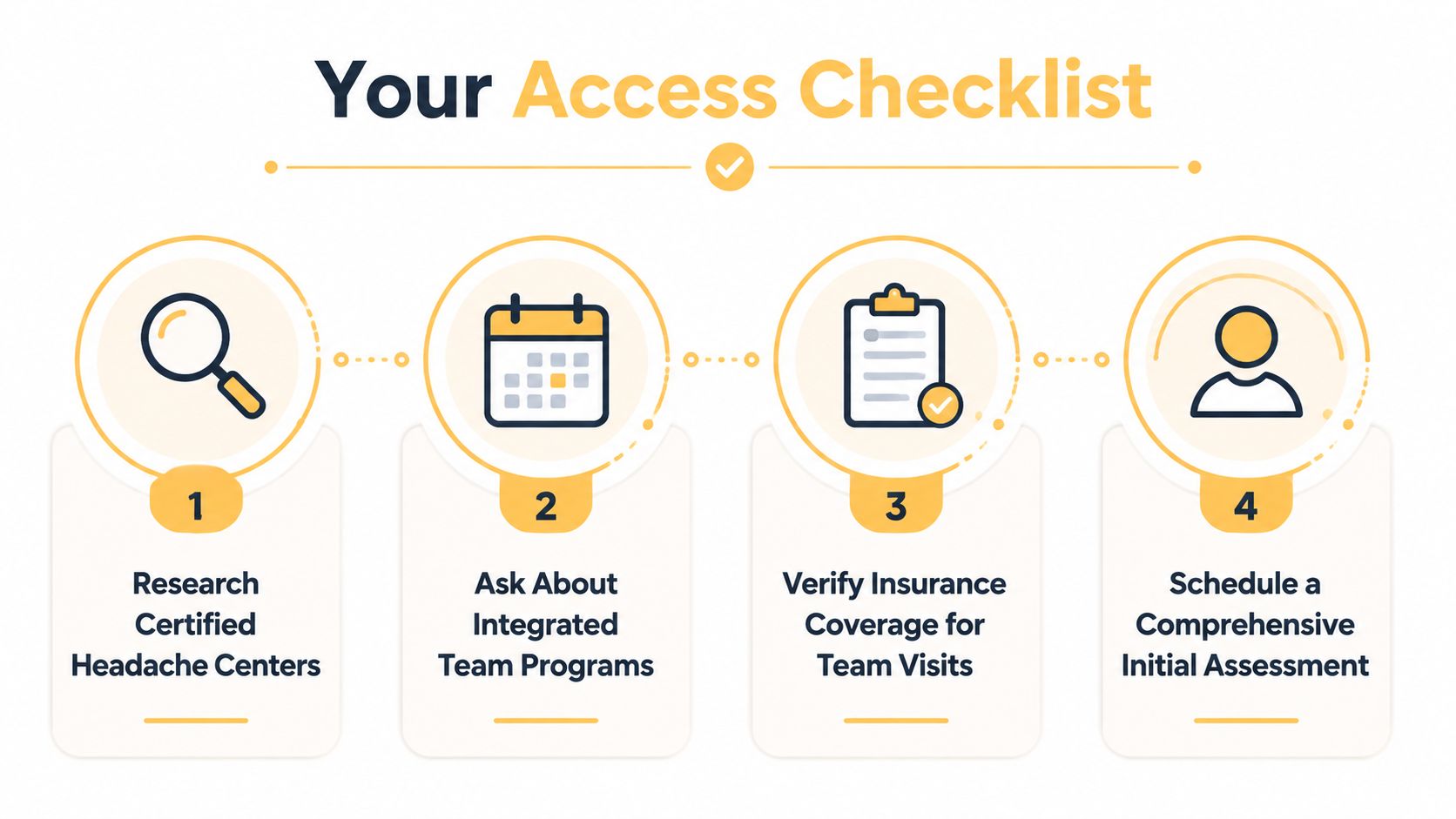
Start by asking whether a clinic offers integrated headache care, not merely multiple referrals. A headache center may have several specialists but still operate through separate appointments. Your goal is to learn how those professionals share information and make decisions.
Questions to ask a clinic
- Who coordinates the plan? Ask whether one clinician or nurse helps keep recommendations connected.
- How do providers communicate? Find out whether team members review cases together, share records, or send updates directly.
- Can the program address more than medication? Ask about physical therapy, behavioral support, sleep, medication review, and education.
- How are goals measured? A useful plan should define what you're tracking, such as migraine days, attack duration, functional impact, or medication patterns.
- What happens if symptoms change? Ask who you should contact and how the team adjusts the plan.
A narrative review identifies several reasons a person might be considered for multidisciplinary headache treatment, including failure of acute or preventive treatment, medication overuse, high headache frequency from the beginning, psychological burden, loss of work capacity, psychiatric comorbidity, sleep disturbance, or temporomandibular disorder. The review also describes role-specific modules for physiotherapy, psychology, and headache nursing in its discussion of integrated multidisciplinary headache care.
Access can be limited by location, insurance, wait times, or the availability of headache specialists. If a formal program isn't available, ask your primary care clinician to help coordinate communication between your existing providers. You can bring a concise symptom history, medication list, treatment responses, and a written list of questions to make that coordination easier.
For a practical tracking tool that can help you prepare information for appointments, visit Relief's migraine management app.
Real Scenarios Showing Interdisciplinary Care in Action
Consider an adult with frequent migraine who also relies on acute medication often and feels discouraged. In fragmented care, a neurologist might discuss medication changes, a nurse might separately explain a diary, and a psychologist might hear about stress months later. In an interdisciplinary plan, those professionals review the same pattern, discuss medication use and sleep together, and agree on which information the patient should track before the next review.
Another example involves vestibular symptoms, such as dizziness or motion sensitivity. A neurologist evaluates the migraine presentation and medical options, while a physical therapist considers balance, movement, and neck-related factors. The team can share observations so that physical exercises, pacing, and medical decisions support one another instead of creating competing instructions.
A third scenario involves a person whose migraine attacks are accompanied by major work disruption and low mood. The neurologist focuses on headache management, the psychologist addresses emotional strain and routines, and a nurse helps turn the plan into manageable tracking and follow-up steps. The patient doesn't have to choose between treating migraine and addressing its effect on daily life. The team recognizes both as part of the care problem.
These are illustrative scenarios, not case reports or predictions. Your migraine type, symptoms, medical history, and treatment options may differ. The defining feature in each example is joint problem solving, not seeing several professionals.
Transitions create another challenge. After hospitalization, communication can break down between hospitals, skilled nursing facilities, primary care practices, and families. Recent literature highlights persistent gaps in closed-loop communication and cross-facility coordination during these transitions, as described in this review of care coordination across settings.
Supporting Your Care Team With Better Data and Tracking
Interdisciplinary care depends on information that is consistent enough for different professionals to use. A clear record of migraine days, attack duration, symptoms, possible triggers, medication responses, sleep changes, and functional impact can help your team see patterns that a single appointment may miss.
You don't need to track every detail perfectly. Start with the information you can maintain:
- Record the attack: Note when it began, how severe it felt, and which symptoms appeared.
- Log the context: Include sleep, meals, hydration, stress, activity, weather, air quality, or other factors you personally want to examine.
- Track responses: Record what you tried and whether symptoms changed, without altering medication use unless your healthcare provider advises you to.
- Prepare a summary: Bring the pattern, questions, and difficult side effects to your next appointment.
A patient-powered tool can make this information easier to organize and share. Relief combines health data with local weather, air quality, and pollen signals, while allowing you to log symptoms, triggers, and medications. Its summaries can support conversations about patterns, but they don't replace clinical assessment or prove that a particular exposure caused an attack. You can review the app's data practices in Relief's privacy information.
Seek immediate medical care for a sudden, severe headache, a headache with fever or a stiff neck, new neurological changes, or a headache after a head injury. This article is for informational purposes and is not medical advice. Consult a healthcare provider for personalized guidance.
Taking an active role doesn't mean managing your care alone. It means giving your team a clearer record, asking how recommendations connect, and telling your providers what migraine is doing to your life.
Relief helps you log attacks, symptoms, triggers, and medications while bringing environmental signals such as weather and air quality into one view. Visit Relief to start building a clearer history you can use in conversations with your care team.


