Preventive care is a coordinated set of screenings, vaccines, check-ups, counseling, and self-monitoring designed to catch risk factors and disease early, before they get harder and more expensive to treat. For migraine sufferers, that matters because you're already managing enough uncertainty without letting preventable problems pile on.
This article is for informational purposes and is not medical advice. Consult a healthcare provider for personalized guidance.
Table of Contents
A Clear Answer on What Preventive Care Is
You're trying to get through work, sleep, weather changes, and the low-level dread that the next migraine could start at any moment. What is preventive care? It is the set of services and habits, screenings, vaccines, check-ups, counseling, and self-monitoring that aim to prevent illness, delay the start of disease, or limit the impact of a chronic condition before problems become harder to treat CMS.
Preventive care works like routine maintenance for your health. You change the oil before the engine seizes because waiting for a breakdown is costly and disruptive. The same idea applies here, only the “engine” is your health, and the goal is to notice risk factors early enough that you can act before they become bigger problems.
Federal health guidance usually breaks prevention into three levels. Primary prevention tries to stop disease from showing up at all, secondary prevention looks for early disease or risk factors when treatment works best, and tertiary prevention helps people live better with an existing condition by limiting complications and protecting function CMS. That framework matters for migraine too, because your week can include all three at once, from sleep routines to symptom tracking to a clinician's prevention plan.
Practical rule: if an action helps you avoid a problem, catch it earlier, or reduce its impact, it fits somewhere in preventive care.
Migraine can make health decisions feel exhausting, especially when every appointment means more planning, more light, more uncertainty, and maybe more pain. So the goal here is not abstract theory. It is a clear map you can use to separate everyday prevention, early detection, and living better with what is already there.
Primary Prevention and How It Shows Up in a Migraine Week
Primary prevention is the moat around the castle. It's what you do to keep trouble from getting in, not what you do after the trouble has already started. Vaccines, healthy eating, exercise, sleep hygiene, not smoking, and sun protection all belong here because they're meant to reduce the chance of illness in the first place.
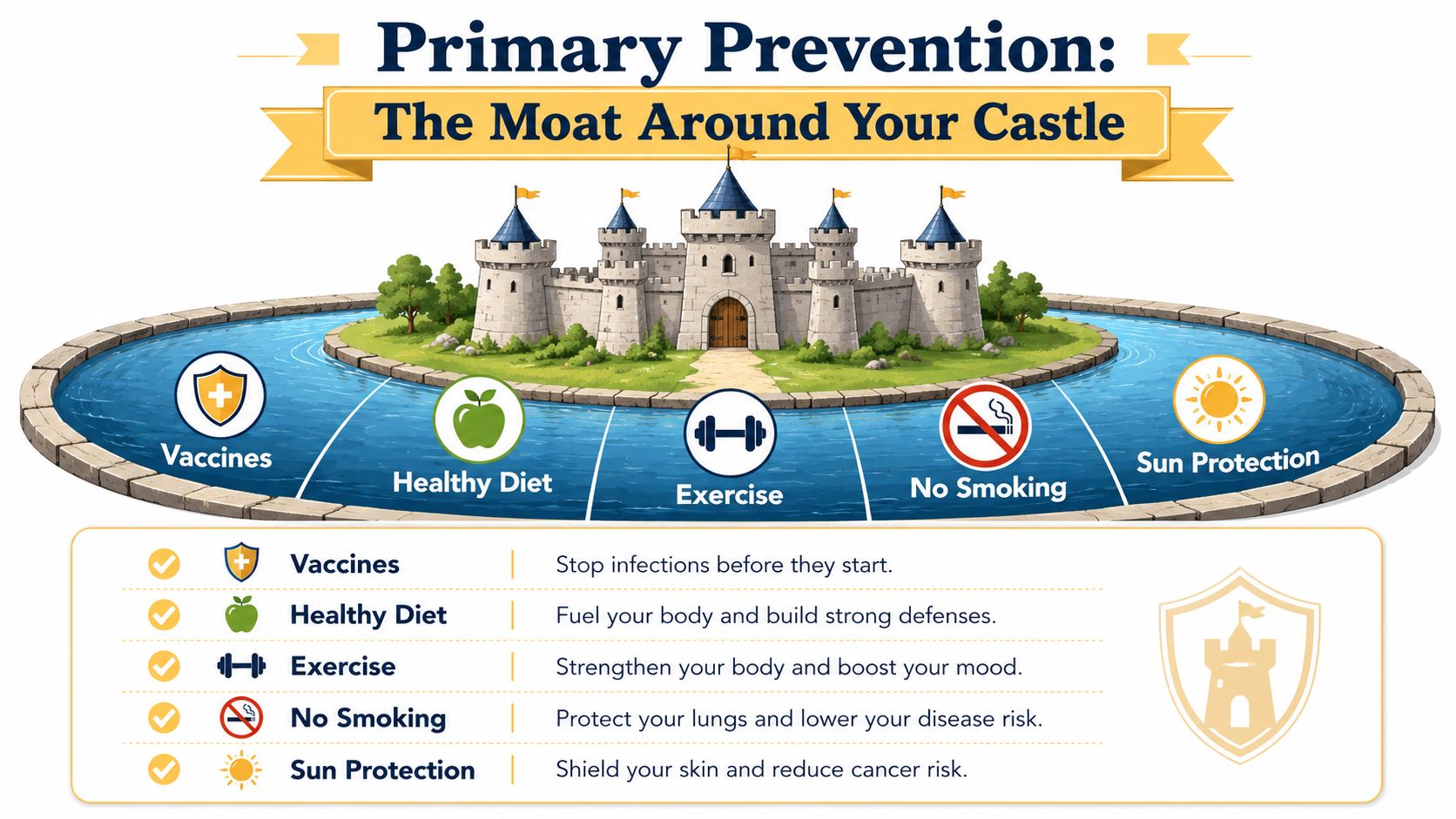
For migraine, the moat isn't glamorous. It looks like keeping sleep and wake times steady, eating regularly so blood sugar doesn't swing wildly, drinking enough fluids, and not stacking stress on top of stress. It can also mean paying attention to common contributors some people identify, like barometric pressure shifts, because what matters most is your own pattern, not someone else's trigger list.
What primary prevention looks like in real life
A migraine week is rarely neat. One day you're fine, the next day weather shifts, a meeting runs long, you skip lunch, and your head starts sending warning signs. Primary prevention is the boring, repeatable stuff you do before that moment arrives.
- Sleep windows: try to keep bedtime and wake time as steady as your life allows, because irregular sleep can make the week feel less predictable.
- Regular meals: long gaps without food can make you feel shaky, drained, and more vulnerable to an attack.
- Hydration habits: keep water visible, not hidden, so you're less likely to forget it during a busy day.
- Stress load: build a little margin into your schedule when you can, since migraine often punishes overpacked days.
- Environmental awareness: if weather changes seem to line up with attacks, note them without assuming they affect everyone the same way.
A good primary-prevention plan is usually unremarkable on purpose. It protects you by becoming routine.
That's the important distinction. Primary prevention isn't a rescue plan and it isn't treatment. It's the set of habits that shape your odds most days, long before you're in the middle of an attack.
Secondary Prevention and Spotting Problems Before They Grow
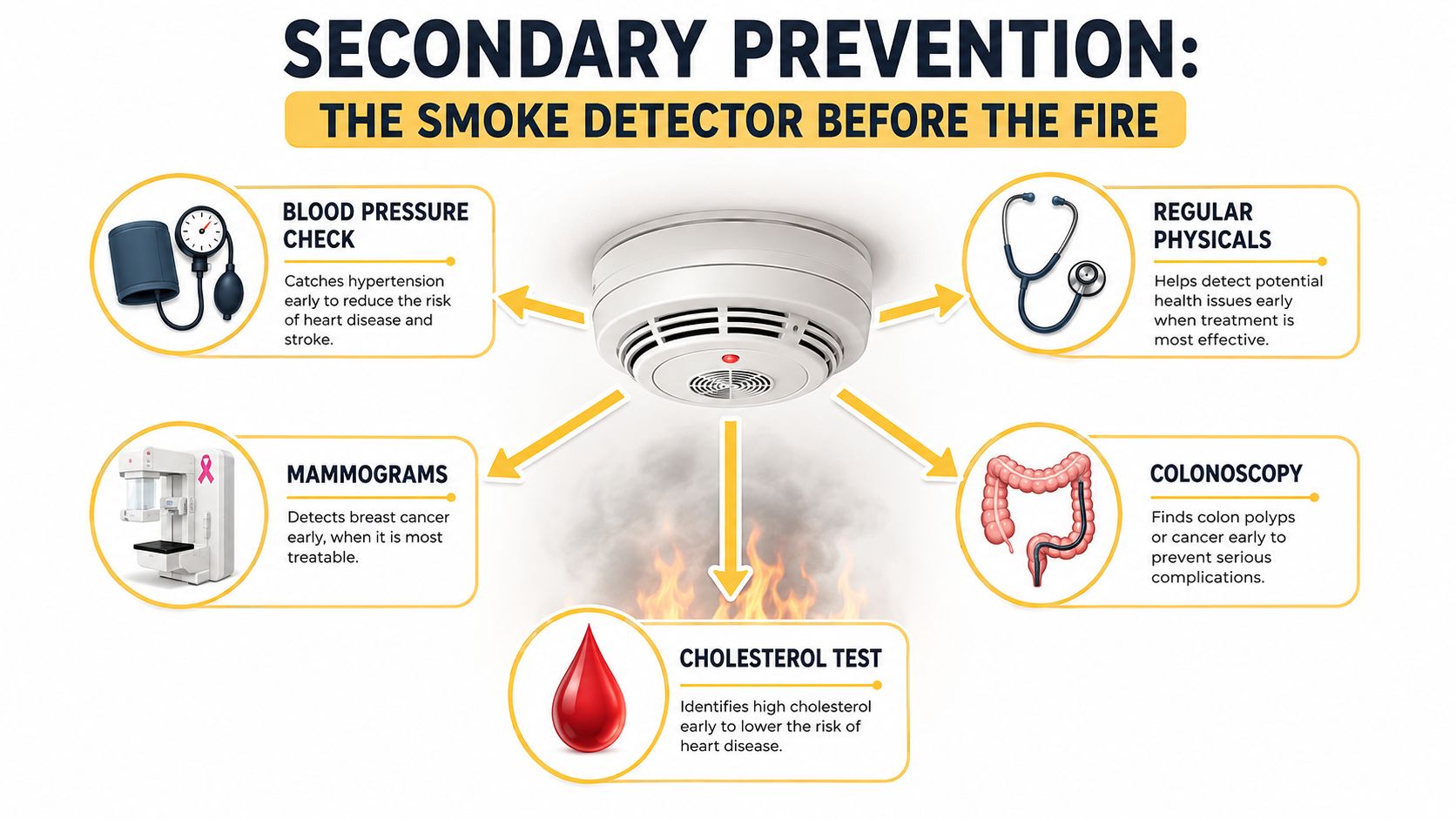
Secondary prevention is early detection. It works like a smoke detector that alerts you before a small problem becomes a bigger one. Blood pressure checks, cholesterol tests, blood sugar testing, and age- or risk-based cancer screenings all fit here because they look for problems when they are easier to find and treat AHRQ.
Why this matters for migraine
Migraine adds a layer of frustration here, because the early signs can be easy to miss until you know what to look for. Prodrome is the phase before pain, and it can include yawning, mood changes, neck stiffness, food cravings, or a vague feeling that something is off. Aura is different. It is a neurological symptom phase that can involve visual changes or other sensory disturbances before or during an attack.
Tracking makes this phase more useful. If neck stiffness and light sensitivity often show up before your head pain peaks, you are not just recording another bad day. You are spotting a pattern early enough to change the day around it, maybe by lowering demands, reducing sensory input, or checking an hourly forecast before committing to a hard task.
A simple question can help separate the warning phase from the pain itself.
Useful question to ask yourself: what happens in the 12 to 24 hours before my migraine, not just once it starts?
Forecasting tools can fit into this middle layer of prevention because they combine your personal logs with environmental data. They do not replace clinical care, but they can help you act earlier, which is often the advantage. If your brain and body give you early signals, the goal is to notice them before pain takes over the schedule.
Tertiary Prevention and Living Better With What's Already There
Tertiary prevention starts after a condition exists. Think of it as maintaining a damaged bridge so people can still cross safely. The bridge may never be brand new again, but careful maintenance can reduce risk, protect function, and make daily life more stable.
In health care, that can mean cardiac rehab after a heart attack or structured diabetes care to protect the kidneys and eyes. The logic is simple, managing an existing condition can slow complications and preserve quality of life, even when cure isn't realistic.
What tertiary prevention means for migraine
For someone with chronic migraine, tertiary prevention often means working with a clinician on a preventive plan that fits real life. The aim is usually to reduce attack frequency, shorten attacks when they happen, and protect daily functioning, not to pretend migraine disappears because you want it to. That matters, because migraine is not a willpower problem.
It can also mean reviewing patterns over time so you know whether the plan is helping or whether the week is still being hijacked too often. Some people need help with sleep, some with sensory triggers, some with stress load, and some with medication decisions handled by a clinician. The point is to lower the cost migraine places on the rest of your life.
Living better with migraine often means fewer surprises, not zero attacks.
Tertiary prevention is easy to overlook because it sounds less exciting than “stopping disease early.” But for anyone already living with a chronic condition, it's the layer that protects your time, your energy, and your ability to keep showing up.
Why So Many People Still Miss Preventive Care
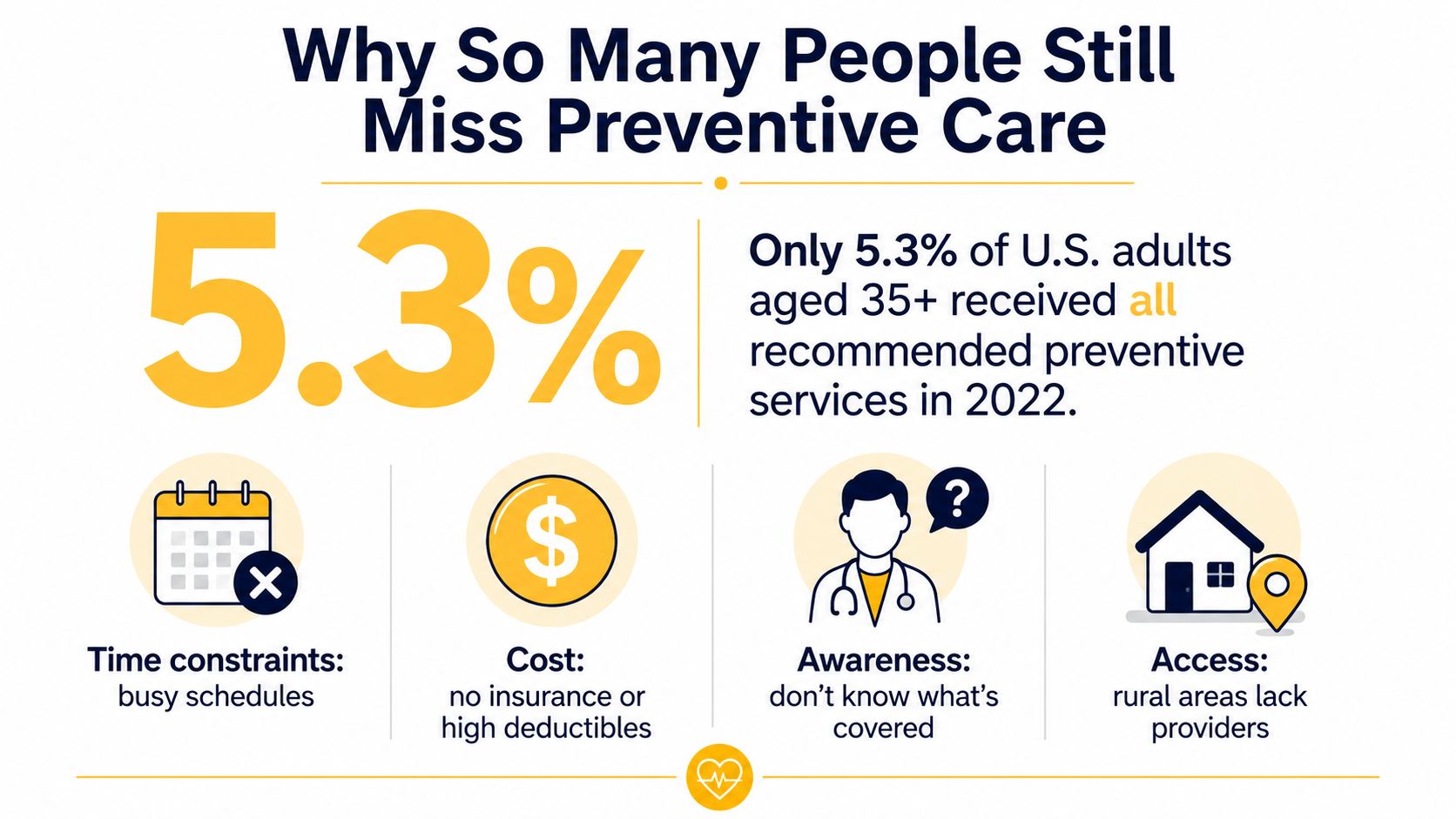
Preventive care is widely recommended, but that doesn't mean it reaches everyone equally. Federal and academic sources point to barriers such as cost, lack of a primary care provider, distance to care, and low awareness of what's recommended, and those obstacles hit harder for socioeconomically disadvantaged people and racial and ethnic minorities Healthy People 2030.
The gap is big enough to matter. Federal data cited by HHS show that only 8.5% of adults age 35 and older received all recommended high-priority clinical preventive services in 2015, and that fell to 5.3% in 2020 HHS. That doesn't mean people don't care about their health. It usually means life, access, and logistics get in the way.
The access gap is part of the definition
The clearest way to understand preventive care is to realize that it's not just a medical concept. It's an access problem too. In 2012, there were 61.4 preventive care visits per 100 persons, but women had 76.6 visits per 100 compared with 45.4 per 100 for men CDC/NCHS. That kind of spread shows that “recommended” and “received” are not the same thing.
For your next clinic visit, a simple checklist helps:
- Bring a short symptom list: note what's new, what's recurring, and what's bothering you most.
- Ask what's recommended for you: screenings and vaccines can depend on age, sex, and risk.
- Name access barriers early: if cost, transport, or time is the issue, say so before the visit ends.
- Clarify follow-up: ask what should happen next and how you'll know if a result needs attention.
Preventive care often fails, not dramatically. That's why a plain, specific visit plan can matter more than good intentions.
How to Access Preventive Services
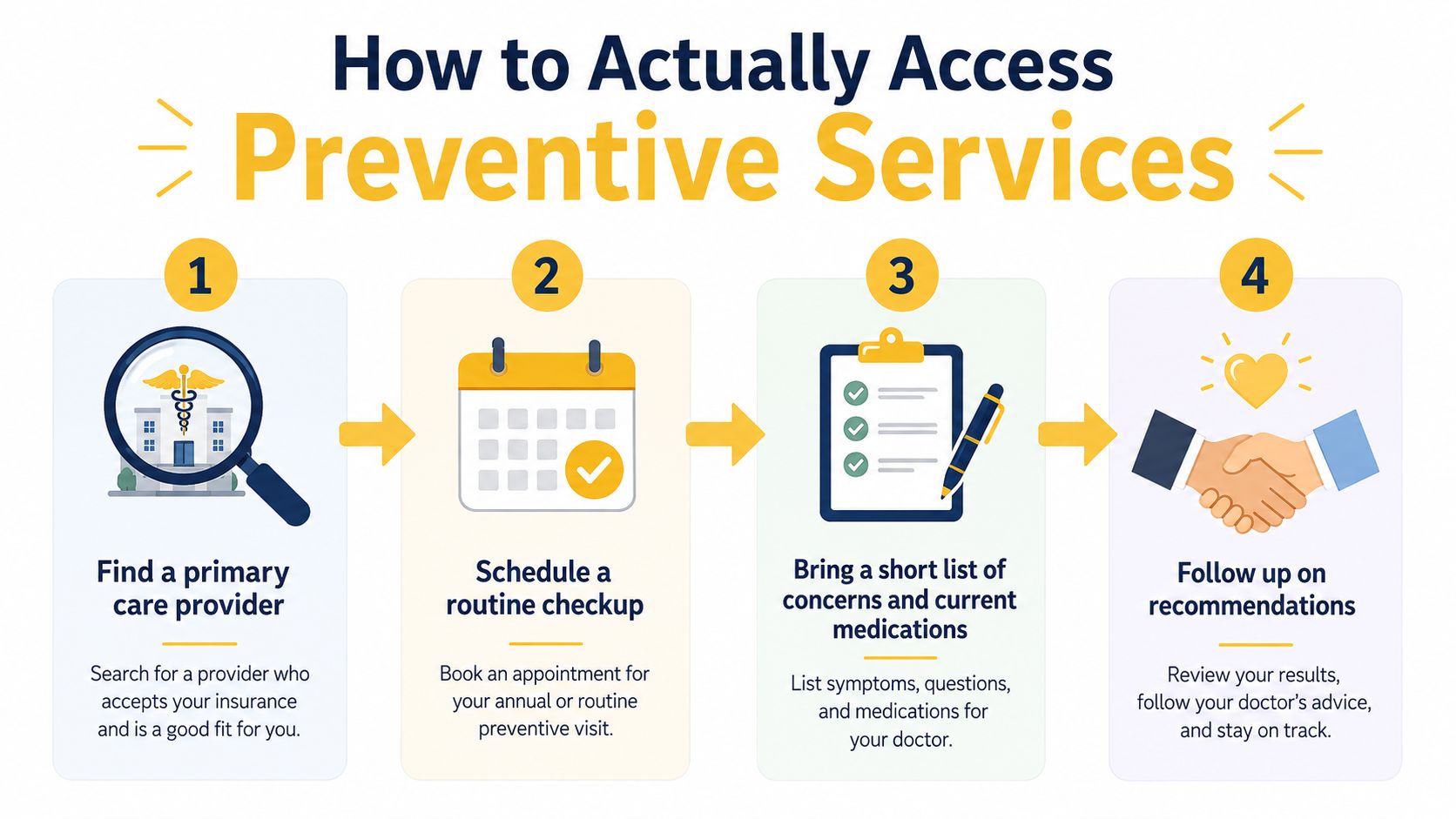
A routine checkup is often the easiest place to begin, ideally with a primary care clinician who can look at your overall risk instead of treating each problem as if it lived in its own box. If you do not already have one, finding that clinician is often the first step, because preventive care works best when someone is helping connect the pieces.
Bring a short list of your current medications, your main concerns, and any questions about screenings or vaccines. If you live with migraine, add attack frequency, common symptoms, and anything that seems to come before pain. That turns a vague conversation into something your clinician can use.
Insurance questions help, too. Many ACA-compliant plans cover recommended preventive services without cost-sharing, although details still vary by plan and service. The clearest question to ask is, “Is this service preventive under my plan, and is it covered without cost-sharing when I use an in-network provider?” That keeps the conversation focused on coverage instead of assuming every screening works the same way.
Between visits, tracking and forecasting can make the next appointment easier. Relief is one option that logs attacks, symptoms, triggers, and environmental data so you can arrive with patterns instead of fuzzy recall. Used that way, it supports preventive care rather than trying to replace it.
This article is for informational purposes and is not medical advice. Consult a healthcare provider for personalized guidance. Seek immediate medical care for a sudden severe headache, headache with fever or stiff neck, new neurological changes such as weakness, confusion, or vision loss, or headache after a head injury.
Putting Preventive Care to Work in Your Migraine Plan
A useful migraine week can hold all three layers of prevention at once. Primary prevention looks like regular sleep, steady meals, hydration, and stress boundaries. Secondary prevention is noticing prodrome, checking your day's risk, and changing plans before symptoms peak. Tertiary prevention is following a clinician's plan, recovering between attacks, and watching patterns over time.
The point isn't to turn your life into a spreadsheet. It's to give yourself a little more warning, a little more control, and a little less guesswork. Migraine already asks a lot, so any system you use should make decisions easier, not heavier.
One simple next step helps more than a complicated plan you never open again. Jot down three recent attacks with the date, severity, and anything that might have been different beforehand, or schedule the routine checkup you've been putting off. If you want a tool that keeps those details organized, Relief can help you track symptoms and patterns without making the process feel like homework.
Common Questions About Preventive Care Answered
A routine visit with a primary care clinician is often scheduled about once a year, though the right timing depends on your age, health history, and risk factors. Preventive services are often covered without cost-sharing in ACA-compliant plans, yet coverage can still change based on the plan and on whether a service is treated as preventive or diagnostic.
Migraine questions can feel more complicated than they should. A headache that is “just migraine” can still hide a red flag, so sudden severe headache, headache with fever or stiff neck, confusion, weakness, vision loss, or headache after a head injury should get urgent care. Tracking apps can still help, especially when you use them regularly, because they make it easier to see your own patterns, sleep windows, trigger clusters, and prodrome cues. They work best as a support for clinical care, not a replacement for it.
This article is for informational purposes and is not medical advice. Consult a healthcare provider for personalized guidance.
If you want a clearer way to spot migraine patterns before they derail your day, try Relief. It helps you track attacks, symptoms, triggers, and weather-linked risk in one place so your next conversation with a clinician starts with real data.


