Risk stratification is a way to forecast your personal likelihood of a migraine attack, so you can plan ahead instead of waiting for the next hit. This serves as a weather forecast for your body, a practical estimate that helps you decide what to protect, what to postpone, and what to prepare.
If you live with migraine, you already know how exhausting uncertainty can be. One day feels manageable, the next feels like it turns on you without warning. A good forecast doesn't promise control, but it can reduce guesswork and help you make calmer choices.
Table of Contents
Feeling Unsure About Your Next Migraine Attack
You know that low-grade dread when you are trying to plan your day and cannot tell whether a migraine is about to show up. That uncertainty can be as draining as the pain itself. Risk stratification gives that uncertainty a structure by sorting people into low, medium, or high risk so care and planning can match the level of concern, and it is a planning tool, not a diagnosis scienceinsights.org.
For migraine, that structure becomes useful when you connect it to the phases of an attack. A person who notices prodrome symptoms, such as a change in mood, neck stiffness, or unusual fatigue, may move into a higher-risk group for the next attack because those early signals often come before the pain starts.
Migraine can also include aura, which means temporary neurological symptoms like visual changes or tingling. Other parts of the migraine cycle can include postdrome, the “migraine hangover” period after the attack eases, when thinking can feel slow and the body may still feel off. A forecast becomes more practical when it reflects those phases, because the risk level is not just about whether you have a migraine today, it is about whether your own pattern suggests one may be building.

Practical rule: if a forecast helps you act sooner, it is useful. If it makes you ignore how you actually feel, it is not.
Risk stratification helps separate people who are more likely to need closer follow-up from people who can stay on a lighter-touch plan scienceinsights.org. In migraine care, that means you are not treating every day as equal. You are learning which days deserve extra caution and which ones look steadier.
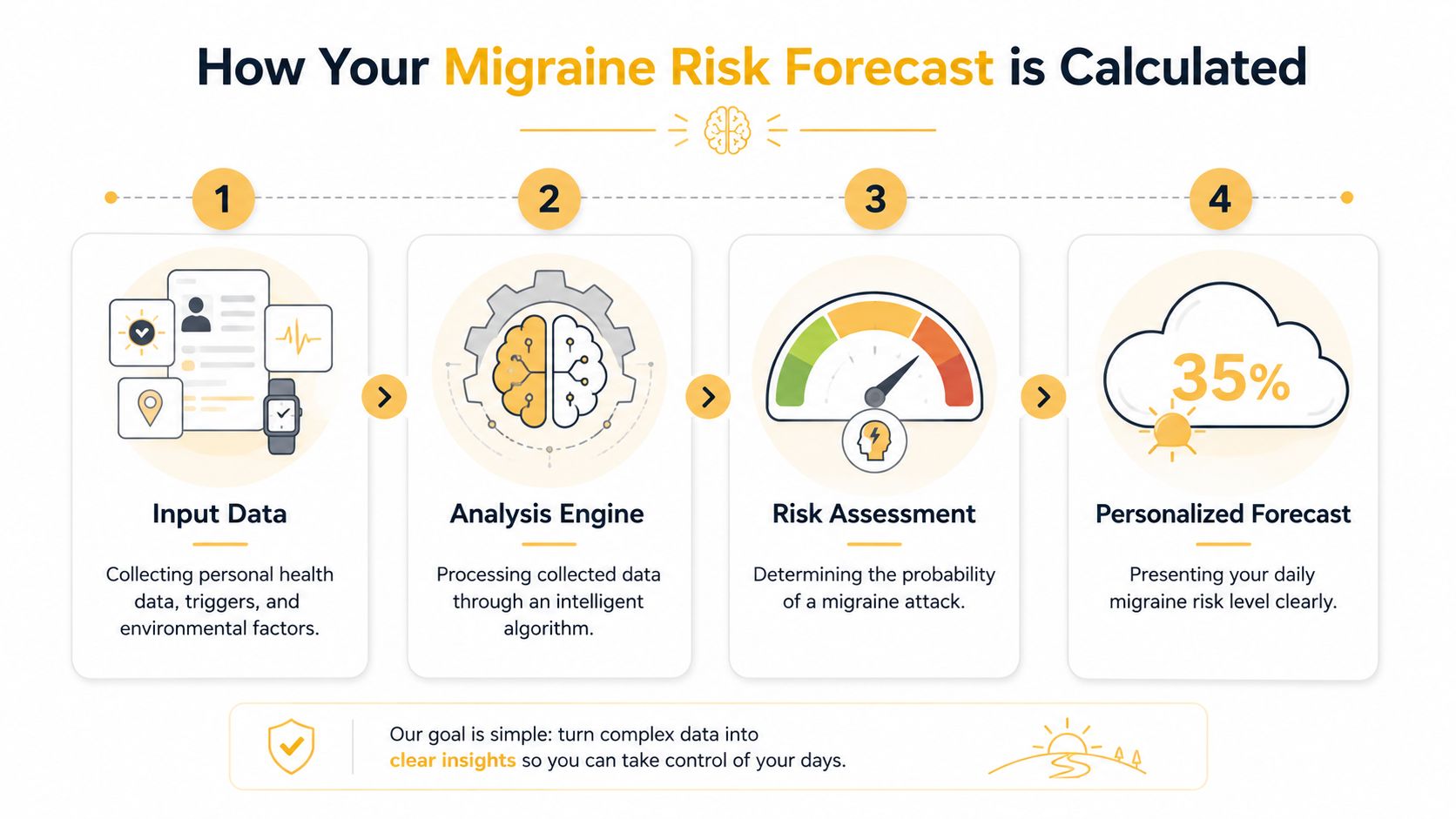
How a Migraine Risk Forecast Is Calculated
A useful risk forecast starts with inputs and turns them into a score or risk band. In healthcare, prediction models often combine several kinds of information, then use those patterns to estimate risk. Migraine forecasting follows the same logic, even though the inputs are more personal and more tied to daily life than to lab values or diagnoses.
The ingredients that matter
The process works a lot like following a recipe. One ingredient rarely explains the result on its own, but the combination can change the final outcome in a clear way. For a migraine forecast, those ingredients can include your logged symptoms, attack timing, sleep, suspected triggers, medication use, and environmental context such as weather or air quality.
The NHS Health Economics Unit notes that risk models can include interventions, comorbidities, demographics, geography, social factors, lifestyle data, and zip code NHS Health Economics Unit PDF. That broader view matters because migraine risk is shaped by more than one cause. It reflects your body, your routine, and the conditions around you.
The scoring part
The technical term is a supervised prediction task. That means the model looks at past examples, learns which patterns tend to appear before a higher-risk day, then uses those patterns to estimate the current risk inferensys.com. In plain language, it reviews your history, compares today's inputs with what happened before, and estimates whether your risk is rising or falling.
A forecast is most useful when it connects to action, not when it just gives you a number.
That is why the better migraine tools do more than predict. They show what is shaping the estimate, so the result feels less like a mystery and more like a signal you can use. If you want a closer look at the app side of this idea, Relief's approach to forecasting is described on its about page.
Why Risk Forecasting Matters for Your Daily Life
The biggest payoff is simple. Less uncertainty, more planning. When you have a clearer sense of risk, you can make decisions before you're stuck reacting in the middle of an attack.
That can change the shape of a day. You might choose a quieter schedule, move a demanding task, or pay closer attention to sleep and hydration. You might also notice that a pattern isn't only about one migraine day, it's about how clusters of factors add up over time.
It helps you see the whole picture
One landmark cardiovascular analysis found that 56% of U.S. adults had low short-term but high lifetime cardiovascular risk PMC. The point isn't that migraine and cardiovascular prevention are the same. The point is that a short-term snapshot can miss a longer pattern, and that's true in chronic conditions more broadly.
Migraine often works that way too. A single “good” day doesn't erase a trend, and a single “bad” day doesn't define your whole pattern. Risk stratification gives you a way to notice the bigger arc without waiting for the next severe episode to teach the lesson.
It supports better conversations with clinicians
When you can show your own patterns, appointments get more useful. Instead of saying only “I've had more migraines lately,” you can point to changes in sleep, symptoms, or triggers and talk about what seems connected. That doesn't replace medical care, it makes your care more informed.
If you use a tracking tool, the aim isn't perfection. It's to create enough clarity that your next decision is easier than your last one.
Putting It Into Practice Real World Scenarios
A forecast only becomes real when you can imagine what it changes. On a low-risk day, you might see a steady pattern, maybe normal sleep, no obvious trigger cluster, and a calm forecast. That could be the day you feel comfortable taking the train to dinner, finishing a presentation, or keeping your usual routine.
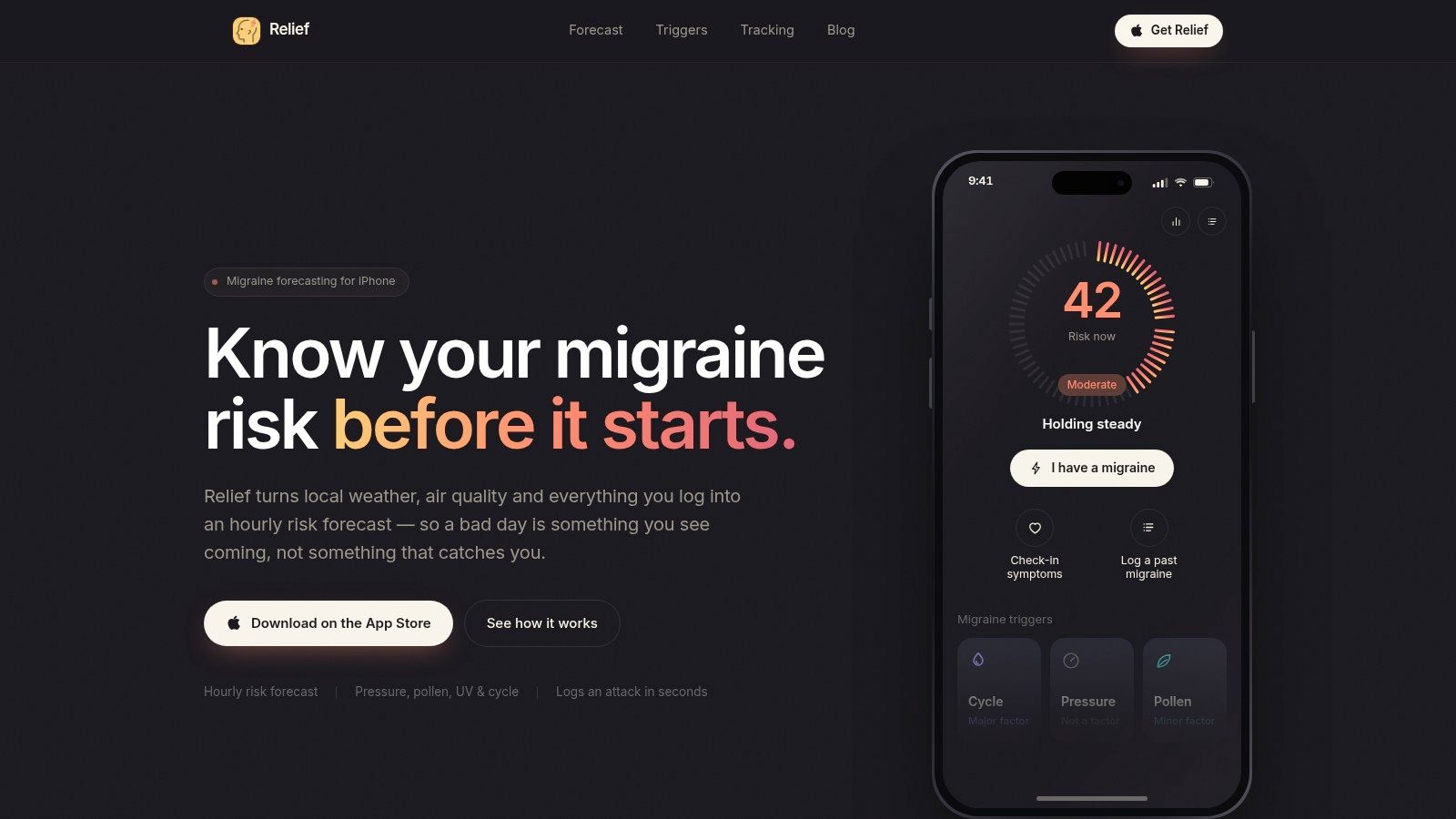
A medium-risk day looks different. Maybe you slept poorly, had a busy workday, and noticed a familiar prodrome symptom like yawning or neck stiffness. You might still go ahead with plans, but you'd be more selective, leaving extra room in your schedule and avoiding piling on more stress.
A high-risk day calls for even more caution. You could choose to work from home, skip a high-intensity workout for something gentler, keep water nearby, and make sure you're not missing meals. That's not fear-based thinking, it's smart pacing.
If your body is sending warning signs, the goal is to reduce friction, not to “push through” at any cost.
This kind of planning is especially helpful because risk isn't just about symptoms already happening. It's about what's likely to happen next. That's why long-term patterns matter, not just the single day in front of you.
This article is for informational purposes and is not medical advice. Consult a healthcare provider for personalized guidance. If you have sudden severe headache, headache with fever or stiff neck, neurological changes, or headache after head injury, seek immediate medical care.
Limitations and What to Keep in Mind
Risk stratification is useful, but it's never a crystal ball. A model can estimate risk, yet your body can still surprise you. That's why the best approach is to treat forecasts as guidance, not as a verdict.
Models can miss people or overfit patterns
A model is only as good as the data behind it. If the inputs are incomplete, inconsistent, or biased, the forecast can miss important parts of your story. Research from the NHS breast screening context warned that risk-based services could worsen inequity for lower socioeconomic and minority ethnic populations unless they're designed with accessibility in mind, including multilingual support University of Manchester research.
That warning matters beyond screening. If someone's data is missing because access is limited, or if the model doesn't reflect their background well, the forecast may be less reliable for them. Fairness isn't an extra feature, it's part of accuracy.
Don't let the forecast outrank your symptoms
If you feel a migraine building, trust that signal even if the forecast looks calm. If the forecast looks high-risk but you feel fine, use it as a prompt to prepare, not as proof that an attack is inevitable.
A useful mindset is to let the forecast influence your plan, while your body still has veto power. That balance keeps the tool helpful instead of stressful.
The same principle applies to privacy. If you're using an app or digital tracker, review how your data is handled and stored. Relief's privacy information is the kind of page worth reading before you decide what you want to log and share.
The best forecast is the one you can understand, question, and use without giving up your own judgment.
How to Start Using Risk Stratification for Your Migraines
The easiest place to start is with a few migraine details you can record consistently. Log attack timing, duration, severity, aura, photophobia. Photophobia means light sensitivity, and many people only realize later that it is one of the symptoms they notice most often.
Then add what was happening around the attack. Write down sleep, stress, meals, exercise, medications, and any trigger exposures you suspect. Over time, those details become the raw material for your personal pattern, and that is what makes risk stratification useful in daily life.
A simple starter checklist can help:
- When it started: date, time, and what you were doing
- What it felt like: pain location, severity, aura, nausea, light sensitivity
- What changed before it: sleep, food, hydration, stress, weather, screen time
- What you took: over-the-counter or prescription treatments, if any
- What happened after: whether the attack eased, returned, or lingered
You do not need a perfect medical record on day one. You need enough information for patterns to become visible, the same way repeated weather reports make it easier to spot a storm system. A tool like Relief can make that process easier by organizing your tracking and pairing your logs with environmental context, so your migraine forecast becomes clearer over time.
If you want a more personal way to spot patterns before the pain spikes, start logging your next few migraine days in Relief. It brings tracking and forecasting together so you can see what is changing, what is staying the same, and what might be worth planning around.


