
Sleep hygiene is the set of daily behaviors and environment choices that make consistent, restorative sleep more likely, and that matters when 30.5% of U.S. adults slept less than 7 hours in 2024 and Healthy People 2030 says about 1 in 3 adults still do not get enough sleep (CDC data brief). If you live with migraine, sleep hygiene is not a cure, it's a foundation, because regular sleep can lower one of the most common ways a migraine day gets set in motion.
You may already know the feeling, one rough night and the next day feels fragile, like your brain is waiting for the smallest nudge. For migraine, that connection is real enough to take seriously, but practical enough to work with.
Table of Contents
- Start with a fixed wake time
- Protect the hour before bed
- Keep the bedroom sleep-friendly
- Watch the late-day stimulants
- Use the bed as a sleep cue
- The weekend sleep-in problem
- Screens in bed when pain is bad
- Late caffeine to push through prodrome
- Small swaps that are easier to keep
A Clear Definition of Sleep Hygiene
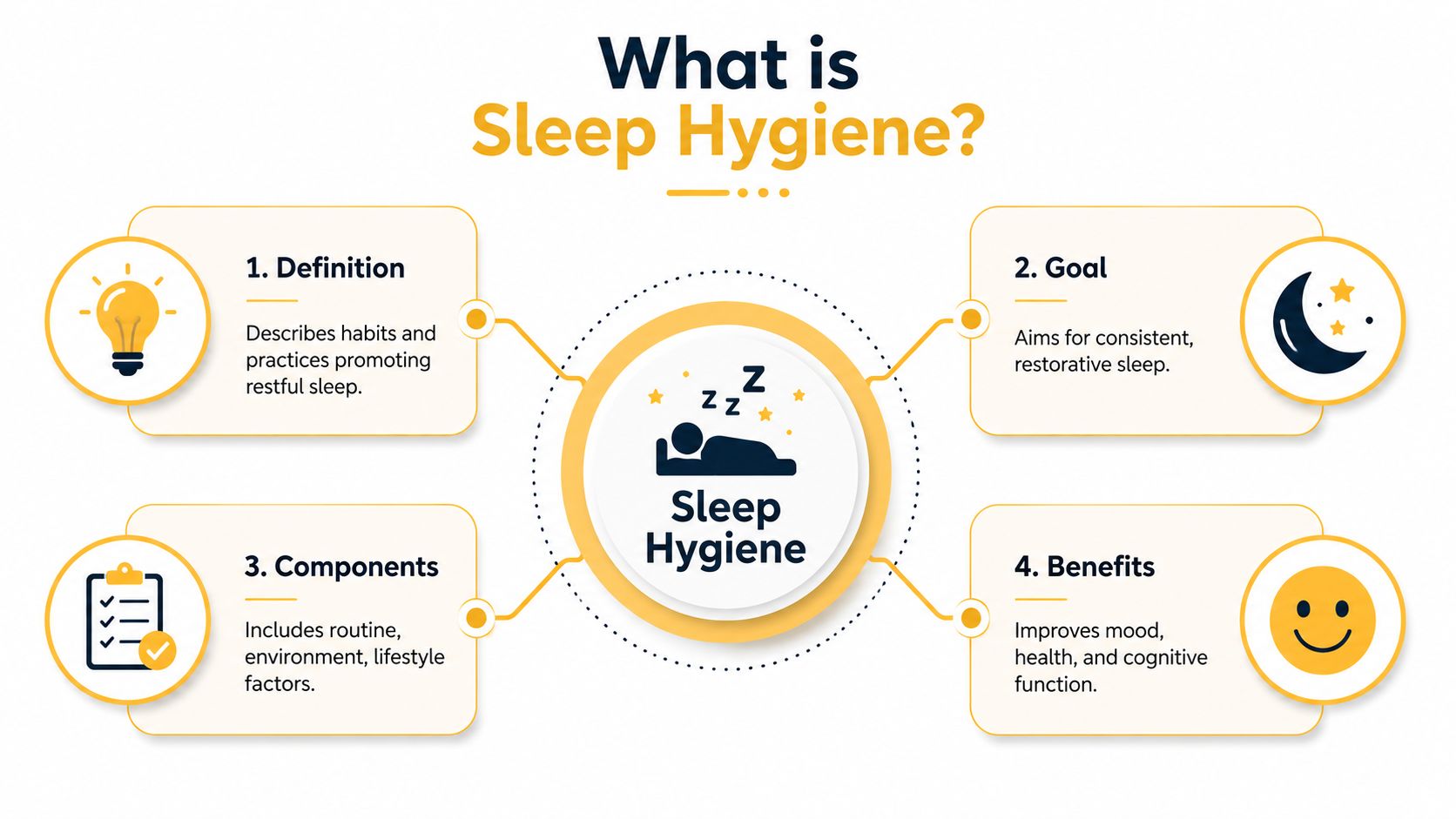
Sleep hygiene is the set of daily behaviors and environment-related habits that support regular, high-quality sleep. It includes what you do during the day, what you do before bed, and how you set up the room where you sleep. Each part affects how easily your brain settles down at night.
For people with migraine, that definition matters because a poor night can spill into the next morning in a way that feels bigger than ordinary tiredness. Sleep hygiene is not a treatment by itself. It is a behavioral and environmental control framework that helps make sleep more stable, which is why it sits underneath other migraine management choices rather than replacing them. If you want a broader look at how this fits into a migraine plan, see the background on Relief's about page.
What belongs in sleep hygiene
The term usually covers two parts. The first is behavioral, things like schedule regularity, caffeine timing, wind-down habits, and how much time you spend on stimulating activity before bed. The second is environmental, including light, noise, temperature, and whether the bed itself has become a place for work, scrolling, or worry.
Practical rule: if a habit makes your brain feel more alert, or makes your room feel less sleep-friendly, it probably belongs in your sleep hygiene plan.
A useful way to think about it is this. Sleep hygiene reduces friction. You are not forcing sleep to happen. You are removing the things that keep it from happening on its own, then watching whether those changes make migraine days less unpredictable over time.
Why Sleep Hygiene Matters for Migraine Risk
A bad night can do more than leave you groggy. For people with migraine, short or broken sleep can make the next attack easier to trigger, and migraine symptoms can then make it harder to sleep well again. That feedback loop is why sleep hygiene belongs in migraine care, not on the sidelines.
Sleep problems are common enough that small improvements can still matter. Public health data show that many adults do not get enough sleep, which means a large number of people are trying to manage their headaches on a tired brain. That matters because migraine-prone nervous systems often react more strongly when sleep is inconsistent.
How disrupted sleep can raise migraine risk
One pathway is circadian instability. When bedtime and wake time move around a lot, the body clock gets mixed signals, and that unpredictability can be rough on a migraine-prone brain. Another pathway is sleep fragmentation, where sleep may last long enough on paper but still feels broken and unrefreshing.
There is also the simpler effect of lowered threshold. After a poor night, light, stress, skipped meals, or screen time may be more likely to tip the system into an attack. On a better-rested day, the same triggers may be easier to tolerate.
That is why a migraine plan feels incomplete if sleep is ignored. Sleep hygiene will not fix a sleep disorder and it will not replace medical treatment, but it can reduce one of the most common sources of day-to-day instability in a migraine pattern.
The Core Principles That Actually Move the Needle
The most useful sleep habits are usually the least glamorous ones. They're also the easiest to test, because you can change one or two at a time and see whether your nights and migraine days shift.
Start with a fixed wake time
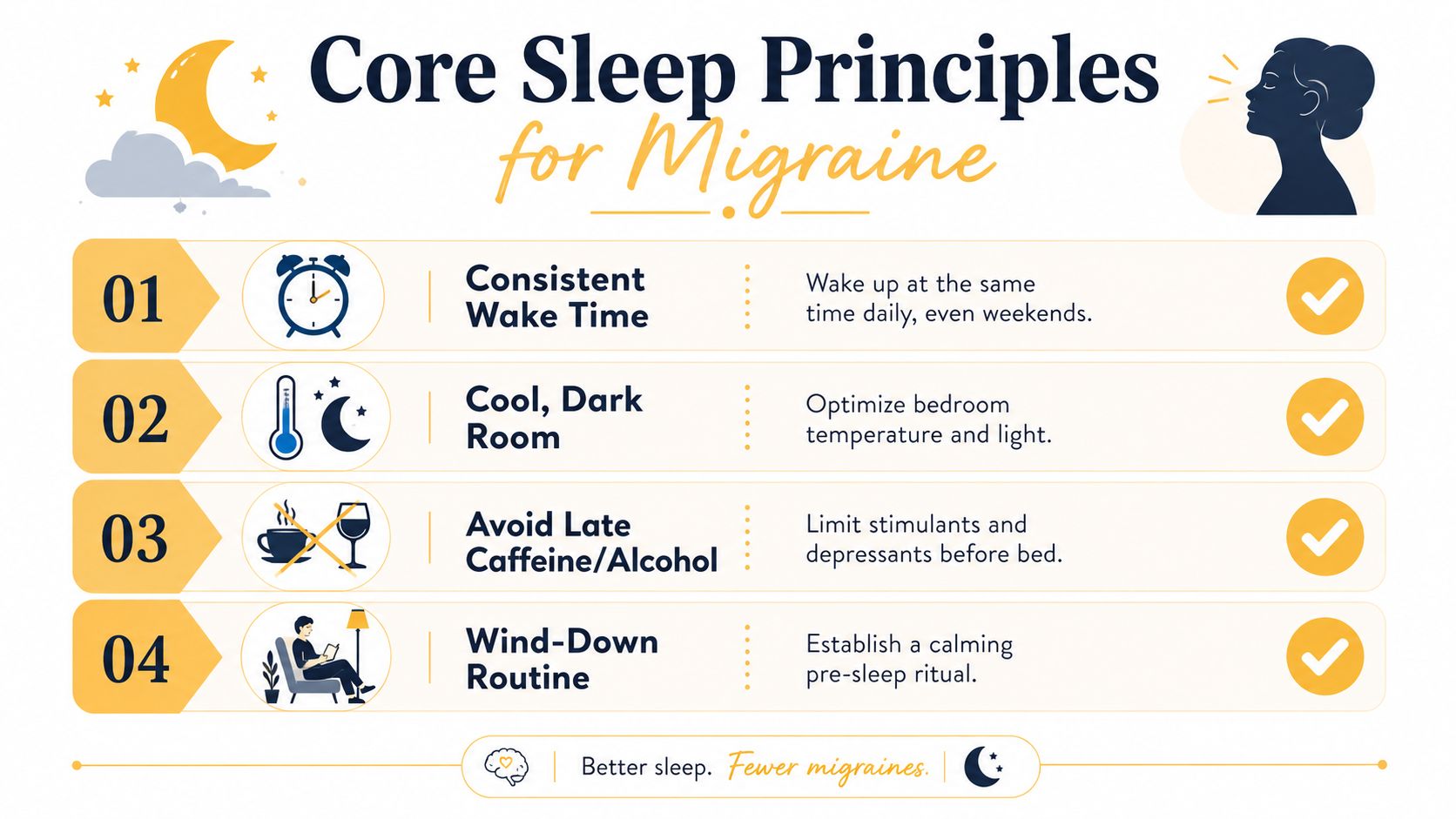
A consistent wake time is often more important than chasing an early bedtime. If you wake at roughly the same time every day, your body gets a steadier cue for when to feel sleepy later, which helps the circadian system stop wobbling around so much.
That doesn't mean you have to be rigid forever. It does mean the “I'll sleep in and fix it tomorrow” approach can backfire if it becomes your default. If you had a migraine night, a steadier next wake time is usually more helpful than a dramatic swing.
Protect the hour before bed
A one-hour wind-down gives your nervous system a chance to shift gears. For many people, that means dimmer lights, a quieter room, and fewer decisions. If your evening is chaotic, even a shorter, repeatable routine is better than trying to improvise every night.
Keep the bedroom sleep-friendly
Light, noise, and temperature all matter because they shape whether your body reads the room as a place for rest. A cool, dark, quiet bedroom works because it removes competing signals. The bed should also stay strongly associated with sleep, not with emails, television, or endless scrolling.
Watch the late-day stimulants
Caffeine and alcohol can both make sleep less predictable, especially later in the day. You don't need a perfect rulebook to notice the pattern, though. If your sleep keeps feeling light or broken, timing is often the first place to look.
Simple test: if you're doing something in bed that keeps your mind “on,” that activity probably belongs somewhere else.
Use the bed as a sleep cue
This part is called stimulus control. The idea is straightforward, the bed should predict sleep, not wakefulness. If your brain learns that bed means planning, worrying, or streaming, falling asleep gets harder because the cue has gotten muddy.
For a practical reset, keep the bed for sleep and quiet rest. If you can't drift off, get out of bed and do something calm elsewhere until you feel sleepy again. That small habit can help preserve the bed as a strong sleep signal.
A Migraine-Friendly Evening Routine in Practice
A routine works best when it fits real life, not an idealized version of it. Say you finish work late, your head feels a little tight, and you're tempted to stay on your laptop “just to catch up.” That's exactly the point where sleep hygiene either helps or slips away.
At 8:30 p.m., the goal isn't to build a perfect spa night. It's to make the next hour less stimulating. You dim the lights, put your phone on silent, and decide that the emails can wait until morning, because late-night problem solving usually costs more than it gives back.
A realistic version of wind-down
Maybe your routine looks like this, a shower, a short stretch, a few pages of a book, then bed. Or maybe it's a quiet podcast, a cup of caffeine-free tea, and no extra screen time. The point is consistency, not ritual purity.
If a migraine earlier in the day already threw things off, don't try to “make up” for it by turning the night into an all-or-nothing project. Sometimes the smartest move is to skip the extra steps and just protect sleep opportunity with a calmer, earlier bedtime.
How to handle the late-night work trap
The hardest part for many adults is the belief that one more task will restore control. In practice, a late work session often pushes sleep later, which can make the next day more fragile. If you know that pattern is common for you, set a stopping point before the evening starts, not after you're already tired.
A workable template looks like this.
- Choose one cutoff: pick the time you stop email, social media, and work tasks.
- Lower the lights: shift the room toward dim, not bright.
- Do one calming repeatable habit: stretching, reading, or breathing practice.
- Go to bed at your usual time: even if the day felt off.
The routine doesn't need to be long to be useful. It needs to be repeatable enough that your brain starts to recognize it as the start of sleep.
Common Sleep Hygiene Mistakes Migraine Sufferers Make
Migraine sufferers often reach for habits that feel helpful in the moment but cost them later. That isn't a character flaw, it's a sign that pain and fatigue make short-term comfort very persuasive.
The weekend sleep-in problem
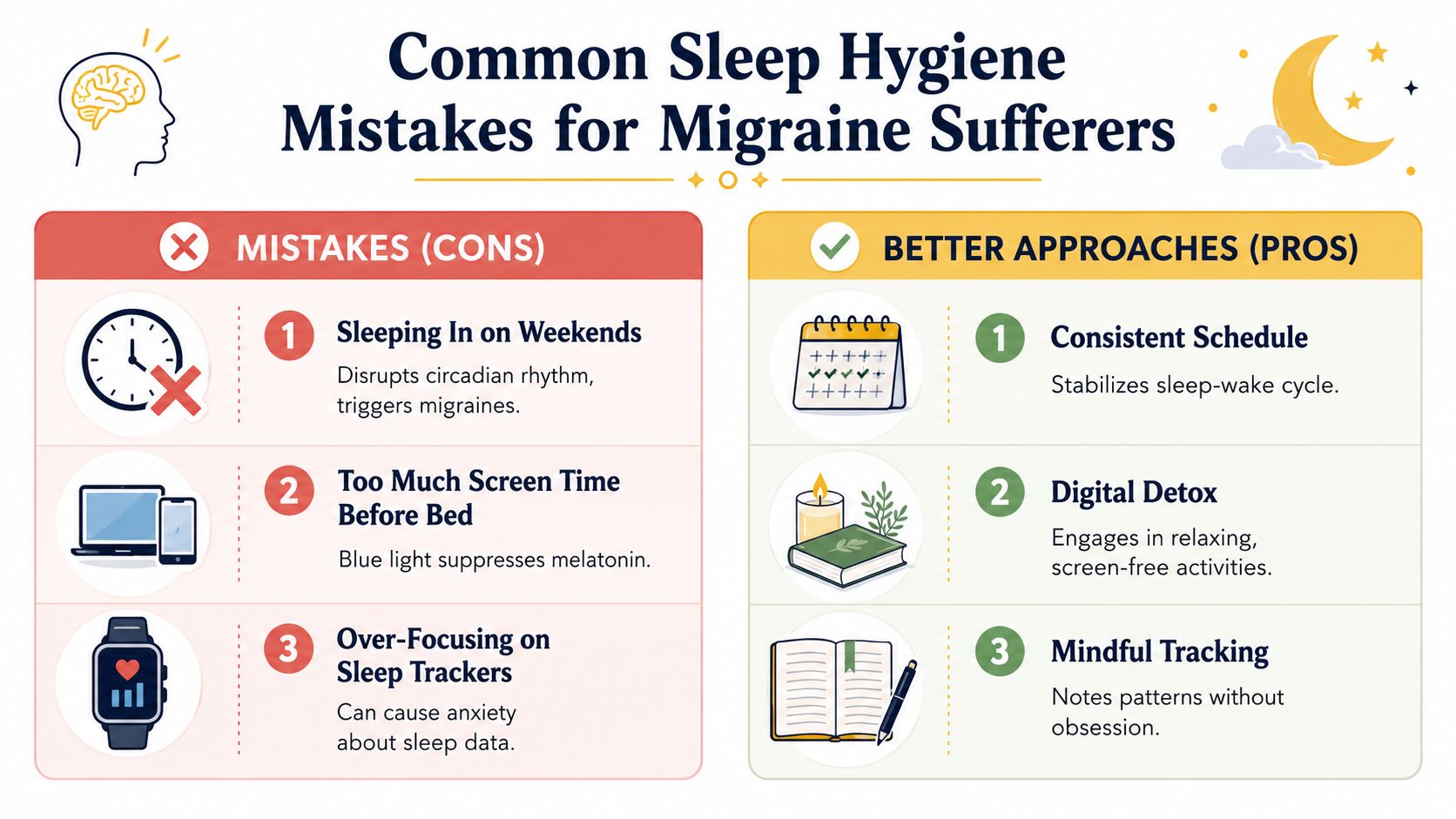
Sleeping in two or three extra hours can feel like recovery. For migraine, it can also blur your body clock and leave Sunday night or Monday morning feeling rougher than it needs to be. A steadier wake time usually helps more than a big rebound sleep.
Screens in bed when pain is bad
Phone or TV use in bed can seem harmless when you're trying to distract yourself from pain. The issue is that you're pairing the bed with wakeful stimulation at the exact moment you most need it to stay linked to rest. If you need distraction, move it outside the bed whenever possible.
Late caffeine to push through prodrome
Prodrome is the early phase that can show up before the head pain of migraine. It can make you want to push through the day, but late caffeine can make sleep shallower or delay it, which sets up the next day poorly. If caffeine is part of your routine, timing matters more than heroics.
Small swaps that are easier to keep
- Sleeping in on weekends becomes keeping wake time steadier, even if bedtime slipped.
- Using your phone in bed becomes moving screen time to a chair or couch before sleep.
- Overthinking every tracker number becomes looking for patterns over several nights, not judging one bad night.
The point isn't perfection. The point is reducing the habits that make migraine and poor sleep reinforce each other.
Tracking Sleep and Connecting It to Your Migraine Pattern
Sleep changes are easier to stick with when you can see whether they're doing anything. A simple sleep check-in can be enough, especially if you already log migraine symptoms, medications, and common triggers.
Start with three notes in the morning, sleep duration, how rested you feel, and whether you woke up during the night. Then pair that with your migraine log. Over time, you may spot things you wouldn't notice from memory alone, like a pattern after short sleep or a weekend oversleep followed by a rough day.

What to look for in the data
You don't need perfect tracking. You need enough detail to answer a few practical questions, like whether your attacks cluster after irregular nights or whether certain evening habits show up before worse mornings. If you track too many variables at once, the signal gets muddy fast.
That's where Relief can fit naturally, since it brings sleep notes together with migraine symptoms and environmental data so you can see patterns over time without trying to hold it all in your head. It's a tracking tool, not a treatment, and the main value is clarity.
Good tracking should lower uncertainty, not increase it.
When you have cleaner logs, provider conversations get more useful too. You can talk about what changed, when it changed, and which sleep habits seem to matter most for your own migraine pattern.
When Sleep Hygiene Isn't Enough and When to Seek Help
Sometimes the problem isn't your routine. If you've made steady changes and still have persistent insomnia, frequent awakenings, or waking unrefreshed despite enough time in bed, sleep hygiene alone may not be enough. That's especially true when the issue keeps showing up three or more nights a week for over a month.
Some sleep problems need evaluation, not just habit changes. A clinician may screen for sleep apnea, look at insomnia disorder, or recommend CBT-I, cognitive behavioral therapy for insomnia, which has stronger evidence than sleep hygiene alone for chronic insomnia. If you're unsure where your sleep issue sits, getting help early is usually better than waiting until the pattern gets entrenched.
For migraine readers, it's also important to know the red flags that need immediate medical care. Seek urgent attention for sudden severe headache unlike any before, headache with fever or stiff neck, new neurological changes such as weakness or vision loss, or headache after a head injury. Those symptoms are not something to manage with sleep tips at home.
This article is for informational purposes and is not medical advice. Consult a healthcare provider for personalized guidance. If you're also thinking about how your data is handled, Relief's privacy information explains how the app approaches that part of tracking.
Relief helps you connect sleep, symptoms, weather, and other migraine clues in one place so the pattern is easier to see. If you want a calmer way to track what your nights are doing to your days, visit Relief and see how it can support your migraine routine.


